Introduction
Grevillea preissii ‘Seaspray’ is a compact, wildlife-friendly Australian native shrub prized for its spreading growth habit and colourful flower displays. Commonly known as the sea spray plant or Seaspray grevillea, this cultivar is derived from Grevillea preissii, a species native to Western Australia. Gardeners value it for its adaptability, drought tolerance, and ability to attract nectar-feeding birds. Its low-growing form makes it ideal for groundcovers, borders, erosion control, and coastal landscapes. Whether used in native gardens or low-maintenance landscape designs, Grevillea preissii Seaspray offers year-round ornamental interest while supporting local biodiversity. It is also a valuable addition to broader Australian native landscapes featured in our Australian Native Garden Trees: The Complete Planting Guide.
Quick Summary
- Grevillea preissii ‘Seaspray’ is a low-growing, spreading Australian native shrub valued for its bright flowers and bird-attracting qualities.
- It belongs to the Proteaceae family and is native to Western Australia.
- Seaspray is a compact groundcover or low border plant suited to well-drained soils and full sun.
- It is drought-tolerant once established and requires minimal maintenance.
- The plant is widely used in native, coastal, and wildlife-friendly gardens.
What Is Grevillea Preissii Seaspray?
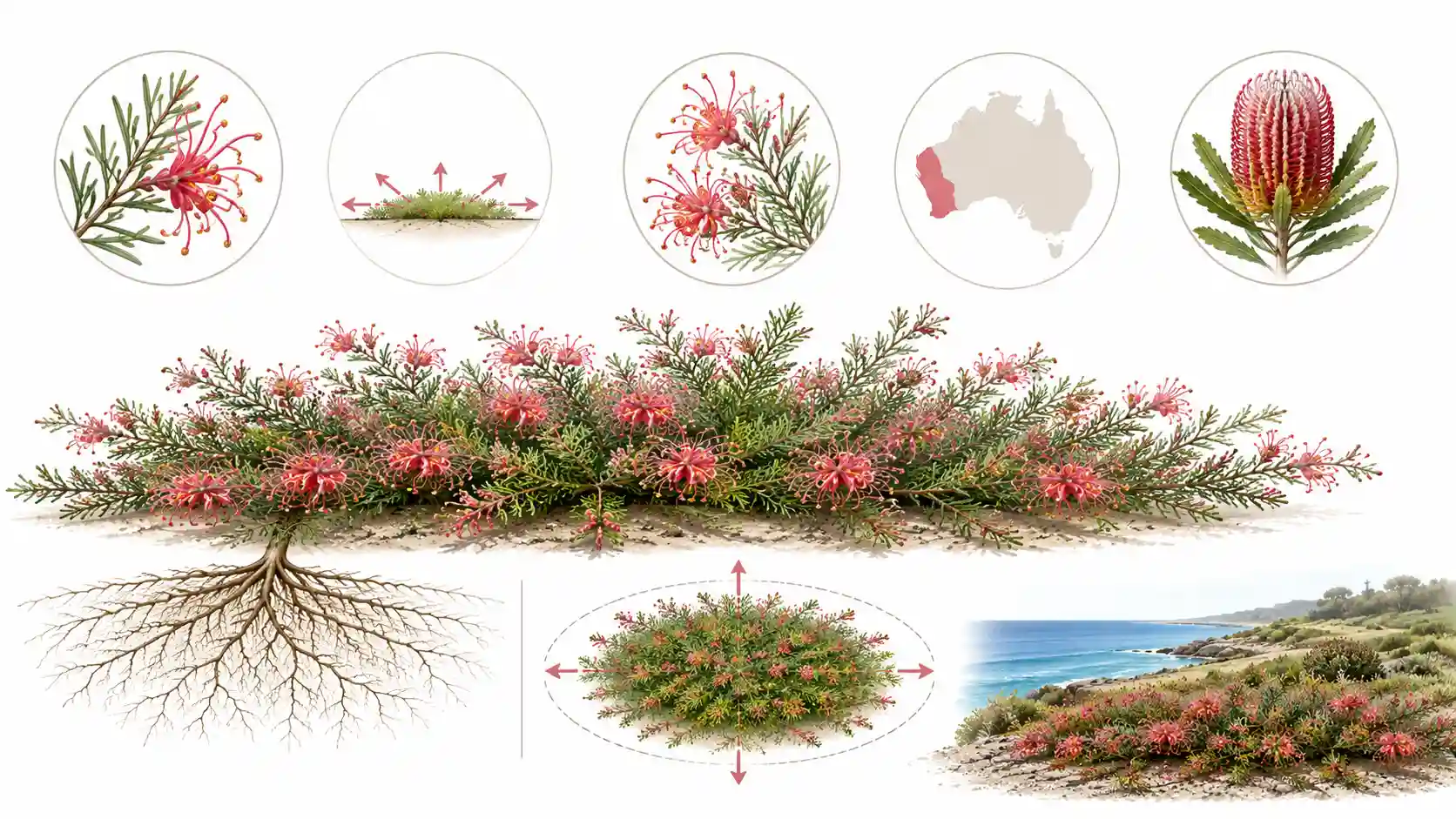
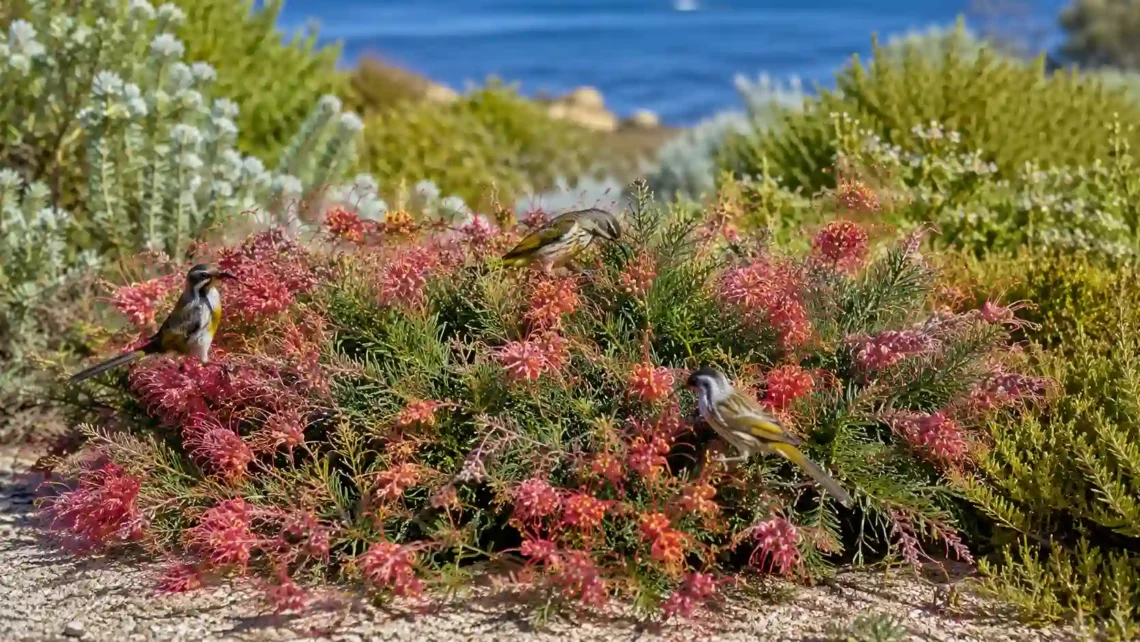
Grevillea preissii ‘Seaspray’ is a named cultivar of the Western Australian species Grevillea preissii. It was selected for its compact, spreading growth habit and attractive clusters of pink-red flowers. The common name “sea spray plant” refers to its broad, cascading form that resembles ocean spray spreading across the landscape.
Unlike the botanical species name, which identifies the wild plant, ‘Seaspray’ refers specifically to a cultivated variety developed for garden use.
Key Facts
- Botanical name: Grevillea preissii ‘Seaspray’
- Family: Proteaceae
- Origin: Western Australia
- Common names: Grevillea Seaspray, sea spray plant, seaspray grevillea
- Growth form: Low spreading shrub or groundcover
Grevillea species belong to the Proteaceae family, a diverse group of flowering plants widely distributed across the Southern Hemisphere.
Plant Size and Growth Habit
Grevillea Seaspray is typically grown as a low, spreading shrub. Mature plants usually reach around 30–80 cm in height while spreading 1.5–3 metres wide, depending on growing conditions.
Its naturally horizontal growth makes it useful as a groundcover, while strategic pruning can help maintain a tidy border planting. Well-drained soils, full sunlight, and suitable climate conditions encourage healthy growth and maximum spread.
Gardeners comparing low-growing native groundcovers may also find Correa Alba Prostrate: Size, Care, Varieties & Uses and Acacia Baileyana Prostrate: Care, Size and Growing Guide useful alternatives.
Environmental factors that influence plant size include:
- Soil drainage quality
- Available sunlight
- Rainfall levels
- Root competition from nearby plants
- Pruning practices
Indoor vs. Outdoor Size Differences
Grevillea Seaspray is primarily an outdoor landscape plant and is not suited to long-term indoor cultivation. Indoors, inadequate sunlight and restricted root space typically result in poor growth and reduced flowering.
| Variety | Mature Height | Mature Width | Growth Habit |
| Grevillea preissii Seaspray | 30–80 cm | 1.5–3 m | Low spreading |
| Grevillea Bronze Rambler | 20–50 cm | 3–5 m | Prostrate rambler |
| Grevillea thelemanniana | 1–2 m | 1–2 m | Compact shrub |
| Grevillea Winter Delight | 1–2 m | 1–2 m | Upright shrub |
Growth Rate of Grevillea Seaspray
Grevillea Seaspray has a moderate growth rate under suitable conditions. Growth is generally most active during spring and autumn when temperatures are mild.
Factors that encourage faster growth include:
- Full sun exposure
- Excellent soil drainage
- Moderate rainfall
- Occasional pruning after flowering
Growth may slow when plants experience:
- Waterlogged soils
- Heavy clay conditions
- Excessive shade
- Nutrient imbalances
Once established, the plant focuses much of its energy on flowering and lateral spread rather than vertical growth. If growth performance is a key consideration, compare it with Grevillea Semperflorens: 8+ Essential Care Tips and Grevillea Elegance: 7+ Essential Care & Growth Tips.
Grevillea Preissii Seaspray Care Guide
Watering Requirements
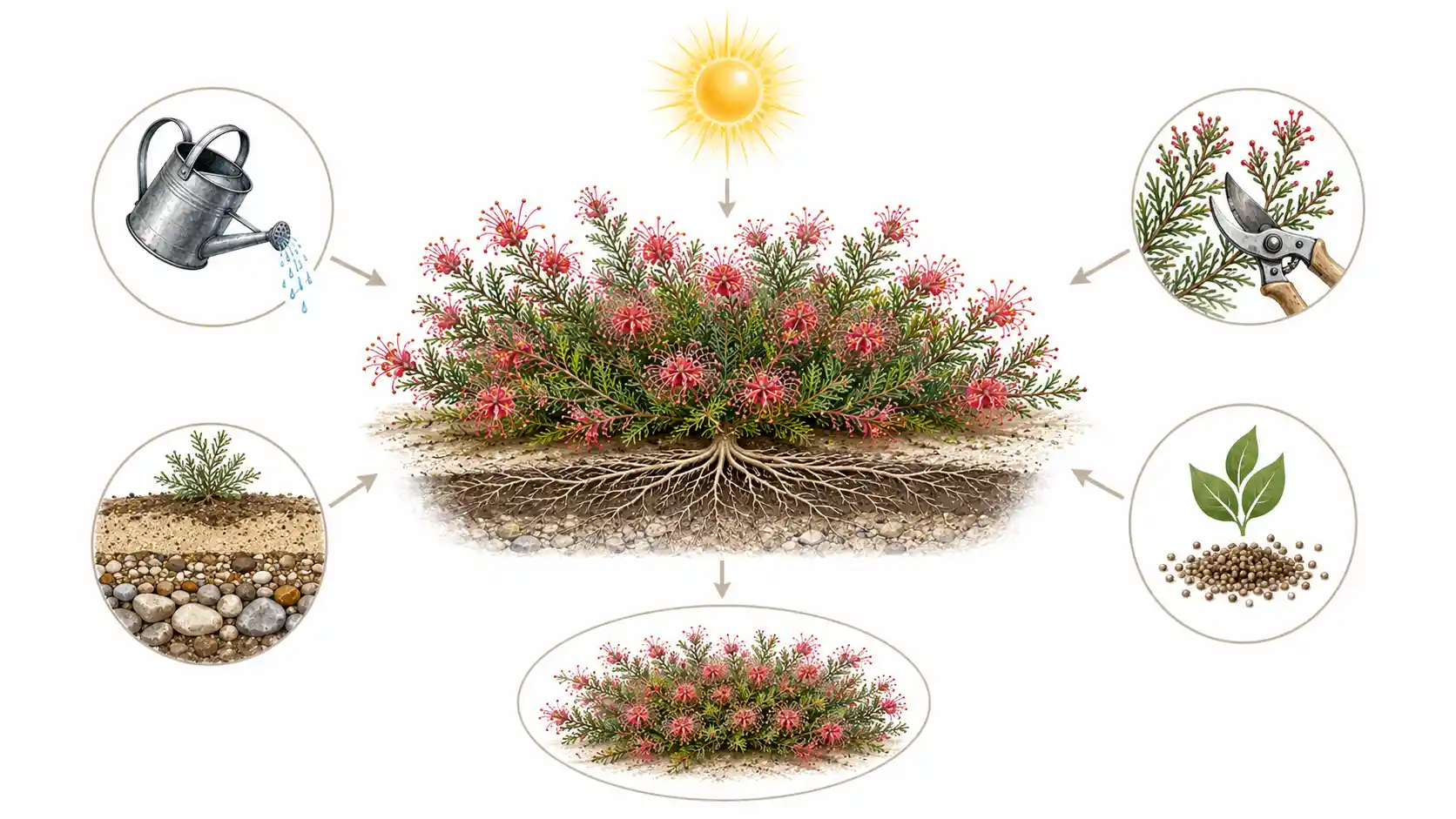
Young Grevillea Seaspray plants require regular watering during their establishment period. Once mature, they become highly drought tolerant and usually need supplemental watering only during extended dry periods.
Avoid overwatering, as excessive moisture can lead to root problems and reduced plant health.
Light and Sun Exposure
Grevillea Seaspray performs best in full sun. At least six hours of direct sunlight daily encourages dense growth and abundant flowering.
In hotter inland regions, the plant can tolerate partial shade, although flowering may be less prolific.
Soil Preferences
Well-drained soil is essential for success. The plant performs well in:
- Sandy soils
- Loamy soils
- Coastal soils
- Low-fertility native soils
Heavy clay soils should be improved with drainage amendments or avoided altogether. Improving drainage is especially important in native gardens, and our guide on Ultimate 8+ Plants That Like Wet Soil Australia Guide explains which plants tolerate moisture better than grevilleas.
Fertilisation
Use only low-phosphorus fertilisers formulated for Australian native plants. Members of the Proteaceae family are highly sensitive to phosphorus and may suffer toxicity when exposed to standard garden fertilisers.
Pruning Considerations
Light tip pruning after flowering helps maintain a compact shape and encourages branching. Avoid cutting deeply into old wood, as regeneration can be slow or unsuccessful.
Climate Tolerance
Grevillea Seaspray is best suited to:
- Temperate climates
- Mediterranean climates
- Coastal regions
- Mild inland locations
The plant may struggle in highly humid tropical areas or regions experiencing severe frost.
Key Care Facts at a Glance
- Watering: Moderate during establishment, low once mature
- Sun: Full sun preferred
- Soil: Well-drained sandy or loamy soil
- Fertiliser: Low-phosphorus native plant fertiliser
- Pruning: Light trimming after flowering
Grevillea Preissii Seaspray in the Landscape
Grevillea Seaspray is widely used as a functional and ornamental landscape plant. Its spreading habit allows it to cover bare ground, suppress weeds, and stabilise soil on slopes.
Popular landscape uses include:
- Groundcover planting
- Coastal gardens
- Erosion control
- Native wildlife gardens
- Low borders
- Informal mass plantings
It also pairs well with other Australian natives such as banksias, westringias, correas, and dwarf bottlebrushes.
Wildlife and Bird-Attracting Value
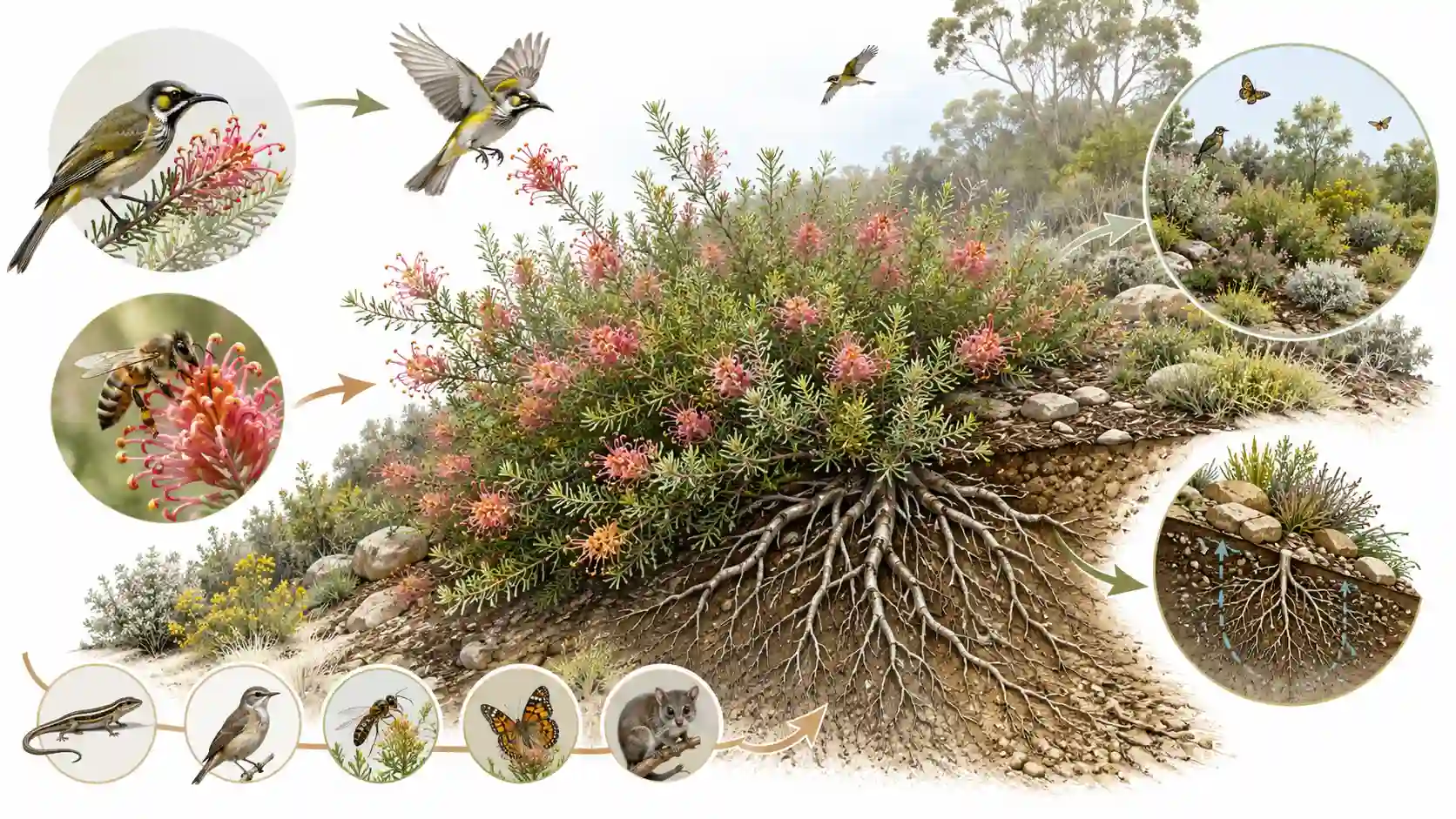
Grevillea Seaspray flowers are rich in nectar and attract a variety of native wildlife. Honeyeaters are particularly drawn to the bright flowers and often visit repeatedly during flowering periods.
Benefits for wildlife include:
- Nectar source for birds
- Pollinator support
- Habitat diversity
- Increased garden biodiversity
Combining Grevillea Seaspray with 7+ Essential Native Pink Flowers Australia Guide and Australian Native Yellow Flowers: 8+ Essential Types can create an even richer habitat for pollinators and nectar-feeding birds.
Grevillea Seaspray vs. Similar Grevillea Varieties
| Variety | Size | Flower Colour | Growth Habit | Best Use |
| Grevillea preissii Seaspray | Low, spreading | Pink-red | Groundcover | Borders, coastal gardens |
| Grevillea Bronze Rambler | Low, prostrate | Orange-bronze | Groundcover/rambler | Slopes, erosion control |
| Grevillea thelemanniana | Compact shrub | Red-pink | Upright/spreading | Native gardens, pots |
| Grevillea Winter Delight | Medium shrub | Red-orange | Upright | Feature planting, bird gardens |
| Grevillea crithmifolia | Spreading shrub | White-cream | Prostrate or bushy | Rockeries, coastal gardens |
| Grevillea olivacea | Medium-tall shrub | Olive-red | Upright | Screening, native hedges |
| Grevillea Red Wings | Spreading shrub | Bright red | Open spreading | Bird gardens, informal hedges |
Grevillea Seaview is another cultivar that is occasionally confused with Seaspray. While both are spreading grevilleas, Seaview generally develops a different overall form and landscape application. Understanding the difference between prostrate and spreading growth habits can help gardeners choose the most suitable variety.
Other popular grevilleas worth comparing include Grevillea Olivacea Hedge Guide: 7+ Easy Care Tips, Grevillea Blood Orange: 7+ Essential Care & Growth Tips, and Grevillea Ivory Whip: Care, Size, Growth & Uses.
Common Problems with Grevillea Seaspray and How to Fix Them
Yellowing Leaves
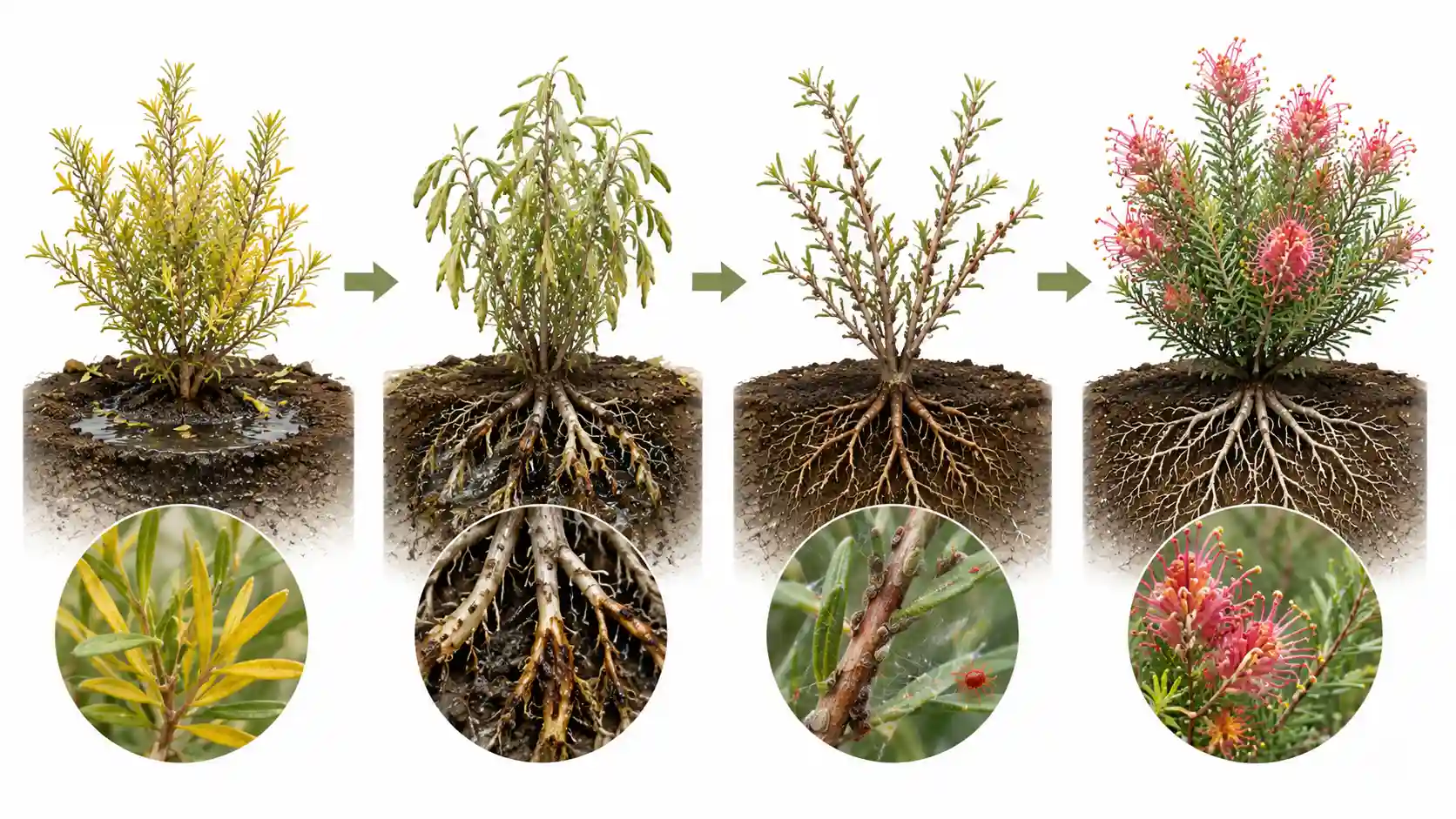
Yellowing leaves are most commonly caused by poor drainage, excessive watering, or phosphorus toxicity from unsuitable fertilisers.
Solution:
- Improve drainage
- Reduce watering frequency
- Switch to native plant fertilisers
Root Rot and Overwatering
Root rot develops when roots remain in constantly wet soil. Symptoms include wilting, yellow foliage, and poor growth.
Solution:
- Plant in well-drained soil
- Avoid waterlogged locations
- Remove severely affected plants if necessary
Pest Issues
Common pests include:
- Scale insects
- Spider mites
- Stem borers
Solution:
- Apply horticultural oils
- Remove heavily infested branches
- Use appropriate insecticides when necessary
Slow or Stunted Growth
Poor growth may result from inadequate sunlight, poor soil conditions, or competition from nearby plants.
Solution:
- Increase sun exposure
- Improve soil drainage
- Reduce root competition
Quick Problem–Cause–Solution Summary
- Yellow leaves → Overwatering → Improve drainage
- Root rot → Waterlogged soil → Reduce moisture
- Scale insects → Pest infestation → Use horticultural oil
- Stunted growth → Shade or poor soil → Improve growing conditions
Learning to identify common pests early can prevent serious damage, and 8+ Common Garden Bugs: Easy Identification & Control Guide provides additional identification help.
Common Beginner Mistakes When Growing Grevillea Seaspray
New gardeners often encounter avoidable issues when growing grevilleas.
Common mistakes include:
- Using general-purpose fertiliser containing high phosphorus
- Planting in heavy clay without improving drainage
- Overwatering established plants
- Hard pruning into old wood
- Growing plants in excessive shade
- Underestimating mature spread and spacing requirements
Avoiding these mistakes significantly improves long-term plant health and flowering performance.
Grevillea Preissii Seaspray in Australia
Grevillea preissii originates from Western Australia, where it naturally occurs in coastal and inland environments with well-drained soils.
The Seaspray cultivar performs particularly well across:
- Western Australia
- South Australia
- Victoria
- Tasmania
- Southern New South Wales
Its adaptability aligns with the growing popularity of Australian native gardens, water-wise landscaping, and biodiversity-focused planting programs.
Where to Buy Grevillea Preissii Seaspray in Australia
Grevillea Seaspray is commonly available through:
- Native plant nurseries
- Specialist Australian plant growers
- Online native plant suppliers
- Selected garden centres
When purchasing, choose healthy plants with strong root systems and avoid specimens showing signs of yellowing or stress. For gardeners building a complete native landscape, Modern Australian Native Garden: 10+ Smart Design Ideas Guide offers practical design inspiration and planting combinations.
Conclusion
Grevillea preissii Seaspray is a versatile Australian native groundcover valued for its attractive flowers, spreading growth habit, and ability to support wildlife. Its drought tolerance, low-maintenance requirements, and adaptability make it an excellent choice for coastal gardens, native landscapes, erosion control projects, and bird-friendly plantings. With proper drainage, full sun, and careful fertilisation, this hardy grevillea can provide years of colour and ecological value in Australian gardens.
It also pairs exceptionally well with native species such as Banksia ‘Giant Candles’: Size, Care and Growing Guide and Coastal Cushion Banksia: 7+ Essential Care & Growth Tips in wildlife-friendly garden designs.
FAQs
Q1: What is the common name of Grevillea preissii ‘Seaspray’?
The most common names are sea spray plant, Grevillea Seaspray, and seaspray grevillea. These names refer specifically to the cultivated variety rather than the wild species.
Q2: How big does Grevillea Seaspray grow?
Grevillea Seaspray typically reaches 30–80 cm in height and spreads 1.5–3 metres wide, making it suitable for borders, groundcovers, and small landscapes.
Q3: Is Grevillea Seaspray drought tolerant?
Yes. Once established, Grevillea Seaspray is highly drought tolerant and requires minimal supplemental watering except during prolonged dry periods.
Q4: What is the difference between Grevillea Seaspray and Grevillea Seaview?
They are separate cultivars with different growth habits and landscape uses. Seaspray is primarily valued for its compact spreading habit, while Seaview may display a different structure and garden application.
Q5: Can I grow Grevillea Seaspray in a pot or container?
Yes. It can be grown in large containers provided they offer excellent drainage and are filled with a suitable native plant potting mix.
Q6: Why are the leaves on my Grevillea Seaspray turning yellow?
Yellow leaves are often caused by overwatering, poor drainage, or phosphorus toxicity from unsuitable fertilisers. Correcting these issues usually improves plant health.
Q7: Is Grevillea Seaspray native to Australia?
Yes. Grevillea preissii is native to Western Australia. ‘Seaspray’ is a cultivated selection derived from this Australian native species.