Introduction
Callistemon Champagne Pink is a compact evergreen Australian shrub valued for its elegant soft pink bottlebrush flowers, attractive foliage, and reliable flowering habit. Commonly sold as Callistemon Pink Champagne, Pink Champagne Bottlebrush, and closely associated with the Callistemon Injune selection, this ornamental shrub has become a favourite for home gardens, native landscapes, and flowering hedges. Unlike traditional red bottlebrush varieties, it produces delicate champagne pink blooms that create a softer appearance while still attracting birds, bees, and other beneficial pollinators. Its adaptability to a wide range of Australian climates, drought tolerance once established, and relatively low maintenance requirements make it an excellent choice for gardeners seeking year round interest with minimal care. If you’re planning an Australian native landscape, explore our comprehensive Australian Native Garden Trees guide for more trees and shrubs that pair beautifully with Callistemon Champagne Pink.
By Greenery Inside | Plant Care & Gardening Expert
Quick Summary
- Callistemon Champagne Pink is a compact evergreen bottlebrush shrub with soft champagne pink flowers and dense green foliage.
- It performs best in full sun and well drained soil, making it ideal for hedges, borders, wildlife gardens, and feature planting.
- Mature size, watering, pruning, and soil conditions all influence healthy growth and long term flowering performance.
- Regular light pruning after flowering encourages a denser shape and more prolific blooms in future seasons.
- Proper planting and seasonal care help prevent common bottlebrush issues such as poor flowering, yellow leaves, and root diseases.
What Is Callistemon Champagne Pink?
Callistemon Champagne Pink is a selected cultivar of the Australian bottlebrush group, admired for its compact growth, soft pink flowers, and long flowering season. Although many gardeners know it as Callistemon Pink Champagne, it is also commonly marketed as Pink Champagne Bottlebrush because of its distinctive pale pink flower spikes. Callistemon is a group of Australian flowering shrubs renowned for their distinctive bottlebrush-shaped flower spikes and exceptional value in wildlife-friendly gardens.
Bottlebrush plants belong to the myrtle family (Myrtaceae), with many species now botanically classified within the genus Melaleuca. However, the name Callistemon remains widely used by nurseries, gardeners, and landscape professionals due to its long horticultural history.
This attractive bottlebrush pink cultivar differs from traditional red flowering varieties by producing elegant pastel blooms that blend well into both native and modern garden designs.
Its popularity continues to grow because it offers:
- Compact evergreen growth
- Soft champagne pink bottlebrush flowers
- Long flowering season
- Excellent nectar source for birds and pollinators
- Strong drought tolerance after establishment
- Low maintenance care requirements
- Suitability for hedges, screening, and feature planting
Greenery Inside has found that this cultivar performs especially well in residential landscapes where space is limited. Its naturally dense branching means it often requires less pruning than larger bottlebrush varieties while still delivering an impressive floral display.
Botanical Classification
| Feature | Information |
| Common Name | Callistemon Champagne Pink |
| Other Names | Callistemon Pink Champagne, Pink Champagne Bottlebrush |
| Botanical Group | Melaleuca (formerly Callistemon) |
| Plant Type | Evergreen flowering shrub |
| Family | Myrtaceae |
| Native Origin | Australia |
| Flower Colour | Soft champagne pink |
| Wildlife Value | Attracts birds, bees, butterflies and pollinators |
Callistemon Champagne Pink Size and Growth Habit
Callistemon Champagne Pink is considered a compact to medium sized evergreen shrub with naturally dense branching and an upright rounded form. Its manageable size makes it suitable for suburban gardens, mixed borders, native landscapes, and flowering privacy hedges.
Unlike some bottlebrush species that become large trees, this cultivar maintains a more restrained growth habit while producing abundant flowers throughout much of the growing season.
Its evergreen foliage provides year round structure, making it attractive even when not in bloom.
How Big Does Callistemon Pink Champagne Get?
Callistemon Pink Champagne typically grows to around 2 to 3 metres (6.5 to 10 feet) tall and 1.5 to 2.5 metres (5 to 8 feet) wide under favourable growing conditions. This compact size makes it easy to maintain while still providing excellent screening and ornamental value.
The exact mature size depends on several environmental factors, including climate, soil quality, available moisture, sunlight exposure, and pruning practices.
Plants grown in full sun with fertile, well drained soil generally develop fuller canopies and reach their mature size more quickly than those planted in shaded or poorly drained locations.
In our experience growing Australian native shrubs, annual formative pruning after flowering produces a denser, more symmetrical plant without significantly reducing its mature size.
Typical mature dimensions include:
- Height: 2 to 3 metres
- Width: 1.5 to 2.5 metres
- Growth habit: Upright, rounded, bushy
- Canopy density: Dense evergreen foliage
- Root system: Moderate, non invasive when properly planted
Growth Rate and Annual Growth
Callistemon Champagne Pink has a moderate growth rate, making it relatively easy to manage while establishing quickly enough for hedging and screening projects.
Most healthy plants produce approximately 30 to 60 centimetres (12 to 24 inches) of new growth each year, depending on environmental conditions.
Several factors influence the Callistemon Pink Champagne growth rate, including:
- Full sunlight exposure
- Soil drainage
- Regular watering during establishment
- Appropriate fertilisation
- Local climate
- Mulching to conserve soil moisture
- Proper pruning after flowering
Healthy plants generally establish within the first two years. During this period, consistent watering encourages deeper root development, which later improves drought tolerance.
Greenery Inside recommends applying an organic mulch around the root zone while keeping it several centimetres away from the trunk. This simple practice helps regulate soil temperature, reduces evaporation, and encourages healthier root growth.
Avoid applying excessive nitrogen fertilisers because they often encourage leafy growth at the expense of flowering.
Size and Growth Characteristics
| Feature | Typical Range |
| Mature Height | 2 to 3 metres |
| Mature Width | 1.5 to 2.5 metres |
| Growth Rate | Moderate (30 to 60 cm annually) |
| Flowering Season | Mainly spring through summer with repeat flowering in favourable climates |
| Best Climate | Warm temperate, subtropical, Mediterranean and coastal regions |
Flowers, Blooming Season and Seasonal Interest
One of the main reasons gardeners choose Callistemon Champagne Pink is its elegant flowers and extended flowering season. While many bottlebrush cultivars produce vivid red blooms, this selection stands out for its softer colour palette, making it suitable for both native gardens and contemporary landscape designs.
The shrub remains attractive throughout the year thanks to its evergreen foliage, but its greatest visual impact occurs during peak flowering.
Flower Colour and Appearance
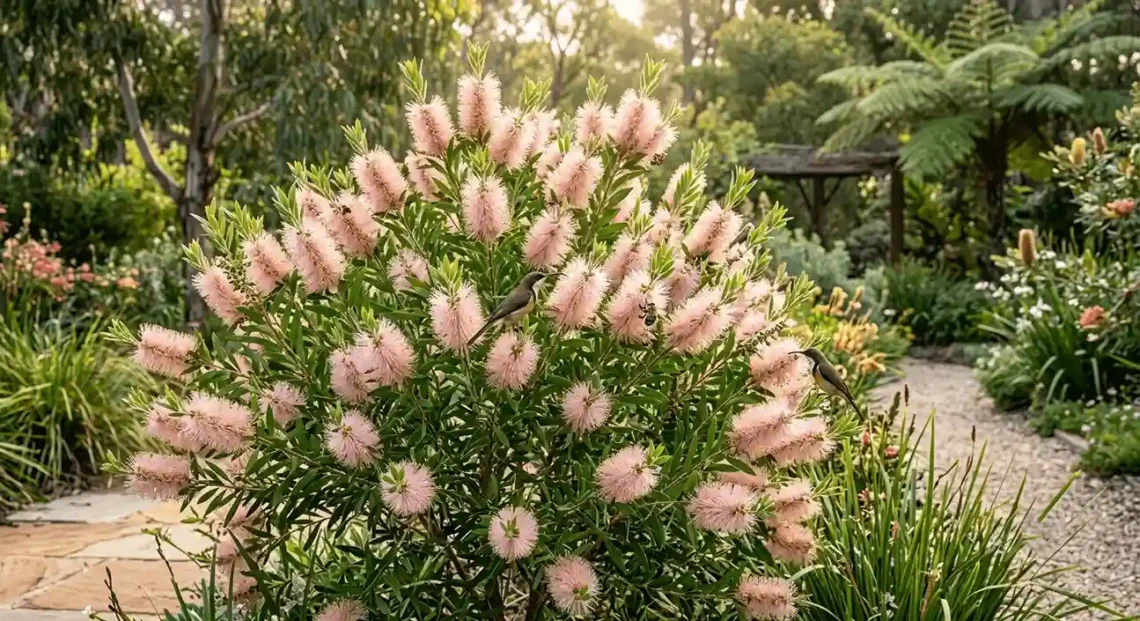
Callistemon Champagne Pink produces distinctive bottlebrush shaped flower spikes in soft champagne pink shades. Each flower consists of hundreds of long stamens that create the characteristic cylindrical bottlebrush appearance.To create an even richer wildlife habitat, combine this shrub with other Native Plants That Attract Butterflies for continuous nectar sources across multiple seasons.
The flowers are rich in nectar, making this Pink Champagne Bottlebrush highly attractive to:
- Honeyeaters
- Lorikeets
- Native bees
- European honeybees
- Butterflies
- Other beneficial pollinating insects
These nectar rich blooms also contribute to local biodiversity by supporting wildlife throughout the flowering season.
The attractive Callistemon Champagne Pink bottlebrush flowers contrast beautifully against the glossy green foliage, creating year round ornamental appeal.
Callistemon in June and Seasonal Flowering
Many gardeners search for information about Callistemon in June, particularly those growing plants in different climates.
In Australia, June falls during winter. Flowering is generally reduced at this time, although plants growing in warmer coastal or subtropical regions may continue producing occasional blooms.
In the Northern Hemisphere, June occurs during early summer, and many bottlebrush cultivars flower heavily during this period.
The closely related Callistemon Injune and Callistemon Injune Pink selections follow similar flowering patterns, although local climate strongly influences bloom timing.
Flowering generally follows this pattern:
- Heavy flowering during spring
- Continued blooms through summer
- Repeat flowering after light pruning
- Reduced flowering during colder months
- Longer flowering seasons in frost free climates
As of the 2026 growing season, many professional growers continue to recommend light post flowering pruning to encourage additional flowering later in the year while maintaining the shrub’s naturally compact form.
Where Is the Best Place to Plant a Bottlebrush?
The best place to plant a bottlebrush is in a sunny location with well drained soil, good air circulation, and enough space for the shrub to reach its mature size. These conditions encourage strong flowering, healthy foliage, and long term growth.
Callistemon Champagne Pink thrives when planted where it receives at least six hours of direct sunlight each day. Although it tolerates light shade, reduced sunlight often results in fewer flowers and a more open growth habit.
Best Planting Locations
- Full sun gardens
- Native landscape plantings
- Wildlife friendly gardens
- Mixed shrub borders
- Informal flowering hedges
- Coastal gardens
- Large containers with excellent drainage
Locations to Avoid
- Permanently waterlogged soil
- Deep shade
- Areas with poor air circulation
- Frost pockets in very cold climates
- Heavy clay without soil improvement
Recommended Plant Spacing
- Feature planting: 2 to 3 metres apart
- Informal hedge: 1.5 to 2 metres apart
- Mixed borders: Allow space for mature width
- Foundation planting: Keep away from walls for airflow
Suitable Companion Plants
Callistemon Champagne Pink pairs well with many drought tolerant Australian natives, including:
- Grevillea
- Westringia
- Correa
- Lomandra
- Kangaroo Paw
- Coastal Rosemary
These combinations provide year round colour while supporting native wildlife and pollinators. Coastal Rosemary is an excellent companion plant, offering contrasting foliage and similar drought tolerance for low-maintenance native gardens.
Complete Care Guide for Callistemon Champagne Pink
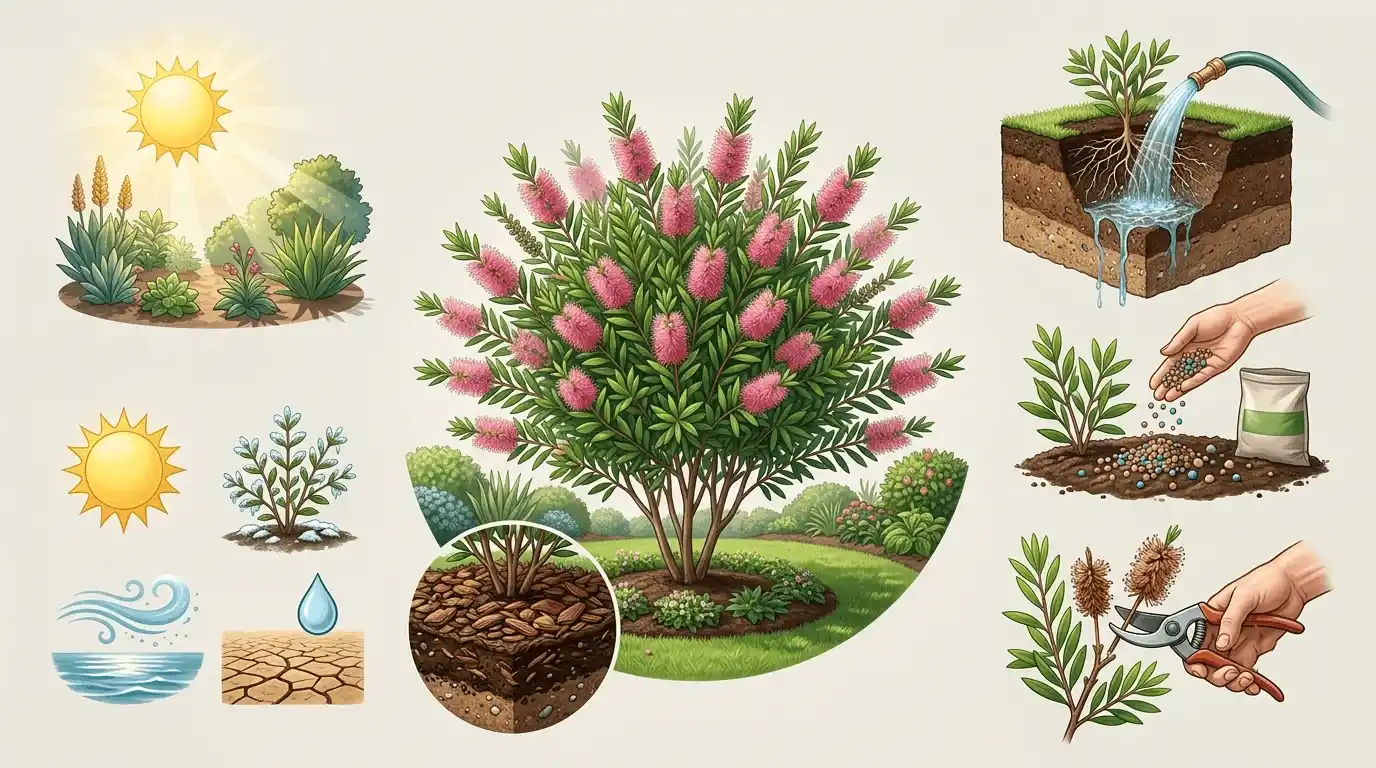
Proper care allows Callistemon Champagne Pink to maintain vigorous growth, abundant flowering, and dense evergreen foliage for many years. Although it is considered relatively low maintenance, understanding its basic cultural requirements helps prevent common growing problems and encourages reliable seasonal performance.
Sunlight Requirements
Callistemon Champagne Pink performs best in full sun, where it receives at least six to eight hours of direct sunlight daily. Full sun promotes stronger branching, denser foliage, and heavier flowering.
The shrub can tolerate partial shade, particularly in regions with intense summer heat, but flowering is usually less abundant and stems may become more open or elongated.
In our experience growing bottlebrush cultivars, plants positioned in full sun consistently develop fuller canopies and produce more vibrant flower displays than those grown in shaded locations.
Watering Needs
Regular watering is most important during the establishment phase.
A practical watering schedule is:
- Newly planted shrubs: Water deeply once or twice each week, depending on rainfall and soil type.
- Established plants: Water deeply every two to three weeks during extended dry periods.
- Container grown plants: Check moisture more frequently, as pots dry out faster than garden beds.
Once established, Callistemon Champagne Pink becomes relatively drought tolerant because of its well developed root system. However, prolonged drought may reduce flowering and slow new growth.
Avoid frequent shallow watering, as this encourages surface roots instead of deeper, more resilient root development.
Soil Requirements
This shrub grows best in well drained soil with moderate fertility.
Ideal conditions include:
- Sandy or loamy soil
- Slightly acidic to neutral pH (approximately 6.0 to 7.0)
- Good organic matter content
- Excellent drainage
If your garden contains heavy clay, improve drainage before planting by incorporating compost and coarse organic matter. Raised garden beds can also improve growing conditions in poorly drained sites.
Fertilising
Use a fertiliser formulated for Australian native plants, as these products are generally lower in phosphorus.
Feed:
- In early spring
- Again after the main flowering flush if needed
Avoid high nitrogen fertilisers because they encourage leafy growth at the expense of flowers. Excessive fertiliser can also reduce the shrub’s naturally compact habit.
Pruning
Light pruning immediately after flowering helps maintain a neat shape and encourages additional branching.
Remove:
- Spent flower heads
- Dead or damaged wood
- Crossing branches
- Weak interior growth
Avoid heavy pruning into old wood unless rejuvenation is necessary, as recovery may be slower.
Climate Tolerance
Callistemon Champagne Pink adapts well to many Australian and similar climates.
It offers good tolerance to:
- Summer heat
- Dry conditions once established
- Coastal exposure
- Moderate frost after establishment
- Humidity with adequate airflow
In colder regions, protect young plants from severe frost during their first few winters until they become fully established.
Greenery Inside recommends refreshing mulch each spring to conserve moisture, suppress weeds, and protect the root zone from temperature extremes throughout the growing season.
Using Callistemon Champagne Pink as a Hedge
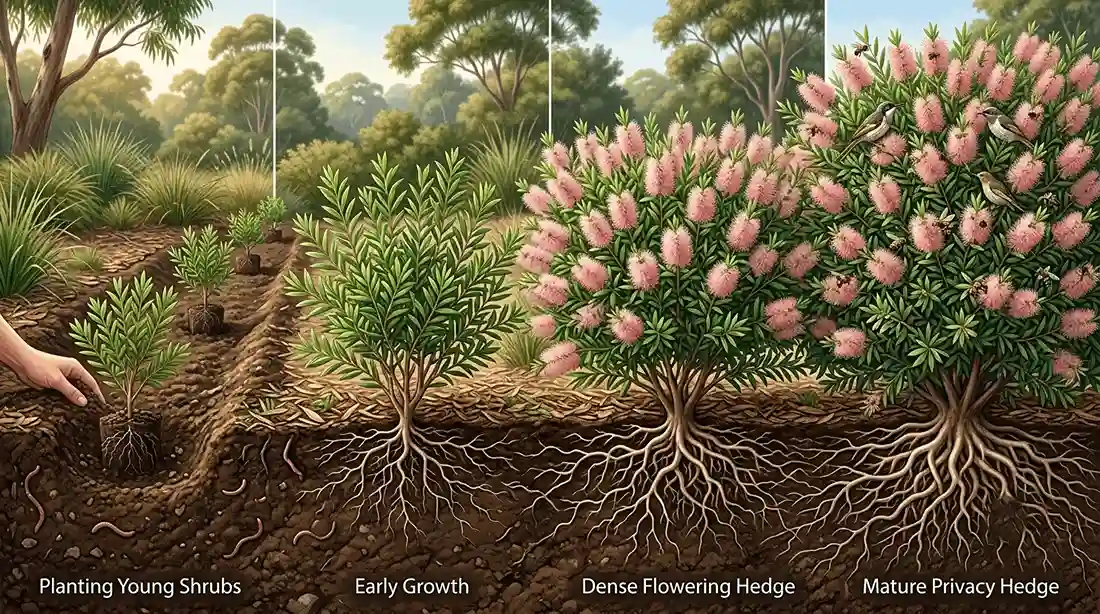
Callistemon Champagne Pink is an excellent choice for gardeners looking to create a colourful, wildlife-friendly hedge. Its naturally dense branching, evergreen foliage, and long flowering season provide year-round privacy while adding seasonal interest with soft pink bottlebrush blooms. Compared with many fast-growing hedge plants, it requires relatively little maintenance once established and retains a neat appearance with occasional pruning.
If you’re comparing flowering hedge options, Grevillea Olivacea Hedge is another outstanding Australian native that provides dense evergreen screening and attracts birds throughout the year.
In our experience, this cultivar develops into a fuller hedge when lightly trimmed after each major flowering flush rather than heavily pruned once a year. This approach encourages more branching and produces a denser screen over time.
Is It a Good Hedge Plant?
Yes, Callistemon Champagne Pink is an excellent hedge plant because it forms dense evergreen growth, responds well to pruning, and produces attractive flowers that support birds and pollinators.
Gardeners often choose a pink Callistemon hedge because it offers both ornamental beauty and practical screening. Unlike plain evergreen hedges, this flowering shrub provides colourful blooms while maintaining privacy throughout the year.
Benefits of a Callistemon Pink Champagne hedge include:
- Dense evergreen foliage for year-round screening
- Soft champagne pink flowers from spring into summer
- Excellent nectar source for birds, bees, and butterflies
- Moderate growth that is easy to manage
- Good drought tolerance after establishment
- Adaptable to coastal and inland gardens
- Suitable for formal and informal hedge designs
It also works well as a boundary planting, driveway screen, or backdrop for mixed native gardens.
Hedge Spacing Guide
Correct spacing is important for creating a healthy hedge. Plants positioned too closely may compete for water and nutrients, while overly wide spacing delays the formation of a continuous screen.
General spacing recommendations include:
- Formal hedge: 1 to 1.2 metres apart
- Informal flowering hedge: 1.5 to 2 metres apart
- Feature shrubs: 2 to 3 metres apart
To maintain a dense hedge:
- Water regularly during the first two growing seasons.
- Apply mulch annually to retain soil moisture.
- Feed with a low-phosphorus native plant fertiliser in spring.
- Lightly prune after flowering to encourage branching.
- Remove dead or damaged stems as required.
Hedge Spacing and Maintenance
| Hedge Type | Plant Spacing | Maintenance |
| Formal Hedge | 1 to 1.2 m | Light pruning 2 to 3 times per year |
| Informal Hedge | 1.5 to 2 m | Annual shaping after flowering |
| Wildlife Hedge | 1.5 to 2.5 m | Minimal pruning to preserve flowers |
| Feature Planting | 2 to 3 m | Occasional maintenance pruning |
Pink Callistemon Varieties Compared
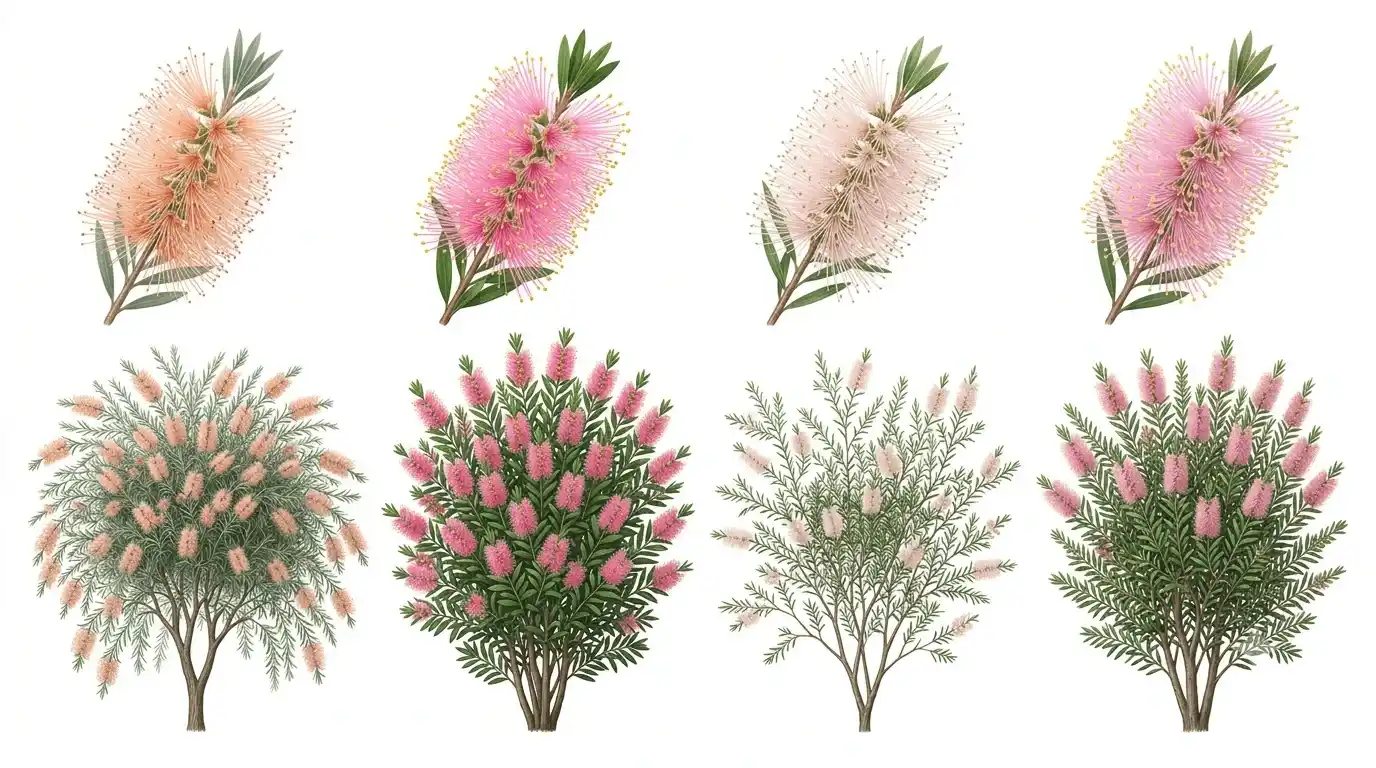
Several pink flowering bottlebrush cultivars are available, each offering slightly different sizes, flower colours, and landscape uses. Comparing these varieties helps gardeners choose the most suitable plant for their available space and design goals.
Although Callistemon Champagne Pink is among the most popular compact selections, other cultivars such as Callistemon Pink Alma and Callistemon Injune also provide attractive pink blooms with slightly different growth habits.
Comparison of Popular Pink Callistemon Varieties
| Variety | Flower Colour | Mature Size | Best Use |
| Callistemon Champagne Pink | Soft champagne pink | 2 to 3 m | Hedges, feature shrubs, native gardens |
| Callistemon Pink Alma | Bright pink | 2 to 4 m | Larger gardens and screening |
| Callistemon Injune | Pale pink | 2 to 3 m | Informal hedges and wildlife gardens |
| Callistemon Injune Pink | Soft pink | 2 to 3 m | Borders and mixed plantings |
How They Differ
Although these cultivars share many characteristics, several differences influence plant selection.
Callistemon Champagne Pink
- Compact rounded habit
- Soft champagne pink flowers
- Excellent hedge performance
- Suitable for smaller gardens
Callistemon Pink Alma
- Taller and more vigorous growth
- Bright pink flower spikes
- Better suited to larger landscapes
Callistemon Injune
- Similar mature size
- Pale pink blooms
- Reliable flowering in warm climates
- Good wildlife value
For most residential landscapes, Callistemon Champagne Pink offers one of the best balances of manageable size, ornamental value, and low maintenance.
Common Problems with Callistemon and How to Fix Them
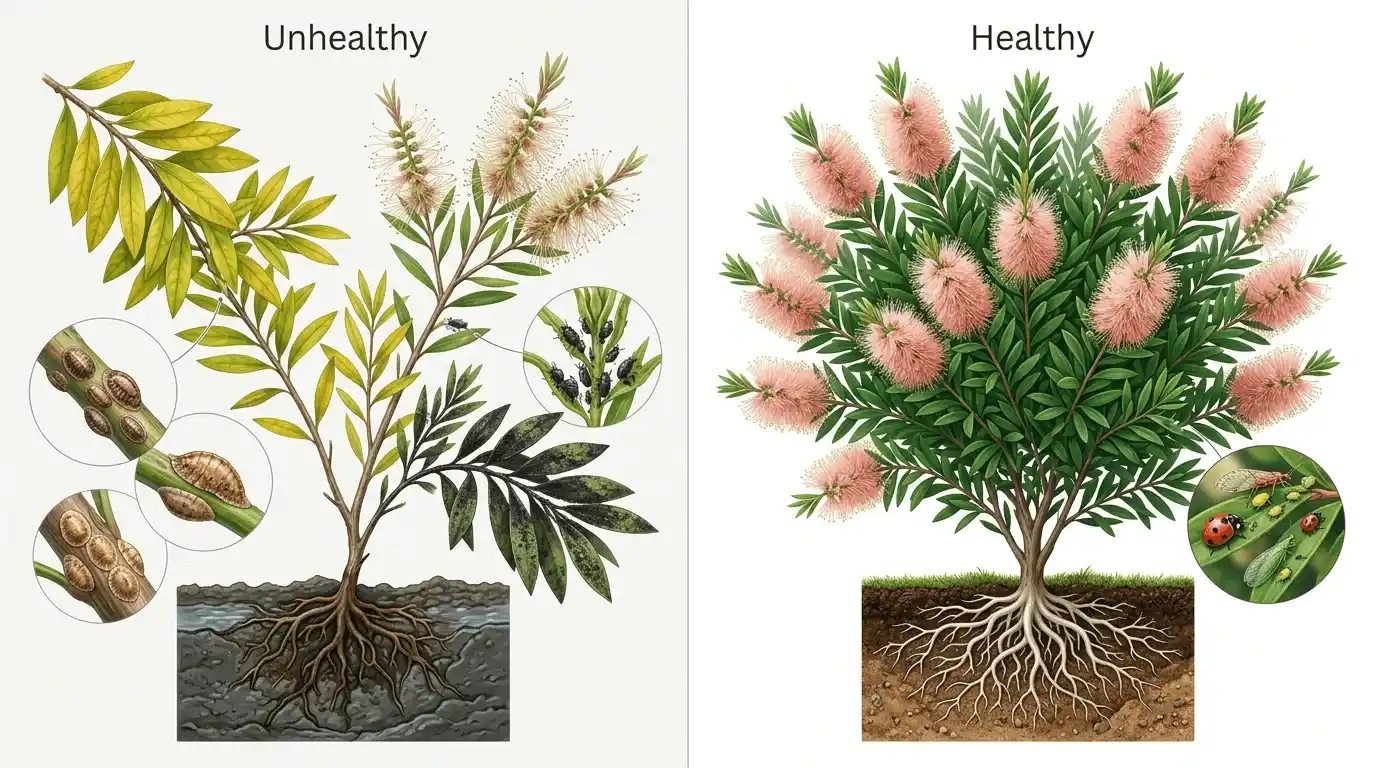
Callistemon species are generally hardy shrubs, but unsuitable growing conditions or poor maintenance can lead to reduced vigour, foliage problems, or fewer flowers. Fortunately, most issues are easy to correct once the underlying cause is identified.
Yellow Leaves
Yellow leaves are usually caused by environmental stress rather than disease.
Common causes include:
- Overwatering
- Poor drainage
- Waterlogged roots
- Iron deficiency
- Nitrogen deficiency
- Compacted soil
To correct yellow foliage:
- Improve soil drainage.
- Reduce watering frequency if the soil remains wet.
- Apply a balanced fertiliser formulated for native plants.
- Test soil pH if nutrient deficiencies are suspected.
Poor Flowering
Insufficient sunlight is one of the most common reasons Callistemon plants produce fewer flowers.
Other contributing factors include:
- Excessive nitrogen fertiliser
- Heavy pruning before flowering
- Young plants that are still establishing
- Prolonged drought
- Dense shade
To encourage more flowers:
- Plant in full sun.
- Use low-phosphorus native fertilisers.
- Prune immediately after flowering.
- Water consistently during dry periods while flower buds develop.
Pests and Diseases
Although relatively resistant to serious problems, Callistemon may occasionally be affected by insects and fungal issues.
Common pests include:
- Scale insects
- Aphids
- Psyllids
These pests can encourage the development of sooty mould, a black fungal coating that grows on honeydew secreted by sap-sucking insects.
Root rot may occur where drainage is consistently poor.
Inspect plants regularly and remove affected branches if infestations become severe. Beneficial insects often provide natural pest control in healthy gardens.
Prevention Tips
The best way to prevent common Callistemon problems is to provide full sun, well-drained soil, appropriate watering, and regular light pruning.
Preventative care includes:
- Avoid planting in poorly drained locations.
- Water deeply rather than frequently.
- Maintain mulch while keeping it away from the trunk.
- Remove spent flowers after blooming.
- Improve air circulation through selective pruning.
- Monitor for pests throughout spring and summer.
- Feed annually using fertiliser designed for Australian native plants.
Following these simple maintenance practices greatly reduces the likelihood of yellow leaves, poor flowering, pest infestations, and root diseases.
Common Beginner Mistakes When Growing Callistemon Champagne Pink
Many growing problems can be avoided by following a few basic planting and maintenance practices. New gardeners often assume bottlebrush shrubs require constant watering or heavy feeding, but these practices may actually reduce flowering and weaken long-term plant health.
The most common beginner mistakes include:
Planting Too Deeply
Position the root ball level with the surrounding soil surface. Planting too deeply can reduce oxygen around the roots and increase the risk of rot.
Overwatering
New plants require regular watering, but mature shrubs prefer deep, infrequent irrigation. Constantly wet soil encourages root diseases and weak growth.
Growing in Too Much Shade
Callistemon Champagne Pink flowers most heavily in full sun. Excessive shade often produces fewer blooms and a thinner canopy.
Using the Wrong Fertiliser
Avoid high-phosphorus fertilisers designed for general garden plants. Native plant fertilisers are usually more suitable and help maintain balanced growth.
Heavy Pruning
Removing large amounts of growth before flowering may significantly reduce the number of blooms. Instead, perform light shaping immediately after flowering has finished.
Poor Plant Spacing
Crowded shrubs compete for sunlight, nutrients, and airflow, increasing the likelihood of disease while reducing hedge quality.
Greenery Inside recommends planning for the plant’s mature size before planting rather than its size at purchase. Proper spacing leads to healthier growth and reduces the need for major corrective pruning later.
Conclusion
Callistemon Champagne Pink is a versatile evergreen Australian shrub that combines attractive soft pink bottlebrush flowers with reliable year round structure and relatively low maintenance requirements. Its compact growth habit, moderate growth rate, and long flowering season make it an excellent choice for hedges, borders, wildlife gardens, and feature plantings.
Most plants reach a mature height of 2 to 3 metres with a similar spread when grown in full sun and well drained soil. Regular deep watering during establishment, light pruning after flowering, and the use of a low phosphorus fertiliser formulated for Australian native plants encourage healthy growth and abundant blooms.
Whether you know it as Callistemon Pink Champagne, Pink Champagne Bottlebrush, or simply a pink bottlebrush shrub, this cultivar offers exceptional ornamental value while attracting birds, bees, and other beneficial pollinators. By selecting the right planting location and following good horticultural practices, gardeners can enjoy decades of healthy growth, vibrant flowers, and dependable landscape performance.
For more Australian native plant advice, explore our related guides on Bottlebrush Tree Care Guide, Best Australian Native Shrubs for Small Gardens, and Grevillea Plants: Care, Size and Growing Guide.
Frequently Asked Questions
How big do Callistemon Pink Champagne get?
Callistemon Pink Champagne typically grows to 2 to 3 metres (6.5 to 10 feet) tall and 1.5 to 2.5 metres (5 to 8 feet) wide at maturity. Its compact, rounded growth habit makes it well suited to hedges, feature plantings, and smaller residential gardens. Growth may vary slightly depending on climate, soil quality, sunlight, and pruning practices.
Does Callistemon like sun or shade?
Callistemon grows best in full sun, where it receives at least six hours of direct sunlight each day. While it can tolerate partial shade, reduced light usually results in fewer flowers, slower growth, and a less dense canopy. Full sun also helps improve flowering and overall plant health.
Where is the best place to plant a bottlebrush?
The best location is a sunny position with well drained soil and good air circulation. Avoid permanently wet areas or deep shade, as these conditions can lead to poor flowering and root problems. Allow enough room for the shrub to reach its mature size and consider planting it near patios, driveways, or garden borders where its flowers can be enjoyed.
What are the common problems with Callistemon?
The most common issues include:
- Yellow leaves caused by overwatering or nutrient deficiencies
- Poor flowering due to insufficient sunlight or incorrect pruning
- Scale insects and aphids
- Sooty mould developing after sap sucking insect infestations
- Root rot in poorly drained soils
Most problems can be prevented by planting in well drained soil, watering correctly, and performing light annual pruning.
How often should Callistemon Champagne Pink be watered?
Newly planted shrubs should be watered deeply once or twice a week during establishment, depending on weather and soil conditions. Mature plants require much less frequent watering and generally only need supplemental irrigation during extended dry periods. Deep watering encourages stronger root development and improves drought tolerance.
Can Callistemon Champagne Pink be grown as a hedge?
Yes. Callistemon Champagne Pink is one of the best flowering bottlebrush cultivars for hedging. Its naturally dense evergreen foliage, moderate growth rate, and excellent response to pruning make it suitable for privacy screens, property boundaries, and informal flowering hedges. Plant shrubs approximately 1 to 2 metres apart, depending on the desired hedge density.
When should Callistemon be pruned?
The ideal time to prune Callistemon is immediately after the main flowering period. Light pruning at this stage removes spent flower heads, encourages branching, and promotes more flowers during the following season. Avoid heavy pruning just before flowering, as this may reduce bloom production.
Is Callistemon Champagne Pink drought tolerant?
Yes. Once fully established, Callistemon Champagne Pink is considered moderately drought tolerant. It can withstand periods of dry weather better than many ornamental shrubs, although occasional deep watering during prolonged drought helps maintain healthy foliage and consistent flowering. Applying mulch around the base also helps conserve soil moisture and protect the root system.