Introduction
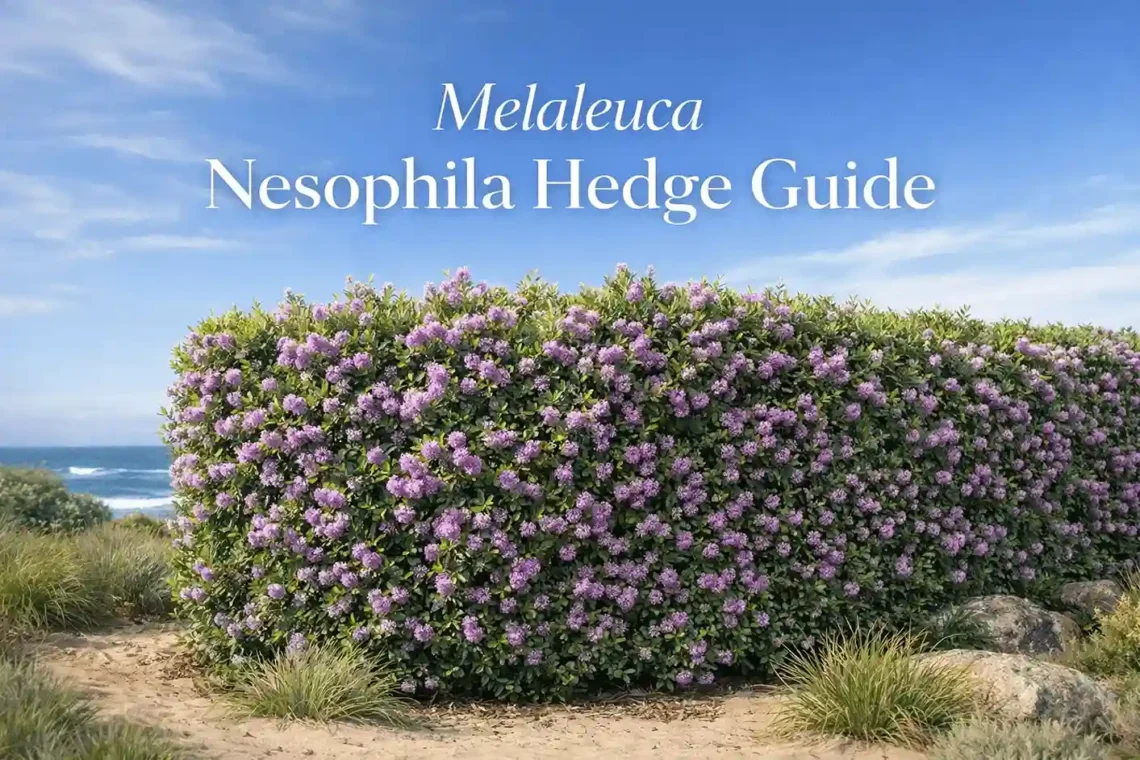
Melaleuca nesophila hedge refers to the use of this Australian native shrub, commonly known as showy honey myrtle, as a dense screening or hedging plant valued for its vibrant purple-pink flowers and adaptability. This hardy species thrives in challenging environments like coastal gardens and dry landscapes, offering both ornamental appeal and practical privacy. It belongs to the Myrtaceae family and is widely used in landscaping due to its evergreen structure and ability to tolerate wind, salt, and drought conditions. Cultivars such as Little Nessie and Narrow Nessie make it adaptable for both compact and large hedging designs.
For more fast-growing screening options, you can also explore 7+ Essential Tropical Privacy Plants for Fast Screening, which includes other strong hedge species for privacy-focused landscapes.
Quick Summary
- Dense evergreen shrub (3–5m tall, 1–3m wide) with pom-pom purple-pink flowers in spring–summer
- Highly suitable for hedges due to pruning response and drought tolerance
- Thrives in full sun with well-drained soil and minimal maintenance after establishment
- Attracts pollinators such as bees and birds
Key Characteristics
Overview of Traits
Melaleuca nesophila is defined by its ornamental flowers, aromatic foliage, and strong structural growth habit, making it a reliable hedge species.
Leaves, Flowers, and Bark
- Leaves: Grey-green, elliptical leaves with a mild fragrance when crushed
- Flowers: Bottlebrush-shaped blooms in lavender-pink tones with golden tips
- Bark: Papery and peeling in thin strips
As an Australian native species, Melaleuca nesophila is also featured in broader landscapes discussed in Ultimate Guide to Native Trees of Australia: Identification & Care.
Flower Aging Process
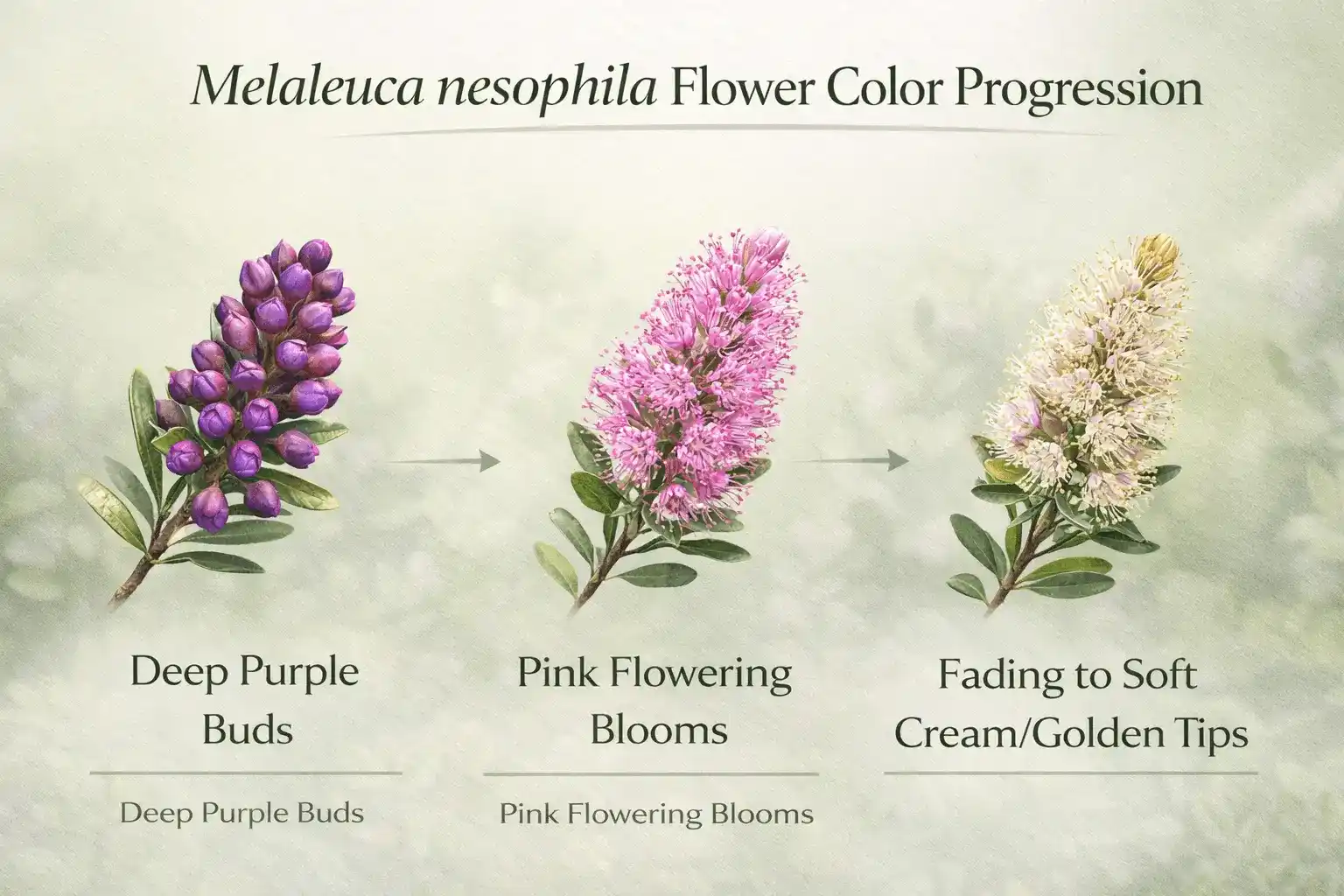
Flowers begin as deep pink or purple buds and gradually fade into softer pink and cream tones as they mature, creating a multi-colored flowering effect across the hedge.
Flower Color Variations
Purple Form
Deep lavender-purple flowers that create a bold visual impact. For a deeper look at how Melaleuca nesophila’s flowering habit compares to other screening shrubs, browse the flowering screening hedge shrubs reference database on Notion. It catalogs bloom color, timing, and pollinator value across dozens of comparable flowering hedge species.
Pink Form
Soft pink blooms that fade into pastel shades for a lighter aesthetic.
Melaleuca nesophila belongs to the genus Melaleuca, a group of plants widely documented for their ecological importance and ornamental value.
Plant Size
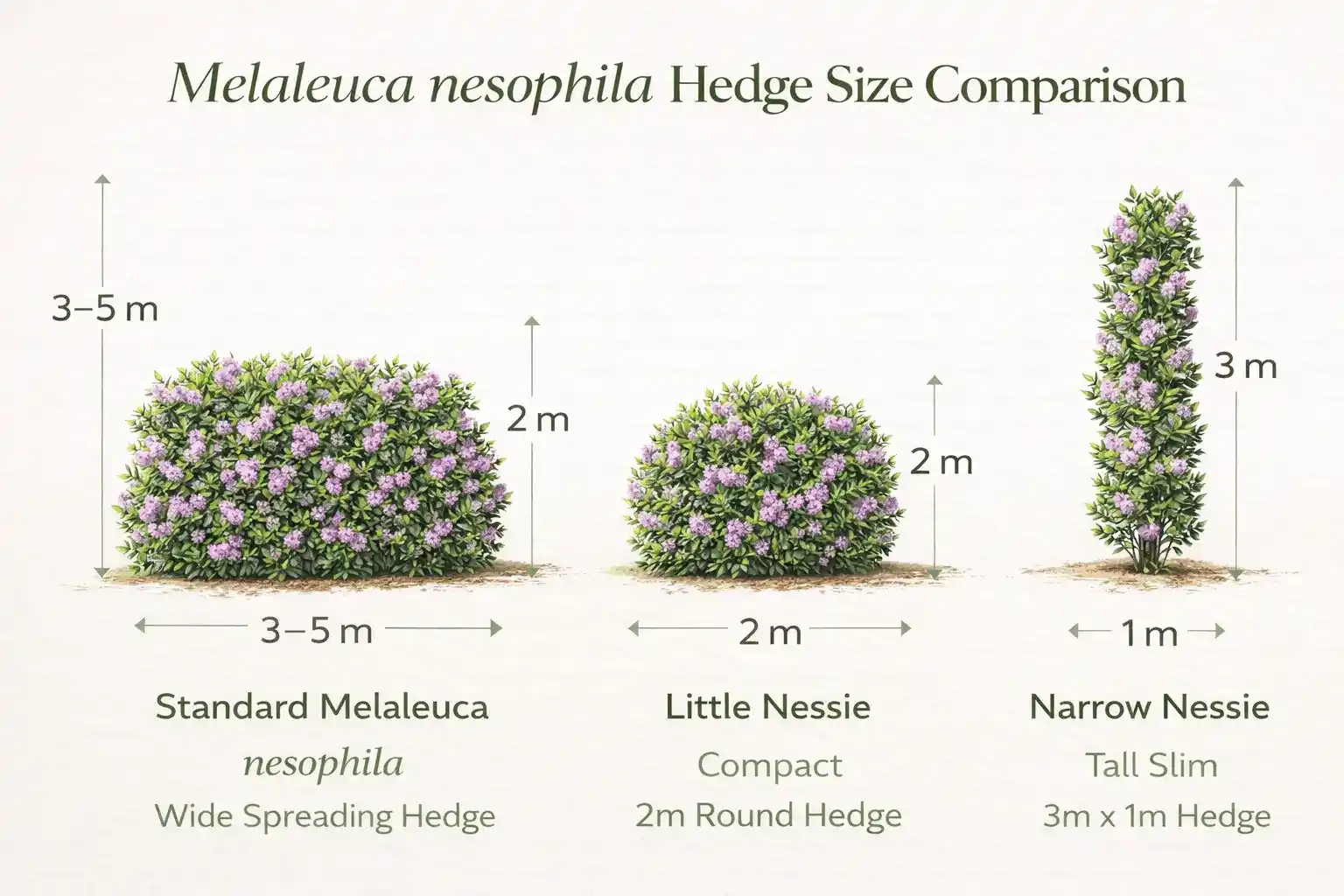
Mature Size Overview
Melaleuca nesophila varies in size depending on cultivar selection and pruning practices. To cross-check these measurements against other coastal and privacy-screen shrubs, see the hedge shrub comparison database on Google Sheets. It lists mature height, width, and spacing data for dozens of alternative hedging species in one sortable table.
| Type | Height | Width | Notes |
| Standard Melaleuca nesophila | 3–5m | 3–4m | Large informal hedges and screens |
| Little Nessie | 2m | 2m | Compact, rounded hedge form |
| Narrow Nessie | 3m | 1m | Slim hedging for tight spaces |
Growth Considerations
Outdoor growth is significantly stronger than indoor growth. Final size is influenced by pruning frequency, soil fertility, and water availability.
Growth Rate
Growth Speed Overview
Melaleuca nesophila has a moderate growth rate suitable for establishing hedges within a few seasons.
- Average growth: ~90 cm per year after establishment
- Faster growth in moist, fertile soil
- Slower growth in dry or coastal stress conditions
- Peak growth during spring and summer
Influencing Factors
Water availability, sunlight exposure, and pruning practices significantly affect overall growth performance.
Melaleuca Nesophila Varieties Comparison
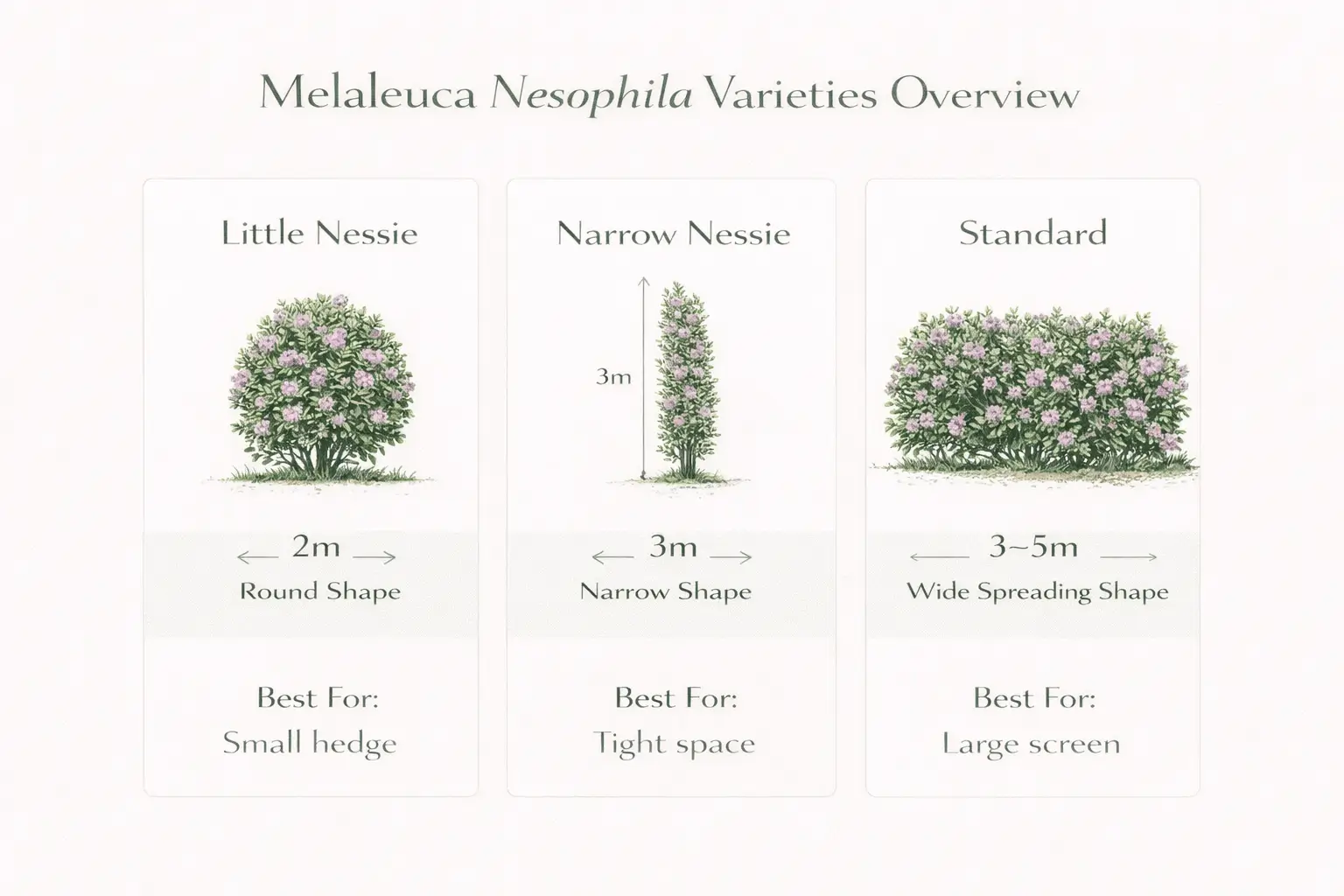
Cultivar Differences
| Variety | Habit | Flower Color | Best Use |
| Little Nessie | Round, dense | Mauve/gold | Small hedges |
| Narrow Nessie | Upright, narrow | Pale purple | Tight spaces |
| Standard | Spreading | Purple-pink | Large screens |
Selection Insights
- Coastal gardens benefit from strong salt tolerance across all varieties
- Narrow forms suit urban landscapes with limited space
- Standard forms provide dense habitat coverage for wildlife
If you’d like to compare these cultivars side-by-side against mature height, width, and planting spacing, try the interactive Australian native hedge selector. It lets you filter Little Nessie, Narrow Nessie, and the standard form by salt tolerance, drought resistance, and hedge footprint before you commit to a layout.
If you’re comparing hedge species, you may also find Best Hedging Trees: 6+ Essential Types for Privacy useful for selecting alternative privacy plants.
Care Guide
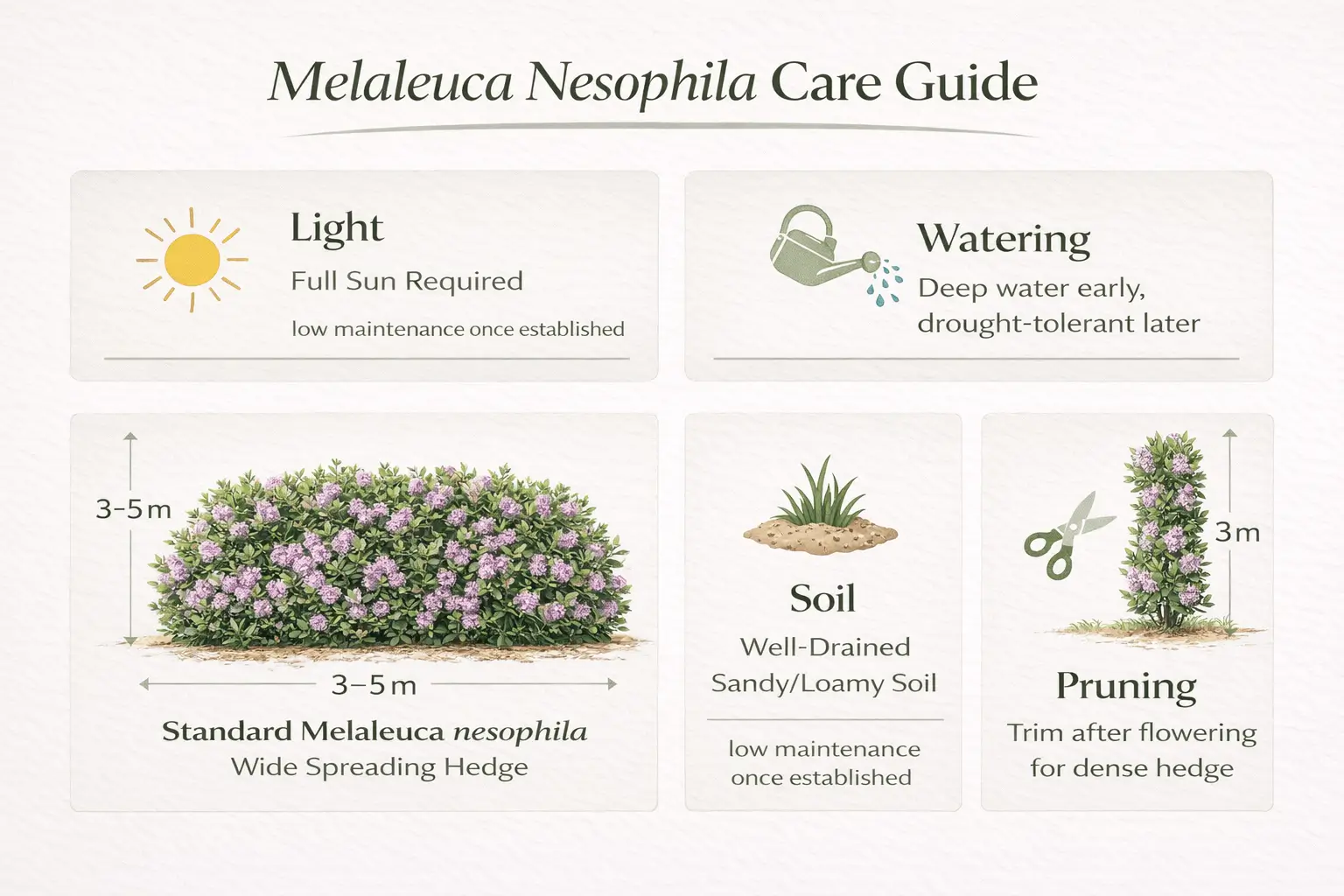
Watering Requirements
Water deeply during the first year. Mature plants are drought-tolerant and require minimal irrigation.
Light Requirements
Full sun exposure is essential for optimal flowering and dense hedge formation.
Soil Requirements
- Well-drained loamy soil preferred
- Tolerates sandy and low-nutrient soils
- Performs best in slightly acidic to neutral pH
Fertilization
Apply balanced fertilizer during growing seasons. Avoid excessive feeding to prevent weak growth.
Pruning Guidelines
Prune after flowering to maintain hedge shape and encourage dense branching.
Climate Tolerance
Tolerates coastal winds, salt exposure, and light frost once established.
Common Problems and Solutions
Yellowing Leaves
Caused by overwatering or poor drainage. Improve soil structure and reduce watering.
Slow Growth
Often linked to insufficient sunlight or poor soil nutrition.
Pest Issues
Aphids may occasionally appear but are easily controlled with water sprays or natural predators.
Woody Growth
Occurs when pruning is neglected. Regular trimming maintains density.
Beginner Mistakes
Poor Establishment Watering
Insufficient watering after planting can reduce survival rates.
Lack of Pruning
Leads to sparse, woody hedges with reduced flowering.
Shade Planting
Reduces flowering and weakens hedge density.
Over-Fertilizing
Can damage roots and reduce plant vigor.
Conclusion
Melaleuca nesophila hedge is a resilient and ornamental screening plant ideal for coastal and dry environments. Its vibrant flowers, evergreen foliage, and low-maintenance nature make it a reliable landscaping choice. With proper pruning, full sun exposure, and well-drained soil, it forms a dense and attractive hedge suitable for both residential and commercial landscapes.
FAQs
What is Melaleuca nesophila hedge best for?
It is best for creating dense privacy screens in sunny, dry, or coastal environments.
How do you prune Melaleuca nesophila for hedging?
Prune after flowering to maintain shape and encourage dense growth.
Can Little Nessie grow in coastal areas?
Yes, it is highly tolerant of salt and wind exposure.
What is the difference between Little Nessie and Narrow Nessie?
Little Nessie is compact and rounded, while Narrow Nessie is slim and upright.
Does Melaleuca nesophila attract wildlife?
Yes, it attracts bees and birds due to its nectar-rich flowers.
Is it frost tolerant?
It tolerates light frost once established, but young plants may need protection.