Introduction
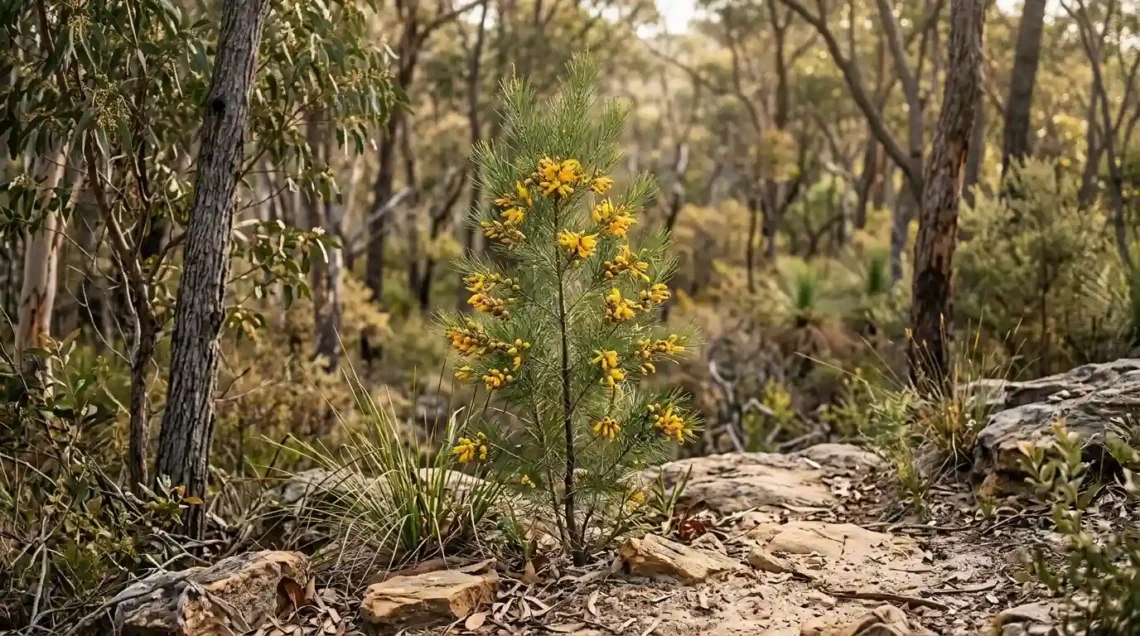
Persoonia pinifolia, commonly known as the pine-leaf geebung, is a distinctive Australian native shrub in the Proteaceae family. It is recognised for its fine, pine-like foliage and bright yellow tubular flowers that appear along its stems during the warmer months. Native to eastern Australia, particularly New South Wales, it grows naturally in nutrient-poor sandstone soils within heathlands and dry sclerophyll forests.
What is Persoonia pinifolia? It is an ecologically important shrub that supports pollinators, produces edible geebung fruit, and contributes to native biodiversity. It is also valued in landscaping for its drought tolerance and ornamental appeal.
Quick Summary
- Persoonia pinifolia is a native Australian shrub with needle-like foliage and yellow flowers.
- It belongs to the Proteaceae family and grows mainly in NSW sandstone ecosystems.
- Produces edible geebung fruit traditionally used by Aboriginal Australians.
- Highly drought-tolerant and valued in native gardens and habitat planting.
What Is a Geebung Plant?
A geebung plant refers to any species in the Persoonia genus, a group of Australian native shrubs and small trees in the Proteaceae family. The term “geebung” originates from Aboriginal languages of the Sydney region and traditionally refers to the small edible fruits produced by these plants.
Persoonia pinifolia is one of the most recognisable geebung species due to its fine, pine-like foliage. This is why it is sometimes referred to as a geebung tree or shrub, depending on its growth form. In taxonomy, Persoonia sits within the Proteaceae family, which also includes grevilleas and banksias. The Persoonia genus, commonly known as geebungs, is part of the Proteaceae family, widely documented in botanical references such as Wikipedia.
Key Characteristics of Persoonia pinifolia
- Needle-like foliage resembling pine leaves
- Bright golden-yellow tubular flowers in summer
- Small green fleshy drupes (geebung fruit)
- Upright to spreading shrub habit
- Naturally grows on sandstone-based soils
Where Does Persoonia pinifolia Grow Naturally?
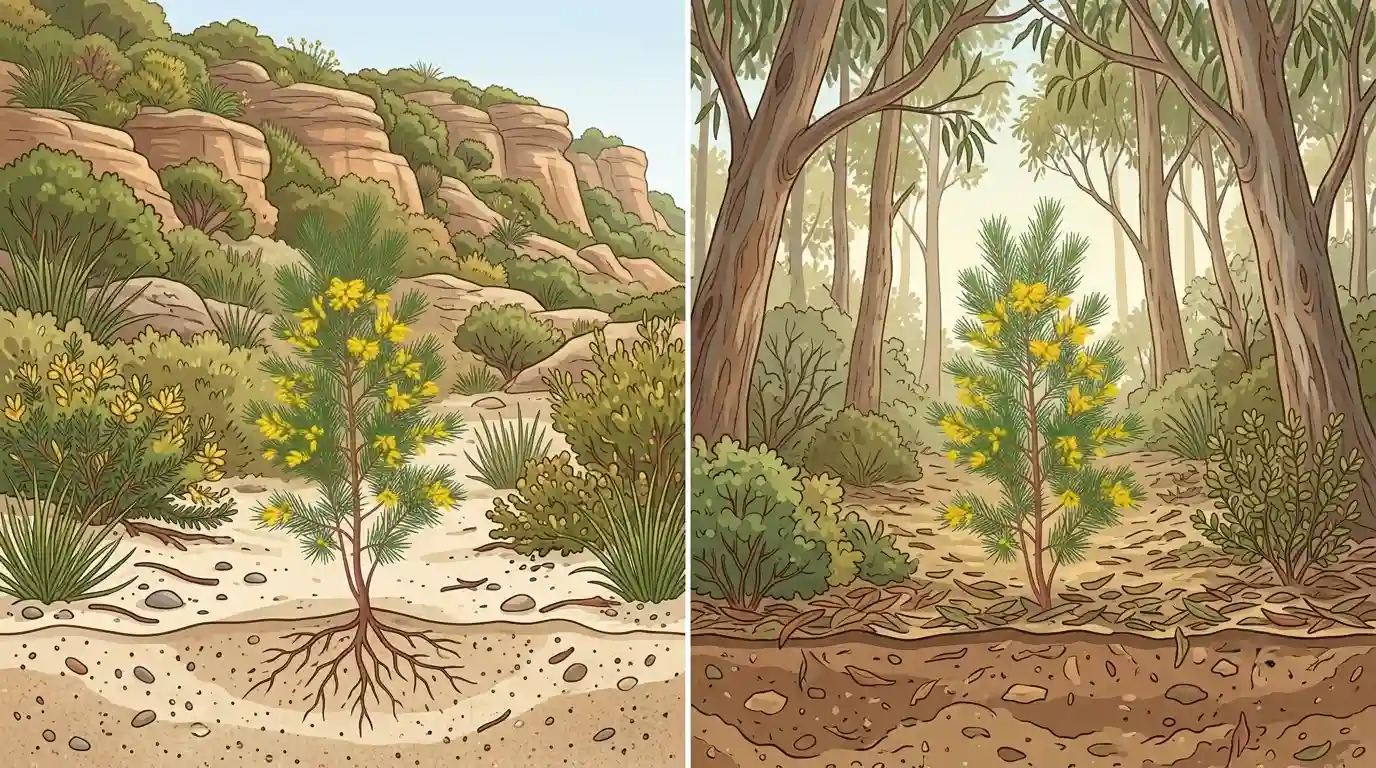
Persoonia pinifolia is native to eastern Australia, mainly New South Wales. It occurs in coastal heathlands, dry sclerophyll forests, and sandstone ridge environments, especially around the greater Sydney region.
When asking where do geebungs typically grow, the answer is consistent: they prefer nutrient-poor, acidic, sandy soils with excellent drainage. These conditions are difficult to replicate, which is why geebungs can be challenging to cultivate outside their native range.
Soil and Climate Conditions Required
- Prefers acidic, sandy, low-phosphorus soils
- Naturally adapted to drought-prone environments
- Highly sensitive to phosphorus-rich fertilizers
- Thrives in full sun to partial shade in bushland conditions
In our experience growing native Proteaceae species, soil compatibility is the most critical factor for long-term survival. While Persoonia pinifolia prefers temperate coastal climates, gardeners in cooler regions often explore hardy natives such as those featured in Frost Hardy Grevilleas Guide for more adaptable planting options.
What Does Persoonia pinifolia Look Like? (Plant Description)
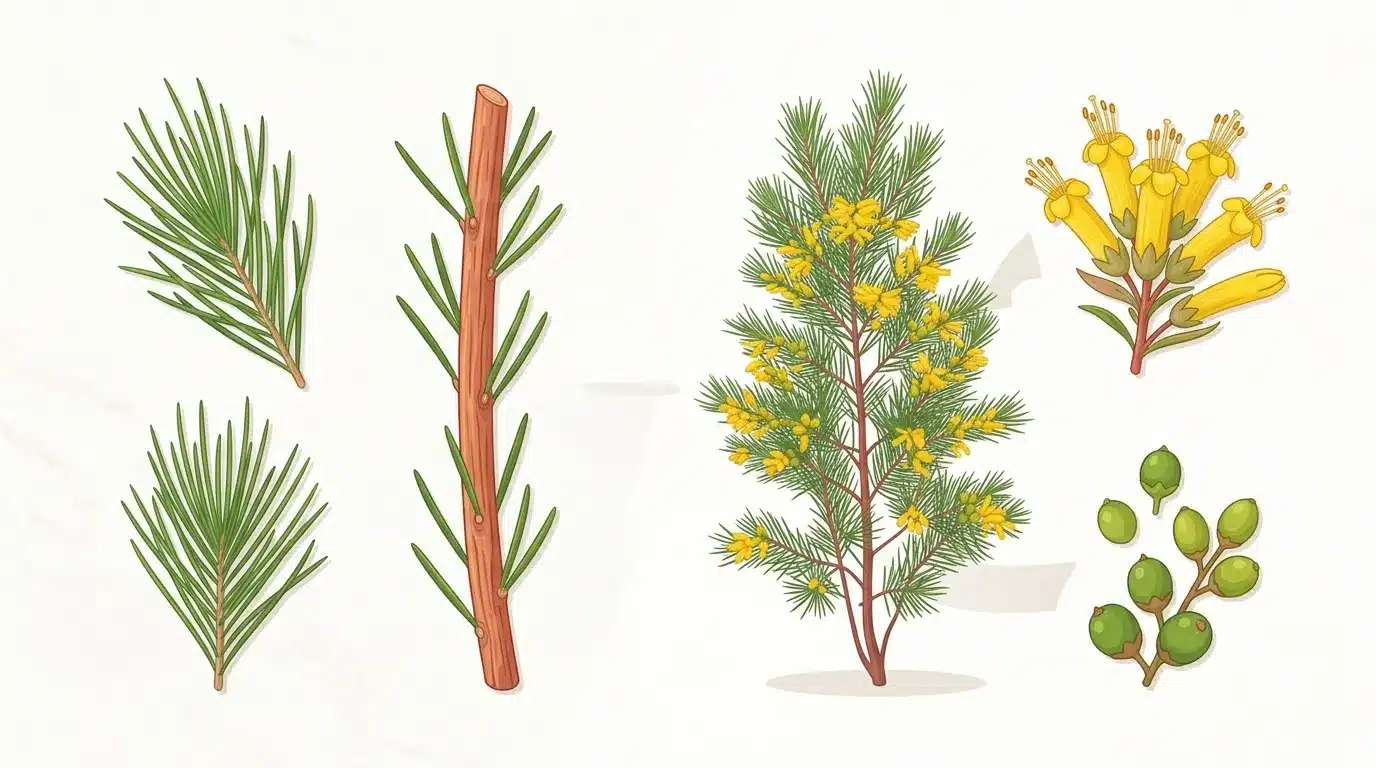
Persoonia pinifolia is an upright to spreading shrub with fine, needle-like leaves that resemble pine foliage. This unique leaf structure distinguishes it from broader-leaved species like Persoonia linearis and Persoonia levis.
The stems are slender and woody, with smooth bark when young. Its flowers are bright yellow and tubular, appearing along new growth. The fruit is a small green drupe with a soft outer layer and a hard central seed.
Comparison Table — Persoonia Species at a Glance
| Feature | P. pinifolia | P. linearis | P. levis | P. nutans | P. juniperina | P. lanceolata |
| Leaf shape | Fine, needle-like | Linear, flat | Broad, smooth | Nodding, narrow | Prickly | Lance-shaped |
| Flower color | Bright yellow | Yellow | Yellow | Yellow | Yellow | Yellow |
| Habit | Upright shrub | Shrub/small tree | Upright shrub | Low spreading | Shrub | Shrub |
| Native region | NSW coast/ranges | Eastern Australia | Eastern Australia | NSW | SE Australia | NSW |
| Common name | Pine-leaf geebung | Narrow-leaved geebung | Smooth geebung | Nodding geebung | Prickly geebung | Lance geebung |
How Tall Does Persoonia pinifolia Grow?
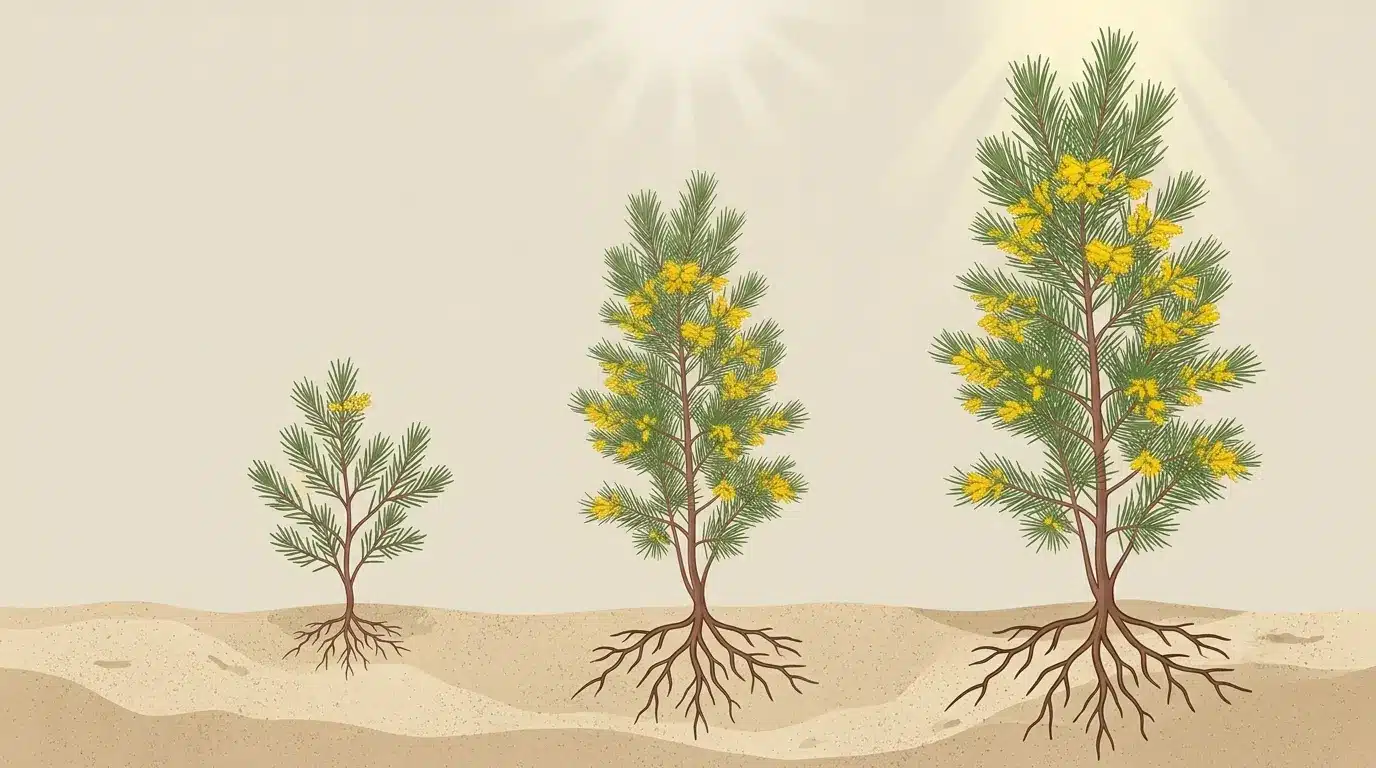
Persoonia pinifolia typically grows between 1–3 metres in height and 1–2 metres in width. In natural sandstone habitats, it may reach its full size potential, while in cultivated gardens it often remains smaller due to soil and moisture differences.
The cultivar Persoonia ‘Golden Lantern’ is known for a more compact and ornamental growth habit, making it suitable for smaller gardens.
Indoor vs. Outdoor Size Considerations
- Not suitable for indoor cultivation due to drainage needs
- Outdoor growth depends heavily on soil quality and sunlight
- ‘Golden Lantern’ remains more compact than wild forms
- Light pruning can help maintain shape in garden settings
Tree geebung forms are uncommon, as most Persoonia species remain shrub-sized even at maturity.
How Fast Does Persoonia pinifolia Grow?
Persoonia pinifolia is a slow to moderate grower. Establishment is slow in the first 1–2 years as the root system develops. Once established, growth becomes more consistent, particularly during spring and early summer.
Growth rate is strongly influenced by:
- Soil nutrient balance (especially phosphorus levels)
- Drainage quality
- Climate stability
Persoonia pinifolia Care Guide
Watering Requirements
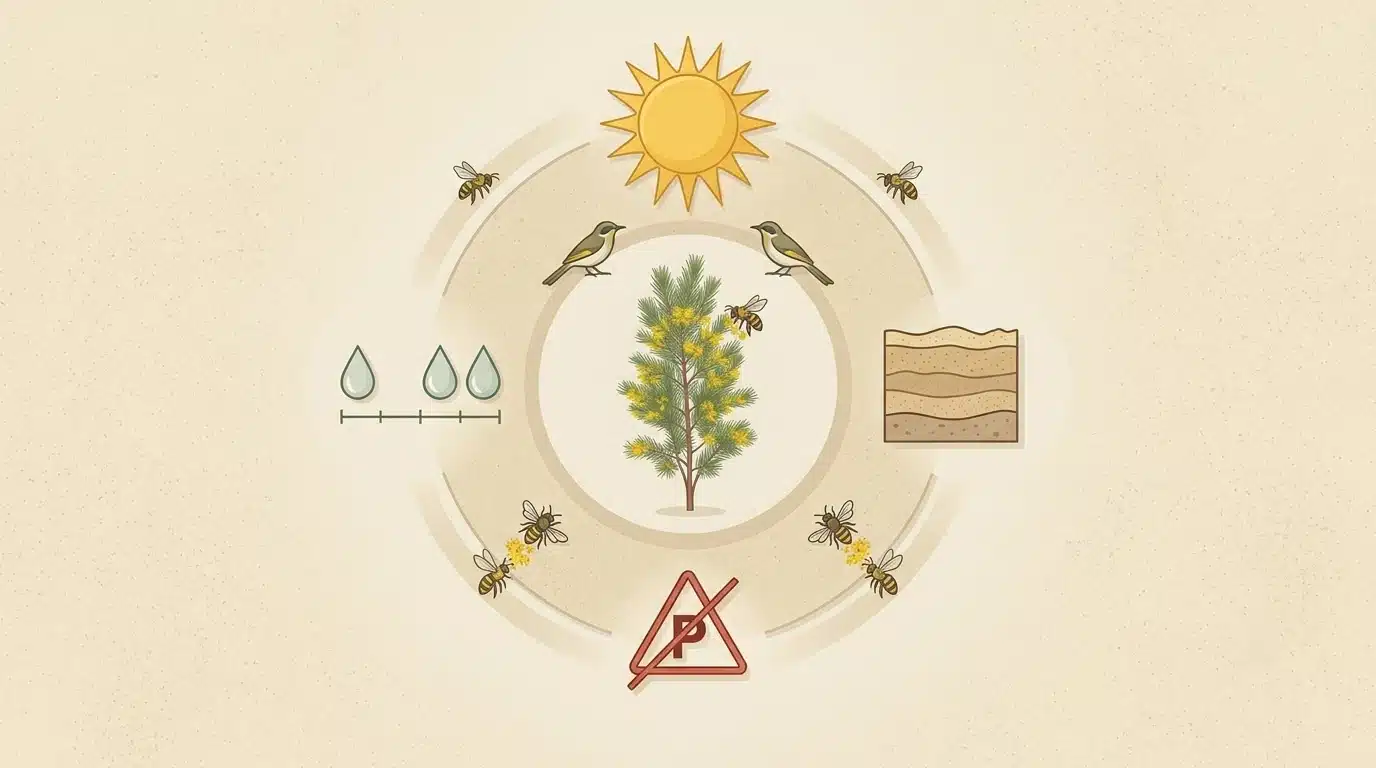
Persoonia pinifolia is drought-tolerant once established. Water deeply but infrequently during the first two years. Avoid waterlogged conditions, which can lead to root failure.
Light Requirements
It prefers full sun to light partial shade. Full sun conditions produce the best flowering performance.
Soil Preferences
Well-drained, acidic, low-phosphorus sandy soils are essential. Clay soils or enriched potting mixes should be avoided. Persoonia pinifolia has similar low-phosphorus soil sensitivity to other Australian natives such as the Silky Emu Bush (Eremophila nivea), which also thrives in well-drained, nutrient-poor conditions.
Fertilization
Avoid standard fertilizers containing phosphorus. Use native-specific low-phosphorus products sparingly. Organic mulch often provides sufficient nutrients.
How to Prune a Geebung
Prune lightly after flowering to encourage bushiness. Avoid cutting into old wood, as Persoonia species do not regenerate well from hard pruning.
In our experience at Greenery Inside, over-pruning is one of the most common causes of decline in geebungs.
Climate Tolerance
- Best suited to temperate coastal climates
- Sensitive to heavy frost
- Highly drought tolerant in suitable soils
Geebung Flower — When and How Does It Bloom?
The geebung flower of Persoonia pinifolia is bright yellow, tubular, and composed of four fused petals. Flowers appear along new stems in summer through early autumn.
These blooms are highly attractive to native pollinators such as honeyeaters and native bees, making the plant ecologically valuable in garden ecosystems.
Geebung Fruit — Can You Eat Geebung Fruit?
Yes, geebung fruit is technically edible. The small green to yellow drupes contain a soft flesh surrounding a hard seed. The flavor is mildly sweet with slight astringency.
Traditional and Cultural Uses of Geebung Fruit
- Consumed by Aboriginal Australian communities
- Collected seasonally from wild shrubs
- Part of broader bush tucker traditions in eastern Australia
Geebung fruit is not commercially cultivated due to its small size and short shelf life.
What Is Persoonia pinifolia Used For?
Persoonia pinifolia is used in several ecological and horticultural contexts. In ornamental landscaping, Persoonia pinifolia is often grouped with flowering natives like Winter Delight Grevillea, which also attract pollinators and perform well in Australian-style gardens.
- Ornamental native garden shrub, especially cultivars like ‘Golden Lantern’
- Wildlife habitat plant supporting birds and pollinators
- Bushland restoration and revegetation projects
- Traditional bush tucker species
- Native landscaping design featuring Proteaceae plants
What is the plant Persoonia pinifolia used for? It is primarily valued for biodiversity support and ecological restoration.
Common Problems with Persoonia pinifolia and How to Fix Them
Yellowing Leaves (Chlorosis)
Caused by phosphorus toxicity or poor drainage. Fix by removing fertilizers, improving soil drainage, and avoiding enriched soils.
Plant Failing After Transplanting
Occurs due to root sensitivity. Prevent by minimizing disturbance and using native-specific soil mixes.
Poor Flowering
Usually caused by low sunlight or excessive phosphorus. Move plant to a sunnier position and avoid runoff from lawn fertilizers.
Pest Issues
Generally pest-resistant. Occasional scale or caterpillars may occur and can be treated with horticultural oil.
Persoonia pinifolia vs Similar Australian Native Plants
Persoonia pinifolia is often confused with other Persoonia species.
How Persoonia pinifolia Differs from P. juniperina and P. lanceolata
- P. juniperina has sharp, prickly foliage and is less garden-friendly
- P. lanceolata has broader, lance-shaped leaves and different habitat preferences
- P. pinifolia has soft, fine foliage ideal for ornamental planting
What Is Persoonia ‘Golden Lantern’?
Persoonia ‘Golden Lantern’ is a cultivated form selected for compact growth and reliable flowering. It is more widely available in nurseries and better suited to small gardens.
Beginner Mistakes When Growing Persoonia pinifolia
Common mistakes include:
- Using phosphorus-rich fertilizers
- Over-watering established plants
- Planting in clay-heavy soils
- Hard pruning into old wood
- Buying from non-specialist nurseries using unsuitable potting media
Avoiding these errors significantly improves survival rates.
Conclusion
Persoonia pinifolia, the pine-leaf geebung, is a distinctive Australian native shrub valued for its ecological role, ornamental flowers, and edible fruit. Its success in cultivation depends on replicating its natural sandstone habitat with well-drained, low-phosphorus soils and minimal disturbance. When grown correctly, it provides long-term value in native gardens, wildlife habitats, and restoration projects.
Frequently Asked Questions About Persoonia pinifolia
1: What is a geebung tree?
A geebung tree refers to any species in the Persoonia genus. These are Australian native shrubs or small trees known for their edible fruit and yellow flowers.
2: Can you eat geebung fruit?
Yes, geebung fruit is edible when ripe. It has a mildly sweet, slightly astringent taste and was traditionally consumed by Aboriginal Australians.
3: Where do geebungs typically grow?
They grow in eastern Australia, especially NSW, in sandy, acidic, low-nutrient soils within heathlands and dry forests.
4: What is Persoonia pinifolia used for?
It is used for ornamental gardening, habitat planting, bushland restoration, and as a traditional bush tucker species.
5: How do you prune a geebung?
Light pruning after flowering is recommended. Avoid cutting into old wood as regrowth is limited.
6: How tall does Persoonia pinifolia grow?
It typically grows 1–3 metres tall, depending on soil, climate, and growing conditions.
7: Is Persoonia pinifolia the same as ‘Golden Lantern’?
No. ‘Golden Lantern’ is a cultivated variety selected for compact growth and ornamental performance.