Introduction
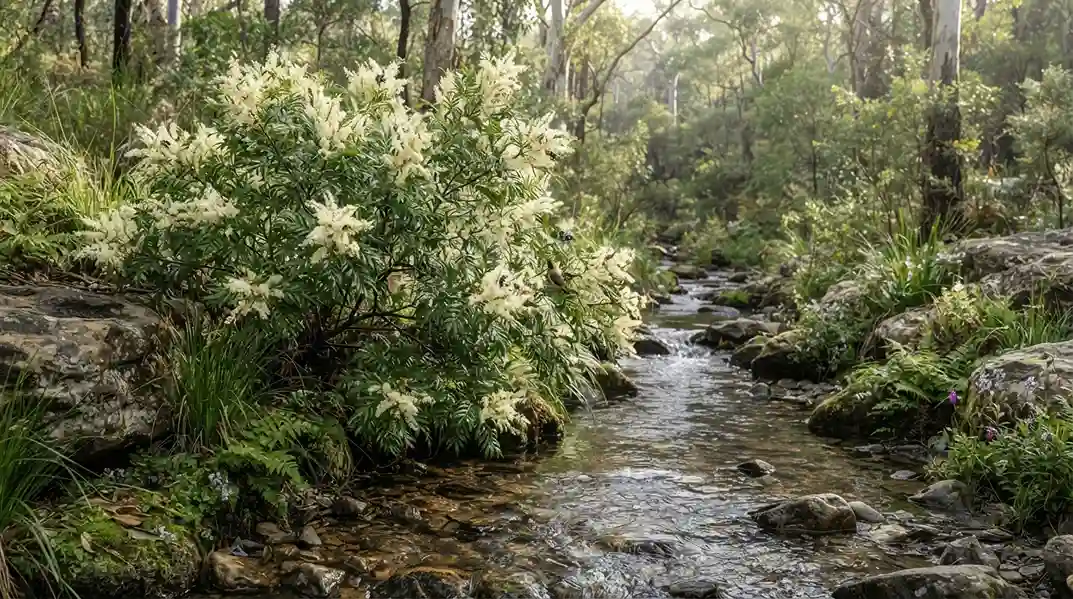
River lomatia (Lomatia myricoides) is an attractive Australian native shrub or small-to-medium tree prized for its graceful foliage, creamy-white flower spikes, and adaptability to a wide range of landscapes. It is an excellent choice for gardeners seeking medium size native trees, medium native trees, or medium sized trees for garden settings because it offers year-round ornamental appeal without becoming excessively large. Native to eastern Australia, this member of the Lomatia genus thrives in moist, well-drained environments and plays an important ecological role by providing nectar, shelter, and habitat for native wildlife. Whether planted in a backyard garden, along a creek, or within a natural landscape, river lomatia combines beauty, resilience, and biodiversity benefits. If you’re exploring more species for native landscapes, our complete guide to Australian Native Garden Trees covers many of the best trees for Australian gardens.
Quick Summary
- River lomatia (Lomatia myricoides) is an Australian native shrub or small-to-medium tree with elegant foliage and creamy-white flower spikes.
- It performs well in wildlife gardens, creek-side plantings, native landscapes, and temperate gardens.
- The species prefers well-drained, consistently moist soils and grows best in full sun to partial shade.
- River lomatia belongs to the diverse Lomatia genus within the Proteaceae family, which includes several distinctive Australian native species.
- In our experience at Greenery Inside, river lomatia develops its healthiest foliage and strongest structure when planted in fertile, well-drained soil with regular moisture during establishment.
What Is River Lomatia?
River lomatia is a versatile Australian native plant that naturally grows as a dense shrub or a graceful small to medium tree. Scientifically known as Lomatia myricoides, it is admired for its finely divided evergreen foliage, upright clusters of creamy-white flowers, and ability to blend into both cultivated gardens and natural bushland. Its moderate size, attractive appearance, and ecological value make it a popular choice for gardeners looking to incorporate Australian native plants into residential and restoration landscapes. River lomatia is also featured among many outstanding Native Trees of Australia, valued for their biodiversity benefits and adaptability to different climates.
Botanical Classification
River lomatia belongs to the ancient Proteaceae family, one of Australia’s most distinctive plant families, which also includes banksias, grevilleas, waratahs, and hakeas. You can learn more about the Lomatia genus and its related species on Wikipedia.
| Classification | Details |
| Scientific Name | Lomatia myricoides |
| Common Name | River lomatia |
| Genus | Lomatia |
| Family | Proteaceae |
| Plant Type | Evergreen shrub or medium tree |
| Native Range | Eastern Australia |
The species develops attractive, deeply divided green leaves that create a soft, fern-like texture throughout the year. During spring and early summer, mature plants produce upright clusters of creamy-white flowers that provide an important nectar source for native insects and birds.
As with many members of the Proteaceae family, Lomatia myricoides has specialised root systems adapted to Australia’s naturally nutrient-poor soils. For this reason, low-phosphorus fertilisers are recommended whenever supplementary feeding is necessary.
In our experience growing Australian native plants, river lomatia responds best when left to establish naturally without excessive fertiliser, particularly during its first few growing seasons.
Natural Habitat and Distribution
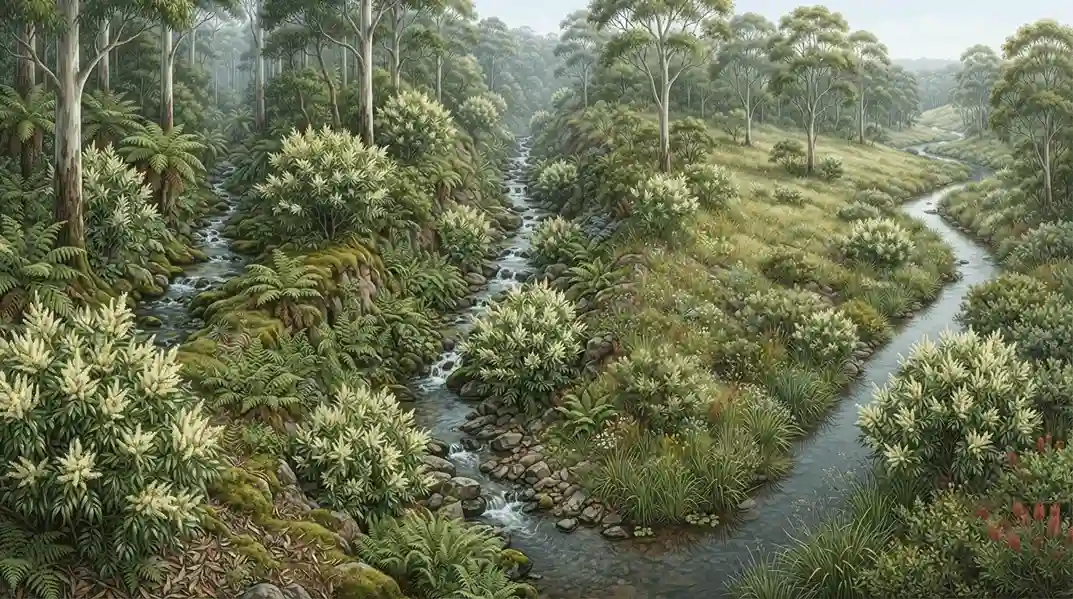
River lomatia naturally occurs across eastern Australia, where it grows in environments with reliable moisture and excellent soil drainage. It is commonly associated with waterways and sheltered forests, where conditions remain cool and humid throughout much of the year.
Its natural habitats include:
- Creek lines
- Moist forests
- Open woodlands
- Sheltered gullies
- Riparian vegetation zones
The species is naturally distributed across:
- New South Wales
- Victoria
- Southern Queensland
These habitats generally experience moderate to high annual rainfall, allowing river lomatia to establish deep root systems while avoiding prolonged waterlogging. Although naturally associated with moist environments, established plants show reasonable resilience during short periods of dry weather, provided the soil remains healthy and well mulched.
Its natural adaptability explains why river lomatia has become a reliable ornamental plant for many temperate Australian gardens, especially those aiming to recreate native bushland conditions.
River Lomatia Size and Growth Habit
River lomatia is considered one of the most versatile medium native trees for Australian landscapes because it combines manageable dimensions with an elegant, naturally spreading form. Depending on pruning and growing conditions, it can be maintained as a large multi-stemmed shrub or trained into a single-trunked medium tree, making it suitable for a wide variety of landscape designs.
Most mature specimens develop a rounded to upright canopy with gently arching branches that create a light, airy appearance. The finely textured foliage provides visual softness throughout the year while allowing filtered sunlight to reach lower-growing plants beneath the canopy.
Under favourable growing conditions, mature plants typically reach the following size:
| Feature | Typical Size |
| Height | 4–8 metres |
| Width | 2–5 metres |
| Growth Habit | Upright shrub or medium-sized tree |
| Lifespan | Several decades with proper care |
Plants growing beside permanent waterways or in fertile soils generally become taller and fuller than those growing in drier inland locations.
River lomatia is particularly well suited to gardeners searching for medium sized trees Australia because it provides structure and seasonal interest without dominating smaller residential gardens. Its moderate mature size allows it to function equally well as a feature tree, screening plant, wildlife habitat, or part of a mixed native border.
Suitable landscape applications include:
- Medium-sized suburban gardens
- Wildlife-friendly native gardens
- Creek and riparian restoration projects
- Informal privacy screening
- Mixed native borders
- Naturalistic landscape designs
Greenery Inside recommends allowing sufficient space for the mature canopy when planting. Although young plants appear compact, they gradually develop a broad, graceful framework that is best appreciated when not overcrowded by neighbouring trees or structures.
Growth Rate
River lomatia (Lomatia myricoides) has a moderate growth rate, making it a practical choice for gardeners who want a native shrub or medium tree that establishes steadily without becoming difficult to manage. Under favourable conditions, young plants usually put on consistent annual growth and develop into well-shaped specimens over several years.
The most active growth occurs during spring and early summer when temperatures are mild, soil moisture is reliable, and daylight hours increase. Growth may slow during hot, dry summers or throughout winter, particularly in cooler regions.
Several environmental factors influence how quickly river lomatia grows:
- Rainfall: Consistent moisture encourages healthy shoot and root development.
- Sunlight: Plants in full sun generally produce denser growth and better flowering than those in heavy shade.
- Soil: Fertile, well-drained soils rich in organic matter support stronger growth.
- Pruning: Light formative pruning helps create a bushier plant and encourages new branching.
Young plants usually require two to three years to become well established. During this period, regular watering and mulching are especially important to encourage deep root development.
In our experience at Greenery Inside, avoiding rapid, soft growth through excessive fertiliser results in a stronger, longer-lived plant with a naturally balanced shape.
River Lomatia Care Guide
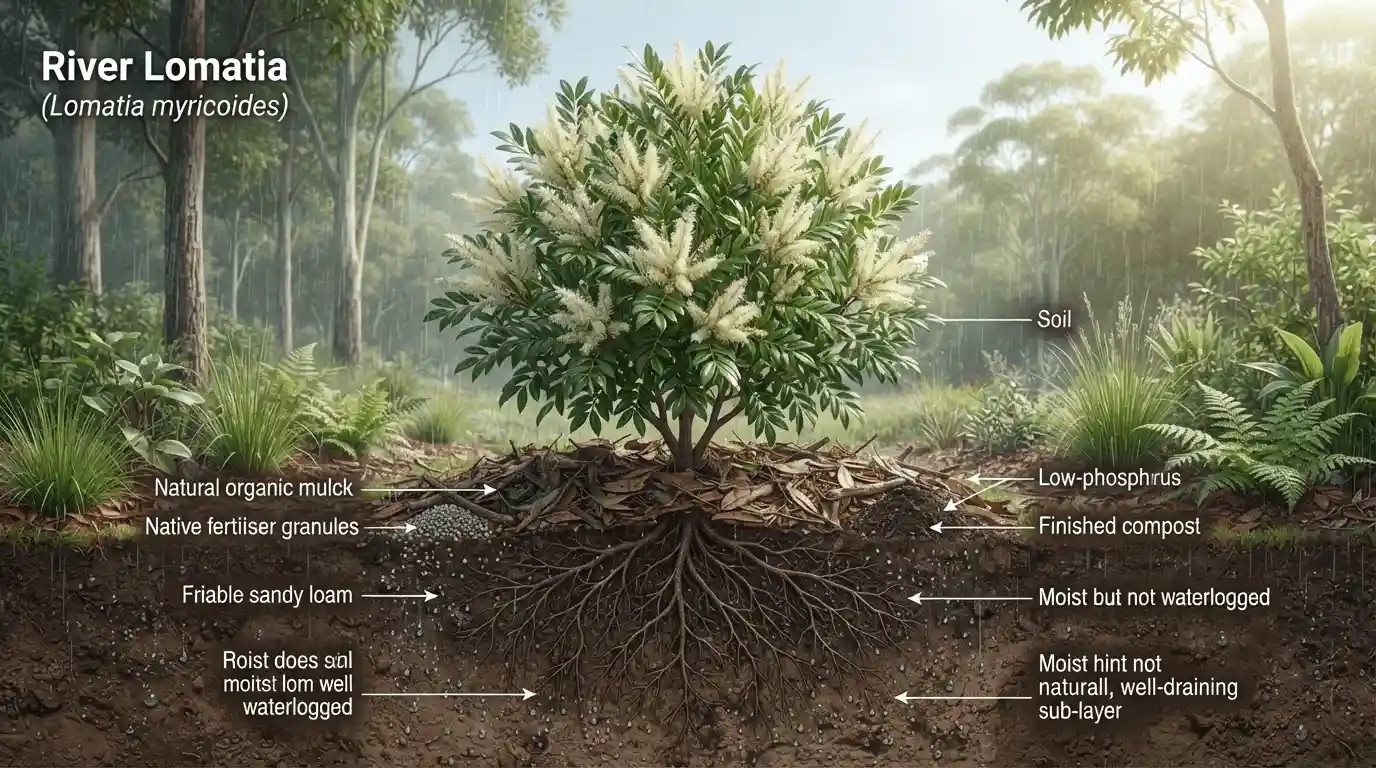
Providing the right growing conditions helps river lomatia remain healthy, flower reliably, and maintain its attractive evergreen foliage. Although it is relatively low maintenance once established, proper care during the first few years greatly improves long-term performance.
Light Requirements
River lomatia grows well in full sun to partial shade.
Full sun generally produces:
- More abundant flowering
- Denser branching
- Stronger overall growth
Part shade is suitable in warmer climates, particularly where afternoon temperatures become very high. Light shade can also help reduce moisture loss during prolonged dry periods.
Deep shade is not recommended because it often results in sparse growth, fewer flowers, and a less compact habit.
Greenery Inside recommends planting river lomatia where it receives at least five to six hours of direct sunlight daily for the best ornamental display.
Soil Preferences
Like many Australian native plants, river lomatia performs best in well-drained soils that retain consistent moisture without remaining saturated.
Ideal soil conditions include:
- Sandy loam
- Loamy soils
- Well-drained clay loams improved with organic matter
- Slightly acidic to neutral pH
The soil should remain evenly moist while allowing excess water to drain freely. Poor drainage can lead to root decline and reduce plant vigour.
Adding compost or well-rotted organic matter before planting helps improve soil structure, moisture retention, and beneficial microbial activity without creating excessively rich conditions.
Avoid planting directly into heavy, compacted clay unless drainage has been significantly improved.
Watering Requirements
Regular watering is most important while young plants establish their root systems.
Young Plants
During the first one to two years:
- Water deeply once or twice each week during dry weather.
- Allow the upper soil layer to dry slightly between watering.
- Apply organic mulch to conserve soil moisture.
Deep watering encourages roots to grow downward rather than remaining close to the soil surface.
Established Plants
Once fully established, river lomatia becomes more tolerant of occasional dry periods. Mature plants generally require supplementary watering only during extended drought or unusually hot weather.
Although reasonably drought tolerant, prolonged dry conditions may reduce flowering and slow new growth.
Avoid frequent shallow watering, which encourages weak surface roots and reduces drought resilience.
Fertiliser Needs
River lomatia belongs to the Proteaceae family, which is sensitive to excessive phosphorus.
The safest fertilising options include:
- Low-phosphorus native plant fertilisers
- Well-aged compost
- Organic mulch that gradually releases nutrients
Apply fertiliser lightly during spring when new growth begins. Excess fertiliser is unnecessary and may damage sensitive proteoid roots.
In our experience growing Proteaceae species, healthy soil preparation and annual compost applications often provide all the nutrients river lomatia requires.
Pruning
River lomatia requires only light pruning to maintain its natural shape.
Routine pruning helps:
- Maintain a tidy appearance
- Remove dead or damaged branches
- Improve air circulation
- Encourage bushier growth
- Develop a strong framework in young plants
The best time to prune is after flowering, allowing the plant to recover before the next growing season.
Avoid severe pruning into old woody stems, as recovery may be slow.
Light formative pruning during the early years produces a more balanced shrub or medium-sized tree over time.
Climate Tolerance
River lomatia is well adapted to many temperate regions of Australia and tolerates a range of seasonal conditions when grown in suitable locations.
Frost
Established plants tolerate light to moderate frost, although young plants benefit from protection during their first few winters.
Heat
River lomatia handles warm summers well when adequate soil moisture is available. Applying mulch helps regulate root temperatures and conserve moisture.
Rainfall
The species naturally grows in areas receiving moderate to high rainfall but adapts well to gardens where supplemental watering is provided during extended dry periods.
Coastal Conditions
River lomatia tolerates some coastal influence, including mild salt-laden winds. However, it generally performs best slightly inland where exposure to strong ocean winds is reduced.
As of the 2026 growing season, many Australian native plant growers continue to recommend maintaining an organic mulch layer throughout the year to improve moisture retention, suppress weeds, and moderate soil temperatures during increasingly variable seasonal weather.
With appropriate light, well-drained soil, consistent moisture during establishment, and minimal pruning, river lomatia remains a reliable, long-lived Australian native that rewards gardeners with attractive foliage, seasonal flowers, and valuable habitat for local wildlife.
River Lomatia Uses in the Garden
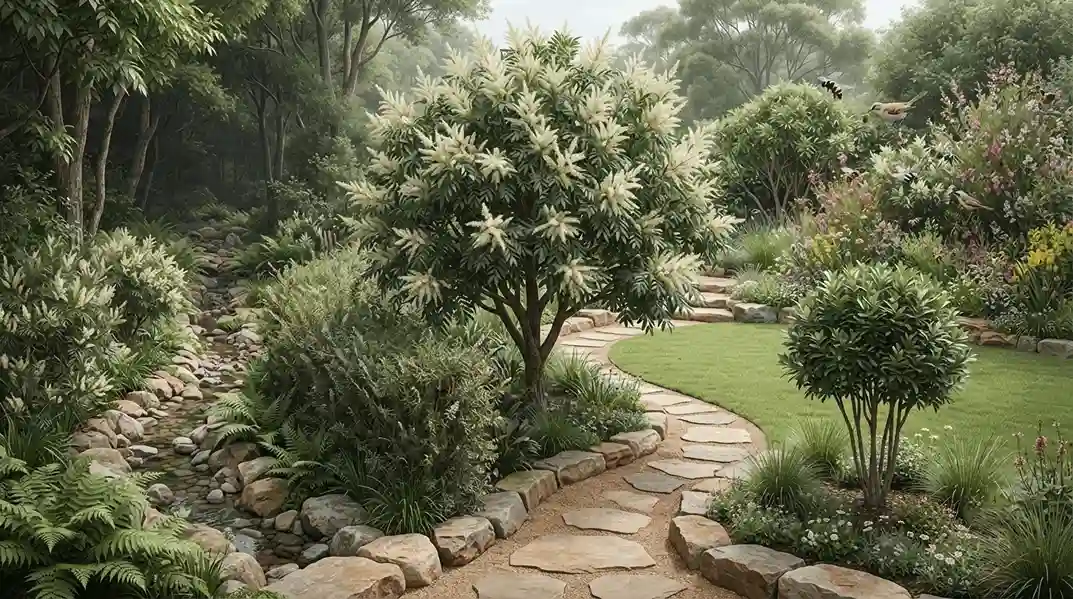
River lomatia (Lomatia myricoides) is a versatile Australian native plant that suits both residential landscapes and ecological restoration projects. Its elegant foliage, manageable size, and nectar-rich flowers make it valuable for ornamental planting while also supporting local biodiversity. Whether grown as a large shrub or a medium-sized tree, it provides year-round structure and seasonal interest.
One of the greatest strengths of river lomatia is its ability to blend naturally into Australian landscapes while requiring relatively little maintenance once established. For gardeners wanting additional medium-sized native feature trees, the Blueberry Ash Tree is another excellent companion species with attractive foliage and seasonal interest.
Common garden uses include:
- Wildlife gardens
- Native landscape designs
- Informal privacy screens
- Creek and riparian restoration
- Habitat gardens
- Mixed native borders
- Feature tree plantings
The creamy-white flower spikes attract native bees, butterflies, and other beneficial insects, while the dense branching offers shelter for small birds and other wildlife.
Popular landscaping applications include:
- Feature tree: Creates an elegant focal point in medium-sized gardens.
- Native borders: Blends well with grevilleas, banksias, wattles, and other Australian natives.
- Creek planting: Naturally suited to moist creek banks and riparian zones.
- Biodiversity gardens: Supports pollinators and native wildlife throughout the growing season.
- Naturalistic landscapes: Complements bush-style gardens with its soft, textured foliage.
In our experience at Greenery Inside, river lomatia performs especially well when planted alongside other locally native species, creating a balanced ecosystem that attracts a greater diversity of birds and beneficial insects.
Is River Lomatia a Good Choice Among Medium Native Trees?
Yes. River lomatia is an excellent choice among medium native trees because it combines ornamental beauty, manageable growth, and ecological value. Its moderate mature size makes it suitable for gardens where larger eucalyptus or rainforest trees would eventually become too large. You can also compare it with other recommended species in our complete guide to Australian Native Garden Trees to choose the best tree for your landscape.
Compared with many other Australian native trees, river lomatia offers:
- A naturally graceful growth habit
- Attractive evergreen foliage
- Creamy-white ornamental flowers
- Moderate maintenance requirements
- Excellent wildlife value
- Adaptability to a range of temperate climates
It is particularly suitable for:
- Small to medium-sized suburban gardens
- Lifestyle properties
- Bushland gardens
- Wildlife-friendly landscapes
- Native revegetation projects
Unlike fast-growing species that require regular heavy pruning, river lomatia develops slowly and predictably, making long-term maintenance relatively straightforward.
Comparison of River Lomatia and a Typical Medium Native Tree
| Feature | River Lomatia | Typical Medium Native Tree |
| Mature Size | 4–8 m | 5–12 m |
| Flowers | Creamy-white flower spikes | Varies by species |
| Wildlife Value | Excellent for birds and pollinators | Moderate to high |
| Maintenance | Low once established | Low to moderate |
Its combination of moderate size and habitat value makes river lomatia one of the more practical choices for gardeners seeking long-lasting native trees that fit comfortably into residential landscapes.
River Lomatia vs Other Lomatia Species
The Lomatia genus contains several Australian species that differ in size, foliage, habitat, and growth habit. Although all belong to the Proteaceae family, each species is adapted to different environments.
Lomatia fraseri
Lomatia fraseri, commonly known as silky lomatia, generally grows larger than river lomatia and often develops into a taller forest tree.
Key differences include:
- Larger overall size
- Broader leaves
- More common in subtropical and rainforest margins
- Better suited to higher-rainfall forests
Gardeners with larger properties often select Lomatia fraseri where greater height is desirable.
Lomatia silaifolia
Lomatia silaifolia, often called crinkle bush, is recognised for its finely divided foliage that appears even more delicate than river lomatia.
Compared with river lomatia:
- Leaves are finer and more deeply divided.
- Flowering may be slightly more prolific in suitable conditions.
- Usually occurs in drier woodland habitats.
- Often has a more open growth habit.
Its ornamental foliage makes it popular in native cottage gardens and informal landscapes.
Lomatia tinctoria
Lomatia tinctoria is a much smaller species native to Tasmania.
Characteristics include:
- Compact, low-growing habit
- Shrubby growth form
- Adapted to cooler climates
- Suitable for rock gardens and alpine-style plantings
Unlike river lomatia, it rarely develops into a medium-sized tree.
Lomatia arborescens
Lomatia arborescens is one of the larger members of the genus and develops a true tree form.
Features include:
- Taller mature height
- Upright canopy
- Adaptation to rainforest environments
- Best suited to humid climates with reliable rainfall
It is generally chosen for larger landscapes where sufficient space is available.
Lomatia tasmanica
Lomatia tasmanica is one of the world’s rarest plant species and holds exceptional conservation significance.
Unlike river lomatia:
- It survives naturally in only one known wild population in Tasmania.
- It reproduces almost entirely through vegetative growth rather than seed.
- All known plants are genetically identical clones.
Because genetic studies indicate the clone has persisted for tens of thousands of years, Lomatia tasmanica is frequently associated with discussions about the world’s oldest plant. While the living stems are continually replaced, the genetic lineage itself is considered extremely ancient.
Its rarity has made it an important focus of botanical conservation and scientific research.
Other Plants Commonly Confused with River Lomatia
Several Australian native plants are occasionally mistaken for river lomatia because of similar foliage, growth habits, or common names. Understanding these differences helps gardeners correctly identify plants before purchasing or planting.
| Plant | How It Differs from River Lomatia |
| King’s lomatia | Usually refers to Lomatia kingii, a Tasmanian species with different foliage and habitat. |
| King’s holly | Belongs to a completely different plant group despite the similar common name. |
| Crinkle bush | Commonly refers to Lomatia silaifolia, which has finer, more deeply divided leaves. |
| Guitar plant | An unrelated ornamental plant with very different foliage and flowers. |
| Parsley bush | Several unrelated shrubs share this common name due to their divided leaves. |
Much of the confusion arises because finely divided foliage is common among several Australian native shrubs. Scientific names provide the most reliable method of identification, particularly when purchasing plants from specialist nurseries.
Greenery Inside recommends checking the botanical name on nursery labels to ensure you are selecting Lomatia myricoides rather than another species with a similar appearance or common name.
Propagation Methods
River lomatia can be propagated from both seed and cuttings. While propagation is possible for home gardeners, patience is required because members of the Proteaceae family often establish more slowly than many ornamental shrubs.
Growing from Seed
Growing river lomatia from seed is the most common propagation method for producing genetically diverse plants.
Basic steps include:
- Collect mature seed from ripe seed pods.
- Sow seeds into a free-draining native plant propagation mix.
- Keep the growing medium evenly moist but never waterlogged.
- Place trays in a warm, bright position with indirect sunlight.
- Transplant seedlings once they develop several true leaves.
Fresh seed generally provides better germination than seed stored for extended periods.
Seedlings grow slowly during their first year as they establish healthy root systems.
Propagation from Cuttings
Semi-hardwood cuttings can also produce new plants, although success rates are generally lower than seed propagation.
For best results:
- Take healthy semi-hardwood cuttings during late spring or summer.
- Remove leaves from the lower section of each cutting.
- Insert cuttings into a well-drained propagation mix.
- Maintain consistent humidity until roots develop.
- Avoid excessive watering that may encourage fungal diseases.
Rooting hormone may improve success, although healthy parent material and good environmental conditions remain the most important factors.
In our experience, home gardeners achieve the highest success rates by maintaining steady moisture, warm temperatures, and good air circulation throughout the rooting process while avoiding excessive fertiliser during early establishment.
Common Problems and Solutions
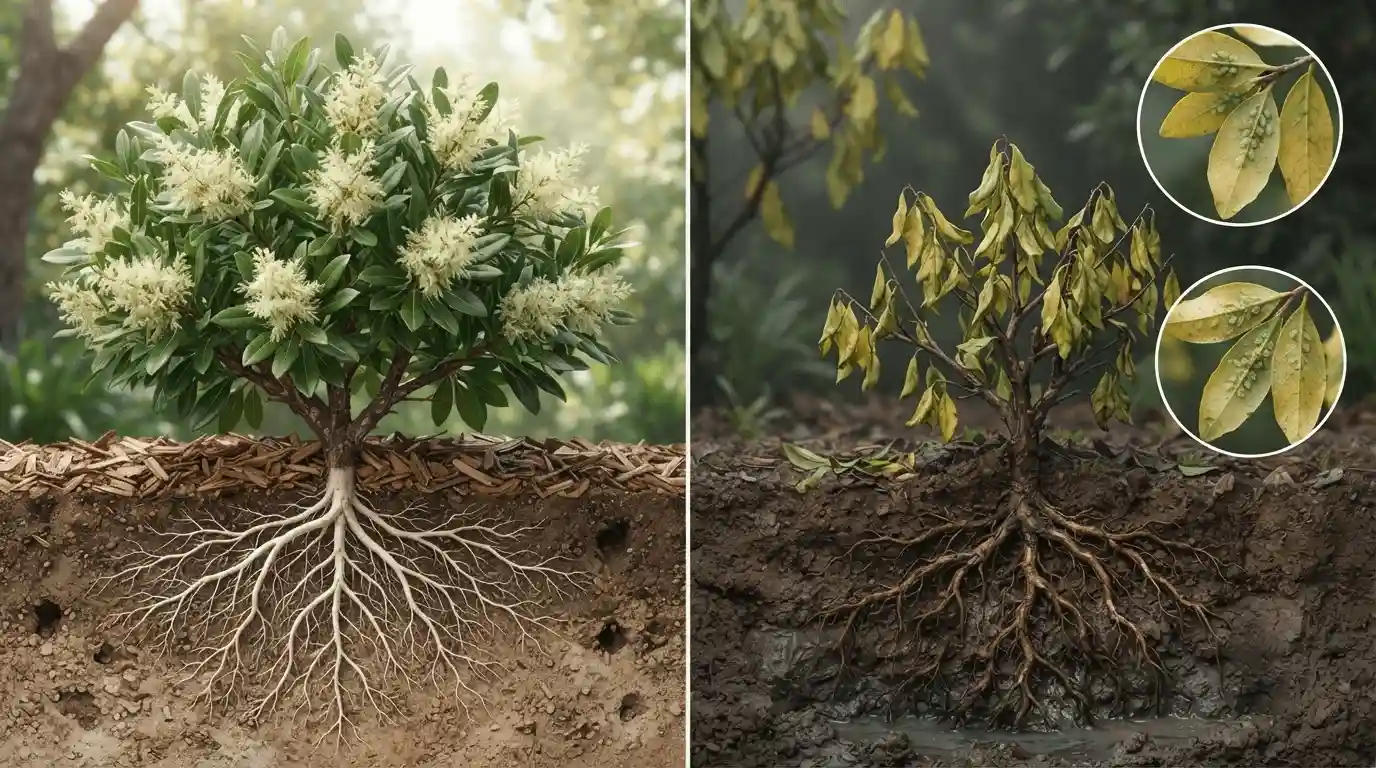
Although river lomatia (Lomatia myricoides) is generally a hardy Australian native plant, unsuitable growing conditions can lead to reduced vigour or poor performance. Most issues can be prevented by providing well-drained soil, appropriate watering, and suitable light.
Slow Growth
Slow growth is usually caused by environmental stress rather than disease.
Why it happens
- Poor soil fertility
- Insufficient sunlight
- Competition from nearby plants
- Water stress during establishment
How to fix it
- Plant in full sun to partial shade.
- Improve soil with compost before planting.
- Water deeply during prolonged dry periods.
- Apply a low-phosphorus native fertiliser in spring if needed.
Prevention
Prepare the planting site well and allow adequate spacing for healthy root development.
Yellowing Leaves
Yellow leaves often indicate watering or nutrient issues.
Why it happens
- Overwatering
- Poor drainage
- Temporary nutrient deficiencies
- Root stress
How to fix it
- Check soil moisture before watering.
- Improve drainage if water remains around the roots.
- Remove damaged foliage if necessary.
Prevention
Maintain evenly moist, well-drained soil rather than constantly wet conditions.
Root Rot
Root rot is one of the most serious problems affecting river lomatia.
Why it happens
- Waterlogged soil
- Poor drainage
- Heavy clay soils
- Fungal pathogens encouraged by excessive moisture
How to fix it
- Improve drainage immediately.
- Reduce watering.
- Remove severely affected plants if root damage is extensive.
Prevention
Plant in free-draining soil and avoid locations where water collects after rain.
Poor Flowering
Healthy plants normally flower reliably each spring.
Why it happens
- Too much shade
- Excess nitrogen fertiliser
- Immature plants
- Environmental stress
How to fix it
- Increase sunlight exposure where possible.
- Use fertilisers formulated for Australian native plants.
- Allow young plants time to mature.
Prevention
Grow river lomatia in a bright location with balanced nutrition.
Pest Issues
River lomatia experiences relatively few serious pest problems.
Occasionally you may notice:
- Aphids
- Scale insects
- Leaf-chewing caterpillars
Why it happens
Pests often appear when plants are stressed or environmental conditions become unfavourable.
How to fix it
- Remove minor infestations by hand.
- Encourage beneficial insects.
- Use horticultural oils only if necessary.
Prevention
Healthy, well-maintained plants naturally resist most pest problems.
Beginner Mistakes to Avoid
Many problems with river lomatia result from avoidable planting and maintenance mistakes.
Common mistakes include:
- Overwatering: Constantly wet soil can damage sensitive Proteaceae roots.
- Planting in heavy clay soils: Poor drainage greatly increases the risk of root diseases.
- Using high-phosphorus fertilisers: Members of the Proteaceae family are sensitive to excessive phosphorus.
- Growing in deep shade: Insufficient sunlight reduces flowering and creates weak, open growth.
- Ignoring drainage: Even moisture is beneficial, but standing water is harmful.
- Planting too close to buildings or other trees: Remember the mature size when selecting a planting location.
At Greenery Inside, we’ve found that careful site preparation before planting prevents most long-term maintenance issues.
Seasonal Care Tips
Seasonal maintenance helps river lomatia remain healthy throughout the year.
Spring
Spring is the main growing season.
Recommended tasks:
- Apply fresh mulch.
- Feed lightly with a low-phosphorus native fertiliser if required.
- Monitor new growth.
- Enjoy flowering displays.
Summer
Higher temperatures increase water requirements.
Recommended care:
- Water deeply during prolonged dry periods.
- Maintain mulch to reduce evaporation.
- Inspect foliage for signs of heat stress.
Autumn
Autumn is an excellent time for planting.
Tasks include:
- Plant new specimens while soil remains warm.
- Reduce watering as temperatures cool.
- Remove damaged branches if needed.
Winter
Growth slows during winter.
Recommended maintenance:
- Protect young plants from severe frost.
- Avoid unnecessary fertilising.
- Check drainage after heavy rain.
As of the 2026 growing season, many Australian native plant specialists recommend maintaining an organic mulch layer year-round to improve soil health and moisture retention while helping plants cope with increasingly variable seasonal weather.
Can You Buy River Lomatia?
Yes. River lomatia is available from many specialist Australian native plant nurseries, although availability varies depending on the region and the time of year.
You may see it listed under names such as:
- Lomatia myricoides for sale
- River lomatia for sale
- River lomatia (Lomatia myricoides) for sale
When selecting a nursery plant, inspect it carefully.
Choose plants with:
- Healthy green foliage
- Strong stems
- No obvious pest damage
- A well-developed root system that is not root-bound
Avoid purchasing plants with yellow leaves, damaged stems, or signs of prolonged water stress.
Because native plant production varies seasonally, some nurseries may only stock river lomatia during particular times of the year. If unavailable, many specialist growers accept advance orders.
Are There Different River Lomatia Varieties?
There are no widely recognised named ornamental varieties or cultivars of Lomatia myricoides commonly available in the nursery trade.
Most plants sold are propagated directly from naturally occurring populations, meaning slight differences in leaf size, branching, or growth habit may occur between individual plants. These variations are normal and reflect natural genetic diversity rather than distinct cultivated varieties.
Availability can differ among nurseries because some growers source seed from local provenances to suit regional climates and restoration projects.
When purchasing river lomatia, always check that the botanical name is Lomatia myricoides to ensure you are selecting the correct species.
Interesting Facts About the Lomatia Genus
The Lomatia genus contains a fascinating group of plants that belong to the ancient Proteaceae family, one of the oldest flowering plant families in the Southern Hemisphere.
Interesting facts include:
- Australia is home to several native Lomatia species, each adapted to different environments.
- Members of the Proteaceae family evolved millions of years ago on the ancient supercontinent Gondwana.
- The genus includes shrubs, medium-sized trees, and compact alpine species.
- Many Lomatia species provide nectar and habitat for native birds and insects.
- Lomatia tasmanica is regarded as one of the world’s rarest plants because only a single naturally occurring clone survives.
- Discussions about the world’s oldest plant often mention Lomatia tasmanica, as its ancient clonal lineage has persisted for tens of thousands of years despite individual stems being continually replaced.
These characteristics highlight the ecological and evolutionary importance of the Lomatia genus within Australia’s native flora.
Conclusion
River lomatia (Lomatia myricoides) is a beautiful and dependable Australian native shrub or medium-sized tree that combines ornamental appeal with ecological value. Its graceful foliage, creamy-white flowers, moderate growth, and adaptability make it an excellent choice for wildlife gardens, creek plantings, and residential landscapes.
For gardeners looking for medium size native trees, medium native trees, or medium sized trees for garden settings, river lomatia offers an attractive balance of manageable size, low maintenance, and long-term landscape value. By providing well-drained soil, consistent moisture during establishment, and suitable sunlight, you can enjoy a healthy plant that supports local biodiversity for many years.
Frequently Asked Questions
How big does river lomatia grow?
River lomatia typically reaches 4–8 metres in height and 2–5 metres in width, depending on climate, soil conditions, and available moisture. It can be grown as either a large shrub or a medium-sized tree.
Where does Lomatia myricoides naturally grow?
Lomatia myricoides naturally occurs in eastern Australia, particularly in New South Wales, Victoria, and parts of Queensland. It commonly grows along creek lines, moist forests, and open woodlands.
Is river lomatia suitable for small gardens?
Yes. River lomatia is suitable for many small to medium-sized gardens because of its moderate mature size and naturally graceful growth habit. Allow enough space for its canopy to develop fully.
How fast does river lomatia grow?
River lomatia has a moderate growth rate. Young plants establish steadily, with the most active growth occurring during spring and early summer when moisture and temperatures are favourable.
Does river lomatia attract birds and pollinators?
Yes. Its creamy-white flowers provide nectar for native bees, butterflies, and other beneficial insects, while the branching structure offers shelter for small birds and other wildlife.
Can river lomatia tolerate frost?
Established plants tolerate light to moderate frost. Young plants should be protected during severe frosts until they become well established.
Is Lomatia myricoides easy to maintain?
Yes. Once established, river lomatia is considered a relatively low-maintenance Australian native plant. Regular mulching, occasional pruning, and appropriate watering during dry periods are usually all that is required.
What makes Lomatia tasmanica unique?
Lomatia tasmanica is one of the world’s rarest plant species. It survives as a single ancient clonal population in Tasmania and is widely studied because its genetic lineage is considered one of the oldest living plant lineages known to science.