Introduction
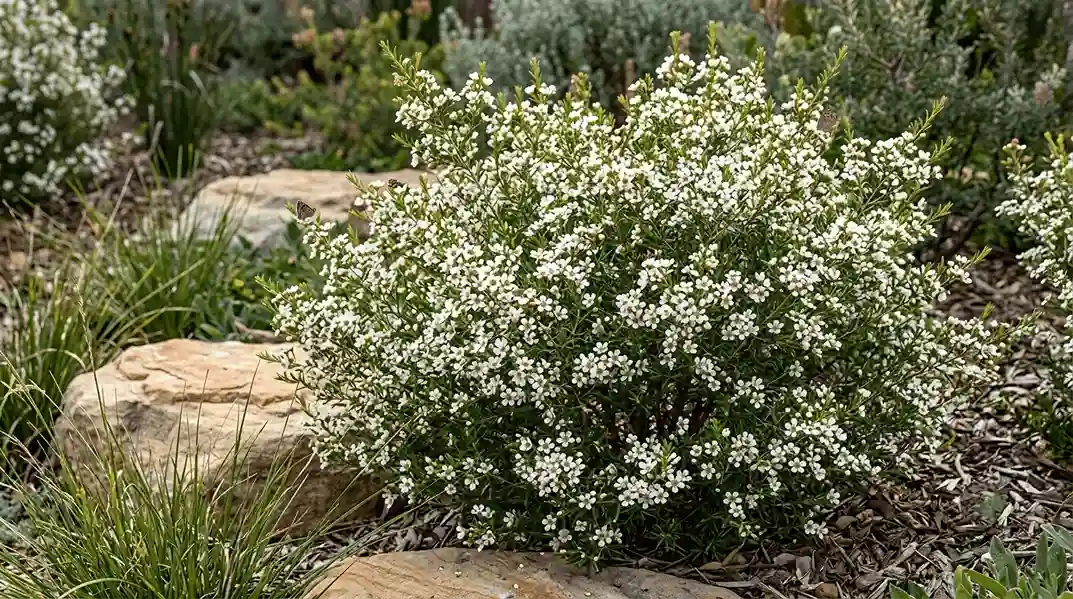
Sannantha virgata is a compact Australian native shrub in the Myrtaceae family, admired for its fine foliage and masses of delicate white native flowers. Formerly classified as Baeckea virgata and Babingtonia virgata, the plant is still sold under older names, making botanical synonyms important for identification. Commonly called heath myrtle or twiggy heath myrtle, it is valued for attracting pollinators, tolerating dry conditions once established, and fitting naturally into native, cottage, and wildlife-friendly gardens.
Quick Summary
- Sannantha virgata was formerly known as Baeckea virgata and Babingtonia virgata.
- It produces abundant white flowers that attract native bees and other pollinators.
- It grows best in full sun and well-drained soil with moderate watering while establishing.
- Dwarf and related Sannantha species suit gardens of different sizes.
What Is Sannantha virgata?
Botanical classification and recent name changes
Sannantha virgata is a flowering shrub in the Myrtaceae family. Botanical research transferred the species from Baeckea to Sannantha, while Babingtonia virgata was also used historically. These name changes reflect improved scientific understanding rather than changes to the plant itself.
Common names of Sannantha virgata
The common name for Babingtonia virgata is usually heath myrtle or twiggy heath myrtle. It is also called twiggy myrtle, describing its slender branching and compact appearance.
Key Identification Features
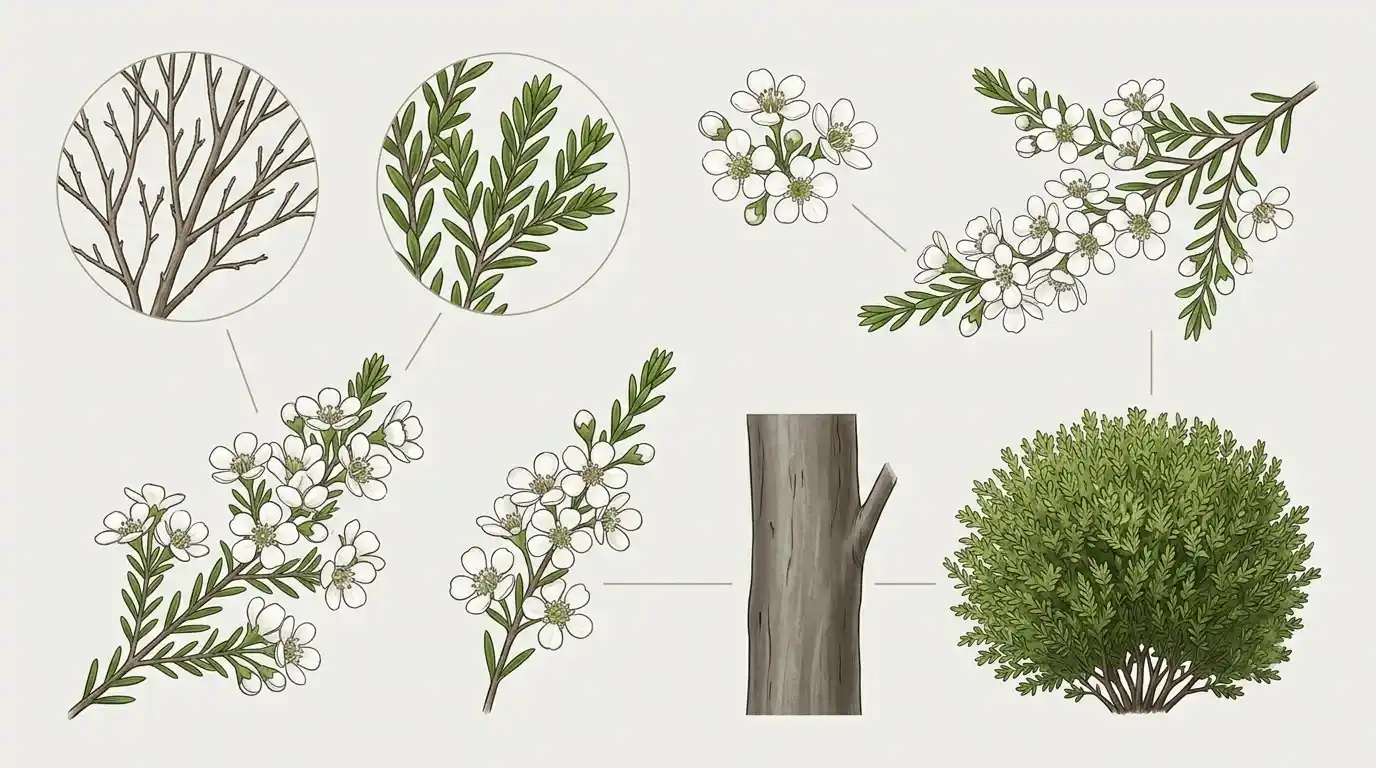
Sannantha virgata is recognised by its dense, rounded habit and fine twiggy stems.
Key features include:
- Small aromatic green leaves
- Fine branching structure
- Masses of five-petalled white flowers
- Long flowering period from spring into summer
- Smooth brown to grey bark with age
- Compact shrub covered in native white flowers
These characteristics make heath myrtle easy to distinguish in Australian native gardens.
Plant Size and Growth Habit
Mature height and spread
Baeckea virgata typically reaches 1–2 m tall and 1–2 m wide, although compact selections remain smaller. Space plants about 1–1.5 m apart when creating informal hedges or mass plantings.
Growth rate
Growth is generally moderate. Plants establish quickly in sunny positions with free-draining soil, while shade, poor drainage, and drought during establishment slow development.
Care Guide for Sannantha virgata
Light requirements
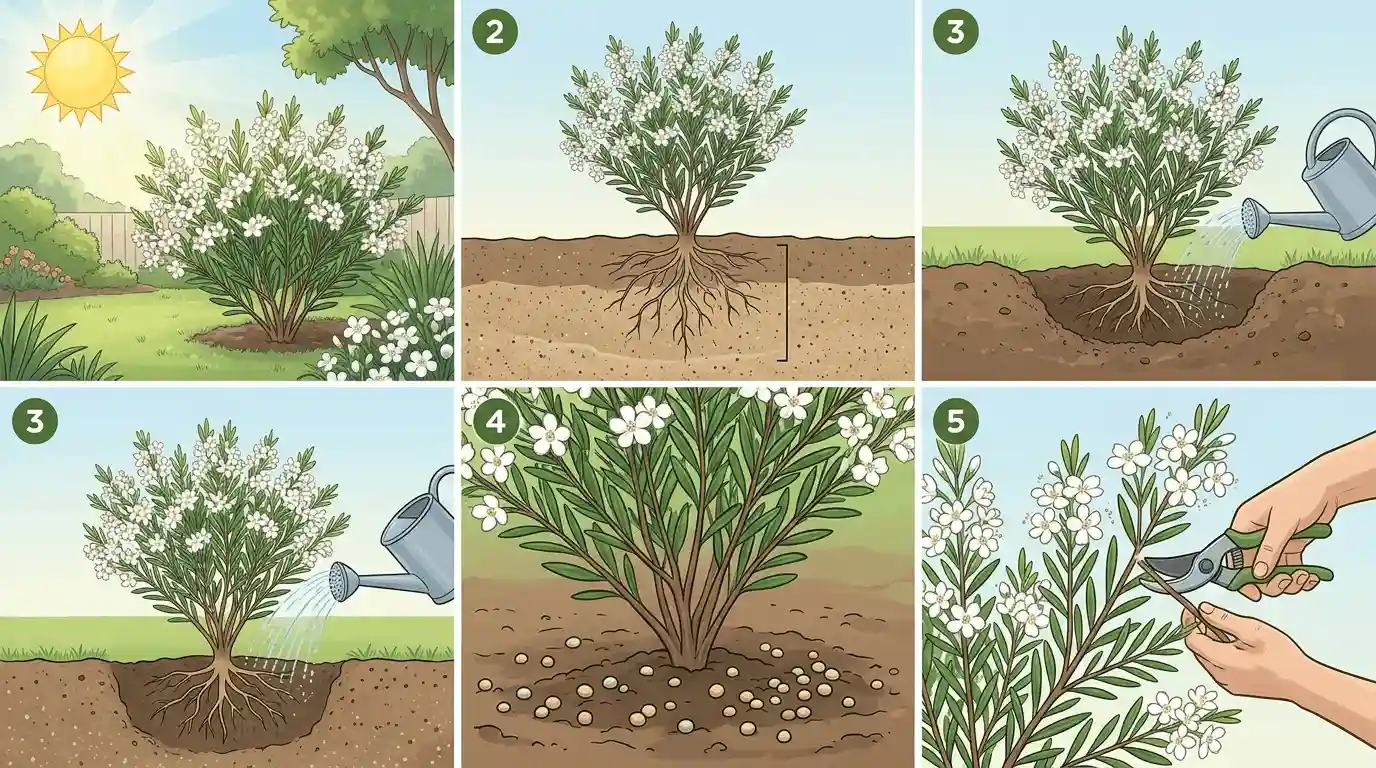
Grow Sannantha virgata in full sun for the best flowering. It tolerates light partial shade but usually produces fewer blooms.
Soil preferences
It performs best in sandy or well-drained loam with a slightly acidic to neutral pH. Improve heavy clay with coarse sand and organic matter to enhance drainage. If your garden contains heavy clay, our guide on how to improve clay soil explains practical ways to increase drainage before planting.
Water requirements
Water regularly during the first growing season. Once established, the shrub becomes drought tolerant but benefits from occasional deep watering during prolonged summer heat.
Fertiliser
Use a low-phosphorus native plant fertiliser in spring. Slow-release products formulated for Australian natives encourage healthy growth without damaging sensitive roots.
Pruning
Lightly prune after flowering to maintain a compact shape and encourage fresh flowering wood. Avoid cutting into old woody stems.
Flowering Characteristics
Flower colour and blooming season
The shrub produces masses of small white blossoms, usually from spring to early summer. The flowers supply nectar that attracts beneficial insects throughout the flowering season.
Wildlife value
Its nectar-rich flowers support:
- Native bees
- Butterflies
- Hoverflies
- Small insect-eating birds
Greenery Inside recommends planting several shrubs together to create a stronger food source for local pollinators. Sannantha virgata also pairs well with other native plants that attract butterflies, helping create a diverse, pollinator-friendly Australian garden.
Landscaping Uses
Sannantha virgata adapts well to many Australian landscapes because of its compact growth and reliable flowering.
Ideal uses include:
- Native gardens
- Cottage gardens
- Rockeries
- Garden borders
- Low informal hedges
- Containers
- Wildlife gardens
In our experience, it performs especially well when combined with other drought-tolerant Australian native shrubs.
Comparison With Similar Species and Cultivars
Sannantha virgata vs Sannantha minima
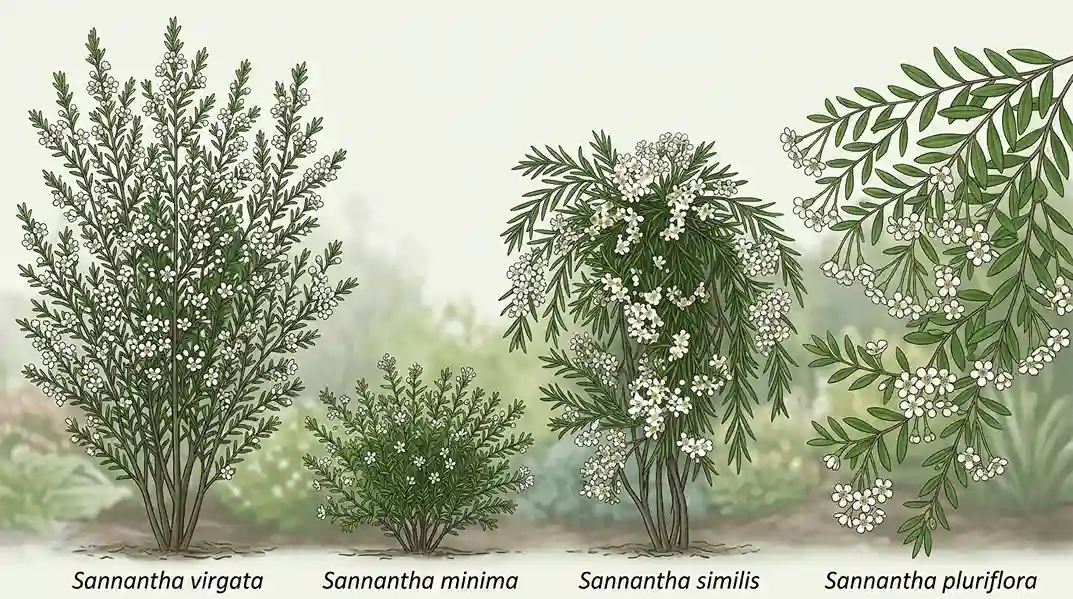
Sannantha minima is generally smaller and more compact than Sannantha virgata, making it better suited to small gardens and containers.
Sannantha virgata vs Sannantha similis
Sannantha similis (formerly Babingtonia similis) differs in natural distribution, leaf form, and overall growth habit, although both produce attractive white flowers.
Other related Sannantha species
Species such as Sannantha pluriflora and Sannantha angusta vary in size, foliage, and natural habitat but share similar ornamental qualities.
| Species | Mature Size | Flower Colour | Best Garden Use |
| Sannantha virgata | 1–2 m | White | Borders, hedges |
| Sannantha minima | Under 1 m | White | Pots, small gardens |
| Sannantha similis | 1–2 m | White | Native landscapes |
| Sannantha pluriflora | Variable | White | Bushland gardens |
| Sannantha angusta | Variable | White | Native collections |
Popular Forms and Older Cultivar Names
Many nurseries still use historical names such as Baeckea virgata dwarf, Babingtonia virgata dwarf, Baeckea virgata compacta, Baeckea virgata nana, Baeckea virgata minima, dwarf heath myrtle, dwarf baeckea, and tall baeckea. These names usually refer to older botanical classifications or selected horticultural forms rather than different species.
Common Growing Problems and Solutions
Poor flowering
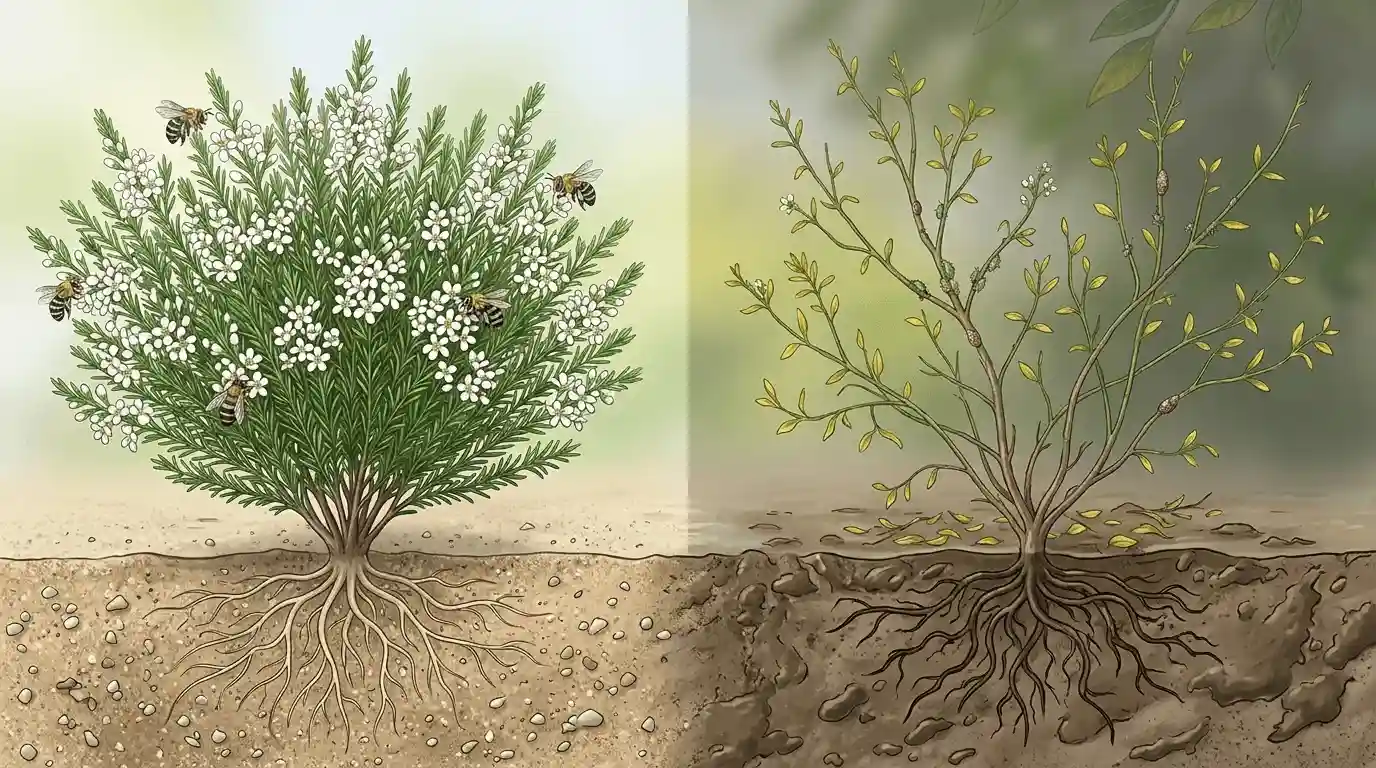
Poor flowering is usually caused by too much shade, excessive nitrogen fertiliser, or pruning at the wrong time. Grow Sannantha virgata in full sun and prune lightly after flowering to encourage new blooms.
Root problems
Poor drainage is the main cause of root rot. Plant in free-draining soil and avoid waterlogged conditions, especially during winter. Raised beds can improve drainage in heavy clay.
Sparse or leggy growth
Leggy growth often results from insufficient sunlight, lack of regular pruning, or ageing stems. Light annual pruning helps maintain a dense, compact habit.
Common pests
Although generally hardy, the shrub may occasionally attract:
- Scale insects
- Psyllids
- Aphids
Inspect plants regularly and encourage beneficial insects. Healthy plants grown in suitable conditions rarely experience severe pest problems.
Common Beginner Mistakes
Avoid these common mistakes:
- Planting in poorly drained soil
- Overwatering established plants
- Applying high-phosphorus fertilisers
- Pruning too heavily into old wood
- Growing in deep shade where flowering is reduced
Frequently Confused Plants
Is Bracteantha a perennial?
Yes. Bracteantha (now commonly classified as Xerochrysum bracteatum) is usually grown as a perennial Australian daisy. Unlike Sannantha virgata, it belongs to the Asteraceae family and has colourful daisy-like flowers rather than small white myrtle blooms.
What is Babingtonia similis?
Babingtonia similis is the former botanical name for Sannantha similis. Like Sannantha virgata, it was renamed following botanical revision, but it remains a distinct species with differences in foliage, natural distribution, and growth habit.
Why Sannantha virgata Is Valuable in Australian Gardens
Sannantha virgata is valued because it combines ornamental beauty with low-maintenance performance. Its long flowering season, compact habit, and drought tolerance make it suitable for gardens of many sizes.
Key benefits include:
- Long-lasting white flowers
- Excellent pollinator plant
- Low-maintenance once established
- Compact growth for small spaces
- Suitable for native and cottage gardens
- Good drought tolerance
- Supports Australian biodiversity
As of 2026, native shrubs such as Sannantha virgata continue to be recommended for water-wise Australian landscapes due to their resilience and wildlife value.
Conclusion
Sannantha virgata, formerly known as Baeckea virgata and Babingtonia virgata, is an attractive Australian native shrub prized for its delicate white flowers, compact growth, and easy-care nature. With full sun, well-drained soil, occasional pruning, and low-phosphorus fertiliser, it provides years of reliable flowering while supporting native pollinators. Whether used in borders, rockeries, wildlife gardens, or containers, selecting the right cultivar ensures this versatile heath myrtle performs beautifully in gardens of every size.
FAQs
Is Sannantha virgata the same plant as Baeckea virgata?
Yes. Baeckea virgata is the former scientific name of Sannantha virgata following botanical reclassification.
What is the common name for Babingtonia virgata?
The most common names are heath myrtle, twiggy heath myrtle, and twiggy myrtle.
How big does Sannantha virgata grow?
Most plants mature at 1–2 metres tall and wide, while dwarf selections remain significantly smaller.
Can Sannantha virgata tolerate drought?
Yes. Once established, it has good drought tolerance but benefits from occasional deep watering during extended dry periods.
Does Sannantha virgata attract bees and pollinators?
Yes. Its nectar-rich white flowers attract native bees, butterflies, beneficial insects, and sometimes small birds.
What soil is best for Sannantha virgata?
Well-drained sandy or loamy soil with a slightly acidic to neutral pH is ideal.
Can Sannantha virgata be grown in pots?
Yes. Compact and dwarf forms grow well in containers when planted in a quality free-draining native potting mix and watered regularly during establishment.