Introduction
The cats whiskers plant is a unique flowering herb known for its long, delicate stamens that resemble a cat’s whiskers. Scientifically called Orthosiphon aristatus, this plant is valued both as an ornamental garden plant and as a traditional medicinal herb used in herbal teas such as Java tea. Native to tropical regions of Asia and Australia, the plant is recognized for its distinctive white or purple flowers and its historical use in herbal remedies. Understanding the cats whiskers plant, including its benefits, growth habits, care requirements, and potential side effects, helps gardeners and plant enthusiasts cultivate it successfully while appreciating its botanical and herbal significance.
What Is the Cats Whiskers Plant?
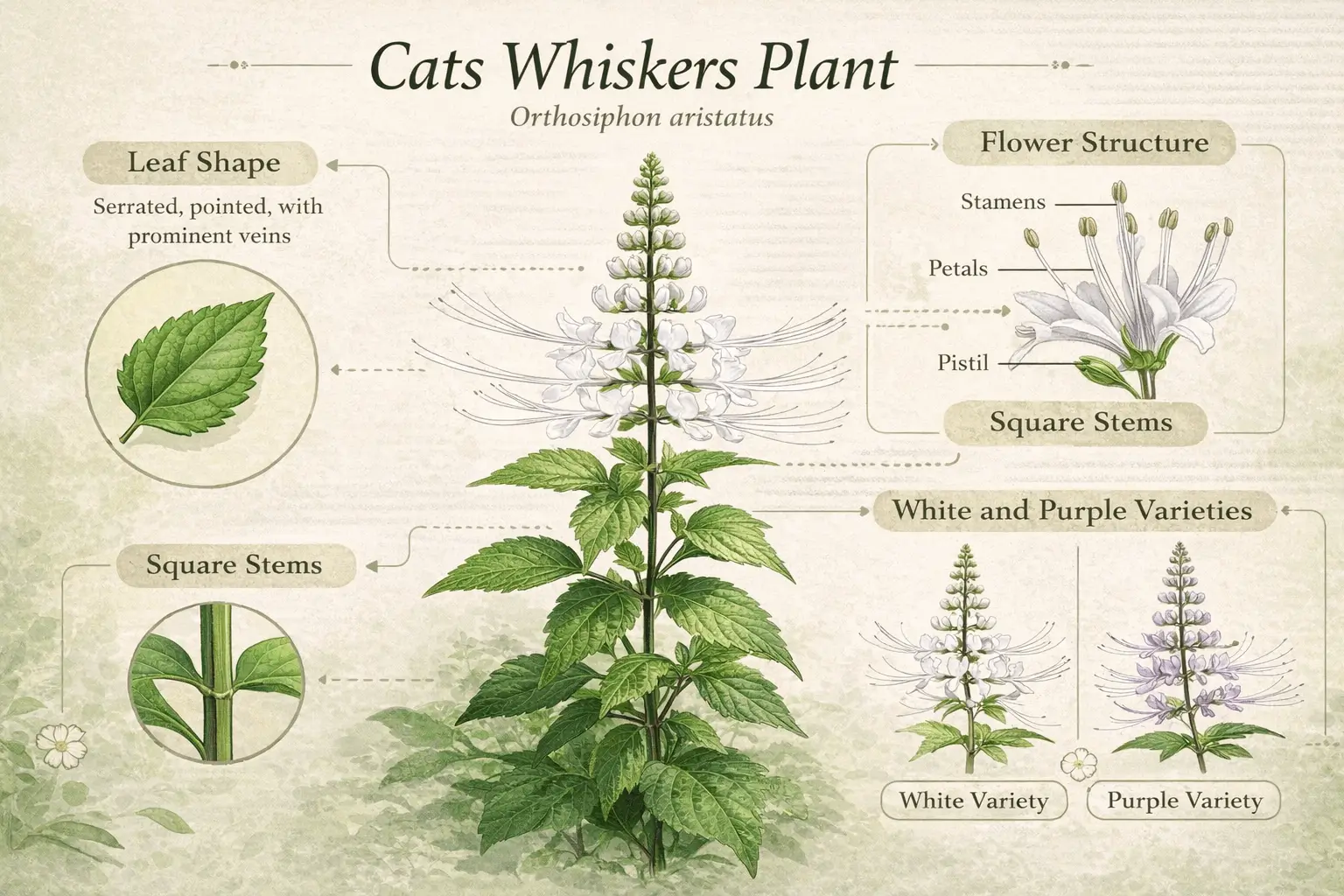
The cats whiskers plant is a tropical flowering herb scientifically known as Orthosiphon aristatus, a species in the mint family Lamiaceae widely recognized in tropical herbal traditions. It is widely cultivated for its ornamental flowers and for its traditional medicinal uses in herbal preparations.
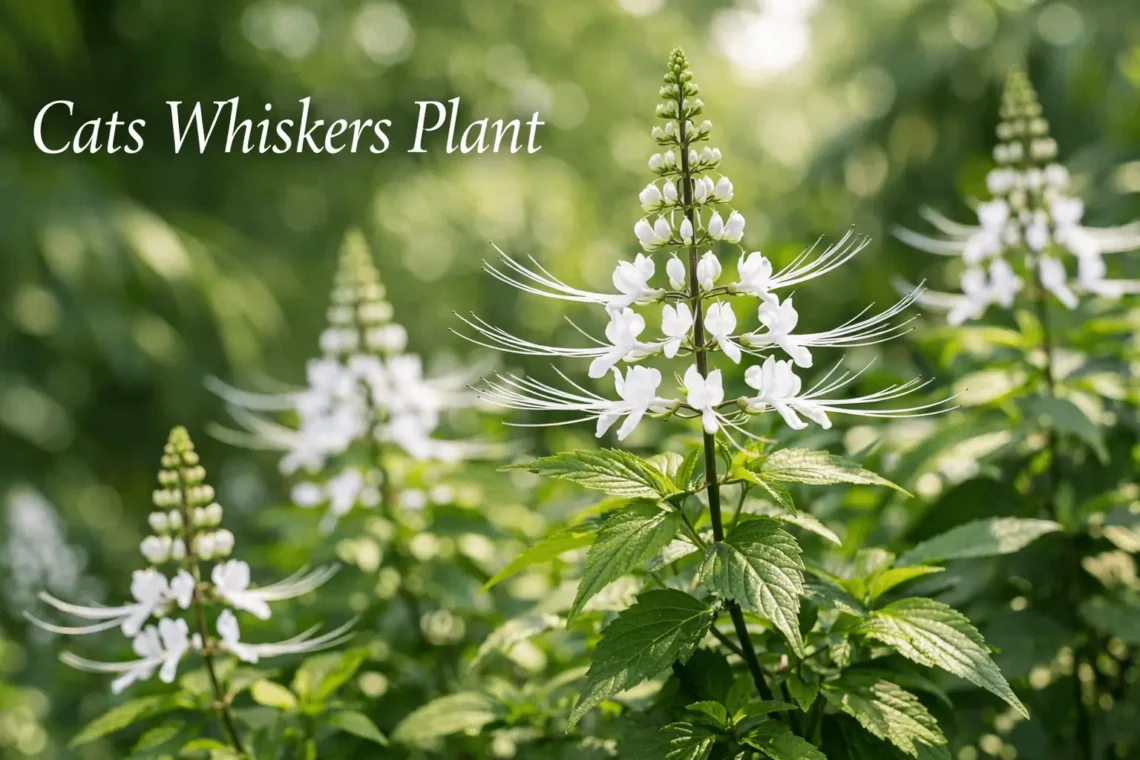
This plant is known by several common names, including cat’s whiskers plant, kitty whiskers plant, and orthosiphon herb. The name originates from the plant’s distinctive flowers, which feature long, thin stamens extending outward like the whiskers of a cat.
Beyond its ornamental appeal, the plant has been historically used to prepare Java tea, a herbal infusion made from its leaves. Gardeners often grow it for its decorative appearance as well as its association with herbal traditions.
Flower colors vary depending on the cultivar. The white cats whiskers plant is the most commonly cultivated form, while some varieties produce light purple or lavender flowers. Like other decorative tropical plants such as the Purple Heart Plant Indoor Benefits, the cats whiskers plant is valued not only for its appearance but also for the atmosphere it brings to indoor and garden spaces.
Botanical Characteristics and Identification
Scientific Classification and Plant Structure
The cats whiskers plant belongs to the Lamiaceae (mint) family, which includes many aromatic herbs. Its botanical classification includes:
- Family: Lamiaceae
- Genus: Orthosiphon
- Species: Orthosiphon aristatus
The plant typically produces oval to lance-shaped leaves with slightly serrated edges and a soft green color. Leaves grow opposite each other on square stems, a characteristic commonly found in the mint family.
The most recognizable feature of the plant is its elongated stamens, which extend far beyond the flower petals. These thread-like structures resemble whiskers, giving the plant its common name.
White varieties are the most widely grown, but purple flowering cats whiskers plants also exist. The main difference between these varieties is flower coloration, while their growth habit and structure remain similar.
Natural Habitat and Growing Regions
The cats whiskers plant is native to tropical Asia, particularly regions of Southeast Asia such as Indonesia, Malaysia, and Thailand. It also grows naturally in parts of Australia and the Pacific Islands.
Because it originates from warm climates, the plant thrives in tropical and subtropical environments. It is often cultivated in home gardens in regions with warm temperatures and moderate humidity.
Healthy growth typically occurs in areas that provide:
- Warm temperatures
- Consistent moisture
- Well-draining soil
- Adequate sunlight
These environmental conditions mimic the plant’s natural tropical habitat.
Benefits and Traditional Uses of Cats Whiskers Plant
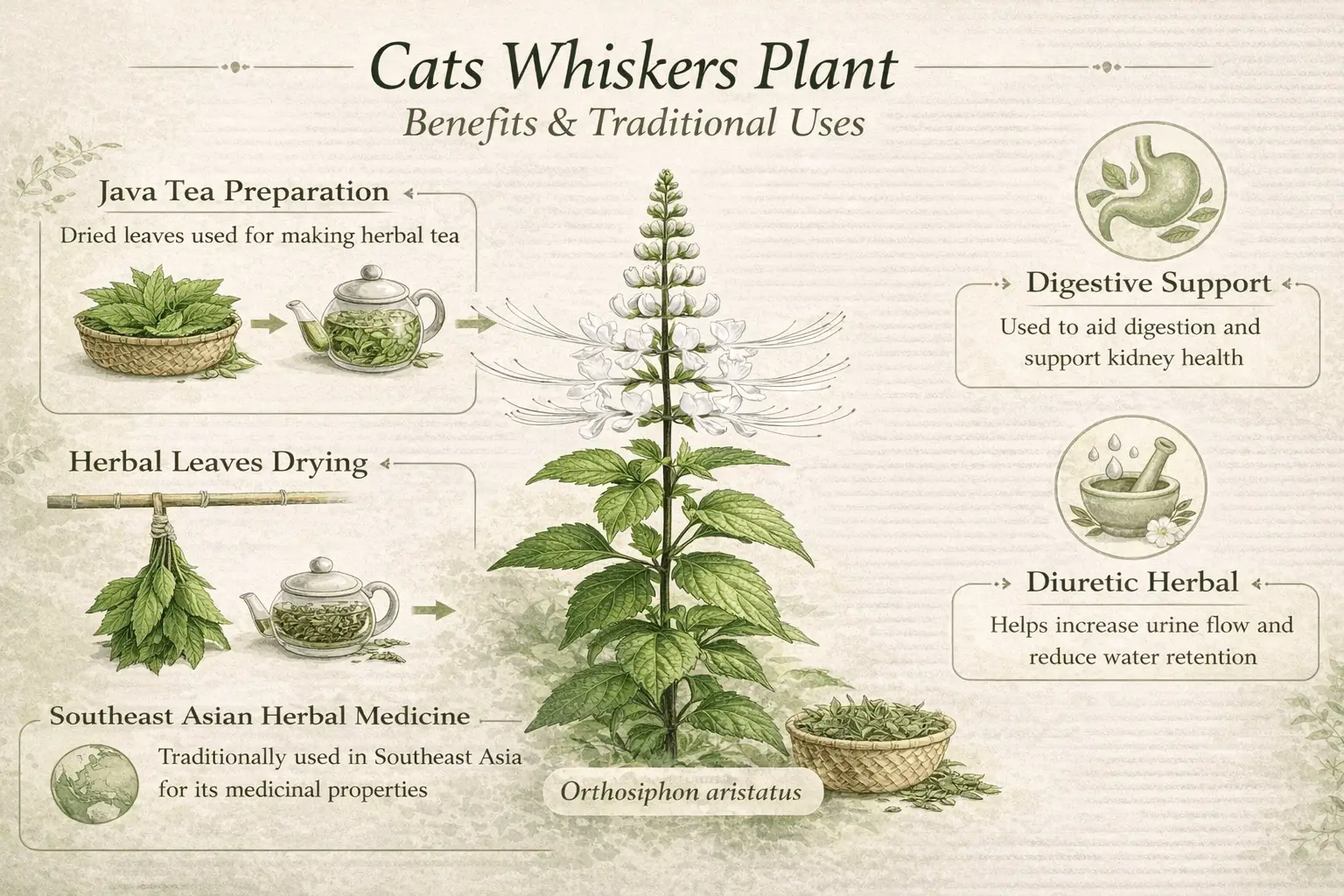
The cats whiskers plant has long been associated with traditional herbal medicine, particularly in Southeast Asian cultures. As an orthosiphon herb, it has historically been used in herbal infusions and natural remedies.
One of the most common uses is in the preparation of Java tea, a traditional herbal beverage made from the plant’s dried leaves. In herbal traditions, this tea has been used to support digestive function and promote fluid balance in the body.
Several plant compounds have been studied in connection with Orthosiphon aristatus benefits in herbal medicine. These include natural plant chemicals such as flavonoids and essential oils that contribute to the plant’s reputation in traditional herbal practices.
While many herbal traditions reference potential benefits, medicinal use should always be approached carefully and guided by professional advice.
Herbal Tea and Traditional Medicine
The leaves of the plant are commonly dried and brewed into cat whisker tea, also known as orthosiphon tea or Java tea.
In traditional herbal systems, the tea has been used as part of herbal routines intended to support:
- Fluid balance in the body
- Digestive comfort
- General wellness practices
Some herbal traditions also reference cat whiskers diuretic effects, meaning the plant may help promote natural fluid elimination. These uses are primarily based on historical herbal practices rather than standardized medical treatment.
Plant Size
The cats whiskers plant typically reaches 2 to 4 feet (60–120 cm) in height and width when fully mature. Under favorable growing conditions, the plant develops into a bushy, branching herb with multiple flowering stems.
Plants grown in garden beds often become larger due to unrestricted root growth and access to natural soil nutrients.
In containers or pots, the plant generally remains smaller, usually between 1.5 to 3 feet tall, depending on pot size and care conditions.
Several environmental factors influence the plant’s final size, including:
- Sunlight exposure
- Soil fertility
- Water availability
- Climate conditions
Adequate sunlight and nutrient-rich soil often produce fuller growth and more abundant flowering.
Growth Rate
The cats whiskers plant is generally considered a moderate to fast-growing herb, especially in warm climates.
In tropical regions where temperatures remain consistently warm, the plant can grow rapidly during the active growing season. Flowering typically begins once the plant becomes well established.
In cooler climates, growth may slow during colder months or periods of reduced sunlight.
Conditions that promote faster growth include:
- Warm temperatures between 70–85°F (21–29°C)
- Fertile, well-draining soil
- Regular watering without waterlogging
When these conditions are maintained, the plant can produce new stems and flowers throughout much of the growing season.
Cat Whiskers Plant Care Guide
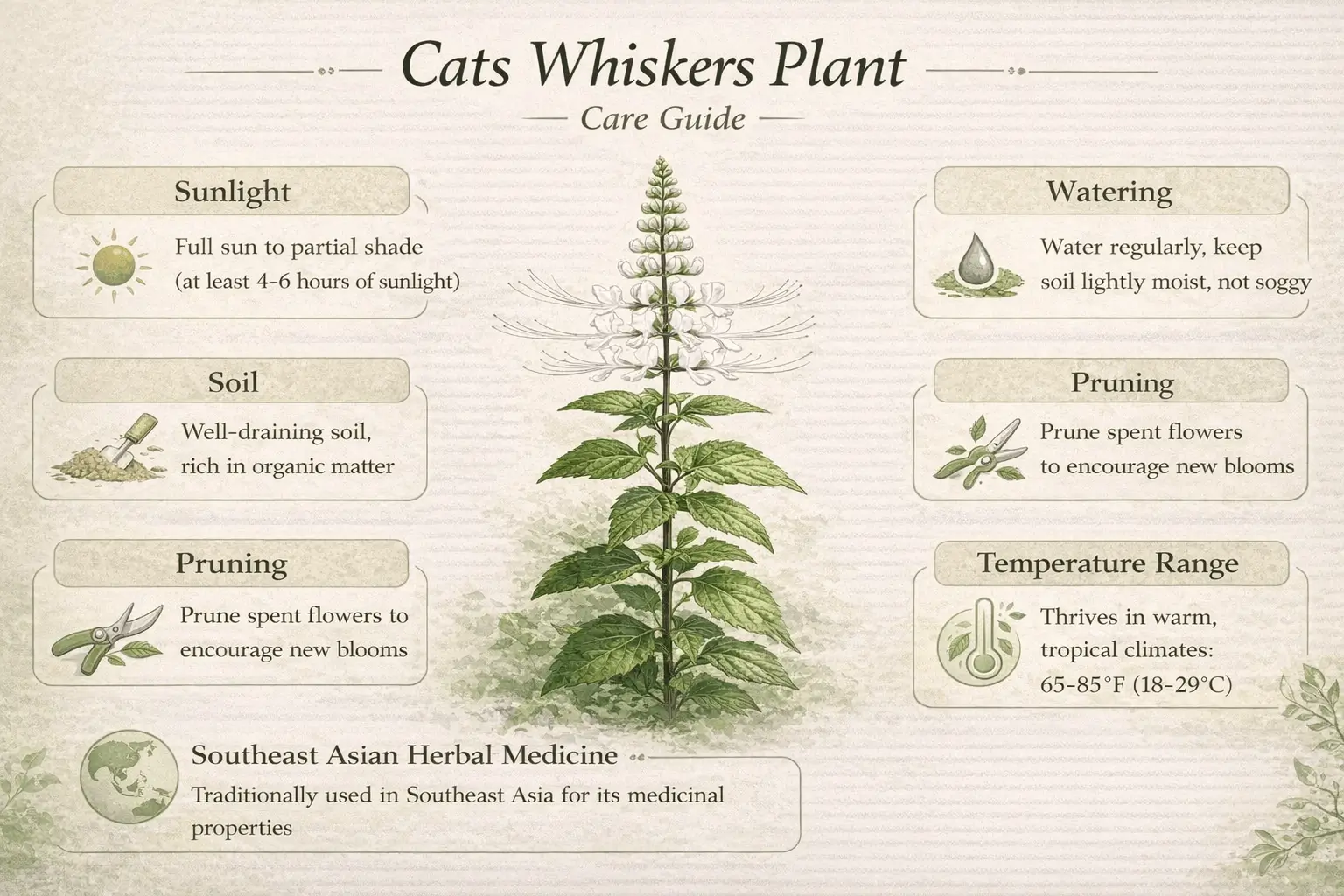
Proper care helps the cats whiskers plant grow vigorously and produce abundant flowers.
Sunlight Requirements
The plant generally grows best in full sun to partial shade.
Bright sunlight encourages stronger flowering and compact growth. However, in extremely hot climates, partial afternoon shade can protect the plant from excessive heat stress.
Watering and Soil Needs
The plant prefers well-draining soil that retains moderate moisture without becoming waterlogged.
Regular watering is recommended, especially during active growth periods. The soil should remain slightly moist but not overly saturated.
A balanced garden soil or organic potting mix works well for container-grown plants.
Fertilization and Pruning
Light fertilization during the growing season can encourage healthy growth. A balanced fertilizer applied every few weeks is usually sufficient.
Pruning helps maintain plant shape and stimulates new flowering stems. Removing spent flower spikes often encourages additional blooms.
Climate and Temperature Tolerance
The cats whiskers plant prefers warm, tropical climates and performs best in temperatures above 60°F (15°C).
It is sensitive to frost, and prolonged exposure to cold temperatures can damage or kill the plant. In colder climates, gardeners may grow it in containers so it can be moved indoors during winter.
Cats Whiskers Plant Propagation Methods
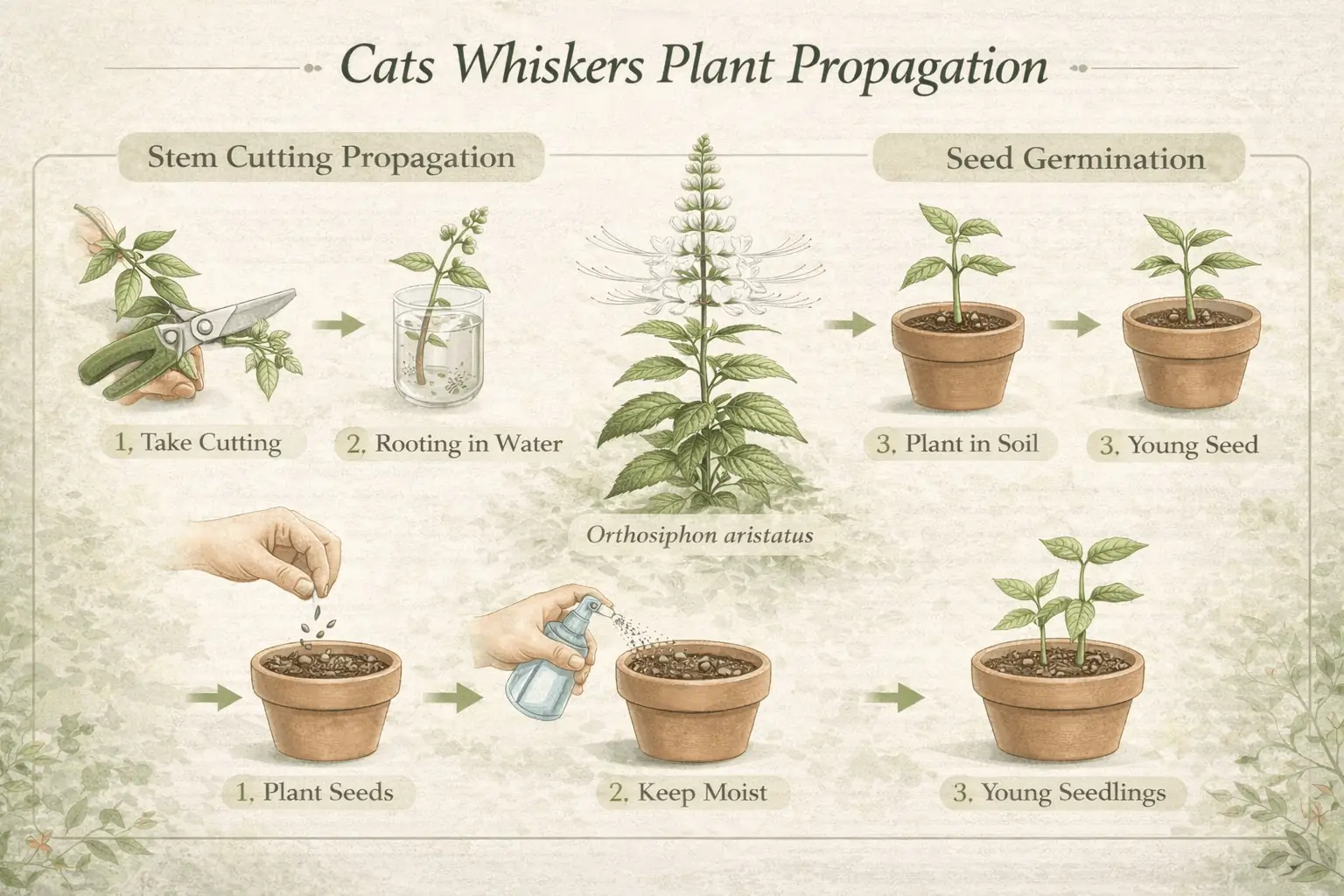
Gardeners can propagate the cats whiskers plant using several reliable methods.
Propagation from Cuttings
Stem cuttings are the most common propagation method.
Steps typically include:
- Select a healthy stem about 4–6 inches long.
- Remove lower leaves from the cutting.
- Place the cutting in moist, well-draining soil.
- Keep the soil consistently moist while roots develop.
Warm temperatures and indirect sunlight support successful rooting.
Growing from Seeds
The plant can also be grown from cat whiskers plant seeds.
Seeds should be planted in warm soil and lightly covered. Consistent moisture and warm conditions support germination.
Young seedlings require gentle watering and bright light to develop into healthy plants.
Common Problems and Troubleshooting
Yellow Leaves or Slow Growth
Yellowing leaves or slow development may result from:
- Overwatering
- Poor soil drainage
- Insufficient sunlight
Adjusting watering frequency and improving soil drainage often resolves these issues.
Pest and Disease Issues
Like many tropical herbs, the plant may occasionally attract pests such as aphids or spider mites.
Regular inspection of leaves and maintaining proper air circulation helps reduce pest problems.
Natural pest control methods, including rinsing leaves with water or using mild insecticidal soap, are often effective.
Overwatering Problems
Excess water can cause root stress or root rot, particularly in poorly drained soil.
Symptoms include drooping leaves, yellow foliage, and slowed growth. Allowing soil to partially dry between watering helps prevent this problem.
If aphids become persistent, gardeners can follow proven treatment methods such as those explained in Aphids on Plants to control infestations safely.
Safety, Side Effects, and Toxicity
A common question is: Is cat whiskers plant poisonous?
When grown as an ornamental plant in gardens, the cats whiskers plant is not generally considered poisonous.
However, herbal consumption should be approached carefully. The plant has a long history of use in herbal teas, but excessive consumption or improper preparation may cause unwanted effects.
Individuals considering medicinal use should consult qualified herbal or medical professionals. This distinction between ornamental cultivation and medicinal use is important for safe plant use.
Comparison With Similar Herbal Plants
The cats whiskers plant is sometimes compared with other herbal plants commonly used in teas and herbal remedies.
For example, herbs such as mint, lemongrass, and basil are also used in herbal beverages. However, Orthosiphon aristatus is unique due to its long whisker-like stamens and its association with Java tea.
Unlike many common culinary herbs, the cats whiskers plant is primarily valued in herbal traditions rather than everyday cooking.
Its ornamental appearance also sets it apart from many medicinal herbs typically grown only for functional purposes.
Seasonal Care and Environmental Considerations
Seasonal changes can influence the growth and flowering patterns of the cats whiskers plant.
During warm seasons, the plant actively produces new stems and flowers. Consistent watering and sunlight support healthy development during this time.
In cooler seasons, growth may slow or temporarily pause. Gardeners in colder regions often grow the plant in containers so it can be protected from frost.
Indoor cultivation during winter may require:
- Bright indoor lighting
- Reduced watering
- Protection from cold drafts
These adjustments help maintain plant health until warmer temperatures return.
Conclusion
The cats whiskers plant is a distinctive flowering herb valued for its ornamental beauty and traditional herbal uses. Known scientifically as Orthosiphon aristatus, it produces elegant whisker-like flowers and has long been associated with herbal teas such as Java tea. With proper sunlight, well-draining soil, and consistent watering, the plant can thrive in warm climates and home gardens. Understanding its care requirements, growth habits, and traditional uses allows gardeners and herbal enthusiasts to appreciate the plant’s full potential while cultivating it successfully.
FAQs
- What is the scientific name of the cats whiskers plant?
The cats whiskers plant is scientifically known as Orthosiphon aristatus, a tropical flowering herb commonly used in ornamental gardens and herbal medicine. - Does the cats whiskers plant prefer sun or shade?
The plant generally prefers full sun to partial shade, with brighter conditions encouraging better flowering. - How do you propagate a cats whiskers plant?
Propagation is typically done through stem cuttings or seeds, with cuttings being the most common and reliable method. - Is the cats whiskers plant poisonous?
The plant is not generally considered poisonous when grown as an ornamental plant, but herbal consumption should follow proper guidance. - What is cat whiskers tea made from?
Cat whiskers tea, also called Java tea or orthosiphon tea, is made from the dried leaves of the cats whiskers plant. - How big does the cats whiskers plant grow?
The plant typically grows 2–4 feet tall and wide, depending on climate, soil conditions, and care.