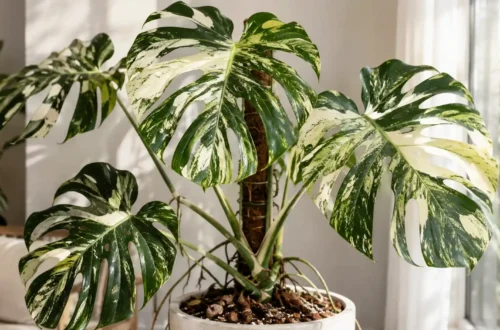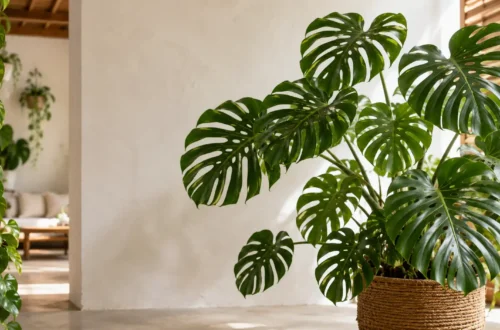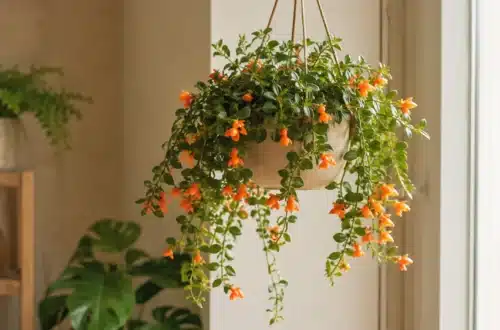
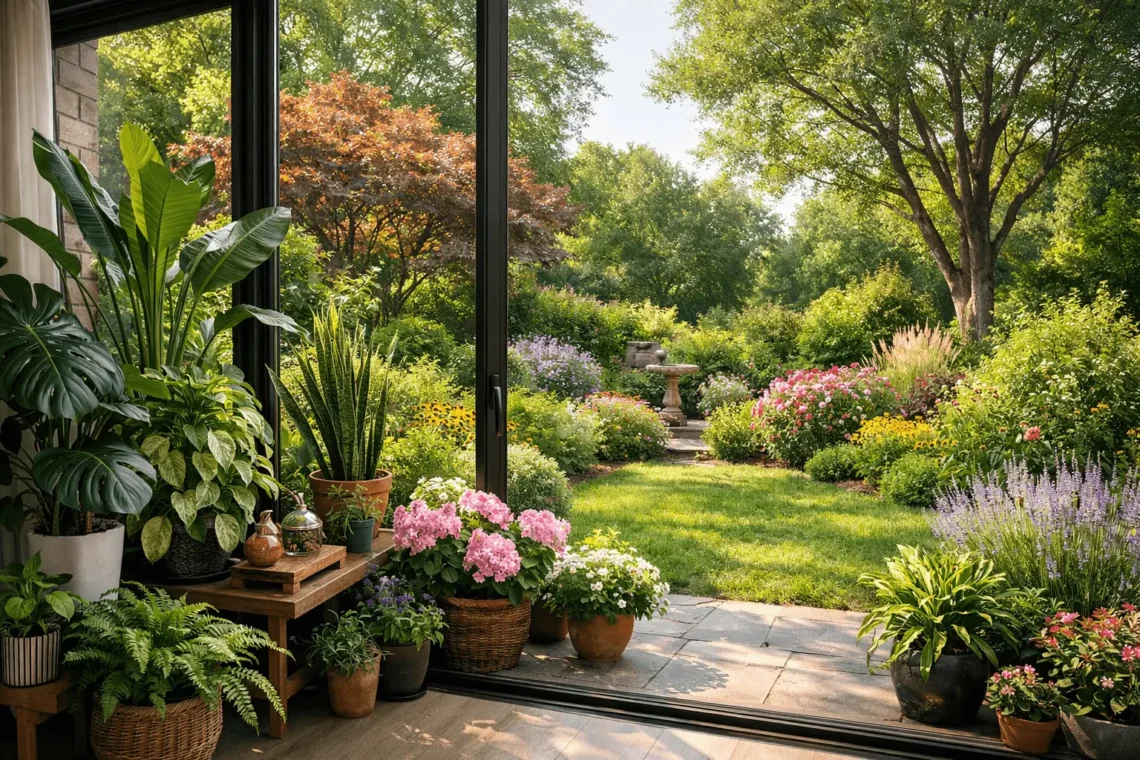
Plants are essential components of healthy homes and thriving outdoor environments. From decorative indoor foliage to flowering garden plants and landscape trees, plants influence the beauty, comfort, and ecological balance of living spaces.
Across cultures and climates, people have always relied on plants to create welcoming environments. In modern homes, indoor plants improve the atmosphere of living spaces while outdoor plants shape landscapes, provide shade, support wildlife, and increase property value.
Just like houseplants bring life and personality to indoor spaces, many people also look for meaningful and creative names inspired by nature. If you’re exploring unique naming ideas, you can check out NameChuckle for a wide collection of names and their meanings.
Whether you are a beginner plant enthusiast, a homeowner building a garden, or someone simply interested in improving the natural beauty of your living environment, understanding how plants grow and interact with their surroundings is the foundation of successful gardening.
This comprehensive guide to house plants explores the most useful plants for homes and gardens and explains how to grow and maintain them effectively. Throughout the article, you will discover how different plant types function, how to select plants suited to your environment, and how to create spaces that combine visual beauty with ecological sustainability.
You will also find connections to detailed plant guides that explore specific species in greater depth, including indoor houseplants, ornamental shrubs, landscape trees, and ground cover plants.
By the end of this guide, you will understand:
- the environmental and health benefits of plants
- the most useful indoor plants for homes
- flowering plants that enhance outdoor landscapes
- trees and shrubs used in landscape design
- low-maintenance ground cover plants
- edible plants for home gardens
- common plant problems and solutions
Understanding these plant categories will help you design healthier, greener spaces that thrive year after year.
Why Plants Are Important for Homes and Gardens
Plants provide far more than visual appeal. They contribute to environmental balance, human health, and sustainable ecosystems. When integrated thoughtfully into indoor and outdoor environments, plants improve air quality, support biodiversity, and create calming living spaces.
Many homeowners initially begin gardening for aesthetic reasons, but they soon discover that plants offer numerous additional benefits.
Environmental Benefits of Plants
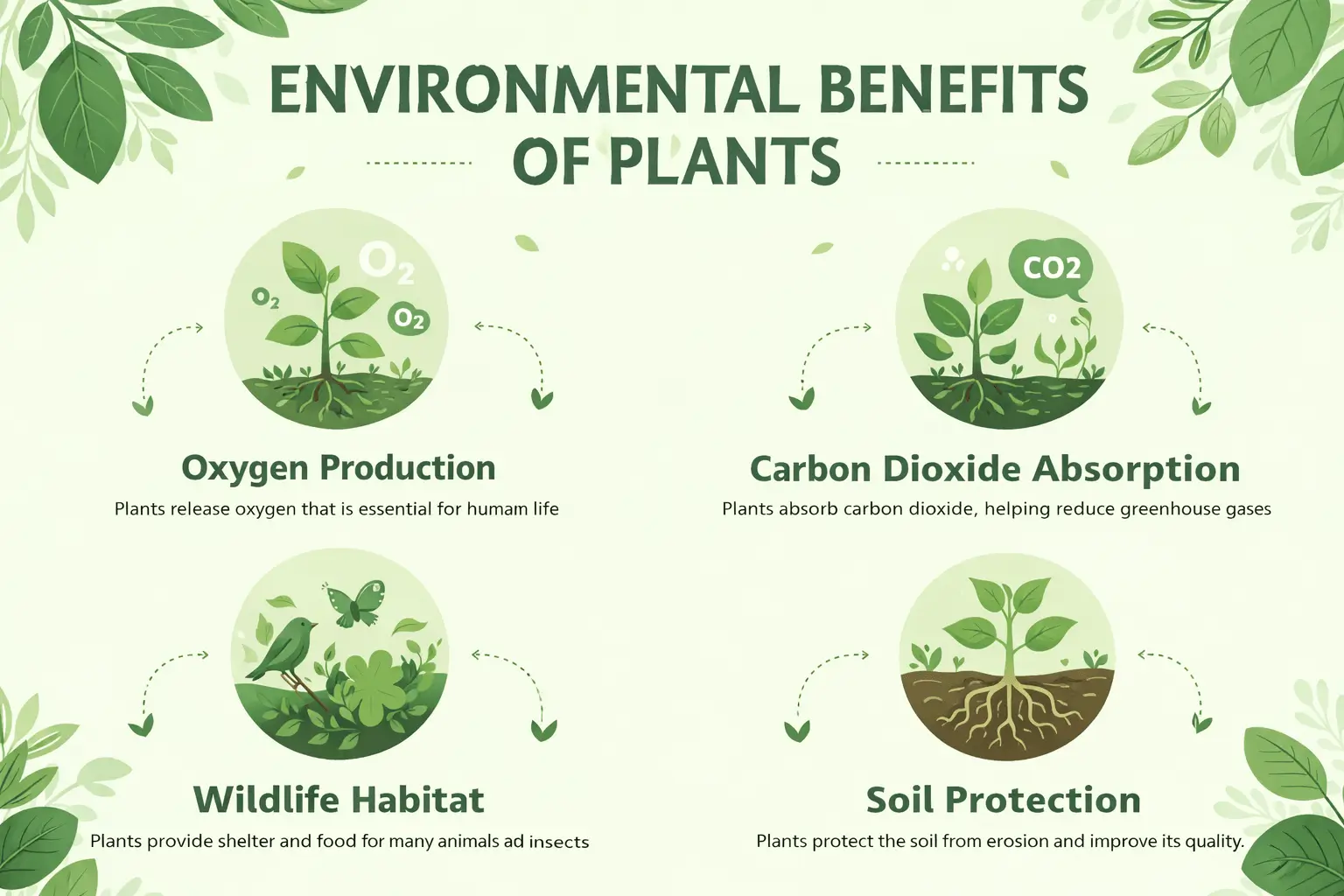
Plants are critical to the Earth’s ecological systems. Through the natural process of photosynthesis, plants absorb carbon dioxide and release oxygen into the atmosphere.
This process plays an essential role in maintaining atmospheric balance and reducing greenhouse gas concentrations.
Trees and shrubs also help regulate temperature in urban environments. Their shade lowers surface temperatures and reduces the urban heat island effect commonly found in cities.
Ground cover plants and grasses contribute to soil stability by reducing erosion and improving soil structure. Their root systems help hold soil in place while increasing its ability to retain water.
Plants also support wildlife by providing shelter and food sources for insects, birds, and small animals. Flowering plants attract pollinators such as bees and butterflies, which are essential for ecosystem health and agricultural productivity.
Mental and Emotional Benefits of Plants
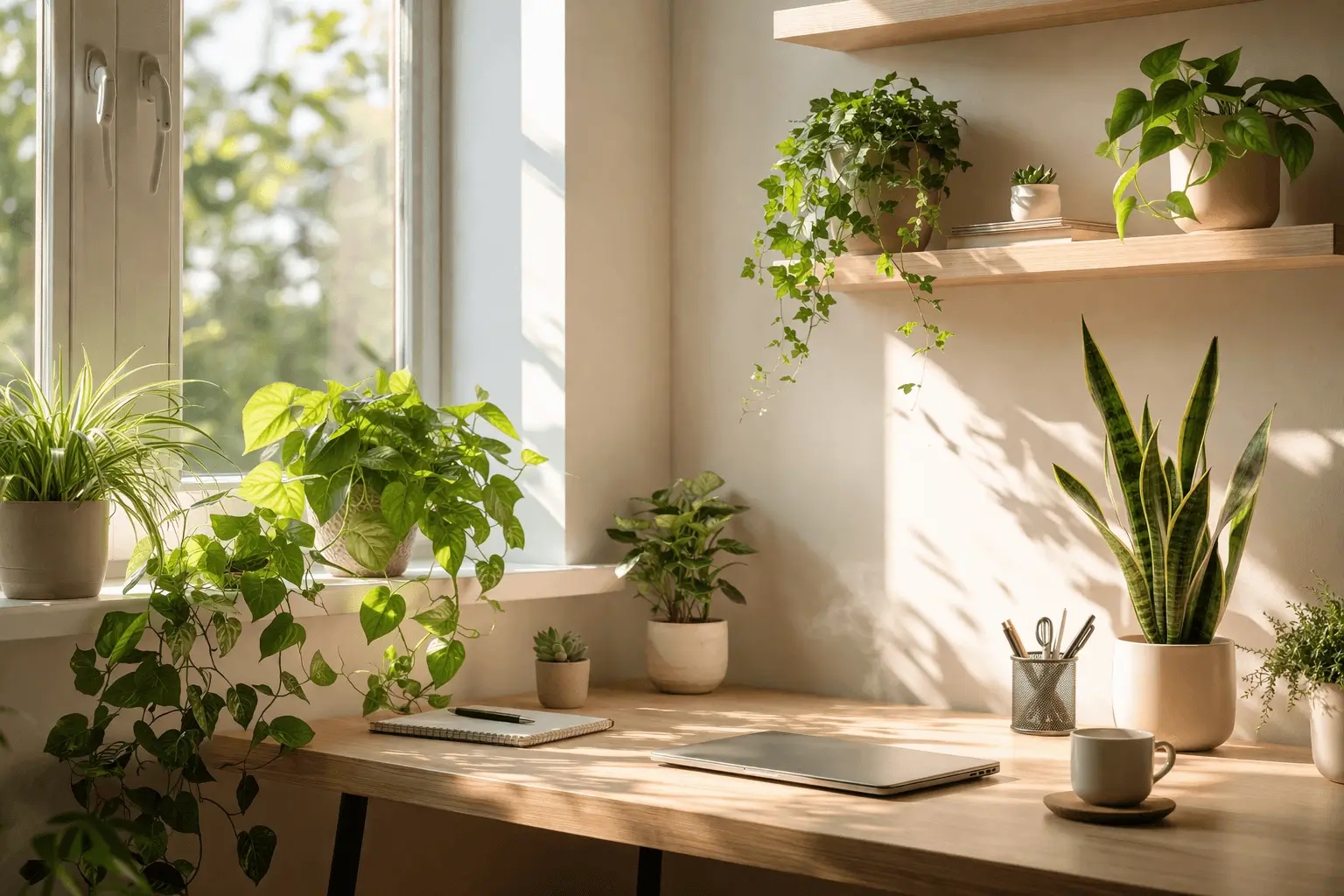
Beyond environmental advantages, plants have profound effects on human well-being.
Studies in environmental psychology have shown that exposure to greenery can reduce stress levels and promote relaxation. Even small indoor plants can create a sense of calm and connection with nature.
People working in offices with plants often report improved concentration and productivity. Similarly, homes filled with natural greenery tend to feel more welcoming and comfortable.
Gardening itself has also been linked to improved mental health. Activities such as planting, watering, and caring for plants encourage mindfulness and physical activity.
Aesthetic and Design Benefits
Plants add color, texture, and life to interior and exterior spaces.
In indoor environments, houseplants soften architectural lines and introduce natural patterns that complement modern interior design.
In outdoor landscapes, trees, shrubs, and flowering plants create dynamic spaces that change with the seasons. Spring flowers, summer foliage, autumn colors, and winter structures provide year-round visual interest.
Because of these benefits, plants are widely used in residential landscaping, commercial environments, and urban green spaces.
Quick Plant Guide Summary
Plants improve both indoor and outdoor environments by supporting health, beauty, and ecological balance.
The most useful plant categories include:
- Indoor plants – spider plant, elephant ear, purple heart
- Flowering plants – lantana, bird of paradise, crepe myrtle
- Landscape trees – brisbane box, silver sheen, australian willow
- Shrubs and hedges – coastal rosemary, bottlebrush
- Ground cover plants – creeping myoporum, dymondia
- Edible plants – garlic and container vegetables
Each category plays an important role in creating sustainable home gardens and attractive living spaces.
Understanding how these plants grow and interact with soil, sunlight, and water helps gardeners build healthier environments.
Indoor Plants That Improve Living Spaces
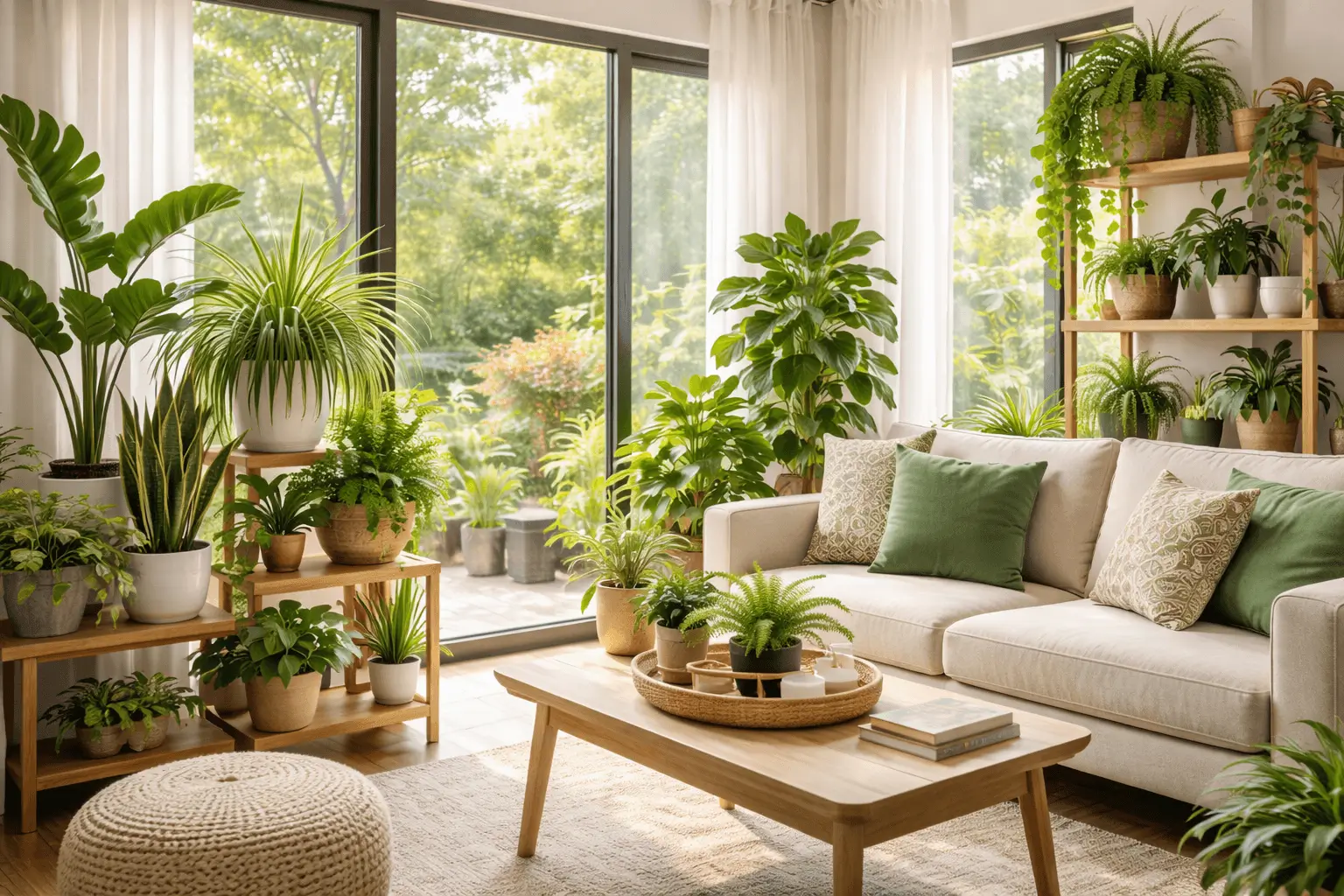
Indoor plants have become increasingly popular in modern homes. They allow people to experience nature even in apartments or urban environments where outdoor gardening space may be limited.
Houseplants can improve interior aesthetics, increase humidity levels, and contribute to healthier indoor air conditions.
When selecting indoor plants, it is important to consider factors such as available light, room temperature, humidity, and maintenance requirements.
Some plants thrive in bright sunlight near windows, while others adapt well to shaded indoor spaces.
Best Placement Tips for House Plants
Where you place your plants can directly affect their growth and health.
-
Near windows: Ideal for bright indirect light plants
-
Bathrooms: Great for humidity-loving plants
-
Bedrooms: Perfect for low-light tolerant plants
-
Offices: Choose low-maintenance greenery
Avoid placing plants near air conditioners, heaters, or direct harsh sunlight.
How to Choose the Right House Plant
Choosing the right house plant depends on your environment and lifestyle. Not all plants thrive in the same conditions.
Consider these factors:
-
Light availability (low, medium, bright)
-
Room temperature and humidity
-
Maintenance level (low vs high care)
-
Space availability (small vs large plants)
For low-light spaces, plants like ZZ Plant and Snake Plant are ideal, while brighter rooms can support flowering indoor plants. If you want to compare light needs, watering triggers, and care level side-by-side before picking a plant, this interactive houseplant care comparison tool lets you filter 25 common species instantly.
It’s a faster way to match a plant to your exact room conditions than scrolling through individual guides one by one.
Below are several indoor plants that are widely appreciated for their adaptability and decorative value.
Spider Plant: A Perfect Beginner Houseplant
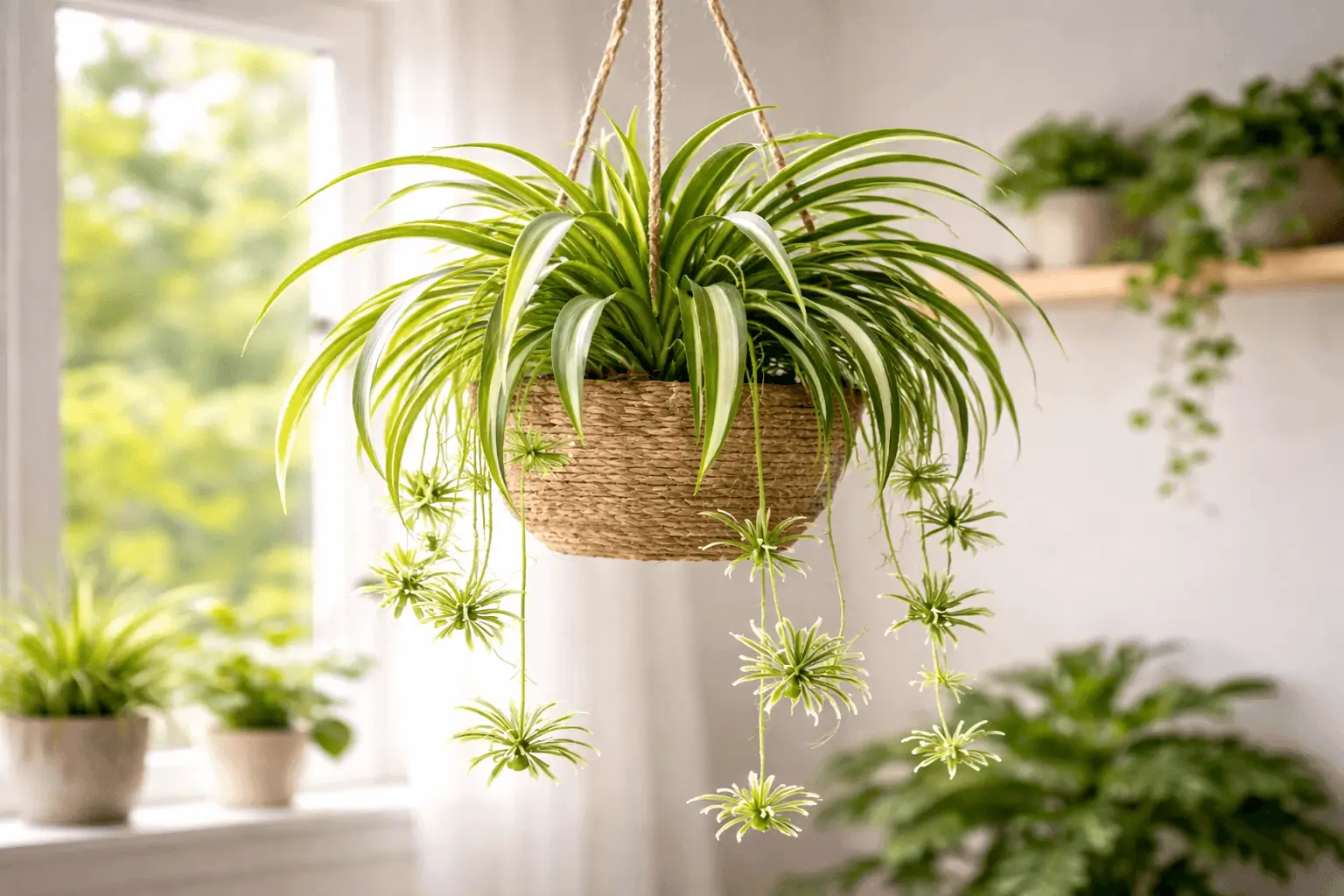
The Spider Plant (Chlorophytum comosum) is one of the most beginner-friendly indoor plants available.
Its arching green leaves and cascading plantlets make it an attractive addition to shelves, hanging baskets, and plant stands.
Spider plants are known for their resilience. They tolerate occasional neglect and can survive irregular watering schedules better than many other houseplants.
Because of their adaptability, spider plants are often recommended for people who are new to indoor gardening.
Growth Characteristics
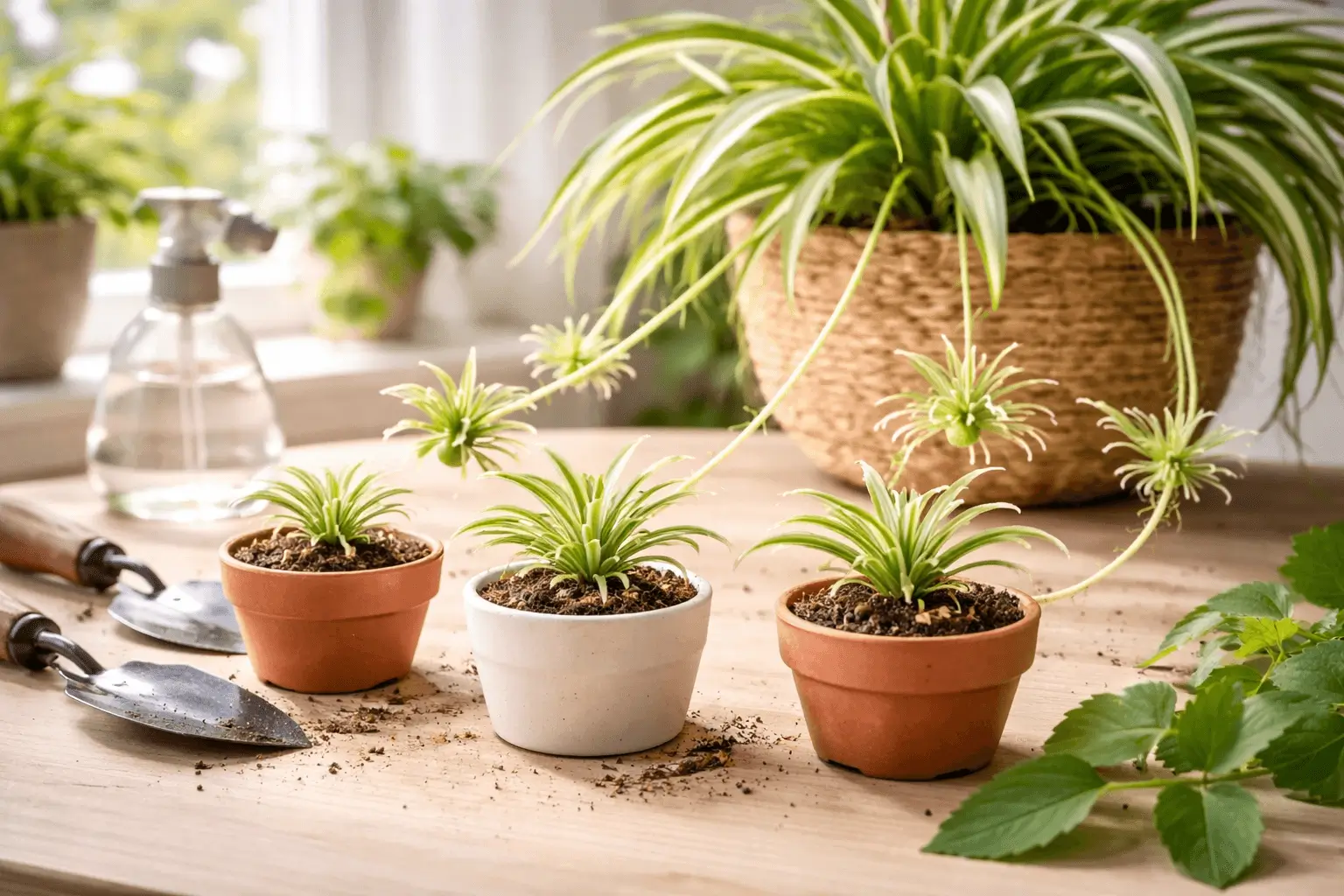
Spider plants grow in clumps of long, narrow leaves that extend outward from a central base. As the plant matures, it produces long stems known as runners.
These runners develop small baby plants, often called spiderettes, which can easily be propagated into new plants.
Indoor Environment Requirements
Spider plants prefer bright indirect light but can tolerate lower light conditions. Direct sunlight should generally be avoided because it can scorch the leaves.
They grow best in well-draining potting soil and benefit from occasional fertilization during the growing season.
Benefits of Spider Plants
Spider plants are widely associated with improving indoor environments. Many plant enthusiasts appreciate their ability to adapt to a wide range of indoor conditions.
If you would like a deeper explanation of their health and environmental benefits, see our full guide on Spider Plant indoor benefits.
Elephant Ear Plant: Tropical Foliage for Bold Interiors
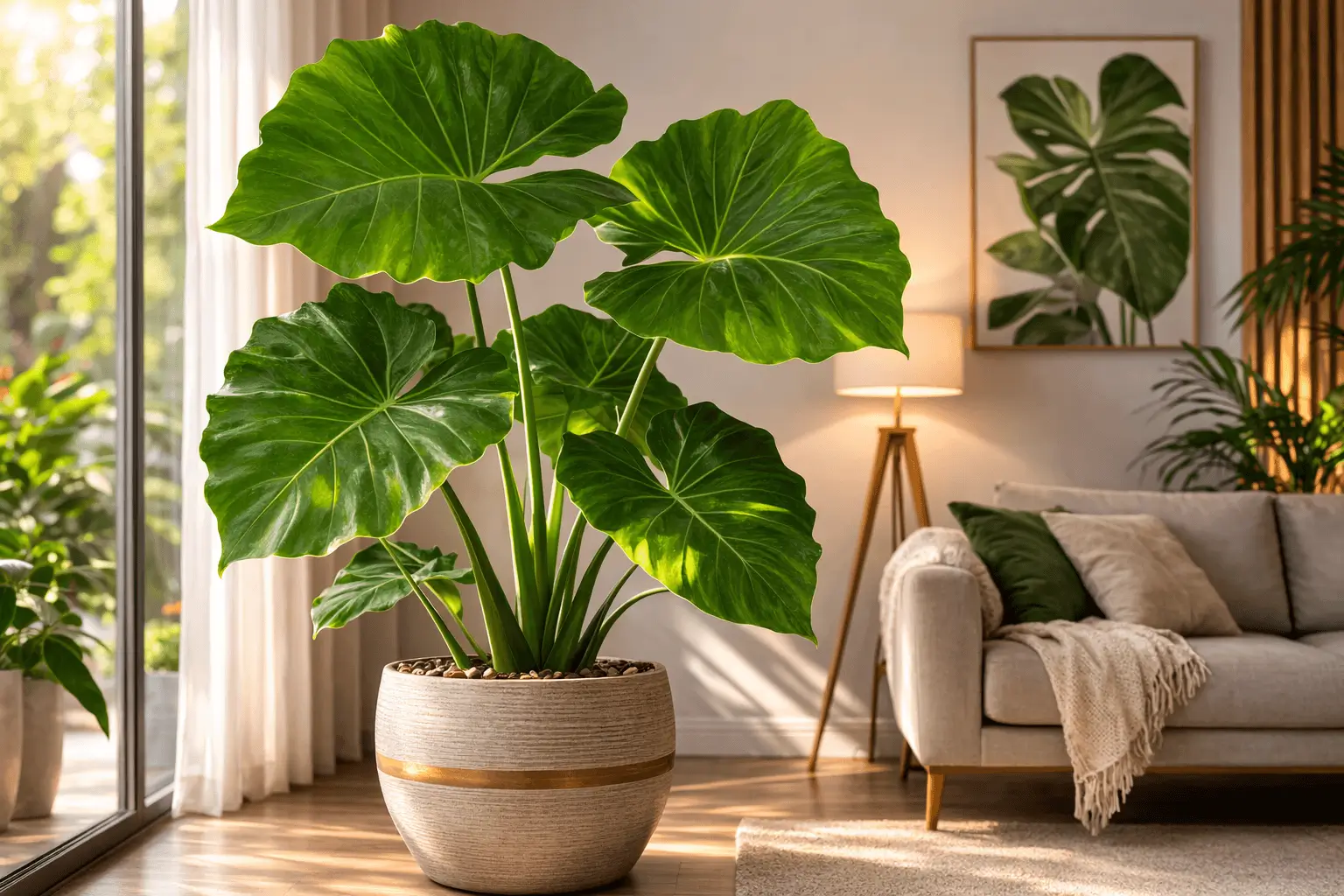
The Elephant Ear Plant is known for its large, dramatic leaves that resemble the shape of an elephant’s ear.
These tropical plants bring a lush, jungle-like appearance to indoor spaces and are often used as focal points in plant arrangements.
Visual Impact
Elephant ear plants can grow very large leaves, sometimes reaching several feet in length. Their bold foliage creates a strong visual statement in living rooms, sunrooms, and indoor gardens.
Because of their size and shape, they are often placed in large decorative containers.
Growing Conditions
Elephant ear plants prefer warm temperatures, high humidity, and bright indirect light.
They also require consistent moisture in the soil. Unlike drought-tolerant plants, elephant ear plants generally do not tolerate extended dry periods.
Decorative Uses
These plants are particularly popular in interior design because they add tropical texture and dramatic greenery to indoor spaces.
For a complete explanation of their indoor uses and benefits, visit the detailed guide on Elephant Ear plant indoor benefits.
Purple Heart Plant: A Colorful Indoor Favorite
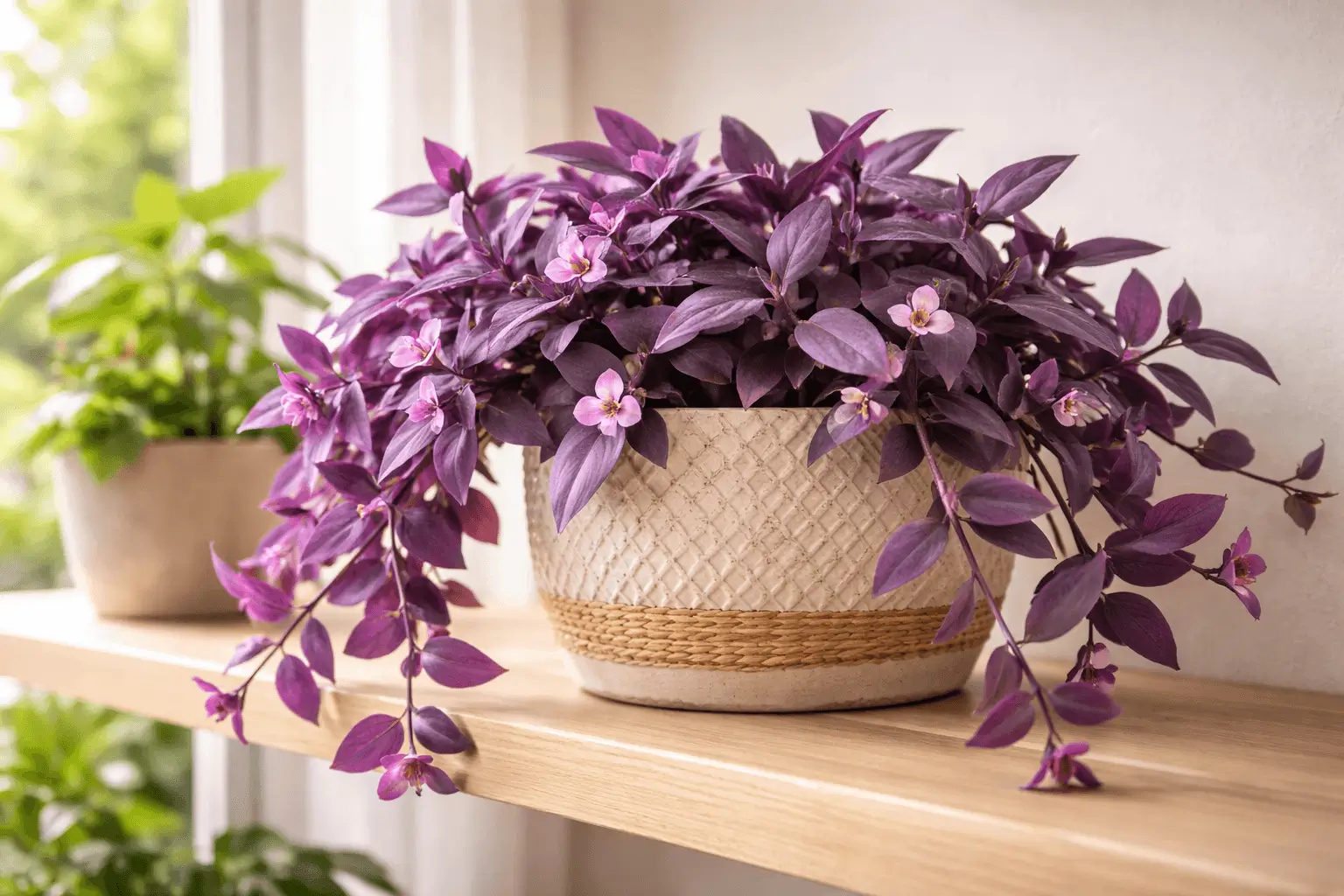
The Purple Heart Plant (Tradescantia pallida) is admired for its deep purple foliage and trailing stems.
Unlike many houseplants that rely primarily on green foliage, this plant adds vibrant color to interior plant collections.
Unique Appearance
The plant produces long stems covered in purple leaves that can cascade over the edges of containers. Small pink flowers occasionally appear, adding additional decorative interest.
Indoor Growing Conditions
Purple heart plants prefer bright light conditions to maintain their rich coloration. In lower light environments, the purple color may become less intense.
They grow well in standard potting soil and require moderate watering.
Easy Propagation
One of the reasons this plant is popular among gardeners is its ability to propagate easily. Stem cuttings can quickly root in water or soil, allowing gardeners to multiply their plants.
For more information about the plant’s indoor benefits and care techniques, see our guide on Purple Heart plant indoor benefits.
English Ivy: A Classic Hanging Plant
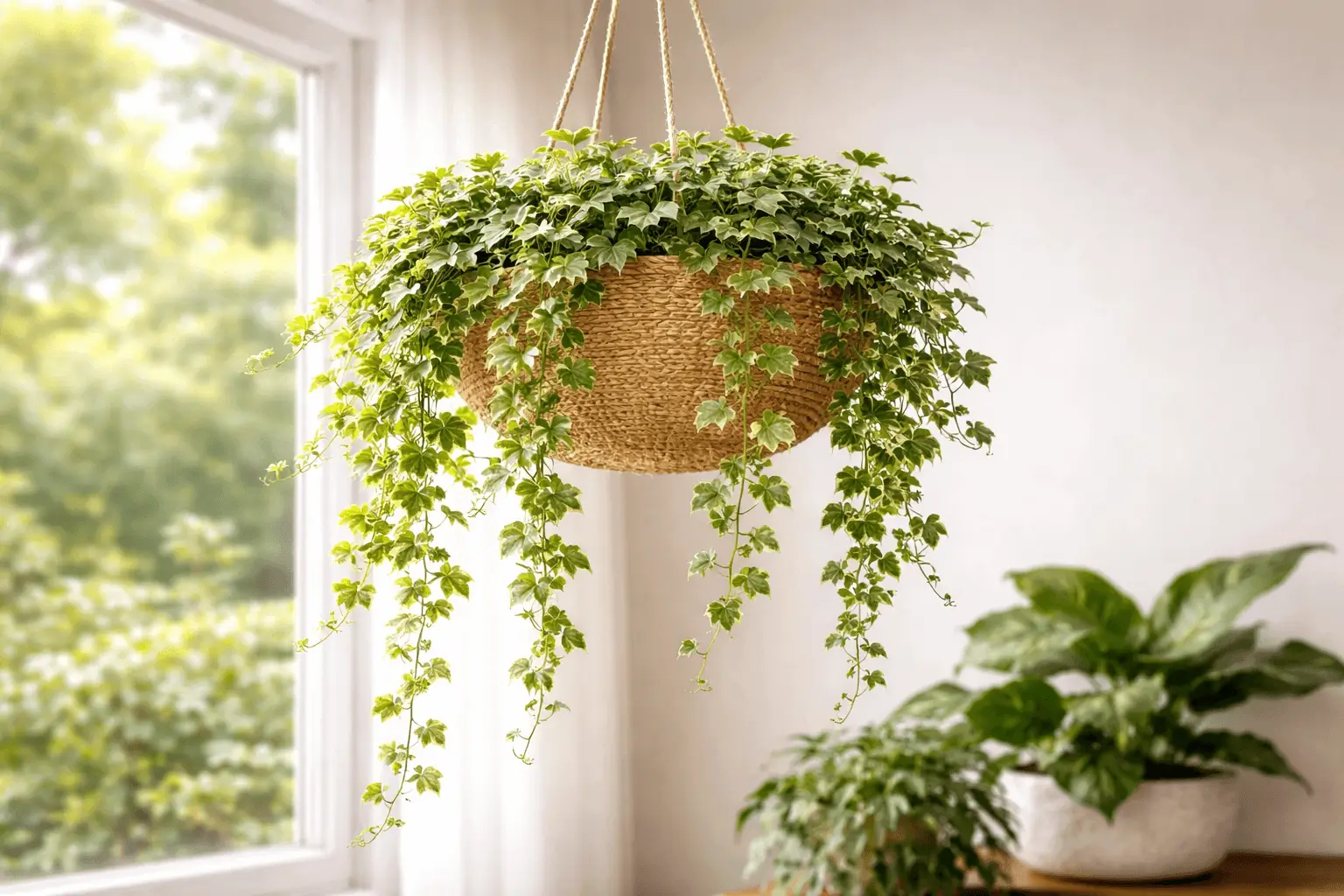
English ivy is one of the most recognizable trailing houseplants.
Its elegant vines and lobed leaves make it ideal for hanging baskets, shelves, and decorative planters.
Growth Habit
English ivy grows long trailing stems that can cascade downward or climb upward when supported by structures.
Because of this flexible growth pattern, it can be used in a variety of decorative arrangements.
Indoor Care Requirements
English ivy prefers cool indoor temperatures and moderate light levels. It should be watered regularly but allowed to dry slightly between watering sessions.
Proper air circulation also helps prevent fungal problems.
Decorative Uses
Many homeowners use English ivy in hanging baskets to create vertical greenery within interior spaces.
To learn more about growing and styling this plant indoors, explore the guide on English Ivy hanging plant.
Flowering Plants, Landscape Trees, Shrubs, and Ground Cover Plants
Outdoor plants form the foundation of landscape design. While indoor plants improve interior environments, outdoor plants define the structure, color, and character of gardens.
Flowering plants bring seasonal beauty, trees provide shade and long-term structure, shrubs create borders and privacy, and ground cover plants fill empty spaces while protecting soil.
Understanding how these plant groups work together is essential for creating healthy and visually appealing landscapes.
A well-designed garden typically combines multiple plant layers, including:
- canopy trees
- understory shrubs
- flowering plants
- ornamental grasses
- ground cover plants
Each layer contributes to the overall balance and biodiversity of the landscape.
Flowering Plants That Add Color to Gardens
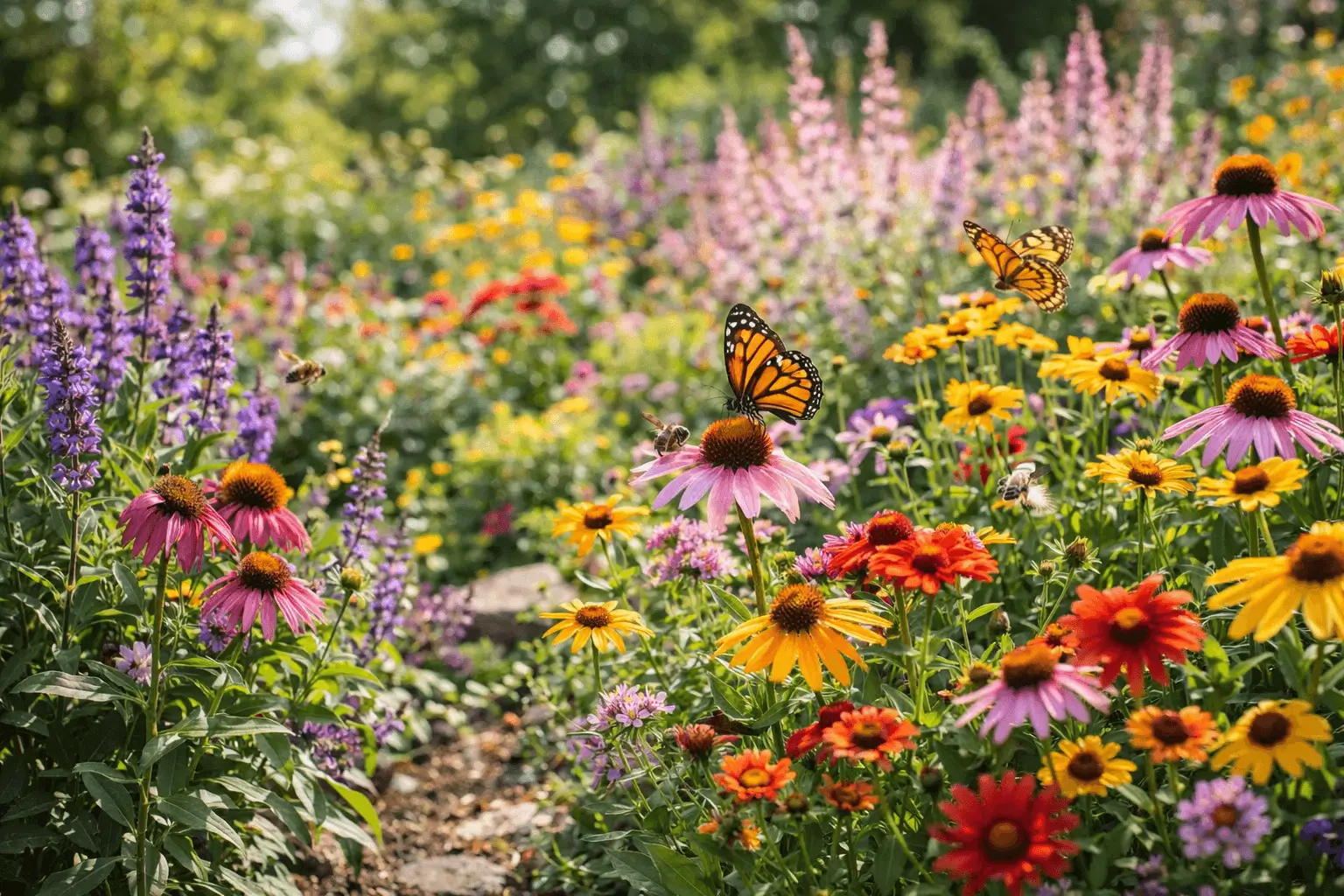
Flowering plants are among the most visually striking elements in garden design. They introduce vibrant colors, attract pollinators, and create seasonal changes that make gardens feel alive throughout the year.
Gardeners often use flowering plants to create focal points in garden beds, borders, and container arrangements.
Many flowering plants are also beneficial for local ecosystems because they attract bees, butterflies, and hummingbirds.
Below are several flowering plants that are commonly used in home landscapes.
Purple Trailing Lantana
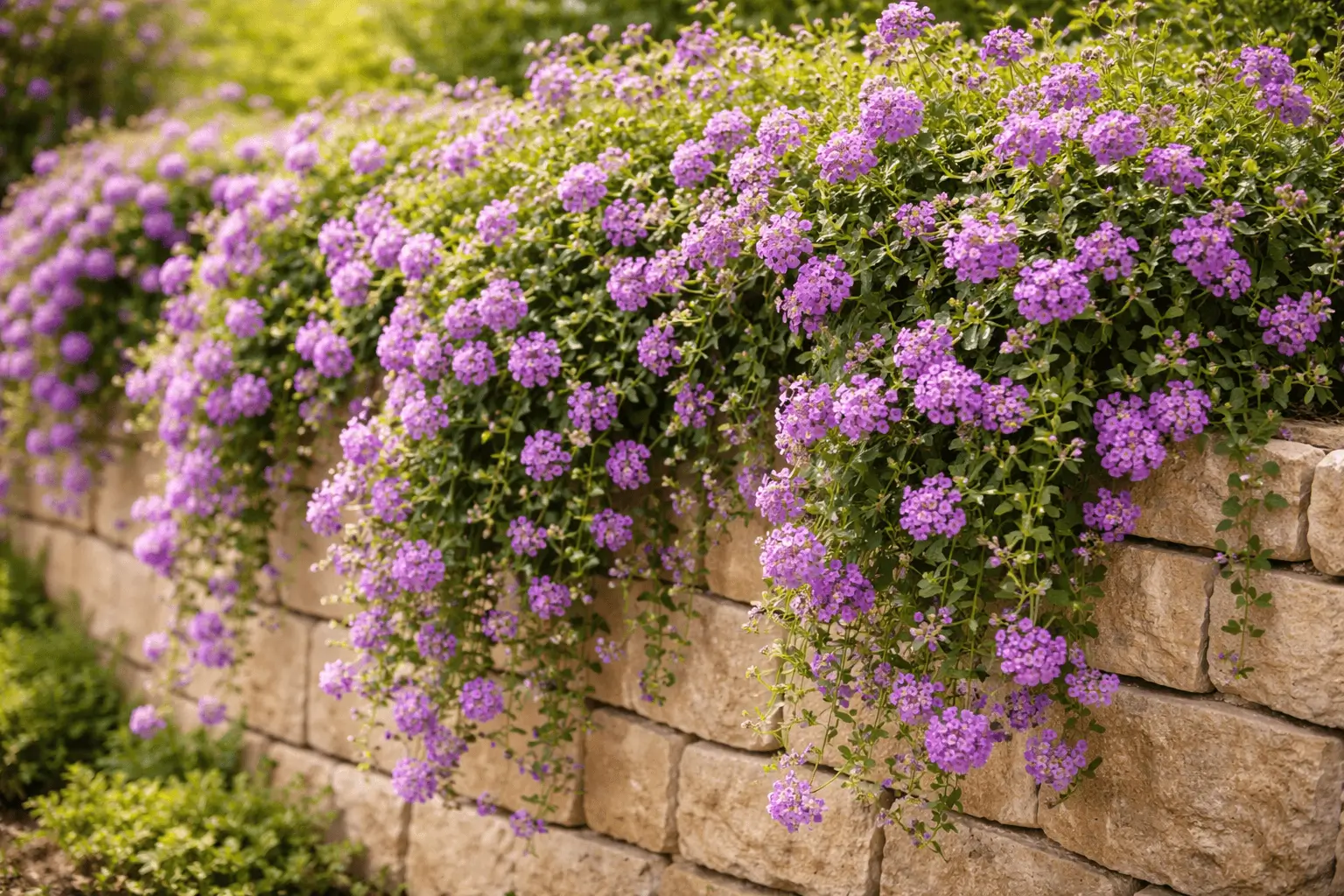
Purple trailing lantana is a versatile flowering plant known for its vibrant clusters of purple blossoms and spreading growth habit.
Unlike upright lantana varieties, trailing lantana spreads across the ground and cascades over garden edges, retaining walls, and containers.
Growth Habit
Trailing lantana grows low to the ground and spreads horizontally, making it ideal for use as ground cover or in hanging baskets.
Its flowers bloom continuously throughout warm seasons, providing long-lasting color in gardens.
Landscape Uses
Because of its spreading growth habit, purple trailing lantana is often used in:
- rock gardens
- retaining walls
- container gardens
- slopes and erosion control areas
The plant thrives in full sunlight and well-drained soil, making it particularly suitable for warm climates.
You can learn more about its growth habits and landscaping benefits in the detailed guide on Purple Trailing Lantana.
Mexican Bird of Paradise
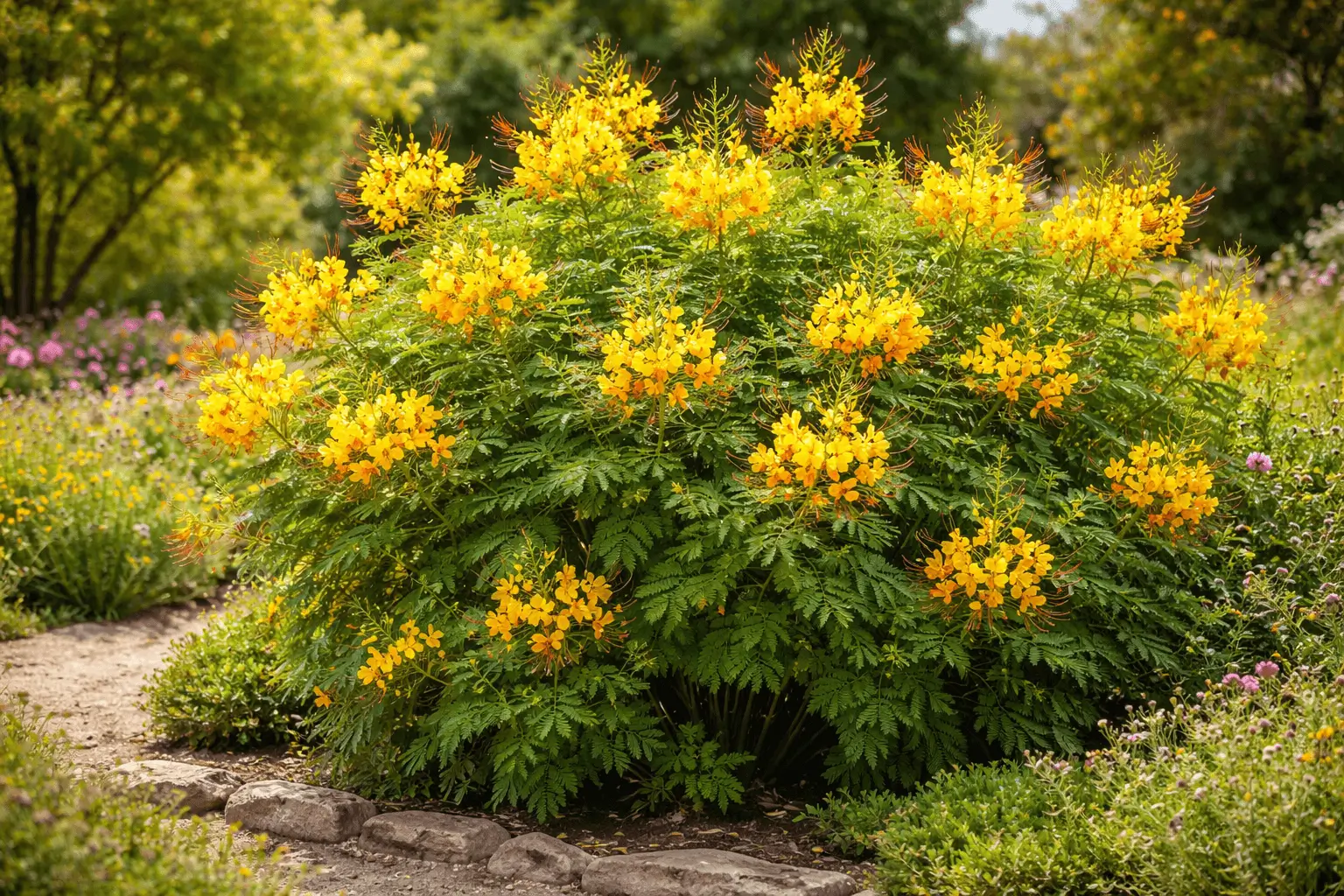
The Mexican Bird of Paradise (Caesalpinia mexicana) is a striking flowering shrub known for its bright yellow blooms and fern-like foliage.
It is widely used in warm climates and desert landscapes due to its drought tolerance and ability to thrive in intense sunlight.
Visual Characteristics
This plant produces large clusters of bright yellow flowers that bloom throughout the warm months. The flowers create a tropical appearance that adds dramatic color to garden spaces.
Climate Adaptability
Mexican Bird of Paradise plants thrive in hot, dry climates and require minimal watering once established.
Their resilience makes them popular in xeriscaping landscapes designed to conserve water.
Garden Applications
Gardeners often use this plant in:
- desert gardens
- tropical-themed landscapes
- large decorative containers
- sunny garden borders
To learn more about planting and maintaining this species, see the full guide on the Mexican Bird of Paradise plant.
White Crepe Myrtle Tree
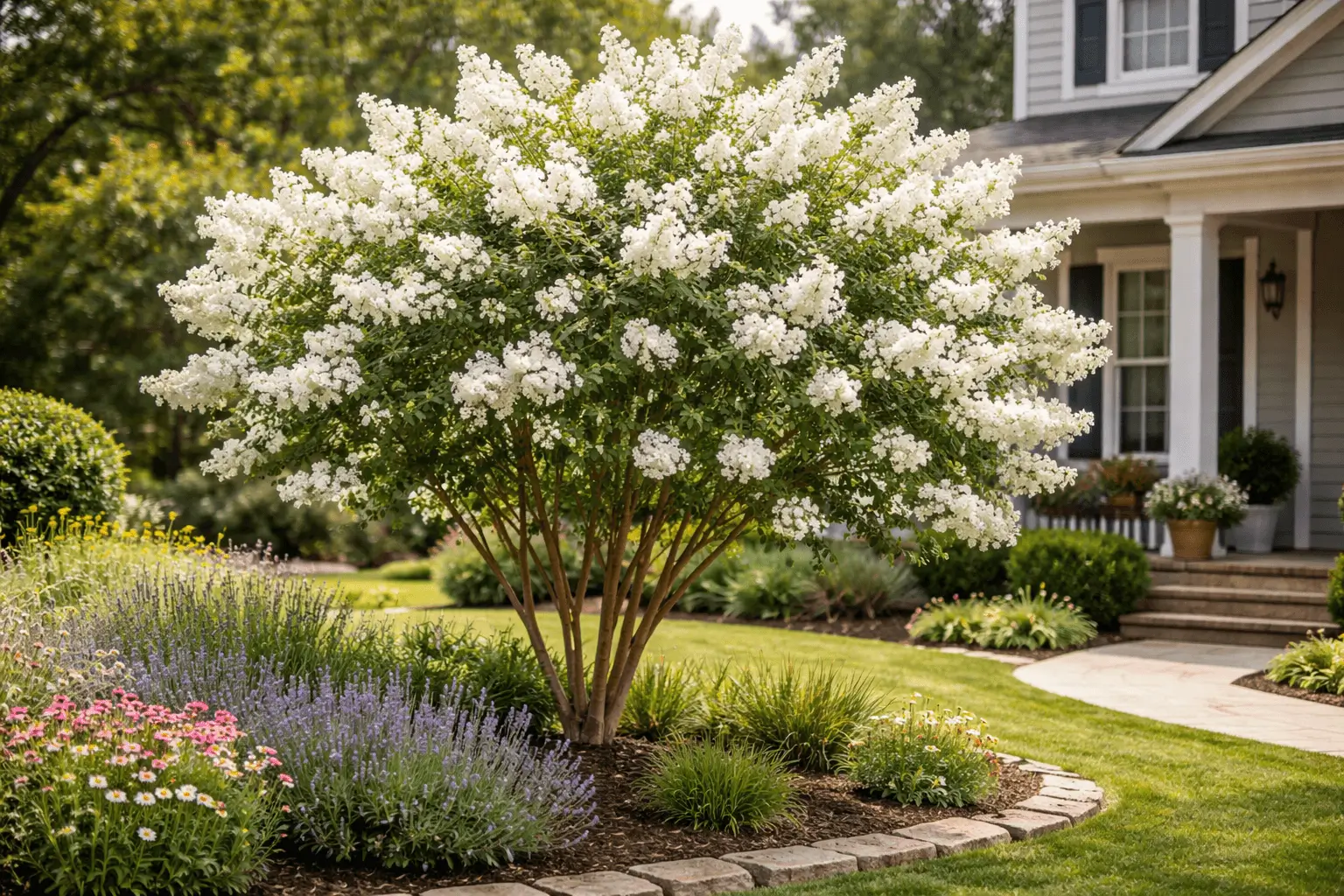
The White Crepe Myrtle is one of the most popular flowering trees used in residential landscapes.
It is admired for its elegant white blossoms that appear during summer, as well as its smooth bark and attractive fall foliage.
Seasonal Beauty
Crepe myrtle trees produce abundant flowers that can last for several weeks during the summer months.
In autumn, their foliage often turns shades of orange, red, or yellow, providing additional seasonal interest.
Landscape Design Benefits
These trees are commonly used in:
- front yard landscaping
- garden focal points
- street tree plantings
- decorative borders
Because they tolerate heat and moderate drought conditions, crepe myrtles are widely planted in warm regions.
To explore planting tips and maintenance advice, see the White Crepe Myrtle tree guide.
Landscape Trees That Provide Shade and Structure
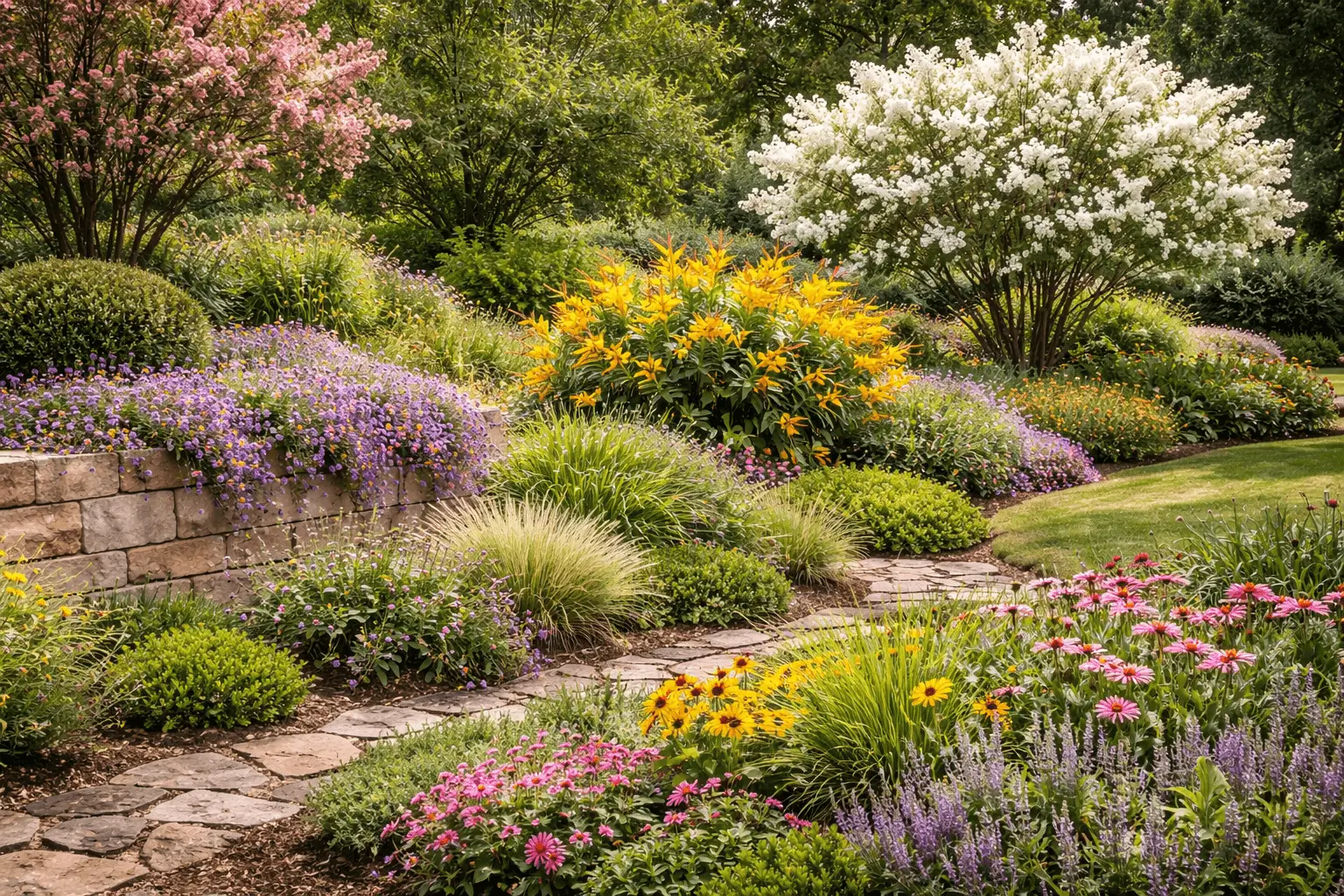
Trees are the structural backbone of many landscapes. They create vertical dimension in gardens and provide shade that makes outdoor spaces more comfortable.
Well-placed trees can also reduce energy costs by shading homes during hot weather.
When choosing landscape trees, gardeners should consider:
- mature height and spread
- root system size
- climate compatibility
- soil conditions
- maintenance requirements
Below are several trees that are frequently used in landscape design.
Brisbane Box Tree
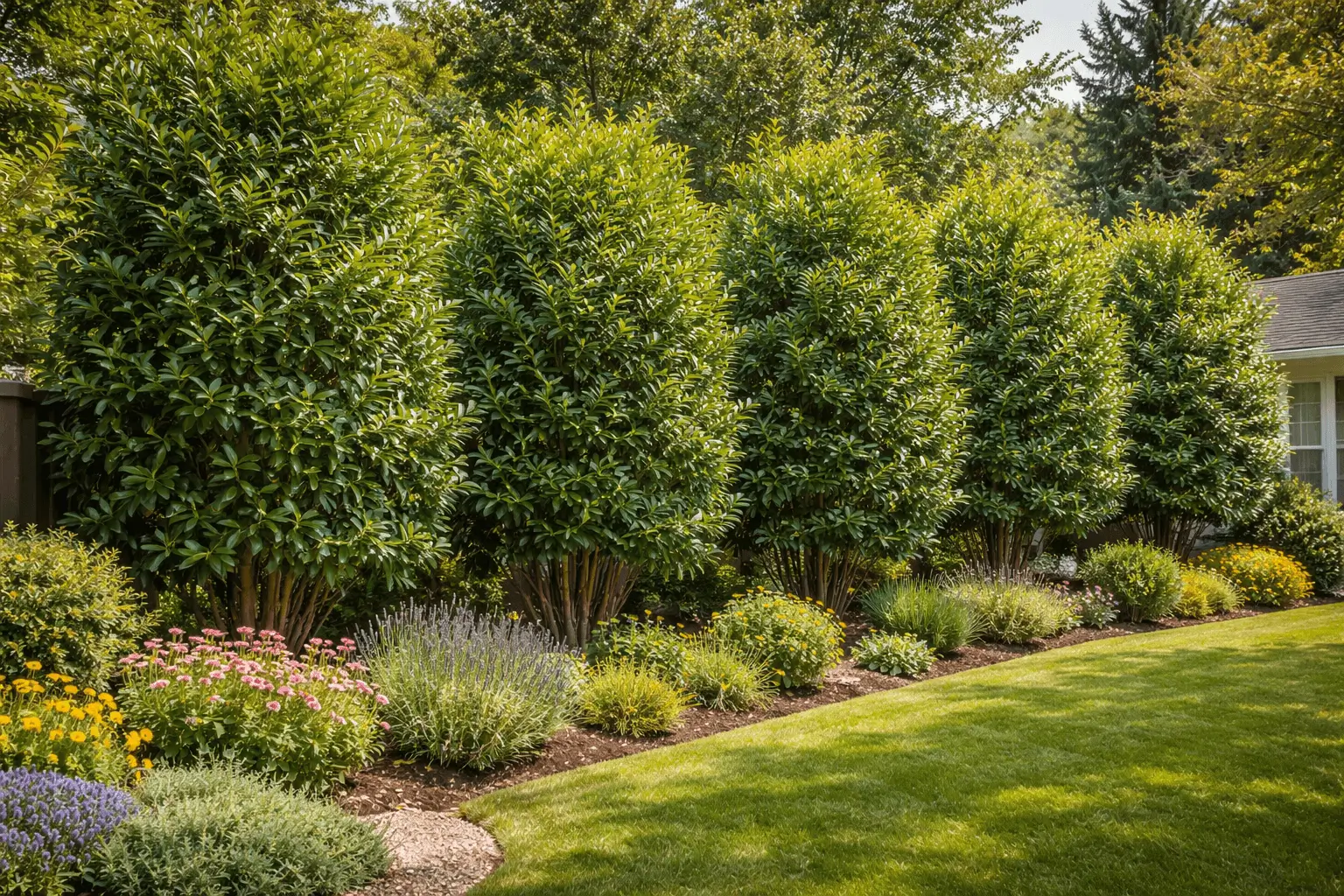
The Brisbane Box tree is an evergreen tree valued for its dense foliage and adaptability to different growing conditions.
Its upright growth habit makes it particularly suitable for formal landscapes and structured garden designs.
Landscape Uses
This tree is often planted for:
- privacy screens
- hedges
- structured landscape borders
- shade in residential gardens
Because of its dense foliage, the Brisbane Box tree can create effective natural barriers between properties.
For more details on growing and maintaining this species, see the Brisbane Box tree guide.
Australian Willow Tree
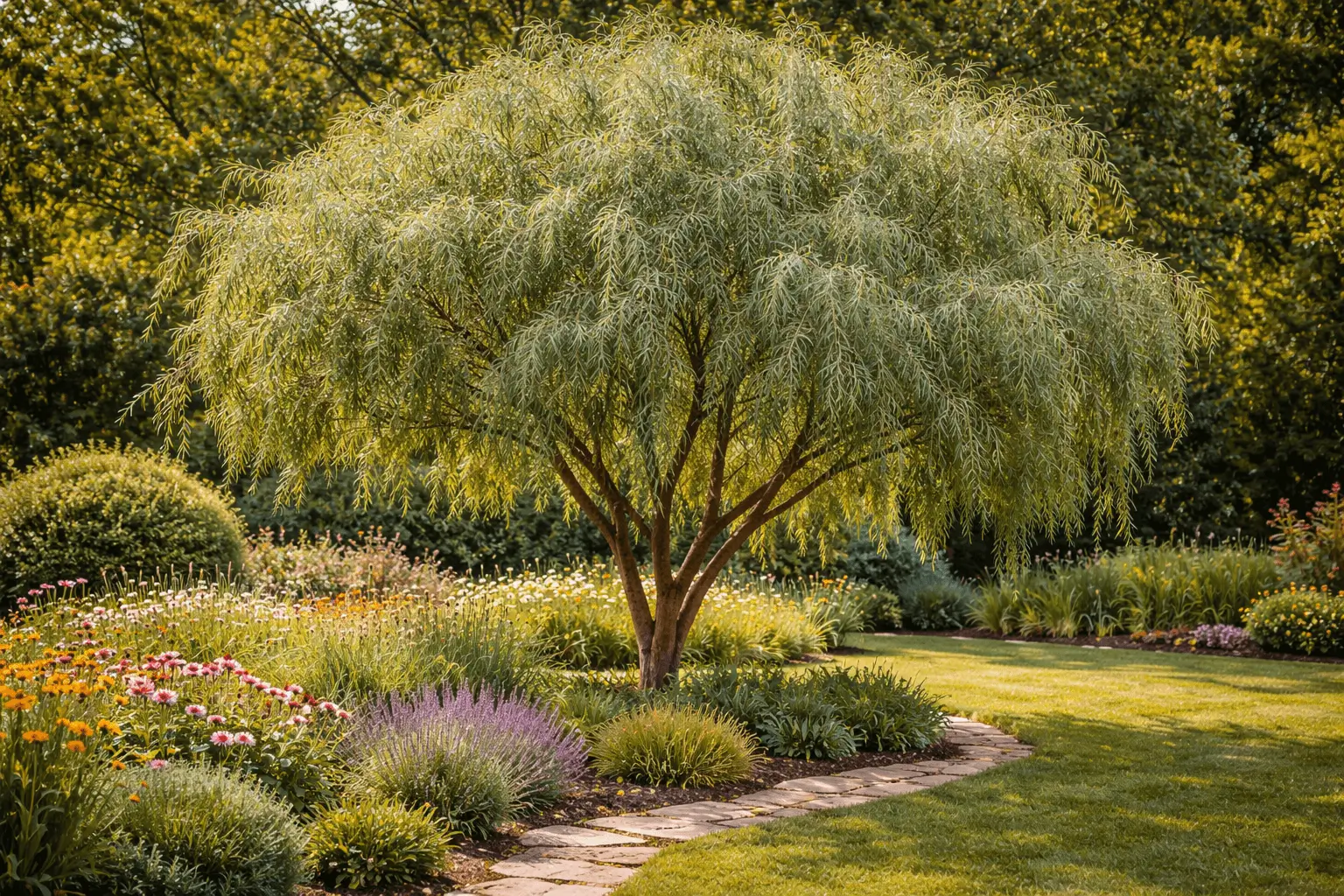
Despite its name, the Australian Willow is not a true willow tree. It is an evergreen tree with narrow leaves that resemble willow foliage.
Appearance
The tree has graceful, drooping branches that create a soft and elegant appearance in landscapes.
Growing Conditions
Australian willow trees thrive in warm climates and prefer full sunlight and well-drained soil.
They are often used in residential landscapes where a medium-sized shade tree is desired.
Learn more about this plant in the Australian Willow tree guide.
Silver Sheen Tree
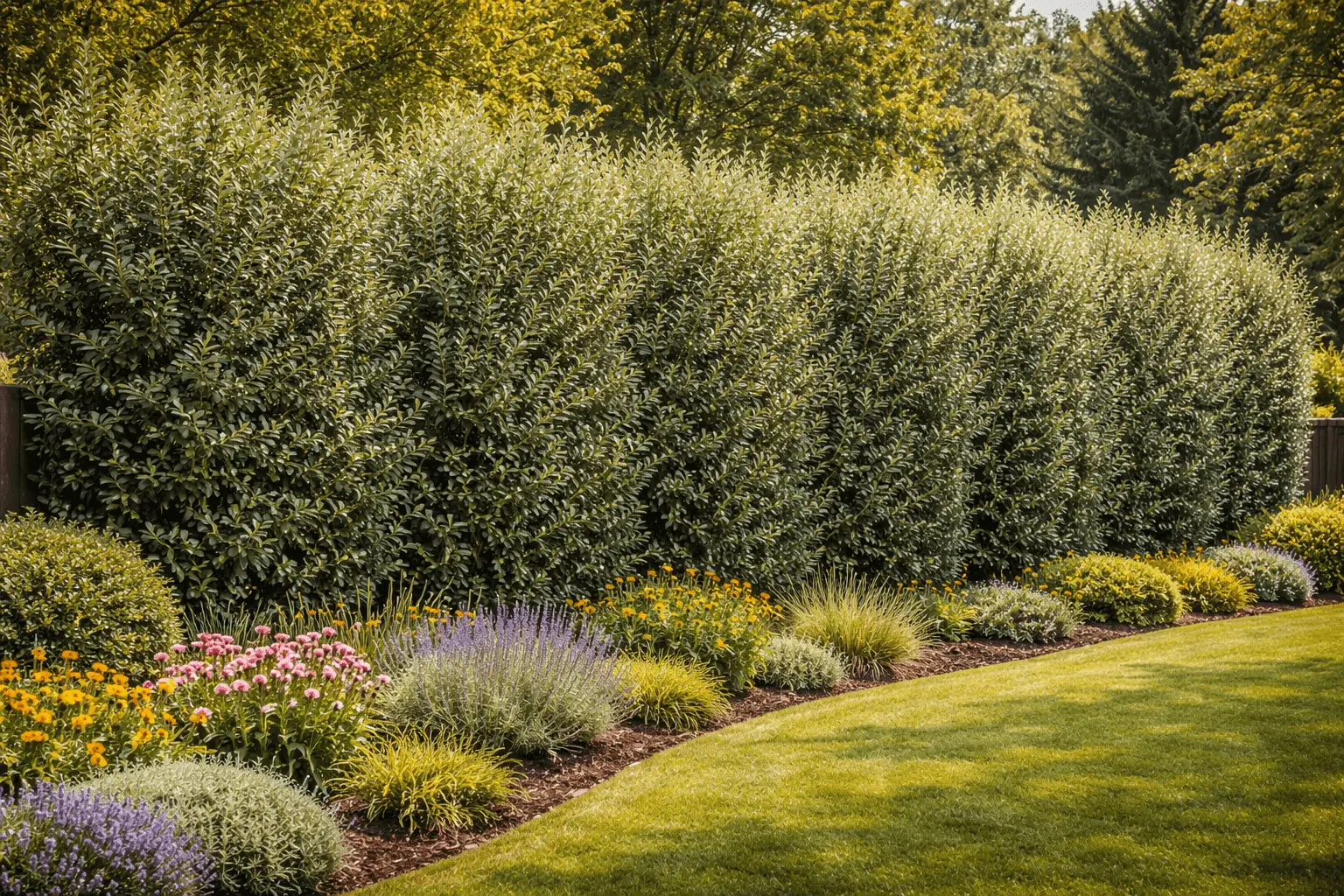
Silver Sheen trees are fast-growing evergreen trees widely used for privacy hedges.
Their tall, upright growth habit allows them to form dense screens that block views and reduce noise between properties.
Growth Characteristics
Silver Sheen trees can grow relatively quickly compared to many other landscape trees. Their glossy green leaves create a lush appearance.
Privacy and Screening
Homeowners frequently plant these trees along property boundaries to create natural privacy screens.
The trees can also be trimmed to maintain a neat hedge shape.
For more information about this species, visit the Silver Sheen tree guide.
Shrubs and Hedge Plants for Privacy
Shrubs and hedges are essential elements in garden design. They define property boundaries, create privacy, and add texture to landscapes.
Evergreen shrubs are particularly valuable because they maintain their foliage throughout the year.
Several shrub species are commonly used for hedging and landscape borders.
Coastal Rosemary
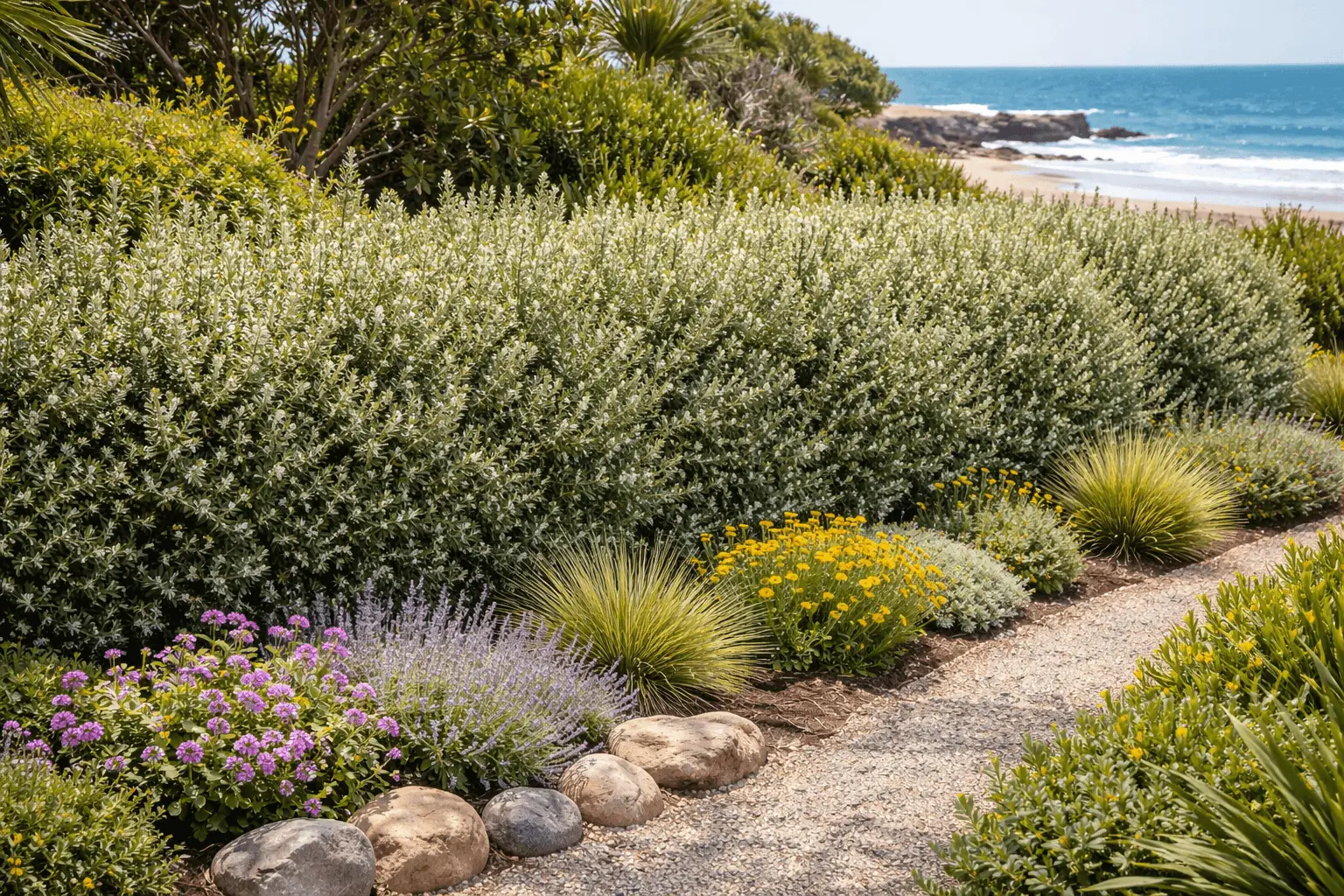
Coastal Rosemary is a hardy evergreen shrub that grows well in coastal and drought-prone environments.
Its fine foliage and compact growth make it suitable for both hedges and decorative plantings.
Adaptability
This shrub tolerates salty air, wind, and poor soil conditions, which makes it ideal for coastal gardens.
Landscape Applications
Gardeners often use coastal rosemary in:
- coastal landscapes
- drought-tolerant gardens
- formal hedges
- decorative borders
To learn more about planting and caring for this species, see the Coastal Rosemary plant guide.
Dwarf Bottlebrush
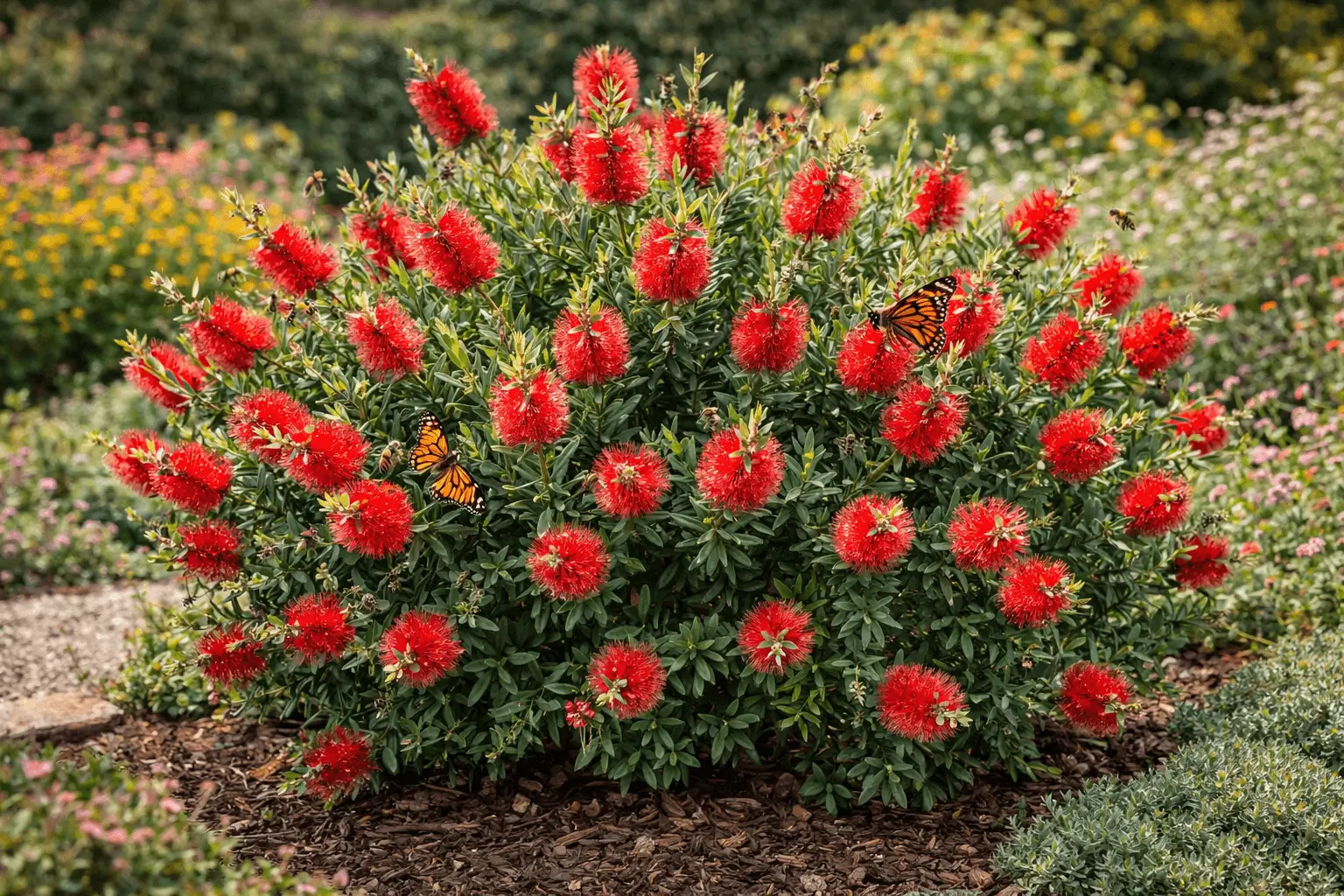
The Dwarf Bottlebrush is a compact shrub known for its bright red flowers that resemble cleaning brushes.
These flowers attract birds, bees, and other pollinators.
Garden Benefits
Because of its smaller size, the dwarf bottlebrush works well in:
- small gardens
- decorative containers
- hedge plantings
- pollinator gardens
Its colorful blooms make it a popular ornamental plant.
Explore the detailed care guide for the Dwarf Bottlebrush plant.
Ground Cover Plants for Low-Maintenance Gardens
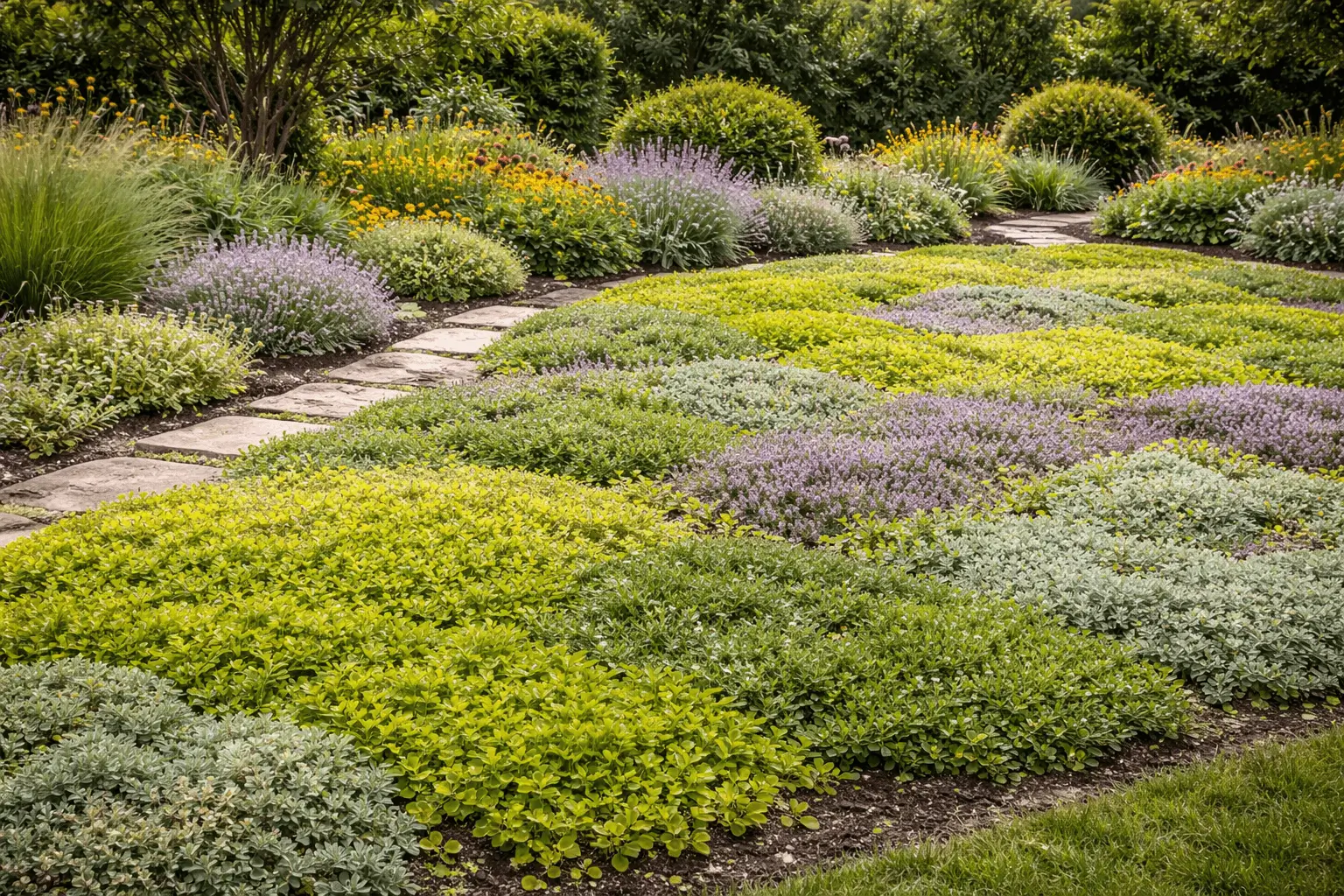
Ground cover plants spread across the soil surface and create dense mats of foliage.
They are useful for reducing weeds, preventing soil erosion, and replacing traditional lawns in areas where grass may struggle to grow.
Ground cover plants are particularly valuable in slopes, pathways, and large garden beds.
Creeping Myoporum
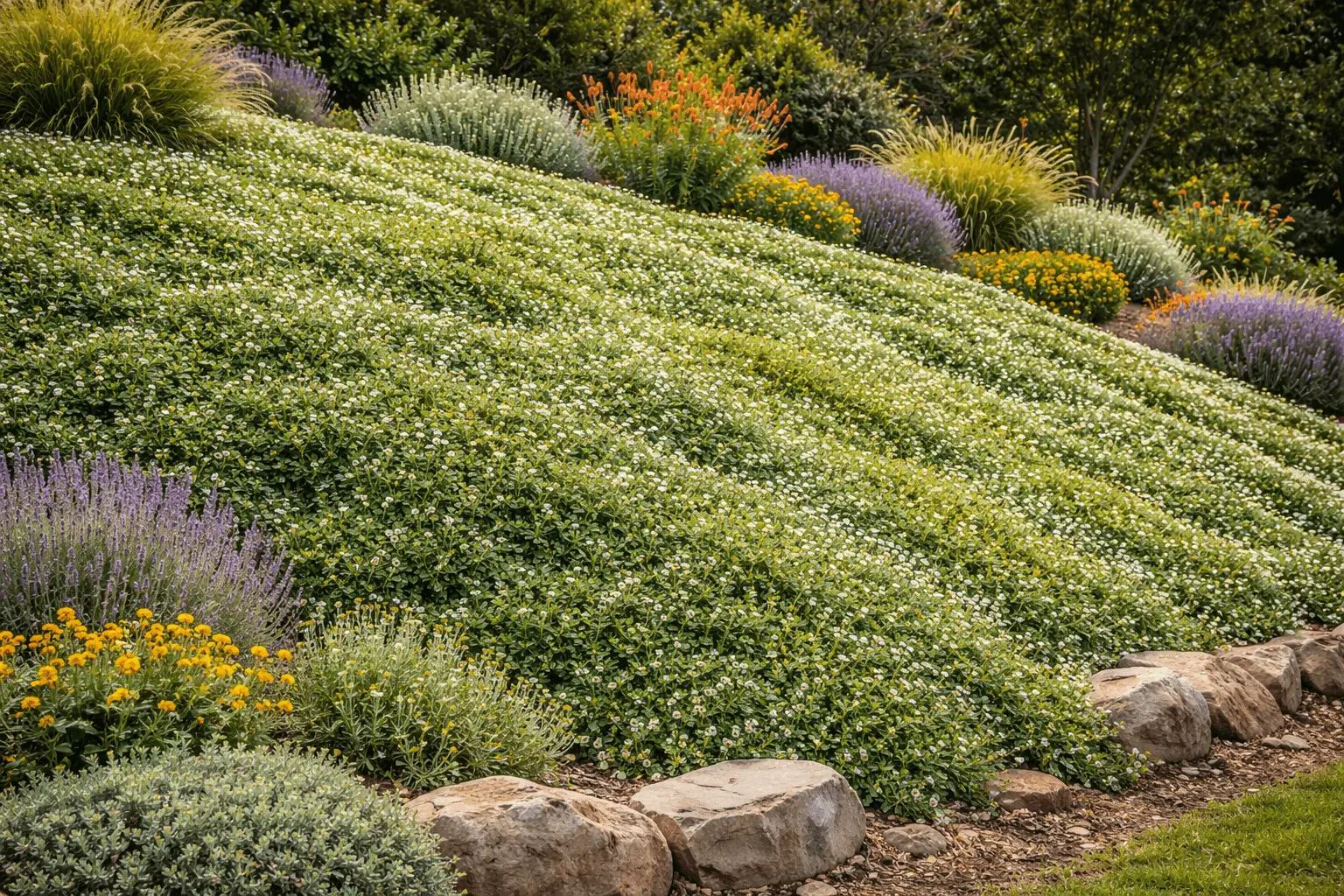
Creeping myoporum is a fast-growing ground cover plant that spreads rapidly across the soil surface.
Landscape Uses
This plant is often used in:
- hillside erosion control
- large garden beds
- coastal landscapes
- sunny slopes
It produces small white flowers and dense foliage that covers bare ground quickly.
To learn more about planting and maintaining this species, read the Creeping Myoporum guide.
Dymondia Ground Cover
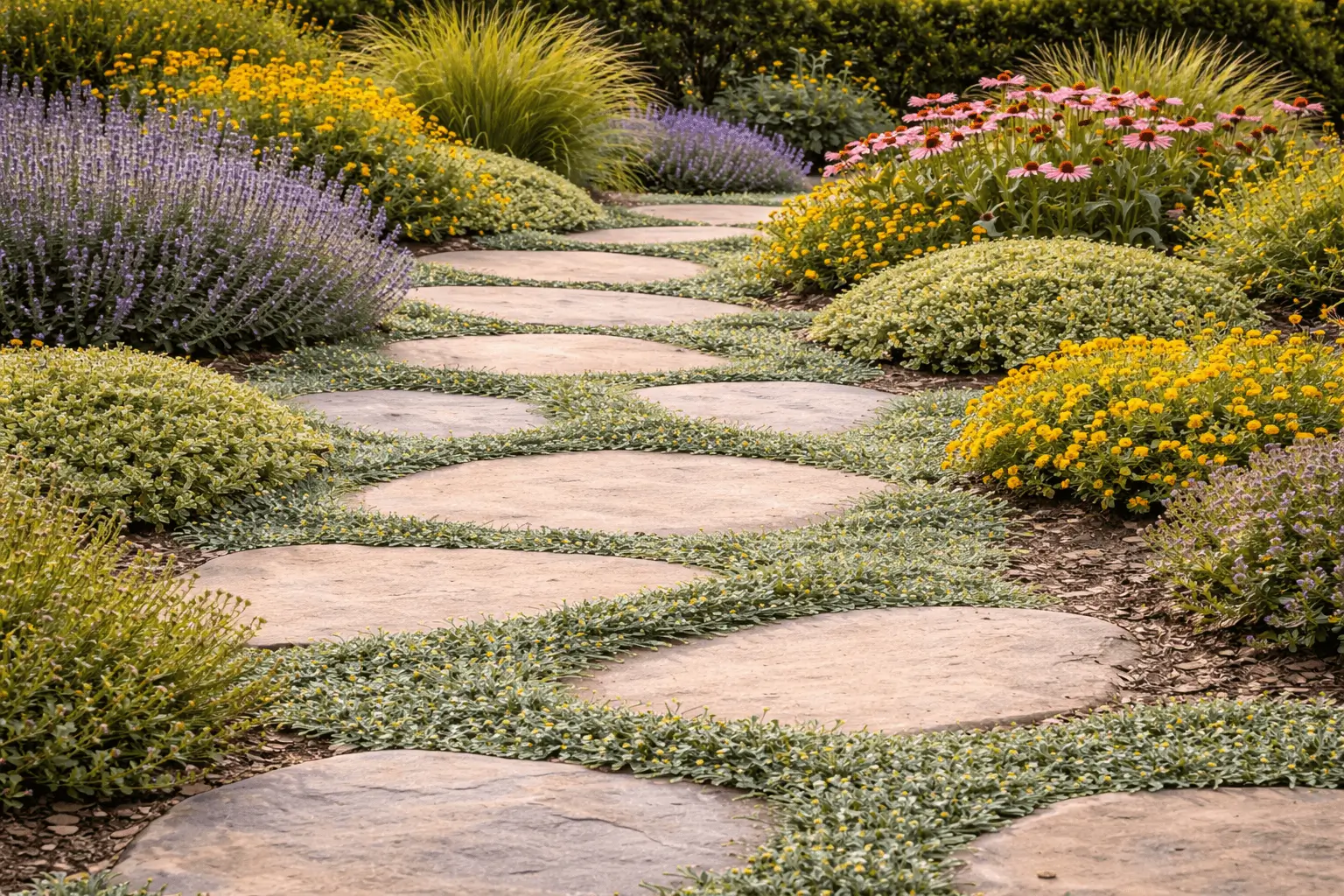
Dymondia is a low-growing ground cover known for its silver-green leaves.
It forms dense mats that can tolerate light foot traffic, making it suitable for pathways and stepping stone areas.
Advantages
Dymondia requires relatively little maintenance once established.
It also performs well in dry climates where traditional lawns may struggle.
You can explore its planting requirements in the Dymondia ground cover guide.
Ornamental Plants That Add Texture to Landscapes
Ornamental plants play an important role in creating visual interest within landscapes.
They add texture, movement, and contrast to gardens.
Examples include ornamental grasses, succulents, and architectural plants.
These plants are often used in modern landscape design where structure and form are as important as color. For a broader, categorized library covering ornamental grasses, succulents, and architectural plants beyond what we cover here, browse our home and garden plant reference database.
It’s organized as a living knowledge base, so it’s a good next stop if you want to keep exploring texture-driven plant categories.
Plant Care, Soil Health, Pest Management, and Sustainable Gardening
Growing healthy plants requires more than simply placing them in soil and watering them occasionally. Successful gardening depends on understanding how plants interact with their environment.
Factors such as sunlight, soil composition, watering schedules, temperature, humidity, and pest control all influence plant health and long-term growth.
When gardeners understand these elements, they can create conditions that allow plants to thrive naturally with minimal intervention.
In this section, we explore essential plant care principles that apply to both indoor plants and outdoor landscapes.
Understanding Soil and Plant Nutrition
Healthy soil is the foundation of plant growth. Soil provides structural support for plant roots, supplies essential nutrients, and stores water that plants need for survival.
Different soil types have different characteristics that influence plant growth.
Types of Garden Soil
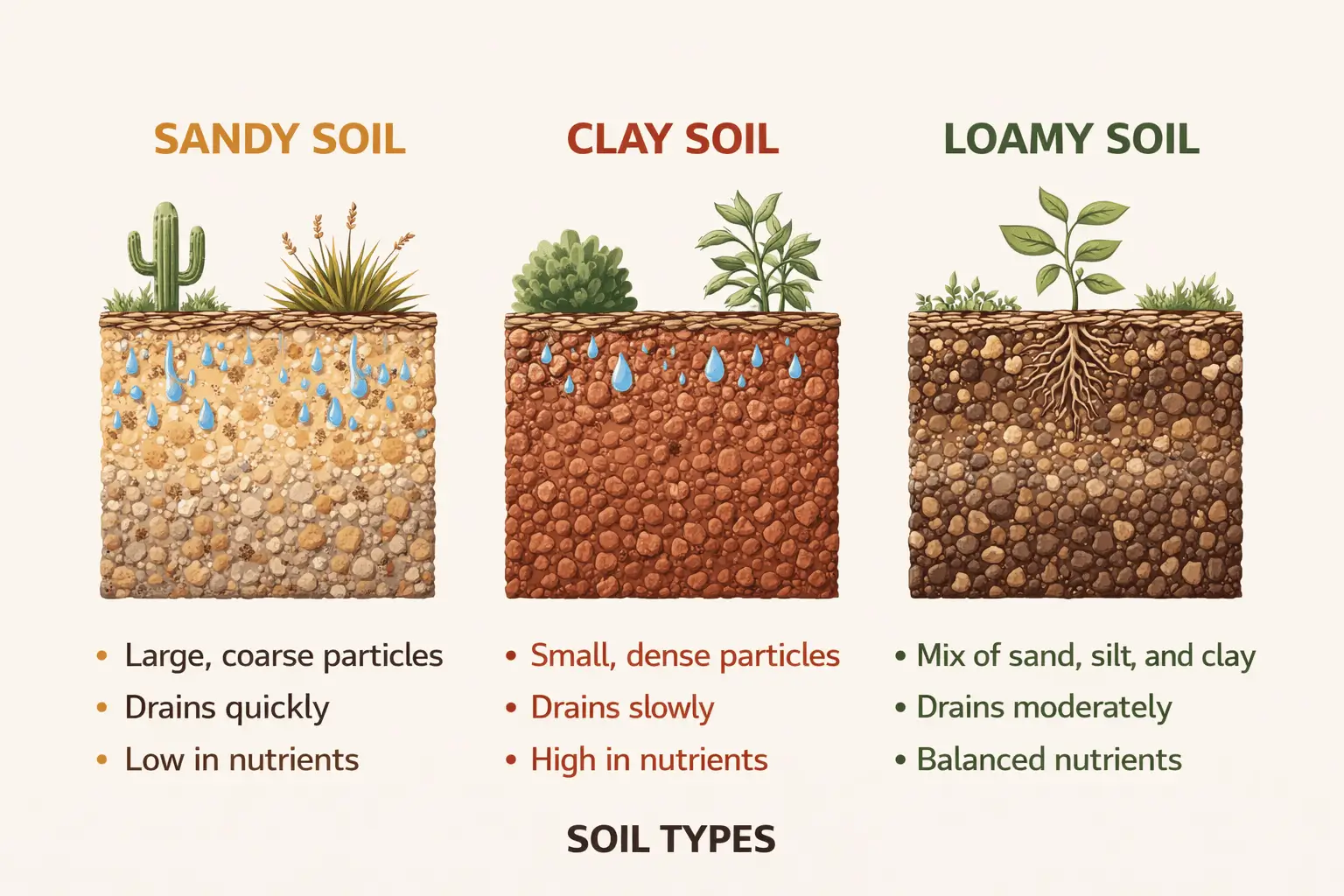
Most garden soils fall into three general categories.
Sandy Soil
Sandy soil contains large particles that allow water to drain quickly. While this prevents waterlogging, sandy soil may not retain nutrients effectively.
Gardeners often improve sandy soil by adding organic matter such as compost or aged manure.
Clay Soil
Clay soil contains very fine particles that retain water and nutrients well. However, it can become compacted and restrict root growth if drainage is poor.
Adding compost or organic materials helps loosen clay soil and improve aeration.
Loamy Soil
Loamy soil is considered ideal for gardening because it balances drainage, nutrient retention, and aeration.
Many garden plants grow best in loamy soil enriched with organic matter.
Importance of Organic Matter
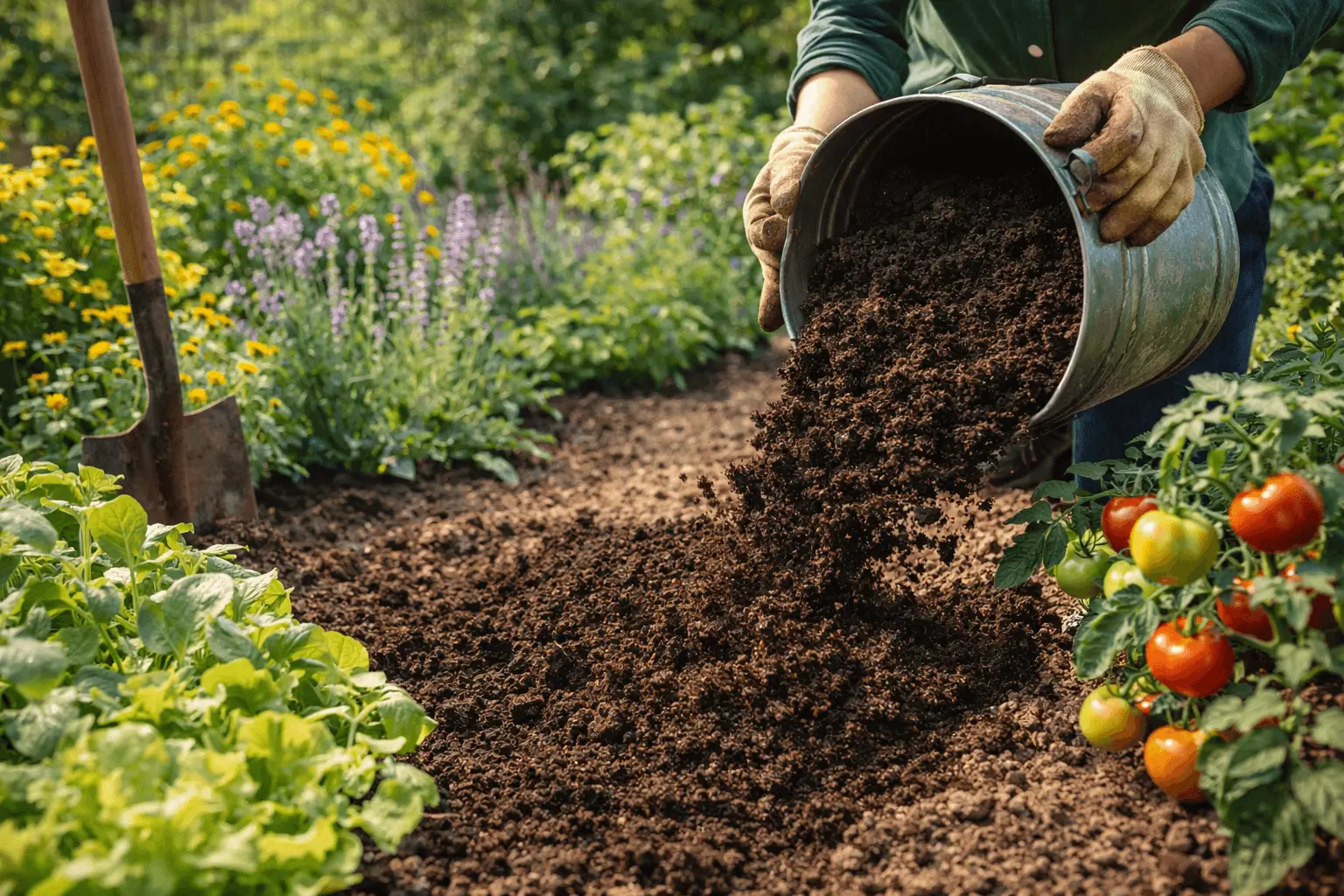
Organic matter plays a crucial role in maintaining soil health. Materials such as compost, leaf mulch, and decomposed plant material improve soil structure and increase microbial activity.
Healthy soil organisms help break down organic matter into nutrients that plants can absorb.
Gardeners who regularly add compost to their soil often experience stronger plant growth and improved resistance to pests and diseases.
Watering Plants Correctly
Water is essential for plant survival, but both overwatering and underwatering can damage plants.
Understanding how different plants use water can help gardeners create proper watering routines.
Indoor Plant Watering Rule (Quick Guide)
A simple rule for most house plants:
-
Water only when the top 1–2 inches of soil are dry
-
Always avoid standing water in pots
-
Reduce watering during winter months
Overwatering is the #1 reason indoor plants fail, so it’s better to underwater than overwater.
Signs of Overwatering
Overwatering is one of the most common plant care mistakes.
Symptoms of excessive watering include:
- yellowing leaves
- soft or mushy stems
- mold or fungus in soil
- root rot
When soil remains constantly wet, plant roots cannot access oxygen, which leads to root damage.
Signs of Underwatering
Underwatered plants may show symptoms such as:
- dry, brittle leaves
- drooping foliage
- slow growth
- dry soil pulling away from container edges
Plants that experience repeated drought stress may struggle to recover fully.
Best Watering Practices
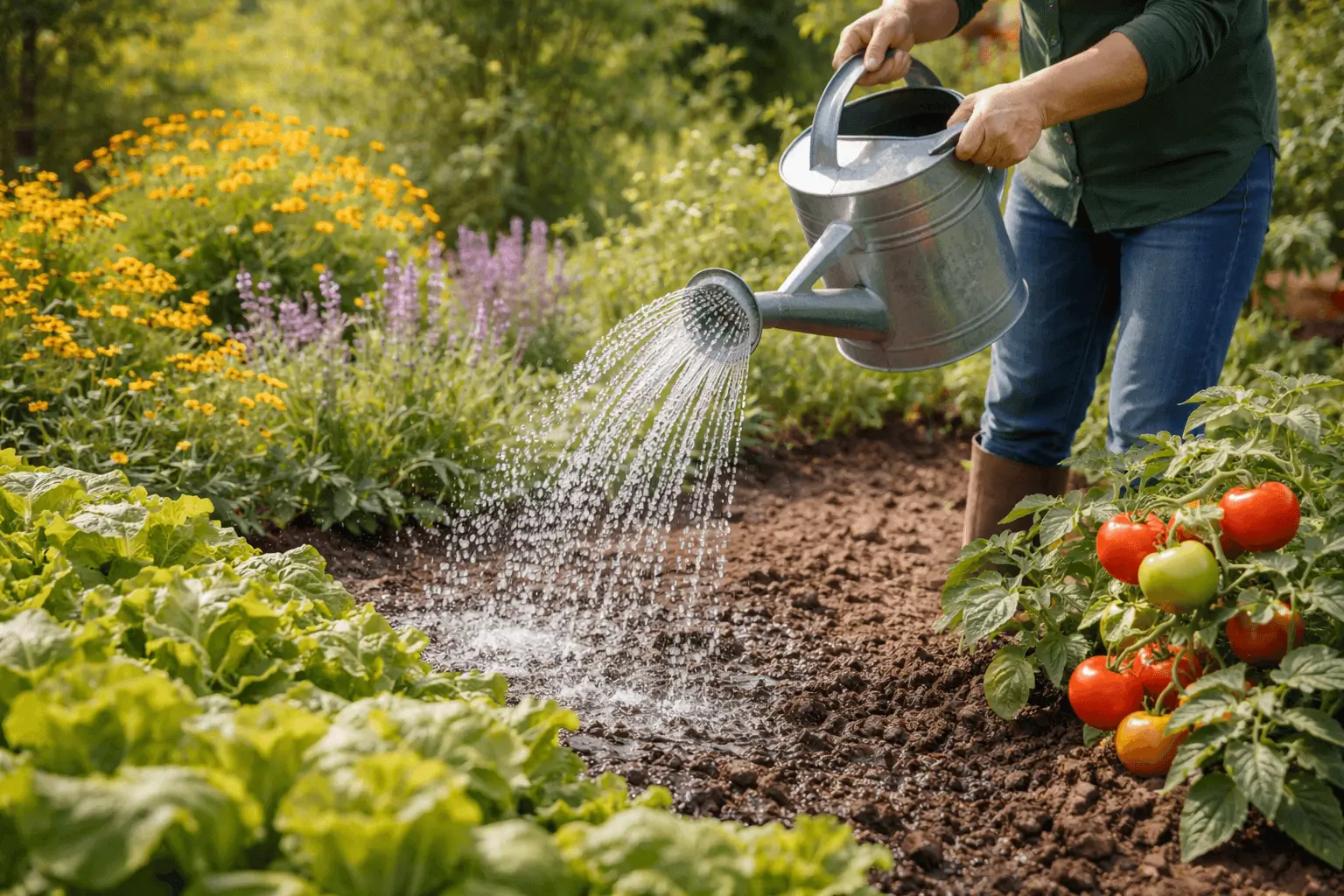
A useful guideline is to water plants when the top layer of soil begins to dry.
Indoor plants often require watering once every few days or once per week depending on humidity and temperature.
Outdoor plants may require deeper watering sessions that allow moisture to penetrate the root zone.
Mulching garden beds can also help conserve soil moisture by reducing evaporation.
Sunlight and Plant Growth
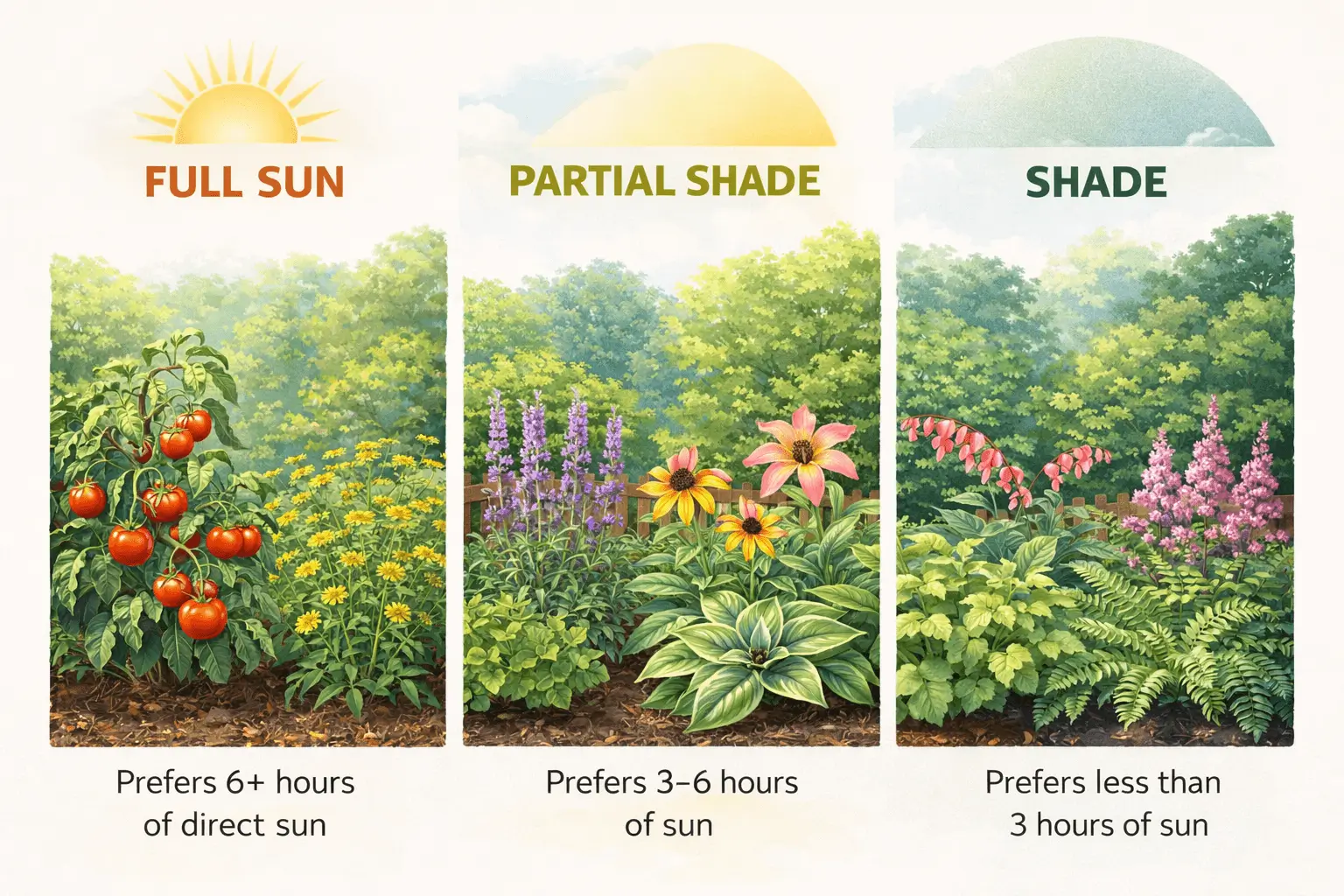
Sunlight provides the energy plants need to perform photosynthesis. Without sufficient light, plants cannot produce the energy required for growth.
Different plant species require different levels of sunlight.
Full Sun Plants
Full sun plants require at least six hours of direct sunlight per day.
Examples include many flowering plants, vegetables, and ornamental shrubs.
Partial Shade Plants
These plants thrive in environments where they receive filtered sunlight or limited direct sun during the day.
Many understory plants and shade-loving species fall into this category.
Low-Light Indoor Plants
Certain indoor plants can tolerate low light conditions, making them suitable for rooms with limited sunlight.
Spider plants, pothos, and other adaptable houseplants can grow well in indirect light.
Fertilizing Plants for Healthy Growth
Plants require essential nutrients to grow, including nitrogen, phosphorus, and potassium.
These nutrients are often referred to as N-P-K, which represents the three primary components of most fertilizers.
Nitrogen
Supports leafy growth and green foliage.
Phosphorus
Encourages strong root development and flowering.
Potassium
Improves plant resilience and overall health.
Gardeners should fertilize plants according to their growth stage and nutrient needs. Over-fertilization can damage plants and cause excessive foliage growth with fewer flowers.
Organic fertilizers such as compost, fish emulsion, and bone meal provide slow-release nutrients that support long-term soil health.
Growing Edible Plants at Home
Many gardeners enjoy growing edible plants because they provide fresh ingredients for cooking and promote sustainable food practices.
Even small spaces such as balconies or patios can support herb gardens or container vegetables.
One of the easiest edible plants to grow is garlic.
Garlic: A Simple Crop for Beginners
Garlic is widely cultivated in home gardens because it requires relatively little maintenance and produces reliable harvests.
Planting Garlic
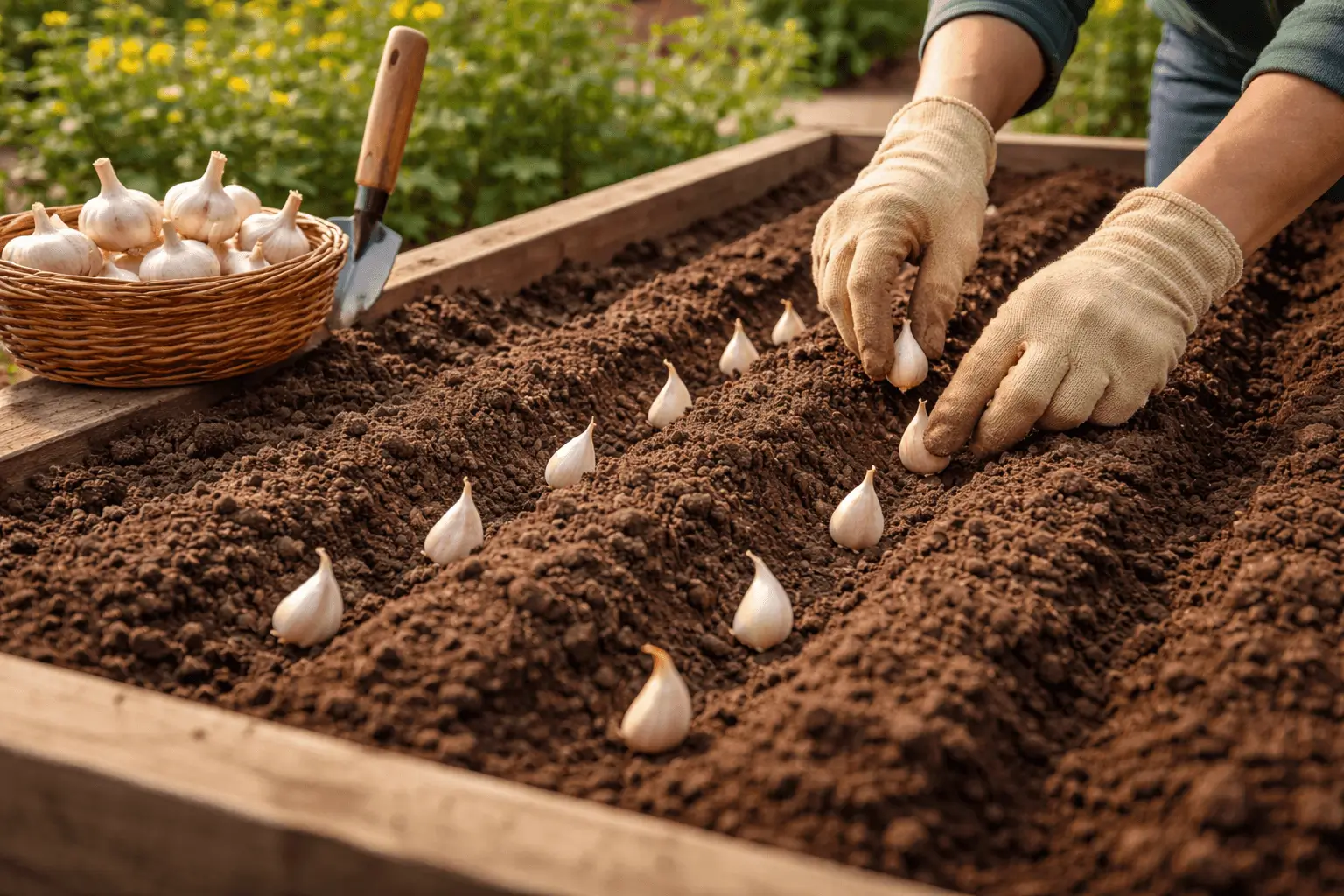
Garlic is typically planted from individual cloves rather than seeds.
Gardeners plant cloves in well-drained soil during autumn so they can develop roots before winter.
Growing Conditions
Garlic prefers:
- loose, well-drained soil
- full sunlight
- moderate watering
By the following summer, the garlic bulbs will mature and can be harvested.
For a detailed step-by-step planting guide, see How to Plant Garlic.
Common Plant Pests and How to Control Them
Pests are a natural part of gardening ecosystems, but severe infestations can damage plants.
One of the most common plant pests is the aphid.
Common Mistakes to Avoid with House Plants
Even experienced plant owners make mistakes. Avoid these common issues:
-
Overwatering plants
-
Using pots without drainage
-
Ignoring light requirements
-
Not repotting when needed
-
Sudden temperature changes
Understanding these mistakes can significantly improve plant health and longevity.
Aphids on Plants
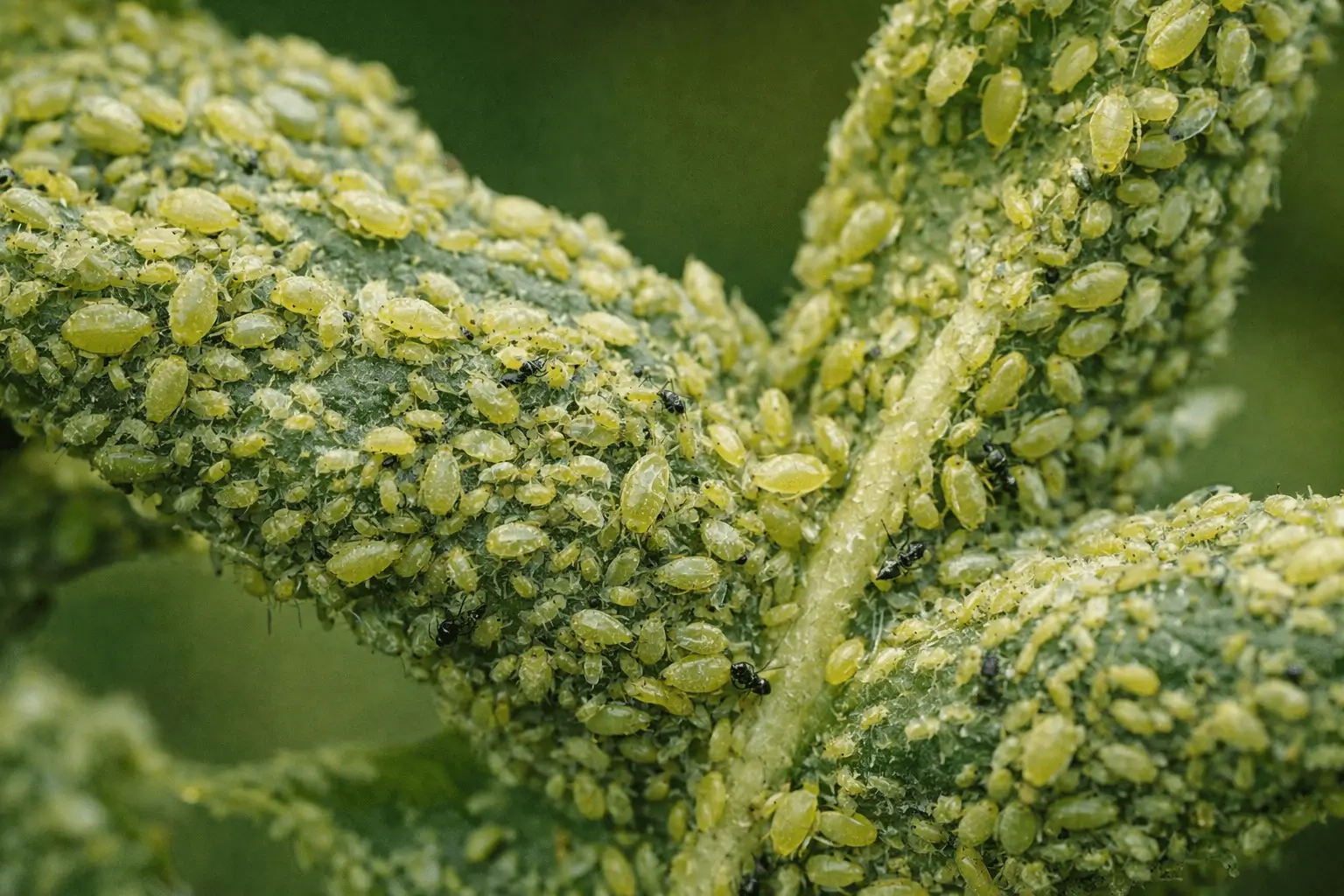
Aphids are tiny insects that feed on plant sap. They often cluster on young shoots, leaves, and stems.
These pests reproduce quickly and can weaken plants if populations grow large.
Signs of Aphid Infestation
Common symptoms include:
- sticky residue on leaves
- distorted or curled foliage
- slow plant growth
- presence of ants near plants
Natural Aphid Control Methods
Many gardeners prefer natural pest control solutions.
Effective methods include:
- spraying plants with water to remove aphids
- introducing beneficial insects such as ladybugs
- using neem oil or insecticidal soap
For a complete explanation of identification and treatment methods, see the guide on Aphids on Plants.
Sustainable Gardening Practices
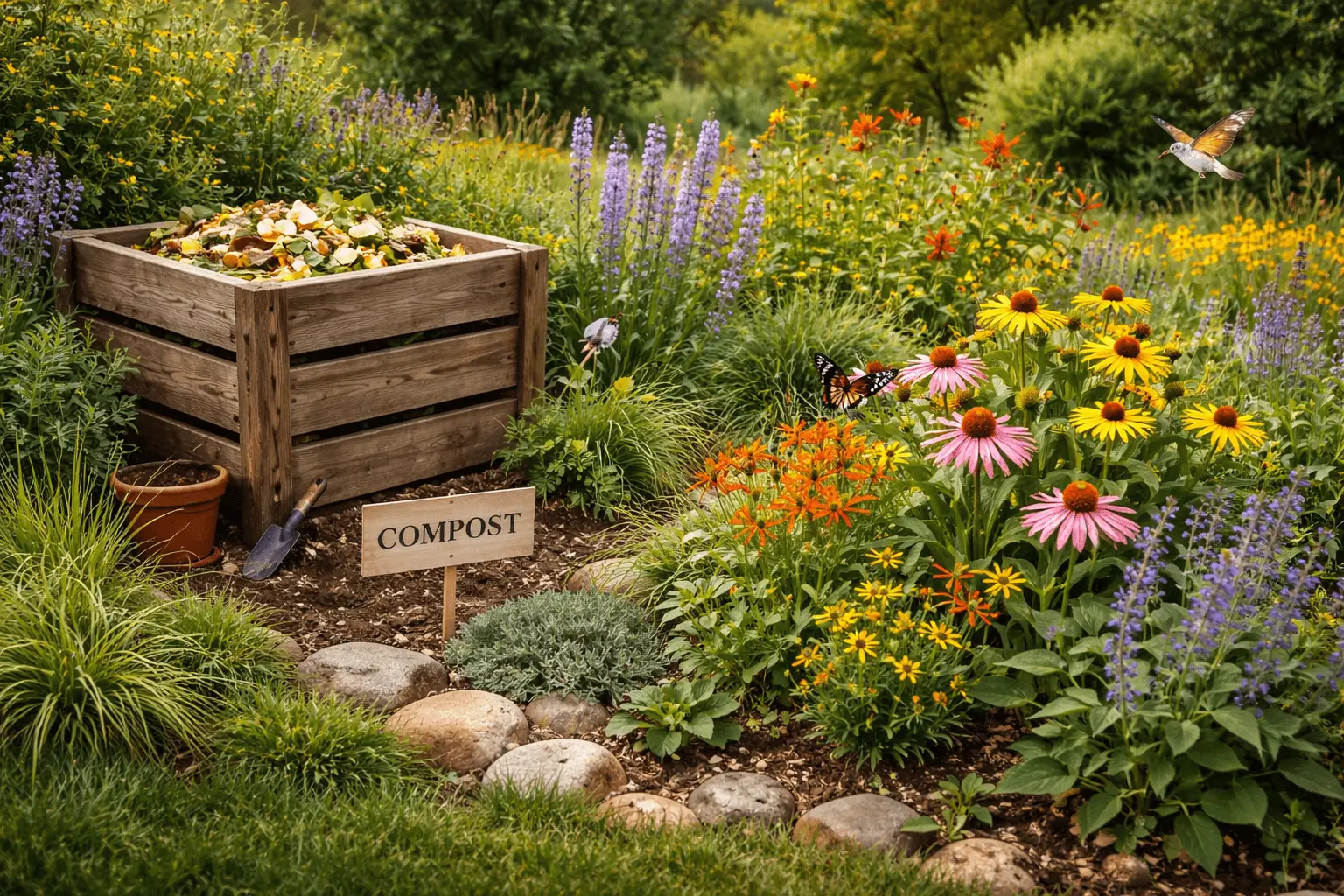
Sustainable gardening focuses on creating healthy ecosystems while minimizing environmental impact.
Practices such as composting, water conservation, and native plant selection help maintain ecological balance.
Composting
Composting transforms organic waste into nutrient-rich soil amendments.
Kitchen scraps, yard waste, and plant materials can be composted to improve soil fertility.
Water Conservation
Efficient irrigation methods such as drip irrigation reduce water waste and ensure plants receive consistent moisture.
Native Plants
Native plant species are often better adapted to local climates and require less maintenance compared to exotic species.
They also support local wildlife and pollinators.
Quick House Plant Care Checklist
-
Check soil moisture weekly
-
Ensure proper light exposure
-
Clean leaves regularly
-
Rotate plants for even growth
-
Fertilize during growing season
Following this simple checklist can keep your indoor plants thriving year-round. Want the full data behind this checklist? Our house plant reference spreadsheet breaks down watering frequency, light, and fertilizing schedules plant-by-plant.
Use it alongside this checklist to build a personalized care routine instead of a one-size-fits-all schedule.
Hanging & Trailing Indoor Plants for Vertical Greenery
If you want to add depth, texture, and vertical greenery to your indoor space, trailing and hanging plants are a perfect choice. They soften interiors and work beautifully in modern home gardening setups.
- Add lush cascading greenery with English ivy hanging plant.
- Brighten indoor corners with fast-growing wandering jew flower plant.
- Create decorative trailing walls using variegated English ivy varieties.
- Cover shaded outdoor spaces with creeping myoporum ground cover.
- Enhance indoor air freshness with spider plant indoor benefits guide.
- Add soft texture with false heather plant care tips.
Trees, Shrubs & Bold Landscape Plants
For larger gardens and outdoor landscapes, structural plants like trees and shrubs create long-term beauty, shade, and seasonal color impact.
- Grow vibrant seasonal color with flame tree flowers guide.
- Add ornamental foliage with purple leaf plum bush landscaping plant.
- Improve edible landscaping with evergreen pear tree growing guide.
- Enhance tropical gardens using red-leaved banana plant care.
- Design drought-tolerant landscapes with desert bird of paradise plant.
- Structure hedges with boxwood japonica evergreen shrub.
- Add ornamental value with Indian hawthorn plant guide.
- Grow low-maintenance shrubs like dwarf karo landscaping plant.
- Seasonal interest with winterbourn plant care guide.
- Decorative outdoor beauty with coral plant landscaping guide.
Groundcovers, Lawns & Garden Design Plants
Groundcovers and lawn-supporting plants help create a unified garden look while improving soil health and reducing maintenance.
- Style Mediterranean gardens with Tuscan plants landscape guide.
- Build drought-friendly designs using Mediterranean plants guide.
- Achieve lush lawns with Korean grass lawn care guide.
- Create soft garden carpets with Carpet of Stars groundcover plant.
- Use moisture-loving edging with sweet flag grass landscaping plant.
- Prepare soil properly with turf laying preparation guide.
- Control spreading greenery using creeping myoporum ground cover.
Care Tips, Edibles, Problem Solving & Specialty Plants
This section connects plant care knowledge with problem-solving and unique ornamental or edible plant options for a complete gardening ecosystem.
- Improve soil nutrients with society garlic companion planting guide.
- Understand safe lawn treatment using weed and feed safety for dogs guide.
- Optimize lawn health with iron sulphate for lawns guide.
- Prevent lawn issues using how to remove mushrooms in lawn guide.
- Natural plant feeding ideas from is tea good for plants guide.
- Grow ornamental desert plants like Arizona roses care guide.
- Add fragrant interest with cat’s whiskers plant guide.
- Decorative foliage with fan aloe succulent plant.
- Bright garden accents using copper pinwheel plant guide.
- Add citrus interest with pink lemonade lemon tree guide.
- Exotic ornamental appeal with black rose succulent guide.
- Architectural garden plants like Mexican bird of paradise plant.
- Add desert landscaping structure with Mexican grass tree guide.
- Fill tropical landscapes with tropical privacy plants guide.
- Seasonal flowering beauty with princess bush plant guide.
Rare & Velvety-Leaved Indoor Plants
Collectors love these statement foliage plants for their dramatic leaf texture, color, and shape. Here’s how to keep them thriving indoors.
- Grow bold jungle foliage with Anthurium clarinervium care guide.
- Master humidity needs with Anthurium crystallinum care guide.
- Encourage large leaves with Philodendron gloriosum care guide.
- Discover more standout species in our plants with velvety leaves guide.
- Add sculptural texture with African Mask Plant (Alocasia) care guide.
Philodendron, Hoya & Specialty Plant Growth Guides
Track growth rates, watering routines, and care specifics for these popular aroids and flowering vines.
- Understand growth speed with Philodendron billietiae growth rate guide.
- Perfect your watering schedule with how often to water Heartleaf Philodendron guide.
- Grow compact clusters with Hoya carnosa compacta care guide.
- Brighten low-light corners with Scindapsus Treubii Moonlight care guide.
- Explore a unique caudex plant with Stephania cepharantha growing guide.
Final Thoughts: Creating a Thriving Plant Environment
House plants are one of the easiest ways to transform your living space into a healthier and more vibrant environment. Whether you’re a beginner or an experienced plant lover, choosing the right plants and understanding their care needs makes all the difference.
If you’re just getting started, beginner-friendly options like spider plants and ZZ plants can help you build confidence quickly.
Start small, learn as you grow, and gradually build your indoor plant collection with confidence.
FAQs
What are the easiest house plants for beginners?
The easiest house plants include snake plant, spider plant, pothos, and ZZ plant. These plants are low-maintenance, tolerate different light conditions, and require minimal watering.
How often should I water house plants?
Most house plants should be watered when the top 1–2 inches of soil feel dry. Overwatering is the most common mistake, so always check soil moisture before watering.
Which house plants grow in low light?
Low-light house plants include snake plant, ZZ plant, peace lily, and pothos. These plants can survive in shaded rooms with minimal natural sunlight.
Why are my indoor plants dying?
Indoor plants usually die due to overwatering, poor lighting, or lack of drainage. Identifying the cause early can help revive the plant and prevent further damage.
Do house plants improve air quality?
Yes, some house plants like spider plant, peace lily, and areca palm can help improve indoor air quality by filtering toxins and increasing oxygen levels.
What is the best soil for house plants?
Most house plants prefer well-draining soil that allows air and water to move freely. A mix of potting soil, perlite, and organic matter works well for indoor plants.
Where should I place house plants indoors?
Place house plants near windows for natural light or in rooms with indirect sunlight. Avoid placing them near air conditioners, heaters, or direct harsh sunlight.
How do I keep house plants healthy year-round?
Maintain proper watering, light exposure, humidity, and occasional fertilizing. Regular care and monitoring help plants stay healthy in all seasons.