Introduction
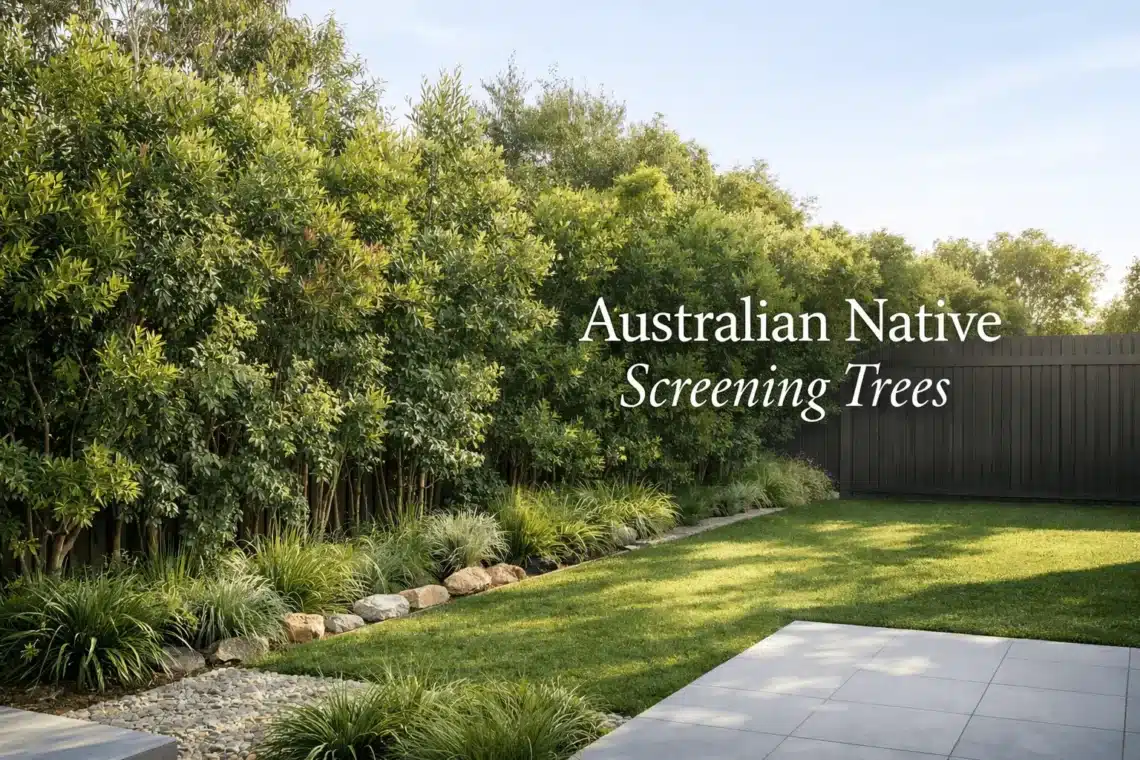
Australian native screening trees are plants specifically used to create natural privacy barriers, wind protection, and visual separation in gardens and landscapes. These trees are highly valued for their ability to adapt to local climates, tolerate drought conditions, and require minimal maintenance compared to non-native species.
They are commonly planted along fences, property boundaries, and narrow garden spaces where dense foliage is needed for effective screening. By selecting suitable native species, homeowners can achieve long-lasting privacy while supporting local ecosystems and maintaining a natural landscape appearance.
Quick Summary
- Australian native screening trees provide natural privacy, wind protection, and noise reduction
- Many species are fast-growing and suited to local climates
- Options exist for narrow spaces, hedges, and tall privacy barriers
- Choosing the right tree depends on space, growth rate, and maintenance needs
What Are Australian Native Screening Trees?
Australian native screening trees are plant species indigenous to Australia that are specifically used to form visual barriers, reduce wind exposure, and enhance privacy in outdoor spaces. Unlike standard garden trees, screening trees are selected for their dense foliage, vertical growth, and ability to form continuous coverage.
These plants are part of broader native ecosystems, which are adapted to local conditions and support biodiversity (see Native plants).
Screening trees differ from hedging plants in both structure and purpose. While hedges are typically pruned into uniform shapes and maintained at lower heights, screening trees grow taller and provide vertical privacy. They also differ from shrubs, which tend to have broader growth and less height.
Key distinctions:
- Screening trees: Taller, vertical growth for privacy and windbreaks
- Hedging plants: Structured, compact, regularly trimmed
- Shrubs: Wider spread, less suited for tall screening
Australian native plants for screening are particularly effective because they are naturally adapted to local soil conditions, rainfall patterns, and climate variations.
Benefits of Using Australian Native Trees for Screening
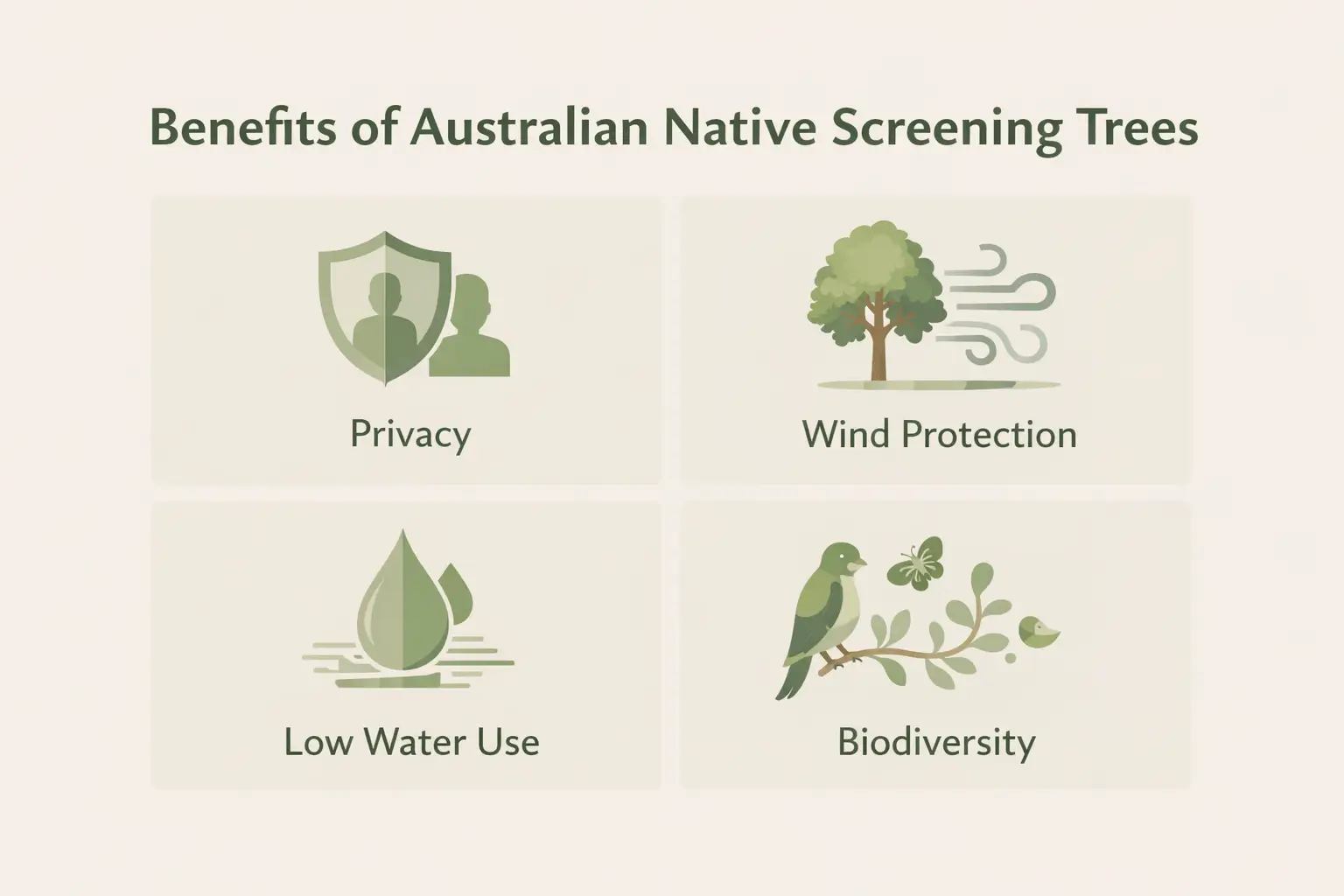
Australian native screening trees offer multiple environmental and practical advantages, making them a reliable choice for long-term landscaping.
They are naturally suited to Australian conditions, including poor soils, variable rainfall, and temperature extremes. This adaptability reduces the need for intensive care and irrigation.
Key benefits include:
- Better survival in local climates
- Reduced water requirements
- Faster establishment in native soil
- Supports biodiversity
In addition, native trees provide habitat and food for birds, insects, and pollinators. Their visual appearance also blends seamlessly into surrounding landscapes, creating a cohesive and natural design.
Fast-Growing Australian Native Screening Trees
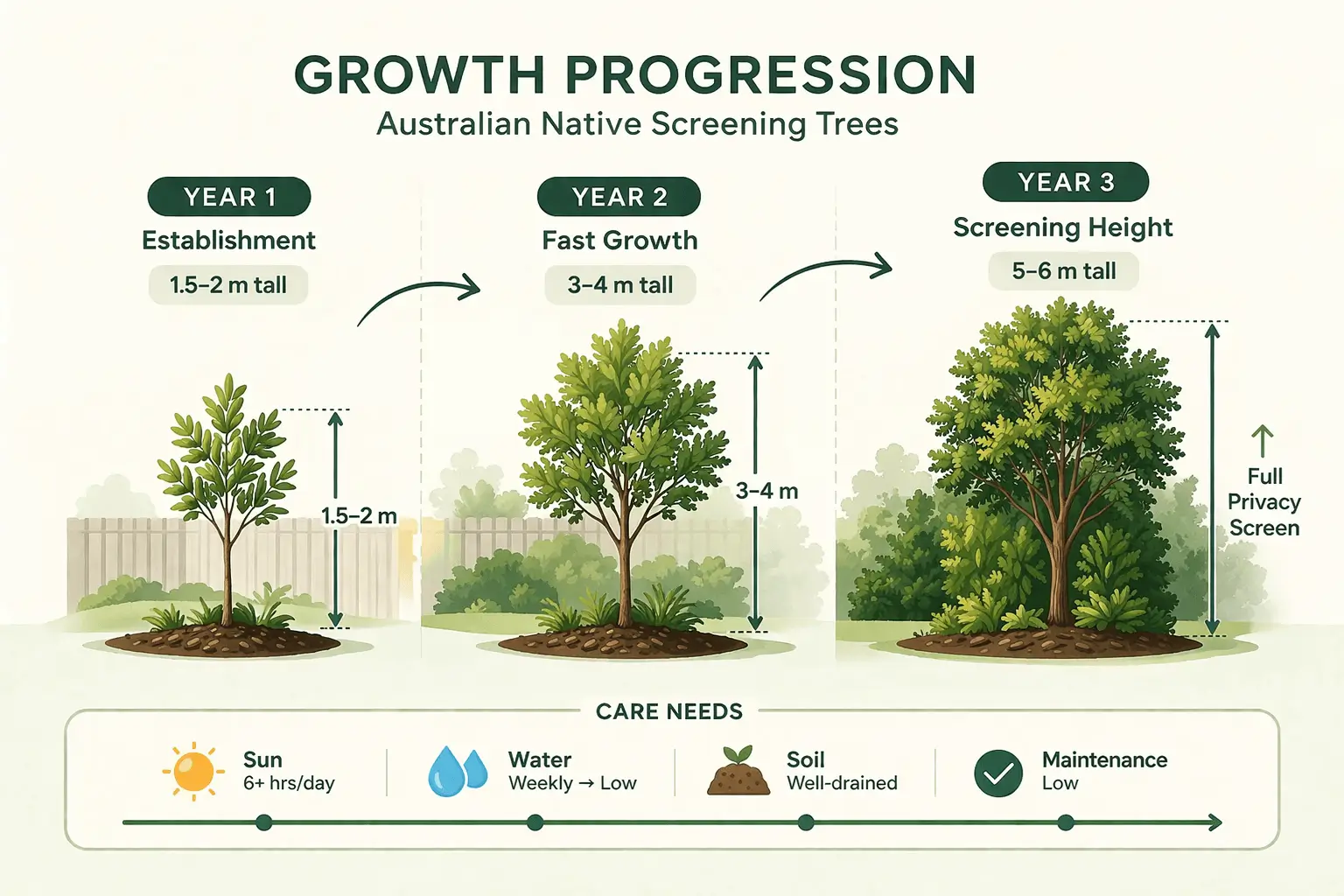
Fast-growing Australian native screening trees are species capable of establishing height and foliage density quickly, typically growing between 0.5 to 1.5 meters per year under optimal conditions. This makes them ideal for situations where rapid privacy is required.
Fast growth is particularly beneficial for new homes, exposed areas, or properties lacking established vegetation. However, rapid growth can also require more frequent pruning to maintain shape and prevent overcrowding.
Key considerations:
- Ideal for quick privacy
- Useful for new homes and exposed areas
- Requires pruning to control size
Choosing fast-growing native trees should balance speed with long-term maintenance and space availability.
Best Australian Native Screening Trees by Use Case
The best Australian native screening trees vary depending on landscaping goals, available space, and environmental conditions. Selecting the right type ensures effective screening and long-term sustainability.
Trees for Privacy and Dense Screening
Trees used for privacy should have dense foliage and the ability to grow tall enough to block views. These species create continuous visual barriers and are often planted along property boundaries. For dense privacy hedging, species like the Australian Brush Cherry are commonly used due to their compact foliage and fast growth habit.
Trees for Landscaping Aesthetics
Some native trees are chosen not only for screening but also for their visual appeal. These may include flowering species, textured foliage, or unique color variations that enhance garden design.
Trees for Windbreaks and Noise Reduction
Trees used as windbreaks or noise buffers typically have strong structures and thick canopies. Their density helps reduce wind speed and dampen external noise, improving outdoor comfort.
Screening Trees for Narrow Spaces and Small Gardens
Screening trees suitable for narrow spaces are species that grow vertically with minimal lateral spread. These are ideal for tight planting areas such as fence lines, side yards, and compact gardens.
Compact species such as Variegated Lomandra are ideal for narrow spaces due to their upright growth and minimal spread.
Native screening plants for narrow spaces are specifically valued for their upright growth habits and manageable root systems.
Key features:
- Columnar growth habits
- Minimal lateral spread
- Suitable for fence lines
These characteristics make them effective for maximizing privacy without occupying excessive space.
Small vs Tall Screening Trees (Choosing the Right Size)
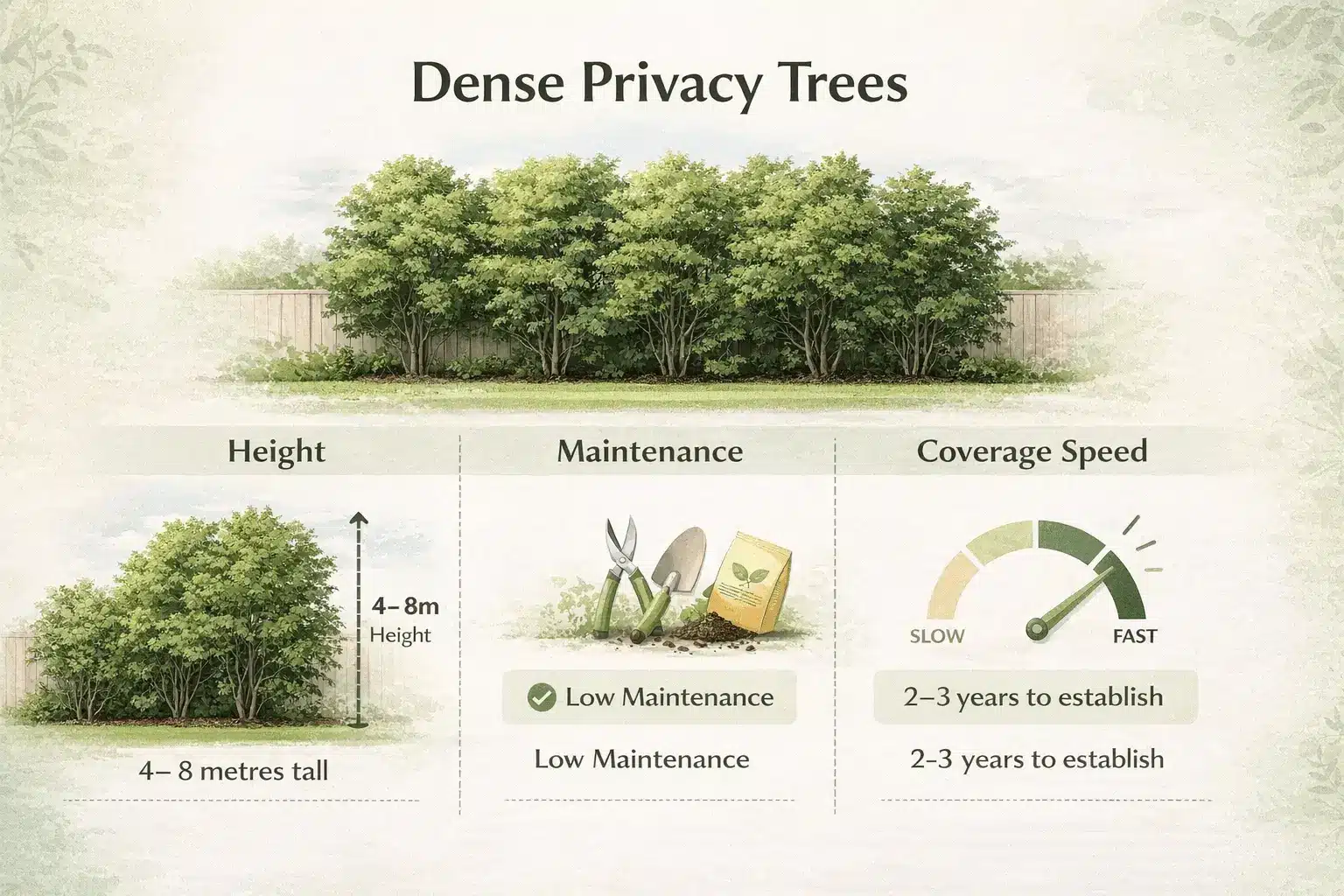
Choosing between small and tall Australian native screening trees depends on the available space and desired level of privacy.
Small Australian native screening trees are suitable for compact gardens, while taller species are better for creating full-height privacy barriers.
Comparison Block
| Feature | Small Screening Trees | Tall Screening Trees |
| Height | Low to medium | Tall (privacy barrier) |
| Best for | Small gardens | Large spaces |
| Maintenance | Easier | Requires pruning |
| Coverage speed | Moderate | Faster full screening |
Australian Native Hedge Plants vs Screening Trees
Australian native hedging plants and screening trees serve different landscaping purposes. The choice depends on desired structure, height, and maintenance level.
Hedges are typically shaped and maintained at a consistent height, providing dense coverage at lower levels. In contrast, screening trees grow taller and offer vertical privacy.
Comparison Block
- Trees: Vertical privacy, faster height
- Hedges: Structured shape, dense lower coverage
Native hedge plants in Australia are often used for formal garden designs, while screening trees are preferred for natural and informal layouts.
Growth Rate and Establishment Factors
The growth rate of screening trees is influenced by environmental and care-related factors. Fastest growing native trees can establish quickly, but only under suitable conditions.
Key factors include:
- Soil quality
- Water availability
- Sun exposure
- Climate zone
Fast-growing native trees in Australia perform best when planted in well-prepared soil with adequate sunlight and consistent watering during establishment.
Care Guide for Australian Native Screening Trees
Proper care ensures healthy growth, dense foliage, and long-term screening effectiveness. Most native species require minimal maintenance once established.
Core care requirements:
- Water deeply during establishment
- Full sun preferred for most species
- Use well-draining soil
- Prune to maintain density and shape
Seasonal care adjustments may include increased watering during dry periods and pruning after active growth phases.
Common Problems and Solutions (Screening Tree Issues)
Screening trees can experience common issues that affect growth and appearance. These problems are typically manageable with proper care.
Problems and solutions:
- Sparse growth → Improve sunlight and pruning
- Slow growth → Check soil nutrients and watering
- Yellowing leaves → Overwatering or poor drainage
- Pest issues → Use natural pest control methods
Early identification and correction help maintain healthy screening performance.
Common Mistakes When Choosing Screening Trees
Selecting the wrong type of screening tree can lead to long-term maintenance issues and poor performance.
Common mistakes include:
- Choosing trees that grow too wide
- Ignoring mature height
- Planting too close together
- Not considering root systems
Understanding growth habits and spacing requirements is essential for successful planting.
Regional Considerations (Climate & Location)
Australia’s diverse climate conditions influence the performance of screening trees. Native screening trees in Victoria, for example, may differ from those suited to tropical or arid regions.
Key considerations:
- Coastal vs inland conditions
- Frost tolerance
- Rainfall differences
Selecting species adapted to local conditions ensures better growth and long-term success.
Landscaping Ideas Using Native Screening Trees
Australian native screening trees can be used in various landscaping applications to improve functionality and visual appeal.
Common uses include:
- Fence line screening
- Garden zoning
- Pool privacy
- Windbreak barriers
These applications enhance both privacy and overall landscape structure.
Table — Key Features of Australian Native Screening Options
| Feature | Description |
| Growth Speed | Slow / Moderate / Fast |
| Height Range | Small to tall |
| Space Requirement | Narrow / Wide |
| Maintenance | Low / Moderate |
| Best Use | Privacy, hedging, landscaping |
How to Choose the Right Screening Tree
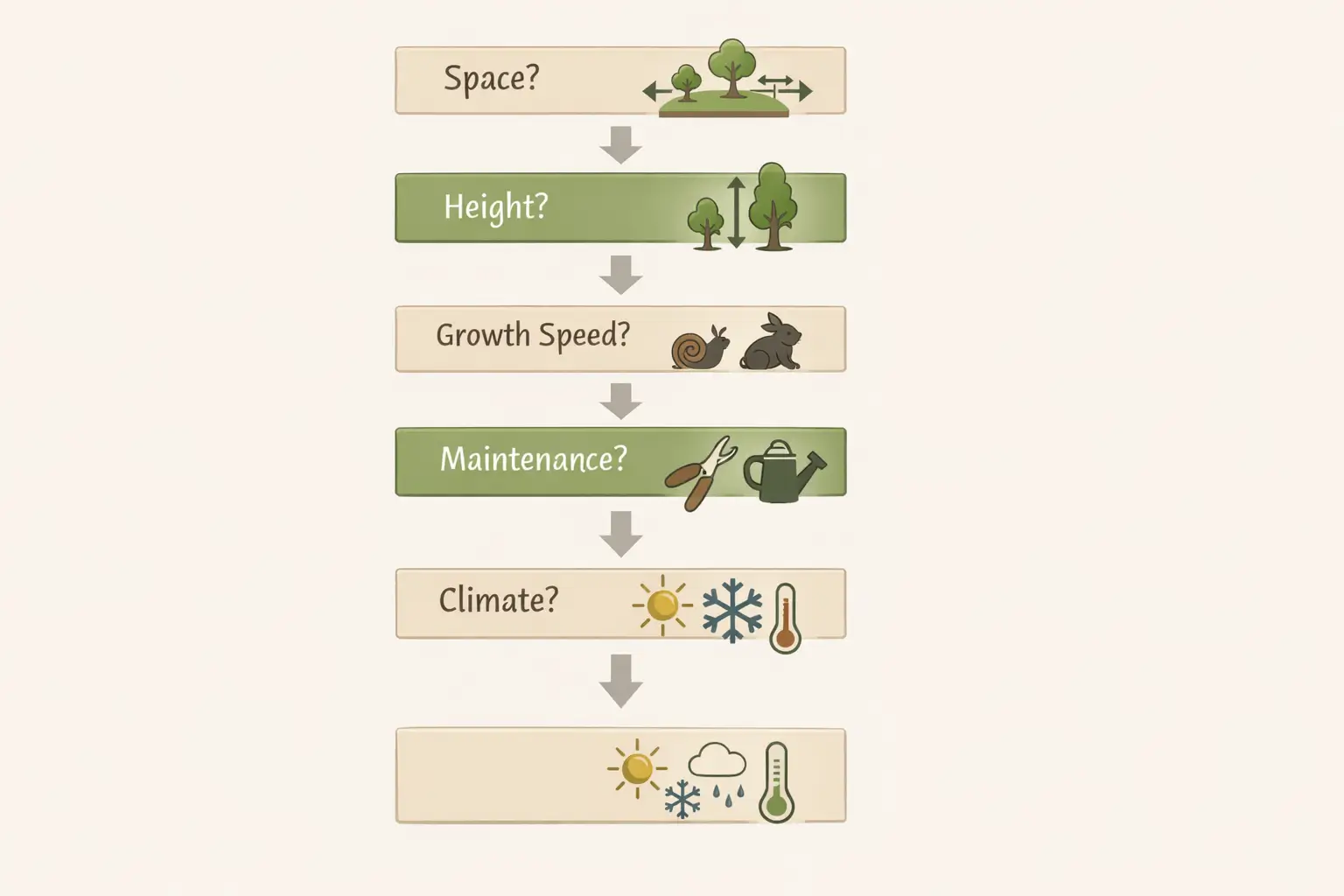
Choosing the right screening tree involves evaluating site conditions, desired outcomes, and maintenance capacity.
Decision factors:
- Available space
- Desired height
- Growth speed preference
- Maintenance level
- Climate suitability
A well-informed selection ensures effective and sustainable screening.
Conclusion
Australian native screening trees are a practical and sustainable solution for creating privacy, structure, and visual appeal in outdoor spaces. By selecting the right type based on space, growth rate, and environmental conditions, homeowners can achieve long-lasting and low-maintenance screening that integrates naturally with the surrounding landscape.
FAQs
1. What are the best Australian native screening trees for privacy?
Trees with dense foliage and fast growth are ideal for creating effective natural privacy barriers. Species that grow tall and maintain thick canopies provide the most reliable coverage.
2. How fast do Australian native screening trees grow?
Growth rates vary depending on species and conditions, but fast-growing varieties can establish noticeable screening within a few years, especially with proper care and sunlight.
3. Are native screening trees suitable for narrow spaces?
Yes, many native species have upright and columnar growth habits, making them ideal for narrow spaces such as fence lines and small gardens.
4. What is the difference between screening trees and hedging plants?
Screening trees grow taller and provide vertical privacy, while hedging plants are typically trimmed into structured shapes and offer dense coverage at lower heights.
5. Do Australian native screening trees require a lot of maintenance?
Most native screening trees are low-maintenance. Once established, they require only occasional pruning and basic care such as watering during dry periods.