Introduction
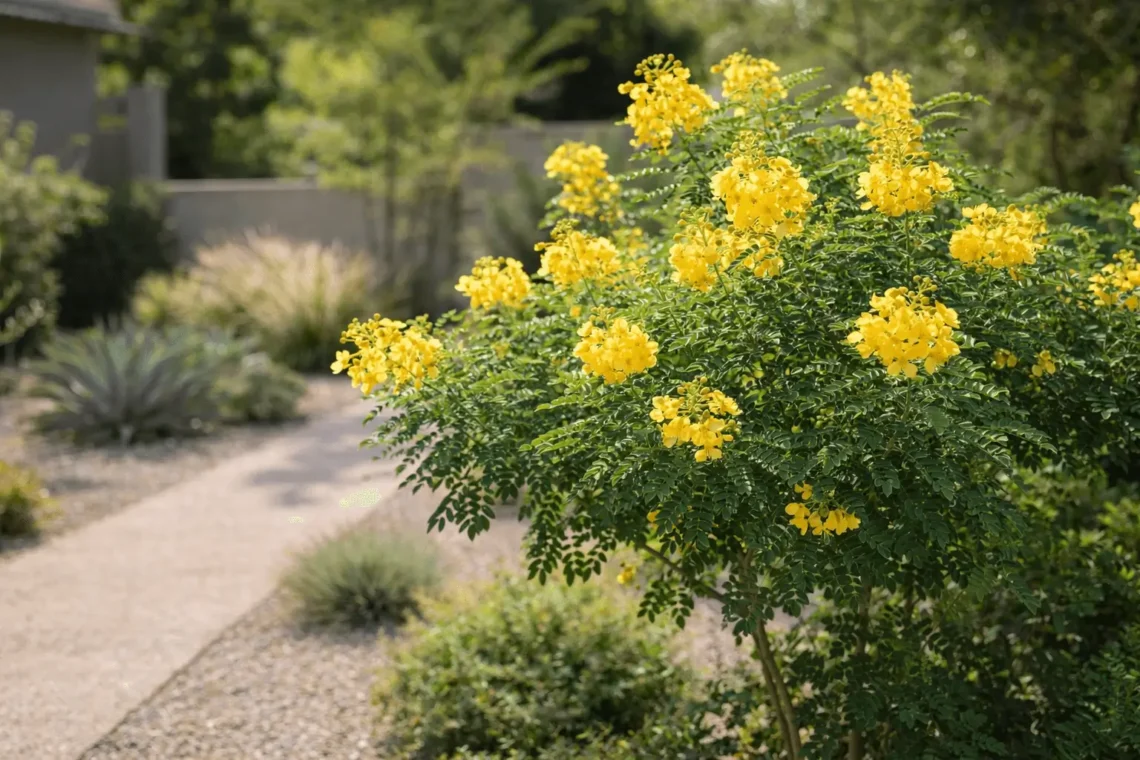
The mexican bird of paradise plant is a striking ornamental shrub known for its bold foliage and vibrant yellow flower clusters. It is widely valued for its ability to thrive in hot, dry regions where many flowering plants struggle to perform. Popular in warm climates and ornamental gardens, this plant combines visual impact with resilience, making it a practical choice for landscapes that demand both beauty and durability. Its long blooming season, attractive evergreen leaves, and tolerance to drought contribute to its strong appeal among gardeners. The mexican bird of paradise plant is also appreciated for its low-maintenance nature, requiring minimal care once established while still delivering consistent ornamental value.
Mexican Bird of Paradise Plant Overview
Botanical Name and Classification
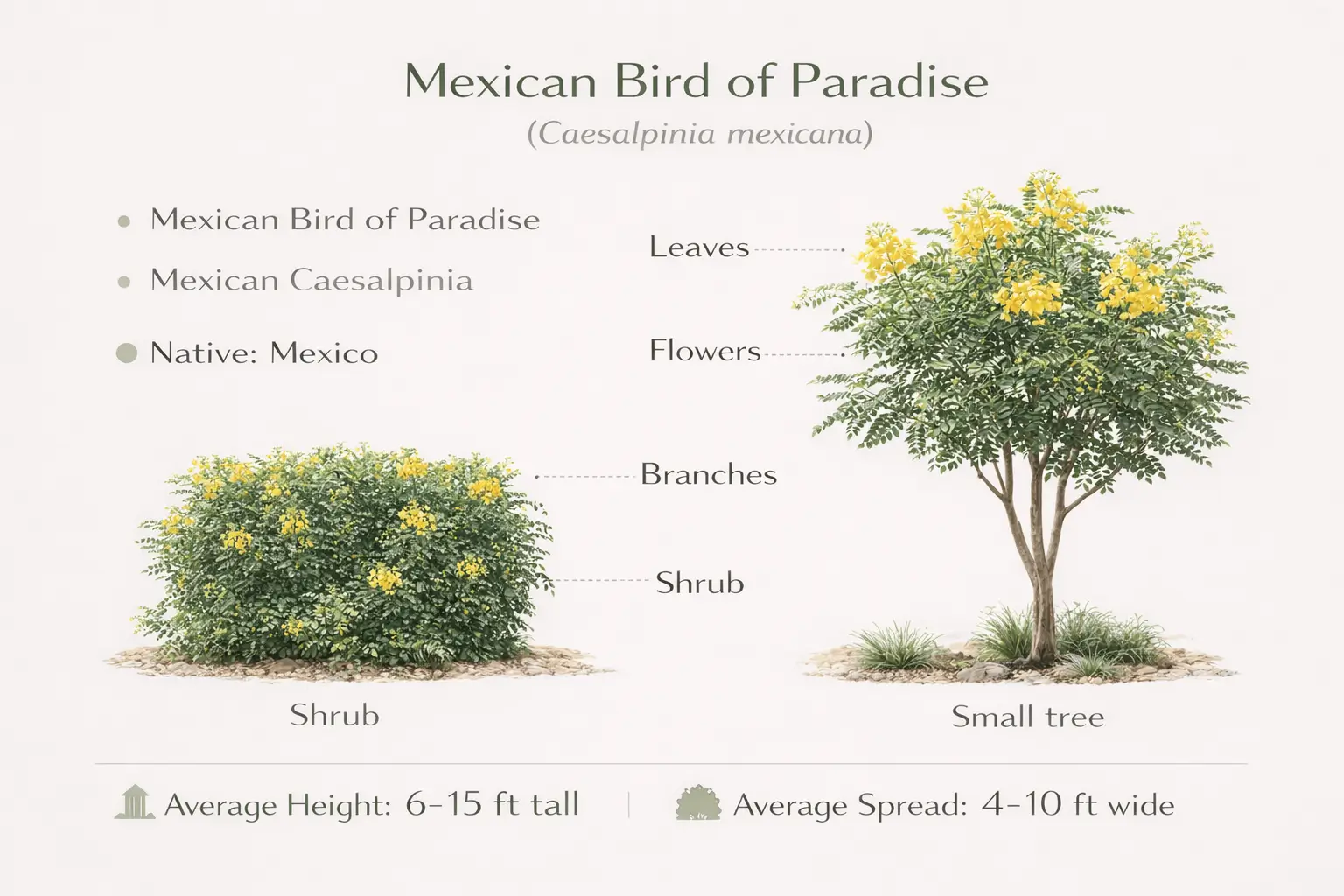
The scientific identity of the mexican bird of paradise caesalpinia mexicana places it within the legume family, where it is recognized for its woody structure and flowering habit. It is commonly referred to as Mexican bird of paradise, yellow bird of paradise, or Mexican poinciana in different regions. These names reflect both its geographic origin and its resemblance to other bird-of-paradise–type ornamentals used in warm-climate landscaping.
Native Habitat and Growth Habit
The mexican bird of paradise plant is native to northeastern Mexico and surrounding arid to semi-arid regions. It naturally prefers warm temperatures, full sun exposure, and well-drained soils. In cultivation, it can grow as a dense shrub or be trained into a small tree form. Mature plants typically reach 10–15 feet in height with a similar spread, and they are known for their long lifespan when grown in suitable conditions.
Mexican Bird of Paradise Plant Care Guide
-
Sunlight Requirements
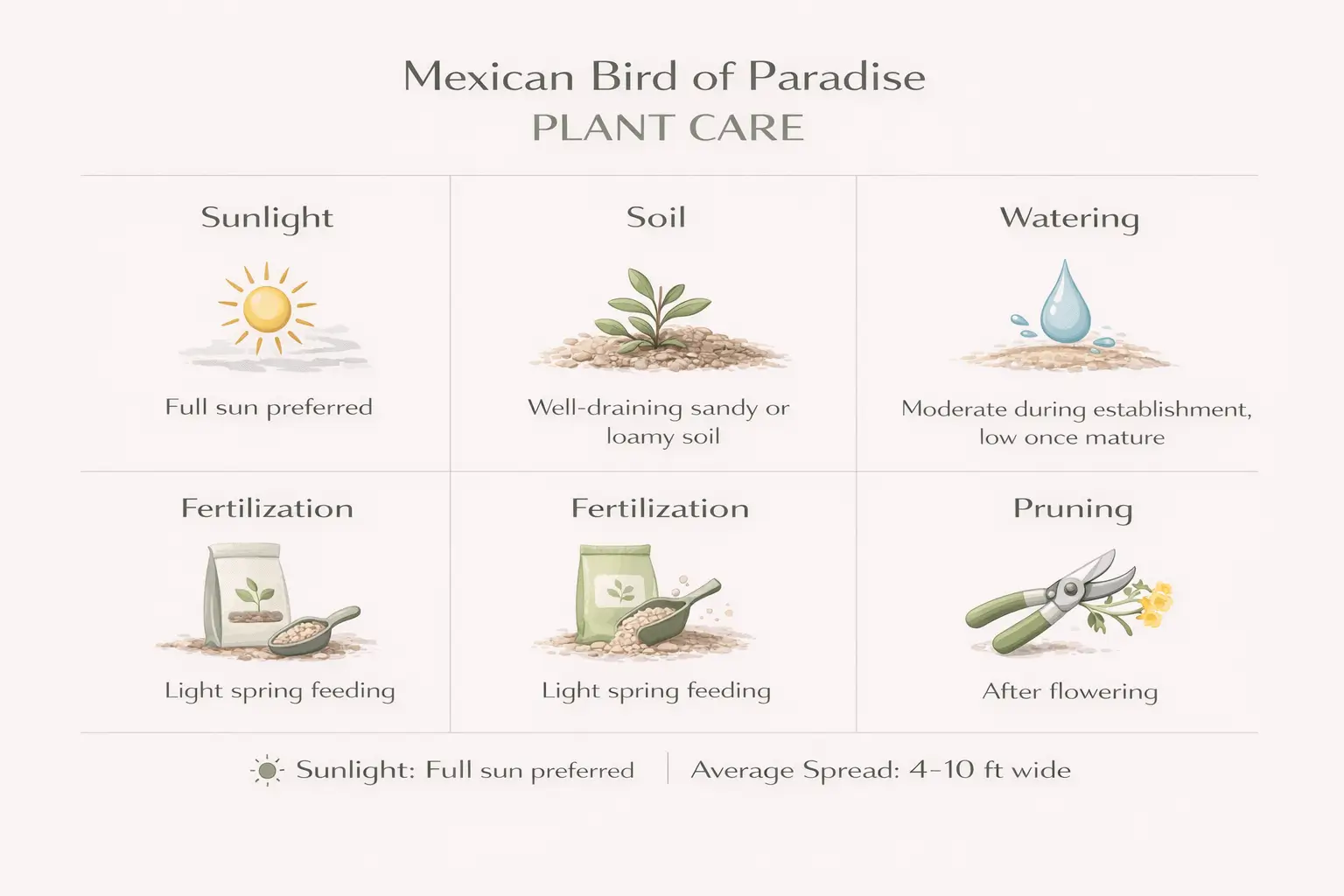
Mexican bird of paradise performs best in full sun, where it produces abundant foliage and consistent flowering. Partial shade is tolerated, but reduced sunlight often leads to fewer blooms and slower growth. Adequate sun exposure directly influences flower production and overall plant vigor.
-
Soil Type and Drainage Needs
Healthy growth depends on well-draining soil with a sandy or loamy texture. While the plant adapts to poor soils, standing water can damage roots and limit development. Proper drainage is essential to prevent root-related stress and decline.
-
Watering Schedule
During the establishment phase, regular watering helps the plant develop a strong root system. Once mature, the mexican bird of paradise plant requires infrequent watering and demonstrates strong drought tolerance. Overwatering should be avoided, especially in cooler seasons.
-
Fertilization and Maintenance
Mexican bird of paradise plant care is minimal but benefits from light fertilization in early spring to support flowering. A balanced, slow-release fertilizer is sufficient. Pruning is best done after flowering to maintain shape, remove dead branches, and encourage fresh growth without reducing bloom potential.
Mexican Bird of Paradise Plant Indoor vs Outdoor Growth
Can Mexican Bird of Paradise Be Grown Indoors?
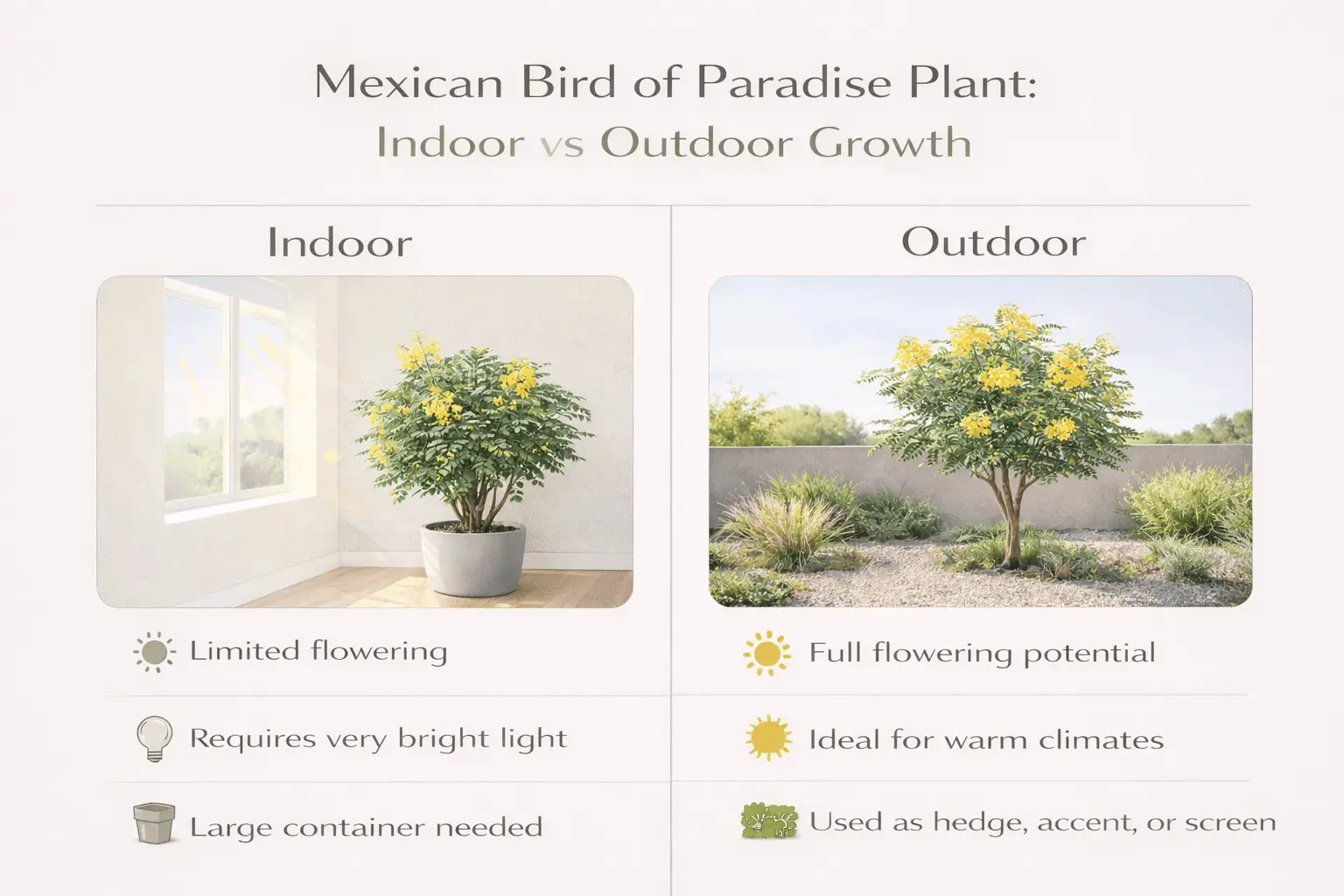
Mexican bird of paradise plant indoor growth is possible only under specific conditions. Indoor cultivation requires very bright light, large containers, and ample space. Even with proper care, indoor plants rarely reach their full size or flowering potential due to light and space limitations.
Best Outdoor Conditions for Thriving Growth
Outdoors, the plant thrives in warm climates corresponding to USDA zones 9–11. It is commonly used as hedges, accent plants, or natural privacy screens. Landscapes with full sun exposure and good airflow provide ideal conditions for long-term health.
Read Also: 7+ Powerful Elephant Ear Plant Indoor Benefits You’ll Love
Mexican Bird of Paradise Plant Propagation Methods
How to Grow Mexican Bird of Paradise From Seed
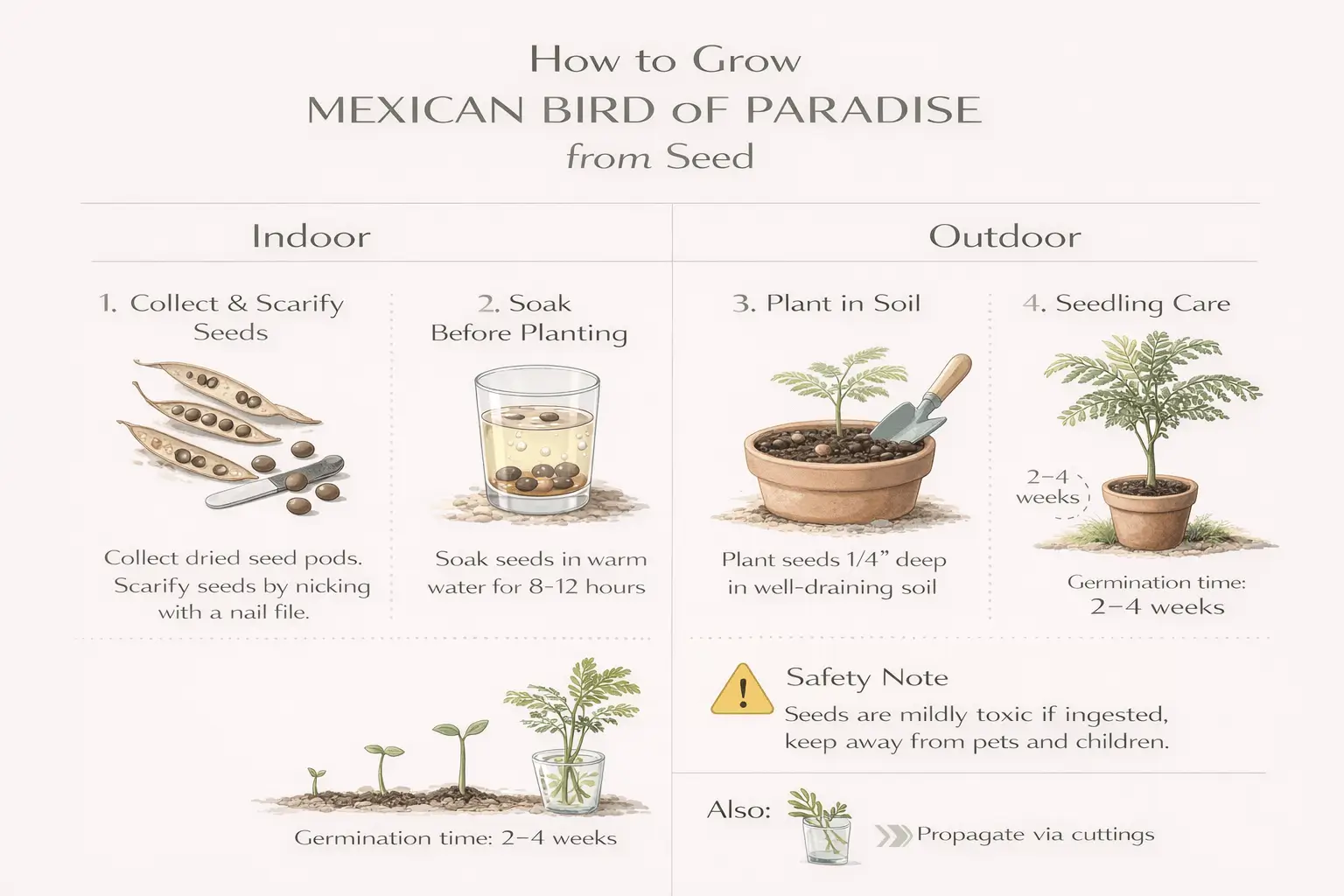
How to grow mexican bird of paradise from seed begins with collecting mature seed pods and scarifying the seeds to improve germination. Seeds are typically soaked in warm water before planting. Germination occurs within two to four weeks under warm temperatures and consistent moisture.
Other Propagation Techniques
Mexican bird of paradise plant propagation can also be done through cuttings or by transplanting young nursery-grown plants. While cuttings are less common, they can be successful under controlled conditions with proper humidity and warmth.
Is the Mexican Bird of Paradise Plant Poisonous?
Toxicity to Humans and Pets
Mexican bird of paradise poisonous concerns primarily involve seeds and seed pods, which may cause mild digestive discomfort if ingested. Leaves and flowers are generally considered low risk, but ingestion should still be discouraged.
Garden Safety Tips
Plant placement away from play areas is recommended in households with children or pets. Basic precautions, such as supervision and proper garden design, help minimize accidental exposure.
Buying a Mexican Bird of Paradise Plant
Mexican Bird of Paradise Plant for Sale — What to Look For
When selecting a mexican bird of paradise plant for sale, look for healthy green foliage, strong stems, and no signs of pests or root damage. Younger plants adapt more easily to new environments, while mature specimens offer quicker landscape impact.
Finding Mexican Bird of Paradise Plant Near Me
Searching for mexican bird of paradise plant near me often leads to local nurseries specializing in warm-climate plants. Local sourcing ensures better climate compatibility, while online sellers offer convenience but require careful evaluation of shipping conditions.
Common Problems and Growing Tips
Slow Growth or Lack of Flowers
Slow growth or reduced flowering is usually caused by insufficient sunlight, excess water, or nutrient imbalance. Adjusting light exposure and watering practices typically resolves these issues.
Pests and Diseases
The plant is generally resistant to pests and diseases. Occasional issues may include aphids or scale insects, which can be managed with routine inspection and basic preventive care.
Conclusion — Is the Mexican Bird of Paradise Plant Right for You?
The mexican bird of paradise plant is an excellent choice for gardeners seeking a bold, flowering plant with minimal upkeep. Its major benefits include strong heat tolerance, low water requirements once established, and reliable seasonal blooms. Care needs are straightforward, focusing on full sun exposure, well-draining soil, and light maintenance. This plant works best in warm-climate gardens, xeriscapes, and ornamental landscapes where structure and color are both desired. As a hedge, accent shrub, or small tree, it delivers long-term visual impact without demanding intensive care. For best results, proper placement, correct sunlight exposure, and controlled watering are essential to ensure healthy growth and consistent flowering.
Read Also: 7+ Powerful Reasons to Choose Australian Brush Cherry
FAQs — Mexican Bird of Paradise Plant
Is the mexican bird of paradise plant easy to grow for beginners?
Yes, the mexican bird of paradise plant is considered beginner-friendly. It tolerates heat, poor soil, and occasional neglect, making it suitable for gardeners with limited experience.
Can mexican bird of paradise survive cold winters?
Mexican bird of paradise has limited cold tolerance. It can handle brief light frost, but prolonged freezing temperatures may damage or kill the plant. It performs best in warm climates.
How long does it take to grow mexican bird of paradise from seed?
When grown from seed, mexican bird of paradise typically takes two to three years to reach a mature flowering stage, depending on climate and growing conditions.
Does the mexican bird of paradise plant require frequent pruning?
No frequent pruning is required. Occasional pruning after flowering helps maintain shape and remove dead growth but is not essential for plant health.
Is mexican bird of paradise safe around pets and children?
While not highly toxic, seeds and pods may cause mild discomfort if ingested. It is advisable to place the plant away from areas where pets or young children frequently play.