Introduction
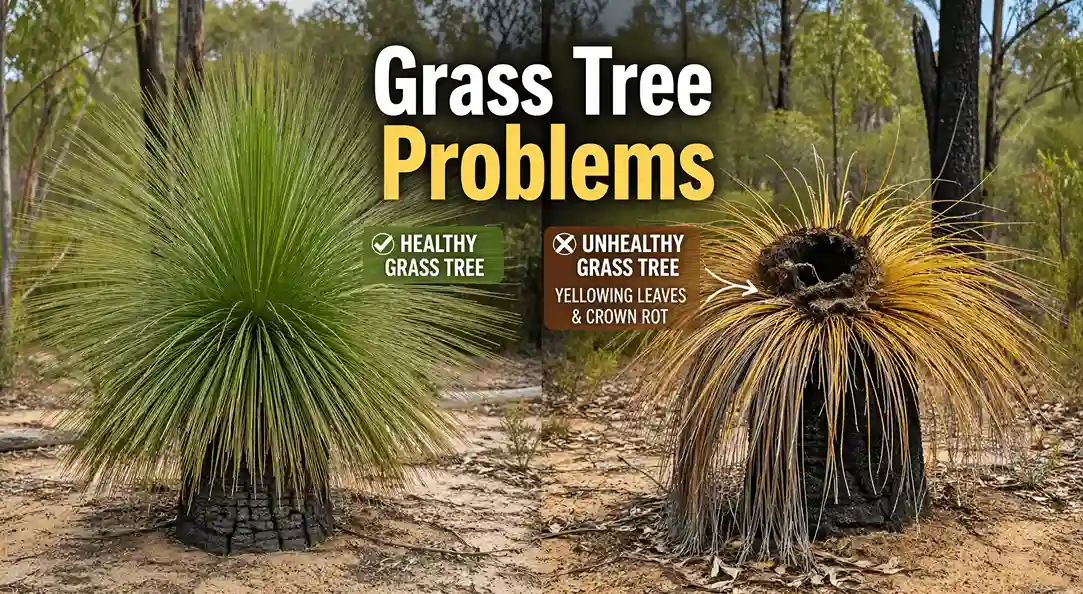
Grass tree problems are among the most common concerns for gardeners growing Xanthorrhoea species, especially in Australia. These iconic native plants are highly sensitive to environmental changes, making them vulnerable to issues like poor drainage, transplant shock, and improper watering. Because grass trees grow extremely slowly and rely on stable conditions, even minor mistakes can lead to long-term decline. Understanding the root causes of grass tree problems—and how to correct them—is essential for maintaining their health and ensuring survival over decades. Grass tree problems are among the most common concerns for gardeners growing Xanthorrhoea species, a unique group of Australian native plants.
Quick Summary
- Grass tree problems are often caused by overwatering, poor drainage, or transplant stress
- Common symptoms include yellowing leaves, crown rot, and slow or halted growth
- Early detection improves chances of recovery before root damage becomes severe
- Grass trees require minimal intervention and thrive in stable, well-drained environments
What Are Grass Trees and Why They Are Unique
Grass trees, scientifically known as Xanthorrhoea, are native Australian plants characterized by a woody trunk and long, grass-like leaves. Commonly referred to as native grass trees or grasstrees, they are adapted to harsh environments and bushfire cycles.
These plants are unique due to their biological traits:
- Extremely slow growth rate, often just a few centimeters per year
- Fire-adapted lifecycle, with flowering often triggered by fire
- Long lifespan, sometimes exceeding hundreds of years
The slow development explains how long grass trees take to grow, often decades to reach maturity. This also answers why grass trees are expensive—mature specimens are rare, difficult to cultivate, and slow to replace. Understanding the grass tree growth rate helps explain why these plants require long-term care and patience, similar to other slow-growing ornamental species.
Why Grass Tree Problems Occur (Root Causes Explained)
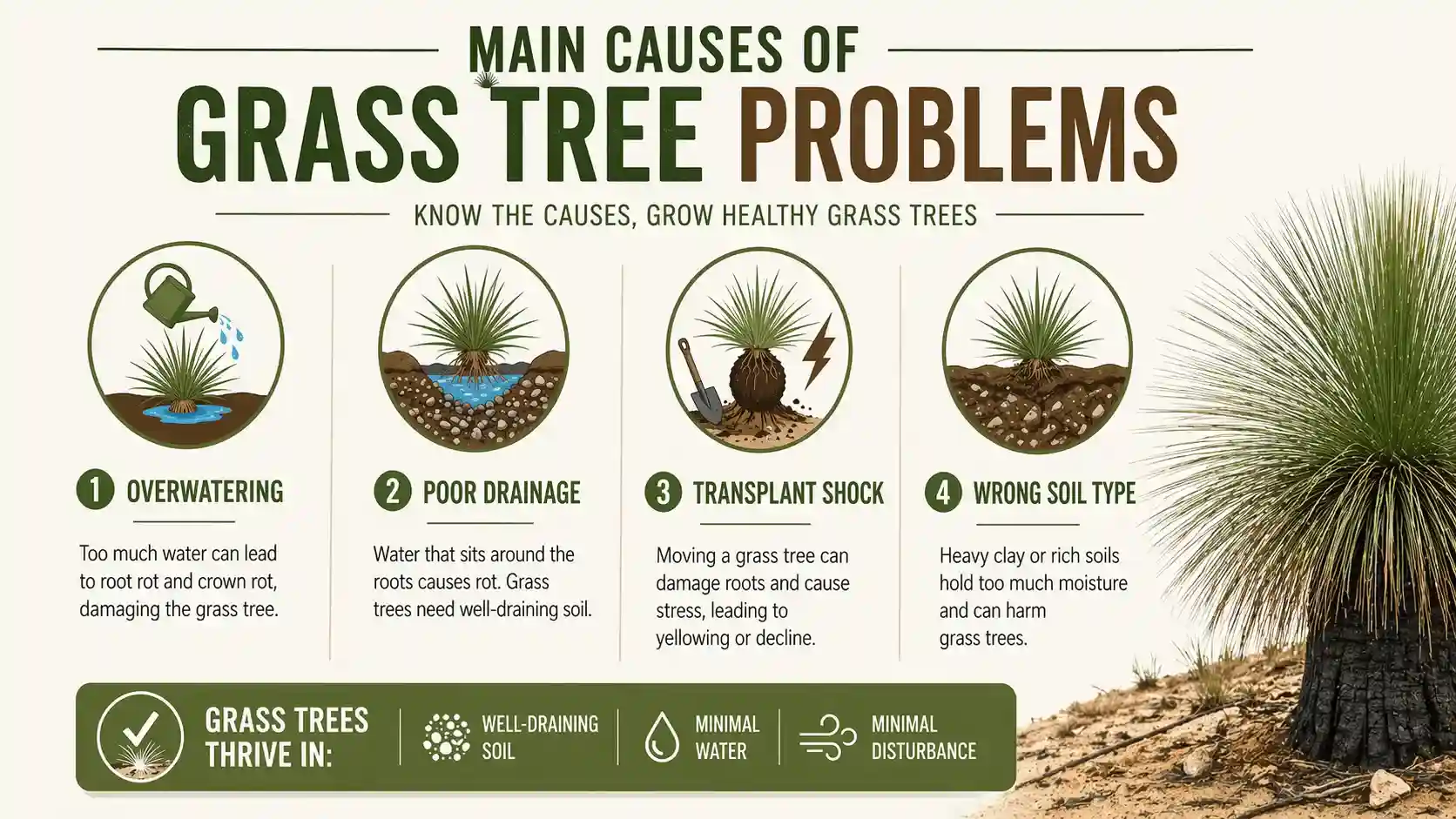
Grass tree problems occur primarily due to environmental mismatch and improper care. In regions like Australia, especially Victoria, or when growing Mexican grass tree varieties, incorrect conditions can quickly stress the plant.
Key causes include:
- Poor soil drainage
- Excessive watering
- Root disturbance during planting
Watering and Drainage Issues
Grass trees require minimal water and are highly susceptible to overwatering. Excess moisture leads to root rot and oxygen deprivation in the root system.
Common issues:
- Overwatering causes root decay
- Underwatering may stress young plants
- Poor drainage traps water around roots
These factors often explain why a grass tree is dying.
Soil and Root System Sensitivity
The grass tree root system is adapted to sandy, well-draining soils. Heavy or compacted soil prevents proper aeration.
Important considerations:
- Use native soil conditions whenever possible
- Avoid dense potting mixes
- Ensure water drains quickly
If your garden has heavy soil, addressing poor soil drainage issues is essential to prevent root damage and long-term plant decline.
Transplant Shock and Handling Damage
Transplanting Xanthorrhoea is risky due to fragile roots. Even minor disturbances can interrupt nutrient uptake.
Risks include:
- Root damage during relocation
- Delayed recovery or permanent stress
- Increased susceptibility to disease
Common Grass Tree Diseases and Health Issues
Grass tree diseases are typically linked to moisture imbalance and fungal infections. These issues develop quickly when environmental conditions are unsuitable.
Crown Rot (Most Common Disease)
Crown rot is the most common disease in grass trees. It occurs when excess moisture accumulates at the base of the leaves.
Symptoms include:
- Soft, rotting crown
- Foul odor
- Progressive plant decline
Fungal and Root Diseases
Fungal infections thrive in wet conditions and poorly drained soil.
Common causes:
- Overwatering
- Soil-borne pathogens
- Lack of airflow
Environmental Stress Conditions
Extreme heat, drought, or poor ventilation can weaken the plant and make it more vulnerable to disease.
Signs Your Grass Tree Is Dying (Early Detection Guide)
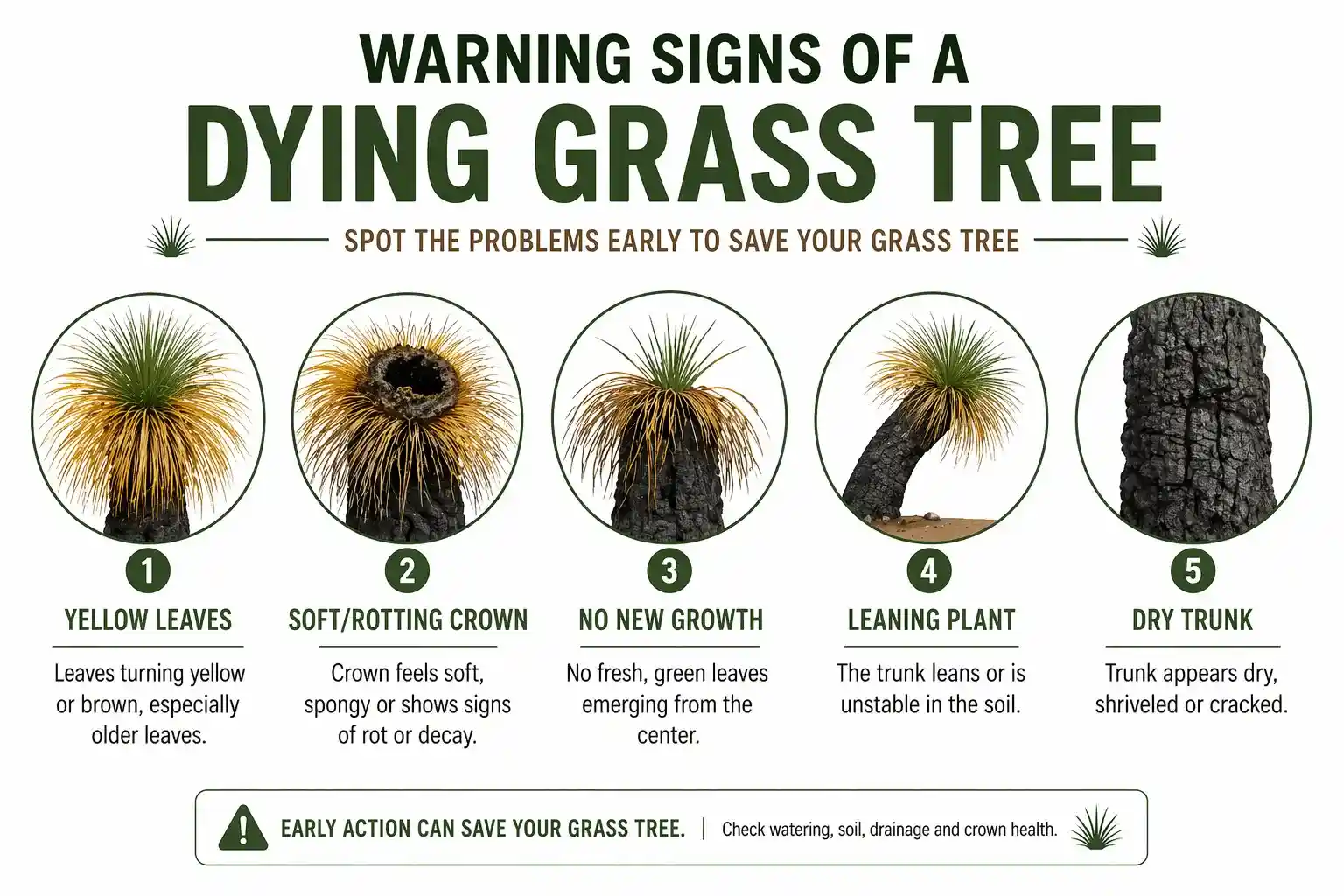
Grass trees show clear warning signs before dying. Early detection is critical for recovery.
- Yellowing or browning leaves
- Soft or rotting crown
- Lack of new growth
- Leaning or instability
- Dry, brittle trunk
What Kills Grass Trees (Critical Threats Explained)
Grass trees are usually killed by environmental stress rather than age.
Key threats include:
- Overwatering and root rot
- Poor drainage soil
- Incorrect fertiliser use
- Severe transplant shock
- Mechanical damage to trunk or crown
How to Save a Dying Grass Tree (Step-by-Step Solutions)
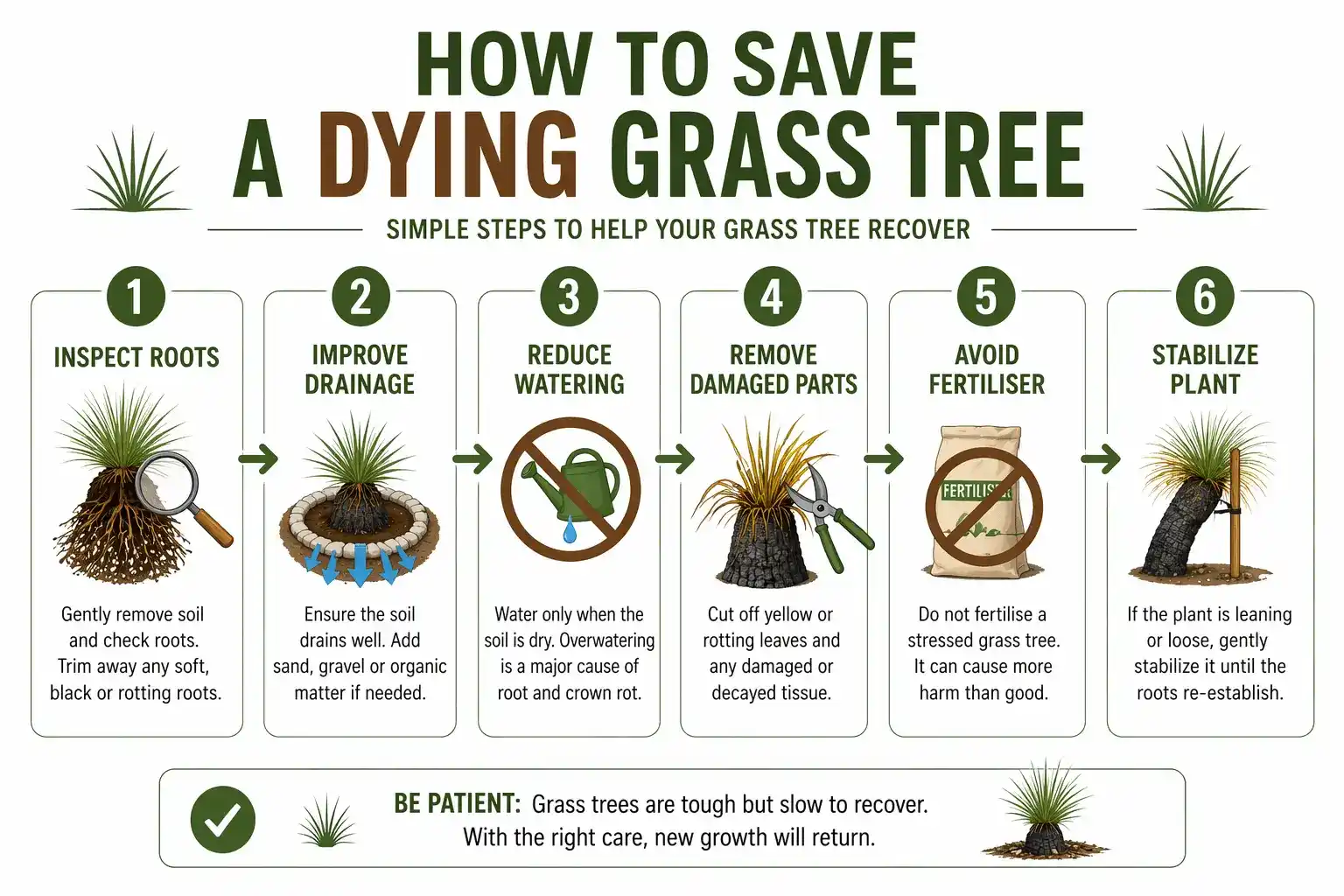
A dying grass tree can often be saved if action is taken early and conditions are corrected quickly.
Steps to follow:
- Inspect root and crown condition
- Improve drainage immediately
- Reduce watering frequency
- Remove infected or dead material
- Avoid fertiliser unless necessary
- Stabilize plant after transplant
Grass Tree Care and Maintenance Best Practices
Proper care is essential for preventing grass tree problems and ensuring long-term health.
Best practices:
- Water sparingly and deeply
- Use sandy, well-draining soil
- Avoid disturbing the root system
- Apply minimal fertiliser
- Allow natural fire-related processes where applicable
Common beginner mistake: treating grass trees like regular garden plants leads to overwatering and root damage. Understanding basic plant care fundamentals helps prevent common mistakes and ensures long-term plant health across both indoor and outdoor species.
Growing Grass Trees in Pots vs Ground
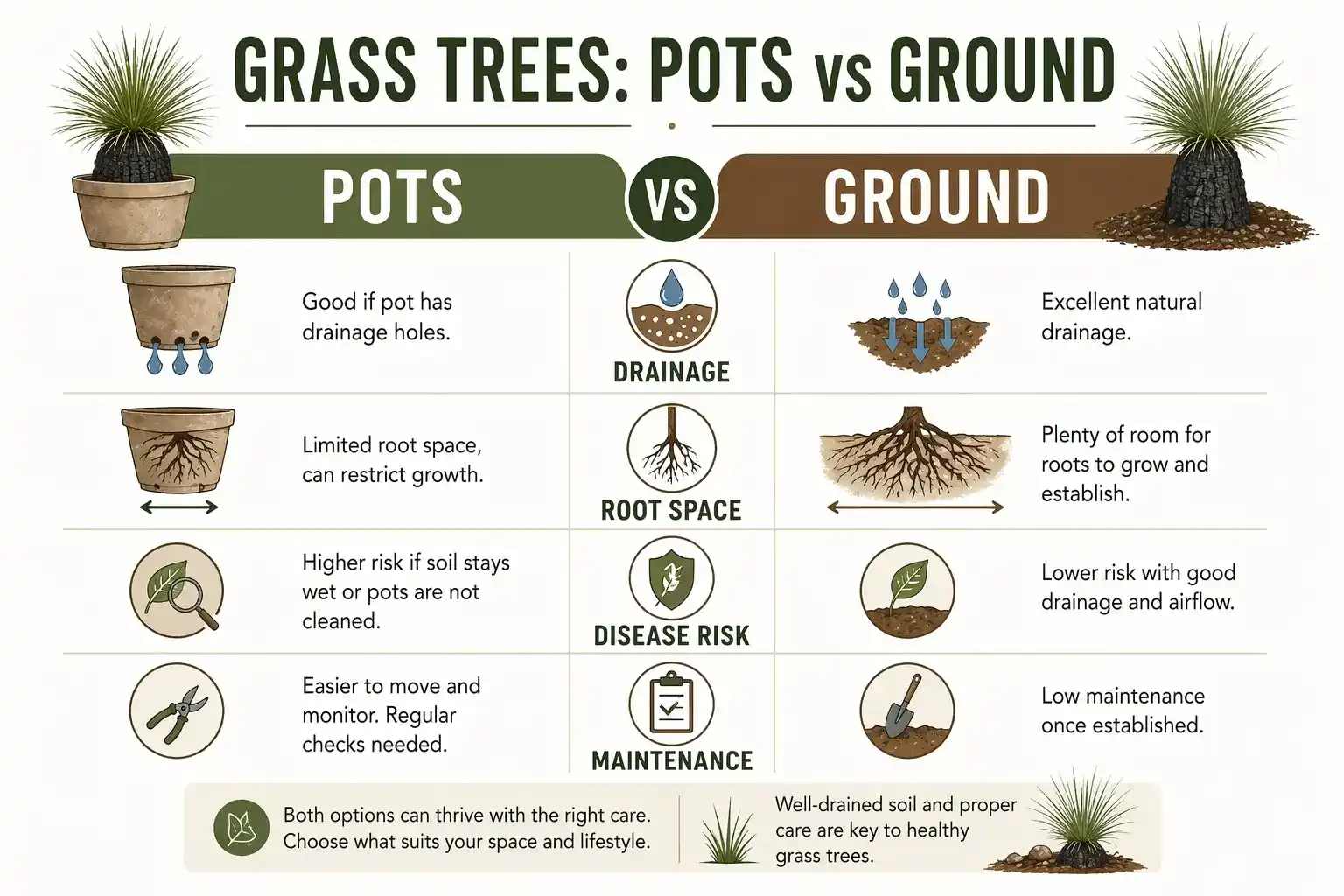
Pot-Grown Grass Trees
Growing grass trees in pots increases risk due to restricted root space and drainage challenges.
Issues include:
- Water retention
- Limited root expansion
- Higher disease risk
Ground-Planted Grass Trees
Planting in the ground provides natural conditions and better long-term survival.
Benefits:
- Improved drainage
- Stable root environment
- Lower maintenance
Pot vs Ground Growth Conditions
| Factor | Pots | Ground |
| Drainage Control | Moderate | Natural |
| Root Space | Limited | Extensive |
| Risk of Disease | Higher | Lower |
| Maintenance | High | Low |
Grass Tree Flowering and Its Impact on Health
Grass tree flowering is often triggered by fire or environmental stress. The plant produces a tall flower spike known as a Xanthorrhoea flower.
Key points:
- Flowering consumes significant energy
- Occurs after stress or fire events
- Flower spike removal may help conserve energy
Transplanting Grass Trees Safely (Risk vs Reward)
Transplanting grass trees should only be done when necessary due to high risk.
Important factors:
- Root systems are fragile
- Recovery is slow and uncertain
- Aftercare is critical
Aftercare essentials:
- Stabilize the plant
- Limit watering
- Avoid fertiliser during recovery
Why Grass Trees Are Expensive (And How It Relates to Problems)
Grass trees are expensive due to biological and environmental limitations.
Reasons include:
- Extremely slow growth rate
- Difficult transplantation process
- High mortality risk
- Legal protections and restrictions
These factors also contribute to why improper care leads to irreversible problems.
Beginner Mistakes That Lead to Grass Tree Problems
Many grass tree problems result from avoidable beginner errors.
Common mistakes:
- Overwatering like regular plants
- Using rich potting soil
- Frequent fertilising
- Moving the plant too often
- Ignoring early warning signs
Troubleshooting Common Grass Tree Problems (Problem-Solution Section)
Yellow Leaves
Yellow leaves are usually caused by overwatering or poor drainage. Reduce watering frequency and improve soil drainage immediately.
No Growth
No growth typically indicates transplant shock or environmental stress. Allow time for recovery and avoid additional disturbance.
Rotting Base
A rotting base is a sign of fungal infection. Improve drainage and remove infected tissue to prevent spread.
While grass trees are not commonly affected by pests, learning how to fix plant pest and damage issues can improve overall plant health management.
Growth Rate, Lifecycle, and Long-Term Expectations
Grass trees grow extremely slowly and require patience.
Key facts:
- Growth rate: only a few centimeters per year
- Lifespan: can exceed hundreds of years
- Flowering: occurs infrequently and under specific conditions
Understanding their lifecycle helps set realistic expectations for care and growth.
Conclusion
Grass tree problems are typically caused by environmental stress, poor drainage, or improper handling rather than natural decline. By recognizing early warning signs, maintaining proper soil and watering conditions, and avoiding common mistakes, it is possible to protect these unique plants. With the right care approach, grass trees can survive and thrive for generations.
FAQs
How do I know if my grass tree is dying?
Look for yellowing leaves, soft crown tissue, lack of new growth, and structural instability. These are early indicators of decline.
Can a dying grass tree be saved?
Yes, early intervention such as improving drainage and reducing watering can help restore plant health.
What is the most common disease in grass trees?
Crown rot is the most common disease, usually caused by excess moisture and poor drainage.
Why are grass trees so sensitive to transplanting?
Their delicate root systems are easily damaged, making recovery slow and difficult.
How often should grass trees be watered?
Grass trees require minimal watering—only occasional deep watering during dry conditions.