Introduction
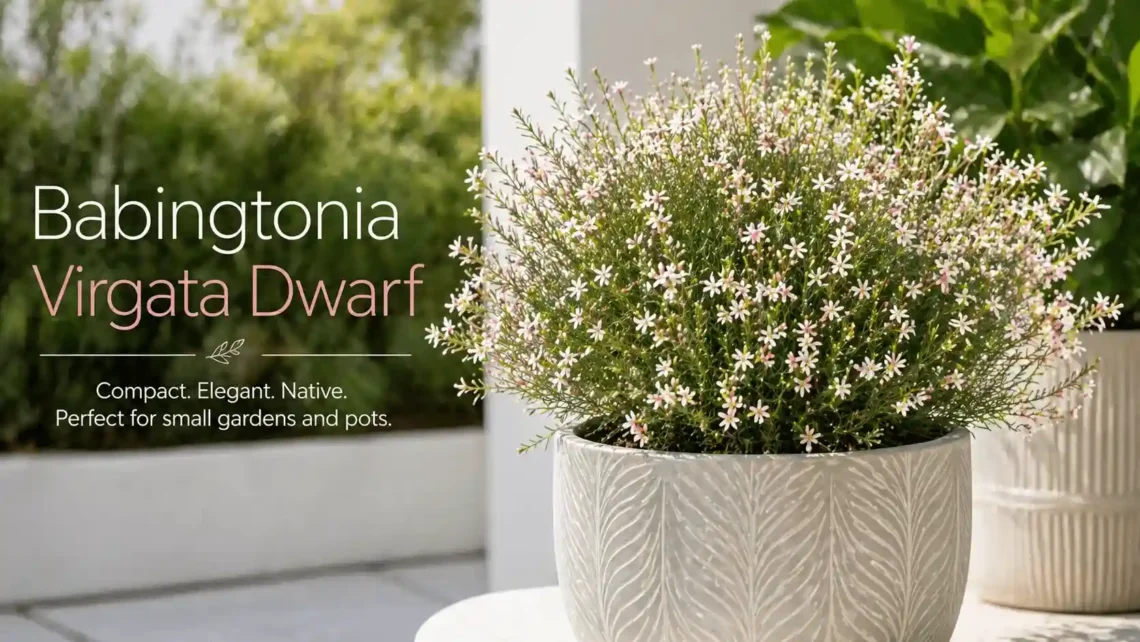
Babingtonia virgata dwarf is a compact ornamental shrub known for its fine, needle-like foliage and delicate, star-shaped flowers. The plant belongs to a complex botanical group that includes closely related names such as baeckea virgata and sannantha virgata, reflecting ongoing taxonomic reclassification within the Myrtaceae family. It is commonly referred to as dwarf baeckea, fairy lights plant, or dwarf heath myrtle due to its visual characteristics. This shrub is widely valued in landscaping, container gardening, and low-maintenance garden designs because of its manageable size, subtle texture, and adaptability to various growing conditions. It is commonly referred to as dwarf baeckea, fairy lights plant, or dwarf heath myrtle, similar in appearance to a dwarf myrtle shrub used in compact garden designs.
Quick Summary
- Babingtonia virgata dwarf is a compact flowering shrub valued for fine foliage and small star-like blooms.
- It is closely related to baeckea virgata and sannantha minima, often reclassified botanically.
- Commonly used in borders, rock gardens, and containers due to its manageable size.
- Thrives in well-drained soil with moderate sunlight and minimal care.
What Is Babingtonia Virgata Dwarf? (Definition & Botanical Background)
Babingtonia virgata dwarf is an evergreen shrub characterized by its compact growth habit, fine foliage, and small decorative flowers. It belongs to the Myrtaceae family and is native to Australia. Its classification overlaps with other botanical names such as baeckea virgata and sannantha virgata due to taxonomic revisions over time. It belongs to the Myrtaceae family, a large group of flowering plants that includes many Australian native species.
This plant includes variants such as baeckea virgata nana, baeckea virgata compacta, and sannantha minima, all of which represent smaller or more compact forms. In horticulture, the term “dwarf” refers to plants that maintain a smaller size and denser growth habit compared to standard species.
Key characteristics include:
- Evergreen shrub with fine, needle-like foliage
- Produces small white or pink star-shaped flowers
- Native to Australia
- Frequently reclassified under different genera
Common Names and Plant Variants
The naming of babingtonia virgata dwarf can be confusing due to overlapping botanical and common names. Scientific reclassification has led to multiple accepted names for similar plants, while gardeners often use common names based on appearance.
Botanical names:
- babingtonia virgata
- baeckea virgata
- sannantha virgata
Popular cultivar names:
- baeckea virgata nana
- baeckea virgata compacta
Common names:
- dwarf baeckea
- fairy lights plant
- dwarf heath myrtle
Plant Size and Growth Habit
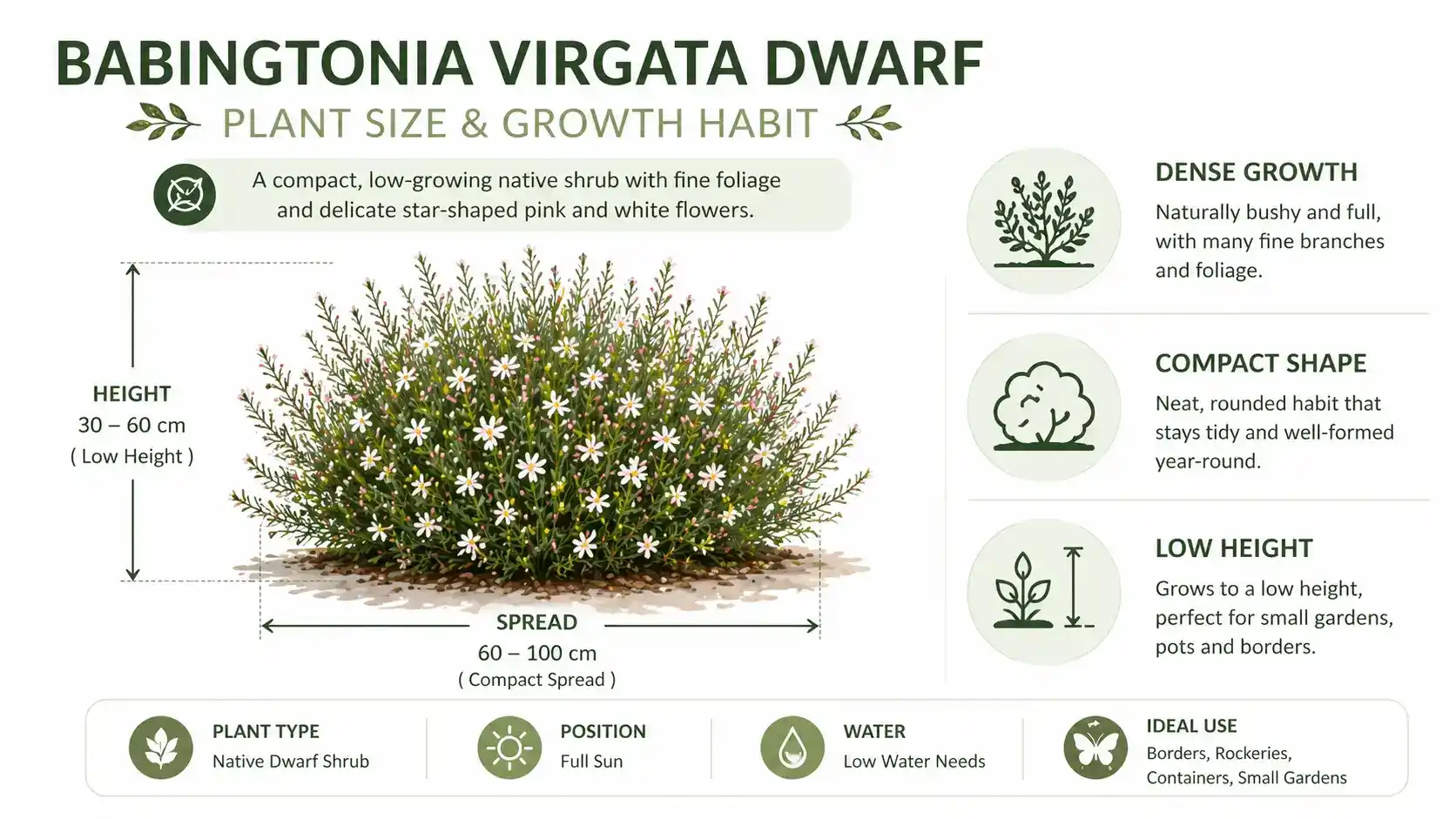
Mature Size and Spread
Babingtonia virgata dwarf remains a low-growing shrub with a compact structure, making it ideal for confined garden spaces. Compared to standard forms, dwarf varieties maintain a smaller and more controlled spread.
- Typical height: low-growing, compact shrub
- Spread: suitable for borders and small planting areas
- Growth pattern: dense and bushy
Growth Rate and Form
The plant exhibits a slow-to-moderate growth rate, gradually forming a neat, rounded shape. Variants such as babingtonia virgata minima emphasize even more compact growth, making them suitable for detailed landscape designs.
Care Guide for Babingtonia Virgata Dwarf
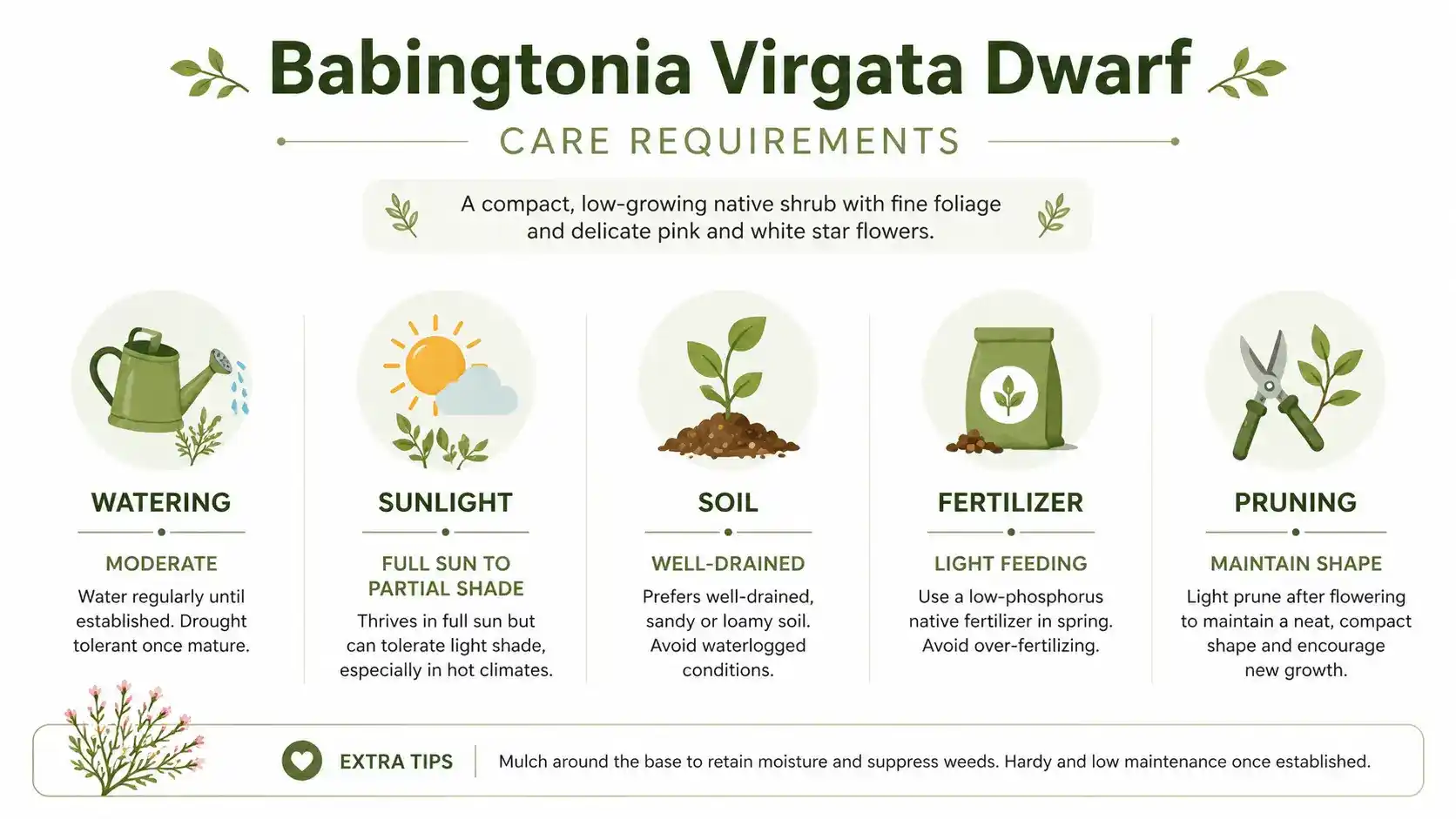
Proper care ensures healthy growth and consistent flowering. This plant is generally low-maintenance when its basic needs are met.
- Watering: Moderate; avoid waterlogging
- Light: Full sun to partial shade
- Soil: Well-drained, sandy or loamy soil
- Fertilization: Light feeding during the growing season
- Pruning: Occasional trimming to maintain compact shape
A common beginner mistake is overwatering, which can negatively impact root health.
Ideal Growing Conditions and Environmental Needs
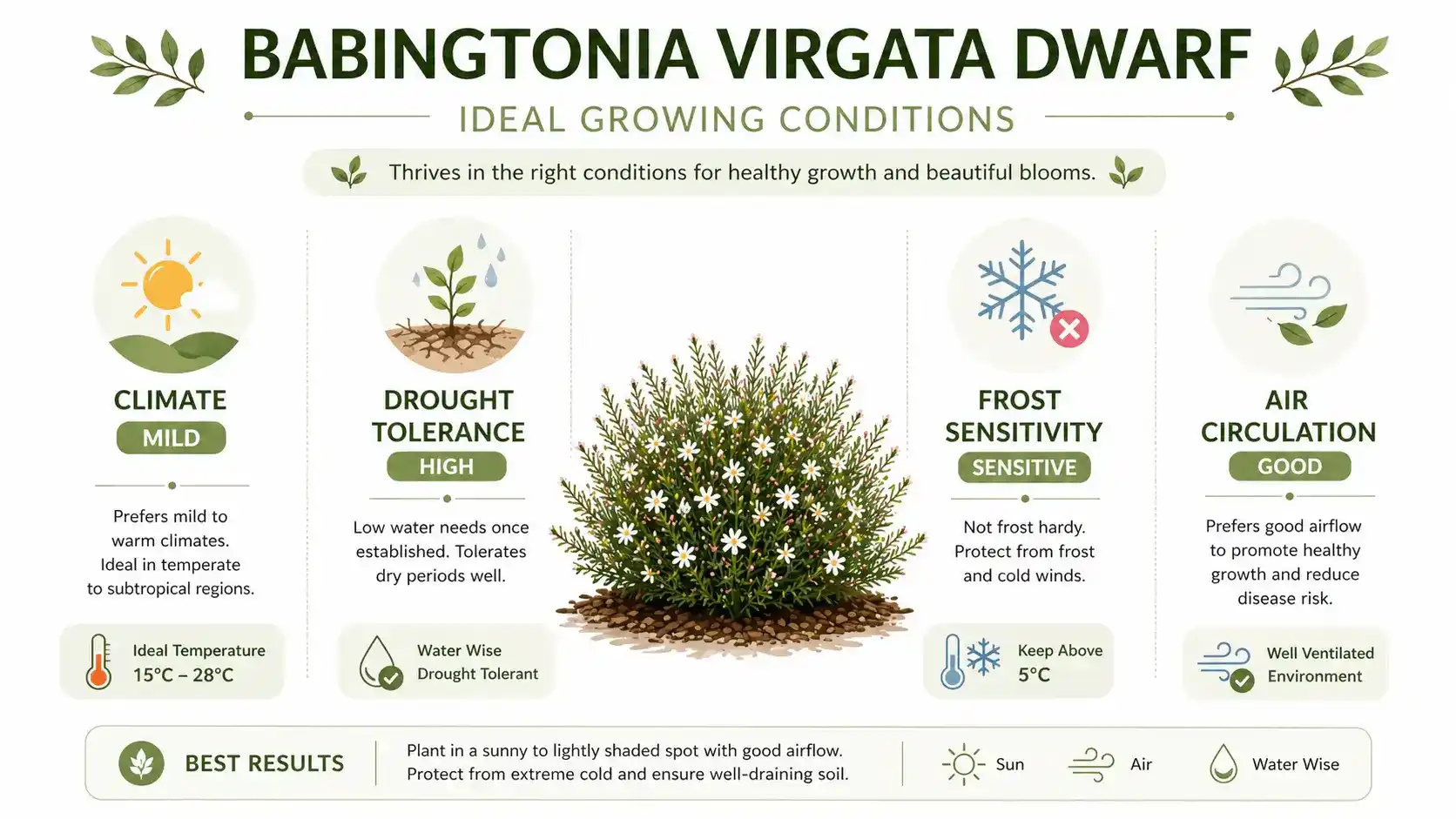
Babingtonia virgata dwarf performs best in conditions similar to its native Australian habitat. It is adaptable but requires specific environmental factors for optimal growth.
- Prefers mild climates
- Tolerates drought once established
- Sensitive to heavy frost
- Requires good air circulation
Seasonal adjustments, such as reducing watering in cooler months, can improve plant health.
Landscaping Uses and Design Applications
This shrub plays a versatile role in garden design due to its size, texture, and low maintenance needs.
- Border plant for pathways
- Suitable for container gardening
- Ideal for rock gardens
- Can be used for low hedging
- Fits well in native garden designs
Its fine foliage provides contrast when combined with broader-leaf plants. It fits naturally into native garden designs where Australian plants are selected for resilience and environmental compatibility. Due to its compact size, it can also be used in containers, making it a suitable option for small-space gardening approaches similar to those covered in a comprehensive guide to house plants.
Comparison of Related Varieties and Species
Understanding related species helps clarify differences in size, growth habit, and usage.
Table: Babingtonia vs Related Varieties
| Feature | Babingtonia Virgata Dwarf | Baeckea Virgata | Sannantha Minima |
| Size | Compact | Larger shrub | Very small form |
| Growth Habit | Dense | More open | Compact |
| Use | Containers, borders | Landscaping | Ground cover |
| Classification | Babingtonia/Sannantha | Baeckea | Sannantha |
Common Problems and How to Fix Them (Problem-Solution Section)
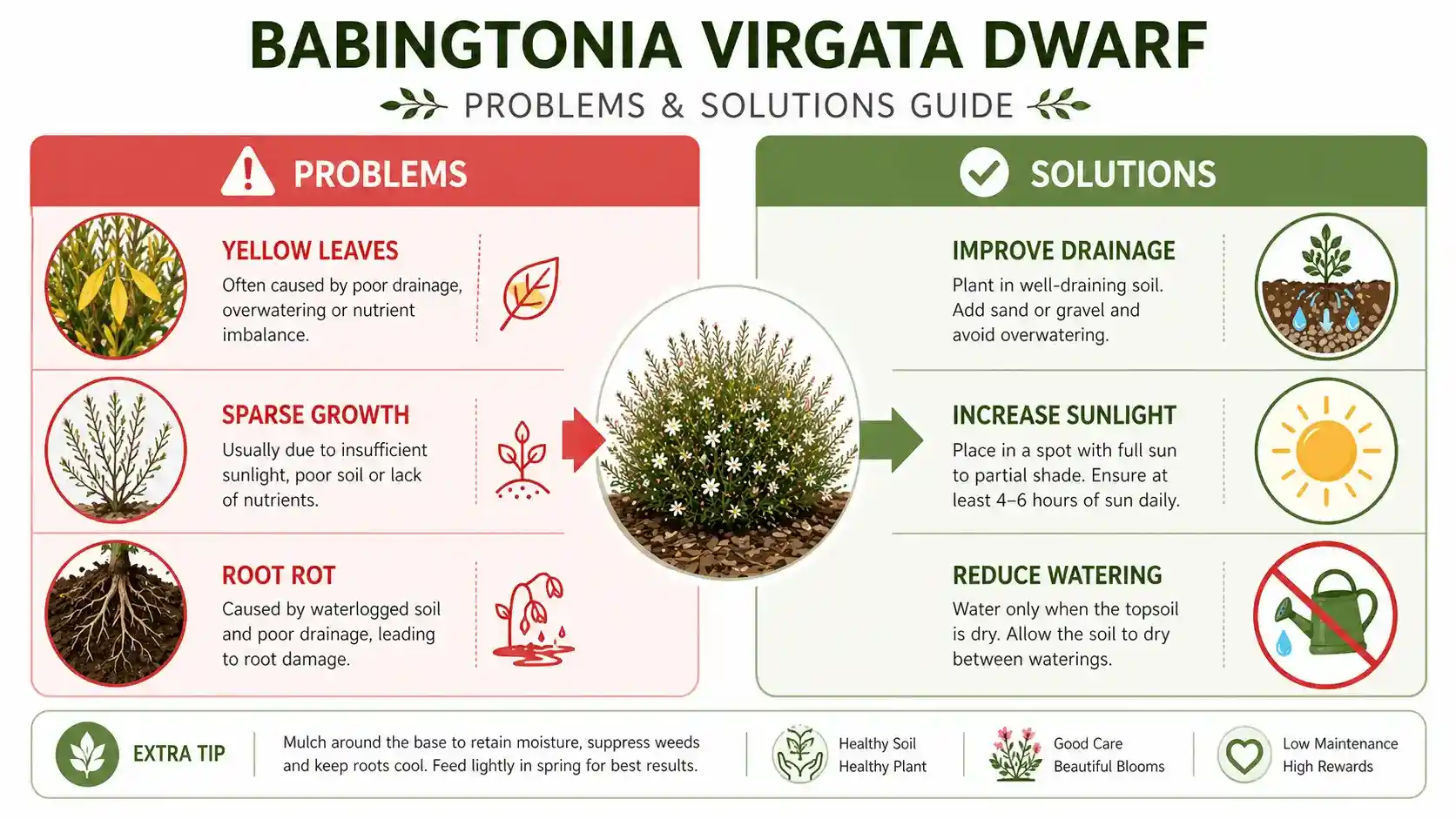
Yellowing Leaves
Yellowing leaves are usually caused by overwatering or poor drainage. Improving soil drainage and reducing watering frequency can resolve the issue.
Sparse Growth
Sparse growth typically results from insufficient sunlight. Relocating the plant to a brighter location encourages fuller development.
Root Rot
Root rot occurs when soil remains waterlogged for extended periods. Reducing watering and using well-draining soil mixes are effective solutions.
Beginner Mistakes to Avoid
Avoiding common mistakes improves plant health and longevity.
- Overwatering compact shrubs
- Planting in heavy clay soil
- Ignoring pruning needs
- Misidentifying plant species due to naming confusion
How Babingtonia Virgata Dwarf Fits into Broader Gardening Topics
Babingtonia virgata dwarf integrates well into multiple gardening approaches and design strategies.
- Suitable for low-maintenance gardening
- Works in native plant landscaping
- Ideal for container gardening
- Complements plant propagation practices
Conclusion
Babingtonia virgata dwarf is a versatile, compact shrub valued for its fine foliage and delicate blooms. Its multiple botanical names, including baeckea virgata and sannantha virgata, reflect its evolving classification. With proper care, suitable soil, and appropriate placement, it thrives in small gardens, containers, and decorative landscapes. Understanding its growth habits and environmental needs ensures long-term success and consistent ornamental value.
FAQs
What is babingtonia virgata dwarf commonly used for?
It is mainly used in landscaping, borders, and container gardening due to its compact size and ornamental flowers.
Is babingtonia virgata the same as baeckea virgata?
Yes, they are closely related and often reclassified, with sannantha virgata being another accepted botanical name.
How tall does babingtonia virgata dwarf grow?
It typically remains a low-growing shrub, making it ideal for small spaces and decorative planting.
What conditions does dwarf baeckea need to thrive?
It prefers well-drained soil, moderate watering, and full sun to partial shade.
Why is it called the fairy lights plant?
The name comes from its small, delicate flowers that resemble tiny glowing lights when in bloom.