Introduction
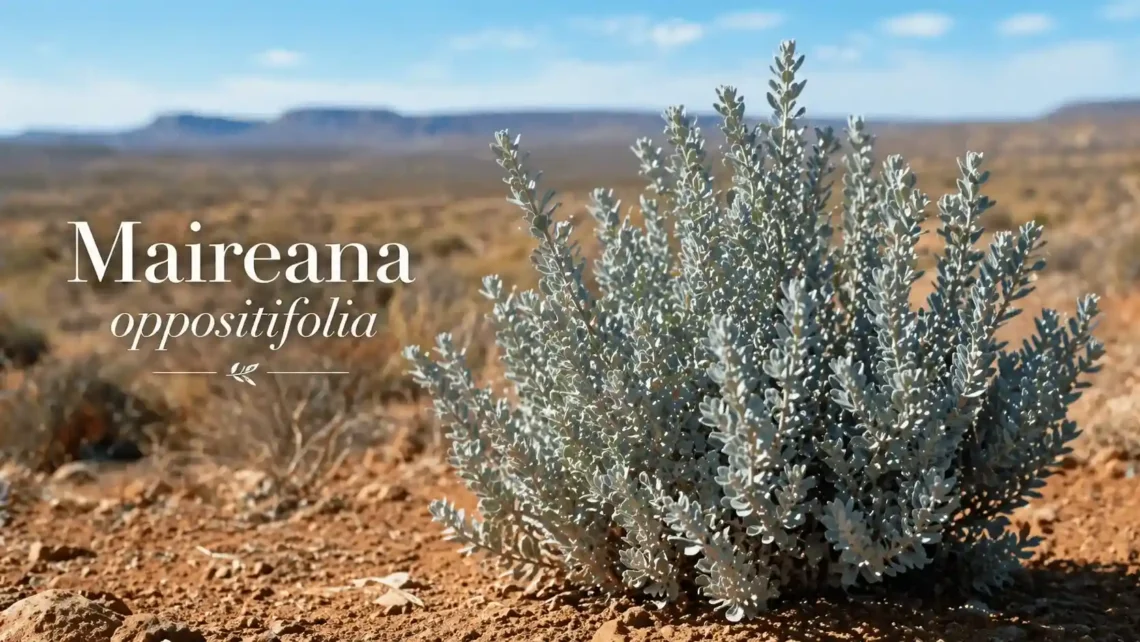
Maireana oppositifolia is a hardy, drought-tolerant shrub native to Australia, widely recognized for its silvery-blue foliage and adaptability to harsh environments. This resilient plant belongs to the Amaranthaceae family and is commonly found in arid and semi-arid landscapes. Known for thriving in poor soils and extreme climates, Maireana oppositifolia is frequently used in ecological restoration, erosion control, and low-maintenance landscaping. Its compact growth habit and tolerance to salinity and drought make it a reliable choice for sustainable gardening practices and dryland environments.
Quick Summary
- Maireana oppositifolia is a drought-resistant shrub native to Australia.
- Known for its blue-grey foliage and use in arid landscaping.
- Thrives in poor soils and requires minimal maintenance.
- Often used for erosion control and habitat support.
What Is Maireana oppositifolia?
Maireana oppositifolia is a compact, woody shrub in the genus Maireana, part of the Amaranthaceae family. It is endemic to southern regions of Australia and adapted to harsh, dry conditions. This species typically forms a dense, branched structure with opposite leaf arrangements and small, inconspicuous flowers. It belongs to a genus of about 58 Australian species commonly known as bluebushes, many of which share drought-resistant traits and succulent-like foliage. Maireana oppositifolia is a drought-tolerant shrub species native to Australia, classified within the Amaranthaceae family.
Naming confusion can occur due to misspellings like “mariana oppositifolia,” but the correct botanical name remains Maireana oppositifolia.
Common Name and Plant Identity
Maireana oppositifolia is commonly known as bluebush, referencing its distinctive bluish-grey foliage.
Key identity points:
- “Bluebush” and “blue bush” are informal variations of the same common name
- Botanical naming follows binomial classification, ensuring scientific accuracy
- It should not be confused with unrelated plants such as “blue bush wattle,” which belong to different genera
This distinction is important for plant identification and proper horticultural use.
Key Characteristics of Maireana oppositifolia
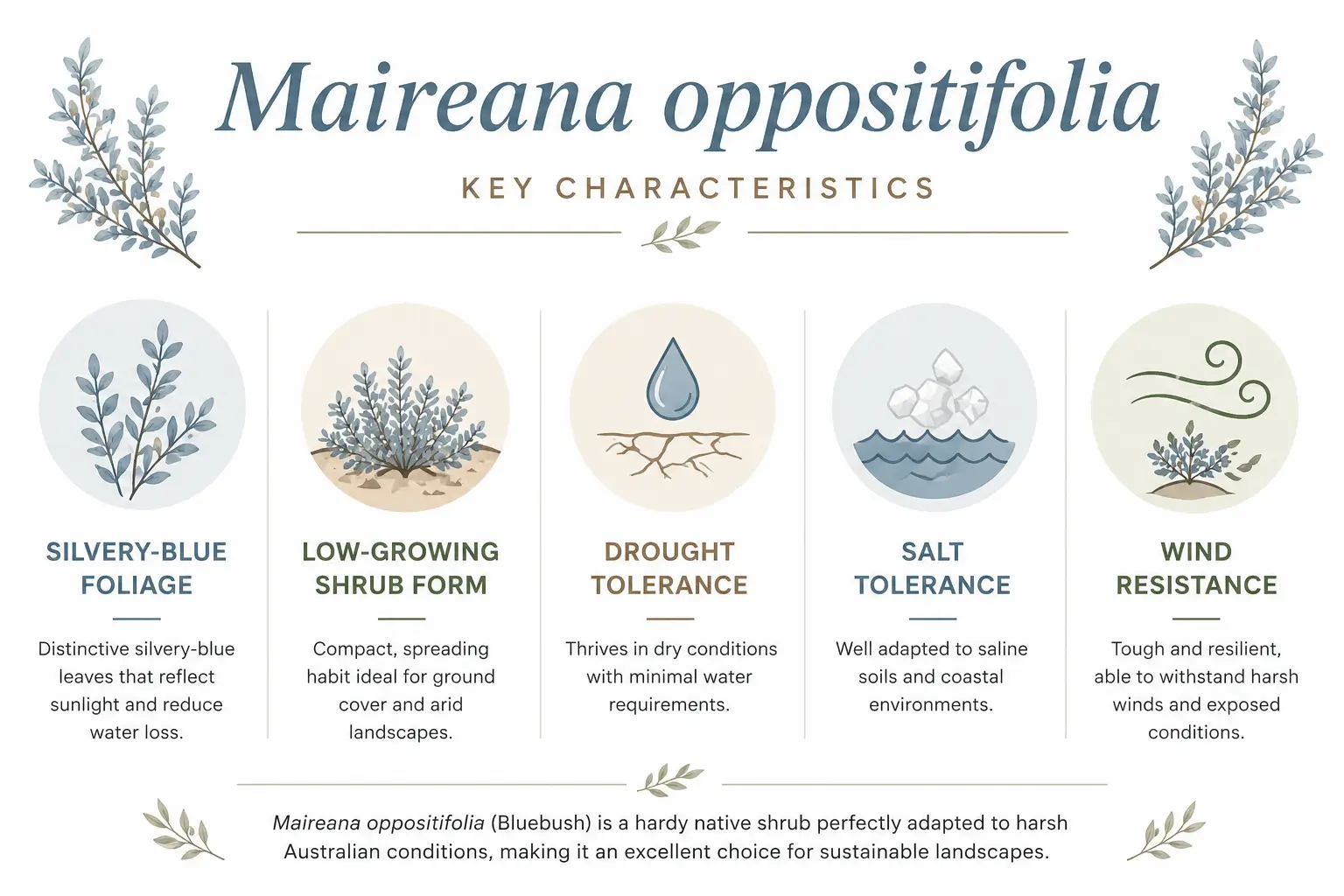
Maireana oppositifolia is defined by its structural resilience and unique foliage.
Key features include:
- Silvery-blue, succulent-like leaves
- Compact, low-growing shrub habit
- Small flowers and winged fruit structures
- Adaptation to saline and arid conditions
Botanically, it produces dioecious flowers and thin-walled fruiting structures with wing-like formations, aiding seed dispersal.
Key Features
- High drought tolerance
- Salt tolerance (halophyte characteristics)
- Wind resistance
- Low water requirements
- Suitable for poor or degraded soils
Native Habitat and Environmental Adaptations
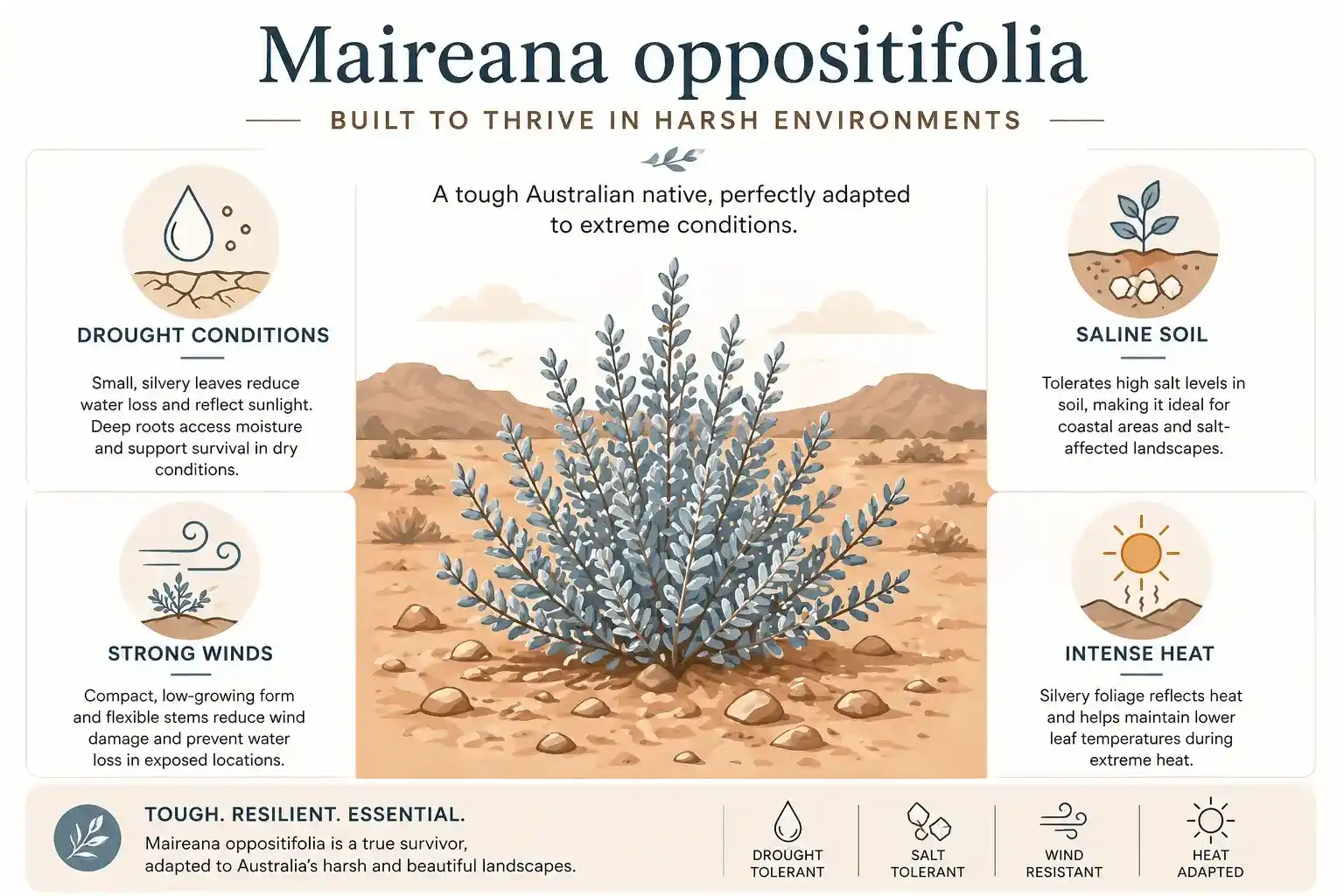
Maireana oppositifolia is native to arid and semi-arid regions across southern Australia, including Western Australia, South Australia, and parts of Victoria.
Environmental adaptations:
- Thrives in sandy, clay, and saline soils
- Tolerates alkaline and nutrient-poor conditions
- Highly resistant to heat, drought, and wind
- Plays a stabilizing role in fragile ecosystems
It naturally grows in environments such as salt lakes, mud flats, and dry plains, where few plants survive.
Plant Size
Maireana oppositifolia is a low-growing shrub with moderate spread.
Typical dimensions:
- Height: 0.5–1.5 meters
- Spread: up to 1 meter or more
Growth varies depending on environmental conditions. In natural habitats, plants may remain smaller due to limited nutrients, while cultivated specimens can achieve fuller growth.
Growth Rate
Maireana oppositifolia exhibits a moderate to slow growth rate depending on conditions.
Growth characteristics:
- Moderate growth in well-drained soils
- Slower development in drought or poor soils
- Active growth during warmer months
- Growth influenced by water availability and sunlight
In harsh environments, growth is naturally limited but consistent over time.
Care Guide for Maireana oppositifolia
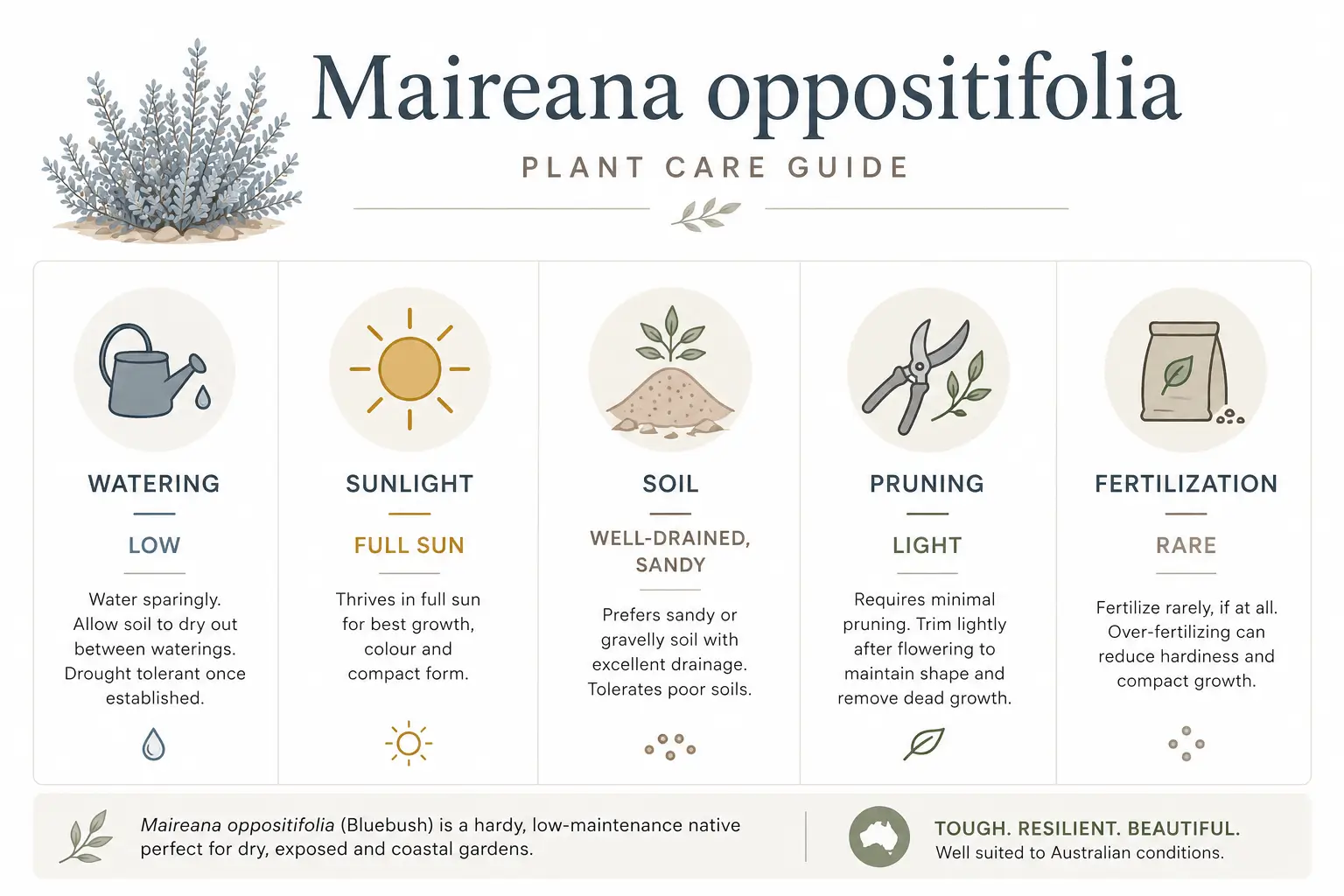
Maireana oppositifolia is designed for low-maintenance gardening, especially in xeriscaping systems.
Watering Requirements
- Minimal watering once established
- Avoid overwatering to prevent root issues
Light Conditions
- Prefers full sun
- Tolerates intense sunlight and heat
Soil Preferences
- Requires well-draining soil
- Thrives in saline and alkaline soils
Fertilization
- Rarely necessary
- Excess nutrients may harm the plant
Pruning
- Occasional shaping improves structure
- Encourages compact growth
Climate Tolerance
- Thrives in hot, dry climates
- Can tolerate light frost
Comparison with Similar Plants
| Plant | Key Differences | Similarities |
| Maireana aphylla | More leafless appearance | Same genus, drought-tolerant |
| Maireana microphylla | Smaller leaves, denser growth | Similar habitat adaptation |
| Maireana brevifolia | Different leaf shape | Comparable resilience |
| Acacia covenyi | Tree form, flowering wattle | Blue-toned foliage |
For a closely related species with similar drought tolerance, see our detailed guide on Silver Saltbush Guide: 7+ Essential Growing & Care Tips.
Landscaping Uses and Applications
Maireana oppositifolia is widely used in sustainable landscaping.
Common Uses
- Dryland landscaping
- Coastal and saline areas
- Native plant gardens
- Soil stabilization
Practical applications:
- Ground cover for erosion control
- Habitat plant for wildlife
- Restoration projects in degraded lands
Its drought resistance makes it ideal for water-efficient garden design. For alternative ground cover options in dry landscapes, explore 7+ Stunning Benefits of Creeping Myoporum for Your Garden.
Environmental Benefits and Ecological Role
Maireana oppositifolia plays a vital ecological role in arid environments.
Key benefits:
- Supports biodiversity by providing shelter
- Offers food sources for native fauna
- Prevents soil erosion in fragile ecosystems
- Contributes to land rehabilitation efforts
Its ability to thrive in extreme conditions makes it a key species in ecosystem stability.
Common Problems and Solutions
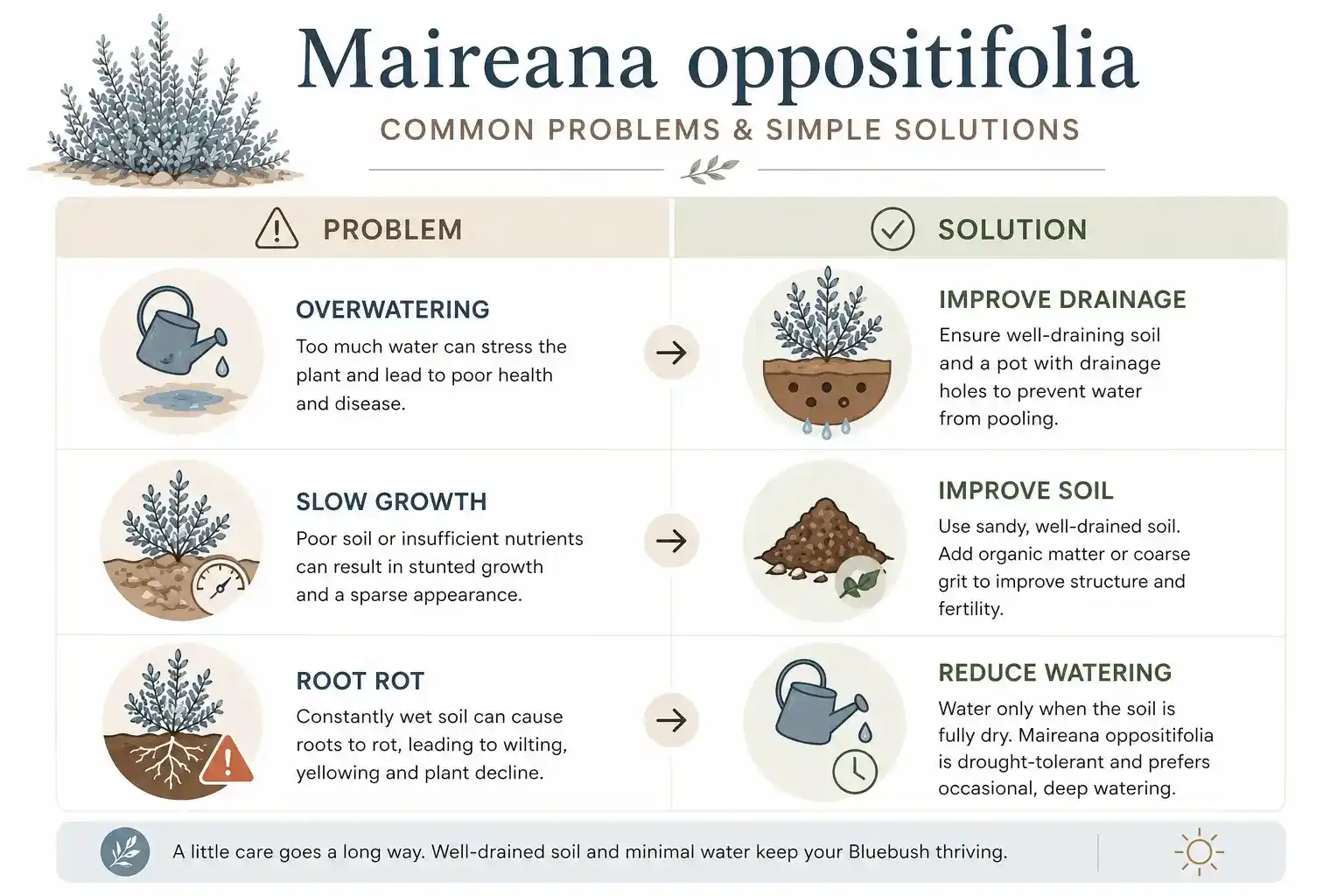
Overwatering Issues
- Why: Poor drainage
- Fix: Improve soil structure
- Prevention: Use sandy, well-drained soil
Slow Growth
- Why: Nutrient-poor soil or drought
- Fix: Light soil amendment
- Prevention: Choose suitable planting conditions
Root Rot Risk
- Why: Waterlogged soil
- Fix: Replant in raised beds
- Prevention: Avoid heavy clay soils
Beginner Mistakes to Avoid
- Overwatering a drought-adapted plant
- Planting in shaded or poorly drained areas
- Expecting rapid growth in harsh environments
- Using unnecessary fertilizers
These mistakes often reduce plant health and longevity.
Seasonal Considerations for Growth and Care
Maireana oppositifolia responds to seasonal changes.
Seasonal patterns:
- Active growth during warmer months
- Reduced activity in colder periods
- Watering should decrease in winter
- Monitor stress during extreme heat
Adjust care routines based on climate and season.
How Maireana oppositifolia Fits into Broader Gardening Topics
Maireana oppositifolia is highly relevant in sustainable gardening. While Maireana oppositifolia is best suited for outdoor environments, understanding plant fundamentals from a Guide to House Plants can help beginners build strong overall plant care knowledge.
Broader applications:
- Xeriscaping and drought-resistant design
- Native Australian plant collections
- Soil rehabilitation projects
- Arid landscape planning
You can also integrate this plant into a broader landscape by following ideas from our Modern Australian Native Garden: 10+ Smart Design Ideas Guide.
Conclusion
Maireana oppositifolia is a resilient, low-maintenance shrub ideally suited for dry and challenging environments. Its adaptability to poor soils, drought, and salinity makes it an essential plant for sustainable landscaping and ecological restoration. With proper understanding of its habitat and care requirements, this native Australian shrub can provide long-term value in both natural and designed landscapes.
FAQs
1. What is the common name of Maireana oppositifolia?
Maireana oppositifolia is commonly known as bluebush, named for its distinctive blue-grey foliage.
2. Where does Maireana oppositifolia naturally grow?
It grows in arid and semi-arid regions of Australia, especially in saline and sandy soils.
3. How much water does Maireana oppositifolia need?
It requires very little water once established and prefers dry, well-drained conditions.
4. Can Maireana oppositifolia grow in poor soil?
Yes, it is highly adapted to nutrient-poor, sandy, and saline soils.
5. What are common problems when growing Maireana oppositifolia?
Overwatering and poor drainage are the most common issues, often leading to root rot.
6. Is Maireana oppositifolia suitable for landscaping?
Yes, it is widely used in xeriscaping, erosion control, and native plant gardens due to its durability.