Introduction
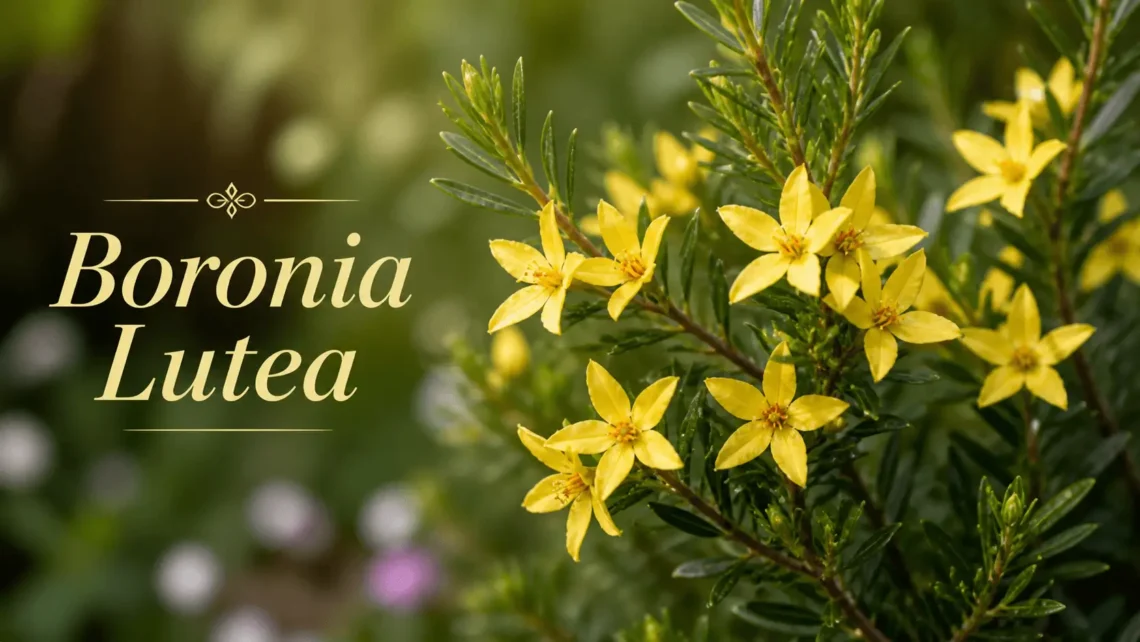
Boronia lutea is a fragrant flowering shrub belonging to the broader boronia plant group, widely appreciated for its bright yellow blooms and aromatic foliage. Native to Australia, it is part of the boronia megastigma species group and is commonly referred to as yellow boronia. This ornamental plant is valued for its compact growth habit, vibrant color, and distinctive scent, making it a popular choice for garden borders, containers, and native landscapes. Despite its relatively short lifespan, boronia lutea remains a desirable plant due to its aesthetic appeal and sensory qualities.
Quick Summary
- Boronia lutea is a yellow-flowering shrub known for its strong fragrance and ornamental value.
- It belongs to the boronia megastigma lutea group and thrives in mild, well-drained environments.
- The boronia lifespan typically ranges from 3–5 years but can improve with proper care.
- Ideal for garden beds, pots, and native plant landscaping.
What Is Boronia Lutea?
Boronia lutea is a subspecies of boronia megastigma characterized by its distinctive yellow flowers and aromatic foliage. It belongs to the Rutaceae family, which includes many fragrant plants. Within the boronia plant group, it is classified alongside several closely related species. The name “borinia” is sometimes used incorrectly as a common misspelling but refers to the same plant group. Boronia lutea belongs to the Rutaceae family, a group of aromatic plants that includes citrus species (learn more about the Rutaceae family on Wikipedia).
This plant is commonly known as yellow boronia due to its bloom color and is part of a broader category that includes:
- boronia crenulata
- boronia heterophylla
- brown boronia
- aniseed boronia
Key Characteristics of the Boronia Plant
Appearance and Structure
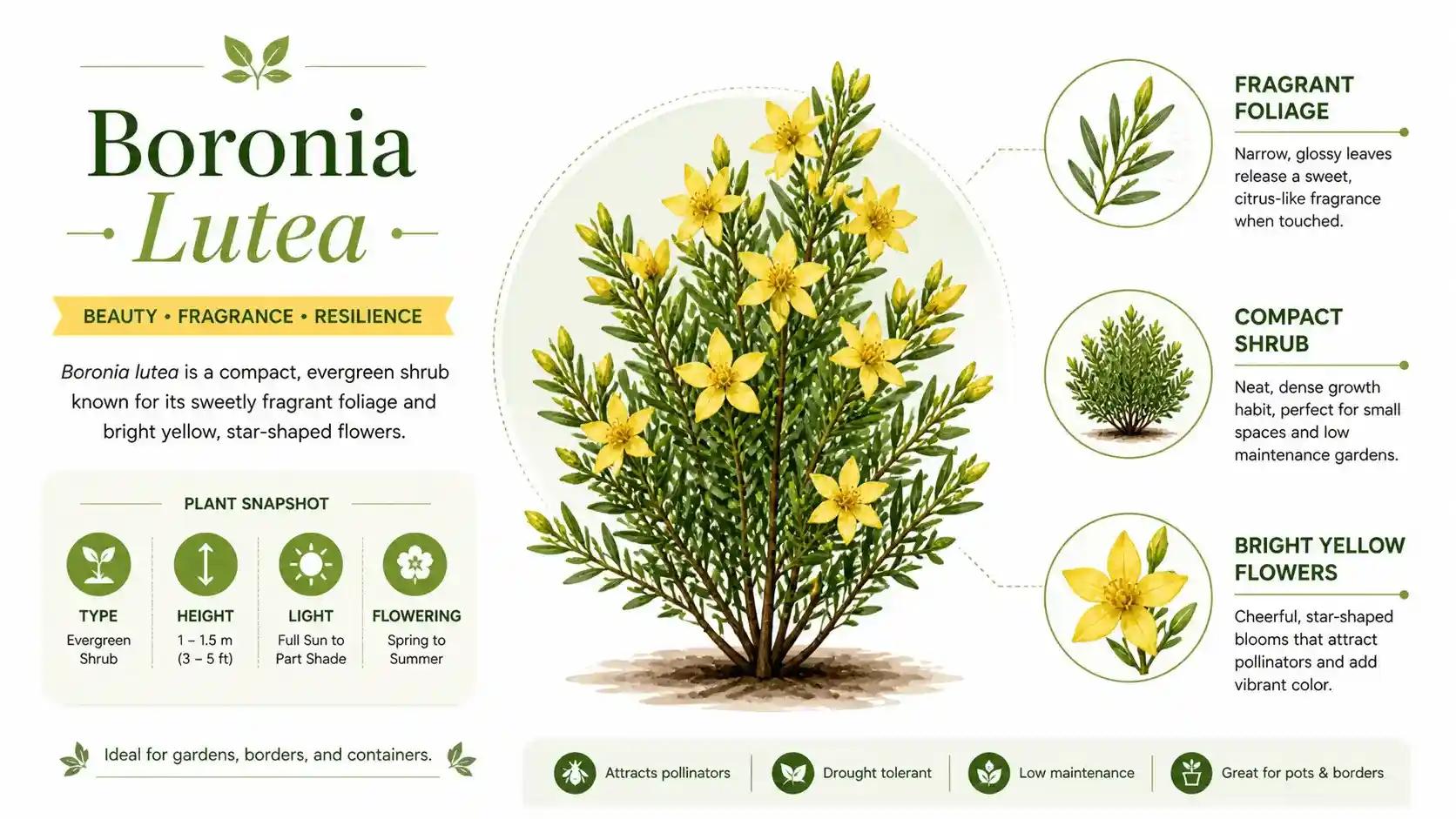
Boronia lutea grows as a compact boronia bush or small shrub, often causing confusion between the two terms. Botanically, it is considered a shrub due to its woody stems and branching structure.
Key visual traits include:
- Bright yellow, star-shaped boronia flowers
- Fine, aromatic foliage
- Strong fragrance resembling citrus or spice notes
Plant Size and Growth Habit
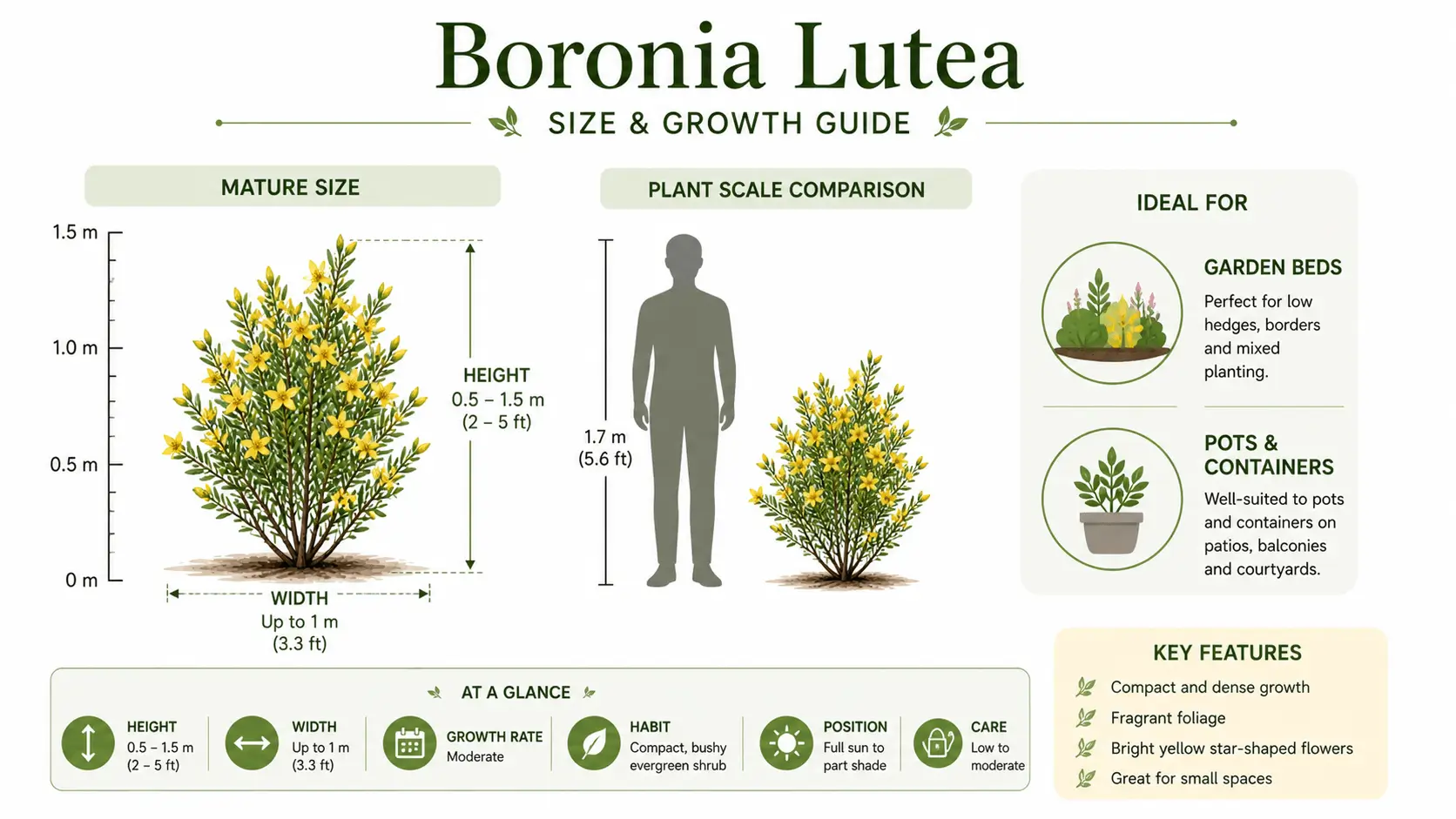
Boronia lutea has a manageable size, making it suitable for both small gardens and containers.
Typical dimensions:
- Height: 0.5 to 1.5 meters
- Width: up to 1 meter
It is well-suited for:
- Garden beds
- Borders
- Growing boronia in pots
It is also suitable for container growing, making it a practical choice for home gardeners (explore more options in our Guide to House Plants).
Boronia Lutea Lifespan and Growth Rate
The typical boronia lifespan is relatively short, averaging between 3 to 5 years under normal conditions. However, with optimal care, its lifespan can be slightly extended.
Growth characteristics:
- Moderate growth rate
- Sensitive to environmental stress
Factors affecting lifespan include:
- Soil drainage quality
- Climate stability
- Consistent watering practices
Where to Plant Boronia Lutea
Boronia lutea grows best in mild, temperate climates and is naturally suited to regions like Australia.
Ideal planting locations:
- Outdoor gardens in temperate zones
- Sheltered spots in cooler regions such as the UK
Optimal conditions:
- Partial shade or filtered sunlight
- Well-drained, slightly acidic soil
- Protection from strong winds
How to Grow Boronia Lutea
Essential Growing Requirements
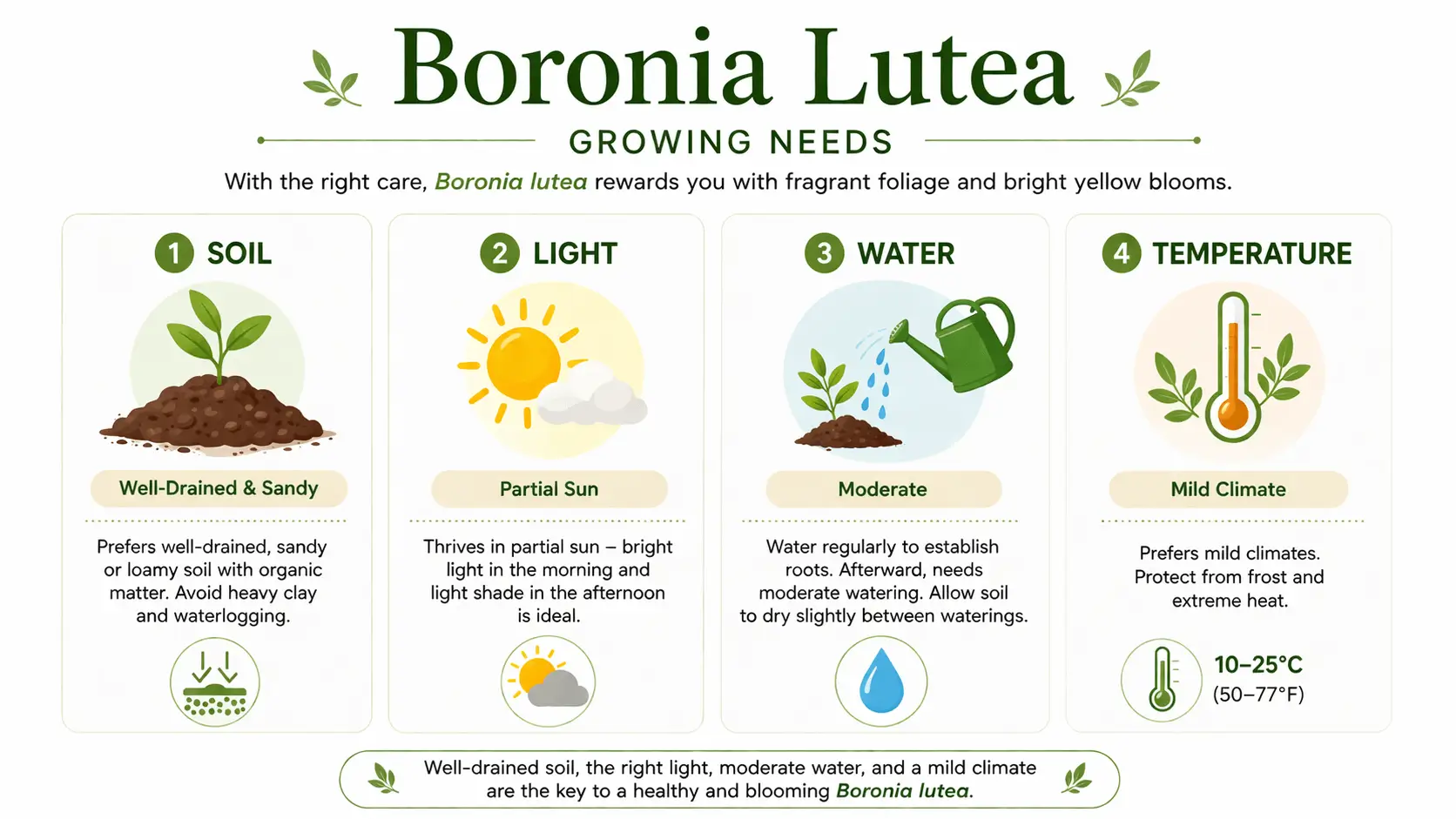
Successful growth of boronia lutea depends on meeting its specific environmental needs.
Core requirements:
- Soil: Sandy, well-draining, slightly acidic — improving soil structure is critical, especially if you’re dealing with heavy soils (see How to Improve Clay Soil for Lawns for Better Grass Growth).
- Light: Partial sun to filtered light
- Water: Regular watering without waterlogging
Fertilization & Maintenance
Proper feeding supports healthy growth but must be carefully managed.
Guidelines:
- Use light applications of native plant fertilizer
- Avoid over-fertilization, which can damage roots
- Maintain consistent care routines
Boronia Lutea Care Guide
Boronia lutea requires attentive but moderate care to maintain health and extend its lifespan.
Care practices:
- Watering: Keep soil consistently moist but not soggy
- Pruning: Light pruning after flowering encourages shape and growth
- Climate: Protect from frost and extreme heat
A common gardening insight is that inconsistent watering is one of the main causes of plant decline.
Boronia Lutea Propagation Methods
Boronia lutea propagation is typically done through cuttings rather than seeds.
Common methods:
- Semi-hardwood cuttings (most effective)
- Seed propagation (less reliable)
Best timing:
- Late spring to early summer for optimal success
Boronia Lutea Varieties and Related Species
Comparison of Boronia Types
| Variety | Flower Color | Key Feature |
| Boronia lutea | Yellow | Strong fragrance |
| Boronia heterophylla | Pink | Taller growth |
| Boronia crenulata | Pink-purple | Compact shrub |
| Boronia denticulata | Pink | Fine foliage |
Other related types include:
- Blue boronia
- Pink boronia
- Red boronia
Comparison: Boronia Lutea vs Other Boronia Species
Boronia lutea differs from other boronia species primarily in flower color, growth habit, and environmental tolerance.
Key Differences:
- Flower color: Yellow vs pink/red in other species
- Growth size: Generally compact compared to taller varieties like boronia heterophylla
- Climate tolerance: More sensitive to environmental fluctuations
Boronia lutea vs boronia heterophylla:
- Lutea is smaller and yellow-flowered
- Heterophylla is taller with pink flowers
Common Problems and Solutions
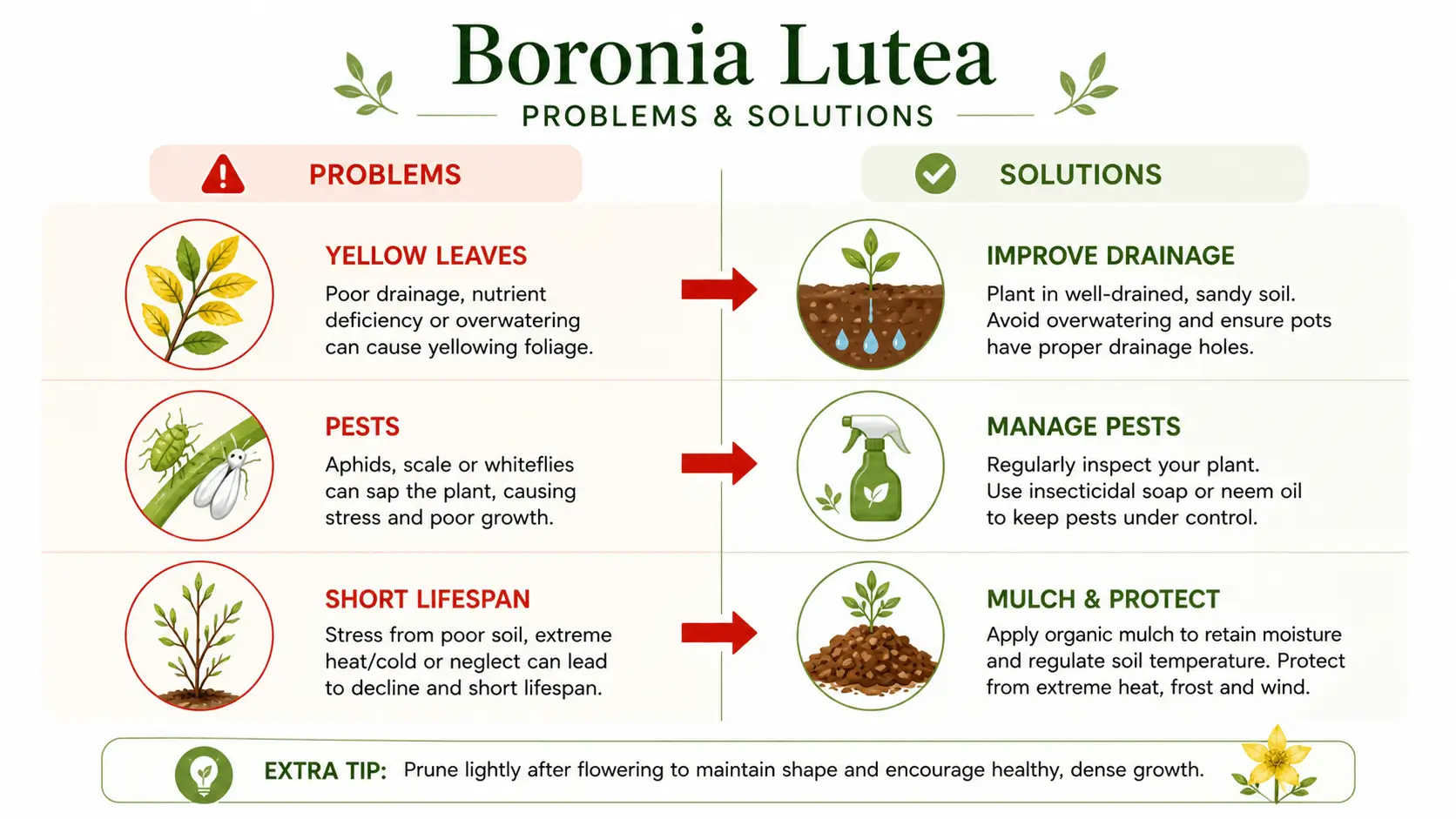
Issues You May Encounter
- Yellowing leaves due to overwatering
- Short lifespan caused by poor soil conditions
- Pest infestations such as aphids and mites
Solutions & Prevention
- Improve soil drainage
- Use mulch to regulate moisture
- Inspect regularly for pests and treat early
Beginner Mistakes to Avoid
Avoiding common mistakes can significantly improve plant health and longevity.
Key mistakes:
- Overwatering delicate roots
- Planting in heavy clay soil
- Ignoring climate suitability
- Exposing the plant to excessive direct sunlight
Environmental Limitations and Seasonal Care
Boronia lutea is sensitive to environmental extremes and requires seasonal adjustments.
Limitations:
- Frost damage in winter
- Heat stress during summer
Seasonal care tips:
- Apply mulch in summer to retain moisture
- Provide shelter or cover during cold weather
Role of Boronia in Garden Design
Boronia lutea is widely used in landscape design due to its fragrance and compact size.
Common uses:
- Native plant gardens
- Fragrant garden sections
- Container gardening for patios and balconies
Its bright flowers and scent make it a focal plant in sensory gardens. It works especially well in native and structured landscapes, similar to plants featured in Modern Australian Native Garden: 10+ Smart Design Ideas Guide.
Conclusion
Boronia lutea is a visually appealing and fragrant shrub within the boronia plant family, valued for its ornamental qualities and aromatic foliage. Although the lifespan boronia is relatively short, proper care, suitable planting conditions, and attention to environmental factors can significantly enhance its longevity. Understanding its growth requirements, propagation techniques, and limitations allows gardeners to successfully cultivate this plant in appropriate climates. With the right approach, boronia lutea remains a rewarding addition to both garden landscapes and container displays.
FAQs
1. What is the lifespan of boronia lutea?
The typical boronia lifespan is around 3–5 years, depending on environmental conditions and care practices.
2. How do you grow boronia lutea successfully?
Grow it in well-drained, slightly acidic soil with partial shade and consistent moisture, while avoiding overwatering.
3. Can boronia lutea be grown in pots?
Yes, it can thrive in containers if provided with proper drainage, suitable soil, and regular maintenance.
4. What is the difference between boronia lutea and boronia megastigma?
Boronia lutea is a yellow-flowering variation within the broader boronia megastigma species group.
5. Where is boronia best grown?
It grows best in temperate climates such as Australia or similar regions with mild conditions and good drainage.