Introduction
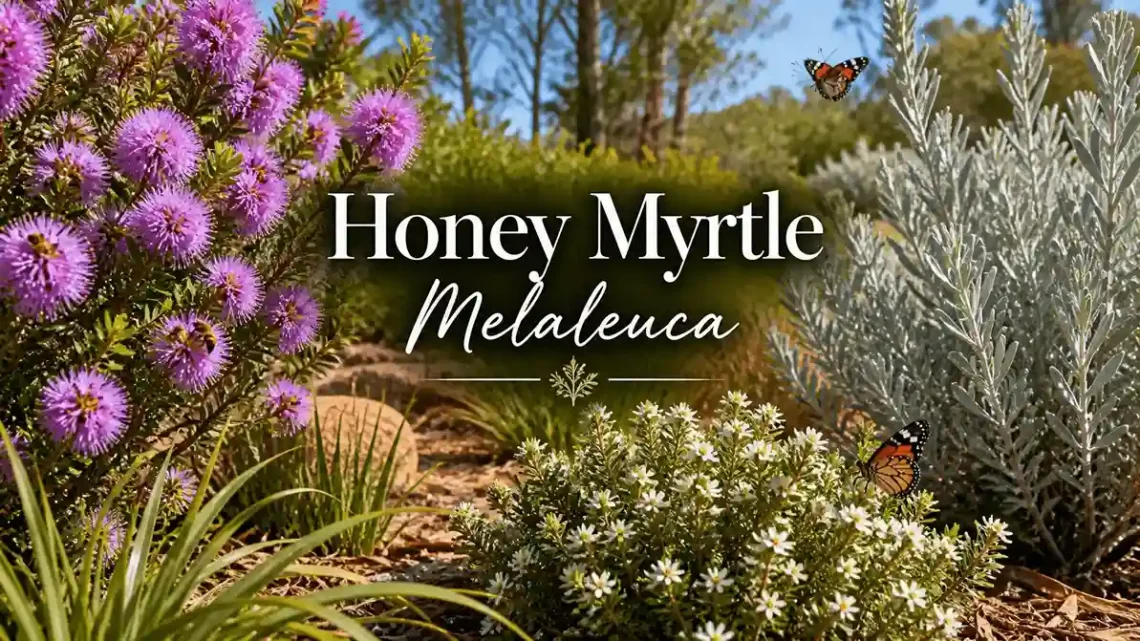
Honey myrtle melaleuca refers to a group of Australian native plants within the Melaleuca genus that are valued for their ornamental flowers, aromatic foliage, and adaptability to different climates. Gardeners commonly grow honey myrtles for hedging, pollinator support, drought tolerance, and low-maintenance landscaping. Popular species include showy honey myrtle (Melaleuca nesophila), grey honey myrtle (Melaleuca incana), and thyme honey myrtle (Melaleuca thymifolia). These evergreen shrubs and small trees vary significantly in mature height, growth habit, flower color, and maintenance requirements, making them suitable for coastal gardens, native landscapes, privacy hedges, and compact urban gardens.
Quick Summary
- Honey myrtle melaleuca plants are Australian native shrubs or small trees valued for colorful flowers and drought tolerance.
- Popular varieties include showy honey myrtle (Melaleuca nesophila), grey honey myrtle (Melaleuca incana), and thyme honey myrtle (Melaleuca thymifolia).
- Most varieties grow well in sunny conditions with well-draining soil and require minimal maintenance once established.
- Honey myrtles are commonly used for hedges, pollinator gardens, and native landscaping.
- Their nectar-rich flowers attract bees, butterflies, and birds while supporting biodiversity in low-water gardens.
What Is Honey Myrtle Melaleuca?
Honey myrtle melaleuca refers to several species within the Melaleuca genus that share similar ornamental and ecological characteristics. The terms honey myrtle, melaleuca honey myrtle, honeymyrtle, and honey myrtles are commonly used interchangeably to describe these Australian native shrubs and small trees. Gardeners exploring both indoor and outdoor plant varieties often compare native shrubs with common houseplants when planning balanced home landscapes.
Most honey myrtle species produce nectar-rich flowers that attract pollinators such as bees, butterflies, and nectar-feeding birds. Their evergreen foliage often contains aromatic oils, giving the leaves a distinctive fragrance when crushed. Many species are adapted to dry climates, coastal exposure, and sandy soils.
Honey myrtles play an important ecological role in Australian native habitats by supporting pollinators and stabilizing soil in coastal environments. Their adaptability also makes them useful in ornamental landscaping and drought-tolerant gardens. Honey myrtle species belong to the Melaleuca genus, a large group of Australian native plants known for aromatic foliage and nectar-rich flowers.
Key Characteristics of Honey Myrtle Plants
- Evergreen growth habit
- Native Australian species
- Nectar-producing flowers
- Adaptable to coastal and dry climates
- Suitable for ornamental landscaping
Popular Honey Myrtle Melaleuca Varieties
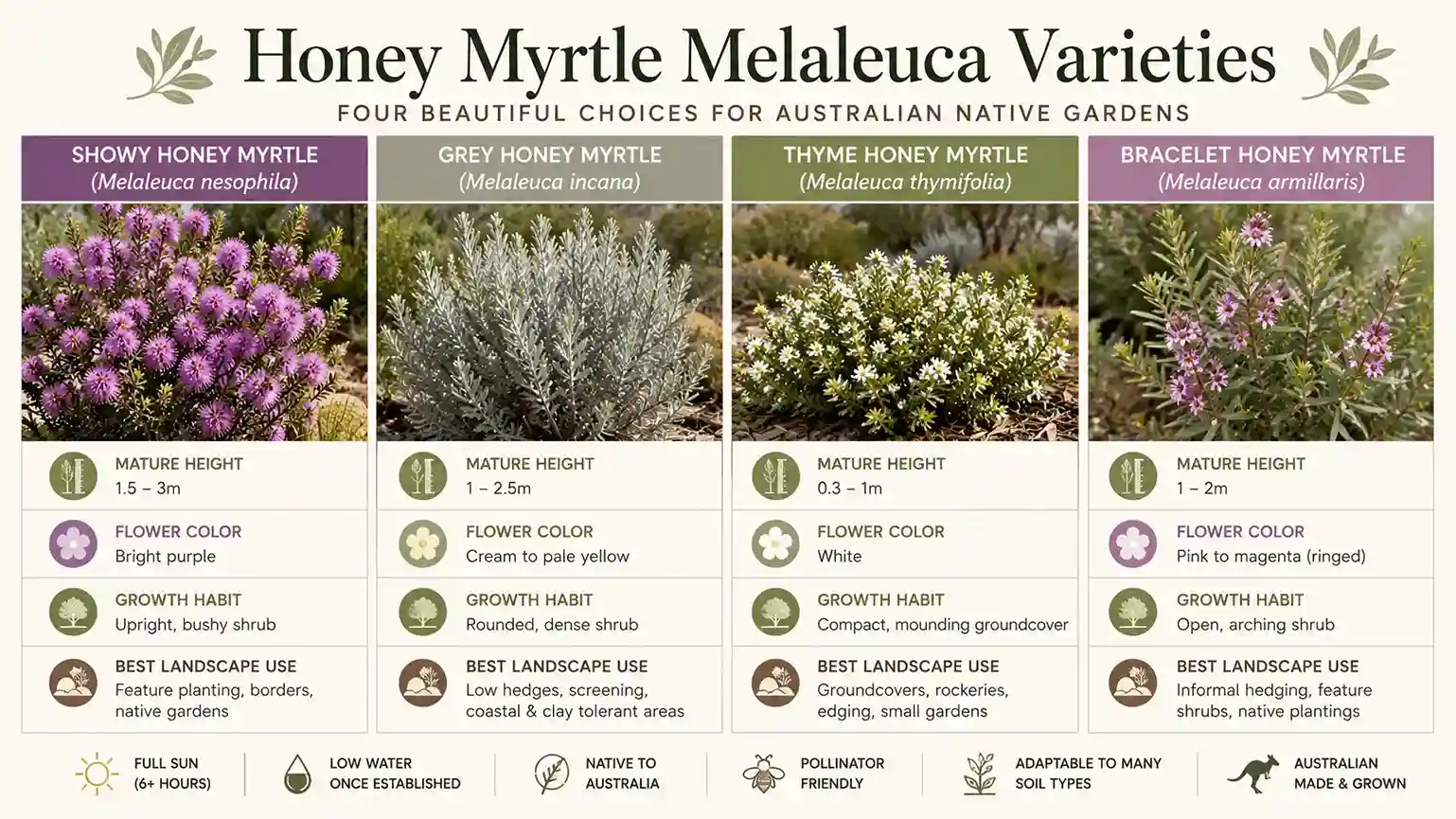
Showy Honey Myrtle (Melaleuca nesophila)
Showy honey myrtle (Melaleuca nesophila) is one of the most widely grown honey myrtle varieties because of its rounded growth habit and large purple pom-pom flowers. The species naturally tolerates coastal conditions, including salty winds and sandy soils.
Showy honey myrtle melaleuca nesophila Australian native plants are commonly used for privacy hedges and screening because they develop dense foliage and respond well to pruning. Honey myrtle melaleuca nesophila can grow as a large shrub or small tree depending on climate and maintenance.
Grey Honey Myrtle (Melaleuca incana)
Grey honey myrtle melaleuca incana is known for its silvery-grey foliage and soft, fine-textured leaves. The foliage provides year-round ornamental value and contrasts well with darker green native shrubs.
Melaleuca incana is drought resistant once established and performs well in warm climates with full sun exposure. Gardeners often use grey honey myrtle as an accent shrub in low-maintenance landscapes and pollinator gardens.
Thyme Honey Myrtle (Melaleuca thymifolia)
Honey myrtle melaleuca thymifolia is a compact species suited to smaller gardens and container planting. Thyme honey myrtle melaleuca thymifolia produces vibrant purple flowers and fine-textured foliage that create a soft ornamental appearance.
Because of its smaller mature size, thyme honey myrtle melaleuca is commonly planted along pathways, in rock gardens, and in compact native landscapes. Melaleuca thymifolia also attracts bees and beneficial pollinators during flowering periods.
Bracelet Honey Myrtle (Melaleuca armillaris)
Bracelet honey myrtle melaleuca armillaris is recognized for its arching or slightly weeping growth habit. The plant can develop into a tall screening shrub or windbreak in exposed gardens.
Melaleuca armillaris is commonly planted for erosion control and privacy hedging because of its dense branching structure. Some gardeners also refer to it as honey bracelet myrtle.
Scarlet and Chenille Honey Myrtle Varieties
Scarlet honey myrtle melaleuca fulgens is prized for its vivid red flowers, which provide strong visual contrast in native gardens. Chenille honey myrtle melaleuca huegelii produces elongated flower spikes that attract pollinators.
Green honey myrtle melaleuca diosmifolia features bright green flower heads and compact ornamental growth. These less common varieties are often used as feature plants in drought-tolerant landscapes.
Honey Myrtle Melaleuca Size and Growth Habits
Honey myrtle melaleuca size varies widely depending on species and growing conditions. Some species remain compact shrubs under 3 feet tall, while others develop into large shrubs or small honey myrtle trees exceeding 15 feet in height. Growth habits also differ significantly between species. Some honey myrtle plants grow in dense upright forms suitable for hedging, while others develop spreading or arching branches better suited for informal landscaping. Compact upright varieties are also suitable for narrow garden beds and privacy designs that use tall narrow shrubs in Australian landscapes.
Typical Mature Heights by Variety
| Variety | Average Height | Width/Spread | Flower Color | Best Landscape Use |
| Melaleuca nesophila | 10–15 ft | 8–12 ft | Purple | Hedges and screening |
| Melaleuca thymifolia | 3–6 ft | 3–5 ft | Purple | Small gardens and containers |
| Melaleuca incana | 6–10 ft | 5–8 ft | Cream to white | Accent shrub |
| Melaleuca armillaris | 10–20 ft | 8–15 ft | Creamy white | Windbreaks and privacy planting |
Honey Myrtle Melaleuca Care Guide
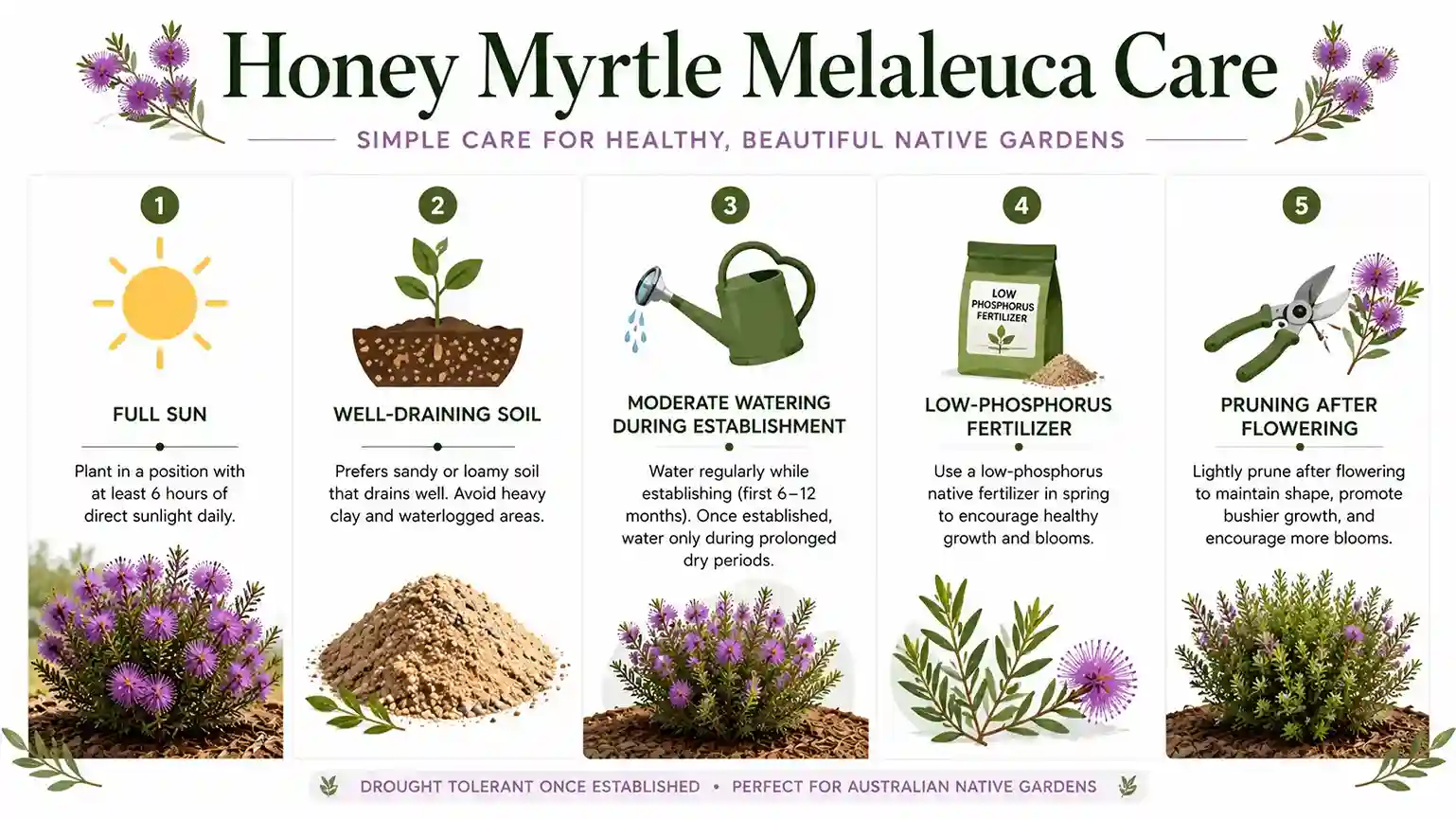
Honey myrtle melaleuca care is generally straightforward because most species are drought tolerant and adaptable once established. Proper sunlight, soil drainage, watering, and pruning are important for maintaining healthy growth and flowering.
Sunlight and Climate Requirements
Most honey myrtle species grow best in full sun conditions with at least six hours of direct sunlight daily.
Sunlight and Climate Needs
- Full sun preferences
- Heat tolerance
- Coastal suitability
- Frost sensitivity of some varieties
Many species tolerate hot, dry climates and coastal exposure. However, some tropical and coastal varieties may experience frost damage in colder inland regions.
Soil and Drainage Needs
Honey myrtle plants prefer sandy or well-draining soils. While many species tolerate nutrient-poor conditions, they generally perform poorly in heavy clay soils that retain moisture.
Waterlogged roots increase the risk of fungal disease and root rot. Improving drainage with raised beds or soil amendments can help prevent moisture problems.
Watering and Drought Tolerance
Newly planted honey myrtles require regular watering during establishment. Deep watering once or twice weekly helps encourage strong root development.
Mature plants are drought tolerant and usually require minimal supplemental irrigation except during prolonged dry periods. During summer heatwaves, occasional deep watering can support flowering and foliage health.
Fertilizing and Mulching
Honey myrtle plants generally require minimal fertilization.
Fertilizing Recommendations
- Low-phosphorus fertilizer recommendations
- Mulch benefits
- Native plant nutrition considerations
Organic mulch helps retain soil moisture, regulate root temperature, and suppress weeds. Avoid excessive fertilizer applications because they can reduce flowering and encourage weak growth.
Pruning and Maintenance
Pruning honey myrtle plants after flowering encourages dense growth and improves airflow. Light shaping also supports better flower production in the following season.
Gardeners commonly prune honey myrtles to maintain compact hedges, remove damaged branches, and improve overall structure.
Growing a Melaleuca Nesophila Hedge
Melaleuca nesophila hedge planting is popular for screening and privacy because the species naturally develops dense foliage and responds well to trimming. Cultivars such as melaleuca narrow nessie and narrow nessie are commonly selected for narrow spaces and formal hedge designs. For gardeners focused on dense privacy planting, this species is also commonly featured in detailed Melaleuca nesophila hedge growing strategies and hedge maintenance guides.
Hedge Spacing and Planting Tips
Planting Guidelines
- Recommended spacing of 4–6 feet apart
- Soil preparation with improved drainage
- Watering after planting
- Mulching techniques to retain moisture
Proper spacing allows airflow while still creating a dense privacy barrier as the plants mature.
How to Keep a Dense and Healthy Hedge
Regular trimming helps maintain a compact hedge structure. Pruning after flowering encourages branching and prevents sparse growth.
Good airflow around the hedge reduces fungal disease risk, especially in humid climates. Avoid overcrowding and remove weak interior growth when necessary.
Common Honey Myrtle Problems and How to Fix Them
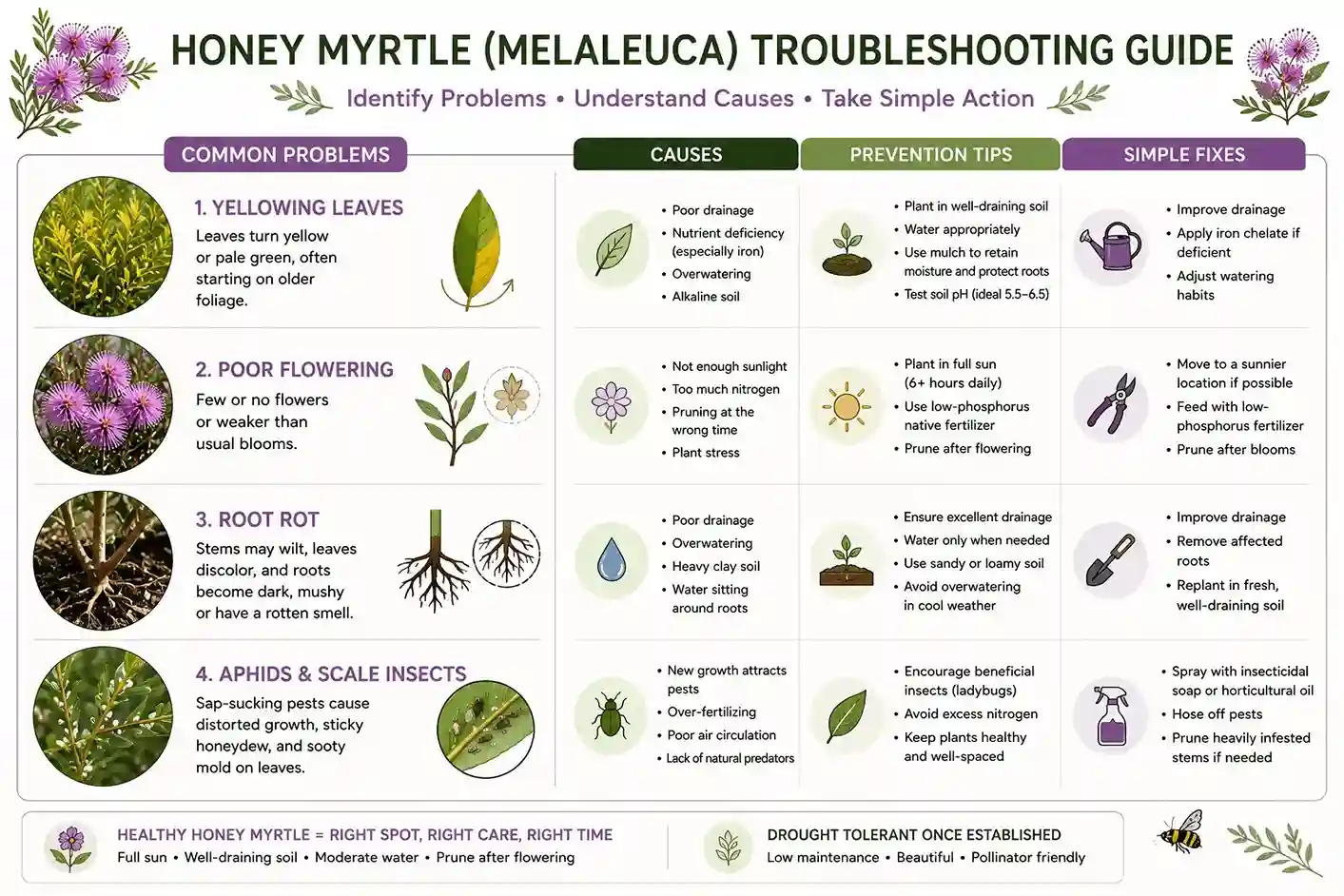
Yellowing Leaves
Yellowing leaves are commonly caused by overwatering, poor drainage, nutrient imbalance, or transplant stress. Waterlogged soil prevents healthy root oxygen exchange and may lead to root decline.
Improving drainage and reducing watering frequency usually helps correct the problem.
Poor Flowering
Poor flowering is often linked to insufficient sunlight, excessive fertilizer, or incorrect pruning timing. Honey myrtles bloom best in full sun and should generally be pruned after flowering rather than before bud development.
Root Rot and Moisture Problems
Root rot symptoms include yellowing foliage, wilting, blackened roots, and slow growth. Heavy soils and standing water significantly increase disease risk.
Prevent root rot by planting in free-draining soil and avoiding excessive irrigation.
Pest and Disease Concerns
Common Problems
- Scale insects
- Aphids
- Fungal issues
- Prevention methods
Most pest problems can be controlled with improved airflow, balanced watering, and regular plant monitoring.
Honey Myrtle Melaleuca Compared With Other Native Shrubs
Honey myrtle shrubs differ from bottlebrush and tea tree plants in flower structure, growth habit, and maintenance needs. Bottlebrush plants typically produce cylindrical flowers, while honey myrtles often develop pom-pom or clustered flower heads.
Compact vs tall melaleuca varieties also vary significantly in screening ability and garden use.
| Plant Type | Flower Appearance | Growth Habit | Water Needs | Hedge Suitability | Pollinator Value |
| Honey Myrtle | Pom-pom or clustered | Dense shrub/tree | Low once established | Excellent | High |
| Bottlebrush | Cylindrical brush flowers | Upright shrub/tree | Moderate | Good | High |
| Tea Tree | Small delicate flowers | Bushy shrub | Moderate | Moderate | Moderate |
Landscaping Uses for Honey Myrtle Plants
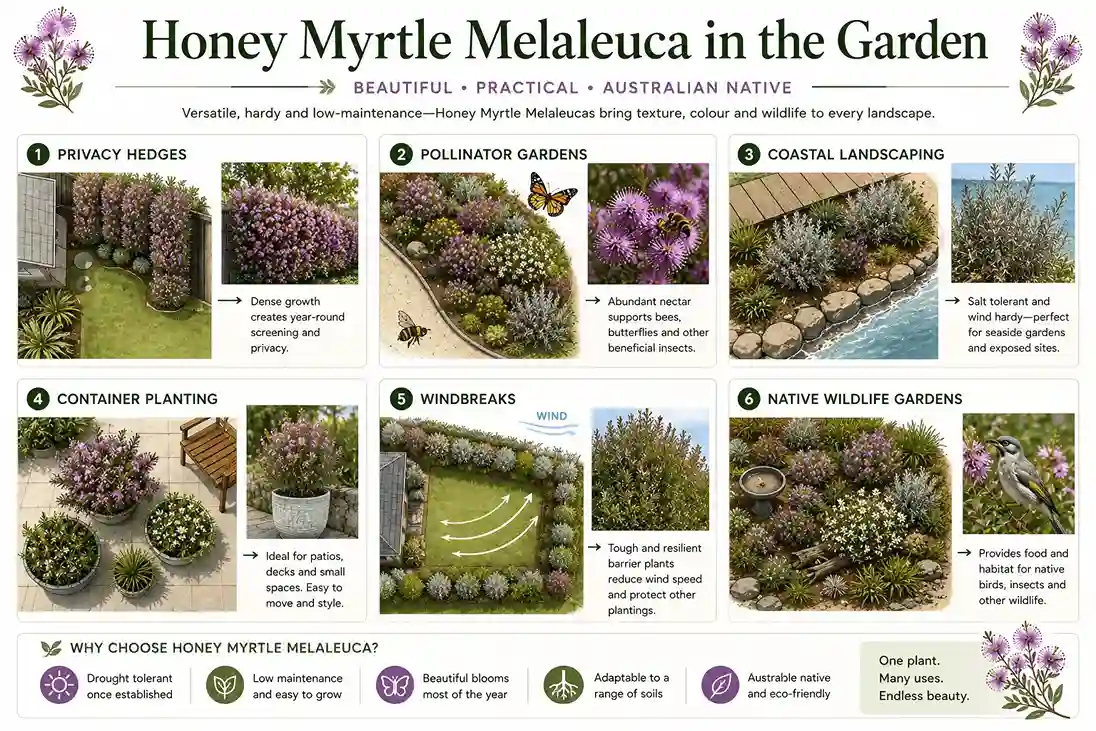
Honey myrtle plants are widely used in native gardens, coastal landscaping, pollinator gardens, and erosion-control projects. Their adaptability and ornamental flowers make them useful in both formal and naturalistic designs. Honey myrtle varieties are frequently combined with other Australian native screening trees to create drought-tolerant privacy landscapes.
Common Landscaping Applications
- Wildlife-friendly planting
- Low-maintenance landscapes
- Privacy hedges
- Accent shrubs
- Windbreak planting
Compact varieties can also grow successfully in containers and courtyard gardens.
Seasonal Care and Environmental Considerations
Honey myrtle plants may experience seasonal growth changes depending on climate and rainfall patterns. Flowering periods vary by species, although many bloom heavily during spring and summer.
Extended drought conditions may slow growth and reduce flowering intensity. In colder regions, frost stress can damage young foliage and branch tips. Coastal wind exposure is usually well tolerated by species such as Melaleuca nesophila.
Beginner Mistakes When Growing Honey Myrtles
Many beginner gardeners struggle with heavy clay soil, excessive watering, and poor sunlight placement. Honey myrtles generally require well-draining soil and strong sun exposure for healthy growth.
Pruning at the wrong time may reduce flowering, while overcrowded hedges can increase disease problems due to restricted airflow.
Common Beginner Mistakes
- Signs of improper care
- Quick prevention tips
- Best practices for healthy growth
Monitoring drainage, sunlight, and spacing early helps prevent most long-term issues.
Where Honey Myrtle Fits in Native Gardening and Landscaping
Honey myrtle plants play an important role in Australian native gardening and drought-tolerant landscaping. Their evergreen foliage, pollinator-friendly flowers, and low-maintenance growth make them practical alternatives to high-water ornamental shrubs.
These plants are especially valuable in privacy hedge design, wildlife gardens, and sustainable landscapes where reduced irrigation and habitat support are priorities.
Conclusion
Honey myrtle melaleuca varieties are versatile Australian native plants valued for their ornamental flowers, drought tolerance, evergreen foliage, and adaptability. Species such as Melaleuca nesophila, Melaleuca incana, and Melaleuca thymifolia provide different growth habits and landscaping benefits for hedges, pollinator gardens, coastal planting, and compact spaces.
With proper sunlight, well-draining soil, moderate watering during establishment, and occasional pruning, honey myrtles remain relatively low maintenance. Choosing the right variety based on climate, available space, and landscaping goals helps ensure healthy long-term growth and reliable ornamental performance.
FAQs
What is the difference between honey myrtle and melaleuca?
Honey myrtle is a common name used for several plants within the Melaleuca genus. Melaleuca is the botanical classification, while honey myrtle refers to specific ornamental species known for nectar-rich flowers and aromatic foliage.
How tall does honey myrtle melaleuca grow?
Honey myrtle melaleuca height varies by species. Compact varieties like Melaleuca thymifolia may remain under 6 feet tall, while larger species such as Melaleuca armillaris can exceed 15 feet in height.
Is Melaleuca nesophila good for hedging?
Yes, Melaleuca nesophila is widely used for hedging because it develops dense foliage, tolerates pruning well, and provides good screening and privacy in coastal and sunny gardens.
How often should honey myrtle plants be watered?
Newly planted honey myrtles should be watered regularly during establishment. Mature plants are drought tolerant and generally only require occasional deep watering during prolonged dry periods.
Can honey myrtle melaleuca grow in coastal areas?
Yes, many honey myrtle species tolerate salty air, coastal winds, and sandy soils. Melaleuca nesophila is especially popular in coastal landscapes because of its high salt tolerance.
Why are my honey myrtle leaves turning yellow?
Yellow leaves are commonly caused by overwatering, poor drainage, nutrient imbalance, or transplant stress. Improving drainage and adjusting watering frequency often resolves the issue.
Which honey myrtle variety is best for small gardens?
Melaleuca thymifolia, also known as thyme honey myrtle, is one of the best options for small gardens because of its compact size, fine foliage, and ornamental purple flowers.