Introduction
Dwarf fruit trees are compact versions of traditional fruit trees that produce full-sized fruit while requiring significantly less space. These trees are widely used in small gardens, patios, and container setups, making them especially suitable for urban environments and regions with varying climates such as Australia.
They provide an efficient way to grow fresh fruit at home without the need for large orchards. Whether placed in pots, balconies, or small backyards, dwarf fruit trees offer flexibility, accessibility, and productivity for both beginners and experienced gardeners.
Quick Summary
- Dwarf fruit trees are compact trees that produce normal-sized fruit but require less space
- Ideal for containers, patios, and small gardens
- Many varieties are self-pollinating and beginner-friendly
- Suitable for different climates, including regions across Australia
What Are Dwarf Fruit Trees? (Definition & Core Characteristics)
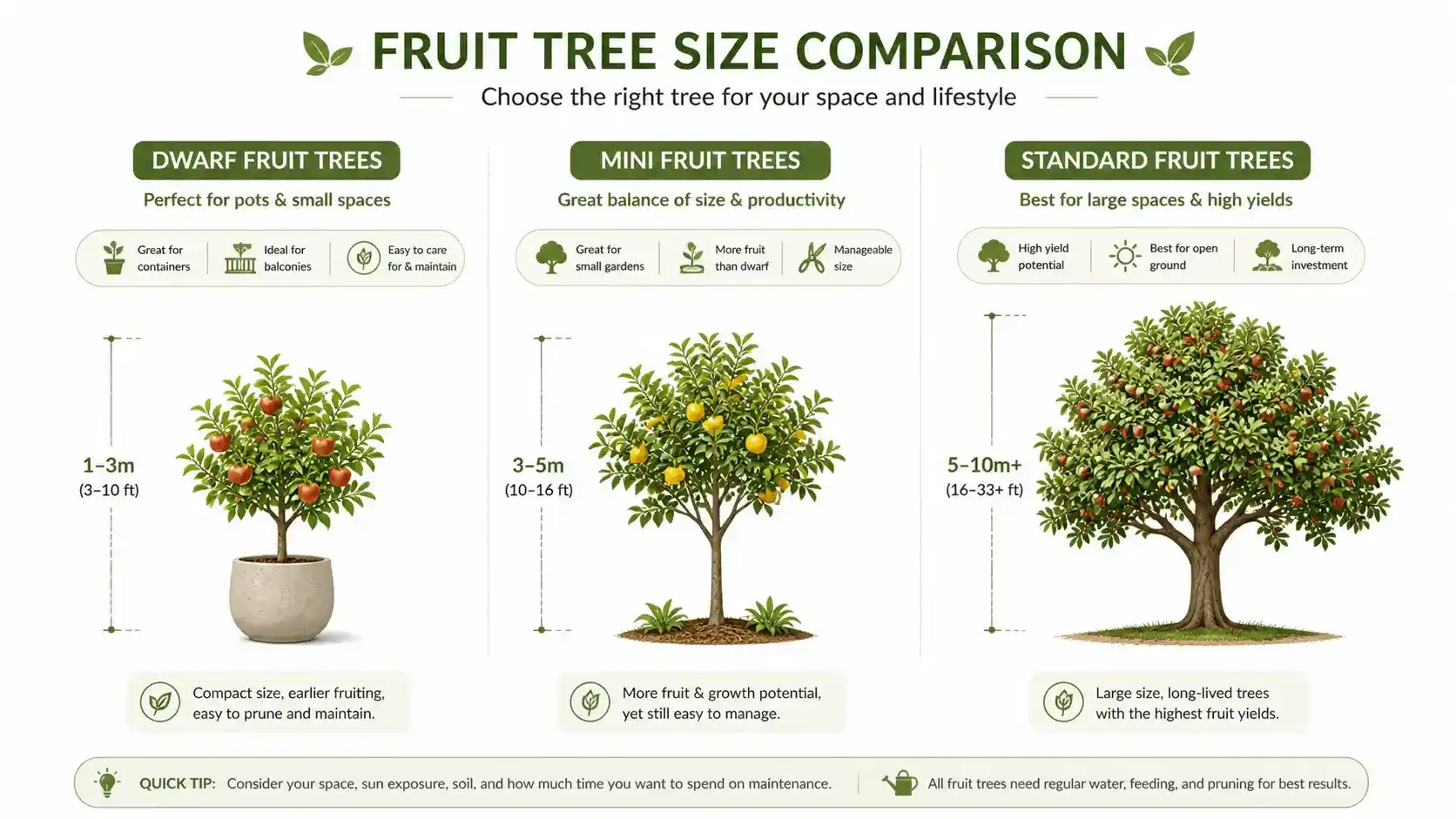
Dwarf fruit trees are trees that are specifically grown to remain small in size while still producing full-sized fruit. This is achieved primarily through grafting onto dwarfing rootstocks and controlled pruning techniques. Most dwarf fruit trees are created using grafting techniques, a standard horticultural practice explained in detail on Grafting.
Core Characteristics
- Trees grafted onto dwarfing rootstocks that limit vertical growth
- Typically grow between 1 to 3 meters in height
- Produce full-sized fruit despite their compact size
- Suitable for pots, patios, and limited garden spaces
Difference Between Tree Types
- Dwarf fruit trees: Compact and ideal for containers
- Mini fruit trees: Extremely small, often decorative and suitable for indoor environments
- Small fruit trees: A broader category including dwarf and semi-dwarf types
- Standard trees: Full-sized trees requiring more space and longer to mature
Types of Dwarf Fruit Trees and Popular Varieties
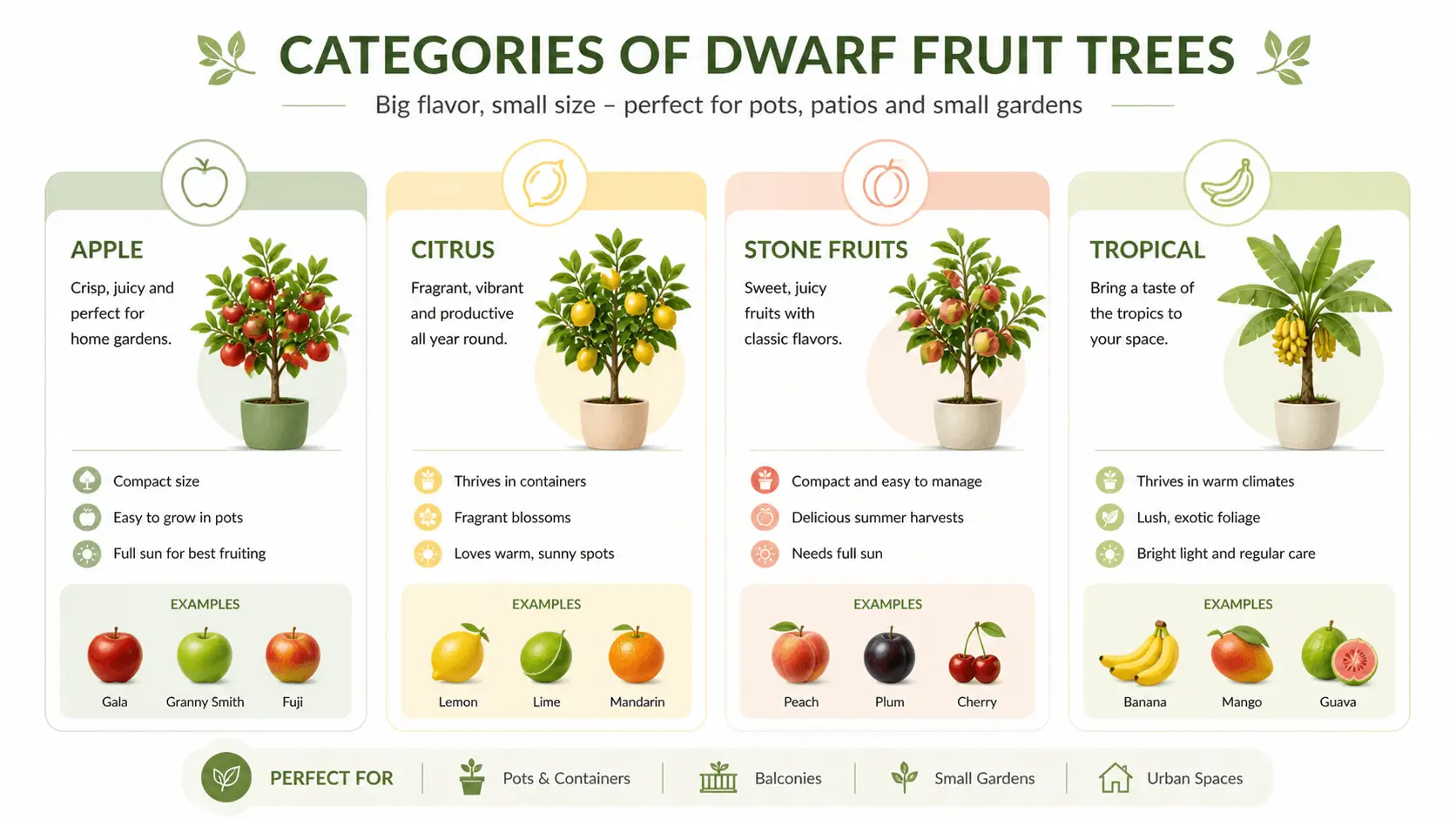
Dwarf fruit trees include a wide range of fruit-bearing species adapted for small spaces.
Common Types
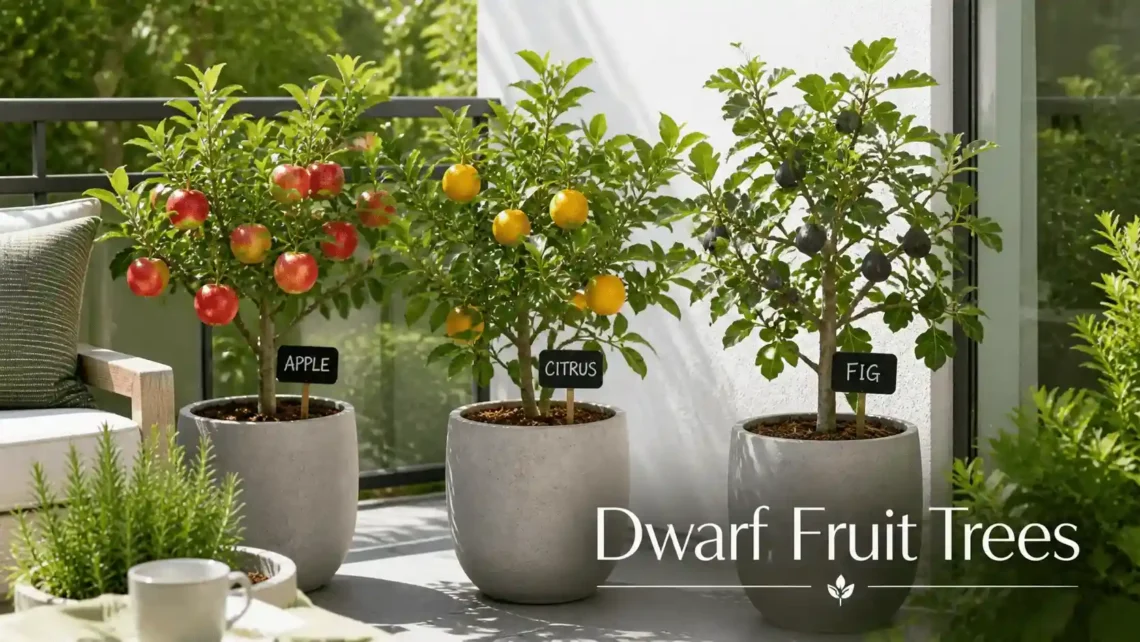
- Apple: dwarf apple tree, miniature apple trees
- Citrus: lemons, oranges, limes
- Stone fruits: peach, plum, nectarine
- Tropical: banana, fig
For a detailed breakdown of apple varieties, see our guide on fraser island apple tree.
Special Categories
- Ultra dwarf fruit trees: Very compact, ideal for indoor or patio use
- Semi dwarf fruit trees: Slightly larger with higher yield potential
- Dwarf bonsai fruit trees: Decorative and functional
Best Dwarf Fruit Trees for Different Climates
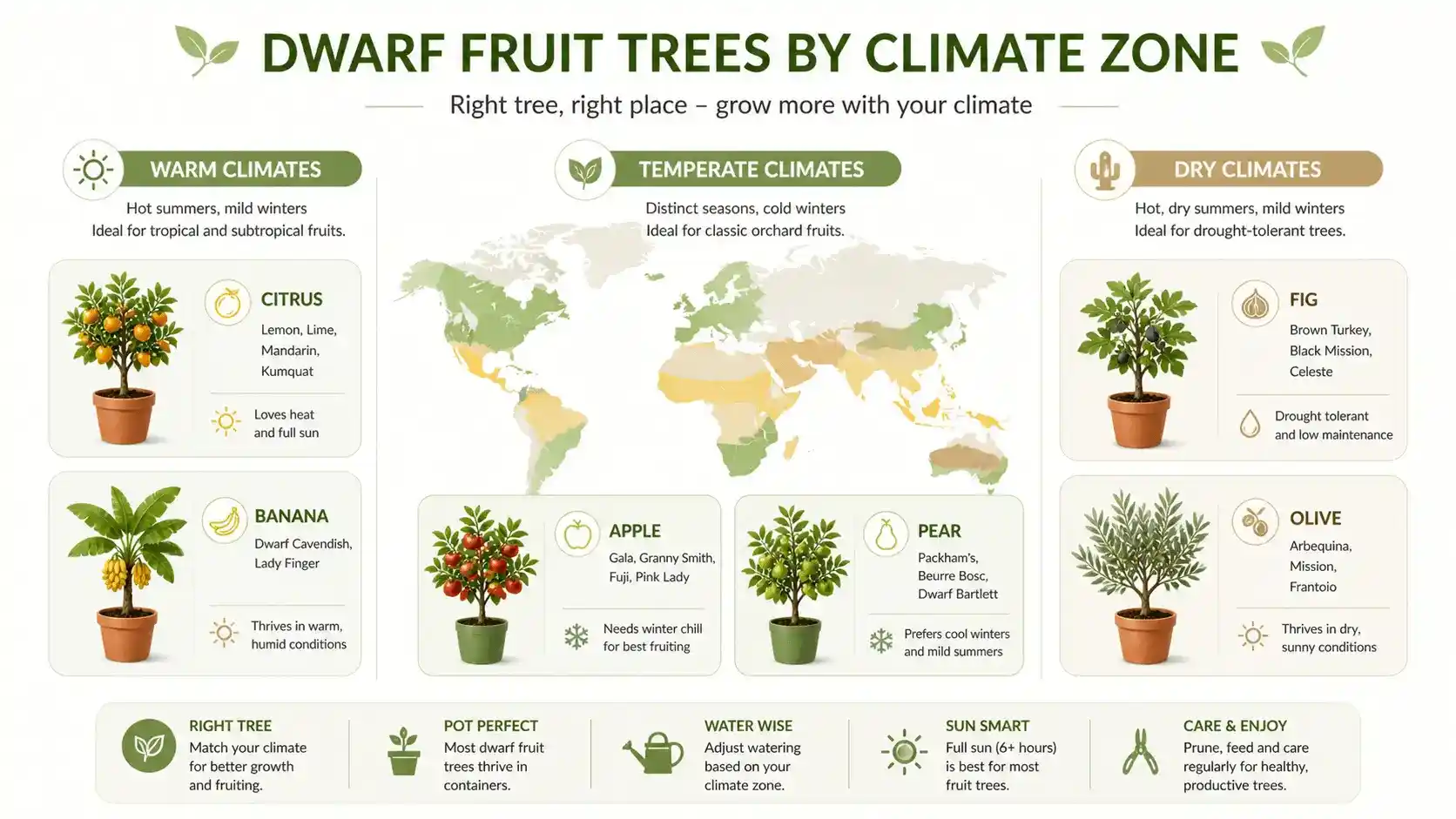
Dwarf fruit trees must be matched to the correct climate to ensure proper growth and fruiting.
Australia Climate Zones Overview
- Warm climates (Queensland, Brisbane): citrus, banana
- Temperate climates (Victoria, Melbourne): apple, pear, plum
- Dry climates: figs, olives
Choosing the Right Tree
- Check required chill hours for fruit development
- Evaluate tolerance to heat
- Consider humidity levels for tropical areas
Growing Dwarf Fruit Trees in Pots (Container Gardening Guide)
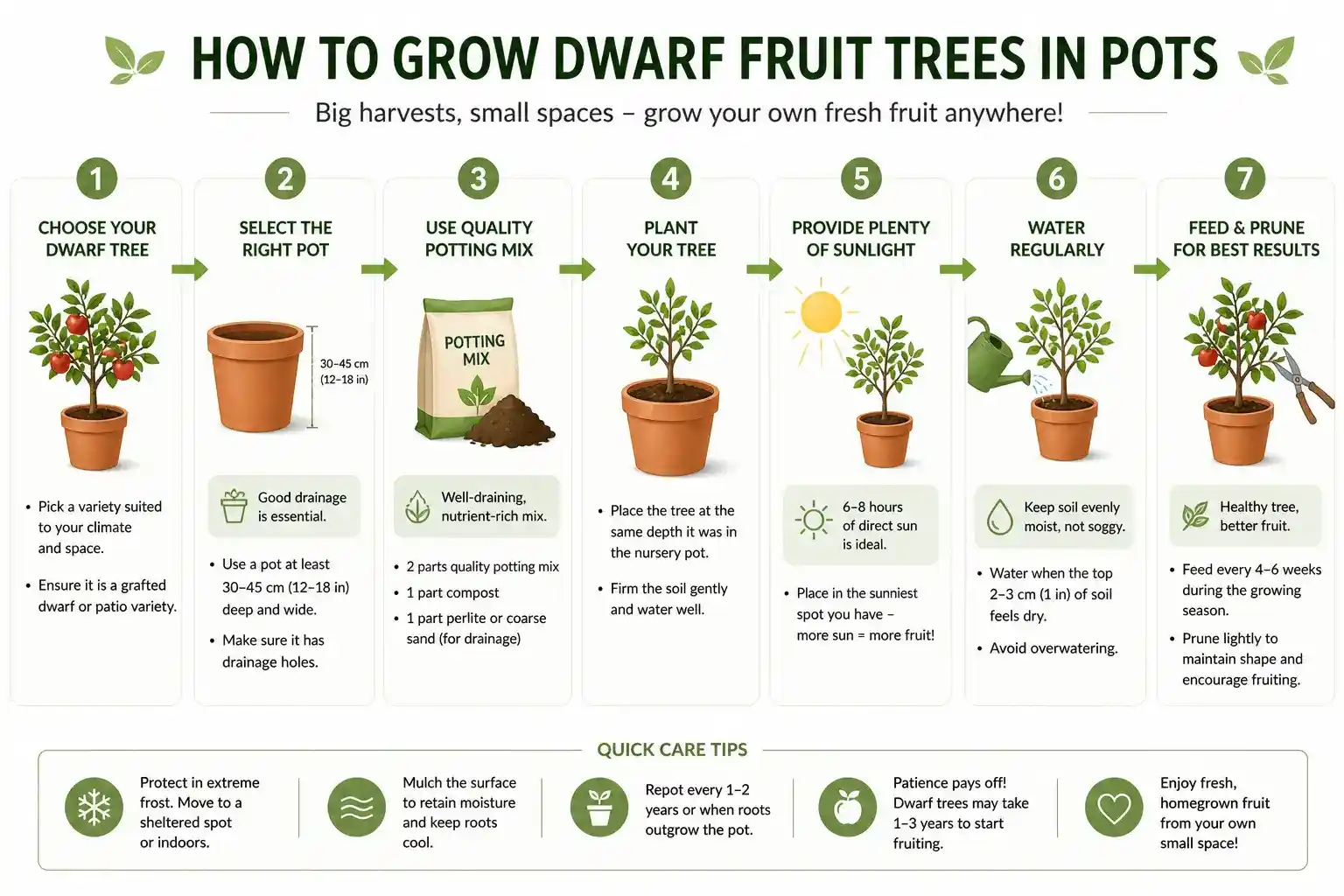
Dwarf fruit trees in pots are ideal for maximizing limited space while maintaining productivity.
Key Requirements
- Pot size: Large enough for root expansion with proper drainage
- Soil mix: Well-draining and rich in organic matter
- Sunlight: At least 6–8 hours of direct sun
Benefits of Container Growing
- Easy to move based on weather conditions
- Efficient for small gardens and balconies
- Simplifies pest and disease control
If you’re exploring more indoor-friendly plants, check out our complete Guide to House Plants for additional ideas and care tips.
Care Guide for Dwarf Fruit Trees
Proper care is essential for maintaining healthy growth and consistent fruit production.
Watering
- Water regularly but avoid overwatering
- Ensure soil drains well to prevent root rot
Light Requirements
- Require full sun exposure for optimal growth
Soil & Fertilization
- Use nutrient-rich, well-draining soil
- Apply fertilizers based on seasonal growth cycles
Pruning & Maintenance
- Maintain shape and size through pruning
- Encourage better fruit production
Climate Tolerance
- Protect trees from frost
- Manage heat stress with proper watering and positioning
Self-Pollinating vs Cross-Pollinating Dwarf Fruit Trees
Self-pollinating dwarf fruit trees can produce fruit on their own, while cross-pollinating trees require another compatible tree nearby.
Comparison Table
| Feature | Self-Pollinating | Cross-Pollinating |
| Number of trees needed | One | Two or more |
| Yield potential | Moderate | Higher |
| Maintenance | Easier | Slightly complex |
Advantages and Disadvantages of Dwarf Fruit Trees
Advantages
- Space-saving and efficient for small areas
- Faster fruit production compared to standard trees
- Easier harvesting due to manageable size
Disadvantages
- Shorter lifespan than larger trees
- Lower total yield compared to standard trees
- Require more frequent care when grown in containers
Common Problems and Solutions (Troubleshooting Guide)
Dwarf fruit trees may experience common issues that can affect growth and fruiting.
Common Issues
- Yellowing leaves from overwatering or nutrient deficiency
- Poor fruiting due to lack of sunlight or pollination
- Pest problems such as aphids and mites
How to Fix & Prevent
- Adjust watering schedule carefully
- Improve soil nutrition with balanced fertilizers
- Use natural pest control methods like neem oil
Beginner Mistakes to Avoid When Growing Dwarf Fruit Trees
Avoiding these mistakes helps ensure successful growth.
- Using pots that are too small
- Overwatering or poor drainage
- Skipping regular pruning
- Choosing varieties not suited to the climate
Dwarf vs Semi-Dwarf vs Standard Fruit Trees (Comparison)
Comparison Table
| Type | Height | Space Needed | Yield | Best Use |
| Dwarf | Small | Minimal | Moderate | Pots, patios |
| Semi-Dwarf | Medium | Moderate | Higher | Small gardens |
| Standard | Large | High | Maximum | Orchards |
Growth Rate and Maturity Timeline
Dwarf fruit trees grow relatively quickly and begin producing fruit earlier than standard varieties.
- Most trees fruit within 2–3 years
- Growth follows seasonal cycles
- Influenced by climate, soil, and care practices
How to Choose the Best Dwarf Fruit Trees
Choosing the best dwarf fruit trees requires careful consideration of several factors.
Selection Criteria
- Climate compatibility
- Available growing space
- Pollination needs
- Preferred fruit type
Conclusion
Dwarf fruit trees provide a practical solution for growing fresh fruit in limited spaces. They are highly adaptable to container gardening and small outdoor areas while still producing full-sized fruit.
With the right selection and proper care, dwarf fruit trees can thrive in various climates, including across Australia. Their compact size, faster fruiting, and ease of maintenance make them suitable for both beginners and experienced gardeners.
FAQs
What are dwarf fruit trees and how are they different from regular trees?
Dwarf fruit trees are smaller trees grown on specialized rootstocks that limit their size while still producing full-sized fruit. They require less space and are easier to manage compared to standard fruit trees.
Can dwarf fruit trees grow in pots?
Yes, most dwarf fruit trees are well-suited for container growing. With proper pot size, soil, and sunlight, they can thrive in pots and small spaces.
How long do dwarf fruit trees take to produce fruit?
Most dwarf fruit trees begin producing fruit within 2–3 years after planting, depending on the variety and care provided.
Do dwarf fruit trees need full sun?
Yes, they generally require 6–8 hours of direct sunlight daily for healthy growth and fruit production.
Are dwarf fruit trees suitable for Australian climates?
Yes, many varieties are adapted to different Australian regions, including Queensland, Victoria, and other climate zones.