Introduction
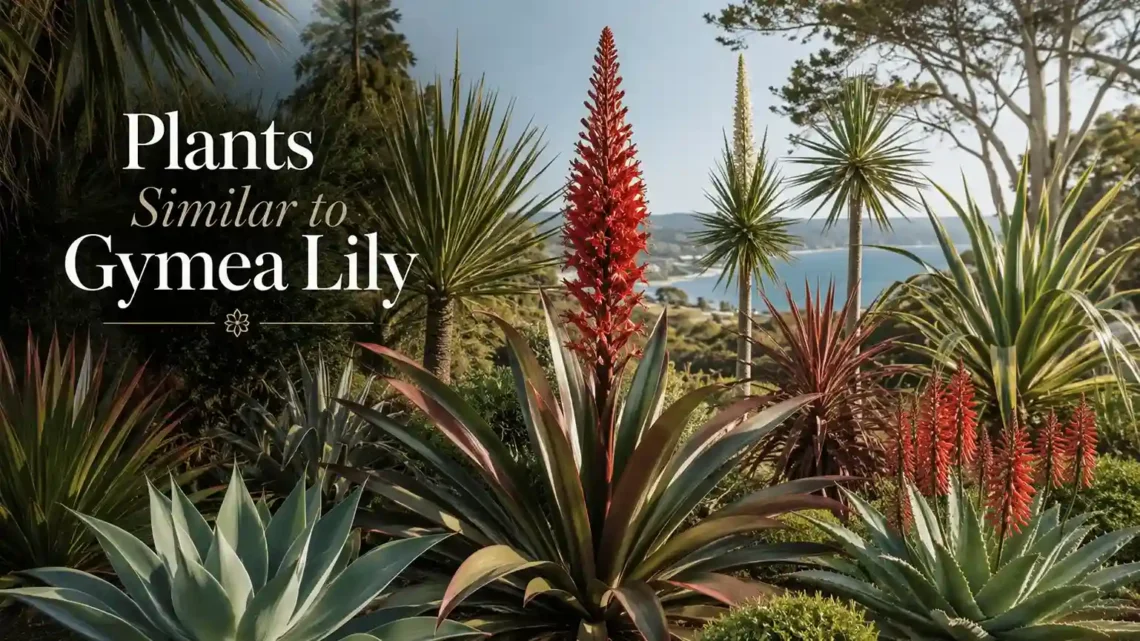
The gymea lily (Doryanthes excelsa) is a dramatic giant spear lily native to coastal New South Wales, Australia. Known for its towering red flower spikes and massive sword-shaped foliage, it is one of the most recognizable architectural plants in Australian landscapes. Gardeners searching for plants similar to gymea lily are usually looking for species with comparable structural impact, drought tolerance, and low maintenance outdoor performance. Similar plants often share bold rosette growth forms, strap-like or spear-shaped leaves, and tall flowering spikes suited to large garden spaces. This guide explores the closest botanical relatives and the best gymea lily alternatives based on appearance, growth habit, landscape function, and long-term care requirements.
Quick Summary
- The gymea lily (Doryanthes excelsa) is a slow growing giant spear lily with towering crimson-red flower spikes that may take 7–15 years to appear.
- Plants similar to gymea lily typically feature bold rosette growth, strap-like foliage, dramatic flower spikes, and strong drought tolerance.
- The closest botanical relative is Doryanthes palmeri, the only other species within the same genus.
- Most gymea lily alternatives are outdoor low maintenance plants suited to full sun, coastal gardens, and dry or subtropical landscapes.
What Is the Gymea Lily?
Doryanthes Excelsa — Botanical Identity and Native Origins
Doryanthes excelsa, commonly called the gymea lily, is a large flowering perennial native to coastal New South Wales, Australia. It belongs to the family Doryanthaceae and is one of only two species within the Doryanthes genus. The plant naturally occurs in sandstone gullies, forest edges, and coastal ranges where it tolerates poor soils, drought, and exposed conditions.
Doryanthes excelsa, commonly called the gymea lily, is a large flowering perennial native to coastal New South Wales, Australia.
The gymea lily grows in a large basal rosette formation consisting of long strap-shaped leaves that can reach up to 2 metres in length. Because of this dramatic upright foliage structure, it is commonly classified as a giant spear lily. Mature plants form dense architectural clumps that become major focal points in large landscapes.
The Gymea Flower — What Makes It Iconic
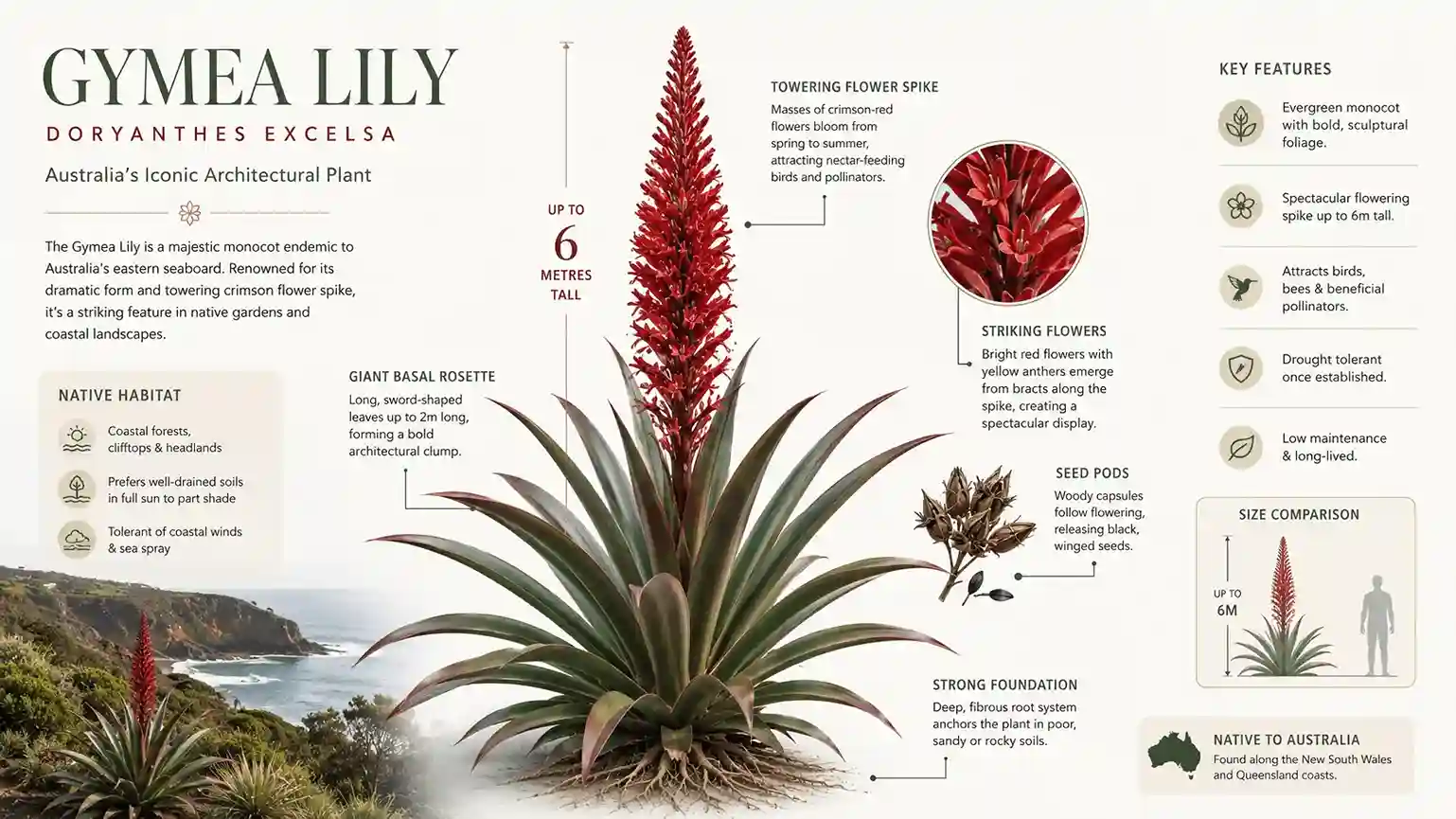
The gymea flower is famous for its enormous upright flowering spike that can rise up to 6 metres tall. The flower head produces clusters of deep crimson-red blooms that attract nectar-feeding birds and pollinators throughout the flowering period.
One reason the gymea lily is considered remarkable is its slow flowering cycle. Plants grown from seed often require 7–15 years before producing their first bloom. Environmental stress, maturity, and prolonged dry conditions may help trigger flowering in established specimens.
Despite its common name, the gymea lily is not a true lily. True lilies belong to the genus Lilium, while the gymea lily belongs to the separate family Doryanthaceae.
Key Traits That Define a “Similar” Plant
Plants similar to gymea lily usually share several structural and horticultural characteristics:
- Long strap-like or sword-shaped foliage
- Rosette or clumping growth habit
- Tall architectural flower spikes
- Slow or moderate growth rates
- Drought tolerance and low maintenance care needs
- Strong performance as specimen plants in outdoor landscapes
These traits help gardeners identify alternatives that provide a similar visual and structural effect in the landscape.
The Closest Botanical Relative — Doryanthes Palmeri
What Is Doryanthes Palmeri?
Doryanthes palmeri, commonly called the spear lily or Queensland gymea lily, is the only other species in the Doryanthes genus. Native to southeast Queensland, it closely resembles Doryanthes excelsa in growth habit, foliage structure, and environmental preferences.
Like the gymea lily, Doryanthes palmeri forms a large rosette of sword-like leaves and grows slowly over many years. Both species are classified as giant spear lilies and perform best in full sun with free-draining soil.
The major visual difference is the flower structure. While Doryanthes excelsa produces a rigid upright flower spike, Doryanthes palmeri develops a more drooping or nodding flowerhead.
Doryanthes Excelsa vs Doryanthes Palmeri — Key Differences
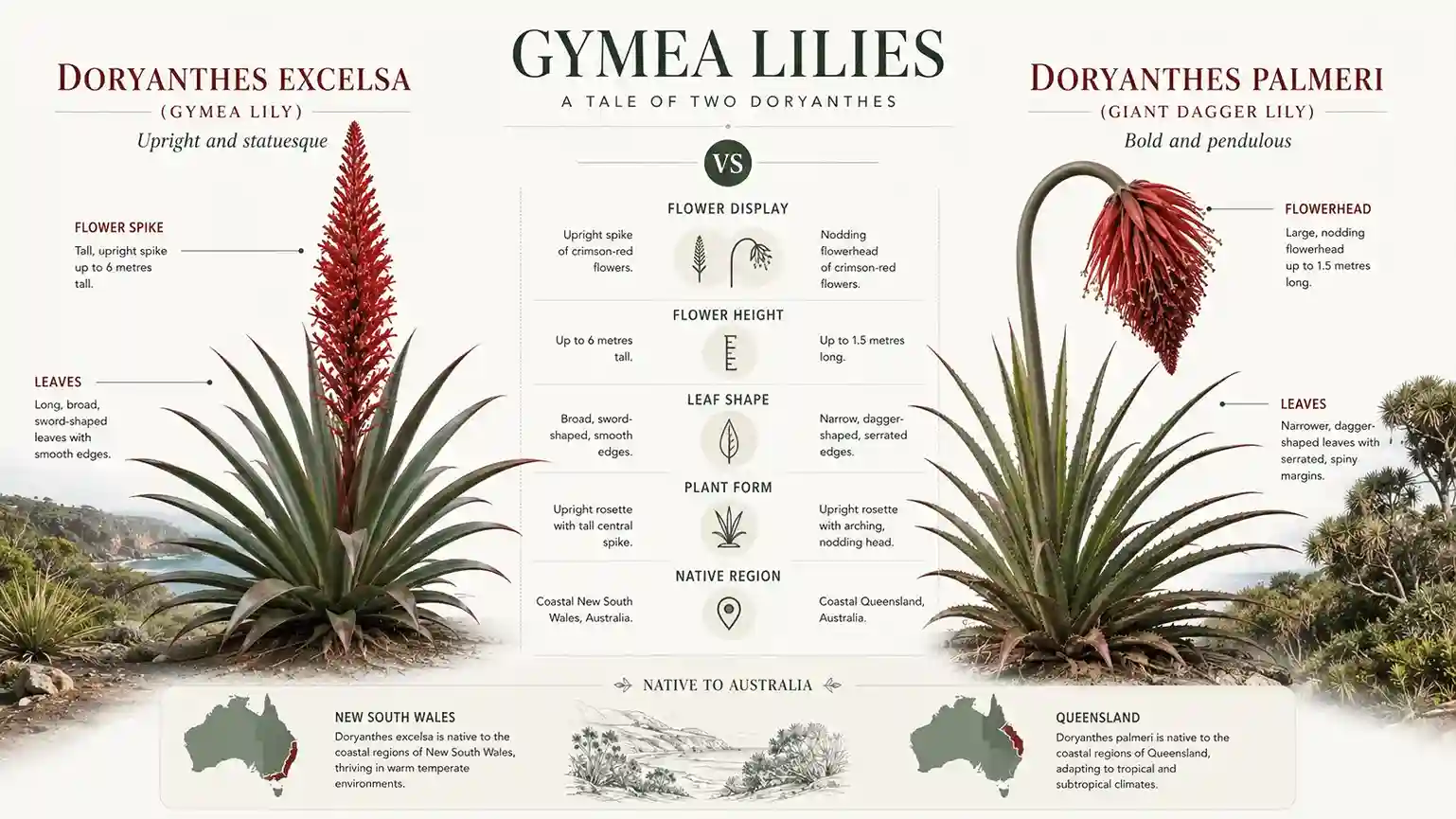
| Feature | Doryanthes excelsa (Gymea Lily) | Doryanthes palmeri (Spear Lily) |
| Common Name | Gymea Lily | Spear Lily / Queensland Gymea |
| Native Region | Coastal NSW, Australia | Southeast QLD, Australia |
| Flower Spike Form | Upright, rigid spike | Drooping, nodding head |
| Flower Color | Deep crimson-red | Red to orange-red |
| Mature Flower Height | Up to 6 metres | 2–4 metres |
| Leaf Length | Up to 1.5–2 metres | Slightly narrower leaves |
| Growth Rate | Slow | Slow |
| Flowering Trigger | Drought stress / maturity | Similar conditions |
| Garden Use | Specimen plant | Specimen or accent plant |
Although Doryanthes palmeri is less commonly grown, it remains the most scientifically accurate alternative to the gymea lily because both species belong to the same genus and share nearly identical care requirements.
Plants Similar to Gymea Lily in Appearance and Form
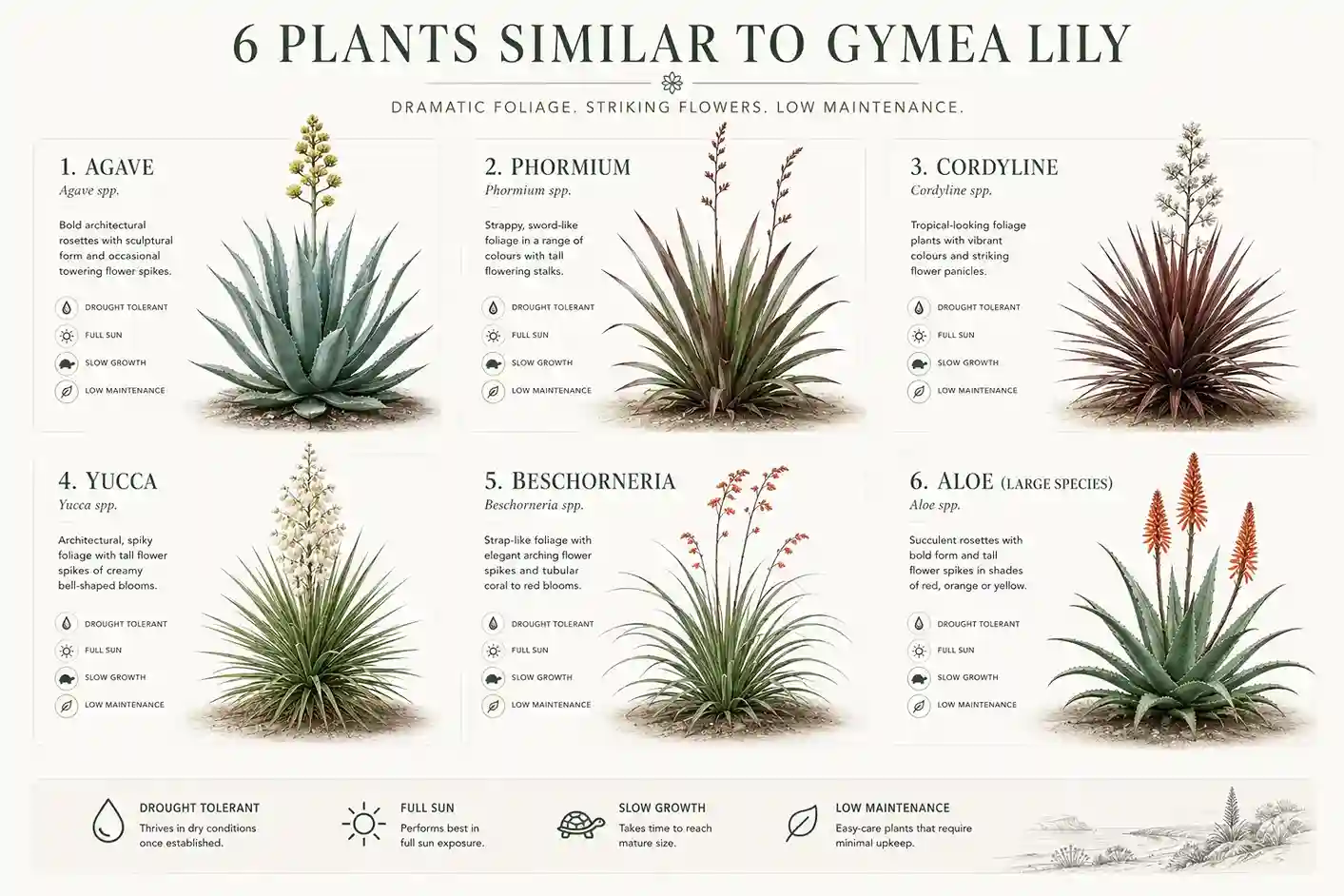
Agave — Bold Rosette Plants for Dry Outdoor Gardens
Agave species are among the best visual alternatives to gymea lily due to their large rosette forms and dramatic spear-like leaves. Most agaves thrive in full sun and dry conditions, making them ideal outdoor low maintenance plants for Mediterranean or drought-prone climates.
Many agaves also produce towering flower spikes after years of growth. Unlike gymea lilies, however, agaves are typically monocarpic, meaning the main rosette dies after flowering.
Key similarities include:
- Architectural rosette growth
- Strong drought tolerance
- Slow growing habit
- Minimal watering needs
- Bold landscape presence
Phormium (New Zealand Flax) — Plants Similar to Flax Lily
Phormium tenax, commonly called New Zealand flax, is another structural perennial with long upright strap-shaped foliage. It is frequently used in coastal and contemporary landscapes where a bold foliage plant is needed.
Gardeners who enjoy strap-leaved architectural plants may also appreciate the softer texture and compact growth habit discussed in our guide to Flax Lily Plant: 7+ Stunning Benefits & Care Secrets Revealed.
Phormium is often confused with flax lily (Dianella), although they are separate plants with different growth habits and mature sizes. Compared to gymea lily, phormium produces less dramatic flowers but offers year-round architectural structure.
It performs well in:
- Coastal gardens
- Border plantings
- Modern landscape designs
- Low maintenance outdoor settings
Cordyline — Tropical Spear-Like Foliage Plants
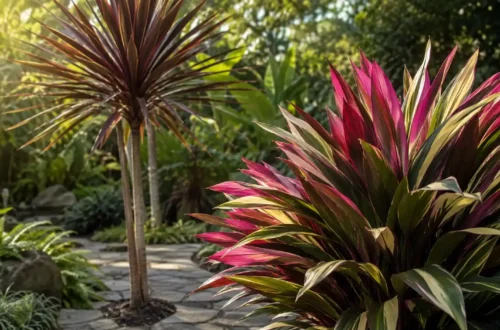
Cordylines provide a tropical alternative to gymea lily with their upright sword-like foliage and strong architectural form. Cordyline australis is especially popular in subtropical and coastal landscapes.
Cordylines pair well with other bold tropical foliage species commonly used in tropical-style landscapes, including the plants featured in 5+ Stunning Tropical Plants for Backyard Paradise.
Compared to gymea lily, cordylines grow faster and are more widely available in nurseries. They are commonly used in tropical-style gardens where vertical structure is important.
Key features include:
- Strap-shaped foliage
- Tropical landscape appearance
- Moderate drought tolerance
- Adaptability to sun or partial shade
Yucca — Spiky Outdoor Alternatives for Full Sun Gardens
Yucca species are highly drought tolerant plants with rigid sword-shaped leaves arranged in rosettes. Many species produce tall white or cream flower spikes that resemble the structural effect of gymea lily blooms.
Yucca plants thrive in hot, dry conditions and are among the toughest outdoor low maintenance plants available for sunny landscapes.
Important differences include:
- White or cream flowers instead of red
- Extremely high drought resistance
- Slower structural development over time
Beschorneria — The Overlooked Gymea Lily Lookalike
Beschorneria yuccoides, sometimes called Mexican lily, is a lesser-known ornamental plant with strong visual similarities to gymea lily. It forms broad rosettes of arching leaves and produces dramatic flower spikes with reddish tones.
Beschorneria performs well in mild climates and requires minimal care once established. Its bold flowering display and structural foliage make it a valuable alternative for gardeners seeking architectural impact.
Large Aloe Species — Structural Flowering Rosettes
Large aloe species such as Aloe arborescens and tree aloes (Aloidendron spp.) provide a similar dramatic silhouette to gymea lily. These plants combine structured rosettes with tall orange-red flower spikes that create strong vertical interest.
Large aloes are especially effective in:
- Dry landscapes
- Mediterranean gardens
- Coastal plantings
- Full sun architectural designs
Gardeners interested in architectural aloe species can also explore the dramatic foliage and flower forms covered in 7+ Stunning Fan Aloe Plants for Easy Indoor & Outdoor Beauty.
Perennial Plants Similar to Gymea Lily for Long-Term Landscaping
Perennial plants similar to gymea lily are valued for their lasting structural presence and minimal long-term maintenance. These plants establish slowly but reward patience with durable landscape performance.
Key traits to look for include:
- Rosette or clumping growth habit
- Strap-shaped or spear-like foliage
- Drought tolerance
- Tall flower spikes
- Long-lived perennial growth
- Minimal pruning or fertilizing needs
Top perennial alternatives include:
- Doryanthes palmeri
- Agave species
- Phormium
- Cordyline
- Large aloe species
- Beschorneria
These plants work particularly well in native gardens, coastal landscapes, and low-water garden schemes where long-term architectural structure is important.
Low Maintenance and Slow Growing Alternatives to Gymea Lily
Why Gymea Lily Gardeners Prefer Low Maintenance Plants
Gardeners attracted to gymea lily often prefer plants that require very little ongoing maintenance. Once established, gymea lilies tolerate drought, poor soil, and exposure with minimal intervention.
Most plants similar to gymea lily share this self-sufficient nature. They generally require:
- Infrequent watering
- Minimal fertilizing
- Limited pruning
- Good drainage rather than rich soil
Best Slow Growing Plants with Gymea-Level Drama
The best slow growing plants with gymea-style impact include:
- Doryanthes palmeri
- Agave species
- Large aloe species
- Yucca species
Slow growth is often beneficial in structural landscaping because these plants maintain their form for many years without becoming invasive or difficult to manage.
Low Growing Tropical Plants as Gymea Companions or Small-Scale Substitutes
Some gardeners want the bold appearance of gymea lily in a smaller space. Compact tropical or strap-leaved plants can provide a similar effect without overwhelming the landscape.
Useful smaller-scale alternatives include:
- Strelitzia reginae (Bird of Paradise)
- Lomandra longifolia
- Dianella (Flax Lily)
- Agapanthus
These plants work well beneath larger gymea-style specimens or in compact border plantings.
For smaller Australian landscapes, compact strap-leaved natives such as Lomandra are also popular, especially the varieties featured in 10+ Stunning Ways Lomandra Variegated Transforms Your Garden.
Outdoor Plants Similar to Gymea Lily — Garden Design Considerations
| Plant | Growth Rate | Mature Size | Sun Needs | Water Needs | Best Garden Use |
| Doryanthes palmeri | Slow | Large | Full sun | Low | Bold specimen plant |
| Agave | Slow | Medium–Large | Full sun | Very low | Dry/rocky gardens |
| Phormium | Moderate | Medium | Full sun / Part shade | Low–Moderate | Borders, coastal gardens |
| Cordyline | Moderate | Medium | Full sun / Part shade | Moderate | Tropical-style gardens |
| Yucca | Slow | Medium | Full sun | Very low | Hot, dry landscapes |
| Beschorneria | Moderate | Medium | Full sun | Low | Statement accent plants |
| Large Aloe | Slow–Moderate | Medium–Large | Full sun | Low | Dry or Mediterranean gardens |
Gymea-type plants work best as focal points in open landscapes where their mature size and architectural form can fully develop. Most require:
- Free-draining soil
- Full sun exposure
- Good airflow
- Adequate spacing from buildings or pathways
These plants generally perform best in USDA zones 8–11 or similar temperate to subtropical climates. These bold structural plants are often featured in broader landscaping collections such as our Plants for Homes and Gardens Guide, especially for drought-tolerant and architectural garden design.
What Flowers Are Similar to Lilies?
Many plants are described as “lily-like” because they produce bold flowers or strap-shaped foliage, even when they are not true lilies. The gymea lily itself is not a true lily and belongs to the family Doryanthaceae rather than the genus Lilium.
Popular lily-like flowering plants include:
- Agapanthus
- Kniphofia (Red Hot Poker)
- Hemerocallis (Daylily)
- Clivia
- Amaryllis (Hippeastrum)
Among these, kniphofia most closely resembles the gymea flower in color and vertical flowering style, although it is much smaller in scale.
Common Problems When Growing Gymea Lily Alternatives
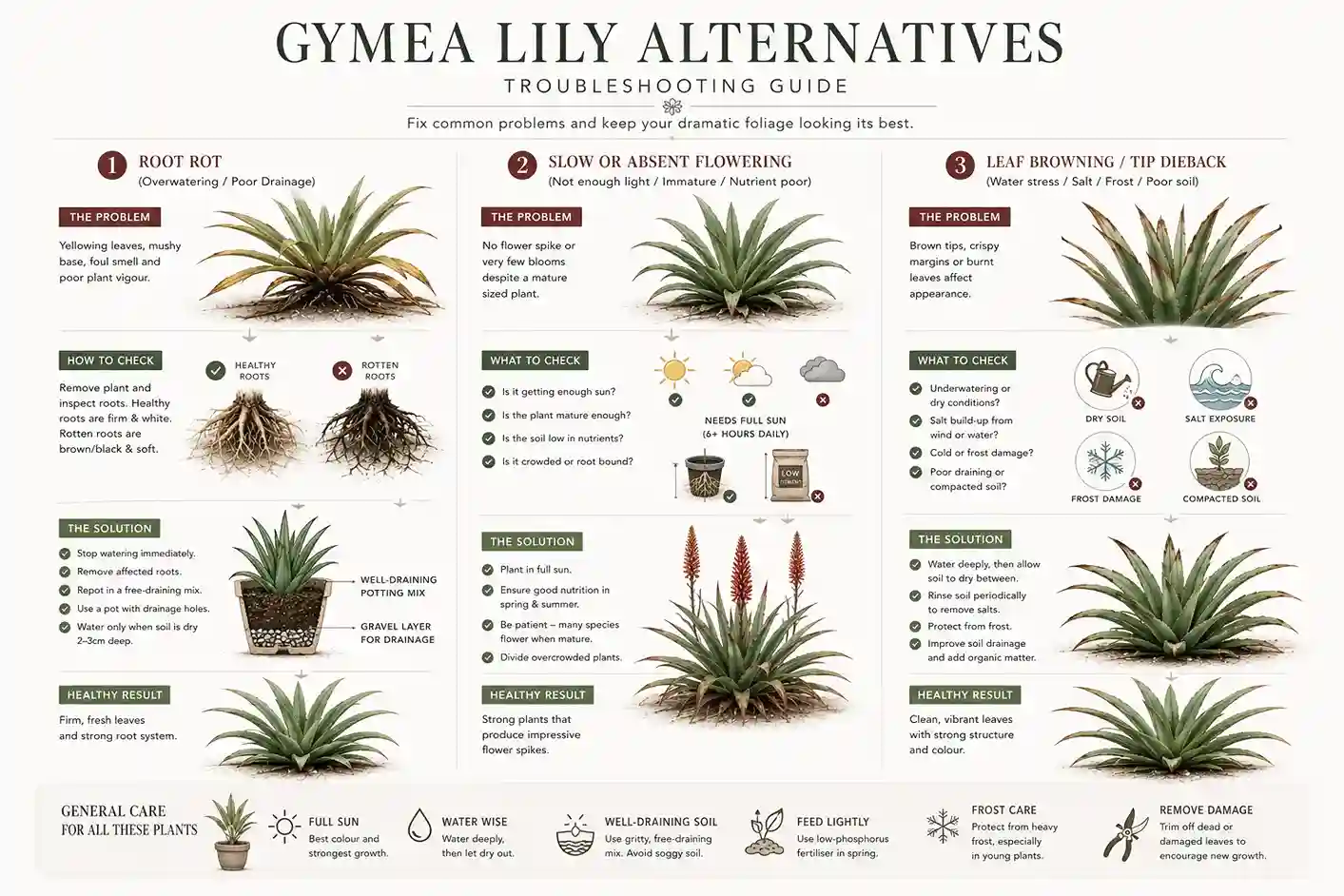
Slow or Absent Flowering — Why Your Plant Won’t Bloom
Many gymea-type plants flower only after reaching maturity. Doryanthes species and agaves may require many years before producing blooms.
Common causes of delayed flowering include:
- Immature plants
- Excess fertilizer
- Insufficient sunlight
- Overwatering
- Lack of drought stress
Patience is essential because these are naturally slow growing plants.
Root Rot from Overwatering or Poor Drainage
Gymea lily alternatives require free-draining soil and dislike waterlogged conditions. Root rot is one of the most common causes of decline.
Symptoms include:
- Yellowing leaves
- Soft or mushy plant bases
- Foul-smelling roots
- Sudden collapse of foliage
Improving drainage and reducing irrigation are the most effective solutions.
Leaf Browning and Tip Dieback
Brown leaf tips are common in phormium, cordyline, and Doryanthes species.
Possible causes include:
- Drought stress
- Frost damage
- Wind exposure
- Salt spray
- Natural aging of leaves
Minor browning is usually cosmetic and rarely threatens overall plant health.
Beginner Mistakes When Growing Plants Similar to Gymea Lily
Common mistakes include:
- Planting in heavy clay soil without improving drainage
- Overwatering slow growing plants
- Underestimating mature size
- Expecting rapid flowering
- Providing insufficient sunlight
- Growing frost-sensitive species in cold climates without protection
Most gymea lily alternatives perform best when planted in sunny, free-draining positions with space to mature naturally.
How Plants Similar to Gymea Lily Connect to Broader Gardening Themes
Plants similar to gymea lily connect to several broader gardening categories.
Indoor plant care: Most gymea-type plants become too large for indoor growth, although compact cordylines and smaller phormium cultivars can adapt to bright indoor conditions.
Plant propagation: Gymea lilies and related plants are propagated through seed, offsets, or division. Growing Doryanthes from seed is extremely slow and may take many years before flowering size is reached.
Landscaping plants: All of the plants covered in this article function as structural landscaping plants suited to coastal, native, tropical, and drought-tolerant garden styles.
Plant troubleshooting: Gardeners experiencing flowering or drainage issues should focus on improving sunlight exposure and soil drainage conditions.
Conclusion
The best plants similar to gymea lily range from the closely related Doryanthes palmeri to visually comparable alternatives such as agave, phormium, cordyline, yucca, beschorneria, and large aloe species. These plants share important characteristics including bold architectural foliage, slow or moderate growth habits, and strong performance as outdoor low maintenance plants.
Choosing the right gymea lily alternative depends on climate, garden size, available space, and desired maintenance level. Gardeners seeking compact options may prefer low growing tropical plants such as Strelitzia reginae or Dianella, while those wanting the closest botanical equivalent should consider Doryanthes palmeri.
Like the gymea lily itself, all of these plants reward patience with long-term structural beauty and dramatic landscape impact.
FAQs
What plant is most similar to the gymea lily?
The plant most similar to the gymea lily is Doryanthes palmeri. It belongs to the same genus and shares the same giant spear lily classification, slow growth habit, and low maintenance outdoor performance. Other strong visual alternatives include agave, phormium, cordyline, and yucca.
What is the difference between Doryanthes excelsa and Doryanthes palmeri?
Doryanthes excelsa produces a tall upright flower spike that can reach up to 6 metres, while Doryanthes palmeri develops a shorter drooping flowerhead. They also differ in native range, with excelsa native to New South Wales and palmeri native to southeast Queensland.
How long does it take for gymea lily and similar plants to flower?
Gymea lilies commonly require 7–15 years from seed before flowering. Doryanthes palmeri has a similar timeline, while some agaves may take 10–30 years before blooming. Mature plants often flower after periods of drought stress.
Are plants similar to gymea lily suitable as outdoor low maintenance plants?
Yes. Most gymea lily alternatives are highly drought tolerant and require minimal maintenance once established. Plants such as agave, yucca, Doryanthes palmeri, and large aloes need little watering, limited pruning, and minimal fertilization.
Can I grow gymea lily alternatives in a small garden?
Some full-sized alternatives require substantial space, but compact options are available for smaller gardens. Good smaller-scale choices include compact phormium cultivars, Strelitzia reginae, and Dianella species.
What are the best perennial plants similar to gymea lily for landscaping?
The best perennial alternatives include Doryanthes palmeri, agave, phormium, cordyline, and large aloe species. These plants provide long-term architectural structure without requiring annual replanting.
What flowers are similar to lilies in terms of appearance and drama?
Flowers similar to lilies in dramatic appearance include agapanthus, kniphofia, hemerocallis, clivia, and amaryllis. Among these, kniphofia most closely resembles the gymea flower because of its tall red flowering spikes.