Introduction
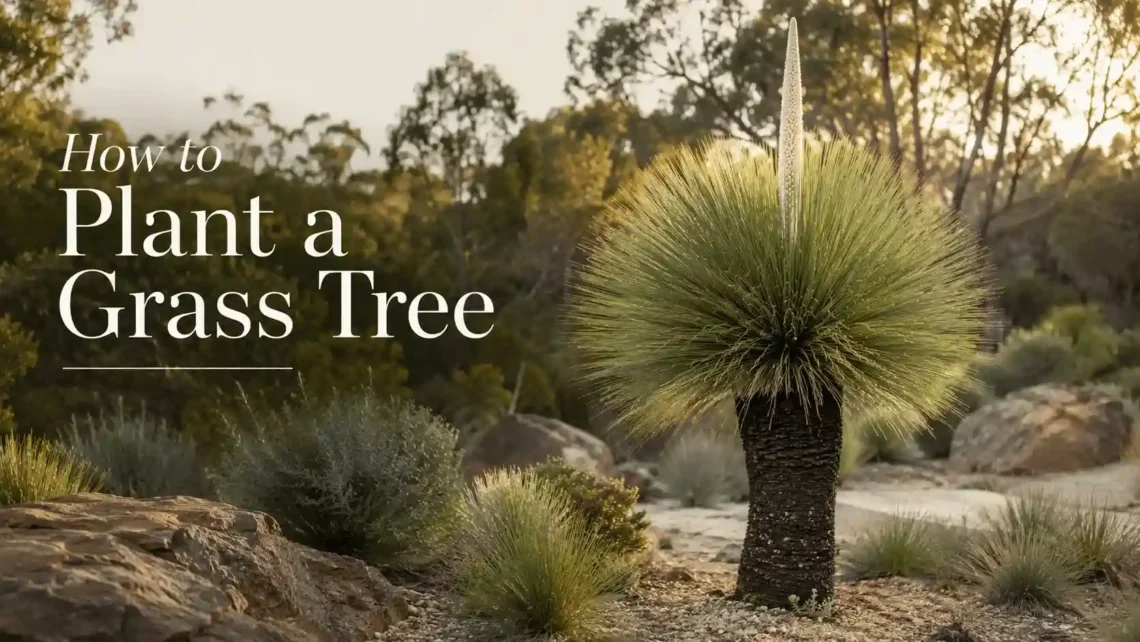
Grass trees (Xanthorrhoea spp.) are among Australia’s most distinctive native plants, valued for their sculptural trunks, grassy foliage, and dramatic flower spikes. Learning how to plant a grass tree correctly is essential because these slow-growing natives are highly sensitive to poor drainage, root disturbance, and excessive fertiliser. Although grass trees are naturally hardy once established, improper planting techniques can cause transplant shock, crown rot, or long-term decline. Native to Australian bushland environments, grass trees thrive in nutrient-poor soils and sunny conditions, making them popular choices for native gardens, rockeries, and low-maintenance landscapes.
Quick Summary
- Grass trees (Xanthorrhoea spp.) are slow-growing Australian natives that require minimal care once established.
- Successful planting depends on excellent drainage, full sun exposure, and minimal root disturbance.
- Grass trees can be grown in the ground or in pots using a low-phosphorus native potting mix.
- Over-fertilising is a major cause of grass tree decline because these plants are adapted to nutrient-poor soils.
- Proper crown positioning and careful watering significantly improve transplant success.
What Is a Grass Tree?
Grass trees are Australian native monocots belonging to the genus Xanthorrhoea. Despite their common name, they are neither true grasses nor trees. These plants are known for their dense clumps of narrow leaves, fibrous trunks, and tall flowering spikes that can rise several metres above the foliage.
Common names include:
- Grass tree
- Black boy plant
- Grasstree
A mature grass tree typically develops:
- A thick, slow-forming trunk
- A skirt of dead fibrous leaves
- Long arching foliage
- A tall grass tree flower spike during flowering periods
Grass trees hold ecological and cultural importance in Australia. Indigenous Australians historically used resin from grass trees as adhesive material, while the flower spikes were used for tools and hunting implements. Ecologically, grass tree flowers support pollinators including bees, birds, and insects. Although grass trees are not true trees, they are frequently grouped with other iconic Australian native trees because of their distinctive trunk structure and long lifespan.
Important related entities include:
- Native grass tree
- Grass tree flower
- Grass tree flower spike
Why Are Grass Trees So Expensive?
Grass trees are expensive primarily because they grow extremely slowly. Many species produce only 1–2 cm of trunk growth annually, meaning a mature specimen with a large trunk may be several decades old.
Several factors contribute to their high price:
- Slow natural growth rate
- Difficult transplanting process
- Strict harvesting regulations
- High transport and establishment costs
- Limited ethical sourcing availability
In many Australian states, collecting grass trees from the wild is heavily regulated or illegal. Ethical suppliers must follow strict licensing requirements when salvaging or relocating mature plants.
Trunk height directly affects price because taller trunks represent older plants. A large specimen may have taken 50 years or more to develop naturally.
Grass tree seedlings are a more affordable option because they are easier to propagate and transport. However, buyers must be prepared for extremely slow long-term growth.
How to Plant a Grass Tree — Step-by-Step Guide
Choosing the Right Location
Grass trees require full sun for healthy growth. Most species need at least six hours of direct sunlight daily to maintain strong foliage and healthy root development.
Avoid planting in:
- Frost-prone areas
- Waterlogged soils
- Deep shade
- Poorly drained clay sites
Grass trees perform best in:
- Australian native gardens
- Rockeries
- Coastal gardens
- Open landscapes with good airflow
Preparing the Soil and Planting Hole
Grass trees prefer sandy, low-nutrient, free-draining soils similar to their natural bushland habitat.
Heavy clay soils should be improved by adding:
- Coarse river sand
- Fine gravel
- Grit-based drainage material
Avoid rich composts or manure because excessive nutrients may damage roots.
The planting hole should match the root ball depth exactly. Never bury the crown below the existing soil line because this significantly increases the risk of crown rot.
Grass trees have delicate root systems that dislike disturbance. Damaging roots during planting often causes transplant shock and poor recovery.
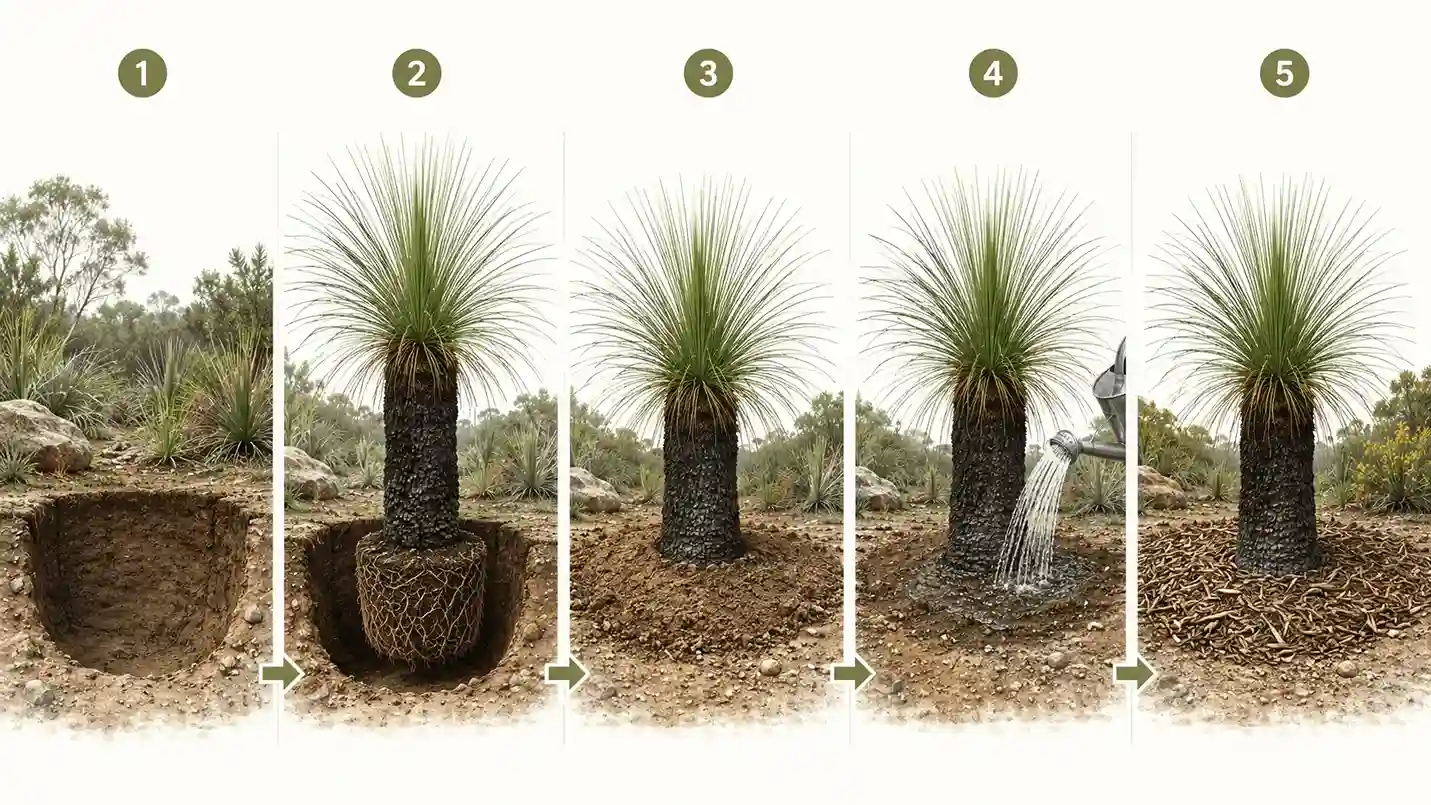
Planting a Grass Tree — The Process
Careful planting improves establishment success and reduces stress.
| Step | Recommended Action |
| 1 | Dig a hole twice as wide as the root ball |
| 2 | Keep the hole the same depth as the original root ball |
| 3 | Position the crown slightly above surrounding soil level |
| 4 | Backfill using existing native soil |
| 5 | Water deeply after planting |
| 6 | Apply light mulch away from the crown |
Key planting steps:
- Dig a hole twice as wide as the root ball, same depth
- Position so the crown sits just above soil level
- Backfill with existing native soil — avoid rich compost
- Water deeply once, then reduce frequency as the plant establishes
- Apply a light native mulch, keeping it clear of the trunk base
Immediately after planting, deep watering helps settle the soil around the roots. Once established, watering frequency should decrease because grass trees prefer dry conditions between waterings.
Mulch should never touch the crown or trunk base because trapped moisture encourages fungal disease and crown rot.
Planting a Grass Tree in a Pot
Grass trees can grow successfully in containers when drainage is carefully managed. Pot-grown grass trees are commonly used in courtyards, patios, and compact native gardens. Wide, shallow pots are generally preferred because they provide better root stability and drainage. Containers must have multiple drainage holes to prevent water accumulation.
The best potting mix for grass trees includes:
- Australian native potting mix
- Low-phosphorus composition
- Coarse, free-draining texture
Avoid standard potting mixes because they:
- Retain excessive moisture
- Often contain high phosphorus levels
- Encourage root rot
Container-grown grass trees should remain in full sun for optimal growth. Watering requirements differ slightly from in-ground plants because pots dry out more quickly. Monitor moisture levels regularly but avoid constant dampness.
Container-grown grass trees benefit from the same drainage principles used for many trees grown successfully in pots and compact garden spaces.
Long-term container care includes:
- Repotting only when necessary
- Minimising root disturbance
- Replacing exhausted potting mix gradually
Ground Planting vs. Pot Planting
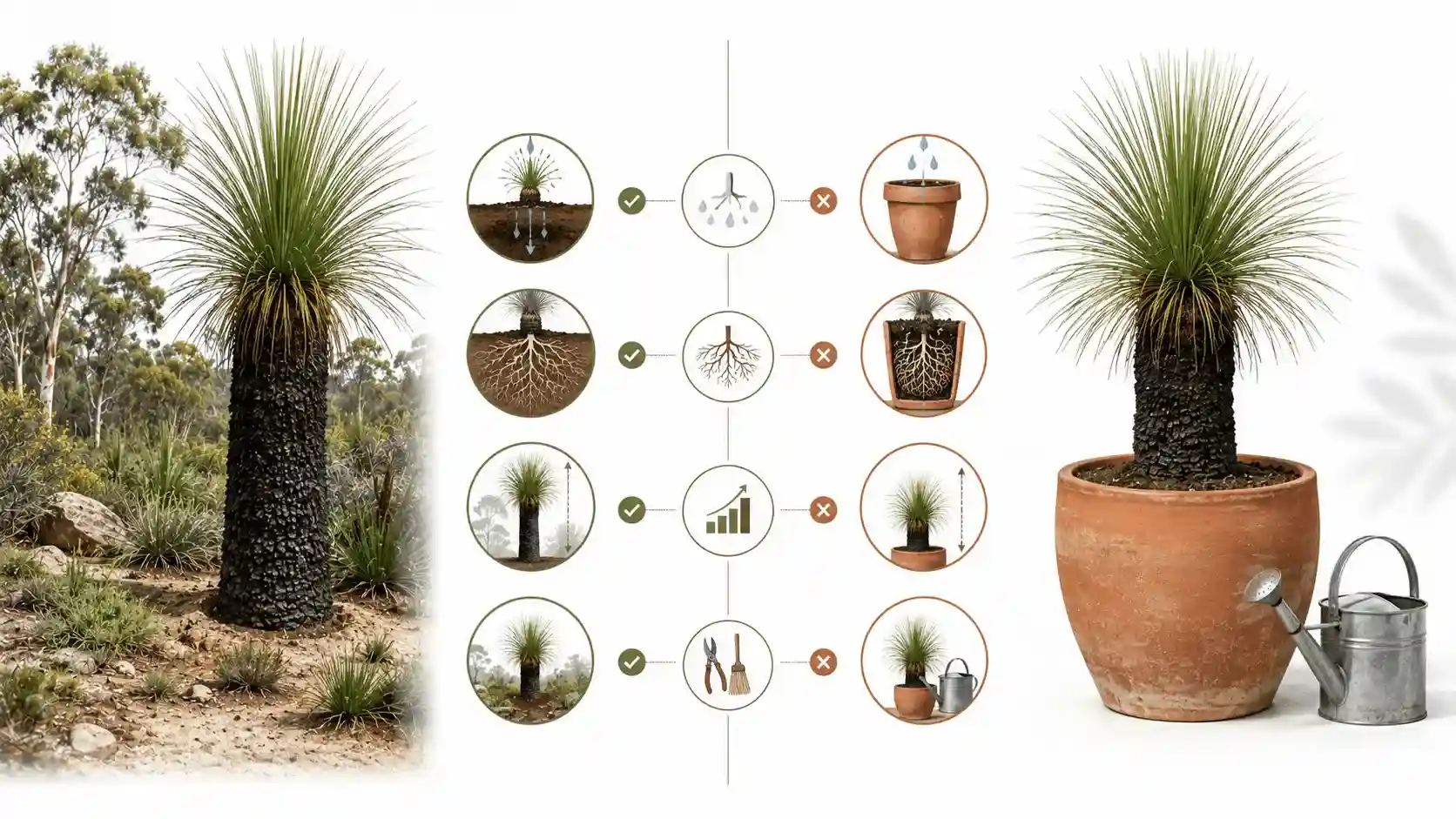
| Feature | In-Ground Planting | In a Pot |
| Growth rate | Slightly faster | Slightly slower |
| Watering needs | Lower once established | More frequent monitoring |
| Best potting mix | Native garden soil | Native/low-phosphorus mix |
| Root restriction | None | Requires appropriate pot size |
| Maintenance level | Low | Moderate |
Transplanting Grass Trees Successfully
Transplanting grass trees is challenging because these plants respond poorly to root disturbance and environmental stress.
The best time for transplanting xanthorrhoea species is during cooler months when evaporation rates are lower. Avoid moving plants during extreme summer heat.
Before transplanting:
- Retain as much root ball as possible
- Trim foliage slightly to reduce moisture loss
- Prepare the new planting site in advance
After transplanting:
- Water deeply but infrequently
- Use temporary shade cloth if heat stress occurs
- Avoid fertiliser immediately after relocation
Signs of transplant stress include:
- Browning leaves
- Crown collapse
- Failure to produce new foliage
However, slow recovery is normal because grass trees establish gradually.
Grass Tree Care Guide
Watering Requirements
Grass trees are drought tolerant once established. Deep, infrequent watering is more beneficial than frequent shallow watering.
Overwatering commonly causes:
- Crown rot
- Root rot
- Fungal infections
Seasonal adjustments are important:
- Reduce watering during winter
- Increase slightly during establishment periods
- Allow soil to dry between waterings
Fertilising a Grass Tree
Grass tree fertiliser should always be low in phosphorus and designed specifically for Australian native plants.
Standard fertilisers can damage or kill grass trees because many species are highly sensitive to phosphorus toxicity.
Fertilising guidelines:
- Apply once or twice yearly maximum
- Use only native-specific products
- Avoid concentrated liquid feeds
Signs of over-fertilisation include:
- Leaf yellowing
- Burnt leaf tips
- Sudden decline
- Root damage
Pruning and Maintenance
Grass trees require very little pruning.
Grass tree flower spike removal is optional. Spent flower spikes may be removed for appearance, but leaving them intact does not usually harm the plant.
The fibrous skirt of dead leaves serves several functions:
- Insulation
- Moisture retention
- Fire protection
Some gardeners remove dead leaves for aesthetics, while others retain the natural appearance.
General grass tree maintenance includes:
- Checking drainage regularly
- Removing excess mulch near the crown
- Monitoring for disease symptoms
Burning a Grass Tree
Fire plays an ecological role in stimulating grass tree flowering in natural Australian ecosystems.
Controlled burning may encourage flowering response in some mature specimens, but this should only be attempted where legal and safe.
Important considerations include:
- Local fire regulations
- Bushfire risk conditions
- Plant health status
In many residential settings, controlled burning is inappropriate or prohibited.
Alternative flowering triggers include:
- Seasonal stress
- Temperature changes
- Natural environmental cycles
Grass Tree Growth Rate and Size
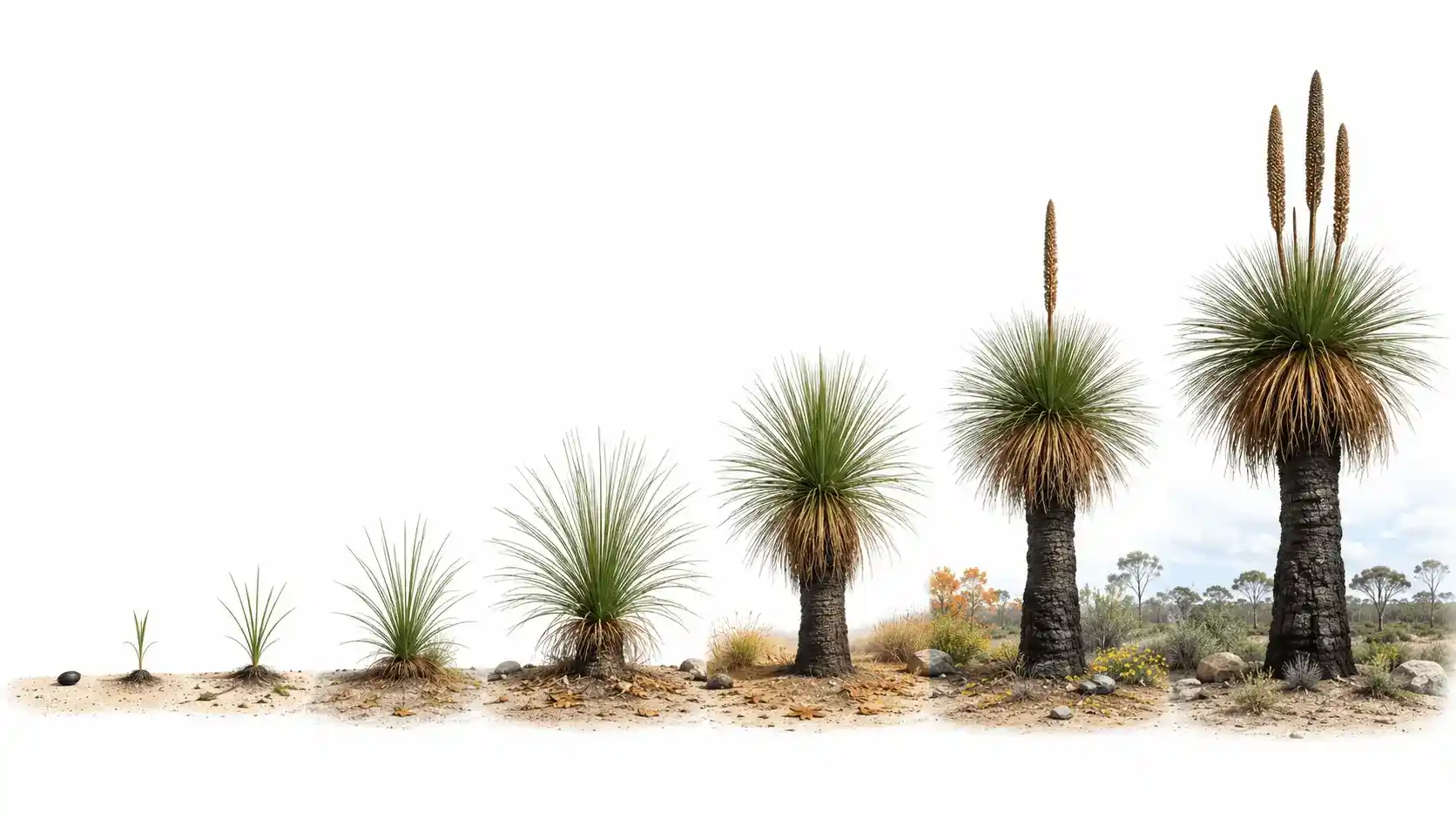
Grass trees grow very slowly. Most species produce only 1–2 cm of trunk growth annually under ideal conditions.
A noticeable trunk may take decades to develop, making mature specimens extremely valuable.
Growth factors include:
- Sun exposure
- Soil drainage
- Species type
- Rainfall levels
- Nutrient availability
Growth Conditions and Effects
| Condition | Effect on Growth Rate |
| Full sun | Optimal — fastest growth |
| Partial shade | Reduced growth |
| Well-draining soil | Healthy root development |
| Overwatering | Stunted or halted growth |
| Over-fertilising | Potential plant stress or death |
Common species may eventually reach:
- 1–5 metres tall
- 1–3 metres wide depending on species
Outdoor plants significantly outperform indoor specimens because grass trees require strong sunlight and natural airflow.
How to Grow Grass Trees from Seed
Growing grass trees from seed is possible but requires patience because seedlings develop extremely slowly.
Seeds should be sourced ethically from licensed suppliers or sustainable native plant nurseries.
Preparation methods may include:
- Scarification
- Soaking in warm water
- Surface cleaning before sowing
Ideal germination conditions include:
- Warm temperatures
- Bright indirect light
- Consistent but light moisture
- Excellent drainage
Germination may take several weeks or months depending on species.
Young seedlings require careful watering because excessive moisture can quickly cause fungal problems.
Seed-grown grass trees are significantly slower to mature than nursery-grown specimens, often taking many years before noticeable trunk formation occurs.
Grass Tree Problems — Diagnosis and Solutions
Common Grass Tree Diseases
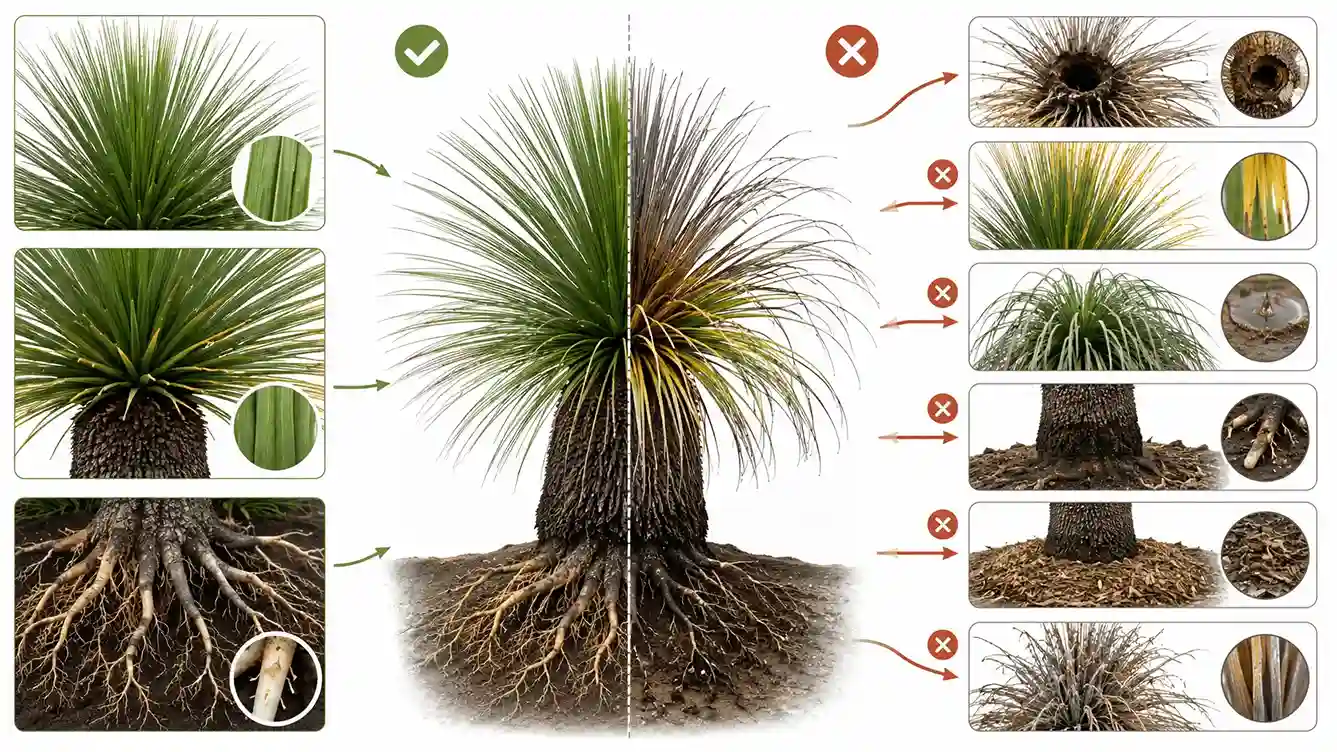
Grass tree crown rot is one of the most common problems affecting cultivated specimens. It usually develops because of excessive moisture around the crown.
Common causes include:
- Poor drainage
- Overwatering
- Mulch touching the trunk
- Heavy soil conditions
Symptoms include:
- Soft crown tissue
- Yellowing foliage
- Foul smell near the base
- Crown collapse
Other grass tree diseases include fungal infections and Phytophthora root rot.
Preventive measures include:
- Excellent drainage
- Correct planting depth
- Minimal crown moisture
- Careful watering practices
How to Tell If a Grass Tree Is Dying
A dying grass tree often shows visible crown decline and foliage damage.
Warning signs include:
- Yellowing or browning leaf tips
- Soft or mushy trunk base
- Crown collapse
- Rapid leaf loss
Normal ageing may cause some lower leaves to die naturally, but widespread crown decline usually indicates serious stress.
How to save a dying grass tree:
- Improve drainage immediately
- Remove excess mulch from the crown
- Stop fertilising temporarily
- Reduce watering frequency
- Inspect for fungal infection
Recovery is possible if the crown remains firm and healthy. Severe crown collapse often indicates irreversible damage.
What Kills Grass Trees?
Overwatering, phosphorus toxicity, and crown rot are the leading causes of grass tree death.
Primary threats include:
- Overwatering or poorly draining soil
- High-phosphorus fertiliser application
- Crown rot from mulch contact or buried trunk
- Root disturbance during transplanting
- Frost damage in cold climates
Additional human errors include:
- Planting too deeply
- Using unsuitable potting mixes
- Excessive irrigation
Persistent crown rot, transplant shock, and drainage-related decline are among the most common grass tree problems affecting cultivated specimens.
Grass Tree Flowers and Flowering
Grass tree flower spikes are tall, dramatic flowering stems that emerge from the centre of mature plants.
These spikes can:
- Reach several metres tall
- Attract pollinators
- Produce thousands of tiny flowers
Grass trees flower irregularly and are often stimulated by:
- Fire
- Environmental stress
- Seasonal climate patterns
Flower spikes may remain attractive for several months before drying naturally.
Pollinators commonly attracted include:
- Native bees
- Birds
- Beetles
- Insects
Removing spent flower spikes generally does not harm the plant.
Grass Trees in the Australian Landscape
Grass trees are widely used in Australian native gardens, bushland restoration projects, and low-maintenance landscaping designs.
Their architectural form pairs well with other Australian natives including:
- Banksia
- Grevillea
- Lomandra
- Kangaroo paw
Benefits in landscaping include:
- Drought tolerance
- Minimal pruning needs
- Strong visual structure
- Wildlife support
Grass trees also contribute to conservation awareness because ethical sourcing helps protect native wild populations. In natural habitats, grass trees occur across diverse Australian regions including coastal heathlands, forests, and dry bushland environments.
Grass trees are often used as architectural focal points in native landscapes, especially in modern Australian native garden designs that prioritise drought tolerance and low-maintenance planting.
Grass Tree Varieties — Choosing the Right Species
Several grass tree species are commonly cultivated in Australian gardens.
Common Species Comparison
| Species | Key Features | Climate Preference |
| Xanthorrhoea australis | Thick trunk, cold tolerant | Cooler regions |
| Xanthorrhoea preissii | Tall flower spikes | Mediterranean climates |
| Xanthorrhoea johnsonii | Faster-growing species | Warm subtropical areas |
Key differences between species include:
- Mature height
- Trunk formation speed
- Flowering behaviour
- Climate tolerance
Choosing the right species depends on:
- Local climate zone
- Garden size
- Drainage conditions
- Desired landscape appearance
Seedlings are cheaper and easier to establish, while mature specimens provide immediate visual impact but cost significantly more.
Beginner Mistakes When Planting Grass Trees
Planting too deeply is the most common mistake when learning how to plant a grass tree.
Other common errors include:
- Using nutrient-rich soil
- Applying standard fertilisers
- Overwatering newly planted specimens
- Ignoring drainage problems
Beginner mistakes that damage grass trees:
- Never bury the crown below the soil line
- Avoid standard garden fertilisers — use native-specific, low-phosphorus products
- Do not overwater — grass trees prefer dry conditions between waterings
- Choose a location with full sun and excellent drainage before planting
- Keep mulch at least 10 cm away from the trunk base
Understanding these issues greatly improves long-term survival and healthy establishment. Unlike plants that tolerate wet conditions, grass trees require exceptionally well-draining soil and can decline rapidly in waterlogged environments.
Conclusion
Learning how to plant a grass tree successfully involves respecting the plant’s natural growing conditions. Grass trees thrive in full sun, low-nutrient soil, and excellent drainage with minimal root disturbance. Correct planting depth, careful watering, and avoiding phosphorus-rich fertilisers are essential for long-term health. Although grass trees grow slowly, they reward patient gardeners with striking architectural form, drought tolerance, and unique Australian character. With proper planting and low-intervention care, grass trees can become long-lasting feature plants in native gardens and landscapes. Grass trees are a valuable addition to broader home and garden planting strategies because they combine drought tolerance, sculptural beauty, and low long-term maintenance.
FAQs
How do I plant a grass tree correctly?
Plant a grass tree in full sun using sandy, well-draining soil. Dig a hole the same depth as the root ball and position the crown slightly above soil level. Avoid disturbing the roots and water deeply after planting. Keep mulch away from the crown to prevent rot.
What is the best potting mix for grass trees in pots?
The best potting mix for grass trees is a low-phosphorus Australian native mix with coarse, free-draining texture. Avoid standard potting mixes because they often retain too much moisture and contain excessive nutrients.
How fast do grass trees grow?
Most grass trees grow extremely slowly, producing only 1–2 cm of trunk growth annually. Significant trunk formation may take decades depending on species, sunlight exposure, soil quality, and rainfall conditions.
Why is my grass tree dying and how can I save it?
Grass trees commonly decline because of overwatering, crown rot, poor drainage, or phosphorus toxicity. Improve drainage, reduce watering, remove mulch from the crown area, and avoid fertiliser while the plant recovers.
Can you grow grass trees from seed?
Yes, grass trees can be grown from seed, although the process is slow. Seeds require warm temperatures, free-draining soil, and careful moisture management. Germination may take weeks or months depending on species.
How often do grass trees flower?
Grass trees flower irregularly, often in response to environmental stress, seasonal conditions, or fire. Mature plants produce tall flower spikes that may last several months before drying naturally.
Are grass trees suitable for growing in pots?
Yes, grass trees can grow in pots when provided with excellent drainage, full sun, and a low-phosphorus native potting mix. Pot-grown specimens usually require more frequent watering monitoring than in-ground plants.