Introduction
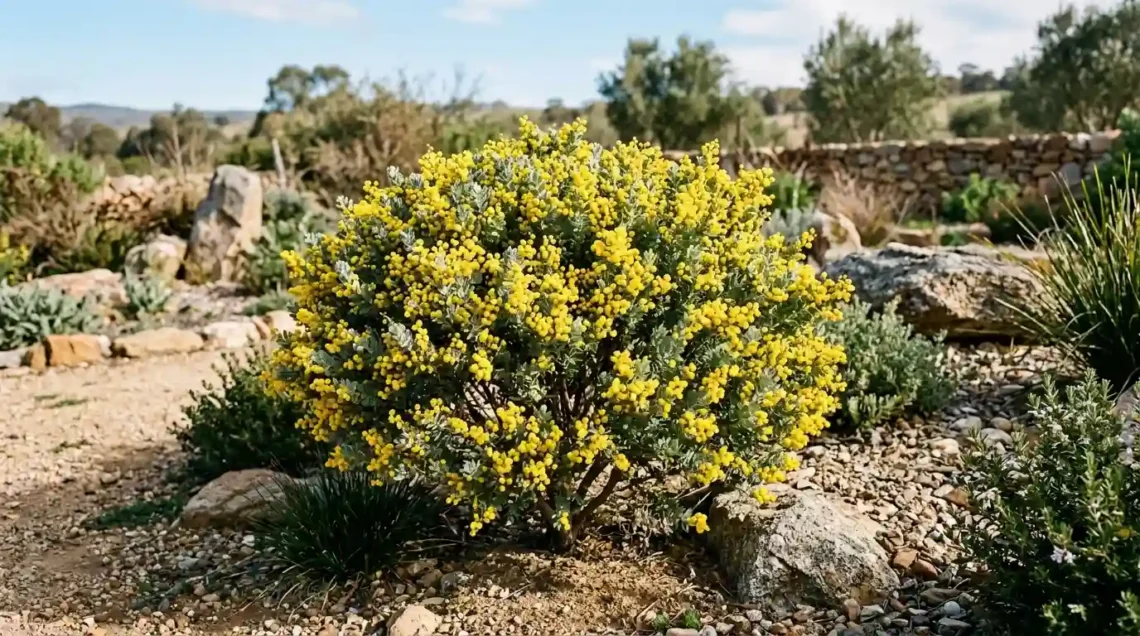
Acacia Little Nugget is a compact ornamental cultivar of Acacia pravissima, commonly known as Ovens Wattle, valued for its dense mounding habit and bright golden-yellow flowers. This dwarf shrub is widely used in landscaping because it offers strong seasonal color in a small, manageable form. Acacia Little Nugget is especially popular in modern low-maintenance gardens where space efficiency and drought tolerance are important.
In practical horticultural settings, this plant is appreciated for its reliability and adaptability. It thrives in full sun and well-drained soils and performs well in temperate and Mediterranean-style climates. Once established, it requires minimal care, making it a strong choice for sustainable garden designs. Acacia Little Nugget is part of broader Australian native landscaping plants, making it a strong addition to designs inspired by the Australian Native Garden Trees concept.
Quick Summary
- Acacia Little Nugget is a dwarf form of Acacia pravissima (Ovens Wattle) with golden-yellow flowers.
- It grows to about 1–1.5 metres in both height and width, making it ideal for small spaces.
- It thrives in full sun and well-drained soil and is highly drought-tolerant once established.
- Light pruning after flowering maintains compact growth and encourages dense flowering.
What Is Acacia Little Nugget?
Acacia Little Nugget is a dwarf ornamental cultivar of Acacia pravissima, belonging to the group of Australian native dwarf acacia shrubs. It is grown primarily for its compact size, decorative foliage, and abundant seasonal flowering.
Acacia species belong to a large genus of shrubs and trees in the legume family, widely studied in botanical classification systems such as those described in Acacia (Wikipedia).
The plant originates from selective breeding of the species Acacia pravissima (Ovens Wattle), which is native to southeastern Australia. The “Little Nugget” form was developed to provide a smaller, denser version suitable for residential gardens, borders, and container planting.
Unlike the standard species, which grows taller and more open, this cultivar maintains a naturally rounded and compact mound, making it easier to manage in landscape design.
Botanical Background — Acacia pravissima
Acacia pravissima (commonly known as Ovens Wattle) is native to New South Wales and Victoria in Australia. It typically grows in rocky, mountainous regions where soil drainage is high and nutrient levels are low.
Key botanical features include:
- Triangular blue-green phyllodes instead of true leaves
- Dense clusters of bright yellow ball-shaped flowers
- Strong seasonal flowering in late winter to early spring
- High drought tolerance once established
Acacia Little Nugget inherits these traits but expresses them in a smaller, more controlled growth habit suitable for ornamental use.
How Little Nugget Differs from the Standard Acacia pravissima
| Feature | Acacia pravissima (Standard) | Acacia Little Nugget (Dwarf) |
| Mature Height | 3–5 metres | 1–1.5 metres |
| Habit | Arching, open shrub or small tree | Dense, rounded mound |
| Best Use | Screening and windbreaks | Small gardens, borders, containers |
| Pruning Needs | Moderate | Light pruning after flowering |
The main difference is size and density. Acacia Little Nugget is specifically selected for compact growth, making it more suitable for limited garden spaces.
Acacia Little Nugget Size and Growth Habit
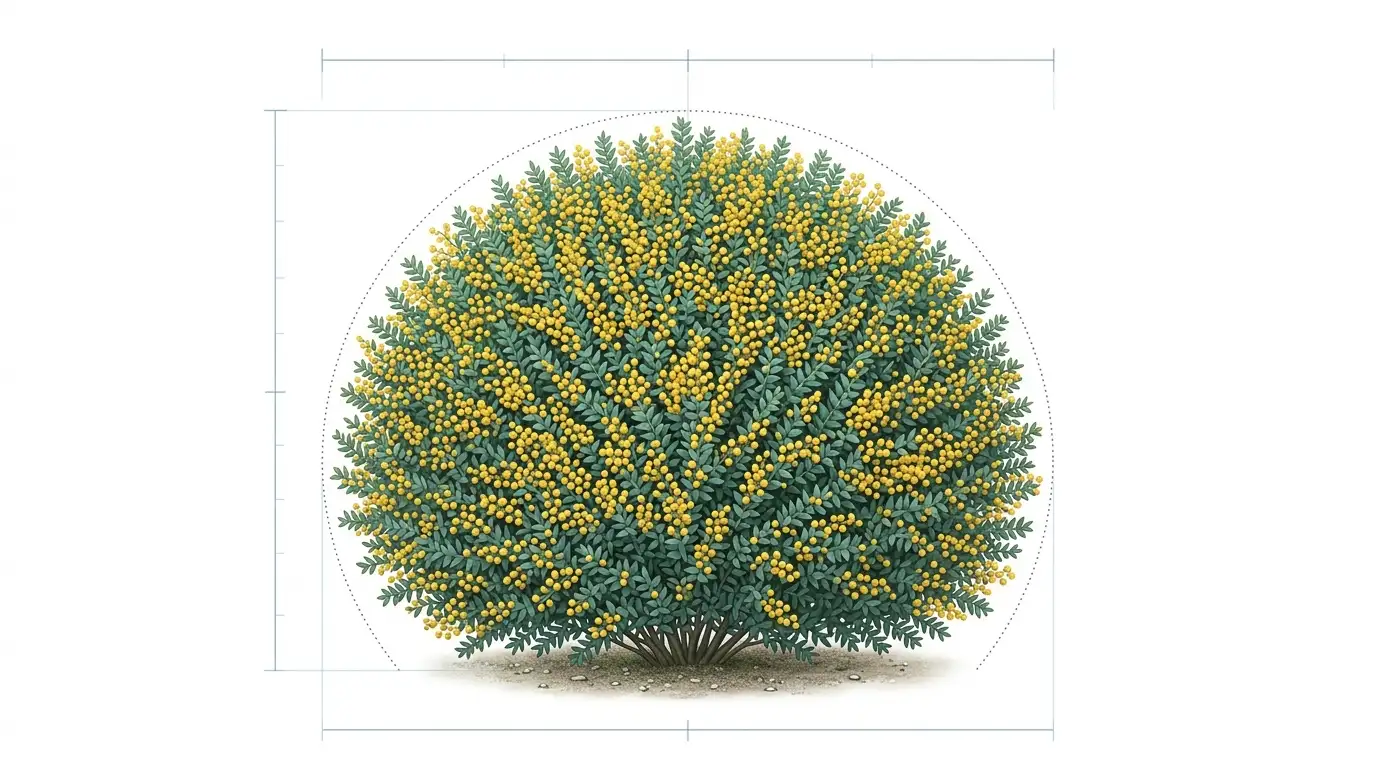
Acacia Little Nugget height and size remain relatively small compared to standard wattles, making it ideal for compact landscaping.
Key size characteristics include:
- Mature height: approximately 1–1.5 metres
- Spread: approximately 1–1.5 metres
- Growth habit: dense, rounded mound with arching branches
- Foliage: small triangular blue-grey phyllodes
- Flowers: cascading clusters of bright yellow ball-shaped blooms
In our experience at Greenery Inside, the plant maintains its natural mound shape without becoming leggy when grown in full sun conditions.
Factors That Influence Plant Size
Several environmental factors influence the final size of Acacia Little Nugget:
- Sunlight exposure: Full sun promotes compact, dense growth
- Soil quality: Poor drainage or heavy clay can restrict healthy development
- Water availability: Overwatering can cause weak, elongated growth
- Climate conditions: Mild climates encourage faster and fuller growth
- Pruning frequency: Regular light pruning keeps the plant compact
- Container growth: Pot cultivation naturally limits overall size
Acacia Little Nugget Growth Rate
Acacia Little Nugget is generally considered a moderate to fast grower under optimal conditions. It establishes relatively quickly, especially when planted in warm, sunny environments with well-drained soil.
Growth behavior patterns:
- Strongest growth occurs in late winter through spring
- Slower growth during hot, dry summer periods
- Reduced growth in frost-prone or very cold regions
- Faster establishment in Mediterranean and temperate climates
Once established, it becomes more stable and requires less frequent intervention.
Acacia Little Nugget Care Guide
Sunlight Requirements
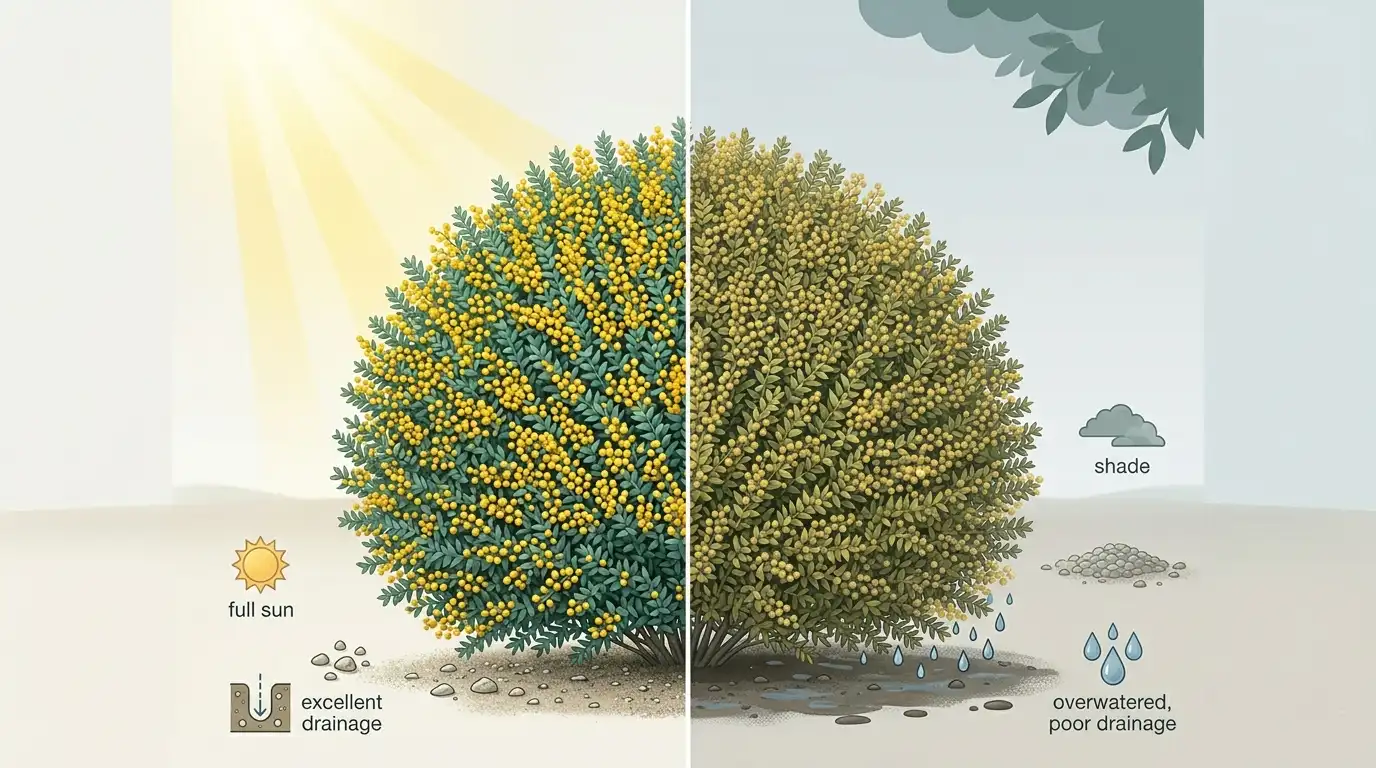
Acacia Little Nugget performs best in full sun conditions.
- Requires at least 6 hours of direct sunlight daily
- Full sun encourages dense foliage and heavy flowering
- Partial shade is tolerated but reduces flower production
- In cooler climates, full sun is essential for best performance
Watering Needs
This plant is highly drought-tolerant once established.
- Water regularly during the first 1–2 growing seasons
- Reduce watering once root system is established
- Avoid waterlogged soils at all costs
- Overwatering is a common cause of decline in young plants
In our experience, deep but infrequent watering produces the healthiest root structure.
Soil Preferences

Acacia Little Nugget requires well-drained soil.
- Thrives in sandy, rocky, or low-nutrient soils
- Prefers slightly acidic to neutral pH
- Does not tolerate heavy clay unless improved with drainage materials
- Excellent performance in poor soils where many plants struggle
Fertilization Practices
This plant has low nutrient requirements.
- Use minimal fertilization
- Apply low-phosphorus native plant fertilizer in early spring if needed
- Avoid high-phosphorus fertilizers, which can damage native roots
- Over-fertilizing leads to weak, excessive growth
Climate and Frost Tolerance
Acacia Little Nugget is moderately frost-tolerant once established.
- Suitable for temperate and Mediterranean climates
- Tolerates light frost but not prolonged freezing conditions
- Performs best in USDA zones 8–11
- May struggle in highly humid tropical climates or severe cold regions
Acacia Little Nugget Pruning
When to Prune Acacia Little Nugget
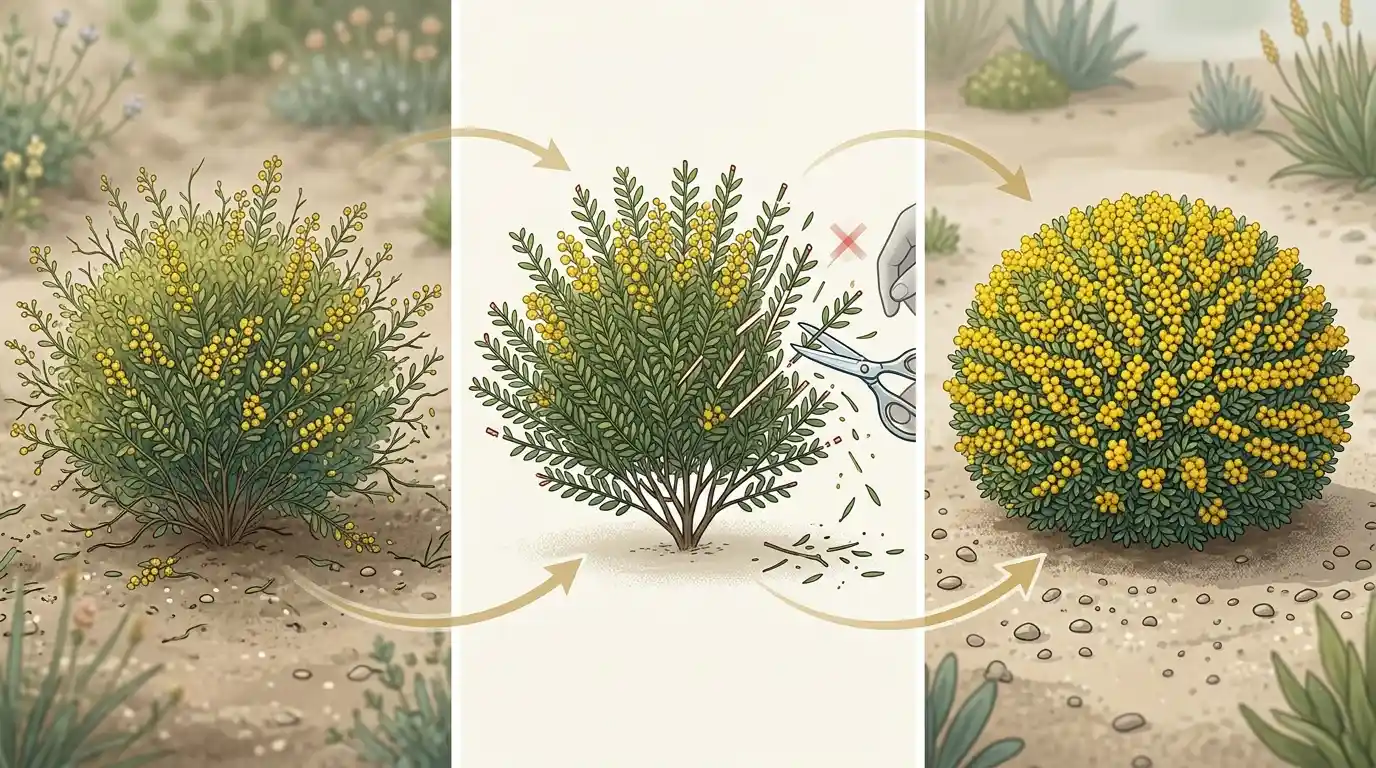
Pruning should be done immediately after flowering, typically in late winter to early spring.
- Prevents removal of next season’s flower buds
- Encourages fresh, dense growth
- Avoid pruning during frost or extreme heat
How to Prune for Shape and Density
Step-by-step pruning approach:
- Remove spent flower stems first
- Lightly trim outer growth to maintain rounded shape
- Avoid cutting more than one-third of total growth
- Always use clean, sharp pruning tools
- Focus on maintaining natural mound form
Pruning Mistakes to Avoid
Common mistakes include:
- Pruning at the wrong season, reducing flowering potential
- Cutting into old woody stems that do not regenerate
- Over-pruning, which weakens plant structure
- Ignoring shape and allowing uneven growth
Acacia Little Nugget vs. Related Acacia Varieties
Acacia Little Nugget vs. Acacia fimbriata (Brisbane Wattle)
- Acacia fimbriata is taller and more upright
- Little Nugget is compact and mound-forming
- Fimbriata produces finer foliage and larger screening potential
- Little Nugget is better suited for small decorative spaces
Acacia fimbriata ‘Dwarf’ vs. Acacia Little Nugget
- Dwarf A. fimbriata grows slightly taller (1.5–2 m)
- Little Nugget remains more compact and rounded
- Flowering patterns are similar but growth habit differs
- Each is suited for different landscape functions
Acacia fimbriata ‘Crimson Blush’
This cultivar is known for its reddish or pinkish new growth.
- Belongs to Acacia fimbriata species
- More ornamental foliage variation than Little Nugget
- Less compact than Acacia Little Nugget
Acacia pravissima ‘Dwarf’ — Is It the Same as Little Nugget?
In some nurseries, “Acacia pravissima dwarf” may refer to similar compact selections.
- Not always genetically identical to Little Nugget
- Naming can vary across growers
- Little Nugget is a specific selected cultivar
- Always check plant labeling for accuracy
Comparison Table — Dwarf Acacia Varieties
| Variety | Species | Height | Flower Colour | Best For |
| Little Nugget | A. pravissima | 1–1.5 m | Bright yellow | Small gardens, pots |
| Acacia pravissima Dwarf | A. pravissima | 1.5–2 m | Yellow | Borders, hedging |
| Acacia fimbriata Dwarf | A. fimbriata | 1.5–2 m | Yellow | Screening, hedges |
| Acacia fimbriata ‘Crimson Blush’ | A. fimbriata | 2–3 m | Yellow | Feature planting |
Garden Uses for Acacia Little Nugget
Acacia Little Nugget is highly versatile in garden design. For similar ornamental flowering shrubs used in decorative landscaping, plants like Chorizema cordatum also perform well in compact garden designs.
Common uses include:
- Small garden borders
- Rock gardens and dry landscapes
- Native plant gardens
- Mass planting for visual impact
- Container gardening
- Wildlife-friendly landscapes
Its compact size and bright flowers make it a strong ornamental feature plant. Plants like Grevillea Elegance pair well with Acacia Little Nugget in pollinator-friendly native gardens.
Growing Acacia Little Nugget in Containers
- Use a medium to large pot with excellent drainage
- Choose a sandy, free-draining potting mix
- Water more frequently than in-ground plants
- Feed lightly with native plant fertilizer
- Ensure full sun exposure for best flowering
Acacia Little Nugget in Native and Wildlife Gardens
Acacia Little Nugget supports biodiversity:
- Attracts bees, butterflies, and nectar-feeding birds
- Fits well into Australian native planting schemes
- Supports low-water, sustainable landscaping designs
In dry, low-maintenance landscapes, ground-cover natives such as Eremophila ground cover varieties complement compact shrubs like Acacia Little Nugget.
Common Problems with Acacia Little Nugget
Yellowing Leaves — Causes and Solutions
Causes include:
- Overwatering or poor drainage
- Nutrient imbalance
- Transplant shock
Solution: Improve drainage, reduce watering, and avoid fertiliser overuse.
Poor Flowering or No Flowers
Reasons include:
- Insufficient sunlight
- Improper pruning timing
- Young plant not fully matured
Solution: Ensure full sun exposure and correct pruning schedule.
Pest and Disease Issues
Generally resistant but may face:
- Scale insects
- Psyllids
- Occasional borers
Healthy plants rarely suffer severe damage. Organic oil sprays can help control infestations.
Overwatering and Root Rot
Symptoms:
- Yellowing leaves
- Drooping branches
- Soft or decaying base
Prevention:
- Ensure free-draining soil
- Avoid frequent shallow watering
Beginner Mistakes When Growing Acacia Little Nugget
Common errors include:
- Planting in heavy clay soil without drainage improvement
- Overwatering during establishment
- Using high-phosphorus fertilizers
- Pruning at the wrong time
- Growing in deep shade
- Using undersized pots for container growth
Avoiding these mistakes ensures long-term plant health.
Conclusion
Acacia Little Nugget is a compact, drought-tolerant ornamental shrub valued for its dense mound shape and bright golden flowers. As a dwarf cultivar of Acacia pravissima (Ovens Wattle), it delivers strong visual impact in a small, manageable form. Its low maintenance requirements, sun-loving nature, and adaptability make it ideal for modern gardens.
For gardeners seeking a resilient and decorative native plant, Acacia Little Nugget stands out as an excellent choice for small gardens, containers, and sustainable landscapes.
Frequently Asked Questions About Acacia Little Nugget
1. How tall does Acacia Little Nugget grow?
It typically grows 1–1.5 metres tall and wide, depending on soil, sunlight, and pruning practices.
2. Is Acacia Little Nugget the same as Acacia pravissima?
It is a dwarf cultivar of Acacia pravissima, commonly known as Ovens Wattle.
3. When does Acacia Little Nugget flower?
It flowers in late winter to early spring, producing bright yellow ball-shaped blooms.
4. How do I prune Acacia Little Nugget without damaging it?
Prune lightly after flowering, avoid cutting old wood, and remove no more than one-third of growth.
5. Is Acacia Little Nugget drought-tolerant?
Yes, once established it is highly drought-tolerant, though it needs regular watering during early establishment.
6. Can Acacia Little Nugget be grown in a pot?
Yes, it grows well in containers with good drainage, full sun, and free-draining soil mix.
7. What is the difference between Acacia Little Nugget and Acacia fimbriata Dwarf?
They are different species with different growth habits; Little Nugget is more compact and mound-forming.