Introduction
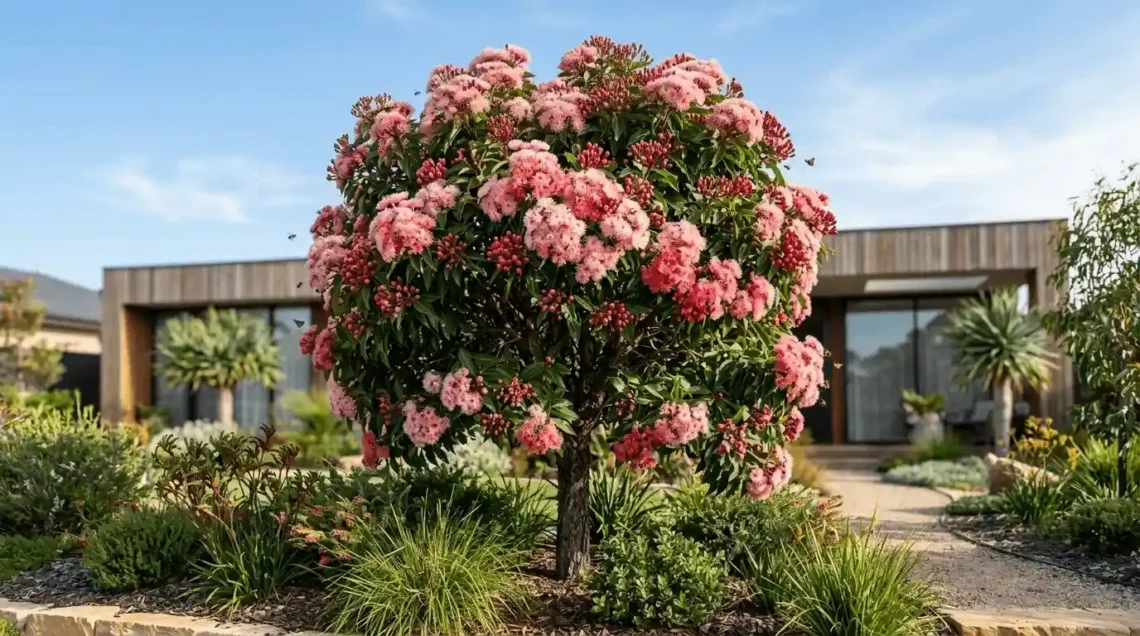
Corymbia ficifolia pink refers to a group of flowering gum trees valued for their vibrant pink blossoms, ornamental beauty, and adaptability in garden landscapes. These trees belong to the species Corymbia ficifolia, commonly known as flowering gum, which is native to Western Australia. Pink-flowering selections are especially popular because they provide striking seasonal color, attract pollinators, and serve as eye-catching feature trees. In recent years, compact cultivars and grafted gum trees have become increasingly popular among homeowners because they offer improved flowering performance, manageable growth habits, and greater reliability in a wide range of residential landscapes. Pink flowering gum trees are widely used in Australian native landscape design, especially in structured planting systems and urban gardens.
By Greenery Inside | Plant Care & Gardening Expert
Quick Summary
- Corymbia ficifolia pink varieties are ornamental flowering gums known for spectacular pink summer blooms.
- Many modern selections are available as grafted trees, improving reliability and flowering performance.
- Pink flowering gums attract pollinators and provide strong landscape value throughout the year.
- Proper site selection, drainage, and climate suitability are essential for long-term success.
What Is Corymbia Ficifolia Pink?
Botanical Background and Classification
Corymbia ficifolia is a flowering tree belonging to the Myrtaceae family. It was originally classified within the Eucalyptus genus but was later reassigned to the Corymbia genus following botanical research that identified important genetic and structural differences.
The species is native to the coastal regions of southwestern Western Australia, where it grows in well-drained soils and experiences a Mediterranean climate. Its natural adaptation to dry summers and mild winters contributes to its popularity in ornamental horticulture.
The transition from Eucalyptus ficifolia to Corymbia ficifolia remains important for gardeners because many nursery labels and plant references still use both names interchangeably.
Characteristics of Pink Flowering Gum Trees
Pink flowering gum trees are known for their dense clusters of blossoms that range from soft pastel pink to deep rose shades. Flower color intensity varies among cultivars and environmental conditions.
Key characteristics include:
- Evergreen foliage
- Rounded to spreading canopy shape
- Decorative flower clusters
- Attractive woody seed capsules
- Seasonal ornamental interest
The foliage is typically dark green and provides year-round structure even when trees are not flowering. Like other flowering gums, pink selections offer a dramatic summer display that makes them highly desirable landscape specimens.
How Corymbia Ficifolia Pink Differs From Other Flowering Gum Trees
Pink vs Red Flowering Varieties
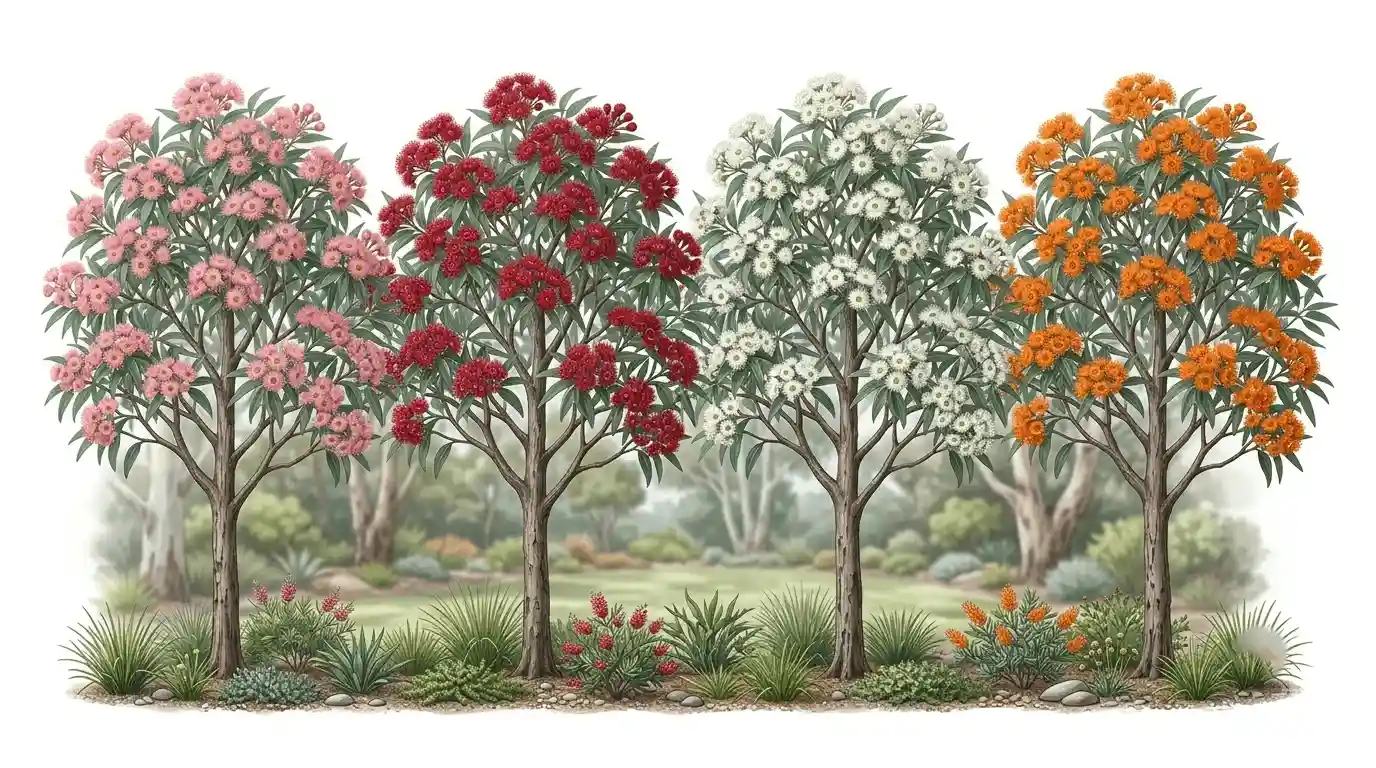
Pink flowering gums and red flowering gums belong to the same species but differ primarily in blossom coloration.
Pink varieties create a softer and more romantic landscape appearance, making them popular in residential gardens. Red flowering forms produce bold, dramatic displays that often stand out from greater distances.
Growth habits are generally similar, although individual cultivars may differ in canopy density and mature size. Pink flowers can create an attractive contrast when planted near trees with red gum leaves or darker foliage plants.
Pink Forms vs White and Orange Flowering Cultivars
Pink flowering cultivars provide a balanced ornamental effect that blends well with many garden styles. White-flowering selections often create a cleaner, formal appearance, while orange cultivars introduce warmer tones into the landscape.
Pollinator attraction is typically strong across all flower colors because flowering gums produce abundant nectar.
| Variety Type | Flower Color | Mature Size | Best Landscape Use | Flowering Season |
| Pink Forms | Soft pink to rose | Small to medium | Feature planting | Summer |
| Red Forms | Scarlet to crimson | Medium | Statement trees | Summer |
| White Forms | White to cream | Small to medium | Formal gardens | Summer |
| Orange Forms | Orange to apricot | Medium | Warm-color landscapes | Summer |
Popular Corymbia Ficifolia Pink Varieties
Corymbia Ficifolia Fairy Floss
Corymbia ficifolia Fairy Floss is one of the most widely grown pink flowering gum cultivars. It produces masses of soft pink blossoms and develops a compact growth habit that suits modern residential landscapes.
Its manageable size makes it ideal for:
- Small gardens
- Courtyard landscapes
- Urban planting schemes
- Feature tree applications
The reliable flowering performance of Fairy Floss contributes significantly to its popularity.
Corymbia Ficifolia Pink Varieties for Modern Gardens
Modern breeding programs have introduced numerous pink-flowering selections designed for improved performance.
These cultivars often feature:
- Compact growth habits
- Increased flowering intensity
- Better canopy structure
- Improved adaptability
Many are propagated as grafted gum trees to ensure consistent ornamental characteristics.
Precious and Other Specialty Cultivars
Corymbia ficifolia ‘Precious’ is valued for its attractive pink blooms and ornamental form. Specialty cultivars are often selected for specific flower shades, growth habits, or enhanced flowering reliability.
These trees are frequently used as:
- Accent trees
- Street trees
- Specimen plantings
- Decorative focal points
Summer Glory Flowering Gum
The summer glory flowering gum is admired for its abundant floral display and vigorous growth habit. During peak flowering, the canopy can become covered in colorful blossoms that attract attention from considerable distances.
This cultivar is generally better suited to larger landscapes where its mature size can be fully appreciated.
Why Grafted Gum Trees Are Commonly Recommended
What Are Grafted Gum Trees?
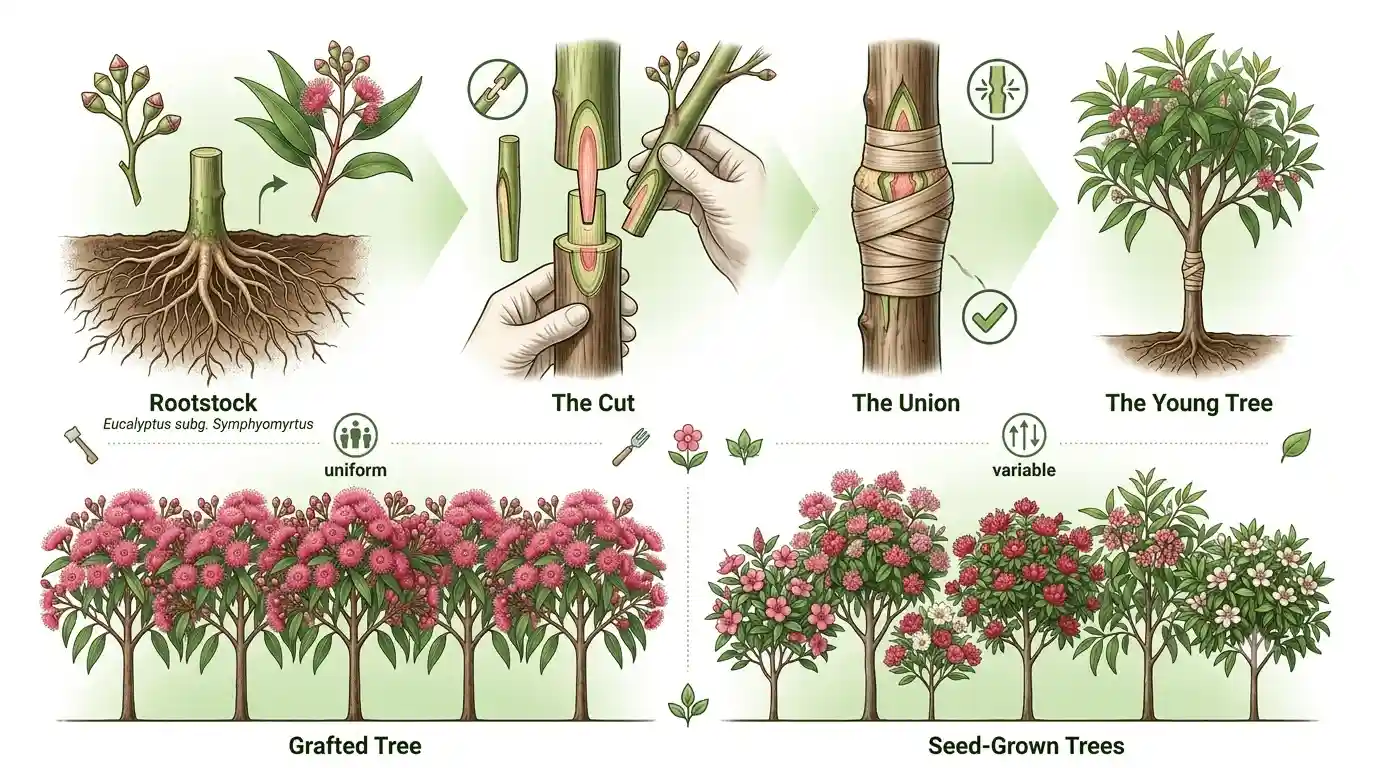
Grafted gum trees are produced by joining the stem of a desirable flowering cultivar onto the rootstock of another compatible tree. This horticultural technique allows growers to preserve desirable traits while improving plant performance.
Compared with seed-grown trees, grafted specimens provide more predictable results.
Advantages of Grafted Corymbia Ficifolia Pink Trees
Grafted trees offer several advantages:
- Improved flowering consistency
- Greater growth uniformity
- Earlier flowering
- Enhanced adaptability
- Reliable flower color reproduction
In our experience growing flowering gums, grafted specimens typically reach flowering maturity sooner than seed-grown alternatives.
Potential Limitations of Grafted Trees
Despite their benefits, grafted trees require some attention.
Potential considerations include:
- Protection of the graft union
- Careful site selection
- Possible differences in long-term lifespan
Greenery Inside recommends avoiding damage to the grafted section during maintenance and planting.
Plant Size and Growth Habit
Corymbia Ficifolia Pink Height and Spread
The mature size of corymbia ficifolia pink depends heavily on cultivar selection.
Typical ranges include:
- Height: 4–12 meters
- Spread: 3–8 meters
Compact forms remain much smaller, while larger cultivars can develop into substantial landscape trees.
Dwarf and Compact Forms
Several corymbia ficifolia dwarf selections have been developed for smaller spaces.One of the most popular compact options in this category is the dwarf Corymbia selection, which is ideal for small residential landscapes and tight garden spaces.
Benefits include:
- Suitable for suburban gardens
- Easier maintenance
- Reduced pruning requirements
- Potential container-growing applications
These forms are increasingly popular in contemporary landscape design.
Factors That Influence Mature Size
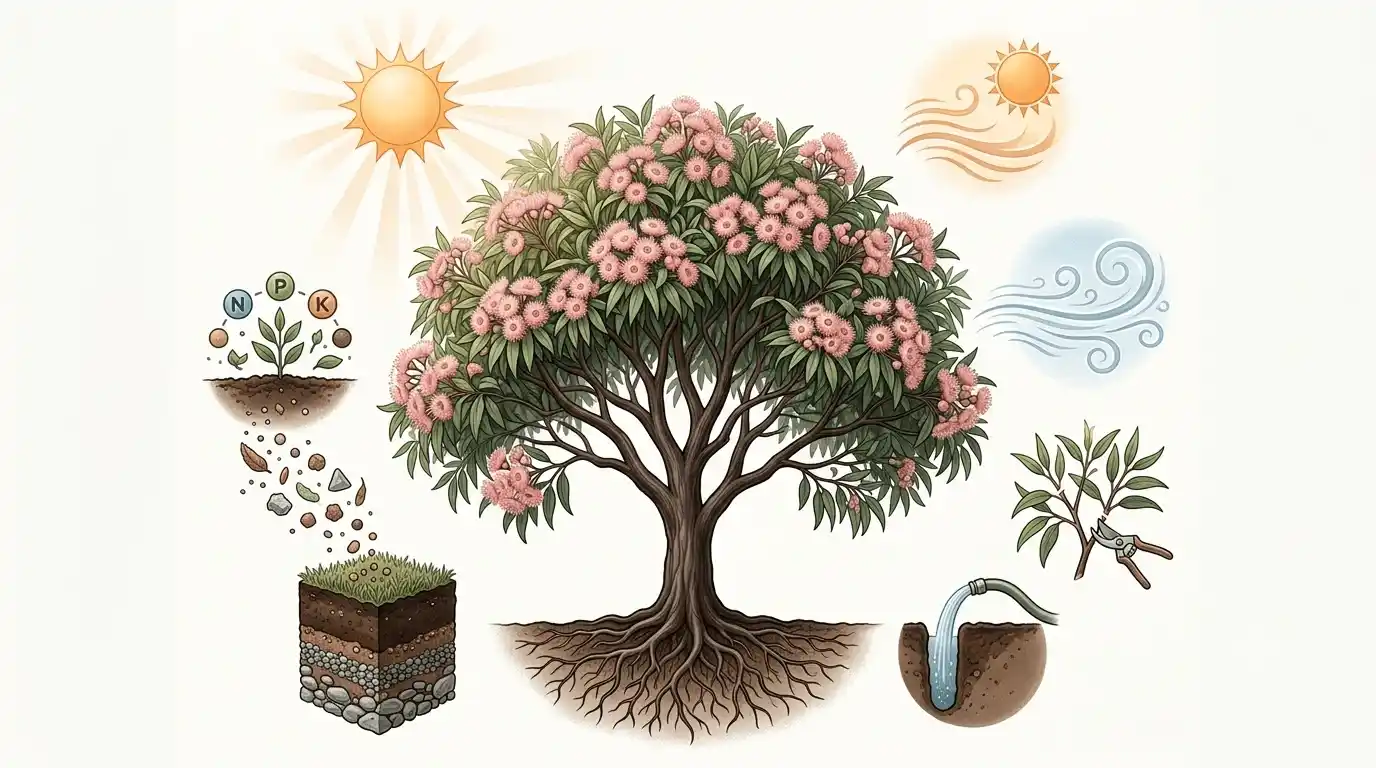
Several environmental factors affect mature growth:
- Climate conditions
- Soil fertility
- Water availability
- Root space
- Sunlight exposure
Trees growing under ideal conditions generally achieve their maximum potential size.
Growth Rate and Seasonal Development
How Fast Does Corymbia Ficifolia Pink Grow?
Corymbia ficifolia pink is generally considered a moderate-growing tree.
Most specimens establish during the first two to three years and then develop steadily as root systems mature. Long-term growth rates vary according to environmental conditions and cultivar characteristics.
Seasonal Growth Patterns
Growth typically follows seasonal cycles.
- Spring: Active growth flushes emerge.
- Summer: Flower production reaches peak levels.
- Autumn: Growth slows gradually.
- Winter: Development becomes less active in cooler climates.
As of the current growing season, many growers continue to emphasize balanced watering during spring establishment to support healthy flowering later in summer.
Environmental Factors Affecting Growth
Growth performance is influenced by:
- Temperature
- Sunlight intensity
- Soil drainage
- Wind exposure
Trees planted in full sun and free-draining soil generally perform best.
Care Guide for Corymbia Ficifolia Pink
Sunlight Requirements
Corymbia ficifolia pink performs best in full sun. A minimum of six hours of direct sunlight daily is recommended for optimal flowering.
Excessive shade often reduces flower production and can result in weaker canopy development.
Soil Preferences and Drainage
These trees prefer:
- Well-drained soils
- Sandy loam soils
- Moderately fertile growing conditions
Good drainage is critical because waterlogged soils can damage roots and reduce plant vigor.
Soil improvement techniques may include adding organic matter and improving drainage before planting.
Watering Requirements
Young trees require regular watering during establishment.
A practical schedule often includes:
- Weekly deep watering during establishment
- Reduced irrigation after root development
- Supplemental watering during prolonged drought
Mature trees generally exhibit good drought tolerance.
Fertilization Best Practices
Flowering gums benefit from balanced nutrition.
Suitable fertilizer options include:
- Slow-release native plant fertilizers
- Low-phosphorus formulations
- Organic soil conditioners
Applications are commonly made during spring before active growth begins.
Pruning and Maintenance
Pruning requirements are relatively modest.
Recommended maintenance includes:
- Structural pruning of young trees
- Removal of dead branches
- Post-flowering cleanup
- Elimination of damaged growth
In our experience growing ornamental gums, light corrective pruning produces better long-term structure than heavy pruning.
Climate and Hardiness Considerations
These trees demonstrate excellent heat tolerance once established.
Important considerations include:
- Moderate frost sensitivity in young plants
- Strong coastal performance
- Good tolerance to dry summers
Many cultivars are particularly well suited to coastal gardens because of their wind resistance.
Flowering Performance and Seasonal Display
When Does Corymbia Ficifolia Pink Flower?
Corymbia ficifolia pink typically flowers during summer. Bloom timing varies slightly depending on climate and cultivar selection.
Individual flowering displays can remain attractive for several weeks.
Factors That Influence Flower Production
Flower production depends on:
- Tree maturity
- Adequate sunlight
- Proper watering
- Overall plant health
Trees growing in shaded locations often produce fewer flowers.
Why Flowering Gums Are Popular Ornamental Trees
Flowering gums remain popular because they provide:
- Exceptional visual impact
- Long-lasting seasonal color
- Wildlife support
- Year-round ornamental value
The combination of colorful blooms and evergreen foliage makes them standout landscape trees.
Landscaping Ideas Using Corymbia Ficifolia Pink
Feature Trees for Residential Gardens
Pink flowering gums make excellent focal points.They are also frequently used in professional landscape designs and are commonly recommended in feature tree planning for Australian gardens.
Common uses include:
- Lawn centerpieces
- Front-yard specimens
- Courtyard highlights
- Entryway accents
Their seasonal flower display naturally draws attention.
Coastal and Drought-Tolerant Landscapes
These trees perform well in:
- Coastal gardens
- Water-wise landscapes
- Wind-exposed sites
- Low-maintenance garden designs
Their adaptability contributes to widespread popularity.
Combining Flowering Gums With Other Plants
Companion planting options include:
- Native shrubs
- Ornamental grasses
- Groundcovers
- Drought-tolerant perennials
Layered planting designs help showcase the tree’s colorful floral display.
Wildlife and Ecological Benefits
Pollinator Attraction
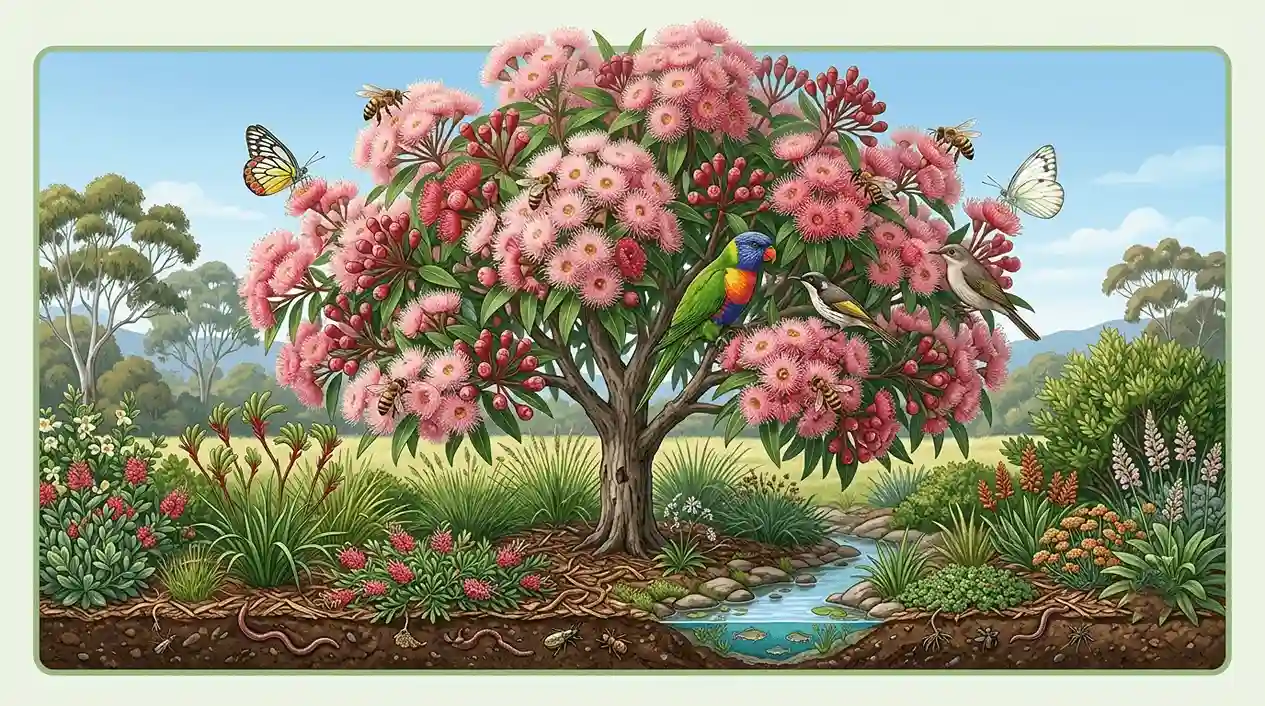
Pink flowering gums are valuable nectar sources.
They attract:
- Bees
- Butterflies
- Nectar-feeding insects
The abundant flowers contribute positively to pollinator activity within gardens.
Bird-Friendly Garden Value
Nectar-rich blossoms attract many bird species.
Additional benefits include:
- Shelter opportunities
- Nesting habitat
- Increased biodiversity
Greenery Inside recommends flowering gums for gardeners seeking wildlife-friendly landscapes.
Common Problems and How to Fix Them
Poor Flowering
Common causes include:
- Insufficient sunlight
- Immaturity
- Excessive nitrogen fertilizer
Solutions involve improving sunlight exposure and maintaining balanced nutrition.
Yellowing or Damaged Leaves
Potential causes include:
- Water stress
- Nutrient deficiencies
- Environmental stress
Careful monitoring helps identify the underlying issue before significant damage occurs.
Root and Drainage Problems
Symptoms may include:
- Slow growth
- Wilting
- Leaf discoloration
Corrective actions focus on improving drainage and reducing waterlogging risks.
Pest and Disease Issues
Occasional problems may involve:
- Leaf-eating insects
- Scale insects
- Minor fungal issues
Integrated management practices include monitoring, sanitation, and maintaining overall tree health.
Common Mistakes When Growing Corymbia Ficifolia Pink
Planting in Poorly Drained Soil
Poor drainage can lead to root decline and reduced vigor.
Proper site preparation is the most effective preventive measure.
Choosing the Wrong Location
Planting too close to buildings or in heavily shaded areas can create long-term problems.
Adequate space and sunlight are essential.
Overwatering Established Trees
Symptoms may include:
- Yellow foliage
- Root stress
- Reduced growth
Established trees generally require less irrigation than newly planted specimens.
Ignoring Mature Tree Size
Failure to consider future size can lead to conflicts with:
- Buildings
- Fences
- Utility lines
- Pathways
Long-term planning is important before planting.
Understanding Flowering Gum Identification and Visual Features
Recognizing Corymbia Ficifolia Through Flowers and Foliage
Key identification features include:
- Dense flower clusters
- Evergreen leaves
- Distinctive woody seed capsules
- Characteristic bark texture
These traits help distinguish flowering gums from many other ornamental trees.
What Gardeners Look for in Eucalyptus Flowers Images
When examining eucalyptus flowers images, gardeners often focus on:
- Flower cluster density
- Stamen structure
- Bloom color intensity
- Canopy coverage
These visual characteristics assist with plant identification and cultivar selection.
Conclusion
Corymbia ficifolia pink is one of the most attractive ornamental flowering gum groups available for modern gardens. Its vibrant pink flowers, evergreen foliage, pollinator value, and adaptability make it an outstanding landscape tree. Selecting appropriate cultivars, providing excellent drainage, and choosing suitable growing conditions are the keys to long-term success. Grafted gum trees often offer improved flowering consistency and reliable performance, while compact selections suit smaller residential spaces. Whether used as a feature tree, wildlife-friendly planting, or seasonal color highlight, corymbia ficifolia pink delivers exceptional ornamental value throughout the year.
Frequently Asked Questions
How tall does Corymbia ficifolia pink grow?
Most corymbia ficifolia pink cultivars reach between 4 and 12 meters tall, depending on genetics, climate, and growing conditions. Compact selections remain significantly smaller.
What is the difference between Corymbia ficifolia and eucalyptus trees?
Corymbia ficifolia was once classified within the Eucalyptus genus but is now placed in the Corymbia genus. Both belong to the Myrtaceae family but differ in certain botanical characteristics.
Are grafted gum trees better than seed-grown flowering gums?
Grafted gum trees are often preferred because they provide more predictable flowering, earlier bloom production, and greater uniformity than seed-grown specimens.
How often should a pink flowering gum be watered?
Young trees require regular watering during establishment. Mature trees generally need supplemental watering only during prolonged dry periods.
Does Corymbia ficifolia pink attract birds and pollinators?
Yes. The nectar-rich flowers attract bees, butterflies, nectar-feeding insects, and various bird species.
Can Corymbia ficifolia fairy floss be grown in small gardens?
Yes. Fairy Floss is a compact cultivar specifically valued for its suitability in smaller residential landscapes and urban gardens.
Why is my flowering gum not producing many flowers?
Poor flowering is commonly caused by insufficient sunlight, excessive nitrogen fertilizer, immature age, or environmental stress.
Is Corymbia ficifolia pink suitable for coastal climates?
Yes. Many cultivars perform well in coastal environments due to their tolerance of wind, heat, and relatively dry conditions once established.