Introduction
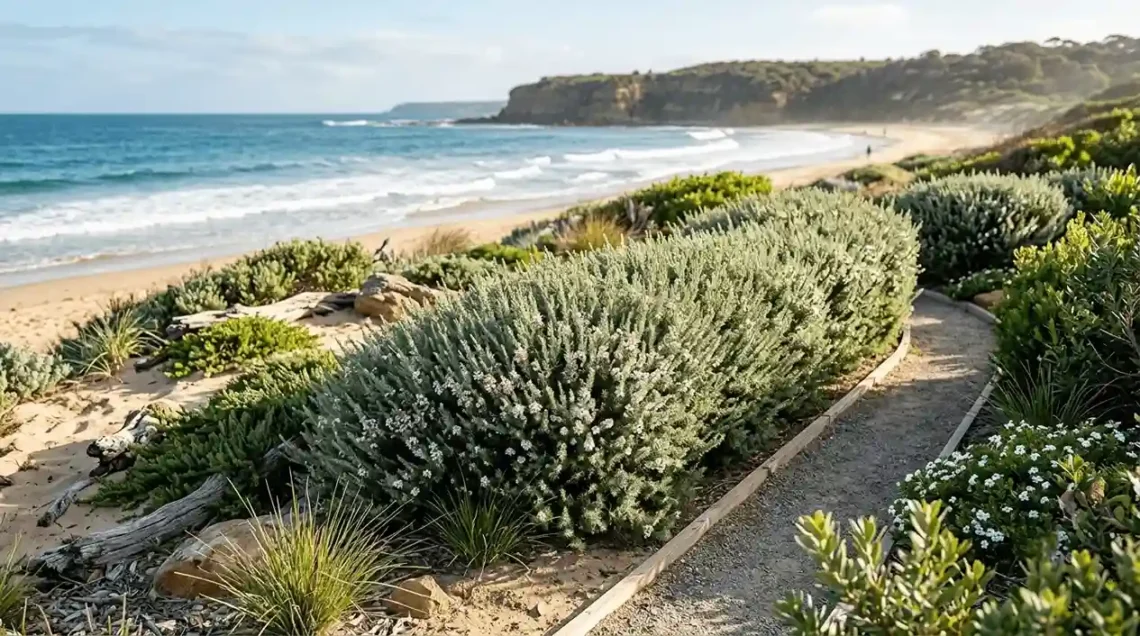
Leptospermum Foreshore is a popular coastal-growing tea tree cultivar valued for its dense evergreen foliage, strong wind tolerance, and versatility in landscape design. Often associated with leptospermum laevigatum foreshore, this hardy shrub belongs to the broader Leptospermum laevigatum group, a species well adapted to Australian coastal environments. Gardeners frequently select it for privacy hedges, screening, windbreaks, and low-maintenance coastal gardens because it performs well in challenging conditions where many other plants struggle. Its ability to tolerate salt-laden winds, sandy soils, and periodic drought has made it a reliable choice for both residential and commercial landscapes.
For broader planting ideas, Leptospermum Foreshore is commonly featured in guides like Australian native garden trees, especially alongside other Australian native screening trees and best hedging trees for coastal landscaping projects.
By Greenery Inside | Plant Care & Gardening Expert
Quick Summary
- Leptospermum Foreshore is a hardy coastal shrub commonly used for screening and hedging.
- It tolerates wind, salt spray, and challenging coastal conditions.
- Regular pruning helps maintain dense growth and hedge shape.
- Most growing problems stem from drainage, watering, or environmental stress.
- The plant is adaptable, relatively low maintenance, and suitable for many Australian landscapes.
What Is Leptospermum Foreshore?
Plant Classification and Origins
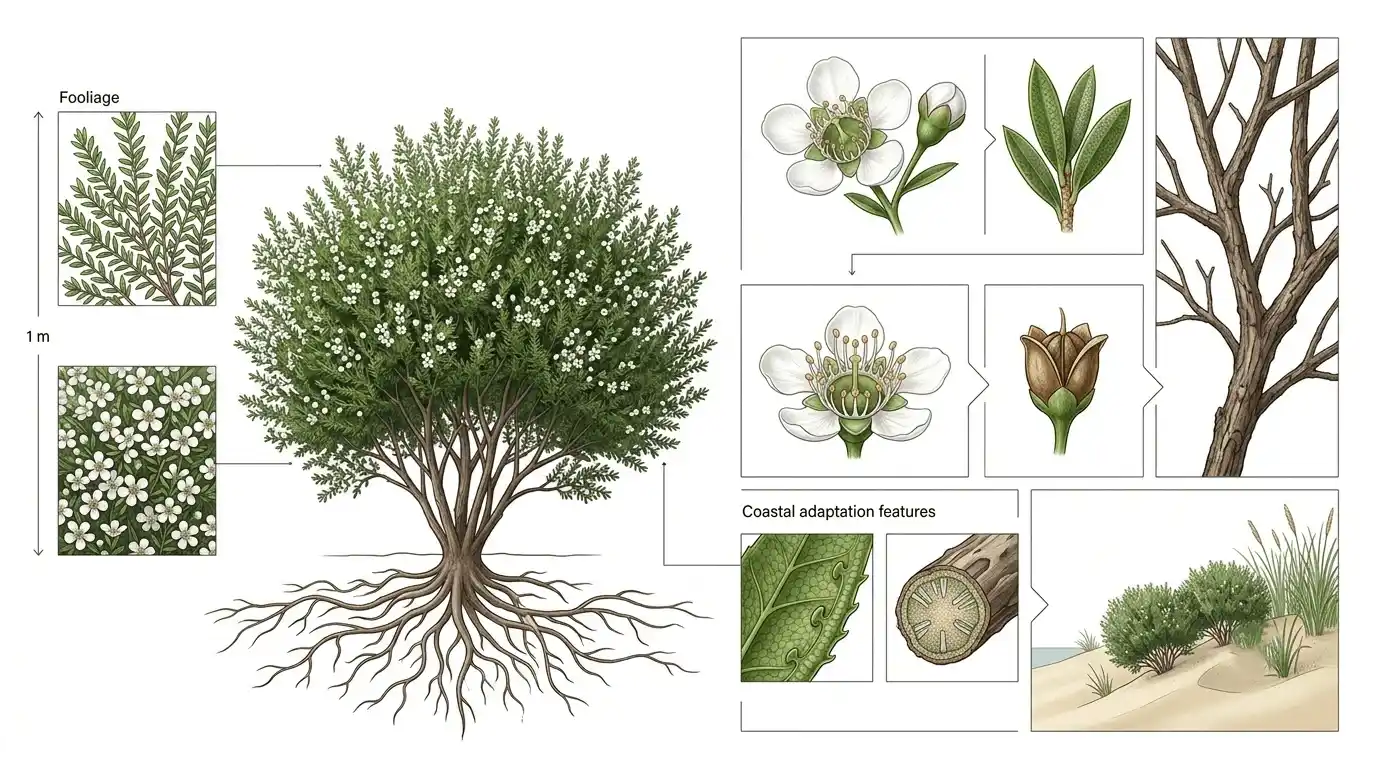
Leptospermum Foreshore belongs to the myrtle family (Myrtaceae), a large plant family that includes tea trees, bottlebrushes, and eucalyptus species. It is commonly regarded as a selected form or cultivar associated with Leptospermum laevigatum, a coastal tea tree native to southeastern Australia.
The species naturally occurs along coastal dunes, sandy shorelines, and exposed coastal environments. These origins explain its remarkable tolerance to salt spray, strong winds, and poor soils.
The term “Foreshore” generally refers to a cultivated selection valued for landscape performance, particularly in coastal regions. Gardeners and nurseries may use slightly different naming conventions, but the plant is widely recognized for its dense growth and screening ability.
Key Characteristics
Leptospermum Foreshore offers several characteristics that make it highly desirable in landscape projects:
- Dense evergreen foliage
- Compact to moderately vigorous growth habit
- Fine-textured leaves with a soft appearance
- Small white flowers that attract pollinators
- Strong resistance to coastal winds
- Excellent suitability for screening and hedging
Its dense canopy provides year-round structure while helping create privacy and wind protection. The shrub also supports local wildlife by providing shelter and seasonal nectar sources.
How It Compares to Other Tea Trees
Leptospermum Foreshore shares similarities with several other tea tree species but differs in growth habit and landscape applications.
Leptospermum laevigatum typically grows larger and more naturally spreading in coastal habitats.
Leptospermum scoparium, commonly known as the manuka tree or manuka tea tree, is native to Australia and New Zealand and is often grown for its colorful flowers and association with manuka honey production.
Compared with a manuka tea tree, Leptospermum Foreshore generally offers:
- Denser screening potential
- Greater suitability for coastal hedging
- Better tolerance of salt-laden winds
- Less emphasis on ornamental flowering
Gardeners often choose Foreshore for functional landscaping, while manuka varieties are frequently selected for ornamental display.
Leptospermum Foreshore Size and Growth Habit
Typical Mature Height and Width
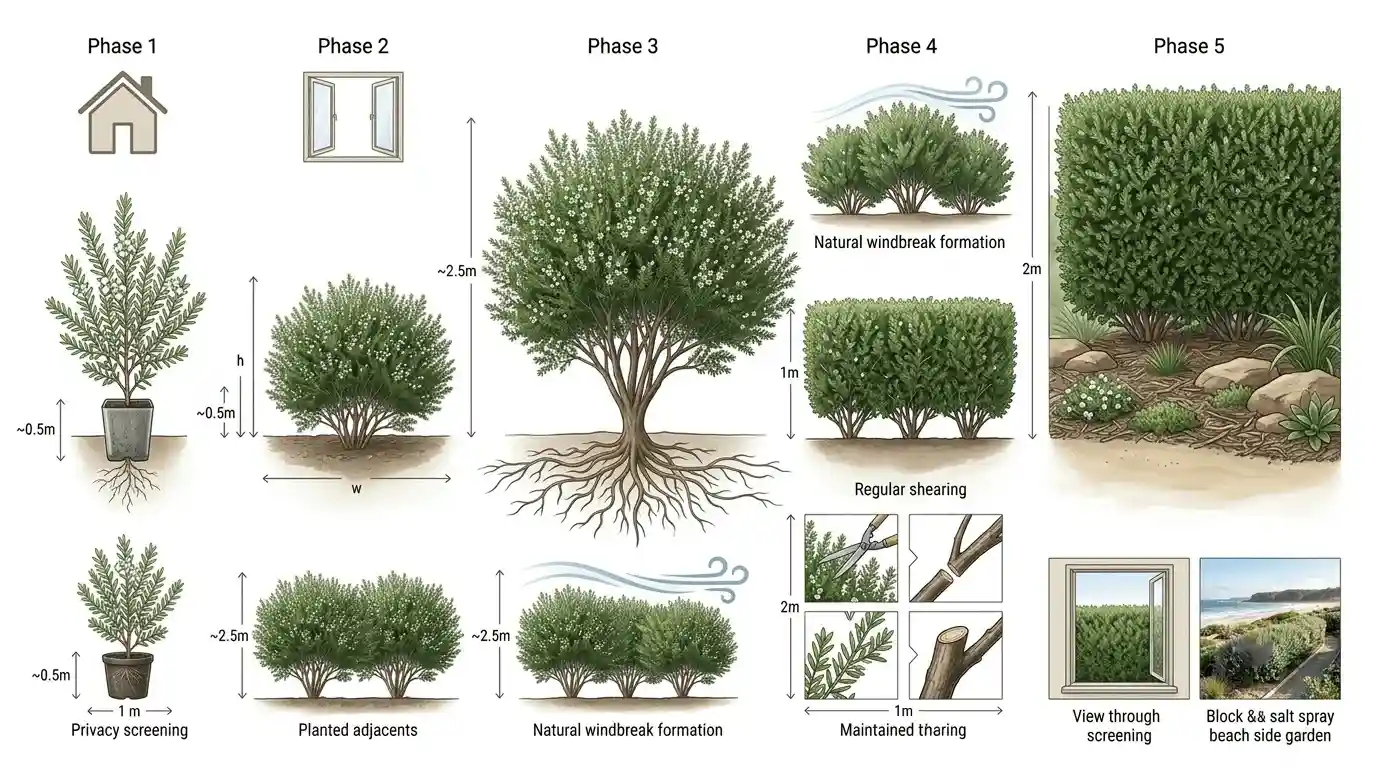
The typical leptospermum foreshore size varies depending on climate, maintenance, and growing conditions.
Under favorable conditions, mature plants commonly reach:
| Growth Dimension | Average Size |
| Height | 2–5 meters |
| Width | 2–4 meters |
When used as a hedge, regular pruning often keeps plants between 1.5 and 3 meters tall. Unpruned specimens can develop a broader and more natural form.
Factors That Affect Plant Size
Several environmental and management factors influence mature size:
- Local climate conditions
- Soil fertility
- Water availability
- Exposure to coastal winds
- Pruning frequency
- Plant age
Plants growing in fertile soils with adequate moisture often become larger than those in exposed coastal environments.
Growth Form in Different Landscapes
Leptospermum Foreshore adapts well to various landscape applications.
Screening: Dense foliage creates effective privacy barriers.
Windbreaks: Coastal resilience makes it suitable for reducing wind exposure.
Informal hedges: Natural growth creates a softer landscape appearance.
Feature planting: Individual specimens can provide texture and structure within garden designs.
Growth Rate of Leptospermum Foreshore
Is It Fast, Moderate, or Slow Growing?
Leptospermum Foreshore is generally considered a moderate to fast-growing shrub.
During establishment, plants focus on root development. Once established, they can produce approximately 30–60 centimeters of annual growth under favorable conditions.
Growth rates vary based on climate, soil quality, and maintenance practices.
Conditions That Encourage Faster Growth
The following factors promote healthy growth:
- Full sunlight exposure
- Well-drained soil
- Consistent moisture during establishment
- Moderate nutrient availability
- Proper spacing
Greenery Inside recommends prioritizing drainage over excessive fertilization, as healthy root systems contribute more to long-term growth.
Seasonal Growth Patterns
Growth patterns typically follow seasonal cycles.
Spring: The strongest growth flush occurs as temperatures rise.
Summer: Growth continues if moisture levels remain adequate.
Autumn: Growth gradually slows.
Winter: Most regions experience reduced growth activity.
As of 2026, growers continue to recommend spring planting for the fastest establishment and root development.
Care Guide for Leptospermum Foreshore
Light Requirements
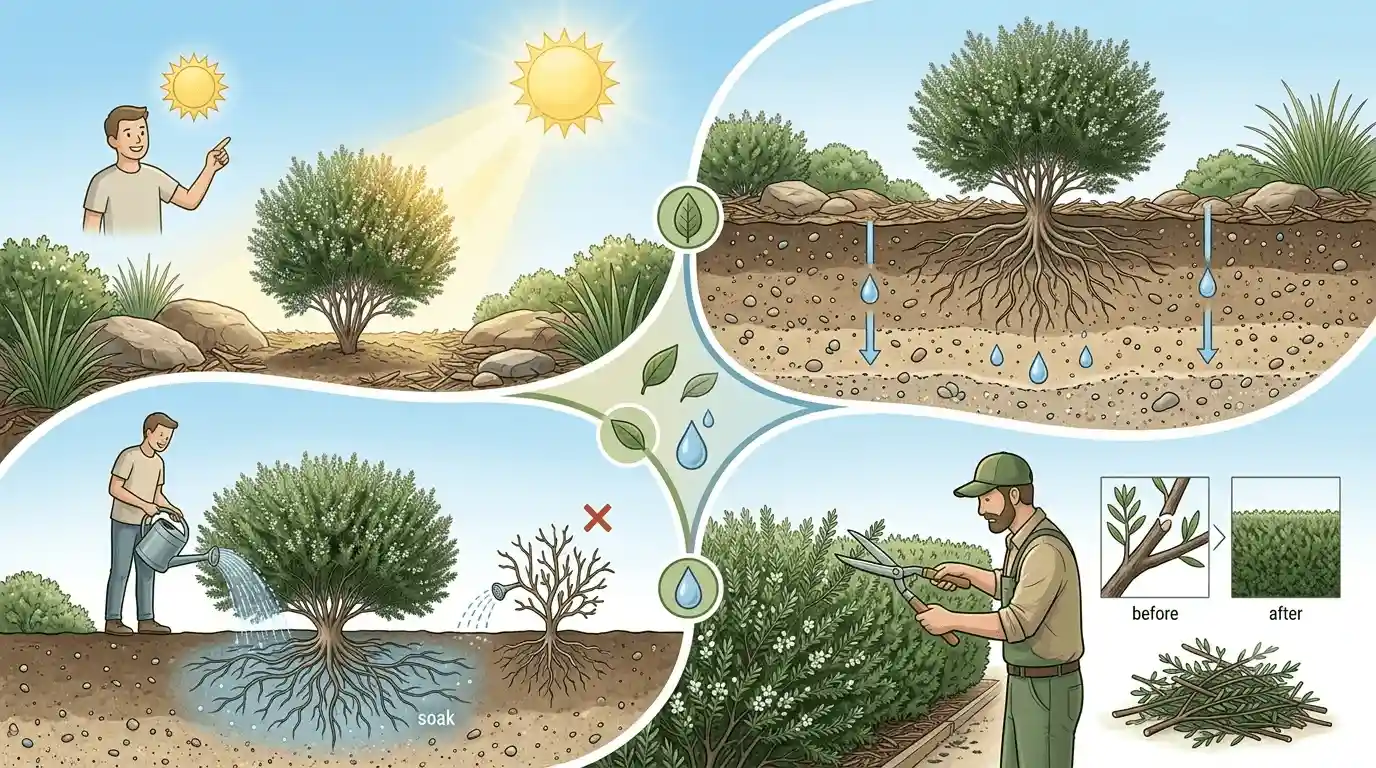
Leptospermum Foreshore performs best in full sun.
While it tolerates partial shade, reduced sunlight may lead to:
- Less flowering
- Reduced foliage density
- Slower growth
For dense hedges and screening, full sun remains the preferred growing condition.
Watering Needs
Newly planted specimens require regular watering until established.
General watering guidelines include:
- Water deeply during establishment
- Reduce frequency as roots develop
- Allow soil to partially dry between watering
Mature plants display good drought tolerance but still benefit from occasional deep watering during prolonged dry periods.
Overwatering should be avoided because excessive soil moisture can damage roots.
Best Soil Conditions
The plant adapts to a range of soil types provided drainage remains adequate.
Ideal conditions include:
- Sandy coastal soils
- Loamy soils
- Slightly acidic to neutral pH
- Free-draining planting sites
In our experience growing coastal tea trees, poor drainage causes more problems than nutrient deficiencies.
Fertilizing Recommendations
Heavy feeding is generally unnecessary.
Suitable fertilizer options include:
- Slow-release native plant fertilizers
- Low-phosphorus formulations
- Organic compost applications
Apply fertilizer during spring when active growth begins.
Pruning and Maintenance
Regular pruning helps maintain compact growth.
Benefits of pruning include:
- Increased density
- Improved hedge shape
- Better airflow
- Stronger branching
Rejuvenation pruning can restore older plants that have become sparse or leggy.
Using Leptospermum Foreshore as a Hedge
Why It Makes an Effective Hedge
A leptospermum foreshore hedge is highly effective because of its:
- Dense evergreen foliage
- Fast screening capability
- Coastal resilience
- Wind protection benefits
- Privacy enhancement
The shrub remains attractive throughout the year while requiring relatively modest maintenance.
Recommended Spacing for Hedges
Spacing depends on the desired screening speed.
| Purpose | Recommended Spacing |
| Quick screen | 1–1.5 m apart |
| Standard hedge | 1.5–2 m apart |
| Informal planting | 2–3 m apart |
Closer spacing creates faster privacy coverage.
Hedge Maintenance Tips
For the best results:
- Trim lightly several times per year
- Avoid severe pruning during extreme heat
- Shape plants while young
- Encourage branching through regular tip pruning
Consistent maintenance produces a denser and healthier hedge.
Coastal and Landscape Uses
Ideal Coastal Garden Applications
Leptospermum Foreshore excels in coastal landscapes because of its:
- Salt tolerance
- Wind resistance
- Adaptability to sandy soils
- Erosion-control potential
It is frequently used for coastal screening and boundary planting. It is often paired with hardy coastal plants such as coastal rosemary and included in broader Australian native screening trees plant selections for wind-prone gardens.
Landscaping Design Ideas
Popular design applications include:
- Native Australian gardens
- Informal screens
- Property boundaries
- Wildlife-friendly landscapes
- Coastal garden designs
Its fine foliage combines well with grasses, banksias, and other native shrubs.
Growing Leptospermum Foreshore in Different Australian Regions
The plant performs best in coastal climates but can adapt to many inland regions.
In areas such as leptospermum foreshore perth landscapes, it is valued for handling coastal exposure and dry summer conditions.
Inland gardeners should monitor irrigation more carefully during extended dry periods.
Leptospermum Foreshore Varieties and Related Species
Are There Different Leptospermum Foreshore Varieties?
The term leptospermum foreshore varieties may refer to different nursery selections associated with coastal tea trees.
Differences may include:
- Mature size
- Growth density
- Branching habit
- Landscape suitability
Availability varies between regions and commercial growers.
Leptospermum Laevigatum vs Leptospermum Scoparium
| Feature | Leptospermum laevigatum | Leptospermum scoparium |
| Native range | Coastal Australia | Australia and New Zealand |
| Growth habit | Dense coastal shrub/tree | Upright shrub or small tree |
| Mature size | Typically larger | Usually more compact |
| Flower appearance | Mostly white flowers | White, pink, or red flowers |
| Typical landscape use | Hedges, screening, coastal planting | Ornamental gardens, pollinator gardens |
Leptospermum scoparium is commonly known as:
- Manuka tree
- Manuka trees
- Manuka flower plant
- Leptospermum manuka
- Manuka tea tree
- Manuka tea tree plant
- Leptospermum New Zealand tea tree
- Tea tree NZ
- Manuka plant
While both belong to the same genus, they are often selected for different landscape purposes.
Common Problems and Troubleshooting
Why Is Leptospermum Foreshore Dying?
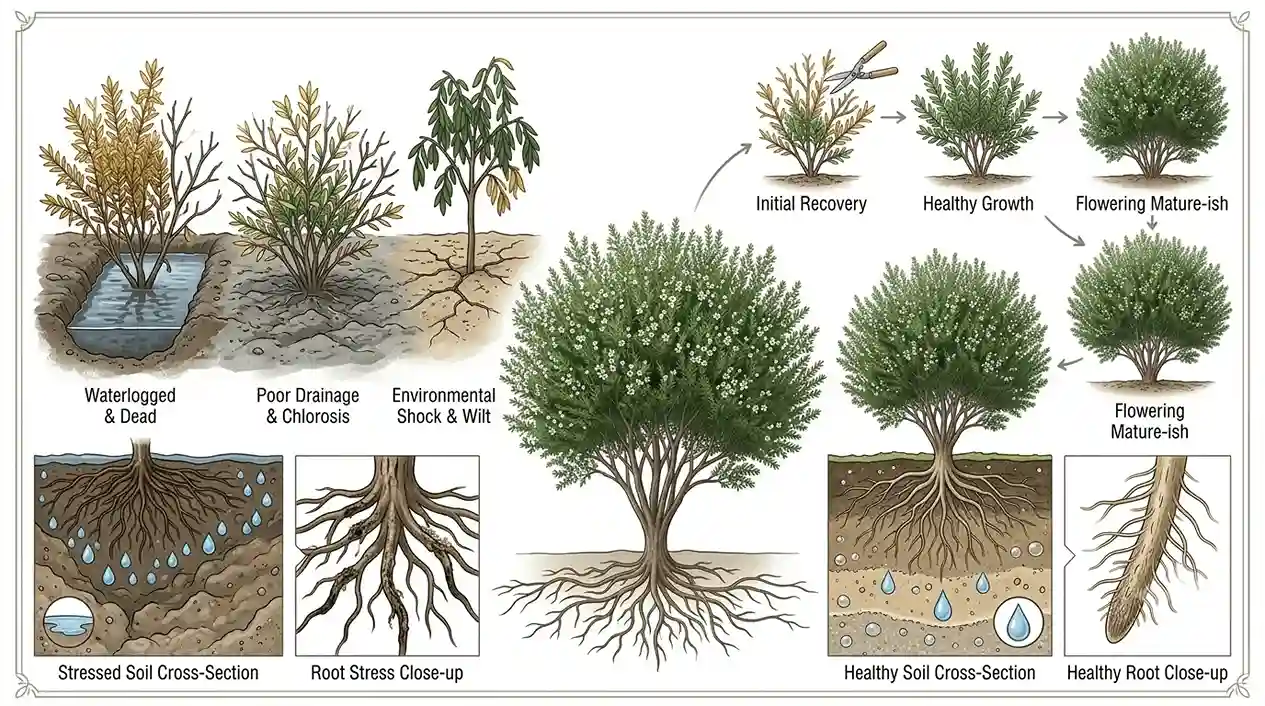
When gardeners report leptospermum foreshore dying, the most common causes include:
- Poor drainage
- Waterlogged roots
- Environmental shock
- Severe drought stress
Root-related problems are particularly common in heavy soils.
Yellow Leaves and Poor Growth
Yellowing leaves may indicate:
- Nutrient deficiencies
- Excessive watering
- Poor drainage
- Soil pH issues
Accurate diagnosis requires evaluating both soil and watering practices.
Pest and Disease Concerns
Common issues may include:
- Scale insects
- Aphids
- Leaf-chewing insects
- Root-related fungal diseases
Good airflow and proper drainage help reduce disease risk.
How to Restore a Struggling Plant
Follow these recovery steps:
- Check drainage conditions.
- Reduce excessive watering.
- Remove damaged growth.
- Improve soil aeration if necessary.
- Monitor for pests and diseases.
- Apply appropriate mulch while keeping it away from stems.
Improvements may take several weeks or months depending on the severity of stress.
Propagating Leptospermum Foreshore
Growing From Seeds
Leptospermum foreshore seeds can be collected from mature seed capsules.
Successful germination requires:
- Fresh seed
- Well-drained propagation mix
- Bright light
- Consistent moisture
Seed-grown plants may display natural variation.
Propagation From Cuttings
Cuttings are often preferred because they maintain the characteristics of the parent plant.
Best practices include:
- Taking semi-hardwood cuttings
- Using rooting hormone
- Providing high humidity
- Maintaining warm temperatures
Which Propagation Method Works Best?
Both methods are useful, but cuttings generally provide:
- Faster results
- Greater consistency
- More predictable growth characteristics
Seed propagation remains valuable for large-scale production and genetic diversity.
Common Growing Mistakes to Avoid
Overwatering Young Plants
Excess moisture can:
- Reduce root oxygen
- Encourage disease
- Slow establishment
Proper drainage remains essential.
Planting in Unsuitable Locations
Poor planting locations often include:
- Deep shade
- Restricted root zones
- Areas with poor airflow
These conditions may reduce vigor and increase disease risk.
Neglecting Pruning
Without periodic pruning:
- Hedges may become sparse
- Lower branches may lose density
- Screening effectiveness can decline
Regular maintenance preserves plant form.
Ignoring Soil Drainage
Long-term drainage issues frequently lead to plant decline.
Greenery Inside recommends improving drainage before planting rather than attempting corrections after root problems develop.
Conclusion
Leptospermum Foreshore is a resilient coastal tea tree valued for its dense foliage, screening ability, and adaptability to challenging environments. Its tolerance for wind, salt spray, sandy soils, and periodic drought makes it one of the most reliable choices for coastal gardens and privacy hedges. With proper sunlight, well-drained soil, and regular pruning, the plant develops into a dense and attractive landscape feature. Whether used as a windbreak, hedge, or standalone specimen, leptospermum foreshore offers long-term performance and low-maintenance appeal across many Australian growing regions.
Frequently Asked Questions About Leptospermum Foreshore
How fast does Leptospermum Foreshore grow?
Leptospermum Foreshore is generally considered a moderate to fast-growing shrub and may grow approximately 30–60 centimeters per year under favorable conditions.
What size does Leptospermum Foreshore reach?
Mature plants commonly reach 2–5 meters in height and 2–4 meters in width, although regular pruning can maintain smaller hedge sizes.
Is Leptospermum Foreshore suitable for coastal gardens?
Yes. It is highly suitable for coastal gardens because it tolerates salt spray, strong winds, sandy soils, and other challenging coastal conditions.
How often should a Leptospermum Foreshore hedge be pruned?
Most hedges benefit from light trimming several times per year, particularly during active growth periods, to maintain density and shape.
Can Leptospermum Foreshore be grown from seed?
Yes. Seeds can be collected from mature capsules and germinated under suitable conditions, although cuttings typically produce more consistent results.
Why are the leaves on my Leptospermum Foreshore turning yellow?
Yellow leaves are commonly caused by overwatering, nutrient deficiencies, drainage issues, or unsuitable soil conditions.
What is the difference between Leptospermum Foreshore and Manuka?
Leptospermum Foreshore is primarily valued for screening and coastal landscaping, while manuka (Leptospermum scoparium) is often grown for ornamental flowers and honey production.
Does Leptospermum Foreshore tolerate drought?
Yes. Once established, Leptospermum Foreshore demonstrates good drought tolerance, although occasional deep watering during extended dry periods helps maintain plant health.