Introduction
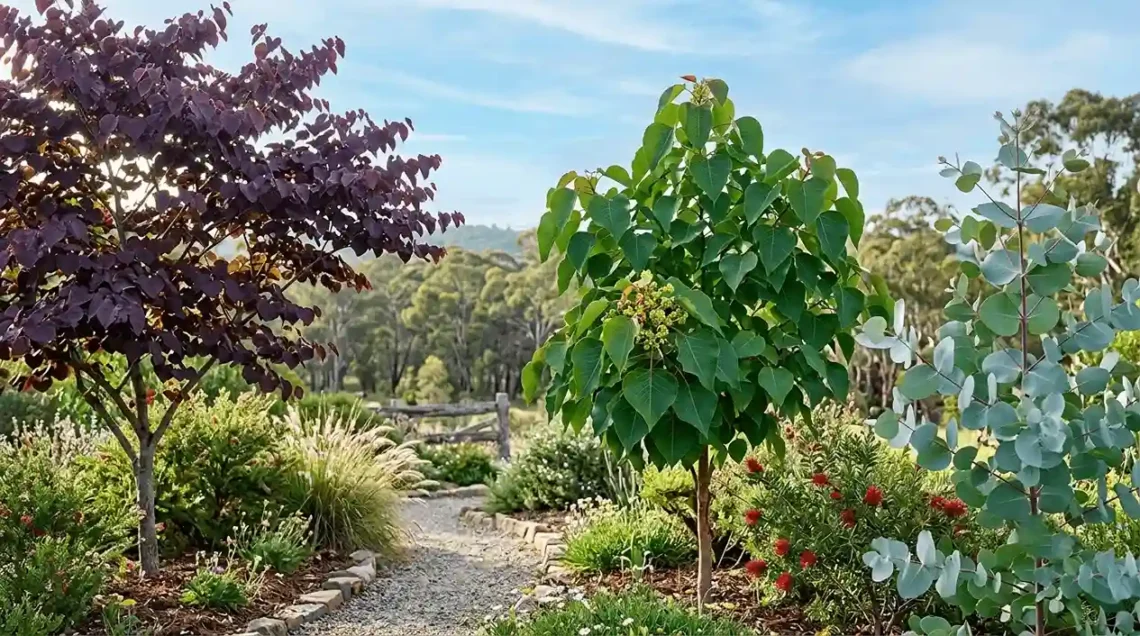
If you are searching for a tree with heart shaped leaves Australia, you may be surprised to learn that several unrelated species share this attractive leaf shape. Some are native Australian trees that naturally grow in forests or woodlands, while others are ornamental trees introduced from overseas and widely planted in parks and home gardens. Although heart-shaped foliage is a useful starting point, accurate identification also depends on bark, flowers, growth habit, fruit, and natural habitat. Well-known examples include Eucalyptus cordata, Homalanthus populifolius (Bleeding Heart Tree), and ornamental redbuds such as Forest Pansy. Understanding these differences helps gardeners choose suitable trees while avoiding confusion with potentially hazardous species.If you are exploring more landscaping ideas, you may also like our guides on Australian native garden trees, popular feature species like the Forest Pansy tree, and indoor-friendly greenery in our guide to house plants.
By Greenery Inside | Plant Care & Gardening Expert
Quick Summary
- Heart-shaped leaves occur on both native Australian and ornamental landscape trees.
- Eucalyptus cordata and Homalanthus populifolius are genuine Australian natives with distinctive characteristics.
- Forest Pansy and other Cercis cultivars are popular ornamental feature trees with spectacular seasonal colour.
- Tree size, climate suitability, and evergreen or deciduous growth habits are important when selecting a species.
- Some heart-shaped leaf plants, including Dendrocnide moroides (Gympie-Gympie), should never be handled because of their extremely painful stinging hairs.
What Makes a Tree’s Leaves Heart Shaped?
A heart-shaped leaf is botanically known as a cordate leaf. This describes a leaf with a rounded base that curves inward where the leaf stalk attaches, creating the appearance of a heart. Many unrelated plant species have evolved this leaf shape independently because it efficiently captures sunlight while supporting healthy water movement through the leaf.
Botanically, this shape is known as a cordate leaf, a term widely described in botanical morphology references such as Wikipedia’s overview of leaf shapes.
Leaf shape alone rarely provides enough information for reliable identification. Professional horticulturists also examine leaf texture, venation, arrangement, bark, flowers, fruit, and the environment where the tree naturally grows.
In our experience at Greenery Inside, beginner gardeners often identify trees solely by leaf shape and overlook other important botanical features. Observing the entire plant always leads to more accurate identification.
Key Features Used to Identify Heart-Shaped Leaves
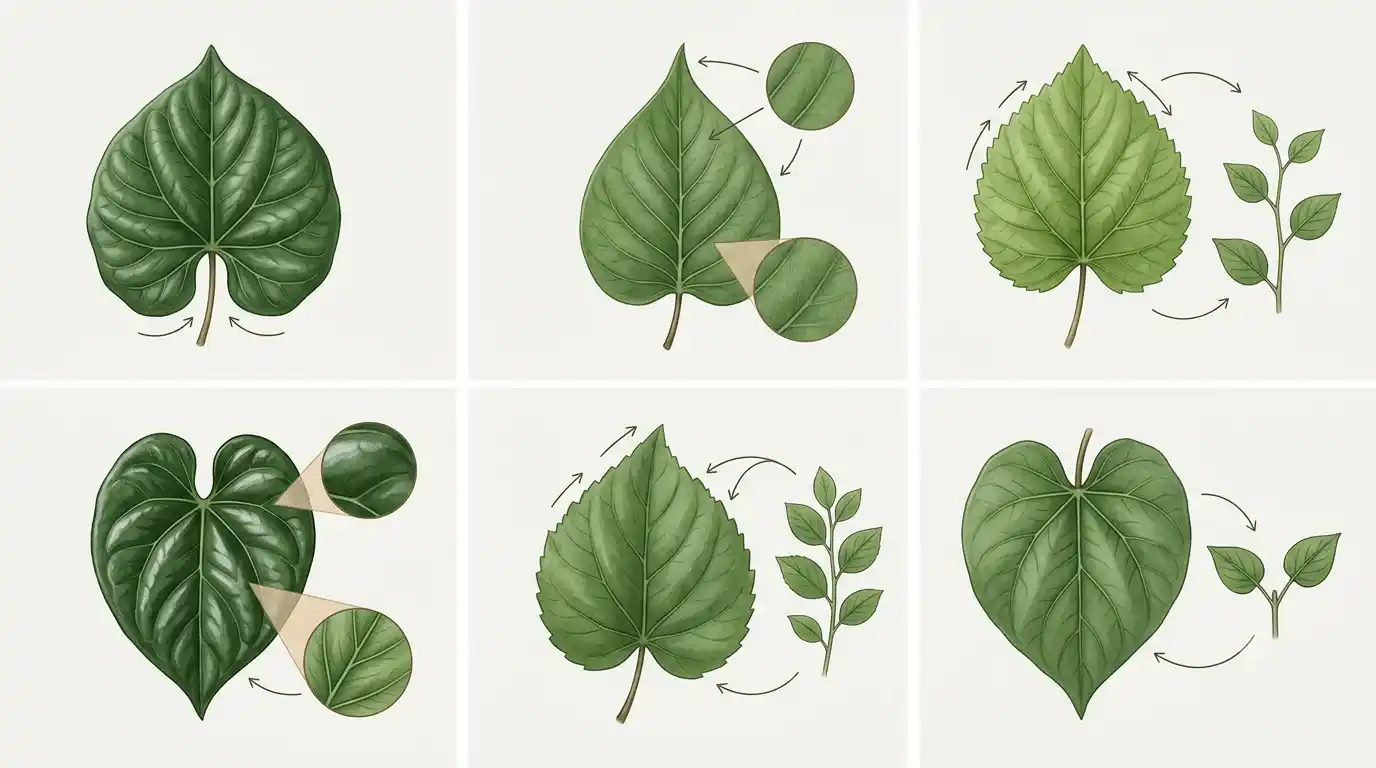
Leaf Base
The defining feature of a cordate leaf is its deeply indented base where the leaf stalk meets the blade. This indentation may be shallow or pronounced depending on the species.
Leaf Tip
Heart-shaped leaves may have:
- Long pointed tips
- Rounded tips
- Tapered tips
- Extended drip tips for rainforest species
These differences help separate similar-looking trees.
Vein Patterns
Most heart-shaped leaves display prominent veins radiating outward from the leaf base.
Common vein patterns include:
- Palmate venation
- Pinnate venation
- Fine secondary branching veins
Vein structure often remains visible even on mature foliage.
Leaf Margins
Leaf edges vary considerably between species.
Common margin types include:
- Smooth (entire)
- Finely toothed
- Slightly wavy
- Gently scalloped
Margin shape is frequently used by botanists during species identification.
Texture
Leaf texture can differ dramatically.
Examples include:
- Glossy and smooth
- Soft and velvety
- Thick and leathery
- Rough or hairy
Texture often reflects the plant’s natural environment and moisture requirements.
Leaf Arrangement
Leaves may grow:
- Alternately along stems
- Opposite one another
- In clusters near branch tips
Leaf arrangement is another important diagnostic feature because many unrelated species share similar leaf shapes.
Native Australian Trees With Heart-Shaped Leaves
Australia is home to several native trees with heart-shaped or nearly heart-shaped foliage. These species occupy diverse habitats ranging from cool mountain forests to tropical rainforests. Many provide excellent habitat for birds, insects, and other native wildlife while adding ornamental value to gardens suited to their natural climate. Many of these species also appear in broader ecosystem-focused guides such as native plants that grow in shade, tropical plants for backyard landscaping, and other shade-loving Australian natives used in low-maintenance garden design.
Eucalyptus cordata
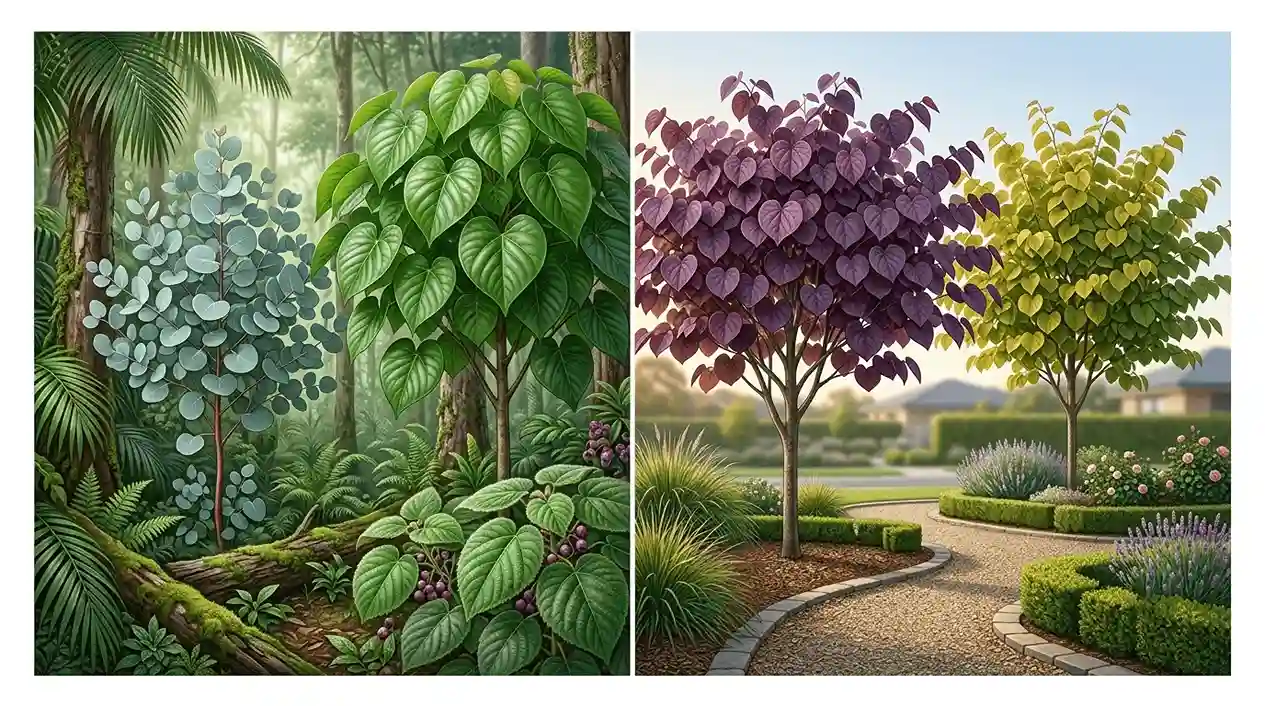
Eucalyptus cordata, commonly called the Heart-leaved Silver Gum, is one of Australia’s best-known native trees with naturally heart-shaped juvenile leaves.
Its young foliage is almost perfectly rounded with a distinct heart-shaped base and attractive silver-blue colouring. As the tree matures, adult leaves gradually become more elongated, which sometimes surprises new gardeners expecting the juvenile shape to remain permanently.
Identification
- Distinctive silver-blue juvenile leaves
- Rounded to heart-shaped foliage
- Smooth bark with patches of peeling cream and grey
- White flowers produced during the flowering season
- Attractive ornamental branching
Natural Distribution
This species is native to southeastern Tasmania, where it grows naturally on rocky slopes and exposed hillsides. Its restricted natural distribution makes it particularly valued among Australian native plant enthusiasts.
Growth Habit
Typical characteristics include:
- Small to medium-sized eucalyptus
- Rounded canopy
- Moderate growth rate
- Long lifespan under suitable conditions
Suitable Climates
Eucalyptus cordata performs best in:
- Cool temperate climates
- Areas with moderate rainfall
- Well-drained soils
- Full sun
Although relatively hardy, it generally performs better in cooler regions than in hot tropical climates.
Greenery Inside Tip: Juvenile foliage is usually most pronounced after pruning or on young plants. Gardeners growing this species primarily for its decorative leaves sometimes use light pruning to encourage fresh juvenile growth.
Homalanthus populifolius (Bleeding Heart Tree)
The Bleeding Heart Tree (Homalanthus populifolius) is one of Australia’s fastest-growing rainforest pioneer trees and a favourite for wildlife-friendly landscapes.
Its common name comes from the reddish sap released when stems are cut, rather than from its flowers. The tree is recognised by its large, glossy heart-shaped leaves that create a lush tropical appearance.
Identification
- Large bright green heart-shaped leaves
- Smooth grey trunk
- Reddish stems
- Small greenish flowers
- Decorative fruit clusters
Native Distribution
The species naturally occurs along Australia’s eastern coastline, particularly in:
- Queensland
- New South Wales
- Coastal rainforests
- Moist forest margins
Growth Habit
This tree is known for:
- Extremely rapid growth
- Pioneer rainforest behaviour
- Dense leafy canopy
- Relatively short lifespan compared with many native trees
Because it grows quickly, it is commonly used for rapid screening and ecological restoration.
Wildlife Benefits
The Bleeding Heart Tree provides important ecological value by supporting:
- Native birds
- Pollinating insects
- Butterflies
- Fruit-eating wildlife
Its fruits become an important seasonal food source for many rainforest bird species.
Landscaping Uses
Suitable uses include:
- Wildlife gardens
- Rainforest gardens
- Native revegetation
- Shade planting
- Fast-growing screening
As of 2026, many native plant growers continue recommending this species for biodiversity-focused landscapes due to its ability to establish quickly and support local ecosystems.
Dendrocnide moroides (Gympie-Gympie)
Although Dendrocnide moroides has striking heart-shaped leaves, it should never be planted in residential gardens.
Often called the Gympie-Gympie tree or stinging tree, this rainforest species is covered with microscopic silica hairs that inject powerful toxins upon contact. The pain can persist for weeks or even months.
Identification
- Large soft heart-shaped leaves
- Fine hairs covering stems and leaves
- Greenish flowers
- White to purple berry-like fruits
Toxicity
- One of Australia’s most painful native plants
- Stinging hairs remain active long after leaves have fallen
- Protective clothing is essential when working nearby
- Never handle with bare skin
Habitat
The species naturally grows in:
- Tropical Queensland rainforests
- Moist forest clearings
- Disturbed rainforest edges
Distinguishing Features
Unlike ornamental heart-shaped trees, Gympie-Gympie usually has:
- Thin, soft leaves
- Dense covering of stinging hairs
- Shrubby growth habit
- Rainforest understorey location
Correct identification is essential because its attractive foliage can easily mislead inexperienced gardeners.
Popular Ornamental Trees With Heart-Shaped Leaves in Australia
Not every attractive heart-shaped leaf tree is native. Several introduced ornamental trees have become favourites in Australian gardens because of their spectacular foliage, seasonal flowers, and manageable size.
These species generally perform best in temperate climates with fertile, well-drained soils.
Forest Pansy (Cercis canadensis)
Forest Pansy is among Australia’s most widely planted ornamental trees featuring heart-shaped foliage.
It is especially admired for its deep burgundy-purple leaves that emerge in spring before gradually changing to bronze, green, and yellow throughout the growing season.
Key Features
- Heart-shaped purple foliage
- Bright pink spring flowers
- Attractive branching structure
- Rounded canopy
- Excellent autumn colour
Seasonal Colour Changes
Forest Pansy provides year-round interest because its foliage changes colour during the seasons.
Typical progression includes:
- Spring: rich purple
- Summer: burgundy to green
- Autumn: yellow, orange, bronze
- Winter: bare architectural branches
Australian Growing Conditions
Forest Pansy grows successfully in many temperate Australian regions where it receives:
- Full sun to partial shade
- Deep, well-drained soil
- Moderate irrigation during establishment
- Protection from prolonged extreme heat
Garden Uses
Forest Pansy is commonly planted as a:
- Feature tree
- Courtyard specimen
- Lawn focal point
- Street tree
- Mixed ornamental border
Its relatively compact size makes it suitable for suburban gardens.
Cercis canadensis Cultivars
Modern breeding has produced several attractive cultivars that offer different foliage colours, growth habits, and mature sizes.
Cercis Golden Leaf
Golden-leaved cultivars provide bright yellow foliage during spring before gradually developing lime-green tones later in the season.
These trees create strong colour contrast when planted alongside darker evergreen species.
Typical characteristics include:
- Golden spring foliage
- Compact branching
- Moderate growth
- Bright landscape impact
Cercis canadensis ‘Aurelian’
‘Aurelian’ is another ornamental selection valued for its refined appearance and colourful foliage.
Compared with Forest Pansy, it generally produces lighter leaf colours while maintaining the classic heart-shaped leaf form.
Landscapers often select this cultivar for:
- Feature planting
- Small residential gardens
- Contemporary landscapes
- Colour contrast
- Seasonal interest
Comparison of Common Trees With Heart-Shaped Leaves in Australia
| Tree | Native or Introduced | Mature Height | Evergreen or Deciduous | Leaf Colour | Best Growing Conditions |
| Eucalyptus cordata | Native | 8–15 m | Evergreen | Silver-blue juvenile, green mature | Cool temperate climates, full sun, well-drained soil |
| Homalanthus populifolius | Native | 6–15 m | Evergreen to semi-deciduous | Bright green | Moist subtropical and tropical regions |
| Forest Pansy (Cercis canadensis) | Introduced | 4–8 m | Deciduous | Purple, bronze, green, yellow | Temperate climates, fertile soil |
| Cercis cultivars (Golden Leaf, ‘Aurelian’) | Introduced | 3–8 m | Deciduous | Golden, lime-green, purple (varies) | Well-drained soil, full sun to part shade |
| Dendrocnide moroides | Native | 2–5 m | Evergreen | Bright green | Tropical rainforest only; not suitable for gardens |
Small, Medium and Large Trees With Heart-Shaped Leaves
Choosing the right tree begins with understanding its mature size. A tree that looks compact in a nursery may eventually outgrow a small backyard, interfere with buildings, or require regular pruning. Selecting the correct size from the beginning reduces long-term maintenance and creates a healthier landscape.
Small Trees
Small heart-shaped leaf trees are ideal for courtyards, patios, and compact suburban gardens where space is limited.
Examples include:
- Dwarf Cercis cultivars
- Young Forest Pansy selections
- Compact ornamental redbuds
These trees generally remain below 5 metres and work well as feature specimens without overwhelming surrounding plants.
Medium Trees
Medium-sized trees suit most residential landscapes by providing seasonal interest and moderate shade.
Suitable examples include:
- Forest Pansy
- Homalanthus populifolius
- Standard Cercis cultivars
They usually reach between 5 and 10 metres and fit comfortably into average Australian suburban gardens when given adequate spacing.
Tall and Large Trees
If you are looking for a tall tree with heart shaped leaves Australia or a large tree with heart shaped leaves Australia, consider species that develop broad canopies and significant height over time.
Examples include:
- Mature Eucalyptus cordata
- Established Homalanthus populifolius in favourable rainforest climates
Before planting large species, consider:
- Available overhead clearance
- Distance from buildings
- Mature root spread
- Shade requirements
- Long-term maintenance
Large trees provide excellent cooling shade, improve habitat for wildlife, and contribute to landscape structure, but they require generous planting space to thrive.
Evergreen vs Deciduous Heart-Shaped Leaf Trees
The choice between evergreen and deciduous species affects the appearance of your garden throughout the year, as well as maintenance requirements and seasonal shade.
| Evergreen | Deciduous | Advantages | Best Uses |
| Eucalyptus cordata | Forest Pansy | Year-round foliage, privacy, wildlife habitat | Native gardens, screening |
| Homalanthus populifolius | Cercis cultivars | Continuous greenery and ecological value | Rainforest and wildlife gardens |
| Dendrocnide moroides (not recommended for gardens) | Other ornamental redbuds | Seasonal flowers and autumn colour | Feature planting and ornamental landscapes |
An evergreen tree with heart shaped leaves Australia is often the preferred choice for year-round screening and habitat creation, while deciduous species are valued for seasonal flowers, changing foliage colours, and winter sunlight reaching the garden.
How to Choose the Best Tree With Heart-Shaped Leaves for Your Garden
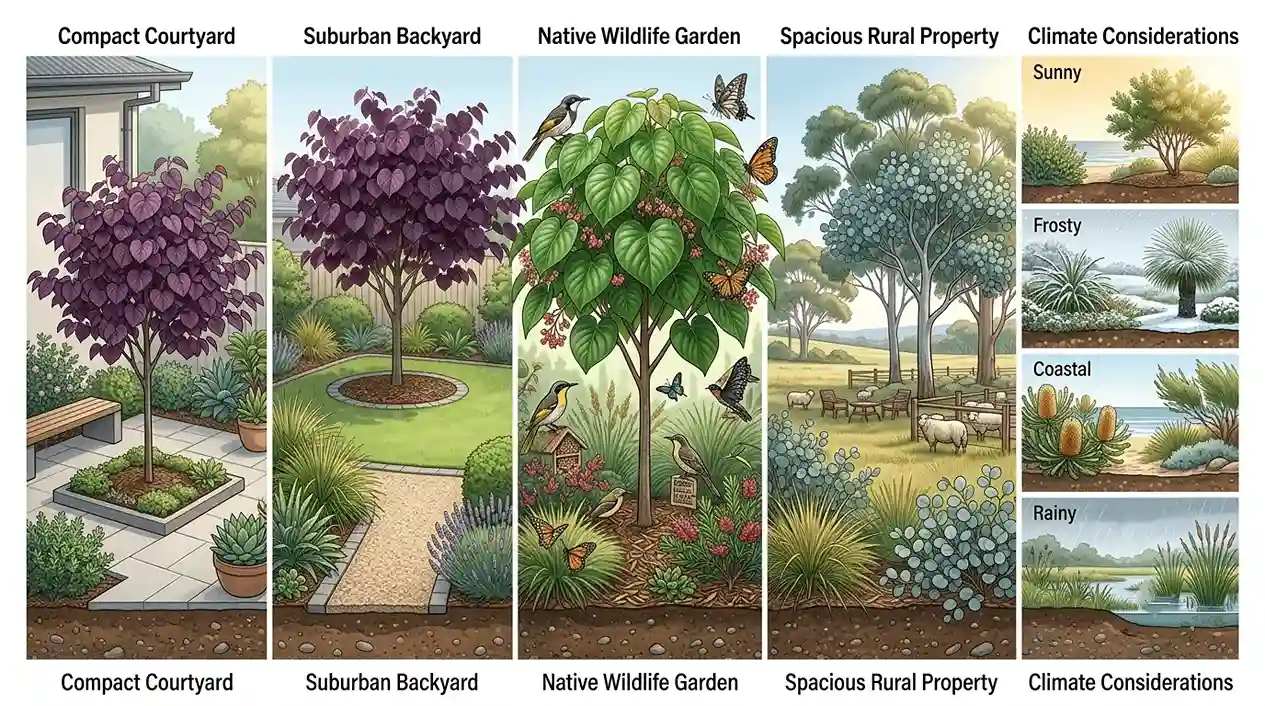
The best tree with heart shaped leaves Australia depends on your local climate, available space, maintenance expectations, and landscaping goals. Rather than choosing based solely on leaf shape, consider the tree’s mature size, water requirements, and long-term performance.
Greenery Inside recommends assessing the following factors before planting:
- Climate: Match the species to your local temperature range and rainfall.
- Frost tolerance: Some rainforest natives dislike heavy frost, while Eucalyptus cordata tolerates cooler conditions.
- Soil type: Most species prefer well-drained soil, but rainforest trees benefit from richer organic matter.
- Available space: Always plan for the mature height and canopy spread.
- Maintenance: Deciduous trees require seasonal leaf cleanup, while evergreen species provide year-round foliage.
- Wildlife value: Native trees often support more birds, pollinators, and beneficial insects than introduced ornamentals.
Best Choices by Garden Type
- Small gardens: Dwarf Cercis cultivars, compact Forest Pansy selections
- Native gardens: Eucalyptus cordata, Homalanthus populifolius
- Shade trees: Mature Eucalyptus cordata where space allows
- Feature trees: Forest Pansy, Golden Leaf Cercis
- Wildlife gardens: Homalanthus populifolius due to its ecological benefits
Care Guide for Trees With Heart-Shaped Leaves
Water Requirements
Newly planted trees require consistent watering during their establishment period, usually for the first one to two growing seasons. Deep watering once or twice a week is generally more effective than frequent shallow irrigation.
Once established:
- Native eucalyptus species become relatively drought tolerant.
- Rainforest natives such as Homalanthus populifolius prefer evenly moist soil.
- Ornamental Cercis species benefit from supplemental watering during extended dry periods.
Sunlight Needs
Light requirements vary by species.
- Full sun: Eucalyptus cordata, Forest Pansy, most Cercis cultivars
- Partial shade: Homalanthus populifolius in hotter climates
- Filtered light: Young rainforest species establish well under light canopy protection
Excessive afternoon heat may scorch the foliage of some ornamental redbuds, particularly in inland Australian regions.
Soil Preferences
Healthy growth depends on suitable soil conditions.
Most species perform best in:
- Well-drained soil
- Organic matter incorporated before planting
- Slightly acidic to neutral pH
- Good aeration around the root zone
Heavy clay soils should be improved with compost before planting to reduce waterlogging.
Fertilising
Fertiliser requirements differ between native and ornamental trees.
- Native eucalyptus species generally require little fertiliser and may be sensitive to excessive phosphorus.
- Forest Pansy and Cercis cultivars respond well to balanced slow-release fertiliser applied in early spring.
- Rainforest trees appreciate compost and organic mulch rather than heavy feeding.
Pruning
Pruning should focus on developing a strong structure and removing damaged branches.
Recommended practices include:
- Structural pruning during the early years
- Removal of dead or crossing branches
- Minimal pruning of mature eucalyptus
- Light shaping of ornamental redbuds after flowering
Avoid excessive pruning, as it may reduce flowering and encourage weak growth.
Climate Tolerance
Different species tolerate different environmental conditions.
| Condition | Best Adapted Species |
| Frost | Eucalyptus cordata |
| Heat | Established eucalyptus species |
| High humidity | Homalanthus populifolius |
| Coastal conditions | Eucalyptus cordata (with suitable drainage) |
| Temperate gardens | Forest Pansy and most Cercis cultivars |
Mature Size and Growth Rate
Understanding mature dimensions helps prevent overcrowding and ensures trees remain suitable for their planting location. Growth rates also vary considerably depending on climate, soil quality, and water availability.
| Species | Height | Width | Growth Rate |
| Eucalyptus cordata | 8–15 m | 5–8 m | Moderate |
| Homalanthus populifolius | 6–15 m | 4–8 m | Fast |
| Forest Pansy | 4–8 m | 3–6 m | Moderate |
| Golden Leaf Cercis | 3–6 m | 3–5 m | Moderate |
| Cercis ‘Aurelian’ | 3–6 m | 3–5 m | Moderate |
| Dendrocnide moroides | 2–5 m | 2–4 m | Fast |
Environmental factors such as sunlight, soil fertility, irrigation, and regional climate can significantly influence mature size and growth speed. Gardeners with limited space should consider dwarf tree with heart shaped leaves Australia selections, particularly compact Cercis cultivars, which provide the same attractive foliage while remaining suitable for smaller landscapes.
Common Problems and Identification Mistakes
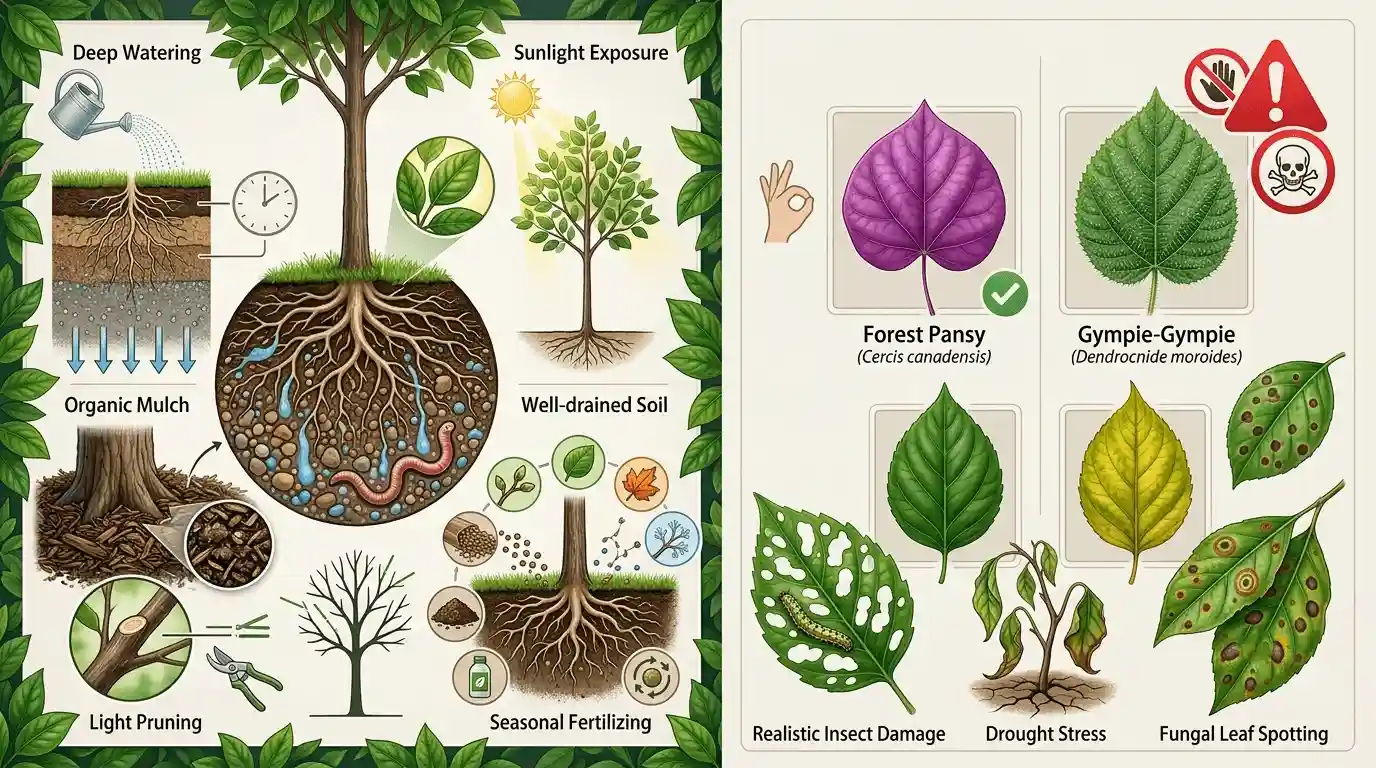
Even healthy trees with heart-shaped leaves can develop issues caused by environmental conditions, poor planting practices, or incorrect species selection. Identifying the cause early helps prevent long-term damage and improves the tree’s health.
At Greenery Inside, we’ve found that many problems blamed on pests are actually the result of unsuitable soil, incorrect watering, or planting a species outside its preferred climate.
Why Leaves May Lose Their Colour
Leaf discoloration is one of the most common concerns among gardeners.
Possible causes include:
- Seasonal colour changes in deciduous species such as Forest Pansy.
- Nutrient deficiencies, particularly nitrogen or iron.
- Excessive watering leading to poor root health.
- Drought stress during prolonged dry periods.
- Natural ageing of older leaves.
For example, Forest Pansy naturally changes from deep purple in spring to bronze and green during summer before developing yellow autumn foliage. This seasonal transition is normal and should not be mistaken for disease.
If evergreen species like Eucalyptus cordata develop widespread yellow leaves, investigate soil drainage, nutrient availability, and watering practices.
Poor Growth
Slow growth usually indicates that one or more growing conditions are unsuitable.
Common causes include:
- Compacted soil restricting root development.
- Insufficient sunlight.
- Poor drainage.
- Incorrect soil pH.
- Competition from nearby trees.
- Limited root space.
In our experience, newly planted ornamental Cercis trees establish more successfully when planted during autumn or early spring, allowing roots to develop before periods of extreme heat.
Environmental Stress
Australian weather varies dramatically between regions, and environmental stress affects species differently.
Potential stress factors include:
- Heatwaves
- Frost damage
- Strong winds
- Extended drought
- Waterlogged soil
- Coastal salt exposure
Rainforest species such as Homalanthus populifolius appreciate consistently moist conditions and can suffer in prolonged drought. Conversely, eucalyptus species generally tolerate dry periods once established but dislike permanently wet soils.
Seasonal Care Update (2026): Australian horticultural experts continue recommending deep mulching around newly planted trees to improve soil moisture retention and reduce heat stress during increasingly frequent summer heatwaves.
Pest and Disease Issues
Most healthy trees experience relatively few serious pest problems when grown in appropriate conditions.
Potential issues include:
Forest Pansy
- Aphids on new growth
- Scale insects
- Powdery mildew
- Leaf spot diseases
Eucalyptus cordata
- Psyllids
- Leaf beetles
- Occasional fungal leaf diseases
Homalanthus populifolius
- Minor chewing insects
- Caterpillars
- Root rot in poorly drained soils
Healthy trees planted in suitable locations generally recover well with minimal intervention.
Misidentifying Dangerous Species
One of the biggest identification mistakes involves confusing ornamental heart-shaped leaf trees with the highly dangerous Gympie-Gympie (Dendrocnide moroides).
Fortunately, there are several obvious differences.
| Feature | Gympie-Gympie | Forest Pansy | Bleeding Heart Tree |
| Stinging hairs | Yes | No | No |
| Garden suitability | No | Excellent | Excellent |
| Native habitat | Tropical rainforest | Gardens | Rainforests |
| Safe to touch | No | Yes | Yes |
Always inspect leaves closely before handling unknown rainforest plants.
If tiny hairs are visible, avoid touching the plant until it has been positively identified.
Forest Pansy in Australia: Benefits and Common Challenges
The forest pansy tree Australia gardeners enjoy is valued for its striking foliage, spring flowers, and manageable size. It has become one of the country’s most popular ornamental feature trees.
However, understanding forest pansy tree problems Australia helps gardeners achieve better long-term success.
Benefits
Forest Pansy offers numerous ornamental advantages:
- Beautiful heart-shaped foliage
- Brilliant seasonal colour
- Attractive pink spring flowers
- Compact mature size
- Excellent specimen tree
- Supports pollinating insects during flowering
It works especially well as a feature tree in cottage gardens, modern landscapes, and suburban front yards.
Common Challenges
Although attractive, Forest Pansy performs best when its growing requirements are met.
Heat Sensitivity
Extended periods of intense summer heat may reduce leaf quality, particularly in inland regions.
Providing afternoon shade in very hot climates can minimise stress.
Leaf Scorch
Leaf scorch usually develops when:
- Soil becomes excessively dry.
- Hot winds occur.
- Newly planted trees experience water stress.
Maintaining a layer of organic mulch helps conserve soil moisture.
Drought Stress
Forest Pansy prefers consistent moisture during establishment.
Symptoms include:
- Curling leaves
- Early leaf drop
- Reduced flowering
- Slower growth
Deep watering during prolonged dry weather is generally more effective than frequent light irrigation.
Flowering Performance
Poor flowering may result from:
- Excessive shade
- Heavy pruning
- Poor nutrition
- Late frosts damaging flower buds
Pruning immediately after flowering helps preserve the following year’s buds.
Bleeding Heart Tree in Australian Landscapes
The bleeding heart tree Australia gardeners recognise is Homalanthus populifolius, a fast-growing native rainforest tree valued for both its appearance and ecological benefits.
Its large heart-shaped leaves create an attractive tropical effect, making it popular in native gardens and wildlife landscapes.
Identification
Typical identifying characteristics include:
- Large glossy heart-shaped leaves
- Grey trunk
- Red leaf stalks
- Greenish flower clusters
- Decorative fruit
The tree’s reddish sap is responsible for its common name rather than its flowers.
Seasonal Appearance
Throughout the year, the tree provides changing visual interest.
- Spring: vigorous new growth
- Summer: lush green canopy
- Autumn: fruit production
- Winter (warmer regions): evergreen appearance
Because seasonal appearance varies with climate, many gardeners rely on bleeding heart tree pictures when comparing mature specimens with young nursery plants.
Photographs showing leaves, bark, fruit, and overall tree shape are especially useful for confirming identification, as leaf shape alone may resemble several unrelated species.
Wildlife Attraction
The Bleeding Heart Tree provides valuable habitat by attracting:
- Fruit-eating birds
- Native bees
- Butterflies
- Beneficial insects
Its rapid growth also makes it useful for ecological restoration projects and native revegetation.
Landscape Value
Popular uses include:
- Rainforest gardens
- Wildlife corridors
- Native landscaping
- Fast-growing screening
- Habitat restoration
Its ability to establish quickly makes it particularly valuable where rapid canopy cover is desired.
Beginner Mistakes When Choosing Heart-Shaped Leaf Trees
Many purchasing mistakes occur because gardeners focus only on attractive foliage while overlooking the tree’s long-term requirements.
Common mistakes include:
- Ignoring the tree’s mature height and canopy spread.
- Choosing species unsuitable for the local climate.
- Confusing native Australian trees with introduced ornamental species.
- Assuming every heart-shaped leaf belongs to the same tree.
- Accidentally planting dangerous species such as Gympie-Gympie.
Before purchasing any tree, always verify:
- Botanical name
- Mature size
- Climate suitability
- Water requirements
- Safety considerations
These simple checks prevent expensive mistakes and improve long-term success.
Landscaping Ideas Using Heart-Shaped Leaf Trees
Trees with heart-shaped foliage can become striking focal points in both native and ornamental landscapes. For more planting inspiration, explore evergreen structure guides like best evergreen trees, flowering evergreen trees, and broader planting advice in our guide to house plants.
Feature Planting
Use a single specimen as a centrepiece in lawns or entry gardens where its foliage can be appreciated from multiple angles.
Native Gardens
Combine Eucalyptus cordata and Homalanthus populifolius with other Australian native shrubs and grasses to create a habitat-friendly landscape.
Wildlife Gardens
Plant native species that provide nectar, fruit, and shelter for birds, butterflies, and beneficial insects.
Shade Gardens
Larger species create comfortable outdoor spaces while reducing summer heat around homes.
Streetscapes
Compact ornamental Cercis cultivars suit streets, parks, and public landscapes because of their moderate size and seasonal interest.
Mixed Ornamental Landscapes
Combining evergreen native trees with deciduous ornamental species provides year-round texture, colour, and seasonal variation.
Conclusion
Australia is home to an impressive diversity of trees with heart-shaped leaves, ranging from native rainforest pioneers and unique eucalyptus species to colourful ornamental redbuds grown in gardens across the country. While heart-shaped foliage provides an excellent starting point for identification, it should always be considered alongside bark, flowers, growth habit, habitat, and overall tree form.
Whether you are selecting a tree with heart shaped leaves Australia for a compact courtyard, a wildlife-friendly native garden, or a feature landscape, choosing the right species depends on your local climate, available space, maintenance expectations, and landscaping goals. Careful identification also helps avoid potentially hazardous plants such as Gympie-Gympie while ensuring you select a tree that will thrive for many years.
Frequently Asked Questions
What is the most common tree with heart shaped leaves in Australia?
The most commonly planted ornamental tree with heart-shaped leaves in Australia is Forest Pansy (Cercis canadensis). Among native species, Homalanthus populifolius and Eucalyptus cordata are well-known examples, although their natural distributions differ significantly.
Is the Bleeding Heart Tree native to Australia?
Yes. The Bleeding Heart Tree (Homalanthus populifolius) is native to eastern Australia, particularly Queensland and New South Wales. It naturally grows in rainforest environments and is valued for its rapid growth and wildlife benefits.
Which evergreen tree has heart-shaped leaves?
Several evergreen Australian species display heart-shaped foliage. Eucalyptus cordata retains its leaves year-round, while Homalanthus populifolius remains evergreen or semi-evergreen in suitable climates.
Are all heart-shaped leaf trees safe to touch?
No. Although most ornamental trees are harmless, Gympie-Gympie (Dendrocnide moroides) has extremely painful stinging hairs. Unknown rainforest plants should never be handled until they have been correctly identified.
What is the difference between Forest Pansy and the Bleeding Heart Tree?
Forest Pansy is a deciduous ornamental tree introduced from North America and grown for its colourful foliage and spring flowers. The Bleeding Heart Tree is an Australian native rainforest species that grows much faster, remains evergreen in warm climates, and provides important wildlife habitat.
Can heart-shaped leaf trees grow in pots?
Yes. Compact Cercis cultivars and young Forest Pansy trees can be grown in large containers for several years, provided they receive regular watering, quality potting mix, and occasional root pruning. Larger native trees are generally better suited to open ground.
Which heart-shaped leaf trees attract birds and pollinators?
Homalanthus populifolius is one of the best wildlife trees because its flowers and fruit attract birds, bees, butterflies, and beneficial insects. Forest Pansy also supports pollinators during its spring flowering period, making it an excellent addition to biodiversity-friendly gardens.