Introduction
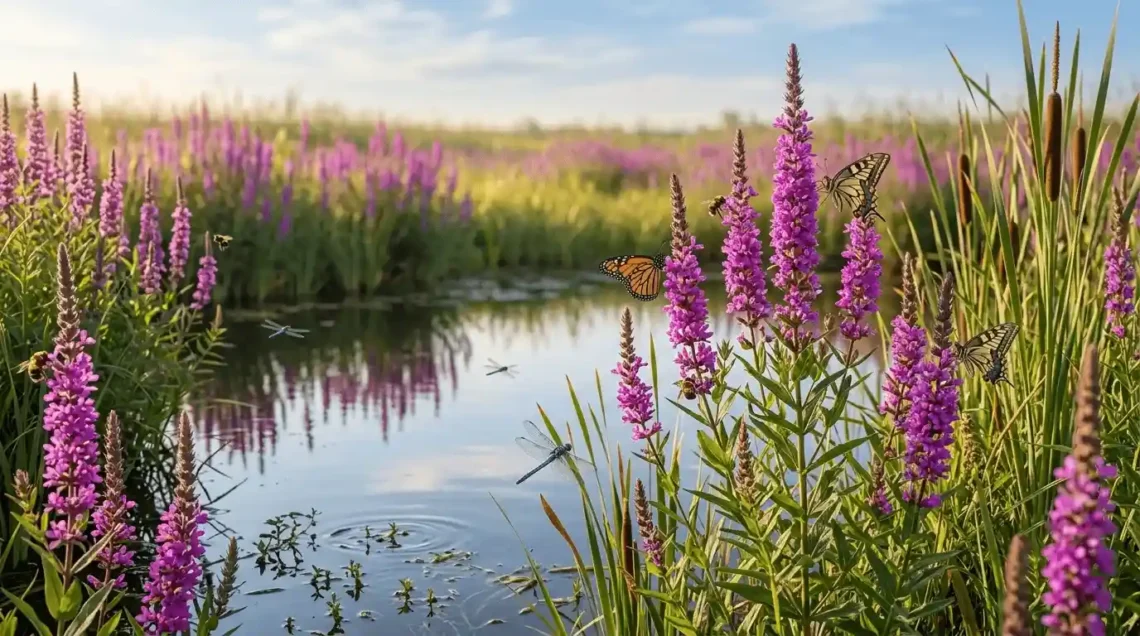
Lythrum salicaria, commonly known as purple loosestrife, is a striking herbaceous perennial admired for its tall spikes of vivid purple flowers. This moisture-loving member of the Lythraceae family thrives in wetlands, ponds, and damp garden borders, making it a popular ornamental plant. However, its vigorous growth and prolific seed production have also earned it a reputation as one of the world’s most invasive wetland plants in many regions. Interest in Lythrum salicaria Australia continues to grow because its cultivation and legal status vary between states and territories. Understanding its identification, ecological impact, and proper care helps gardeners make informed and responsible planting decisions.
By Greenery Inside | Plant Care & Gardening Expert
Quick Summary
- Lythrum salicaria (purple loosestrife) is a moisture-loving perennial recognized for tall purple flower spikes.
- It is highly ornamental but is considered invasive in many countries because it spreads aggressively through seeds and rhizomes.
- Before planting, always check local regulations, particularly regarding Lythrum salicaria Australia.
- Cultivars including ‘Blush’ and ‘Swirl’ provide attractive garden colour with slightly different flower shades.
- Responsible cultivation helps reduce environmental impacts on native wetlands.
What Is Lythrum salicaria?
Botanical Classification
Lythrum salicaria is a flowering perennial belonging to the Lythraceae family. This species, widely studied for its ecological impact, is documented in global botanical and conservation literature such as its Wikipedia entry on Lythrum salicaria.
| Classification | Information |
| Scientific Name | Lythrum salicaria |
| Family | Lythraceae |
| Genus | Lythrum |
| Plant Type | Herbaceous perennial |
| Native Range | Europe, Asia and parts of North Africa |
The plant naturally grows in permanently moist environments and produces upright flowering stems every growing season.
Common Names and Botanical Synonyms
The Lythrum salicaria common name is purple loosestrife, although gardeners may also encounter names such as:
- Purple loosestrife
- Lythrum purple loosestrife
- Purple lythrum
- Lythrum loosestrife
- Salicaria
These names all refer to the same ornamental wetland perennial.
Natural Habitat
Lythrum salicaria naturally thrives in:
- Wetlands
- Marshes
- Riverbanks
- Pond margins
- Moist meadows
- Floodplains
Its extensive root system allows it to flourish where soils remain consistently damp. Moisture availability strongly influences flowering performance, plant size, and seed production.
How to Identify Lythrum salicaria
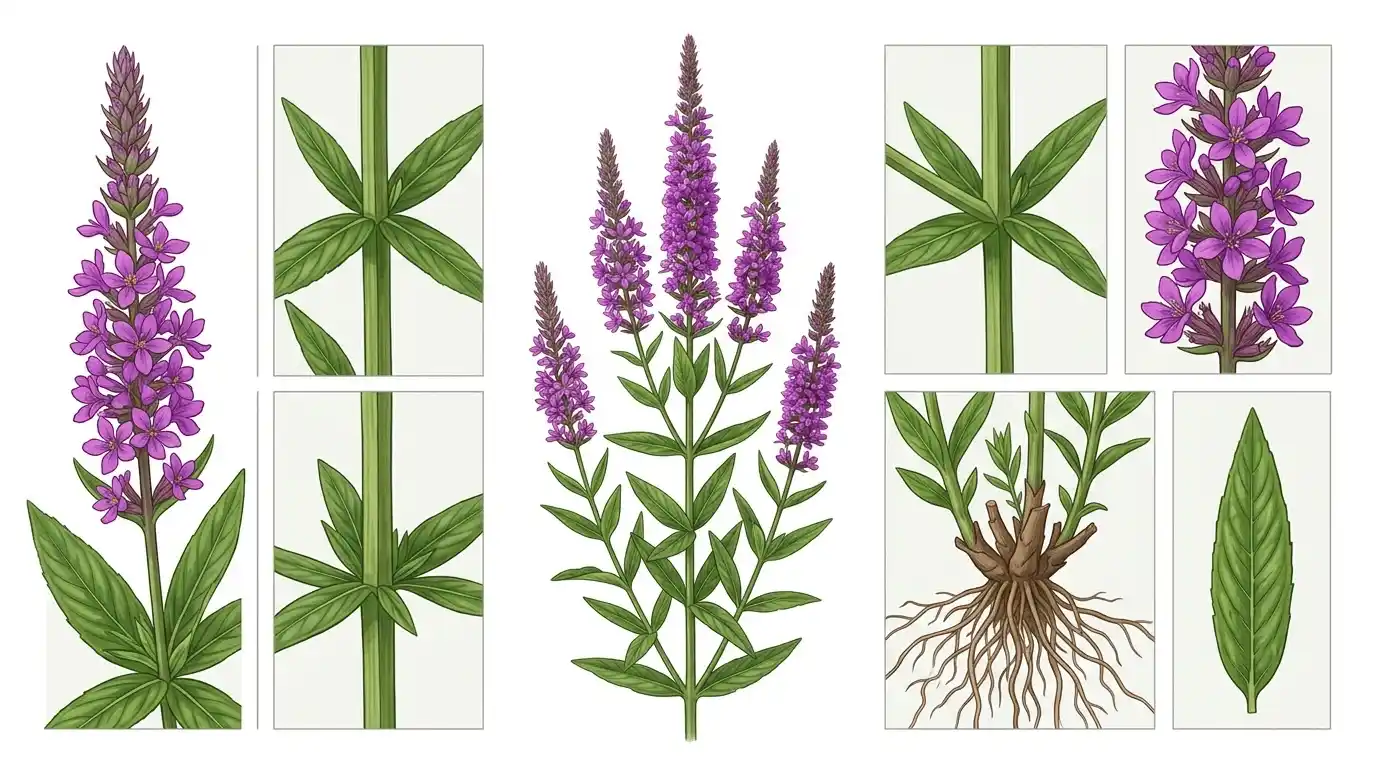
Mature Lythrum salicaria is easy to recognize once flowering begins.
Key identification features include:
- Upright square stems
- Lance-shaped leaves arranged opposite or in whorls
- Dense terminal flower spikes
- Bright purple to magenta flowers
- Summer flowering season
- Woody crown with fibrous roots
| Feature | Description | Identification Value |
| Height | 1–2.5 metres | Very high |
| Stem | Upright, square | High |
| Leaves | Narrow, lance-shaped | High |
| Flowers | Dense purple spikes | Very high |
| Bloom Time | Summer to early autumn | High |
| Roots | Fibrous with woody crown | Moderate |
Is Lythrum salicaria Native or Invasive?
Lythrum salicaria is native to Europe, Asia, and North Africa but invasive in many introduced regions.
Its exceptional seed production—often exceeding two million seeds annually per mature plant—combined with vegetative spread enables it to dominate wetlands rapidly.
Ecological impacts include:
- Displacement of native wetland vegetation
- Reduced biodiversity
- Altered wildlife habitat
- Changed water movement within marshes
Lythrum salicaria in Australia
Interest in Lythrum salicaria Australia has increased because the species has become naturalised in parts of southeastern Australia. Management and legal restrictions differ between jurisdictions, and some areas discourage or regulate its cultivation due to environmental concerns.
Before planting, gardeners should:
- Check state biosecurity regulations.
- Avoid planting near natural waterways.
- Consider native Australian wetland plants as safer alternatives.
Greenery Inside recommends checking current local invasive species lists before purchasing or planting this species, as regulations can change over time.
Plant Size and Growth Habit
Under favourable conditions, Lythrum salicaria develops into a robust clump-forming perennial.
Typical mature size:
- Height: 1–2.5 metres
- Width: 60–120 cm
Growth varies depending on:
- Soil moisture
- Sunlight
- Fertility
- Competition from neighbouring plants
Plants growing beside ponds or marshes often become larger than those in average garden beds.
During winter, foliage dies back while underground crowns remain alive for spring regrowth.
Growth Rate of Lythrum salicaria
Lythrum salicaria has a moderate to vigorous growth rate.
Growth begins in spring, accelerates through summer, flowers heavily, then enters dormancy during winter.
Growth speed depends on:
- Constant moisture
- Full sunlight
- Fertile soils
- Warm growing seasons
Spread occurs through:
- Massive seed production
- Short rhizomes
- Crown expansion
Ideal Growing Conditions
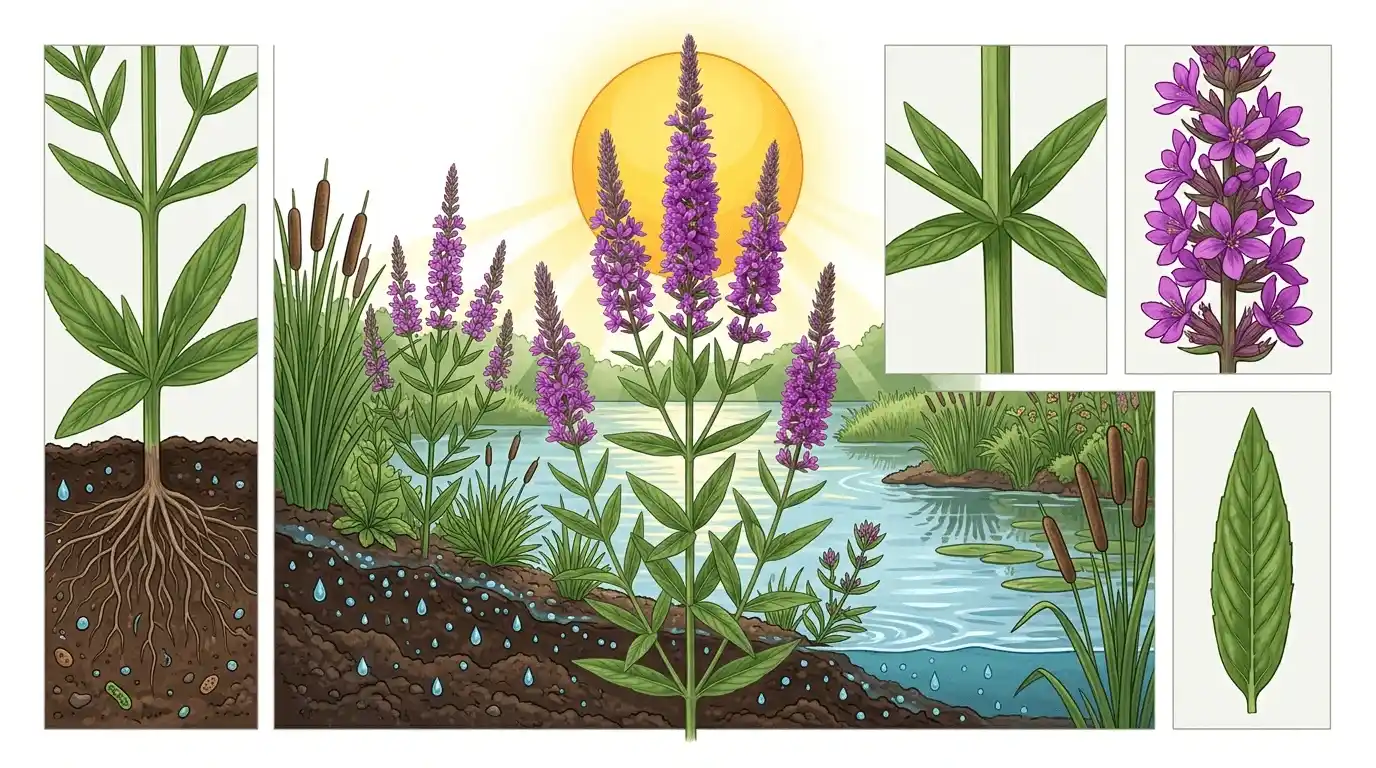
Light Requirements
Purple loosestrife flowers best in full sun.
Lythrum salicaria performs best in consistently damp environments, making it similar to other moisture-loving species such as those covered in our guide to plants that like wet soil in Australia.
Although partial shade is tolerated, flowering typically becomes lighter and stems may stretch.
Soil Preferences
Ideal soils include:
- Moist loam
- Clay
- Organic-rich soils
- Wet garden soils
Unlike many ornamentals, drainage does not need to be rapid.
Water Requirements
Constant moisture produces the healthiest plants.
Established specimens tolerate brief dry periods but prolonged drought reduces flowering and vigour.
Climate and Hardiness
The species performs well in temperate climates.
It tolerates:
- Cold winters
- Moderate summer heat
- High humidity
- Seasonal flooding
As of the 2026 growing season, many horticulturists continue recommending careful monitoring of moisture levels during prolonged heatwaves, even for wetland-adapted perennials.
Complete Care Guide
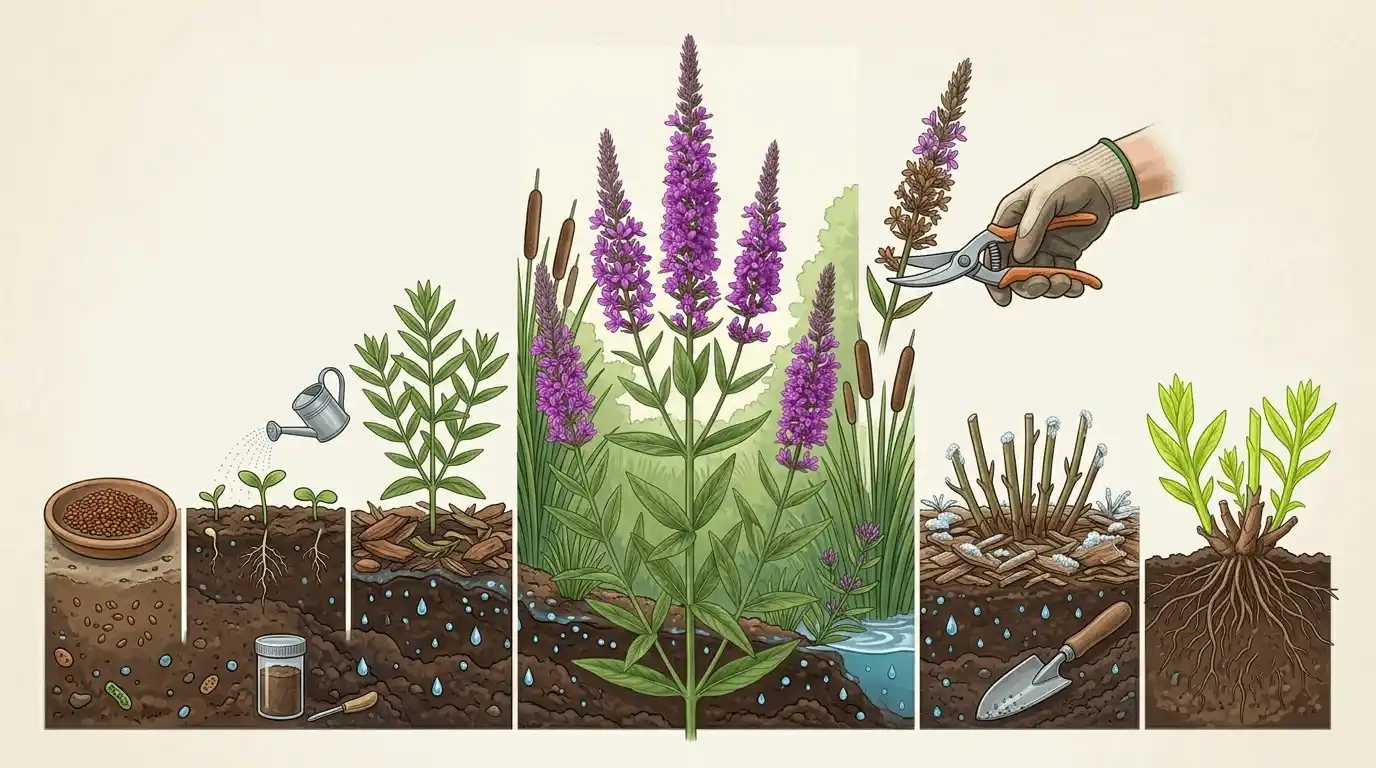
Watering
Maintain evenly moist soil.
- Water weekly in average garden beds.
- Water more frequently during hot weather.
- Pond-edge plants often require little supplemental irrigation.
Fertilizing
Heavy feeding is rarely necessary.
Apply a balanced slow-release fertiliser in early spring if soil fertility is low.
Mulching
Organic mulch helps:
- Retain soil moisture
- Reduce weeds
- Moderate soil temperature
Avoid piling mulch directly against stems.
Pruning and Deadheading
Deadhead faded flowers before seeds mature to reduce unwanted spread.
Cut back stems after flowering or in late winter.
In our experience growing moisture-loving perennials, removing spent flower spikes promptly is the most effective way to minimise self-seeding.
Winter Care
Plants naturally become dormant.
Winter care includes:
- Cutting stems to ground level
- Removing seed heads
- Leaving crowns undisturbed
Fresh shoots emerge the following spring.
How to Grow Lythrum salicaria from Seeds
Lythrum salicaria seeds germinate best after exposure to cool, moist conditions.
Basic growing process:
- Collect mature seed heads.
- Store seeds dry and cool.
- Cold stratify for several weeks if required.
- Surface sow without deeply covering seeds.
- Keep growing media consistently moist.
Best Practices
- Best sowing season: Late winter to early spring
- Germination temperature: 15–20°C
- Seedling care: Bright light and consistent moisture
- Common mistakes: Allowing seedlings to dry out, overcrowding trays, or planting near natural wetlands where spread may occur.
Popular Cultivars of Lythrum salicaria
Lythrum salicaria ‘Blush’
Lythrum salicaria ‘Blush’ produces delicate pale pink flowers instead of deep purple blooms.
Features:
- Softer flower colour
- Cottage gardens
- Pond margins
- Pollinator-friendly
Lythrum salicaria ‘Swirl’
Lythrum salicaria ‘Swirl’ offers white to very pale blush flowers.
It creates contrast in mixed perennial borders and water gardens while maintaining the upright growth habit of the species.
| Cultivar | Flower Colour | Mature Size | Best Garden Use |
| Blush | Pale pink | 1.5–2 m | Cottage gardens |
| Swirl | White to blush | 1.5–2 m | Water gardens |
Medicinal and Traditional Uses
Historically, Lythrum salicaria medicinal uses included herbal preparations for digestive complaints, wound care, and diarrhoea because of the plant’s tannin content.
Modern research has identified bioactive compounds, but scientific evidence supporting medicinal effectiveness remains limited.
Safety considerations include:
- Avoid self-medication.
- Consult qualified healthcare professionals.
- Herbal preparations should not replace evidence-based treatments.
Lythrum salicaria vs Similar Wetland Plants
| Plant | Flower Appearance | Leaf Shape | Habitat | Invasiveness | Garden Suitability |
| Lythrum salicaria | Purple spikes | Lance-shaped | Wetlands | High | Limited |
| Native loosestrife | Smaller spikes | Variable | Wetlands | Low | Excellent |
| Fireweed | Loose flower clusters | Narrow | Disturbed soils | Low | Moderate |
| Willowherbs | Pink flowers | Narrow | Moist ground | Low | Good |
Common Problems and How to Prevent Them
Excessive Self-Seeding
Remove seed heads before maturity.
Poor Flowering
Usually caused by:
- Too much shade
- Dry soil
- Excess nitrogen
Root Competition
Avoid overcrowding.
Provide sufficient spacing for airflow and moisture access.
Pest and Disease Issues
Although generally resilient, occasional problems include:
- Aphids
- Leaf beetles
- Powdery mildew
- Leaf spots
Prevent issues through proper spacing, sanitation, and avoiding overhead watering. Aphids are one of the most common pests affecting moisture-loving perennials, especially during warm, humid growth periods, as explained in our guide on aphids on plants.
Common Beginner Mistakes
Common errors include:
- Planting without checking local regulations.
- Allowing seed heads to mature.
- Growing plants beside natural wetlands.
- Letting soil dry excessively.
- Choosing confined planting areas without management plans.
Environmental Benefits and Ecological Concerns
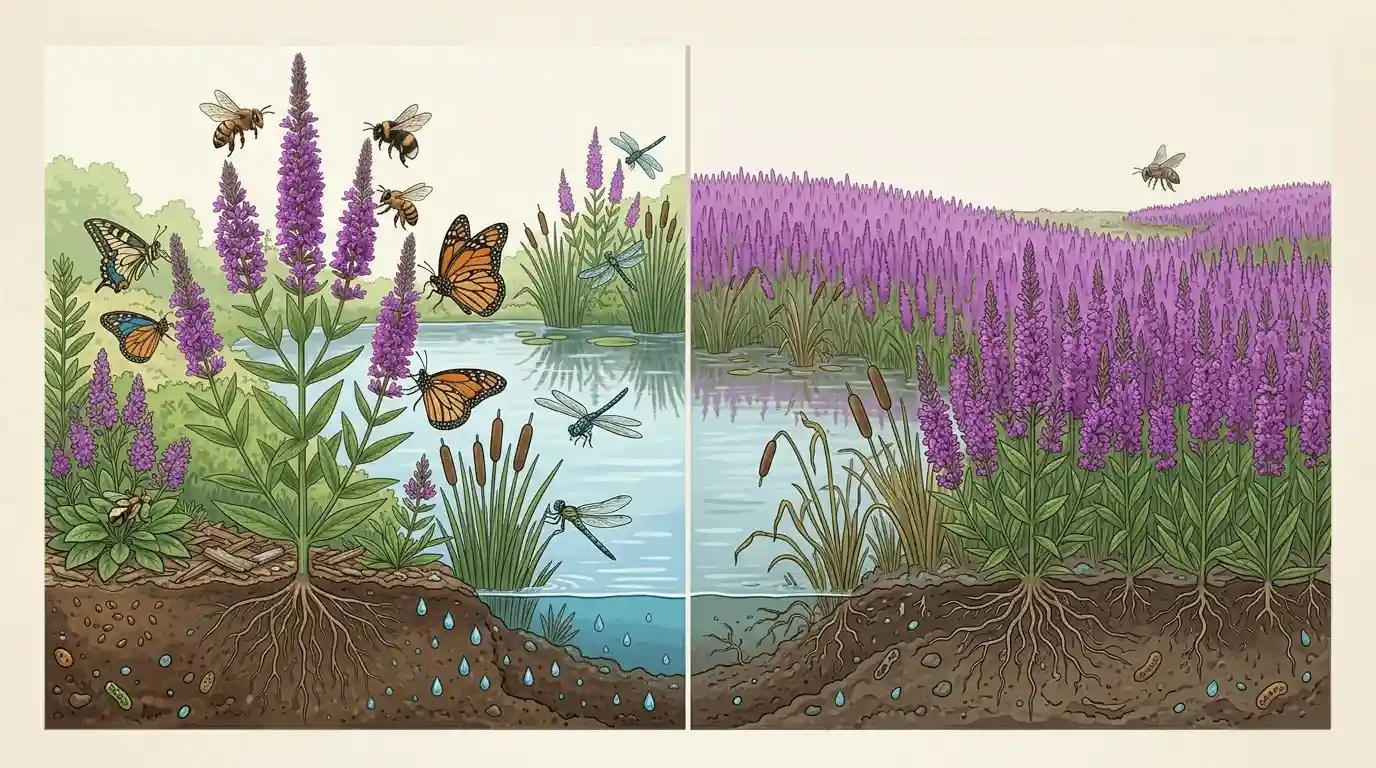
Benefits
- Excellent nectar source
- Supports bees and butterflies
- Attractive wildlife garden feature
- Long flowering season
Ecological Concerns
- Invades wetlands
- Displaces native vegetation
- Reduces biodiversity
- Alters natural ecosystems
Balancing ornamental value with environmental responsibility is essential. Despite its invasive reputation in some regions, Lythrum salicaria still produces abundant nectar that attracts bees, butterflies, and other pollinators, similar to other species featured in our guide to native plants that attract butterflies.
Landscaping Uses and Responsible Planting
Purple loosestrife can complement:
- Cottage gardens
- Rain gardens
- Pond edges
- Wildlife gardens
Responsible cultivation includes:
- Removing spent flowers.
- Preventing seed escape.
- Avoiding planting near waterways.
- Choosing native wetland species where invasive risks exist.
Greenery Inside recommends selecting local native alternatives whenever ecological sensitivity or legal restrictions apply. For gardeners designing environmentally responsible landscapes in Australia, it’s often better to combine ornamental species with resilient native planting structures, as outlined in our Australian native garden trees guide.
Conclusion
Lythrum salicaria is a beautiful yet environmentally significant perennial that combines impressive ornamental value with substantial ecological responsibilities. Correct identification, suitable growing conditions, careful maintenance, and awareness of local regulations are essential before introducing it into any landscape. While it offers benefits for pollinators and ornamental gardens, its invasive potential means responsible cultivation should always be the priority. By understanding its growth habits, care requirements, and environmental impacts, gardeners can make informed decisions that protect both cultivated landscapes and natural ecosystems.
Frequently Asked Questions
What is Lythrum salicaria commonly called?
Lythrum salicaria is most commonly known as purple loosestrife.
Is Lythrum salicaria invasive in Australia?
It is naturalised in parts of Australia, and management or legal restrictions vary between states. Always check local regulations before planting.
Can Lythrum salicaria be grown from seeds?
Yes. Seeds germinate readily when kept moist, and cold stratification may improve germination rates.
What growing conditions does purple loosestrife prefer?
It grows best in full sun, consistently moist soils, fertile loam or clay, and temperate climates with reliable moisture.
What are the medicinal uses of Lythrum salicaria?
Traditionally, it has been used for digestive complaints and wound care, but modern scientific evidence remains limited, and medicinal use should be approached cautiously.
What is the difference between Lythrum salicaria and other loosestrife species?
Lythrum salicaria generally grows taller, produces dense purple flower spikes, and has a much greater invasive potential than many native loosestrife species.
How tall does Lythrum salicaria grow?
Most mature plants reach between 1 and 2.5 metres tall, depending on growing conditions.
Are cultivars like ‘Blush’ and ‘Swirl’ invasive?
Although ornamental cultivars may produce fewer viable seeds in some conditions, they should still be managed responsibly. Their invasive potential varies, and they should not be assumed to be non-invasive without local guidance.