Introduction
Dymondia ground cover is a low-growing, evergreen plant valued for its exceptional drought tolerance and clean, uniform appearance. Known for forming a dense, silver-green carpet, it has become a popular alternative to traditional turf in water-wise landscapes. Homeowners and landscape designers often choose dymondia ground cover for lawns, pathways, borders, and areas where reduced irrigation is a priority. Its ability to thrive in sunny, dry conditions while maintaining visual appeal makes it especially suitable for sustainable garden designs. With minimal maintenance requirements and strong weed-suppressing qualities, dymondia ground cover fits well into modern landscapes that prioritize efficiency, durability, and long-term water conservation.
What Is Dymondia Ground Cover?
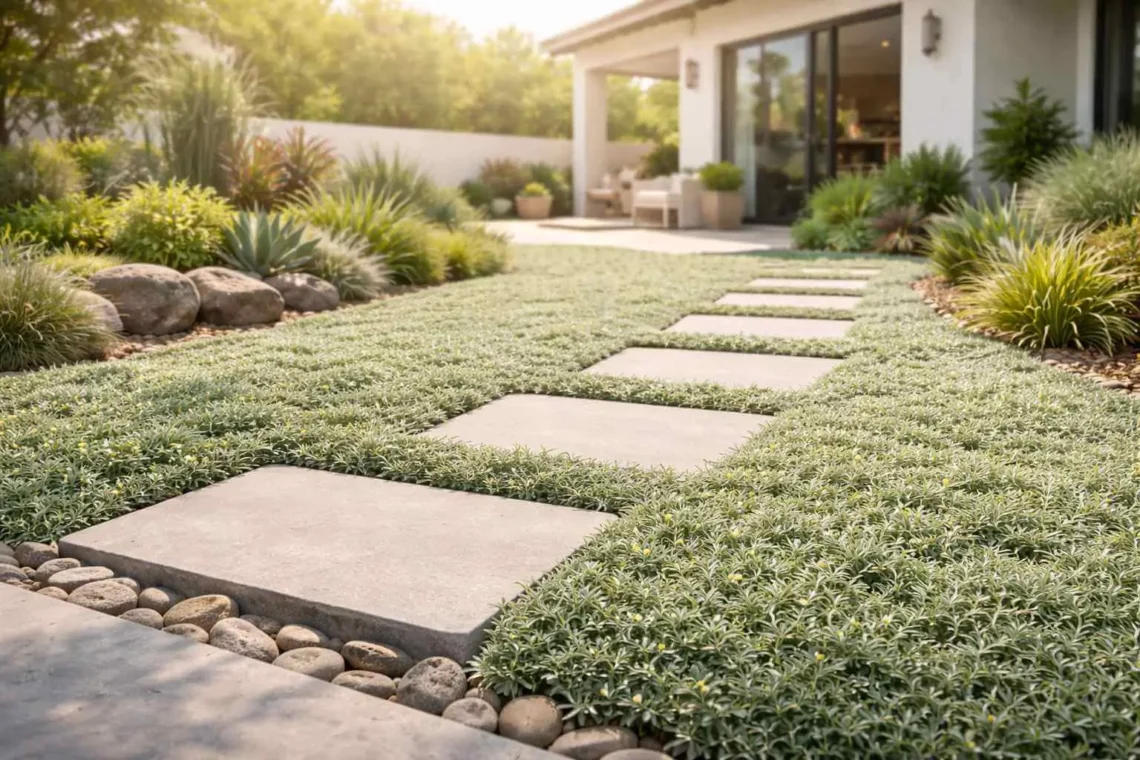
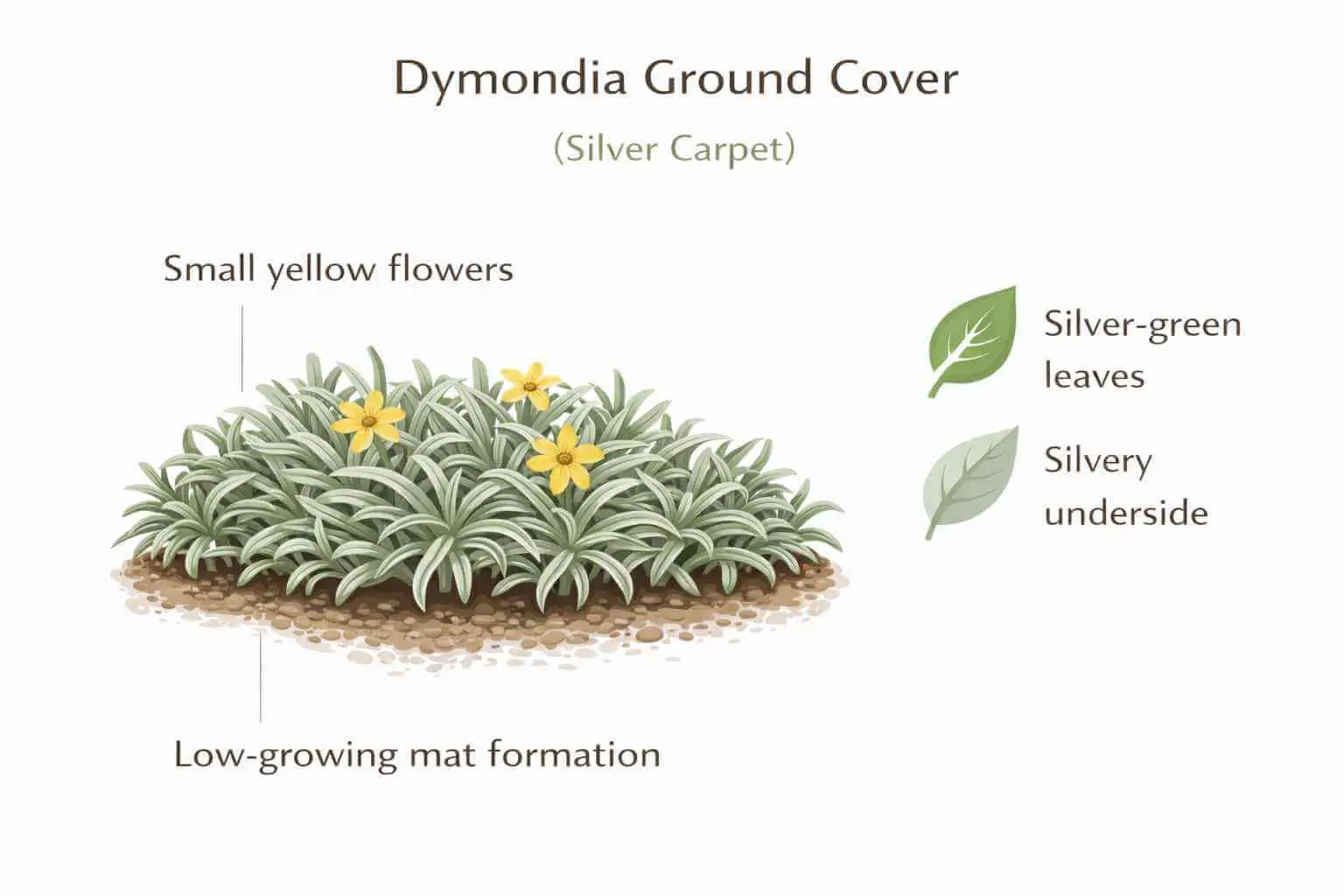
Dymondia ground cover, botanically known as Dymondia margaretae, is commonly referred to as Silver Carpet due to the silvery underside of its narrow green leaves. This evergreen ground cover originates from South Africa and is well adapted to dry, coastal, and Mediterranean-style climates. It grows close to the ground, creating a tight, mat-like surface that looks tidy throughout the year. The plant produces small, yellow daisy-like flowers that sit low within the foliage, adding subtle seasonal interest without disrupting its uniform appearance.
Dymondia Ground Cover Height and Growth Pattern
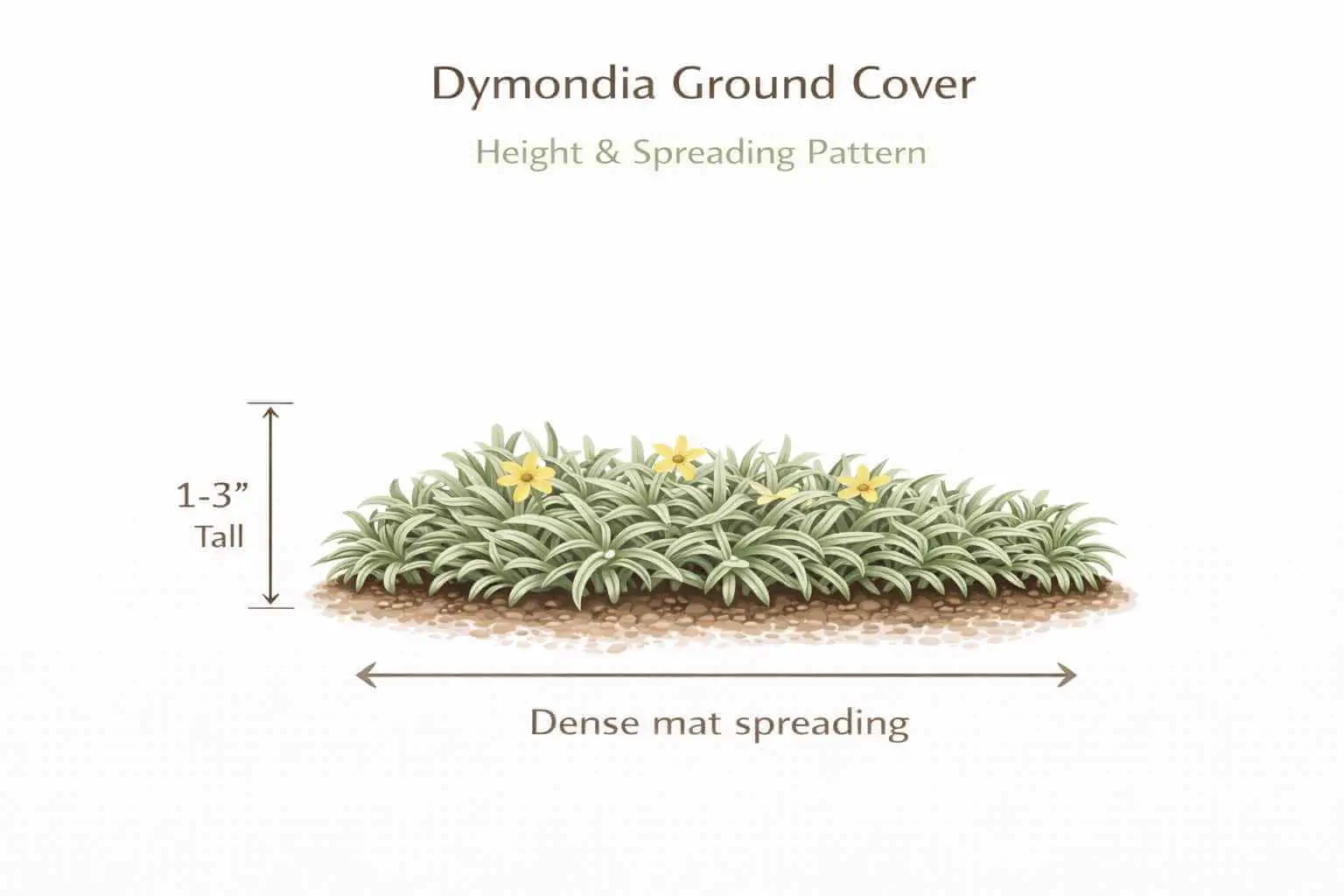
Dymondia ground cover height typically ranges between 1 to 3 inches when mature. Rather than growing upward, it spreads horizontally through creeping stems that root as they expand. This mat-forming growth pattern allows the plant to gradually fill open spaces, creating continuous coverage over time. Its low profile makes it ideal for areas where height control is important, such as between stepping stones or along garden edges.
Key Benefits of Dymondia Ground Cover
Homeowners and landscapers choose dymondia ground cover for its combination of visual appeal and practical performance. One of its primary advantages is water efficiency, as it requires significantly less irrigation once established compared to traditional lawns. Its dense growth helps reduce soil erosion and limits weed germination, supporting long-term landscape sustainability. Dymondia ground cover also performs well in sunny locations, maintaining its color and structure even during extended dry periods.
Dymondia Ground Cover Pros and Cons
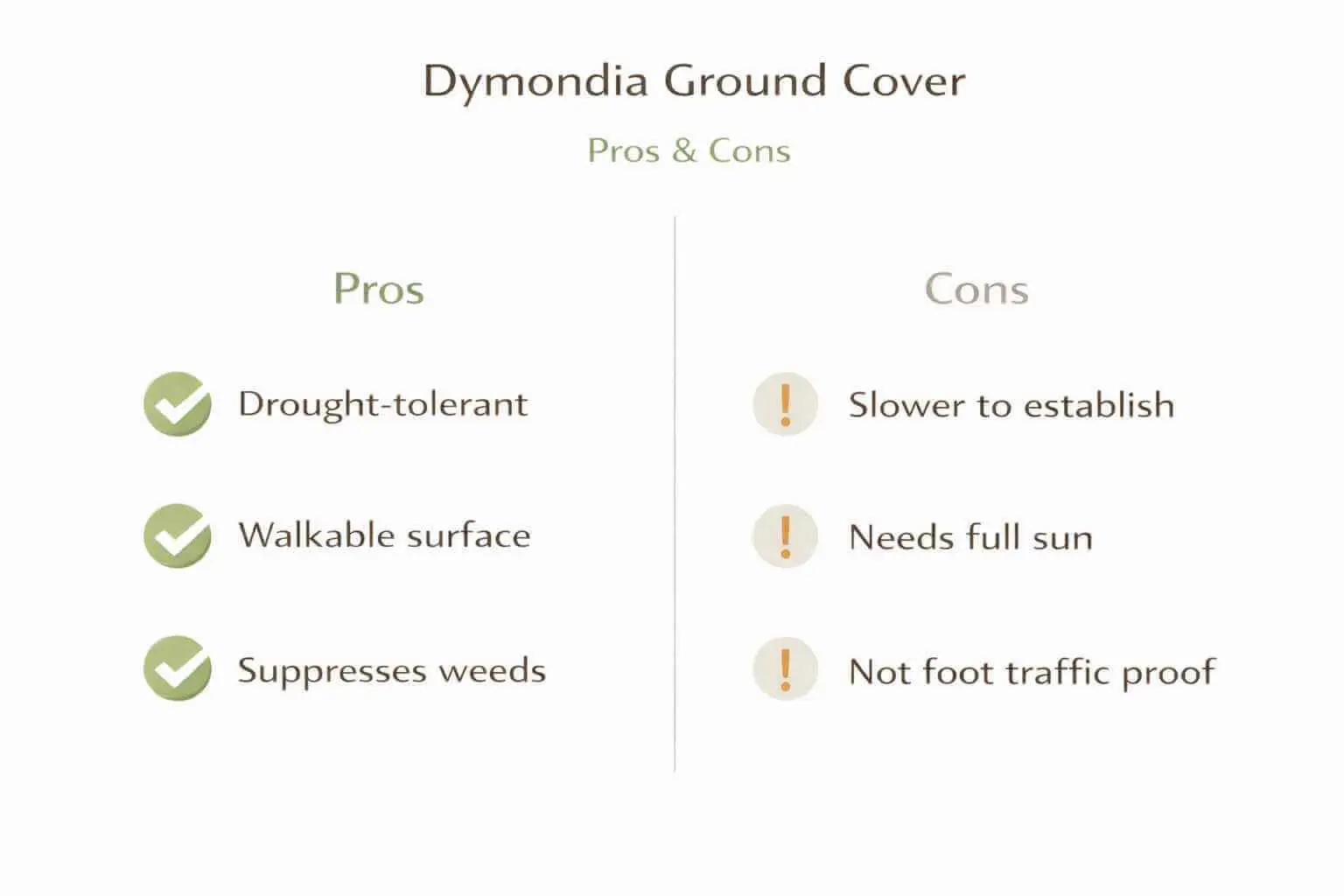
Pros:
- High drought tolerance once established
- Low maintenance requirements
- Effective weed suppression through dense growth
Cons:
- Slow establishment compared to some ground covers
- Limited tolerance for heavy or constant foot traffic
Understanding dymondia ground cover pros and cons helps set realistic expectations and ensures it is planted in suitable areas for best performance.
How to Plant Dymondia Ground Cover Successfully
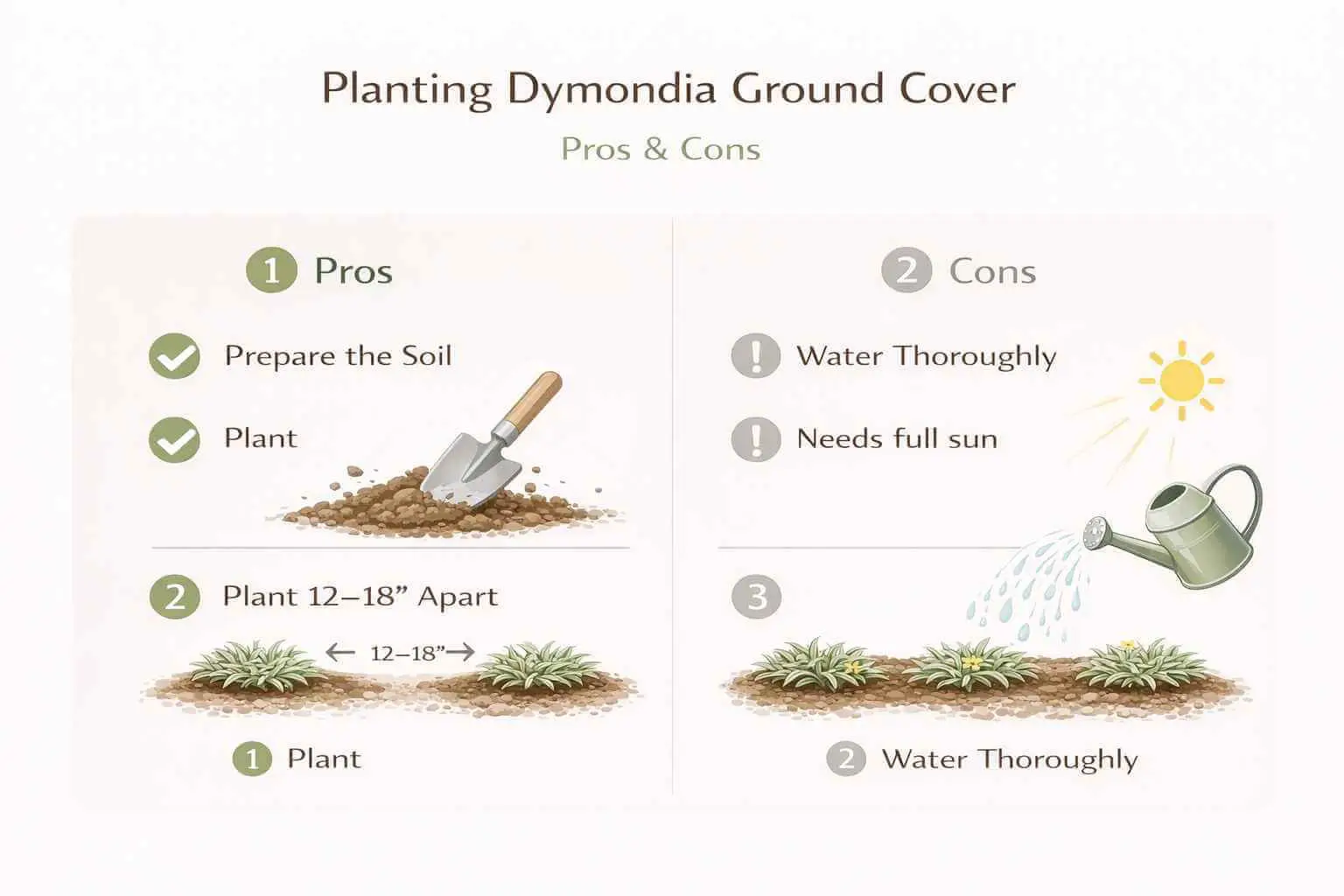
Successful planting begins with proper timing and site preparation. Dymondia ground cover is best planted during mild seasons, such as spring or early fall, when temperatures are moderate. The planting area should receive full sun and have well-draining soil, as standing water can hinder root development. Removing existing weeds and loosening the soil before planting improves early establishment and long-term coverage.
Dymondia Ground Cover Spacing Guidelines
Recommended dymondia ground cover spacing is typically 12 to 18 inches apart, depending on how quickly full coverage is desired. Closer spacing results in faster ground coverage and better weed control, while wider spacing reduces initial plant costs but requires more time to fill in. Proper spacing directly affects how evenly and efficiently the plants form a continuous mat.
Using Dymondia Flats vs Dymondia Seeds
Dymondia flats provide an immediate visual structure and establish more quickly, making them a popular choice for residential landscapes. Dymondia seeds are less expensive upfront but require longer germination and establishment periods. Flats generally offer higher success rates and more uniform coverage, while seeds are better suited for large areas where time is less critical.
Dymondia Ground Cover Care and Maintenance
Dymondia ground cover care focuses on supporting healthy establishment and maintaining consistent conditions. Once established, the plant requires minimal intervention. Occasional inspection and early-stage weed control are usually sufficient to keep the ground cover dense and healthy over time.
Watering, Soil, and Sun Requirements
After establishment, irrigation needs are low, with infrequent deep watering being sufficient in most climates. Well-draining soil is essential to prevent root issues and promote longevity. Full sun exposure is ideal, as shaded areas may lead to thinner growth and reduced density.
Ongoing Dymondia Care Tips
Seasonal maintenance is minimal and typically involves removing debris and monitoring plant spread. Weed management is most important during early growth stages, before the mat fully closes. As part of regular dymondia care, avoiding excessive watering helps preserve its drought-tolerant characteristics and compact form.
Where to Buy Dymondia Ground Cover
Dymondia ground cover is available through a variety of purchasing channels, including local nurseries and specialized landscape suppliers. Homeowners and professional landscapers can choose between in-person purchasing or online ordering based on availability and project scale.
Dymondia Ground Cover for Sale: What to Look For
When shopping for dymondia ground cover for sale, look for healthy plants with firm, well-rooted growth and no signs of disease or discoloration. Local nurseries often provide plants already acclimated to regional conditions, while online retailers may offer broader availability and bulk options.
Where to Buy Silver Carpet Ground Cover
Those looking for where to buy silver carpet ground cover should consider climate compatibility and shipping conditions. Availability may vary by region, so selecting suppliers familiar with local growing conditions improves long-term success.
Common Uses in Landscaping
Dymondia ground cover is widely used in pathways, between stepping stones, along borders, and as a lawn alternative. Its low height and durable mat make it suitable for slopes and erosion-prone areas, while its clean appearance enhances modern and minimalist landscape designs.
Read Also: 7+ Powerful Reasons Rosemary Prostrate Transforms Any Garden
Is Dymondia Ground Cover Right for Your Garden?
Dymondia ground cover performs best in sunny, low-water gardens with well-drained soil. It is ideal for homeowners seeking a sustainable, low-maintenance solution. In areas with heavy foot traffic, poor drainage, or dense shade, alternative ground covers may provide better results.
Conclusion & Call to Action
Dymondia ground cover stands out as a smart, eco-friendly landscaping choice due to its low-growing form, drought tolerance, and long-term sustainability benefits. Its ability to reduce water use, suppress weeds, and maintain a clean, uniform appearance makes it especially valuable for modern, water-wise gardens. Before planting, it’s important to assess your local climate, sun exposure, and available space to ensure the plant can perform at its best. For successful results, explore reputable local suppliers or consult a landscape professional who can help determine whether dymondia ground cover is the right fit for your specific garden conditions.
Read Also: 7+ Stunning Japanese Sweet Flag Grass Benefits You’ll Love
FAQs About Dymondia Ground Cover
How tall does dymondia ground cover grow?
Dymondia ground cover typically grows between 1 and 3 inches tall. It spreads horizontally rather than vertically, forming a dense, mat-like surface that stays low and uniform.
How far apart should dymondia ground cover be planted?
Dymondia ground cover is usually planted 12 to 18 inches apart. Closer spacing leads to faster coverage and better weed suppression, while wider spacing reduces initial planting costs.
Is dymondia ground cover drought tolerant?
Yes, dymondia ground cover is highly drought tolerant once established. It requires minimal irrigation compared to traditional lawns, making it suitable for water-efficient landscapes.
Can you grow dymondia from seeds?
Dymondia can be grown from seeds, but germination and establishment are slow. Many gardeners prefer planting flats or plugs for quicker, more reliable coverage.
Where can I find dymondia ground cover for sale near me?
Dymondia ground cover for sale is commonly available at local nurseries, landscape supply centers, and online plant retailers. Local suppliers are often preferred due to regional climate compatibility.