Introduction
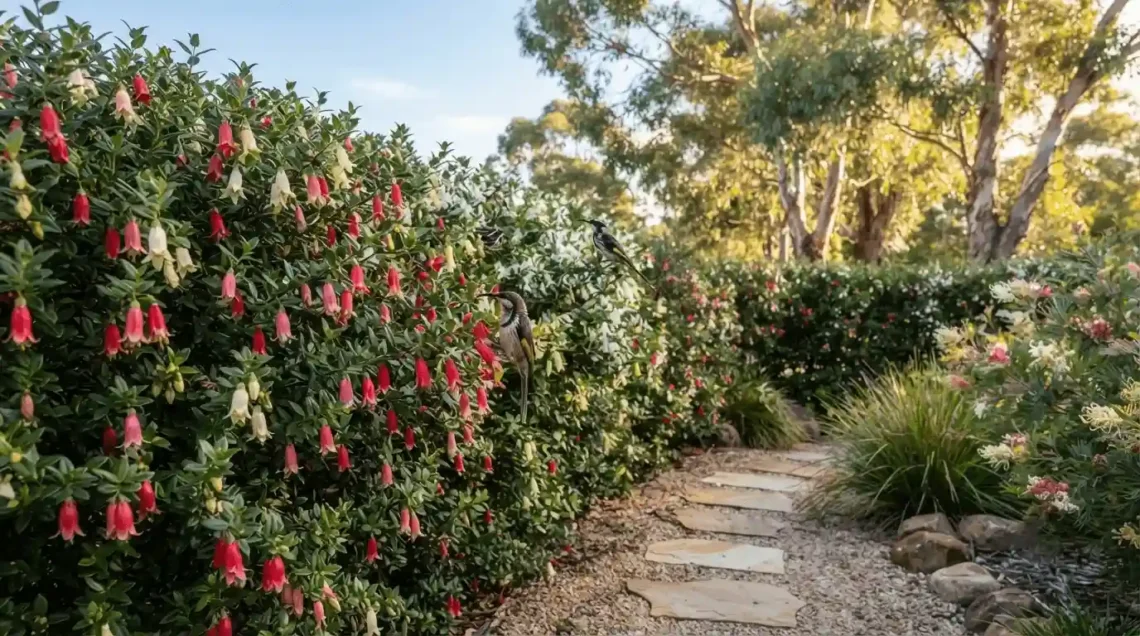
A correa hedge is one of the most versatile and attractive choices for Australian native landscapes. Known by common names such as native fuchsia, Australian native fuchsia, and native fuschia, Correa species produce dense evergreen foliage, colourful bell-shaped flowers, and reliable year-round structure. Whether you’re creating a privacy screen, defining a property boundary, or adding habitat for native birds, a well-planned correa plant hedge offers beauty with relatively low maintenance. With numerous correa species available, gardeners can choose varieties suited to coastal gardens, dry inland climates, formal hedges, or informal wildlife-friendly landscapes. Their distinctive correa flowers also make them a valuable addition to modern Australian native gardens.
Correa hedges are widely used in broader Australian native garden design systems, often alongside structured landscape planting principles discussed in Australian native garden trees, while also complementing biodiversity-focused plantings such as native plants that attract butterflies and mixed ecological gardens inspired by guide to house plants. Botanically, Correa belongs to the Rutaceae family and is documented in detail on Wikipedia.
By Greenery Inside | Plant Care & Gardening Expert
Quick Summary
- Correa hedges are evergreen Australian native shrubs valued for dense foliage, attractive flowers, and excellent wildlife habitat.
- Different Correa species vary in mature size, flower colour, growth habit, and suitability for formal or informal hedges.
- Most Correas thrive in well-drained soil with full sun to partial shade and become drought tolerant after establishment.
- Proper spacing, pruning, and choosing the right variety help create a healthy, long-lasting hedge.
- Correa hedges are ideal for coastal gardens, native landscapes, bird-friendly gardens, and low-maintenance screening.
What Is a Correa Hedge?
A Correa hedge is a living hedge formed from shrubs belonging to the botanical genus Correa, a group of evergreen plants native to Australia. These shrubs belong to the citrus family (Rutaceae) and naturally occur across southeastern Australia, where they grow in forests, coastal dunes, rocky hillsides, and open woodlands.
Correas are highly valued because they combine ornamental beauty with practical landscaping benefits. Their naturally dense branching creates effective screening, while their tubular flowers provide nectar for native birds throughout much of the year.
Unlike many traditional hedging plants that require frequent trimming, most Correa species naturally maintain a compact shape with only light pruning.
Homeowners commonly plant Correas for:
- Privacy hedges
- Boundary planting
- Wildlife gardens
- Native landscapes
- Coastal screening
- Windbreaks
- Informal garden borders
In our experience at Greenery Inside, Correas establish more successfully when planted into well-drained soil rather than heavily amended garden beds. Allowing young plants to develop strong root systems before frequent pruning also encourages denser long-term growth.
Another advantage is their adaptability. While many flowering shrubs bloom for only a short period, many Correa species flower from autumn through winter, providing seasonal colour when many other plants are dormant.
Why Is Correa Called Native Fuchsia?
Correa is commonly known as native fuchsia because its flowers closely resemble those of true Fuchsia plants. The hanging, tubular blooms have a similar bell-shaped appearance, although the two plants belong to completely different botanical families.
The name native fuchsia Australia refers specifically to Australian Correa species rather than the exotic Fuchsia plants commonly grown in Europe and the Americas.
Key differences include:
| Native Fuchsia (Correa) | True Fuchsia |
| Native to Australia | Native to Central and South America |
| Belongs to Rutaceae family | Belongs to Onagraceae family |
| Excellent drought tolerance | Prefers moist conditions |
| Suitable for Australian native gardens | Better suited to cooler, sheltered gardens |
| Attracts native honeyeaters | Attracts bees and hummingbirds where native |
Several species are especially associated with the common name Australian native fuchsia, including:
- Correa reflexa native fuchsia, one of the most widespread Australian species.
- Correa native fuchsia cultivars selected for hedging.
- Naturally occurring populations found across Victoria, South Australia, New South Wales, and Tasmania.
The flowers typically appear as pendulous bells in shades of:
- Red
- Pink
- Cream
- White
- Yellow
- Greenish-yellow
These nectar-rich blooms are particularly attractive to honeyeaters, spinebills, and other nectar-feeding birds, making Correas one of Australia’s most wildlife-friendly native shrubs.
Why Choose a Correa Hedge?
A Correa hedge combines ornamental value with practical performance, making it one of Australia’s best native hedging options. Whether used in suburban gardens, coastal landscapes, or bush-inspired designs, these shrubs provide year-round greenery while requiring relatively little maintenance.
Some of the main benefits include:
- Dense evergreen foliage for year-round privacy
- Long flowering seasons extending through autumn and winter
- Excellent habitat and food source for native birds
- Pollinator-friendly flowers that support beneficial insects
- Strong drought tolerance once established
- High tolerance to coastal salt spray
- Good resistance to wind exposure
- Low pruning requirements compared with many exotic hedges
- Excellent compatibility with Australian native gardens
- Attractive informal appearance while still responding well to shaping
These characteristics make Correas suitable for a wide variety of hedging ideas, from compact front garden borders to larger privacy screens.
A mature correa bush provides visual interest throughout the year, even when not flowering, thanks to its neat foliage and naturally branching habit.
For homeowners seeking sustainable landscaping, a correa hedge Australia offers several ecological advantages over introduced hedge species. Native birds readily use the shrubs for shelter and nesting, while the flowers contribute valuable nectar during cooler months when food sources can be limited.
Greenery Inside recommends selecting locally adapted Correa varieties whenever possible, as regional cultivars often establish faster and perform better under local climate conditions.
Best Correa Varieties for Hedging
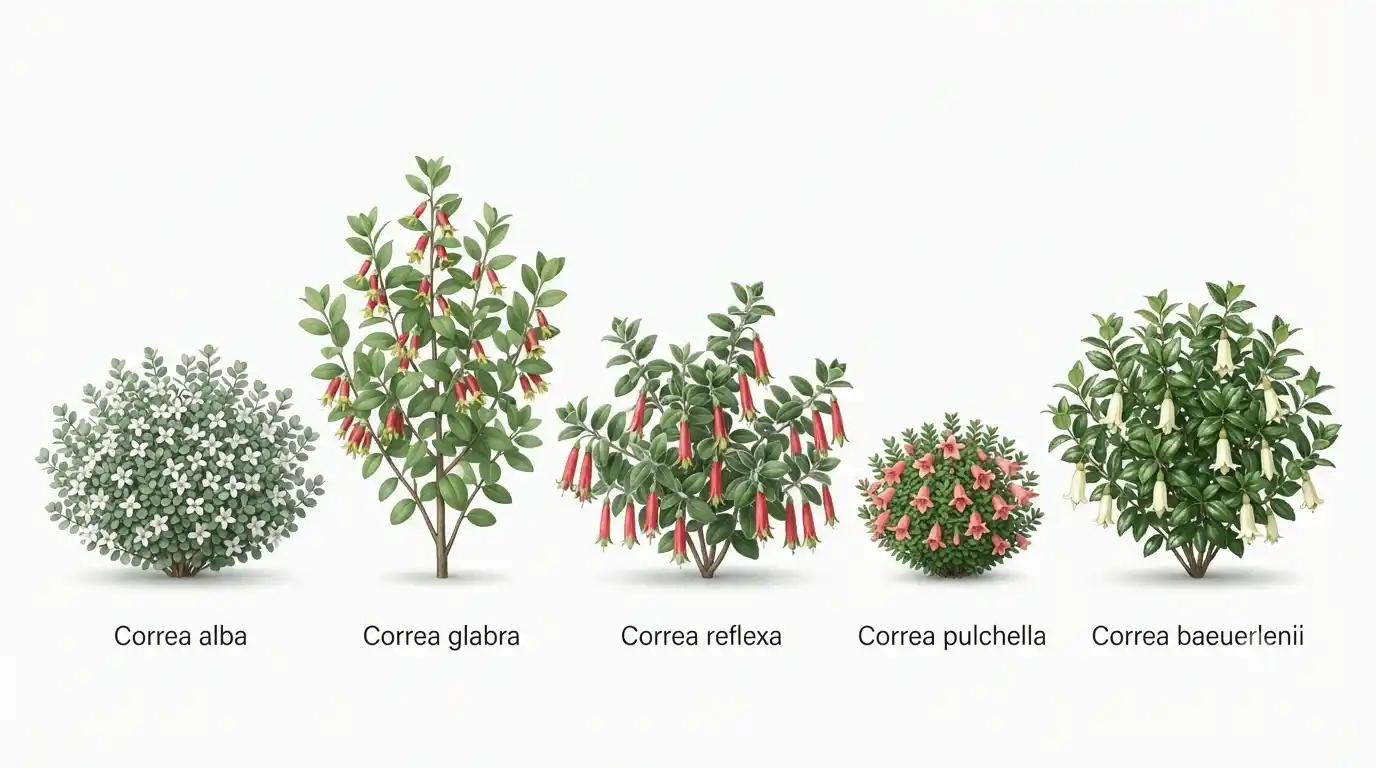
Although all Correa species belong to the same genus, their mature size, growth habit, flower colour, and environmental tolerance vary considerably. Choosing the appropriate variety depends on your desired hedge height, available space, climate, and maintenance preferences.
Correa alba Hedge
Among the most widely planted species is Correa alba, commonly known as white correa. This evergreen shrub is prized for its naturally dense foliage and masses of small white flowers that appear from autumn through winter.
A correa alba hedge is particularly popular in coastal landscapes because it tolerates salty winds, sandy soils, and exposed conditions better than many ornamental shrubs.
Characteristics include:
- Dense rounded habit
- Small leathery grey-green leaves
- White star-like tubular flowers
- Excellent response to light pruning
- Attractive year-round foliage
The correa alba plant typically reaches between 1.5 and 2.5 metres in height depending on cultivar and growing conditions, making it suitable for medium-height screening.
Its naturally compact growth also allows it to be clipped into tidy formal hedges while still maintaining a soft native appearance.
Correa glabra Hedge
Correa glabra is recognised for its upright growth habit and exceptional drought tolerance. It naturally occurs across inland regions of southern Australia, making it an excellent choice for lower-rainfall gardens.
A correa glabra hedge develops into a reliable screening plant with relatively narrow growth compared with some broader Correa species.
Popular forms include:
- Correa glabra green
- Correa glabra yellow
- Correa glabra red
- Correa glabra Ivory Lantern
- Correa glabra Coliban River
- Correa glabra Winter Glow
Flower colours vary considerably between cultivars, ranging from creamy ivory and yellow to rich reds and soft greens.
Because of its upright branching, Correa glabra performs especially well where space is limited but screening height is still required.
Once established, it requires minimal supplementary irrigation except during prolonged drought.
Correa reflexa Hedge
Perhaps Australia’s best-known Correa species, Correa reflexa, is admired for its spectacular pendulous flowers and highly adaptable growth habit.
A correa reflexa hedge creates a relaxed, informal appearance that blends naturally into native landscapes.
The flowers are typically red with green or yellow tips, although cultivated forms display a wider range of colours.
Popular selections include:
- Correa reflexa Dusky Bells
- Correa reflexa Kangaroo Island
These cultivars produce abundant nectar-rich flowers that attract:
- Eastern spinebills
- New Holland honeyeaters
- Wattlebirds
- Native bees
Unlike tightly clipped formal hedges, Correa reflexa is usually allowed to maintain its naturally arching growth, producing a softer and more wildlife-friendly boundary planting.
Its extended flowering period also provides colour when many other shrubs have finished blooming.
Correa pulchella Hedge
For smaller gardens, Correa pulchella is one of the best compact hedging choices.
A correa pulchella hedge develops into a neat, rounded shrub with vibrant flowers that add seasonal interest without becoming overly large.
Popular cultivars include:
- Correa pulchella Little Cate
- Correa pulchella Orange Glow
- Correa Little Cate
- Pink Correa selections
The compact growth habit makes this species particularly suitable for:
- Front garden borders
- Courtyard gardens
- Low native hedges
- Pathway edging
- Mixed native beds
Although smaller than many other Correas, Correa pulchella still produces abundant flowers that attract nectar-feeding birds throughout the cooler months.
With occasional light pruning after flowering, it maintains a dense and tidy appearance for many years.
Other Popular Cultivars
Beyond the major hedging species, several outstanding cultivars are increasingly used in Australian landscapes.
These include:
- Correa baeuerlenii, known for its elegant creamy-white flowers and graceful foliage.
- Chefs Hat Correa, also sold as Correa Chefs Hat or Chefs Cap Correa, valued for its distinctive flower shape and compact habit.
- Correa Coastal Pink, a popular coastal selection producing soft pink flowers.
- Correa Dusky Bells, an outstanding wildlife-attracting cultivar suitable for informal hedges.
- Rock Correa, naturally adapted to rocky soils and exposed sites, making an excellent rock correa hedge.
- Common Correa, referring to naturally occurring Correa forms widely grown in native gardens.
Each cultivar offers slightly different combinations of mature size, flower colour, foliage texture, and environmental adaptability. Selecting a variety that matches your local climate and desired hedge style is one of the most important decisions for long-term success.
Comparison Table: Which Correa Makes the Best Hedge?
Different Correa species suit different landscape styles. Some produce compact formal hedges, while others create informal wildlife-friendly screens. The best choice depends on your available space, climate, desired height, and maintenance preferences.
| Variety | Mature Height | Growth Habit | Flower Colour | Coastal Suitability | Screening Ability | Maintenance Level |
| Correa alba | 1.5–2.5 m | Dense, rounded | White | Excellent | Excellent | Low |
| Correa glabra | 2–3 m | Upright | Red, yellow, green, ivory | Good | Excellent | Low |
| Correa reflexa | 1–2.5 m | Informal, spreading | Red with green or yellow tips | Good | Very Good | Low |
| Correa pulchella | 1–1.5 m | Compact | Pink, red, orange | Moderate to Good | Moderate | Low |
| Correa baeuerlenii | 2–3 m | Graceful, upright | Creamy white | Moderate | Good | Low to Moderate |
Quick comparison:
- Best formal hedge: Correa alba
- Best privacy screen: Correa glabra
- Best wildlife hedge: Correa reflexa
- Best compact hedge: Correa pulchella
- Best ornamental specimen hedge: Correa baeuerlenii
In our experience at Greenery Inside, Correa alba is the easiest choice for homeowners wanting a tidy, evergreen hedge with minimal pruning, while Correa reflexa is ideal for gardeners prioritizing bird habitat and natural-looking landscapes.
Correa Hedge Height, Width and Growth Rate
The mature size and growth speed of a Correa hedge vary depending on the species, cultivar, climate, soil conditions, and maintenance practices. Understanding these differences helps you choose a hedge that fits your landscape without excessive pruning.
Typical Mature Size
Most Correa hedges remain relatively compact compared with many traditional hedging shrubs, making them suitable for suburban gardens and native landscapes.
Typical mature dimensions include:
| Variety | Height | Width |
| Correa alba | 1.5–2.5 m | 1.5–2 m |
| Correa glabra | 2–3 m | 1.5–2.5 m |
| Correa reflexa | 1–2.5 m | 1.5–2.5 m |
| Correa pulchella | 1–1.5 m | 1–1.5 m |
| Correa baeuerlenii | 2–3 m | 1.5–2 m |
If you’re researching correa hedge height, remember that regular trimming usually keeps plants below their maximum mature size.
For Correa alba, gardeners commonly ask about:
- Correa alba height: usually 1.5–2.5 metres
- Correa alba hedge height: commonly maintained at 1.5–2 metres
- Correa alba size: approximately equal width and height when left unpruned
Environmental factors that influence mature size include:
- Sunlight exposure
- Soil drainage
- Soil fertility
- Local rainfall
- Irrigation during establishment
- Frequency of pruning
Growth Rate
Correas generally have a slow to moderate growth rate, which contributes to their manageable maintenance requirements and long lifespan.
Under ideal conditions, many varieties grow approximately:
- 20–40 cm per year during establishment
- Faster growth in warm spring and autumn conditions
- Slower growth during winter and periods of drought
Growth is influenced by:
- Climate: Mild coastal climates encourage more consistent growth.
- Soil fertility: Moderately fertile, well-drained soil promotes healthy development.
- Water availability: Young plants grow faster with regular watering.
- Pruning: Light annual pruning encourages branching and a denser hedge.
Greenery Inside recommends avoiding excessive fertiliser to speed growth. Correas naturally develop a balanced structure, and forcing rapid growth often results in weaker stems and reduced flowering.
How to Plant a Correa Hedge
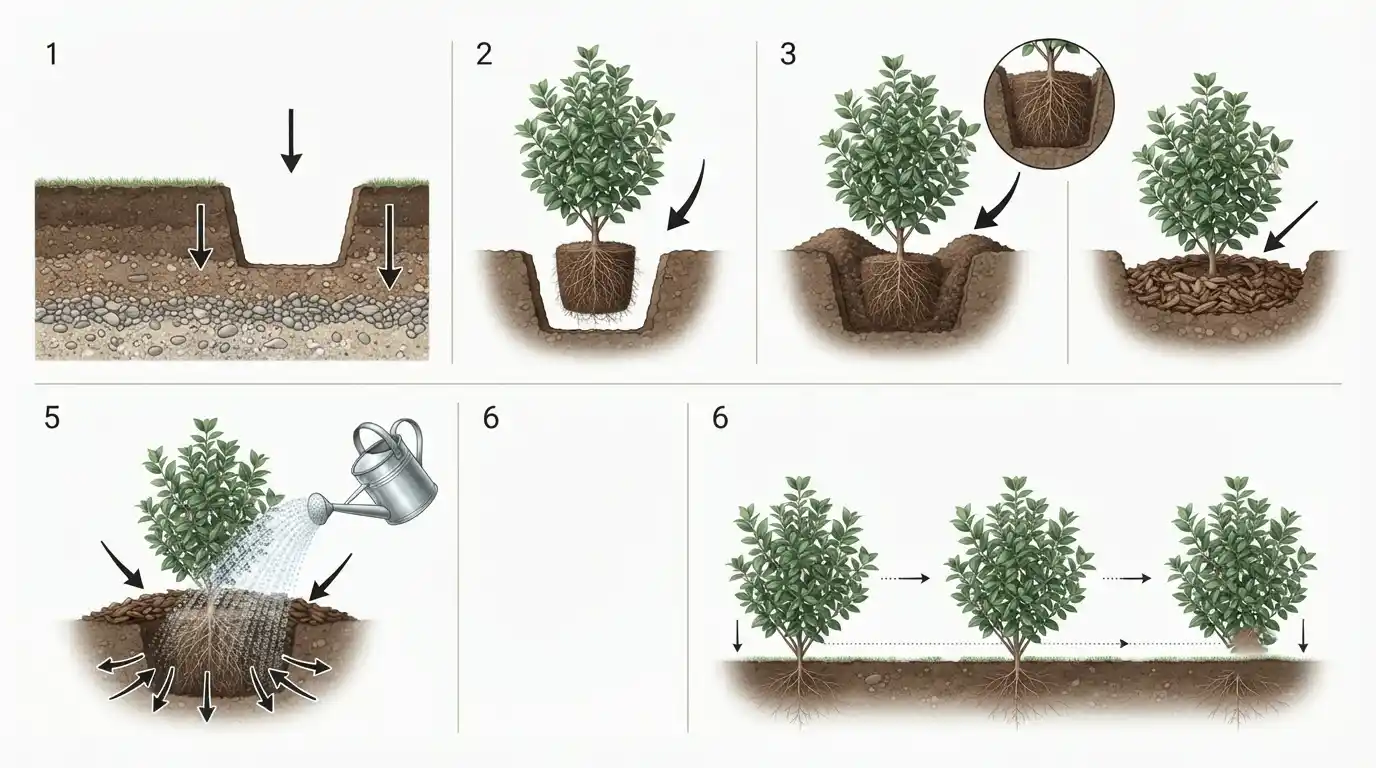
Proper planting gives your hedge the best chance of developing into a dense, healthy screen that lasts for decades.
Follow these steps:
- Choose a location with good sunlight and air circulation.
- Improve drainage before planting if water tends to pool.
- Dig planting holes twice as wide as the root ball.
- Position plants at the same depth as they grew in the nursery container.
- Backfill with native soil rather than heavily enriched compost.
- Water thoroughly after planting.
- Apply organic mulch while keeping it clear of the stem base.
- Continue watering regularly during the establishment period.
Most Correa species establish best when planted during autumn or spring, allowing roots to develop before extreme summer heat or winter cold.
Correa Hedge Spacing
Correct correa hedge spacing allows plants to fill in naturally without excessive competition for water and nutrients.
Recommended spacing:
| Hedge Style | Plant Spacing |
| Formal hedge | 80 cm–1 m |
| Informal hedge | 1–1.5 m |
| Privacy screen | 1.2–1.8 m |
For Correa alba hedge spacing, plants are commonly spaced 80 centimetres to 1 metre apart to produce a dense hedge within a few growing seasons.
Spacing may be adjusted depending on:
- Mature plant width
- Desired screening speed
- Available garden space
- Planned pruning frequency
Avoid planting too closely, as overcrowding reduces airflow and increases the risk of fungal diseases.
Ideal Growing Conditions
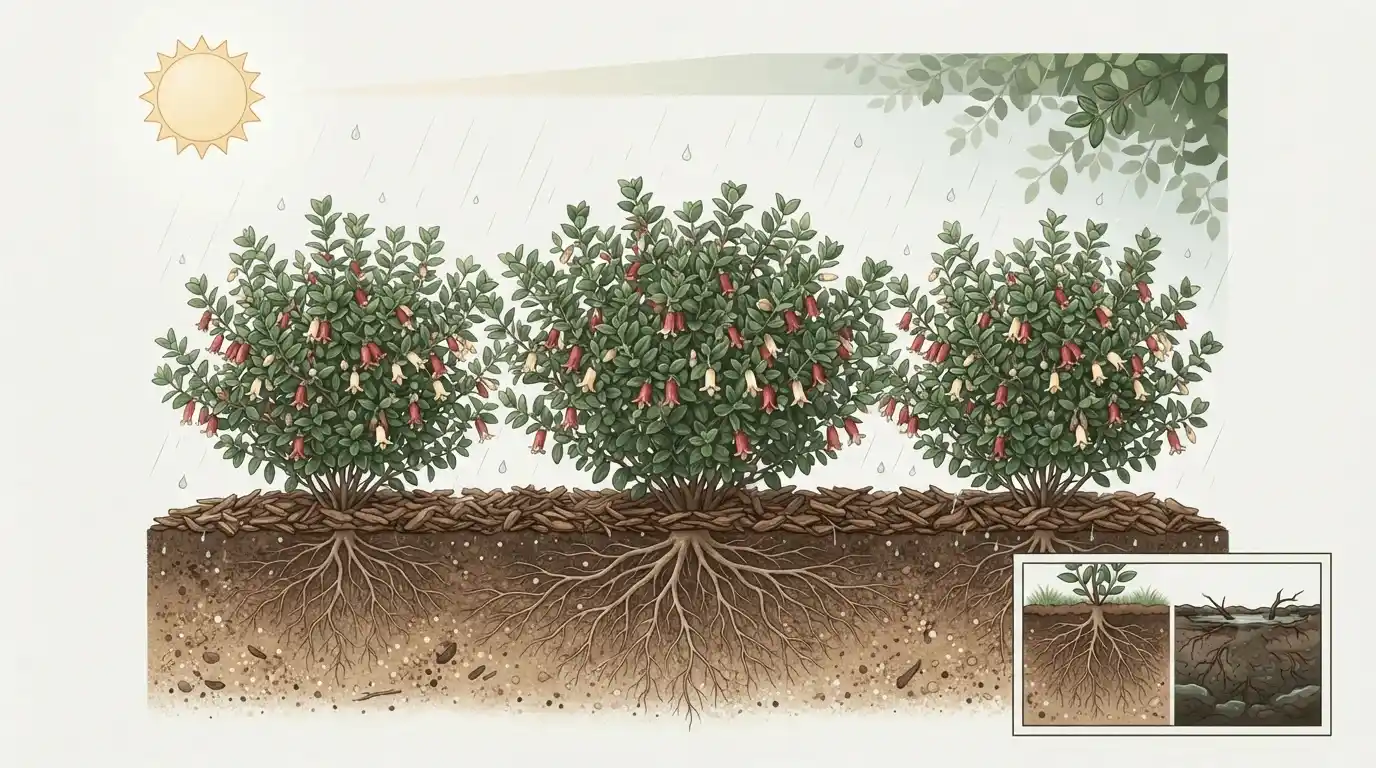
Correas are adaptable Australian natives, but they perform best when grown in conditions similar to their natural habitat.
Sunlight Requirements
Do correas like full sun?
Yes. Most Correas grow best in full sun to partial shade, although the ideal amount of sunlight depends on your local climate.
General recommendations include:
- Full sun in cooler regions
- Morning sun with afternoon shade in very hot inland areas
- Partial shade beneath open-canopy trees
- Full coastal exposure for salt-tolerant varieties such as Correa alba
Adequate sunlight encourages:
- Better flowering
- Denser foliage
- Stronger branching
- Improved disease resistance
Soil Preferences
Well-drained soil is the single most important requirement for a healthy Correa hedge.
Ideal soil conditions include:
- Sandy soils
- Sandy loam
- Light loam
- Gravelly soils
- Slightly acidic to neutral pH (around 6.0–7.0)
If planting in heavy clay:
- Incorporate coarse organic matter or gravel.
- Improve drainage before planting.
- Consider raised beds where drainage remains poor.
Poorly drained soils significantly increase the likelihood of root diseases.
Water Requirements
Although established Correas tolerate dry conditions well, young plants require regular watering while developing their root systems.
A practical watering schedule is:
- First month: two to three times per week
- Months two to six: once or twice weekly, depending on rainfall
- Established hedges: deep watering during prolonged dry periods only
As of the current growing recommendations in 2026, deep, infrequent watering is generally preferred over frequent shallow watering because it encourages deeper root development and improved drought resilience.
Correa Hedge Care Guide
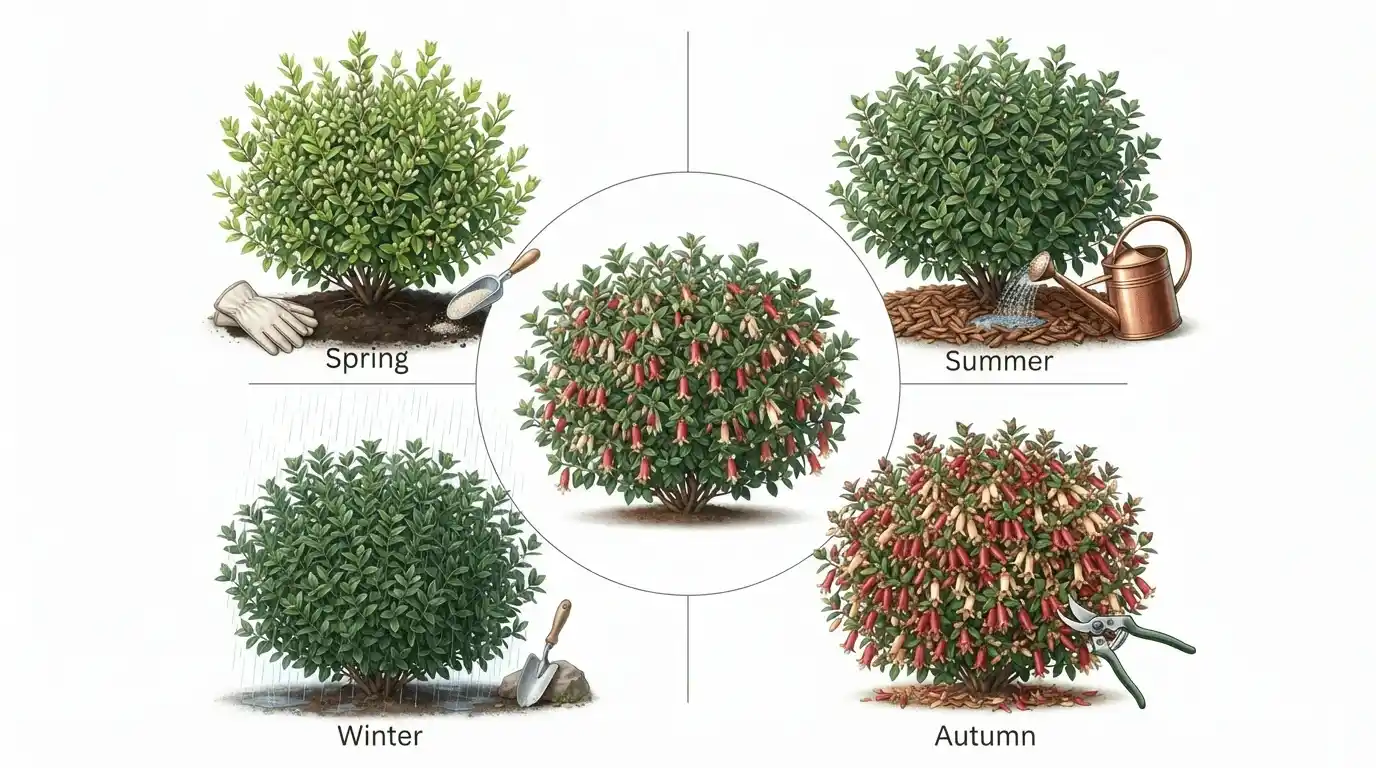
Routine maintenance keeps Correa hedges attractive without requiring intensive care.
Pruning
Light pruning immediately after flowering helps maintain shape while preserving next season’s flower buds.
Best practices include:
- Remove dead or damaged branches.
- Trim lightly to encourage bushier growth.
- Avoid cutting into old woody stems.
- Maintain natural plant shape where possible.
Heavy pruning may temporarily reduce flowering because many Correas bloom on newer growth produced after the previous season.
Fertilising
Correas are adapted to Australia’s naturally nutrient-poor soils.
Use:
- Low-phosphorus native fertilisers
- Slow-release native plant formulations
- Organic mulch to gradually improve soil health
Avoid:
- High-phosphorus fertilisers
- Excessive nitrogen applications
- Frequent feeding
Too much fertiliser often produces lush foliage at the expense of flowering.
Mulching
Mulch offers several benefits:
- Conserves soil moisture
- Suppresses weeds
- Moderates soil temperature
- Gradually improves soil structure
Apply a 5–8 cm layer of organic mulch while leaving a small gap around each stem to prevent stem rot.
Seasonal Care
Spring
- Apply native fertiliser if required.
- Monitor new growth.
- Check for insect activity.
Summer
- Water deeply during extended dry periods.
- Refresh mulch if needed.
- Inspect plants after heatwaves.
Autumn
- Plant new hedges.
- Enjoy peak flowering on many varieties.
- Lightly prune after flowering where appropriate.
Winter
- Remove damaged branches.
- Check drainage during wet weather.
- Reduce watering if rainfall is sufficient.
Common Correa Hedge Problems and Solutions
Most Correa hedges remain healthy when planted in suitable conditions. Problems usually arise from poor drainage, incorrect watering, or unsuitable soil.
Correa Alba Pests and Diseases
Gardeners frequently search for correa alba pests and diseases, but most issues affect multiple Correa species rather than Correa alba alone.
| Problem | How to Identify | How to Fix | Prevention |
| Root rot | Wilting despite moist soil, blackened roots | Improve drainage and reduce watering | Plant in free-draining soil |
| Scale insects | Small bumps on stems and leaves | Remove manually or use horticultural oil | Encourage beneficial insects |
| Leaf spotting | Brown or black leaf spots | Remove affected foliage and improve airflow | Avoid overhead watering |
| Nutrient deficiencies | Pale or yellow leaves | Apply a suitable native fertiliser | Maintain healthy soil and mulch |
Regular inspection allows problems to be identified before they become severe.
Common Mistakes When Growing Correa Hedges
Many hedge failures result from avoidable planting or maintenance errors.
Common mistakes include:
- Planting shrubs too closely together
- Choosing species unsuitable for the local climate
- Growing Correas in poorly drained soil
- Applying excessive fertiliser
- Heavy pruning into old wood
- Overwatering mature plants
- Ignoring mulch during prolonged dry weather
From our experience growing Australian native shrubs, the most common mistake is improving clay soil with compost alone while overlooking drainage. Waterlogged roots are responsible for more Correa losses than drought in many home gardens.
Landscaping Ideas Using Correa Hedges
A correa hedge is far more than a privacy screen. Its evergreen foliage, long flowering season, and adaptability make it a valuable design element in a wide range of Australian landscapes. Whether you’re creating a modern native garden or restoring a wildlife-friendly backyard, Correas blend beautifully with other indigenous plants while requiring relatively little maintenance.
When selecting a Correa variety, consider your local climate, available space, and the overall style of your landscape. Mixing complementary native shrubs and grasses creates a more resilient and visually appealing garden than relying on a single plant type.
Coastal Gardens
Correas are among the most reliable hedging plants for coastal environments, particularly Correa alba and Correa Coastal Pink.
These varieties tolerate:
- Salt-laden winds
- Sandy soils
- Strong coastal exposure
- Seasonal dry conditions
Pair a coastal Correa hedge with Australian natives such as:
- Coastal rosemary (Westringia fruticosa)
- Cushion bush (Leucophyta brownii)
- Pigface (Carpobrotus glaucescens)
- Coastal banksias (Banksia species)
The combination provides year-round structure while stabilising sandy soils and supporting local biodiversity.
Wildlife Gardens
One of the greatest strengths of a Correa hedge is its ability to support Australian wildlife.
Correa hedges play an important role in pollinator-friendly landscaping and can be combined with other nectar-rich species such as butterfly attracting flowers, perennial flowers for hummingbirds, and broader habitat-supporting plant groups like native plants that attract butterflies, helping create a continuous food source for wildlife throughout the year.
The tubular flowers are rich in nectar, attracting:
- Eastern spinebills
- New Holland honeyeaters
- Red wattlebirds
- Native bees
- Beneficial pollinating insects
Dense branching also provides:
- Nesting sites
- Shelter from predators
- Protection during extreme weather
Greenery Inside recommends allowing part of a wildlife hedge to retain its natural shape rather than clipping every section tightly. This creates additional habitat while still maintaining an attractive garden boundary.
Native Borders
Correa hedges work exceptionally well as borders around native planting beds.
Their evergreen foliage contrasts beautifully with:
- Kangaroo paws (Anigozanthos species)
- Grevilleas
- Callistemons
- Bottlebrushes
- Native daisies
- Lomandras
Using plants with varying foliage textures and flowering seasons creates continuous visual interest throughout the year.
Front Gardens
Compact varieties such as Correa pulchella and smaller Correa alba cultivars make excellent front garden hedges.
Benefits include:
- Soft boundary definition
- Attractive seasonal flowers
- Low-maintenance landscaping
- Improved street appeal
- Year-round evergreen foliage
Unlike taller screening plants, compact Correas maintain visibility while still defining garden spaces.
Informal Privacy Screens
For homeowners seeking privacy without a rigid formal hedge, larger Correa species create relaxed, natural-looking screens.
Excellent choices include:
- Correa glabra
- Correa reflexa
- Correa baeuerlenii
These hedges develop gently rounded forms that blend naturally into bushland-style gardens.
Mixed Native Hedges
Rather than planting a single species, many Australian gardeners now prefer mixed native hedges.
A diverse planting may include:
- Correa
- Westringia
- Grevillea
- Dodonaea
- Callistemon
- Melaleuca
Advantages include:
- Greater biodiversity
- Extended flowering periods
- Improved disease resilience
- More seasonal colour
- Increased habitat for wildlife
Mixed hedges also create a more natural appearance than uniform rows of identical shrubs.
Garden Pathways
Lower-growing Correa varieties are ideal beside garden paths and walkways.
Their compact habit:
- Softens hard landscaping
- Adds winter colour
- Creates year-round greenery
- Requires only occasional trimming
- Welcomes birds close to viewing areas
When planted along pathways, allow sufficient space for mature growth to avoid regular hard pruning.
Conclusion
A correa hedge is one of the most practical and rewarding hedging options for Australian gardens. As an evergreen native shrub, Correa offers dense foliage, colourful bell-shaped flowers, and excellent habitat for birds and pollinators while requiring relatively little maintenance once established.
With species ranging from the compact Correa pulchella to the upright Correa glabra and the coastal-tolerant Correa alba, there is a suitable variety for almost every landscape. Selecting the right species, planting at the correct spacing, providing well-drained soil, and following simple seasonal care practices will help create a healthy hedge that remains attractive for many years.
Whether your goal is a formal screen, an informal native border, or a wildlife-friendly garden, a carefully planned Correa hedge combines ornamental appeal with ecological value. By matching the variety to your local climate, available space, and desired hedge style, you can enjoy a resilient Australian native hedge that enhances your landscape throughout every season.
Frequently Asked Questions About Correa Hedges
What is the best Correa for hedging?
The best Correa for hedging depends on your needs. Correa alba is widely considered the best choice for formal and coastal hedges because of its dense growth and excellent response to pruning. For informal wildlife gardens, Correa reflexa is an outstanding option, while Correa glabra is ideal for taller privacy screens.
Do correas like full sun?
Yes. Most Correa species grow best in full sun to partial shade. In cooler regions, full sun encourages dense growth and abundant flowering. In hotter inland climates, light afternoon shade can help reduce heat stress during summer.
What are correas used for?
Correas are used for:
- Privacy hedges
- Native garden borders
- Coastal landscaping
- Wildlife gardens
- Pollinator-friendly planting
- Windbreaks
- Decorative shrub plantings
- Erosion control on suitable sites
Their evergreen foliage and long flowering season make them valuable in both residential and public landscapes.
How big do correas grow?
Most Correas mature between 1 and 3 metres tall, depending on the species and growing conditions. Compact varieties such as Correa pulchella usually remain around 1–1.5 metres, while larger species like Correa glabra and Correa baeuerlenii can reach approximately 3 metres if left unpruned.
Which Correa grows fastest?
Correa glabra is generally regarded as one of the faster-growing Correa species. Under favourable conditions with well-drained soil, adequate sunlight, and regular watering during establishment, it develops into a dense screening hedge more quickly than many compact varieties.
Can Correa hedges grow near the coast?
Yes. Many Correa species perform exceptionally well in coastal environments. Correa alba is particularly well suited to seaside gardens because it tolerates salty winds, sandy soils, and exposed conditions while maintaining dense evergreen foliage.
How often should Correa hedges be pruned?
Most Correa hedges require only one light prune each year, usually after the main flowering period. Light trimming encourages bushier growth while preserving the following season’s flower buds. Avoid heavy pruning into old woody stems, as recovery may be slow.
Are Correa hedges good for attracting birds?
Yes. Correa hedges are among the best Australian native shrubs for attracting nectar-feeding birds. Their tubular flowers provide an important food source during autumn and winter, drawing species such as honeyeaters, spinebills, and wattlebirds. The dense foliage also offers valuable shelter and nesting habitat, making Correas an excellent choice for wildlife-friendly gardens.