Introduction
Landscaping with kangaroo paws is one of the most popular ways to create colourful, low-maintenance Australian gardens. The iconic kangaroo paw (Anigozanthos) is prized for its unique flowers, long blooming season, drought tolerance, and ability to attract birds and pollinators. Available in a wide range of colours and sizes, kangaroo paws suit native gardens, modern landscapes, cottage gardens, and container displays. This guide explains the best garden design ideas, companion plants, growing conditions, ongoing care, and practical landscaping tips to help you create healthy, vibrant, wildlife-friendly gardens.
By Greenery Inside | Plant Care & Gardening Expert
Quick Summary
- Kangaroo paws are drought-tolerant Australian native plants suited to many landscape styles.
- Most varieties grow best in full sun and free-draining soil.
- Different cultivars offer various heights, flower colours, and landscaping uses.
- Proper drainage, pruning, and moderate watering help plants remain healthy and flower for longer.
Why Kangaroo Paws Are Popular for Landscaping
Kangaroo paws are valued because they combine striking flowers with low-maintenance performance. Their upright flower spikes add strong architectural interest while providing nectar for honeyeaters, bees, and other pollinators.
The kangaroo paw plant (Anigozanthos (Wikipedia)) is an iconic Australian native species known for its tubular, velvety flowers and strong attraction to nectar-feeding birds.
Whether used in kangaroo paw landscaping, mass plantings, or feature gardens, these plants provide year-round foliage and spectacular seasonal blooms. Their broad range of kangaroo paw colours and kangaroo paws colors, including red, yellow, pink, orange, and purple, allows gardeners to match almost any landscape design.
Benefits include:
- Bold, upright flower spikes
- Long flowering season
- Attraction of native birds and pollinators
- Low water requirements after establishment
- Modern architectural appearance
- Suitable for both residential and public landscapes
Best Garden Styles for Landscaping With Kangaroo Paws
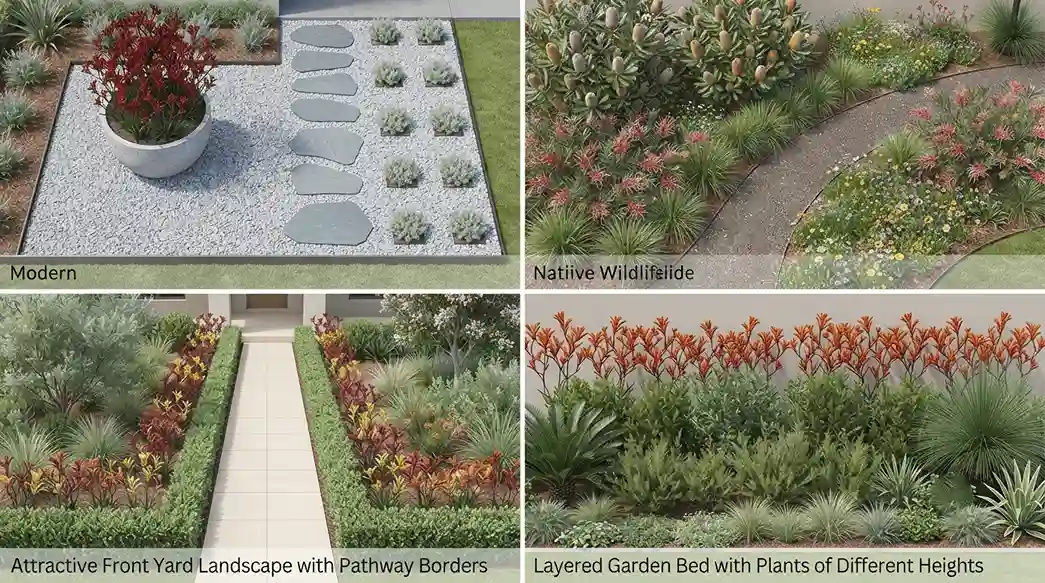
Modern Kangaroo Paw Garden
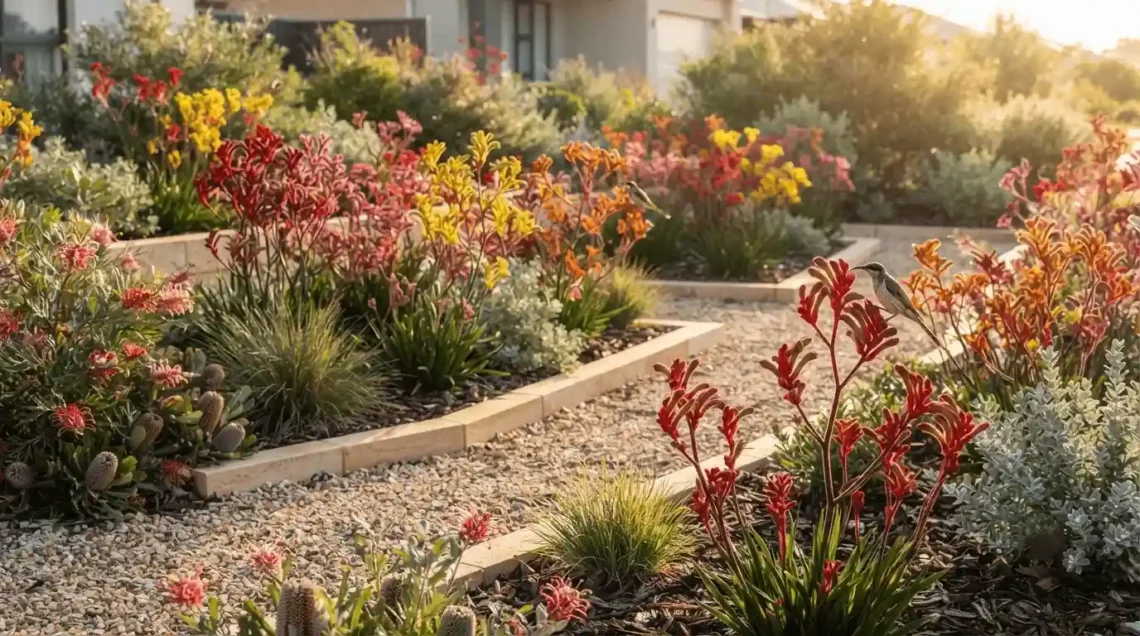
A modern kangaroo paw garden uses clean lines, decorative gravel, natural stone, and simple planting palettes. Kangaroo paws create vertical accents that contrast beautifully with low-growing grasses and minimalist hardscaping. Their vibrant flowers soften contemporary designs without creating visual clutter.
Native Australian Garden Designs
Landscaping with kangaroo paws Australia is especially popular because these native plants pair naturally with other Australian species. Combining them with native shrubs and grasses supports biodiversity while reducing water use and maintenance. Native gardens also provide valuable habitat for birds and beneficial insects.
For a more complete understanding of designing sustainable outdoor spaces, explore ideas in Australian Native Garden Trees (Pillar Guide), which explains how to structure long-term native landscapes using trees, shrubs, and groundcovers that work well with kangaroo paws.
Front Yard Landscaping With Kangaroo Paws
Front yard landscaping with kangaroo paws creates immediate street appeal. Planting them along pathways, driveways, or entrances provides seasonal colour and strong visual structure. Taller varieties make attractive focal points, while compact cultivars work well in borders and foundation plantings.
Kangaroo Paw Garden Bed Ideas
A well-designed kangaroo paw garden bed combines plants of different heights and complementary foliage textures.
Popular kangaroo paw garden ideas include:
- Mass planting for dramatic colour
- Layering tall and compact varieties
- Mixing flower colours for seasonal interest
- Using natural stone edging
- Creating wildlife-friendly native borders
A thoughtfully designed kangaroo paw in garden setting delivers colour through much of the flowering season while remaining relatively easy to maintain.
What to Plant With Kangaroo Paw
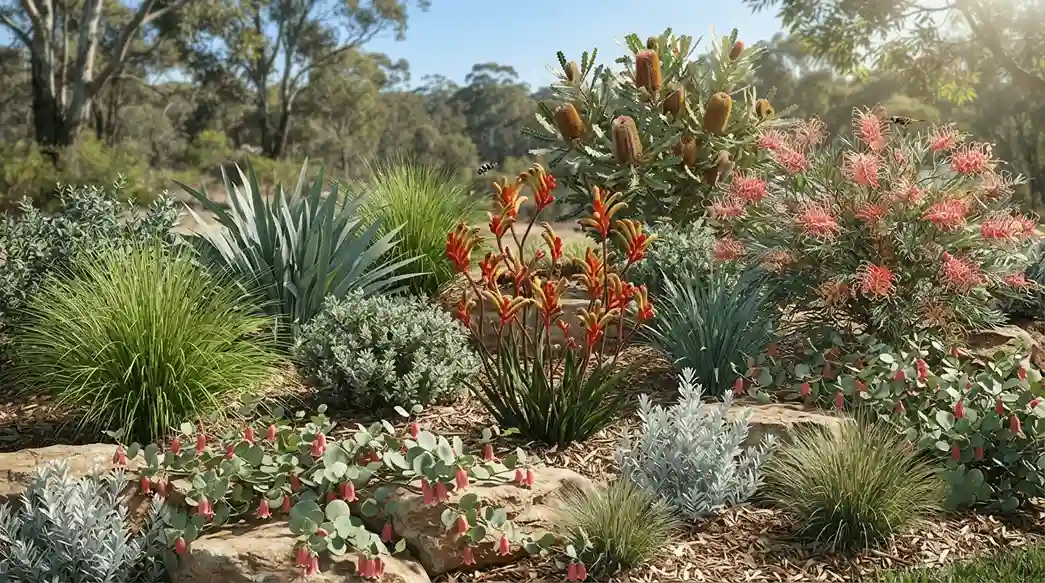
The best companion plants share similar growing conditions, including full sun, well-drained soil, and moderate watering. Choosing compatible species creates balanced, drought-tolerant landscapes while improving biodiversity.
What looks good with kangaroo paws? Native shrubs, grasses, and flowering plants provide contrasting textures and complementary colours without competing for growing conditions.
| Companion Plant | Why It Works | Landscape Style |
| Native Grasses | Soft texture and movement | Modern, Native |
| Westringia | Evergreen structure | Coastal |
| Grevillea | Bird-attracting flowers | Native |
| Lomandra | Low-maintenance edging | Contemporary |
| Dianella | Blue foliage contrast | Mixed Borders |
| Banksia | Height and wildlife value | Native |
| Correa | Winter flowering | Cottage |
| Eremophila | Drought tolerant | Dry Gardens |
Popular Kangaroo Paw Colours and Landscape Varieties
Selecting suitable flower colours helps create cohesive planting schemes throughout the garden.
Red and Scarlet Varieties
Anigozanthos Landscape Scarlet and kangaroo paw landscape scarlet produce vivid red flowers that stand out against silver foliage and decorative gravel. They are ideal as feature plants in modern landscapes.
Yellow Varieties
Yellow kangaroo paw and kangaroo paw yellow brighten borders and combine well with blue or grey foliage plants. Kangaroo paw landscape gold is particularly effective in sunny native gardens where warm colours dominate.
Pink, Lilac and Tangerine Varieties
Gardeners seeking softer colour palettes often choose landscape pink kangaroo paw, Anigozanthos ‘Landscape Lilac’, or kangaroo paw landscape tangerine. These cultivars blend beautifully with ornamental grasses and flowering natives.
Tall Landscape Forms
Tall and Tough Kangaroo Paw cultivars reach well over one metre, making them excellent background plants, screening features, or dramatic focal points in larger gardens.
Growing Kangaroo Paws Successfully
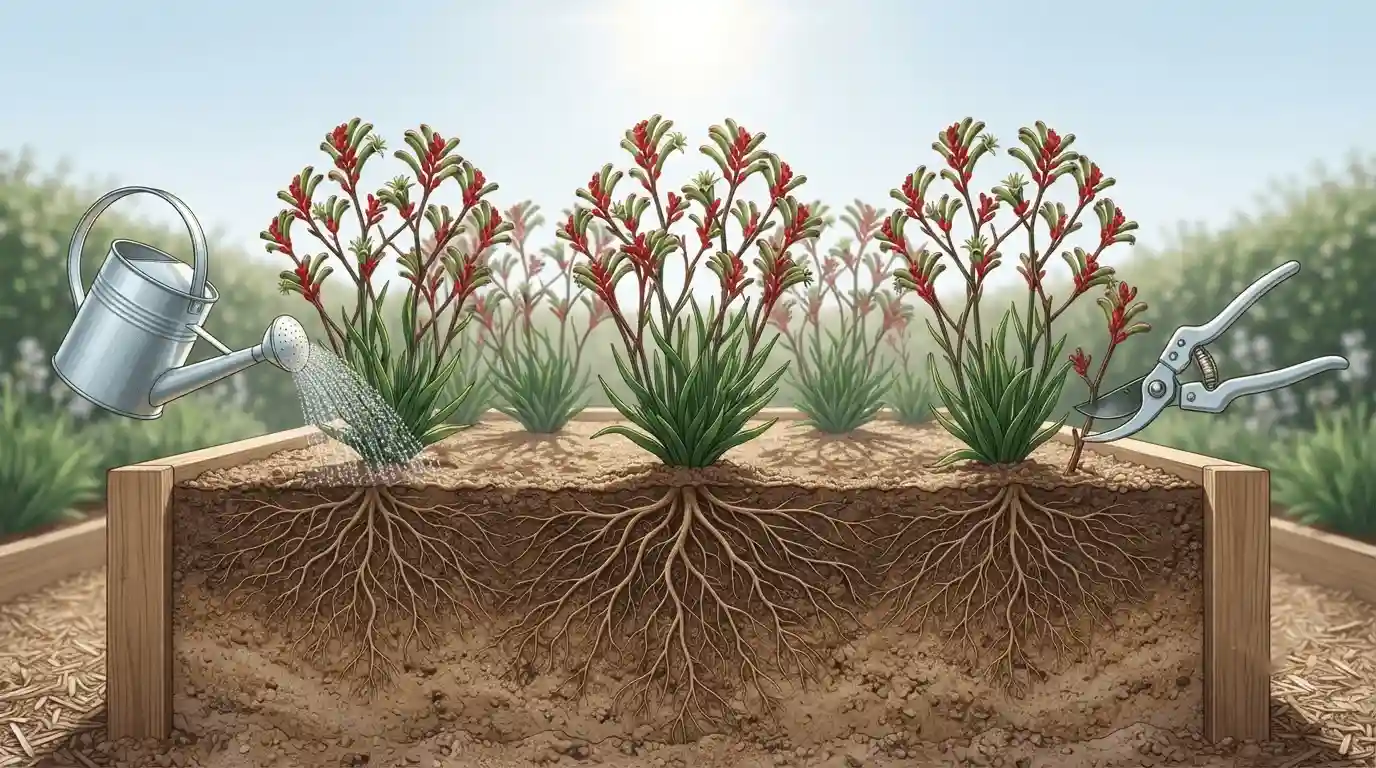
Growing kangaroo paw begins with selecting a sunny location that receives at least six hours of direct sunlight daily. Good drainage is essential because prolonged wet soil can lead to root and crown diseases.
For successful growing kangaroo paws:
- Plant in spring or autumn when temperatures are mild.
- Improve drainage before planting kangaroo paw if soil is heavy.
- Water regularly during establishment, then reduce watering once plants mature.
- Space plants according to their mature size for good airflow.
Gardeners wondering how to grow kangaroo paw successfully should prioritise sunlight, drainage, and moderate watering. In most Australian climates, when to plant kangaroo paw is during spring or early autumn, allowing roots to establish before seasonal extremes.
Care Guide for Healthy Kangaroo Paws
Sun or Shade?
Do kangaroo paw plants like sun or shade? Kangaroo paws perform best in full sun. While some cultivars tolerate light afternoon shade, excessive kangaroo paw shade reduces flowering and increases disease risk.
Watering
Water newly planted kangaroo paws deeply once or twice weekly until established. Mature plants require only occasional watering during prolonged dry periods. Overwatering is one of the most common causes of poor plant health.
Soil Requirements
Kangaroo paws grow best in sandy or loamy, free-draining soil with a slightly acidic to neutral pH. Raised garden beds are recommended where drainage is poor.
Fertilising
Apply a low-phosphorus fertiliser formulated for Australian native plants during active growth. Excess phosphorus may damage sensitive root systems.
Pruning and Deadheading
Regularly remove spent flower stems and damaged leaves to improve airflow and encourage new growth. In our experience at Greenery Inside, annual cleanup after flowering keeps plants healthier and extends their ornamental value.
Following these principles of caring for kangaroo paw, care of kangaroo paws, and kangaroo paws plant care helps reduce disease while promoting stronger flowering season after season. Gardeners asking how to care for kangaroo paw should remember that good drainage is the single most important factor for long-term success.
Plant Size
Kangaroo paws vary significantly in size depending on the cultivar. Compact varieties typically grow 30–60 cm tall, making them ideal for borders, small garden beds, and containers. Medium-sized cultivars reach 60–100 cm, while tall landscape varieties, including some Tall and Tough selections, can exceed 1.5–2 metres.
Allow enough spacing between plants to promote airflow and reduce disease. As a general guide:
- Compact varieties: 30–40 cm apart
- Medium varieties: 50–70 cm apart
- Tall varieties: 80–100 cm apart
In our experience, taller cultivars work best as background plants, while compact forms create colourful edging and mass plantings.
Growth Rate
Kangaroo paws have a moderate to fast growth rate under suitable conditions. Most establish within one growing season and produce strong flowering stems the following year.
Growth is influenced by:
- Full sun exposure
- Well-drained soil
- Moderate watering during establishment
- Proper pruning after flowering
- Low-phosphorus fertiliser for Australian natives
As of the 2026 growing season, growers continue to recommend improving drainage before planting, particularly in regions with heavy winter rainfall, to encourage vigorous long-term growth.
Flowering Season
When do kangaroo paws flower? Most kangaroo paws flower from late winter or spring through summer, although the exact timing depends on the cultivar and local climate.
In warmer parts of Australia, when does kangaroo paw flower may extend into autumn with repeat blooming if spent flower stems are removed promptly. Cooler regions usually experience a shorter flowering period.
To encourage repeat flowering:
- Remove faded flower stems.
- Maintain full sun.
- Avoid excessive watering during cooler months.
- Feed lightly with a native plant fertiliser during active growth.
How Long Do Kangaroo Paws Live?
How long do kangaroo paws live? Most hybrid varieties live 3–7 years, while some species and well-maintained cultivars can survive for 10 years or longer.
Longevity depends on:
- Excellent drainage
- Disease prevention
- Regular pruning
- Correct watering
- Suitable climate
Replacing ageing plants every few years helps maintain consistent colour and performance in landscape designs.
Landscaping With Kangaroo Paws in Pots
Kangaroo paw in pots is an excellent option for patios, courtyards, balconies, and small gardens. Compact cultivars are particularly well suited to container growing.
For successful growing kangaroo paws in pots:
- Choose containers at least 30–40 cm wide.
- Use a premium free-draining native potting mix.
- Ensure drainage holes remain unobstructed.
- Water when the top few centimetres of soil become dry.
- Position containers in full sun.
Landscaping with kangaroo paws in pots allows gardeners to add seasonal colour while easily repositioning plants to suit changing garden designs.
Regional Landscaping Considerations Across Australia
Landscaping With Kangaroo Paws in Victoria
Landscaping with kangaroo paws Victoria requires attention to winter rainfall and frost. Raised beds and excellent drainage reduce the risk of crown rot, while light frost protection benefits young plants in colder districts.
Landscaping With Kangaroo Paws in NSW
For landscaping with kangaroo paws NSW, coastal gardeners should improve airflow to reduce fungal diseases caused by humidity. Inland gardens generally benefit from abundant sunshine but may require additional watering during extended dry periods.
Common Kangaroo Paw Problems and How to Fix Them
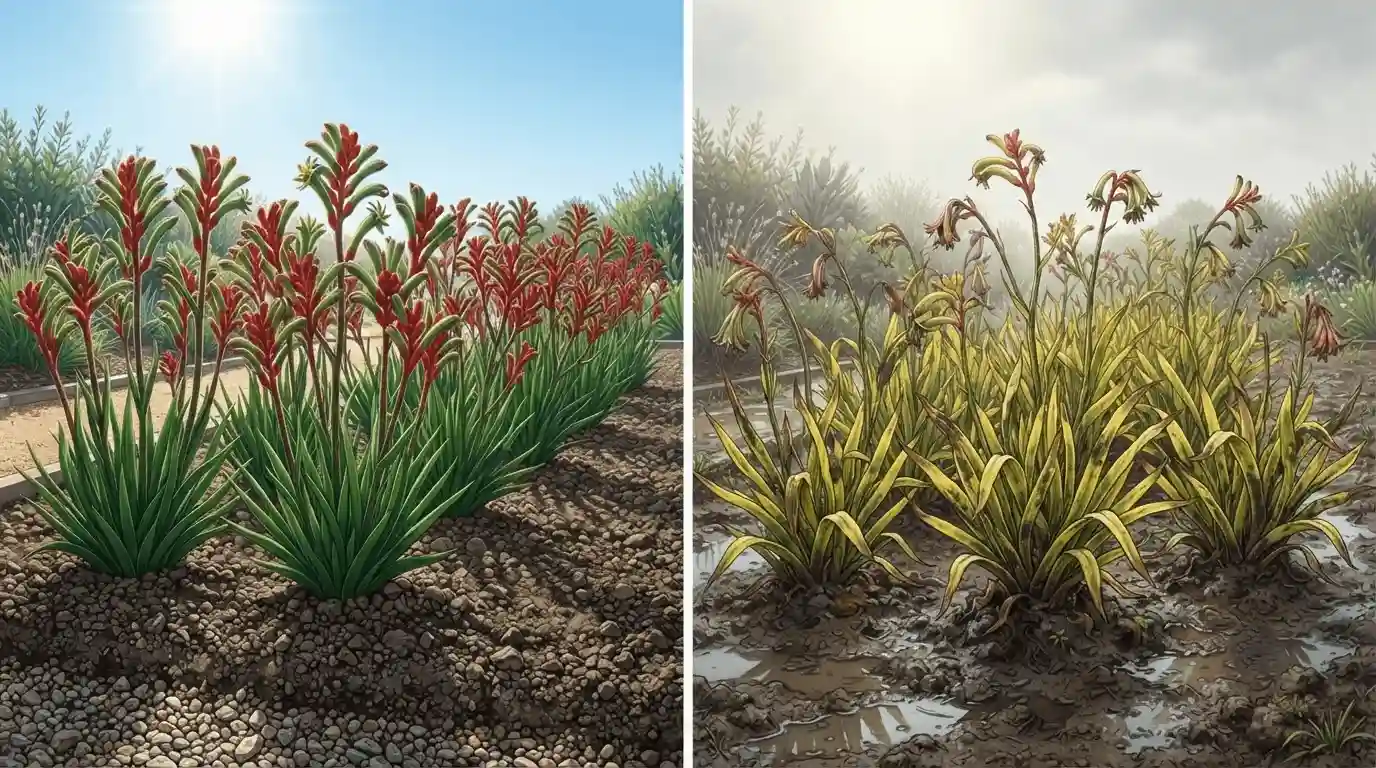
| Problem | Why It Happens | Solution |
| Yellow leaves | Overwatering or nutrient imbalance | Improve drainage and remove affected foliage |
| Crown rot | Poor drainage | Plant in free-draining soil and avoid waterlogging |
| Ink disease | Fungal infection | Remove infected plants and improve airflow |
| Poor flowering | Too much shade or excess nitrogen | Increase sunlight and use native fertiliser |
| Floppy flower stems | Insufficient light or overcrowding | Thin plants and provide full sun |
| Overwatering | Frequent irrigation | Water only when necessary |
| Poor drainage | Heavy clay soil | Build raised beds or amend soil |
| Pest issues | Sap-sucking insects | Monitor regularly and treat early if needed |
Common Beginner Mistakes When Landscaping With Kangaroo Paws
Many problems are easily avoided with proper planning. Common mistakes include:
- Planting in heavy clay soil without improving drainage.
- Growing plants in excessive shade.
- Overwatering established plants.
- Applying high-phosphorus fertilisers.
- Planting too closely together, reducing airflow.
- Ignoring annual pruning after flowering.
Greenery Inside recommends choosing cultivars suited to your local climate and giving each plant enough space to develop naturally.
Conclusion
Landscaping with kangaroo paws is an excellent way to create colourful, low-maintenance Australian gardens that attract birds and thrive in sunny conditions. With the right variety, compatible companion plants, and well-drained soil, kangaroo paws provide months of vibrant flowers and striking architectural form. Whether planted in garden beds, borders, or containers, these iconic native plants reward gardeners with lasting beauty while supporting local biodiversity.
Frequently Asked Questions
Is kangaroo paw high maintenance?
No. Once established, kangaroo paws require relatively little care beyond occasional watering, annual pruning, and good drainage.
What are kangaroo paws good for?
They provide colourful flowers, attract pollinators and native birds, tolerate drought, and add strong architectural interest to Australian landscapes.
Do kangaroo paws grow better in pots or garden beds?
Both perform well when grown in full sun with free-draining soil or potting mix. Pots are ideal for compact varieties, while garden beds suit larger landscape plantings.
Which kangaroo paw varieties flower the longest?
Many modern hybrid cultivars, including the Landscape series and Tall and Tough selections, are bred for extended flowering under suitable growing conditions.
Can kangaroo paws survive drought?
Yes. Once established, most kangaroo paws tolerate dry periods well, although occasional deep watering during prolonged drought supports healthier flowering.
Why are my kangaroo paws not flowering?
The most common causes are insufficient sunlight, overwatering, poor drainage, excessive nitrogen fertiliser, or overcrowded plants.
How often should kangaroo paws be divided or replaced?
Most gardeners replace short-lived hybrids every 3–7 years to maintain vigorous growth and consistent flowering, while longer-lived species may remain productive for much longer with proper care.