Introduction
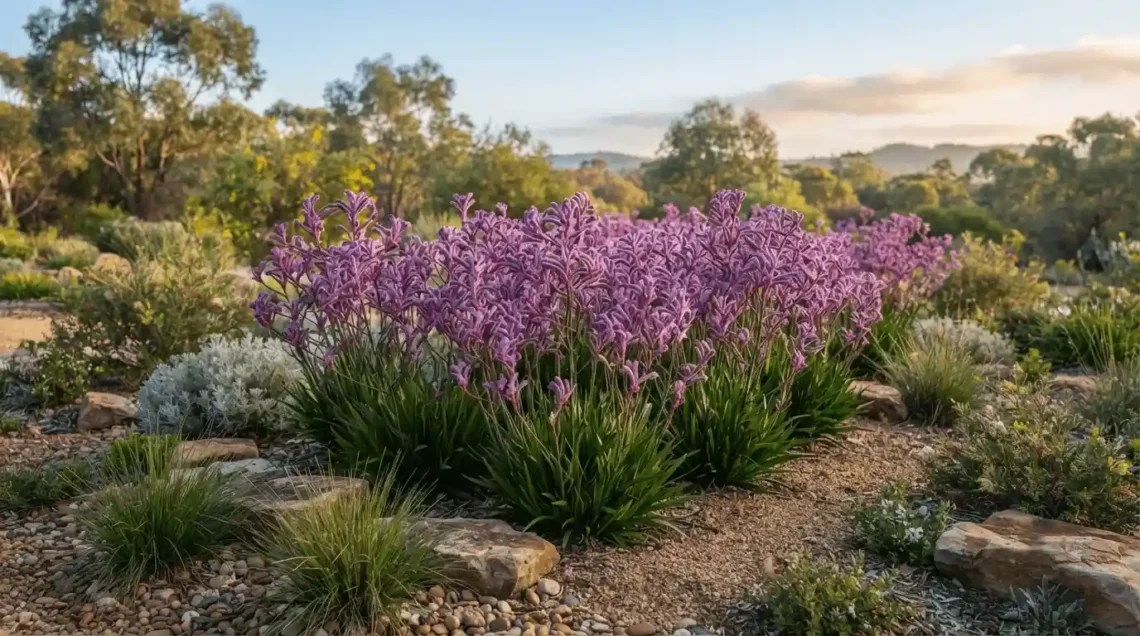
Landscape Lilac Kangaroo Paw (Anigozanthos Landscape Lilac) is a compact Australian native plant known for its striking purple-lilac tubular flowers and architectural clumping habit. The landscape lilac kangaroo paw is widely used in modern gardens due to its drought tolerance, low maintenance needs, and strong visual impact in mass plantings and borders. It belongs to the broader Anigozanthos genus, which includes many ornamental kangaroo paw cultivars. The kangaroo paw belongs to the genus Anigozanthos, a group of Australian native flowering plants. Learn more about its botanical background here: Kangaroo Paw (Anigozanthos)
Unlike traditional forms, the anigozanthos landscape lilac has been selectively bred for consistent flowering, compact growth, and improved garden performance. This makes it ideal for both residential landscapes and commercial planting schemes where reliable colour and structure are essential.
It is commonly featured in large-scale native planting designs, especially in structured landscapes like those explained in our guide on Australian Native Garden Trees, which explores how kangaroo paws integrate into broader Australian garden ecosystems.
By Greenery Inside | Plant Care & Gardening Expert
Quick Summary
- Landscape Lilac Kangaroo Paw produces long-lasting purple-lilac flowers in compact clumps.
- It thrives in full sun and well-drained soil with low water requirements once established.
- Regular pruning encourages repeat flowering and prevents plant decline.
- It is ideal for borders, native gardens, and mass landscape designs.
What Is Landscape Lilac Kangaroo Paw?
Landscape Lilac Kangaroo Paw is a cultivated hybrid from the Anigozanthos genus, bred specifically for ornamental landscaping use. It is valued for its upright flower stems, vibrant lilac colouring, and resilience in dry climates.
This cultivar differs from wild kangaroo paw species because it is more compact, flowers more reliably, and tolerates a wider range of garden conditions. The purple kangaroo paw effect is created through selective breeding, enhancing both colour intensity and bloom consistency.
Scientific and Botanical Classification
The kangaroo paw botanical name belongs to the Anigozanthos genus within the Haemodoraceae family.
- Genus: Anigozanthos
- Cultivar: Anigozanthos ‘Landscape Lilac’
- Common Name: Landscape Lilac Kangaroo Paw
- Plant Type: Perennial evergreen flowering plant
- Origin: Australia
The kangaroo paw scientific name group includes multiple species, but Anigozanthos Landscape Lilac is a horticultural cultivar developed for landscape performance rather than wild habitat growth.
Key Features of Landscape Lilac Kangaroo Paw
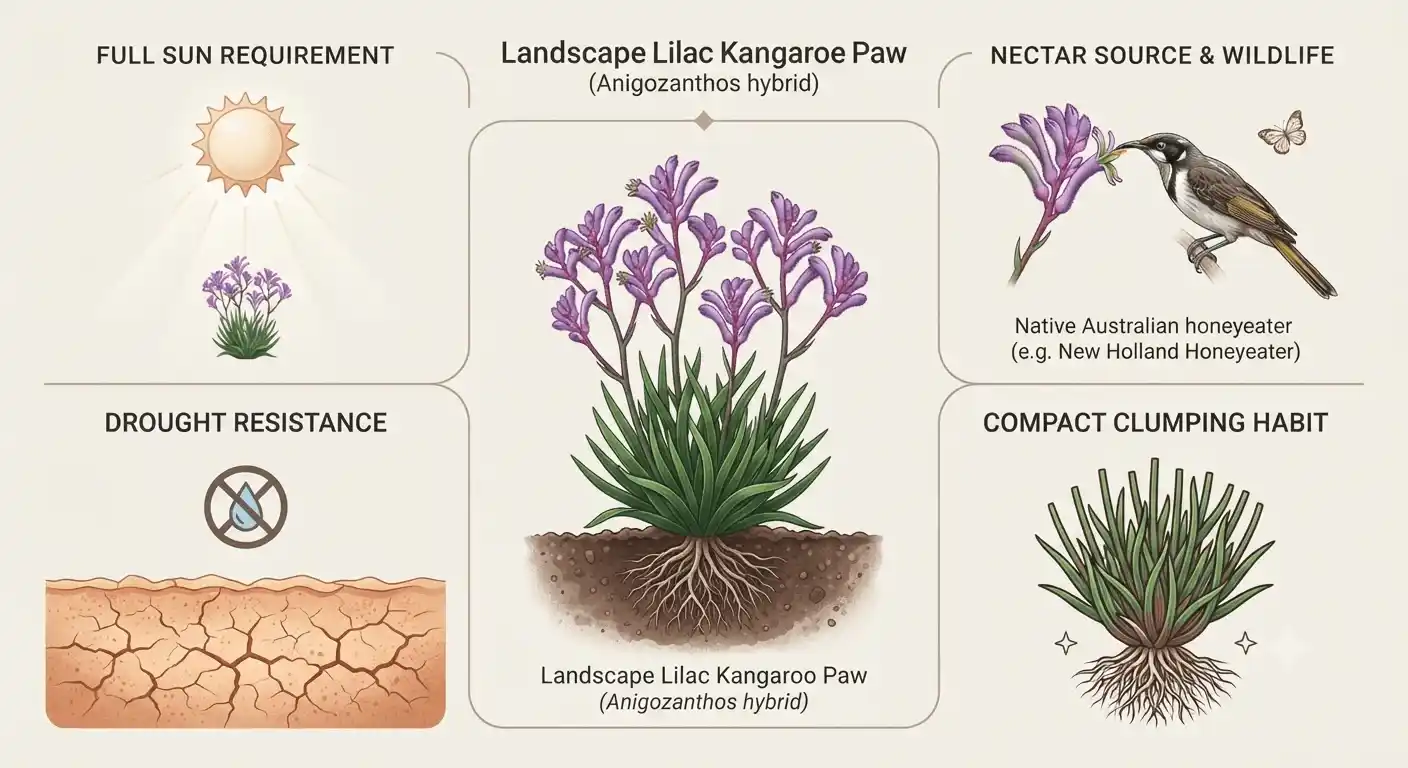
Landscape Lilac Kangaroo Paw is known for its bold structure and vibrant floral display. The kangaroo paw purple tones make it especially valuable in ornamental garden design.
Key Characteristics
- Flower colour: Purple-lilac tubular blooms
- Foliage: Strap-like, green, slightly arching leaves
- Blooming period: Primarily spring to summer, with repeat flowering in warm climates
- Wildlife attraction: Attracts nectar-feeding birds such as honeyeaters
- Landscape value: Excellent for mass planting, borders, and feature displays
| Feature | Details |
| Flower colour | Purple-lilac |
| Mature habit | Compact clumping |
| Flowering season | Spring to Summer |
| Sun requirements | Full sun |
| Water needs | Low to moderate |
| Wildlife attraction | Birds (nectar feeders) |
Landscape Lilac Kangaroo Paw Size and Growth Habit
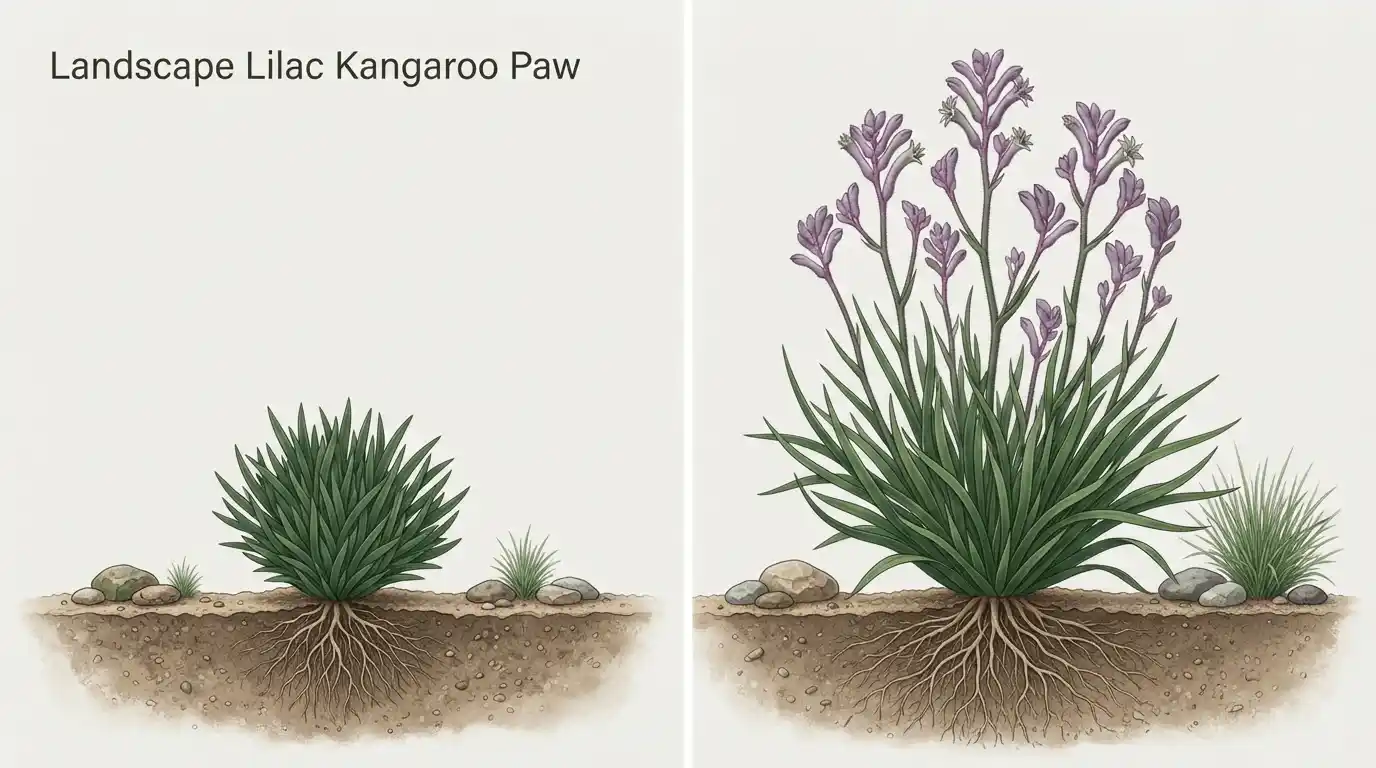
The landscape lilac kangaroo paw size typically remains compact compared to taller species, making it suitable for small and medium gardens.
- Mature height: 40–70 cm
- Mature width: 40–60 cm
- Growth habit: Dense clumping form with upright flower spikes
- Indoor vs outdoor: Performs best outdoors in full sun conditions
Environmental conditions strongly influence final size. In richer soils with consistent moisture, plants may grow slightly larger, while dry, poor soils result in more compact growth. Good drainage is essential for stable development.
Growth Rate and Flowering Performance
Landscape Lilac Kangaroo Paw grows at a moderate rate and establishes quickly in warm conditions. Flower production is one of its strongest traits, especially when properly maintained.
- Growth speed: Moderate to fast in warm seasons
- Flower production: High when pruned regularly
- Seasonal flowering: Peak in spring and summer, with sporadic blooms year-round in mild climates
Pruning has a direct influence on flowering. Removing spent flower stems encourages the plant to redirect energy into new blooms. Adequate sunlight significantly increases flower intensity, while overwatering reduces performance.
Care Guide
Light Requirements
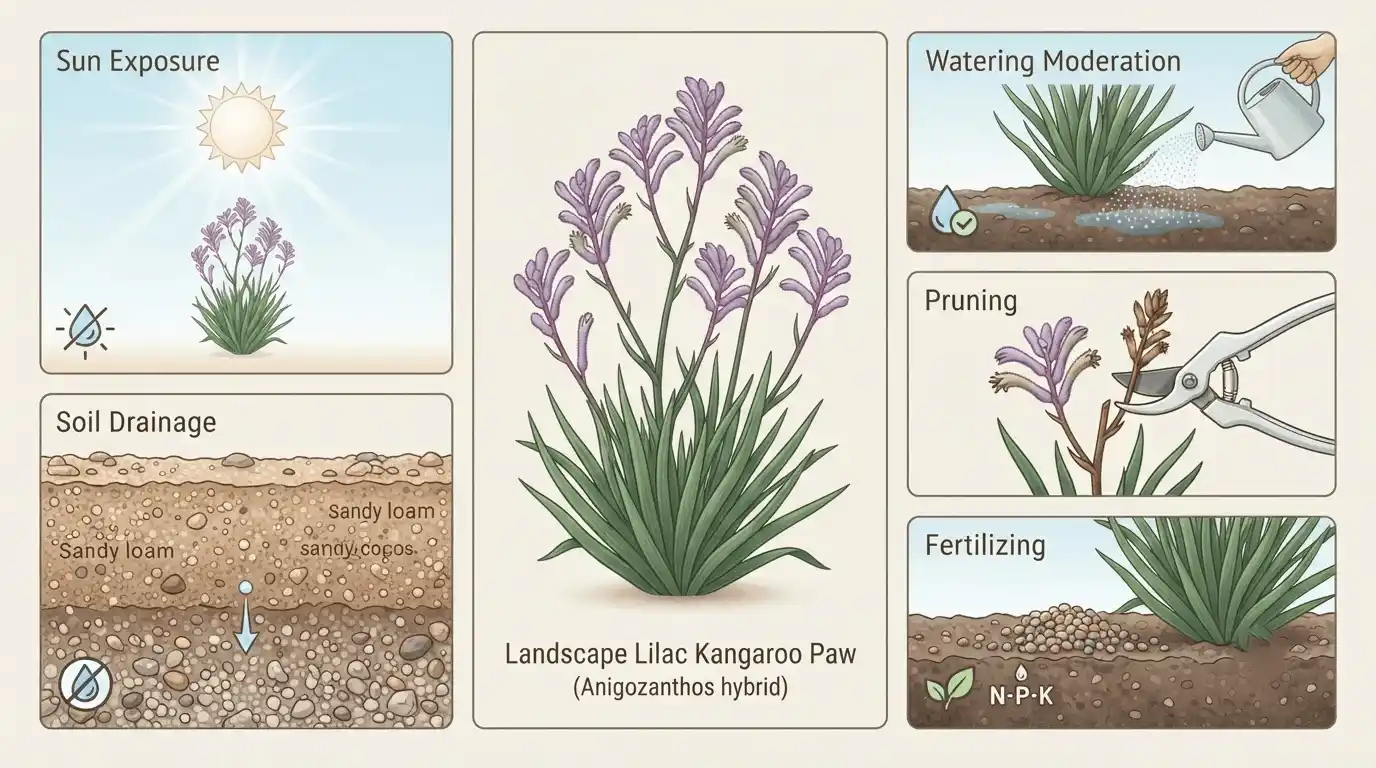
Landscape Lilac Kangaroo Paw care begins with full sun exposure. The plant requires at least 6 hours of direct sunlight daily for optimal flowering. In partial shade, growth becomes leggy and flower production decreases significantly.
Water Requirements
- Establishment phase: Water regularly for the first 6–8 weeks
- Mature plants: Highly drought tolerant
- Risk: Overwatering leads to root rot and fungal decline
In our experience growing kangaroo paws in warm climates, plants perform best when soil is allowed to dry slightly between watering cycles.
Best Soil Conditions
- Requires free-draining sandy or loamy soil
- Prefers slightly acidic to neutral pH
- Heavy soils should be amended with sand or gravel to improve drainage
Fertilising
Use low-phosphorus native plant fertilisers. Kangaroo paws are sensitive to excess nutrients, which can damage root systems.
- Feed lightly in spring
- Avoid heavy feeding in winter
- Do not over-fertilise
Pruning and Maintenance
- Remove spent flower stems regularly
- Cut back old foliage to encourage fresh growth
- Light pruning improves repeat flowering cycles
Greenery Inside recommends pruning after each flowering flush to maintain compact growth.
Common Growing Problems and How to Fix Them
- Yellow leaves: Often caused by overwatering or poor drainage
- Fix: Reduce watering and improve soil aeration
- Root rot: Occurs in heavy, waterlogged soil
- Fix: Replant in raised, free-draining soil
- Crown rot: Fungal issue from moisture buildup
- Fix: Improve airflow and avoid overhead watering
- Poor flowering: Usually due to shade or excess nitrogen
- Fix: Increase sunlight and reduce fertiliser
- Pests (aphids/slugs): Minor infestations on new growth
- Fix: Use gentle organic controls or manual removal
Landscape Lilac vs Other Kangaroo Paw Varieties
Landscape Lilac vs Landscape Orange Kangaroo Paw
Orange varieties are more vibrant but slightly taller, while lilac forms offer softer colour tones for calming garden designs.
Landscape Lilac vs Landscape Pink Kangaroo Paw
Pink types provide warmer tones, but lilac offers stronger contrast in mixed planting schemes.
Landscape Lilac vs Landscape Tangerine Kangaroo Paw
Tangerine varieties are brighter and more eye-catching, while lilac is more subtle and elegant in design use.
Landscape Lilac vs Dwarf Kangaroo Paw
Dwarf kangaroo paw types are smaller and more compact but produce fewer flowers than landscape series plants.
Landscape Lilac vs Blue Kangaroo Paw
Blue kangaroo paw varieties (kangaroo paw blue, blue kangaroo paws) are rarer and often more delicate, while lilac types are more robust and easier to grow.
Landscape Lilac vs Masquerade Kangaroo Paw
Masquerade kangaroo paw (Anigozanthos masquerade) features dramatic colour shifts, while lilac maintains consistent flower colouring.
Comparison Table
| Variety | Flower Colour | Mature Size | Best Use | Maintenance |
| Landscape Lilac | Purple-lilac | Compact | Borders, mass planting | Low |
| Landscape Orange | Orange-red | Medium | Bold feature planting | Low |
| Landscape Pink | Pink | Compact | Decorative beds | Low |
| Landscape Tangerine | Orange | Medium | High-impact landscapes | Moderate |
| Dwarf Kangaroo Paw | Mixed | Very small | Pots, edging | Low |
| Blue Kangaroo Paw | Blue tones | Variable | Collector gardens | Moderate |
| Masquerade | Multi-tone | Medium | Feature focal points | Moderate |
Best Landscaping Uses for Landscape Lilac Kangaroo Paw
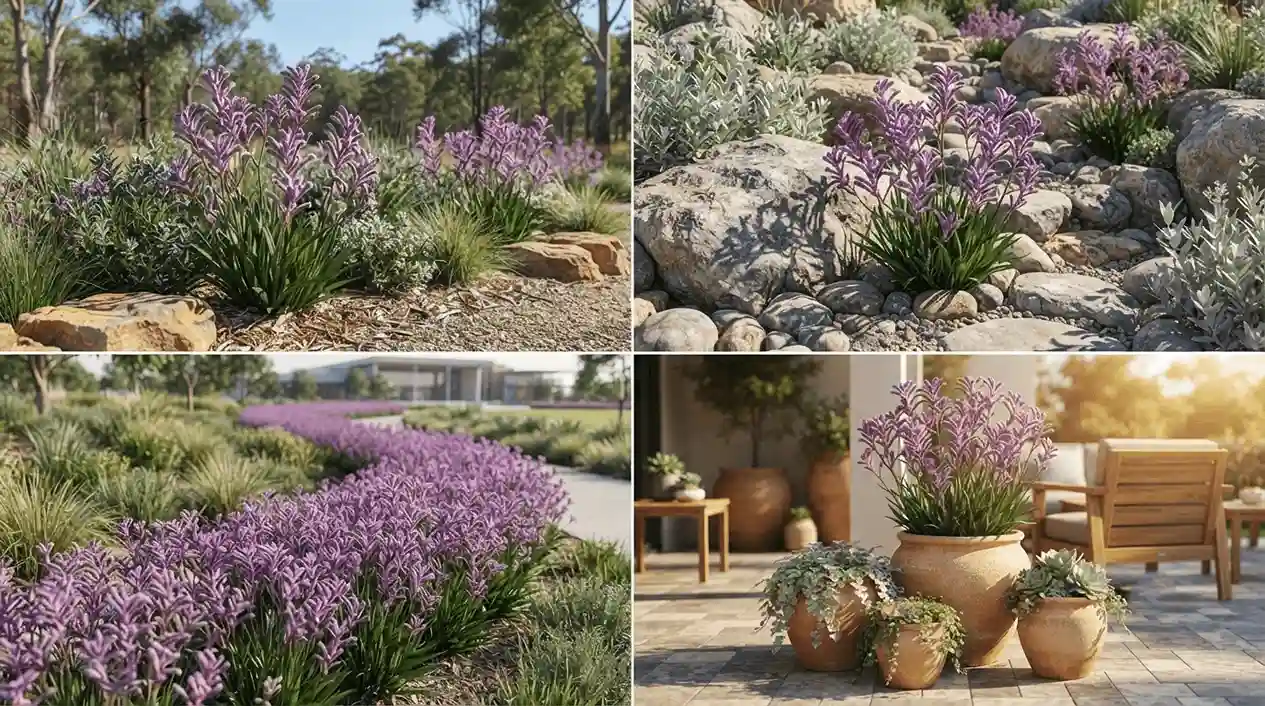
- Works beautifully in layered native planting schemes and mixed borders as shown in Landscaping with Kangaroo Paws.
- Borders and edging plantings
- Native Australian gardens
- Water-wise and drought-tolerant landscapes
- Rock gardens with free-draining soil
- Mass planting for colour impact
- Feature focal points in modern designs
- Pollinator-friendly gardens
- Container planting in sunny locations
Seasonal Care Tips Throughout the Year
- Spring: Peak growth period; apply light fertiliser and prune old stems
- Summer: Maintain watering during extreme heat; ensure soil drains well
- Autumn: Remove spent flowers and tidy foliage
- Winter: Protect from frost and reduce watering frequency
As of 2026 growing recommendations, gardeners increasingly focus on minimal intervention care to improve native plant resilience.
Common Mistakes Beginners Should Avoid
- Planting in heavy clay soil
- Growing in too much shade
- Over-fertilising with high-phosphorus products
- Overwatering established plants
- Poor airflow around dense clumps
- Skipping pruning after flowering
How to Choose the Right Kangaroo Paw Variety
Choose based on:
- Garden size: Compact varieties for small spaces
- Colour preference: Lilac for soft contrast, orange for bold impact
- Climate: Warm, dry climates suit all kangaroo paws best
- Maintenance level: Landscape series for low maintenance
- Wildlife attraction: All varieties attract nectar-feeding birds
- Design style: Modern, native, or mixed ornamental gardens
Conclusion
Landscape Lilac Kangaroo Paw is a highly versatile Australian native plant valued for its purple-lilac flowers, compact growth habit, and drought tolerance. The landscape lilac kangaroo paw performs exceptionally well in sunny, well-drained gardens and requires minimal maintenance once established. With correct pruning, soil preparation, and variety selection, it provides long-term seasonal colour and strong landscape structure.
Frequently Asked Questions
What is Landscape Lilac Kangaroo Paw?
It is a cultivated Anigozanthos variety known for its purple-lilac flowers and compact growth habit used in landscaping.
How large does Landscape Lilac Kangaroo Paw grow?
It typically grows 40–70 cm tall and 40–60 cm wide in ideal conditions.
How do you care for Landscape Lilac Kangaroo Paw?
Provide full sun, well-drained soil, low phosphorus fertiliser, and light pruning after flowering.
Does Landscape Lilac Kangaroo Paw need full sun?
Yes, it requires full sun for best flowering and healthy growth.
What makes Landscape Lilac different from other kangaroo paw varieties?
Its lilac flower colour, compact size, and consistent flowering performance distinguish it from other varieties.
Is Landscape Lilac Kangaroo Paw drought tolerant?
Yes, once established it is highly drought tolerant and suited to dry landscapes.
When does Landscape Lilac Kangaroo Paw flower?
It mainly flowers in spring and summer, with occasional blooms in warm climates year-round.
Can Landscape Lilac Kangaroo Paw grow in pots?
Yes, it grows well in containers if placed in full sun with free-draining potting mix.