Introduction
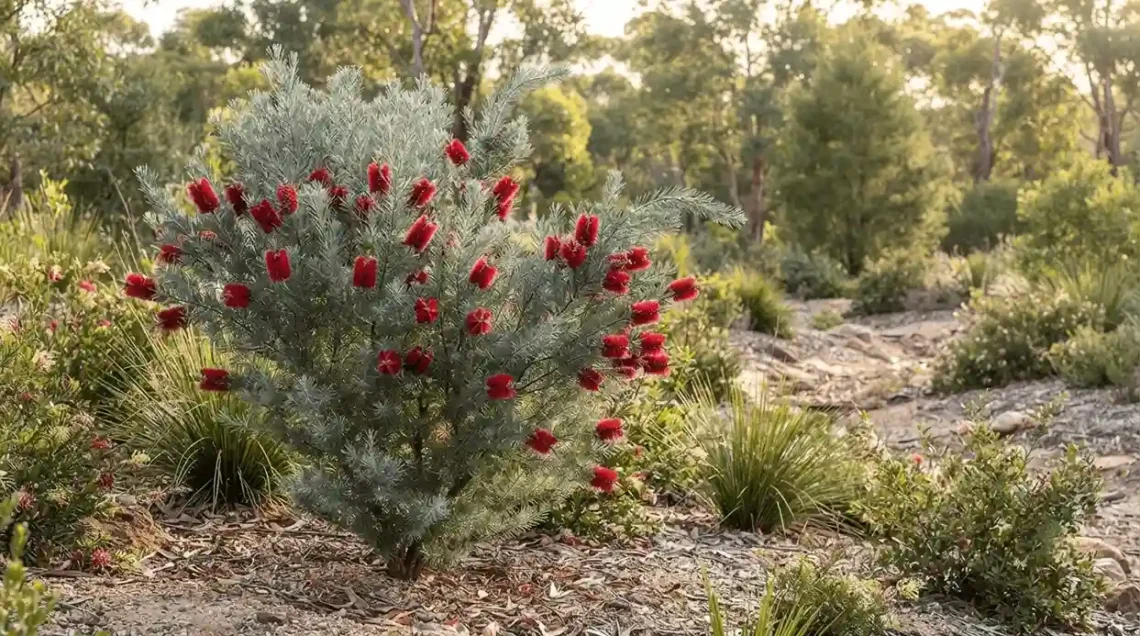
Calothamnus quadrifidus grey is a distinctive grey-foliaged form of the Australian native shrub Calothamnus quadrifidus, commonly known as the one sided bottlebrush. This hardy evergreen plant is valued in native gardens for its silvery foliage, vivid red flowers, drought tolerance, and ability to thrive in low-maintenance landscapes. The Calothamnus grey form provides year-round texture and contrast, making it suitable for waterwise gardens, coastal planting, and wildlife-friendly spaces. This guide explains how to identify Calothamnus quadrifidus grey, understand its growth habits, provide correct care, and use it effectively in Australian garden designs.
Quick Summary
- Calothamnus quadrifidus grey is a grey-leaved form of the Australian native one-sided bottlebrush.
- It grows best in full sun, free-draining soil, and low-water conditions.
- The shrub produces striking red bottlebrush-like flowers that attract native pollinators.
- Regular light pruning helps maintain dense branching and a compact shape.
- It is well suited to native gardens, coastal landscapes, and drought-tolerant planting schemes.
What Is Calothamnus Quadrifidus Grey?
Calothamnus quadrifidus grey is a selected grey-foliage form of Calothamnus quadrifidus, an Australian native shrub from the family Myrtaceae. Understanding the parent species helps gardeners compare growth habits, flowering features, and landscape uses.
Unlike the standard species, which usually has greener foliage, the grey form provides a stronger foliage contrast in garden designs. Its combination of fine grey leaves and bright red flowers makes it a popular choice among gardeners looking for Australian native plants with year-round visual appeal.
Botanical classification
| Feature | Details |
| Scientific name | Calothamnus quadrifidus grey form |
| Genus | Calothamnus |
| Family | Myrtaceae |
| Native region | Western Australia |
| Plant type | Evergreen native shrub |
Calothamnus species are closely related to other Australian flowering shrubs within the Myrtaceae family, including bottlebrush-like plants known for their nectar-rich flowers.
Common names
The common name one sided bottlebrush refers to the unique flower arrangement of the plant. Unlike traditional bottlebrush plants where flowers surround the stem, Calothamnus quadrifidus produces flower clusters mainly along one side of the branches.
This unusual structure creates a distinctive appearance and helps identify the plant. Although some searches mention terms such as bottlebrush yellow, Calothamnus quadrifidus grey is recognised primarily for its red flowers rather than yellow blooms.
How to Identify Calothamnus Quadrifidus Grey Form
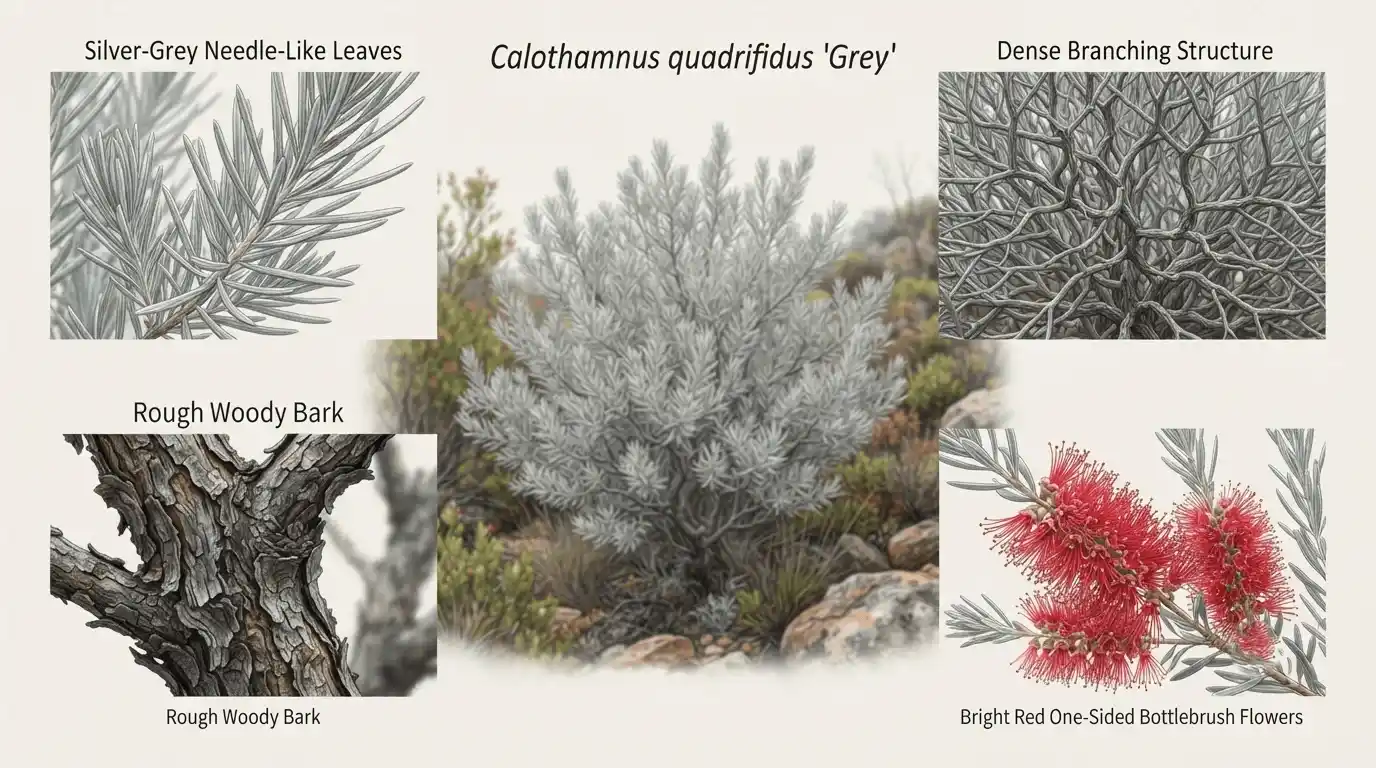
Calothamnus quadrifidus grey form can be identified by its combination of silver-grey foliage, narrow leaves, dense shrub structure, and bright red flowers.
Key identifying features include:
- Grey or silvery evergreen leaves
- Needle-like foliage adapted to dry environments
- Rough woody bark on mature stems
- Red one-sided bottlebrush flowers
- Upright, branching shrub habit
Leaves
Calothamnus quadrifidus leaves are narrow, elongated, and slightly needle-like. In the grey form, the foliage has a distinct silvery appearance caused by surface adaptations that help reduce moisture loss.
The grey foliage provides several advantages:
- Reflects intense sunlight
- Reduces water stress during dry periods
- Adds texture to native garden designs
- Creates contrast with green plants
Greenery Inside recommends avoiding excessive watering around grey-foliaged natives because their natural adaptations are designed for drier conditions.
Flowers
The flowers of Calothamnus quadrifidus grey are typically bright red and appear mainly during spring and summer, although flowering can vary depending on climate.
The red bottlebrush flowers:
- Attract native birds
- Provide nectar for insects
- Add seasonal colour to gardens
The flowers grow along one side of the stems, which creates the characteristic one-sided bottlebrush appearance.
Plant Size and Growth Habit
Calothamnus quadrifidus grey develops into an upright evergreen shrub with dense branching and a naturally compact appearance.
Mature height and width
The typical Calothamnus quadrifidus grey height is approximately 2–4 metres, with a similar spread depending on growing conditions.
The final Calothamnus quadrifidus grey size is influenced by:
- Amount of sunlight received
- Soil quality
- Available moisture
- Pruning practices
- Climate conditions
In cultivated gardens, regular pruning can maintain a smaller and denser shape.
Growth habit
This shrub has:
- Upright growth
- Dense branching
- Compact foliage
- Strong structure suitable for screening
It performs well in native landscapes where a hardy feature shrub is needed.
Growth Rate
Calothamnus quadrifidus grey has a moderate growth rate when planted in suitable conditions.
Growth is usually faster when the plant receives:
- Full sunlight
- Good drainage
- Occasional deep watering during establishment
Seasonal growth is strongest during warmer months, while growth slows during colder periods or drought conditions.
Calothamnus Quadrifidus Grey Care Guide
Light requirements
Calothamnus quadrifidus grey grows best in full sun. At least six hours of direct sunlight daily encourages stronger flowering and healthier foliage. Although Calothamnus quadrifidus grey prefers full sun, gardeners working with shaded areas can explore alternative species in our guide to native plants that grow in shade.
Insufficient light can result in:
- Reduced flowering
- Less dense growth
- Weaker stems
The plant tolerates heat well once established.
Soil requirements
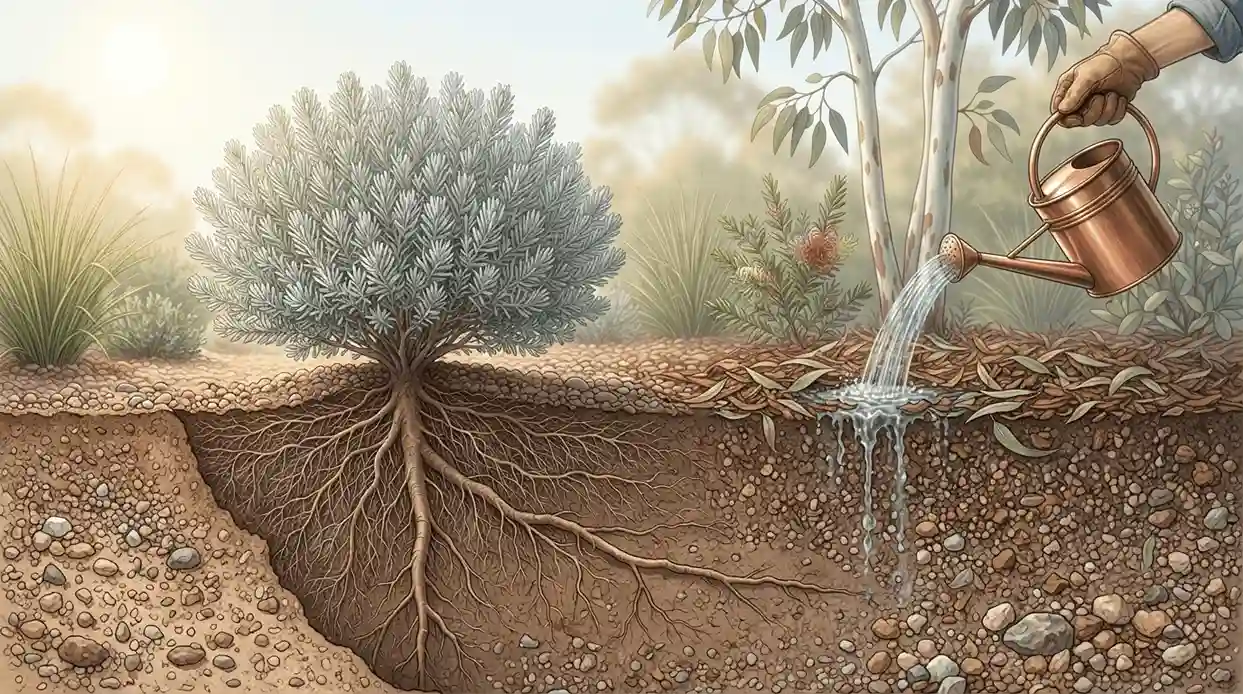
The plant prefers well-drained soils, including:
- Sandy soils
- Gravelly soils
- Low-nutrient native soils
Heavy clay soils should be avoided because poor drainage can lead to root problems.
Watering
Young plants require regular watering while establishing roots. After establishment, Calothamnus quadrifidus grey becomes highly drought tolerant.
A practical watering approach:
- Water deeply during the first growing season
- Reduce watering as roots establish
- Avoid frequent shallow watering
In our experience growing Australian natives, allowing soil to dry slightly between watering cycles improves long-term plant resilience.
Fertilising
Use a low-phosphorus native fertiliser if feeding is required.
Fertilising is most beneficial:
- During active growth
- When plants show nutrient deficiency symptoms
- After pruning to support recovery
Avoid high-phosphorus fertilisers because many Australian native plants are sensitive to excessive phosphorus.
Climate suitability
Calothamnus quadrifidus grey suits:
- Mediterranean climates
- Coastal gardens
- Dry inland gardens
It has mild frost tolerance once established but may require protection from severe frost when young.
Pruning and Long-Term Maintenance
When to prune
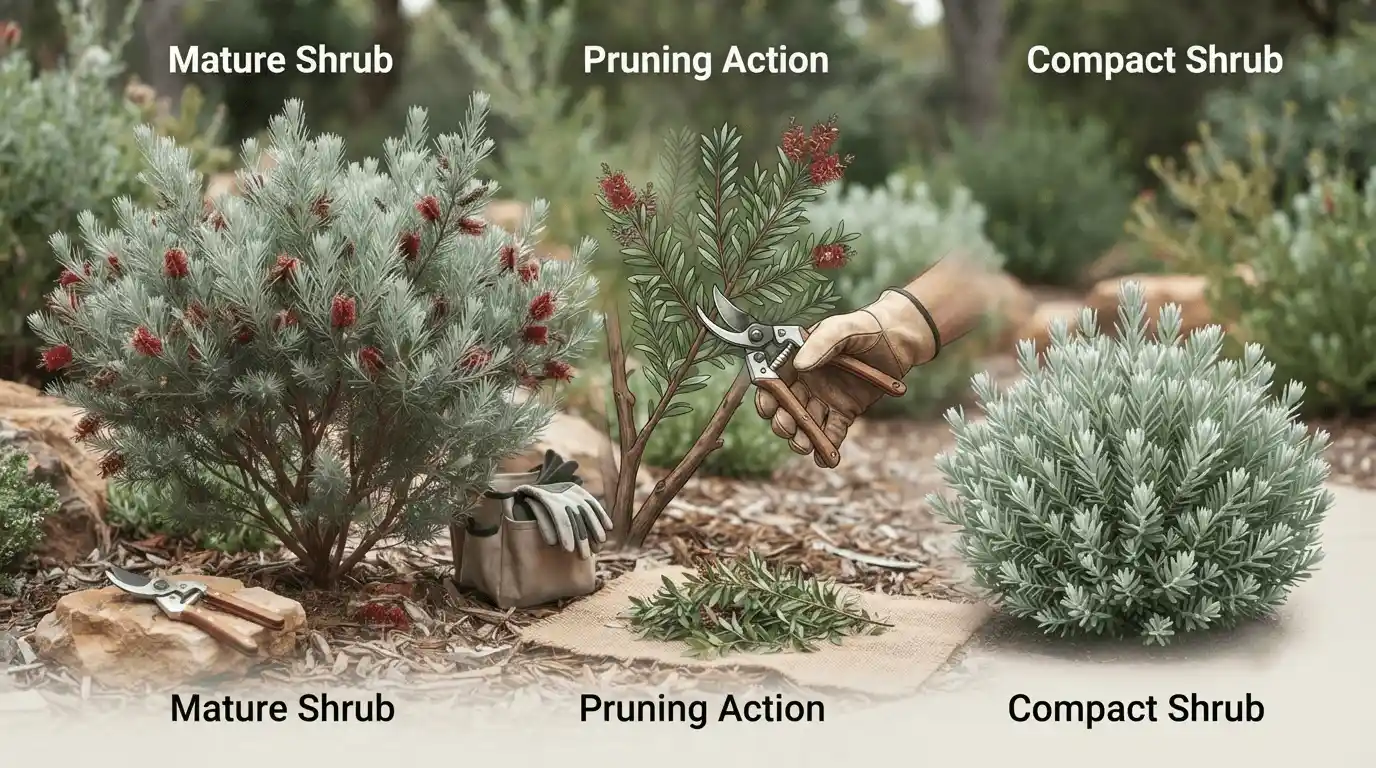
The best time for Calothamnus quadrifidus grey pruning is after flowering. Light pruning encourages branching and helps maintain a tidy shape.
How to prune safely
Recommended pruning methods:
- Remove spent flower stems
- Trim lightly to shape the shrub
- Remove damaged branches
Avoid cutting deeply into old woody growth because regeneration may be limited.
Maintaining dense growth
Regular light pruning helps:
- Encourage compact growth
- Prevent legginess
- Maintain flowering branches
Landscaping Uses for Calothamnus Quadrifidus Grey
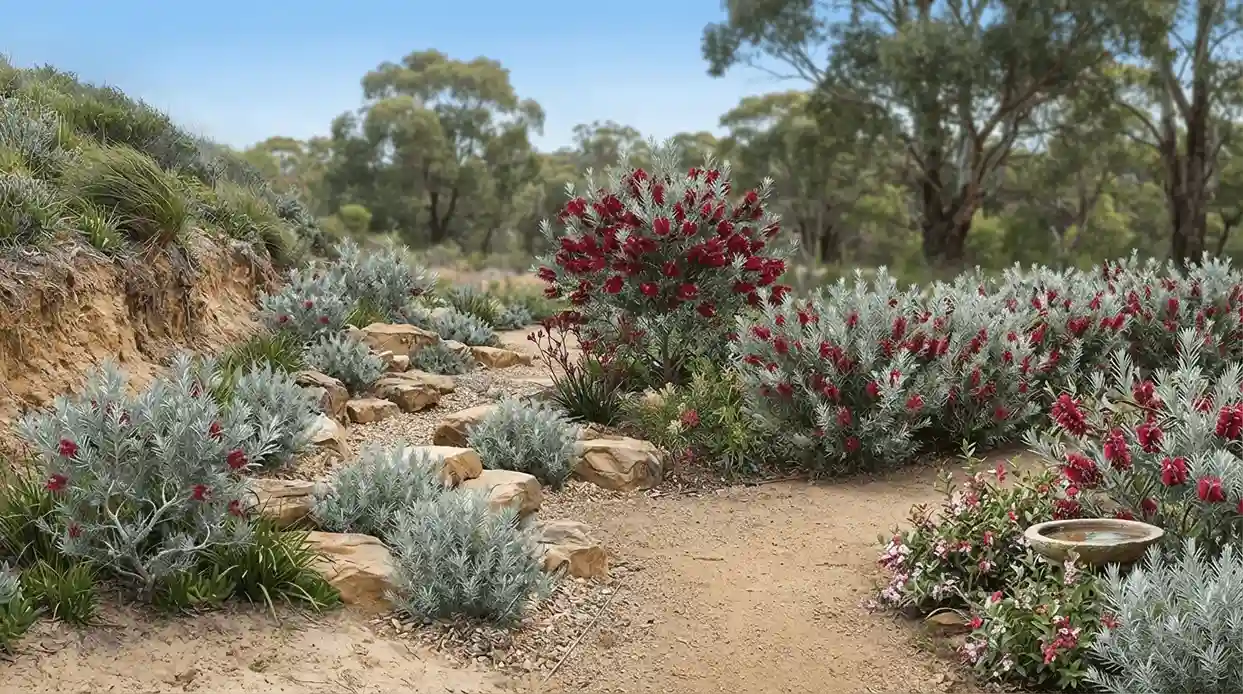
Calothamnus quadrifidus grey is versatile in Australian garden designs. Native gardens as a feature shrub alongside other Australian flowering natives such as Grevillea semperflorens.
Suitable uses include:
- Native gardens as a feature shrub
- Waterwise gardens for drought-tolerant planting
- Wildlife gardens for bird attraction
- Coastal landscapes due to salt tolerance
- Rock gardens with gravel-based soils
- Informal hedging for natural screening
Comparison: Calothamnus Quadrifidus Grey Form vs Similar Varieties
| Feature | Grey Form | Standard Calothamnus quadrifidus | Dwarf Form | Prostrate Form |
| Foliage colour | Silver-grey | Green-grey | Green | Green |
| Mature size | Medium shrub | Medium-large shrub | Smaller | Low spreading |
| Growth habit | Upright and dense | Upright | Compact | Ground covering |
| Landscape use | Feature planting | Native screens | Small gardens | Rockeries |
Grey Form vs Standard Species
Calothamnus quadrifidus grey differs from standard Calothamnus quadrifidus mainly through foliage colour. Both produce red flowers and share similar drought tolerance.
Grey Form vs Dwarf Form
Calothamnus quadrifidus dwarf remains smaller and suits limited spaces, while the grey form provides greater height and stronger foliage impact.
Grey Form vs Prostrate Form
Calothamnus quadrifidus prostrate has a spreading habit suited to ground cover applications, unlike the upright grey form.
Comparison with Calothamnus hirsutus
Calothamnus hirsutus generally differs in growth habit and foliage texture. It may have a more compact structure and different landscape applications, while Calothamnus quadrifidus grey is valued for its upright form and silver foliage.
Common Growing Problems and Solutions
Poor flowering
Common causes include:
- Too much shade
- Excess fertiliser
- Young plants not yet mature
Providing full sun usually improves flowering.
Root rot
Root rot is mainly caused by poor drainage.
Prevention:
- Plant in raised beds if soil is heavy
- Avoid overwatering
- Improve soil drainage before planting
Sparse growth
Sparse growth can result from:
- Lack of pruning
- Low light levels
- Nutrient imbalance
Regular shaping and suitable sunlight encourage denser growth.
Pest and disease issues
Calothamnus quadrifidus grey is generally resistant to many pests. Problems may occasionally include insect activity or fungal issues in consistently wet conditions.
Beginner Mistakes to Avoid
Avoid these common errors:
- Planting in poorly drained soil
- Overwatering established plants
- Using high-phosphorus fertilisers
- Growing in heavy shade
- Cutting too aggressively into old wood
- Ignoring mature plant size
Frequently Asked Questions About Buying and Availability
Calothamnus quadrifidus grey care requirements are similar to many Australian native shrubs. Availability may vary between nurseries because selected grey forms are less common than standard species.
When searching for Calothamnus quadrifidus grey for sale, choose healthy plants with:
- Strong branching
- Healthy foliage
- No signs of root stress
Container-grown plants can establish quickly, while tube stock is often economical and adapts well when planted at the right time.
Conclusion
Calothamnus quadrifidus grey is a valuable Australian native shrub known for its silver foliage, red flowers, drought tolerance, and unique one-sided bottlebrush appearance. With full sun, well-drained soil, careful watering, and light pruning, this grey form develops into a reliable low-maintenance feature plant. Its adaptability makes it an excellent choice for native gardens, coastal landscapes, wildlife areas, and waterwise planting designs.
FAQs
Is Calothamnus quadrifidus grey drought tolerant?
Yes. Once established, Calothamnus quadrifidus grey is highly drought tolerant and performs well in low-water gardens.
How tall does Calothamnus quadrifidus grey grow?
It usually grows around 2–4 metres tall, depending on climate, soil, and maintenance.
When does the one-sided bottlebrush flower?
The one-sided bottlebrush typically flowers during spring and summer, with timing influenced by growing conditions.
Can Calothamnus quadrifidus grey be pruned every year?
Yes. Annual light pruning after flowering helps maintain dense growth and shape.
What makes the grey form different from regular Calothamnus quadrifidus?
The grey form has distinctive silver-grey foliage, while regular Calothamnus quadrifidus usually has greener leaves.
Does Calothamnus quadrifidus grey attract birds and pollinators?
Yes. Its nectar-rich red flowers attract birds, bees, and other pollinating insects.
Can it grow in coastal gardens?
Yes. Calothamnus quadrifidus grey performs well in coastal gardens because it tolerates wind, salt exposure, and sandy soils.