Introduction
Syzygium wilsonii is a spectacular Australian rainforest tree admired for its vibrant hanging pink-red blooms and colourful ornamental berries. Commonly known as the powder puff lilly pilly or powderpuff lilly pilly, this unique species stands out because of its pendulous flower clusters that resemble fluffy powder puffs. The Syzygium wilsonii powderpuff lilly pilly is popular in native gardens, shaded landscapes, and wildlife-friendly plantings, where it attracts birds and pollinators while adding year-round ornamental interest. With the right growing conditions, it is an easy-care feature tree for tropical and subtropical gardens. Syzygium wilsonii is one of the most ornamental rainforest species featured in our complete guide to Australian Native Garden Trees, where you can discover more beautiful native trees for Australian landscapes.
By Greenery Inside | Plant Care & Gardening Expert
Quick Summary
- Syzygium wilsonii is an Australian rainforest tree with striking hanging pink powder-puff flowers.
- It grows best in warm, humid climates with moist, well-drained soil and partial shade.
- Bright edible berries attract birds and other wildlife after flowering.
- Regular watering, mulching, and frost protection encourage healthy growth and abundant blooms.
What Is Syzygium wilsonii?
Syzygium wilsonii is an evergreen Australian rainforest species native to the wet tropical forests of Queensland. Unlike many syzygium trees grown for hedging, this ornamental syzygium tree is prized for its cascading flowers and decorative fruit. Its distinctive appearance makes the powder puff lilly pilly and powderpuff lilly pilly one of the most ornamental members of the genus. If you’re comparing different members of the Syzygium genus, our guide to Australian Brush Cherry explains another popular lilly pilly species commonly grown for hedges and ornamental gardens. It belongs to the Syzygium genus, a large group of evergreen trees and shrubs in the Myrtaceae family that includes many ornamental and edible species.
Botanical classification
| Classification | Details |
| Family | Myrtaceae |
| Botanical Name | Syzygium wilsonii |
| Plant Type | Evergreen rainforest tree |
| Native Range | Tropical Queensland, Australia |
Why is it called Powder Puff Lilly Pilly?
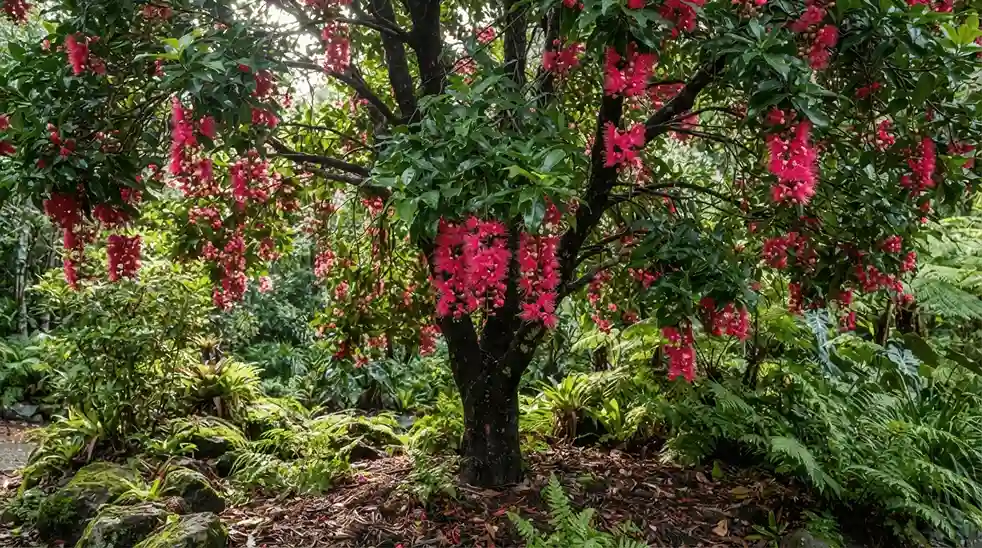
The common name comes from its large, fluffy flower clusters. Long pink to crimson stamens form rounded blooms that resemble cosmetic powder puffs, while the flowers hang beneath the branches, creating a spectacular cascading display during the flowering season.
Identification Features of the Powder Puff Lilly Pilly
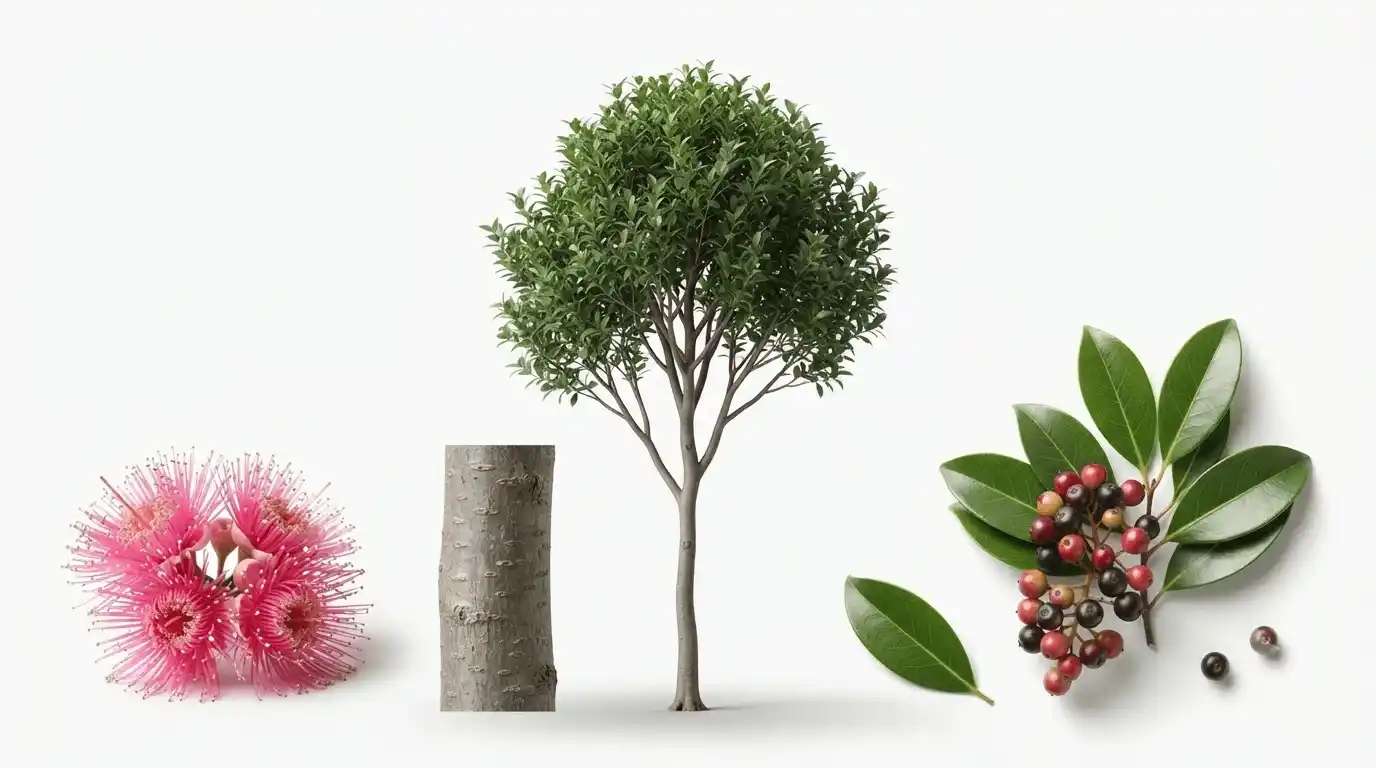
You can recognize this species throughout the year by its glossy foliage, smooth bark, and distinctive flowers.
| Feature | Description |
| Height | 3–8 m in gardens |
| Leaves | Large, glossy, deep green |
| Flowers | Hanging bright pink to crimson powder-puff blooms |
| Fruit | Red to purple edible berries |
| Bark | Smooth grey-brown |
| Growth Habit | Upright, rounded evergreen tree |
Lilly Pilly Flowers and Fruit
One of the greatest attractions of Syzygium wilsonii is its dramatic display of flowers followed by colourful berries.
Flower appearance
The brilliant lilly pilly flowers appear in pendulous clusters directly from older stems and branches. Each lilli pilli flower consists of hundreds of long stamens that create the characteristic powder-puff shape. These striking lilly pilly pink flowers are among the most ornamental syzygium flowers found on Australian native trees.
Fruiting season
After flowering, attractive berries develop and gradually ripen from red to deep purple. The fruit is edible, although mainly enjoyed by birds and other native wildlife. Bees and insects pollinate the flowers, making the tree an excellent addition to wildlife gardens.
Syzygium wilsonii Size and Growth Rate
This rainforest species develops into a manageable ornamental tree when grown in suitable conditions.
Mature dimensions
- Garden-grown: 3–8 m tall and 2–5 m wide
- Rainforest specimens: up to 10–15 m
- Containers: typically 2–3 m with pruning
The final Syzygium wilsonii size depends on climate, soil quality, and available moisture.
Growth rate
The tree establishes slowly during its first few years before developing a moderate growth rate. In our experience at Greenery Inside, plants grow faster in warm, humid tropical climates with consistently moist soil and regular feeding.
How to Grow Syzygium wilsonii

Light requirements
Grow the tree in partial shade, filtered sunlight, or gentle morning sun. Protect it from intense afternoon heat, especially while young. If you’re wondering how different lilly pilly species perform in lower light, read our guide on Can Lilly Pilly Grow in Shade? for more growing tips.
Soil preferences
Plant in rich, organic, well-drained soil that retains moisture without becoming waterlogged. Compost improves soil structure and supports healthy root development.
Watering
Water young plants regularly to maintain evenly moist soil. Established trees tolerate short dry periods but flower best with consistent moisture. Greenery Inside recommends deep watering during prolonged hot weather.
Fertiliser
Feed in spring and early summer using a low-phosphorus native fertiliser or well-rotted compost. Avoid excessive nitrogen, which encourages leafy growth at the expense of flowers.
Mulching
Apply a 5–8 cm layer of organic mulch around the root zone, keeping it clear of the trunk. Mulch conserves moisture, suppresses weeds, and protects shallow roots from temperature extremes.
Climate and Ideal Growing Conditions
Syzygium wilsonii thrives in tropical and subtropical climates with high humidity and reliable rainfall. It prefers sheltered positions protected from strong winds and performs poorly in prolonged frost. As of 2026, growers continue to recommend planting it in frost-free locations or growing it in containers where winters are cool.
Pruning and Maintenance
Remove dead, damaged, or crossing branches after flowering to maintain shape and improve air circulation. Light pruning encourages bushier growth without reducing the next flowering display. Avoid heavy pruning, as flowers develop on mature wood.
Common Problems and Solutions
Leaves turning yellow
Yellow leaves are usually caused by overwatering, poor drainage, or nutrient deficiencies. Improve drainage and apply a balanced native fertiliser if needed.
Poor flowering
Insufficient light, plant stress, or immaturity can reduce blooming. Most trees flower more reliably once established in a warm, sheltered location.
Pest problems
Occasional pests include psyllids, scale insects, and leaf-eating caterpillars. Inspect new growth regularly and manage infestations with horticultural oil or by encouraging beneficial insects.
Root diseases
Waterlogged soil may lead to root rot. Prevent problems by planting in free-draining soil and avoiding excessive irrigation.
Syzygium wilsonii Compared with Other Lilly Pilly Species
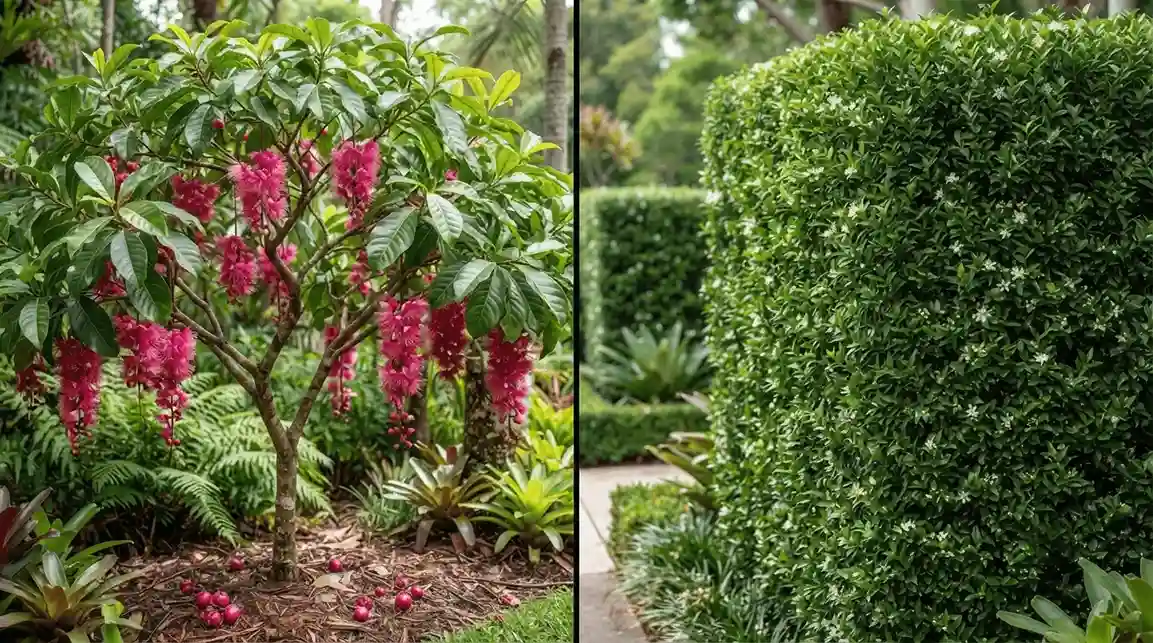
While Syzygium wilsonii is grown mainly for its flowers, Syzygium australe, also known as lilly pilly australe, syzygium australe lilly pilly, or australe lilly pilly, is widely used for hedging. Unlike the cascading lilly pilly forms, including syzygium cascade lilly pilly, S. wilsonii is valued as a feature tree.
Powder Puff Lilly Pilly vs Syzygium australe
For gardeners planning a privacy screen instead of a feature tree, see our guide to the Best Lilly Pilly for Hedge to compare the top hedge-forming varieties.
| Feature | Syzygium wilsonii | Syzygium australe |
| Flowers | Hanging pink powder puffs | Small white flowers |
| Height | 3–8 m | 5–15 m |
| Fruit | Red-purple berries | Pink to purple berries |
| Sun tolerance | Partial shade | Full sun to part shade |
| Best use | Feature tree | Hedge or screen |
When should you choose Syzygium wilsonii?
Choose this species if you want a specimen tree with spectacular flowers, edible fruit, and excellent wildlife value. If your goal is a dense privacy hedge, lilly pilly syzygium australe is generally the better choice.
Landscaping Uses
Syzygium wilsonii suits:
- Feature trees
- Rainforest gardens
- Wildlife-friendly landscapes
- Courtyards
- Large decorative containers
Although attractive, a Syzygium wilsonii hedge is less practical because of its open habit. Hedge-forming lilly pilly species such as Syzygium australe produce denser screening growth. If you’re looking for plants that create dense privacy screens, our guide to Australian Native Screening Trees highlights the best native options for hedging and wind protection.
Common Beginner Mistakes
Avoid these common errors:
- Planting in hot afternoon sun
- Growing in poorly drained soil
- Allowing young plants to dry out
- Removing too much growth during pruning
- Skipping mulch around the root zone
- Planting outdoors in frost-prone climates
Environmental Benefits and Wildlife Value
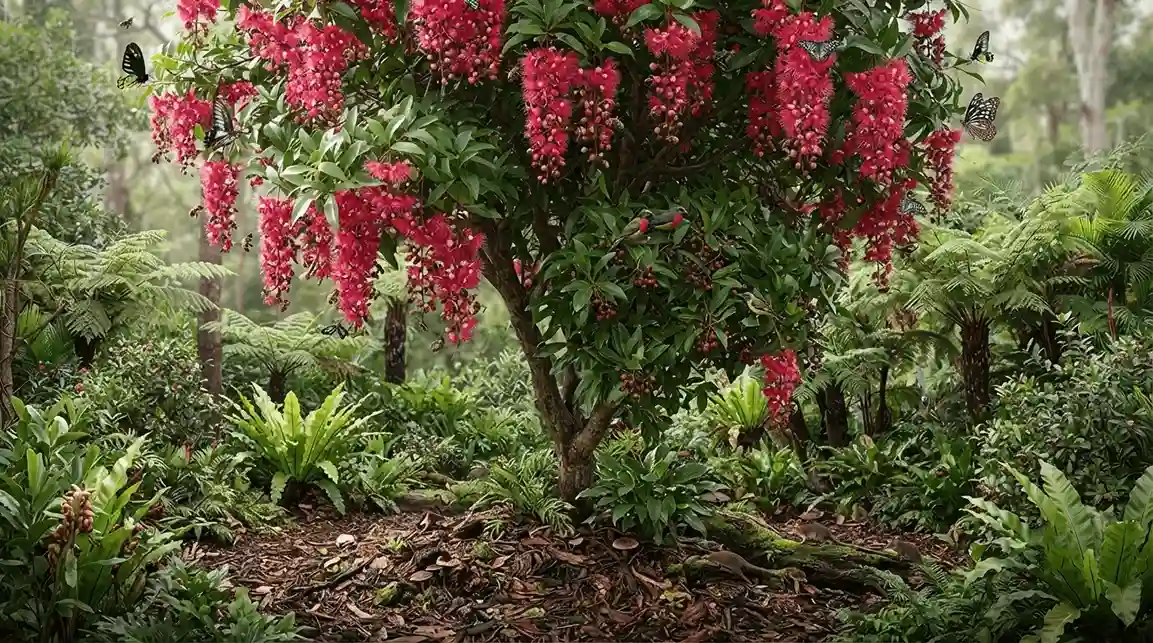
This native rainforest tree supports biodiversity by providing nectar for bees and other pollinators, while its berries attract birds and small wildlife. In our experience growing Australian natives, Syzygium wilsonii quickly becomes a valuable habitat plant when grown in healthy, chemical-free gardens.
Conclusion
Syzygium wilsonii remains one of Australia’s most distinctive ornamental rainforest trees thanks to its dramatic powder puff lilly pilly flowers, attractive edible fruit, and manageable size. With warm conditions, moist well-drained soil, and light maintenance, it provides year-round beauty while supporting local wildlife. Selecting the right planting location and following consistent care practices will help this remarkable native species thrive for many years.
Frequently Asked Questions
Is Syzygium wilsonii native to Australia?
Yes. It is native to the tropical rainforests of Queensland, Australia.
How large does Syzygium wilsonii grow?
Most garden specimens reach 3–8 metres tall, while rainforest trees can grow significantly larger.
Does the powder puff lilly pilly produce edible fruit?
Yes. The berries are edible and are also an important food source for birds and other wildlife.
Can Syzygium wilsonii be grown in pots?
Yes. It grows well in large containers if provided with quality potting mix, regular watering, and occasional pruning.
Does Syzygium wilsonii tolerate frost?
No. It has low frost tolerance and grows best in frost-free tropical or subtropical climates.
How often does Syzygium wilsonii flower?
It typically flowers once each year, producing spectacular hanging pink to crimson blooms during the warmer months.
Is Syzygium wilsonii suitable for hedging?
Not usually. Its naturally open, ornamental habit makes it better suited as a feature tree than as a formal hedge. Dense hedge species such as Syzygium australe are a better choice.