Introduction
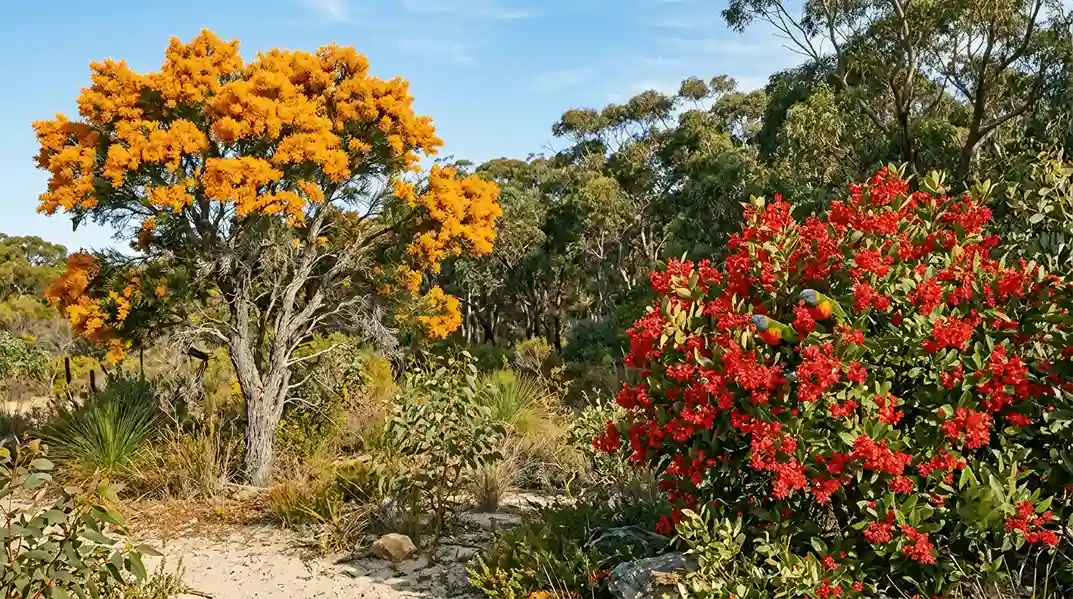
The native Australian Christmas tree refers to several iconic native plants that naturally bloom during the Australian festive season. Unlike many countries that associate Christmas with evergreen conifers, Christmas trees in Australia vary by region. In Western Australia, Nuytsia floribunda, also known as the Western Australian Christmas Tree, is famous for its brilliant yellow flowers. In eastern Australia, the Christmas Bush (Ceratopetalum gummiferum) is recognised for its vivid red display. These celebrated Australian Christmas flowers are among the most distinctive Christmas plants Australia has to offer and remain important symbols of an Australian native Christmas tree tradition.
Quick Summary
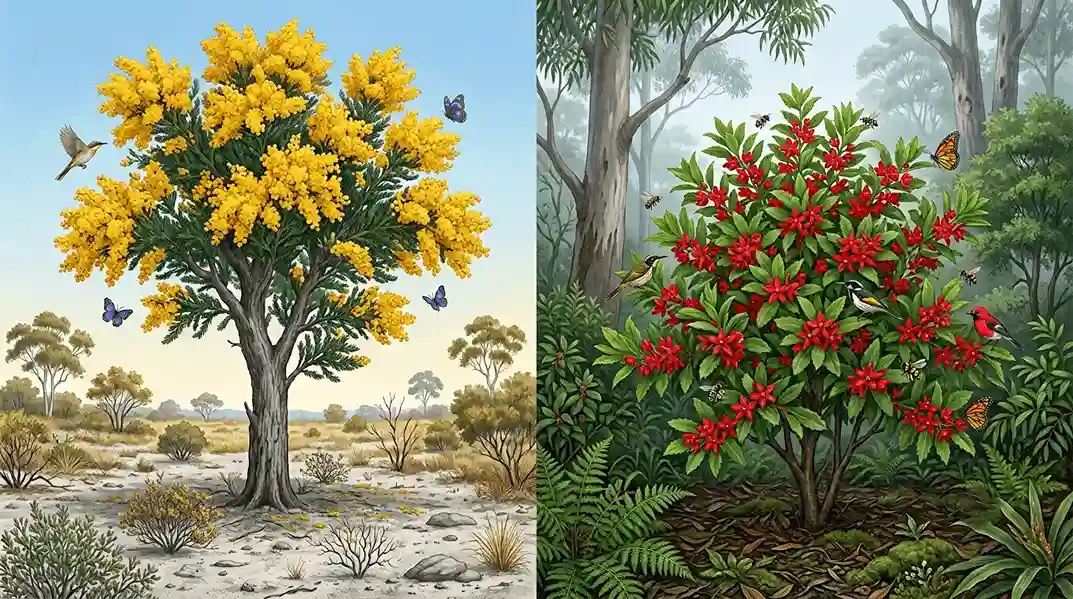
- The native Australian Christmas tree differs by region, with Nuytsia floribunda in Western Australia and Christmas Bush in eastern Australia.
- Yellow flowers and bright red sepals naturally appear around Christmas.
- Both species have significant ecological and cultural value.
- Growing requirements depend on local climate, soil, and rainfall.
What Is the Native Australian Christmas Tree?
The term native Australian Christmas tree describes Australian plants that flower or display festive colours during the Christmas season. Rather than having one official species, Australia celebrates different native trees and shrubs based on regional climates and natural distribution.
Why Australians Have Different Native Christmas Trees
Western Australia and eastern Australia experience different climates, leading to different native species becoming Christmas symbols. Both the Western Australian Christmas Tree and the Christmas Bush naturally reach their peak display in late spring and early summer, matching the Australian Christmas period.
The Most Recognised Native Christmas Trees
The best-known species include:
- Nuytsia floribunda
- Western Australian Christmas Tree
- Moodjar tree
- WA Christmas Tree
- Yellow Christmas Tree
- Christmas Bush
- NSW Christmas Bush
Each represents its local landscape while celebrating Australia’s unique native flora. Many gardeners also enjoy planting Australian native yellow flowers alongside festive natives to extend seasonal colour throughout the garden.
Nuytsia floribunda (Western Australian Christmas Tree)
Nuytsia floribunda is a spectacular flowering tree native to the south-west of Western Australia. It belongs to the sandalwood family (Loranthaceae) and is renowned for flowering during December, earning its reputation as the Western Australian Christmas Tree.
Greenery Inside recommends planting this species only where it has ample space, as established trees dislike root disturbance.
Identification Features
Key characteristics include:
- Brilliant orange-yellow flower clusters
- Mature height of 8–15 metres, occasionally taller
- Rough grey-brown bark
- Long, narrow green leaves
- Broad, rounded crown
Its striking blooms often cover the canopy, making it one of Australia’s most recognisable flowering trees.
Why It Is Called the Moodjar Tree
Moodjar is the traditional Noongar name for Nuytsia floribunda. For Noongar people, the tree holds deep cultural significance and is connected to traditional stories and spiritual beliefs. These cultural connections should always be respected when discussing the species.
Ecological Importance
The tree provides valuable nectar for:
- Honeyeaters
- Native bees
- Insects
It is also unusual because of its semi-parasitic root system, which connects to neighbouring plants to obtain additional water and nutrients while still producing its own food through photosynthesis. This unique adaptation supports survival in nutrient-poor Australian soils.
Christmas Bush (Ceratopetalum gummiferum)
The Christmas Bush, scientifically known as Ceratopetalum gummiferum, is native to coastal New South Wales. Often called the Australian Christmas Bush, Christmas Bush Tree, or NSW Christmas Bush, it is prized for its brilliant festive colour.
In our experience, this species performs best in well-drained soil with good air circulation and reliable moisture during establishment.
Why Christmas Bush Turns Red at Christmas
The colourful display comes from enlarged red sepals, not the flowers themselves. After small white flowers finish blooming, the sepals gradually turn bright pink to deep red, creating the plant’s famous Christmas appearance.
Popular Cultivars
One of the most popular selections is Ceratopetalum ‘Albery’s Red’, valued for its reliable red colouring and compact habit. It is widely planted in native gardens, streetscapes, and feature landscapes throughout suitable climates.
Native Australian Christmas Trees Compared
| Feature | Nuytsia floribunda | Christmas Bush |
| Native region | Western Australia | New South Wales |
| Flower colour | Orange-yellow flowers | White flowers with red sepals |
| Mature size | Large tree | Large shrub or small tree |
| Best climate | Mediterranean | Coastal temperate |
| Wildlife value | Excellent nectar source | Attracts birds and insects |
| Garden suitability | Large landscapes | Gardens and small landscapes |
Both species flower during the Australian Christmas season but suit different climates. Nuytsia floribunda is best for spacious Western Australian landscapes, while Christmas Bush adapts well to gardens in eastern Australia. Both provide seasonal colour, support native wildlife, and remain enduring symbols of Australia’s unique Christmas traditions.
Where Native Australian Christmas Trees Grow
Native Australian Christmas trees occur naturally in different parts of the country, reflecting Australia’s diverse climates and ecosystems.
Western Australia
The Western Australian Christmas Tree, WA Christmas Tree, or Moodjar grows naturally in the south-west of Western Australia. It thrives in sandy, well-drained soils with hot, dry summers and mild, wet winters.
New South Wales
The NSW Christmas Bush is native to coastal forests of New South Wales. It prefers temperate conditions, good drainage, and consistent moisture during establishment.
Other Australian Regions
Both species can be grown outside their natural range only where climate and soil are suitable. Local temperature, rainfall, and drainage are the main limiting factors.
Plant Size and Growth Habit
Plant size varies considerably between the two species and should be considered before planting.
Nuytsia floribunda Size
- Mature height: 8–15 metres
- Crown spread: 6–10 metres
- Long-lived native tree with a broad canopy
Christmas Bush Size
- Mature height: 3–6 metres
- Spread: 2–4 metres
- Can be grown as a large shrub or small tree, making it suitable for residential gardens.
Soil quality, available space, and rainfall all influence final size.
Growth Rate
How Fast Does Nuytsia floribunda Grow?
Nuytsia floribunda has a slow to moderate growth rate. Young trees spend several years establishing their root system before noticeable canopy growth.
Christmas Bush Growth Rate
Christmas Bush grows at a moderate pace and develops steadily under favourable conditions.
Growth of both species improves with:
- Full sun
- Well-drained soil
- Consistent watering while young
- Healthy soil structure
Care Guide for Native Australian Christmas Trees
Sunlight Requirements
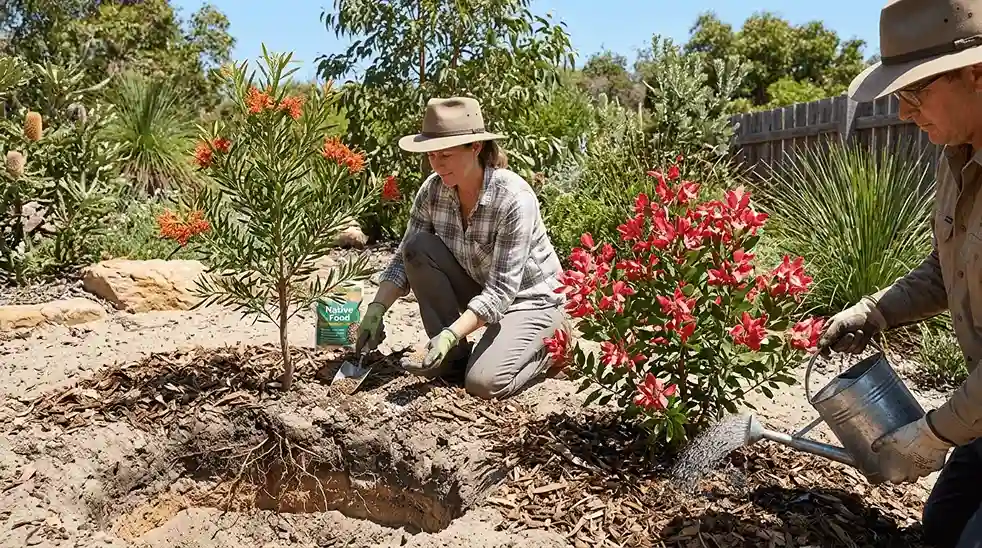
Both species perform best in full sun. Good light encourages stronger flowering and healthy growth.
Soil Conditions
Free-draining sandy or sandy-loam soils are ideal. Poor drainage increases the risk of root problems.
Watering Needs
Water newly planted specimens regularly until established. Mature plants are relatively drought tolerant but benefit from occasional deep watering during extended dry periods.
Fertilising
Use a low-phosphorus native fertiliser in spring if required. Excess phosphorus can damage many Australian native plants.
Pruning
Only minimal pruning is needed. Remove dead, damaged, or crossing branches and lightly shape Christmas Bush after flowering.
Common Problems and Growing Challenges
Why Native Christmas Trees Fail to Establish
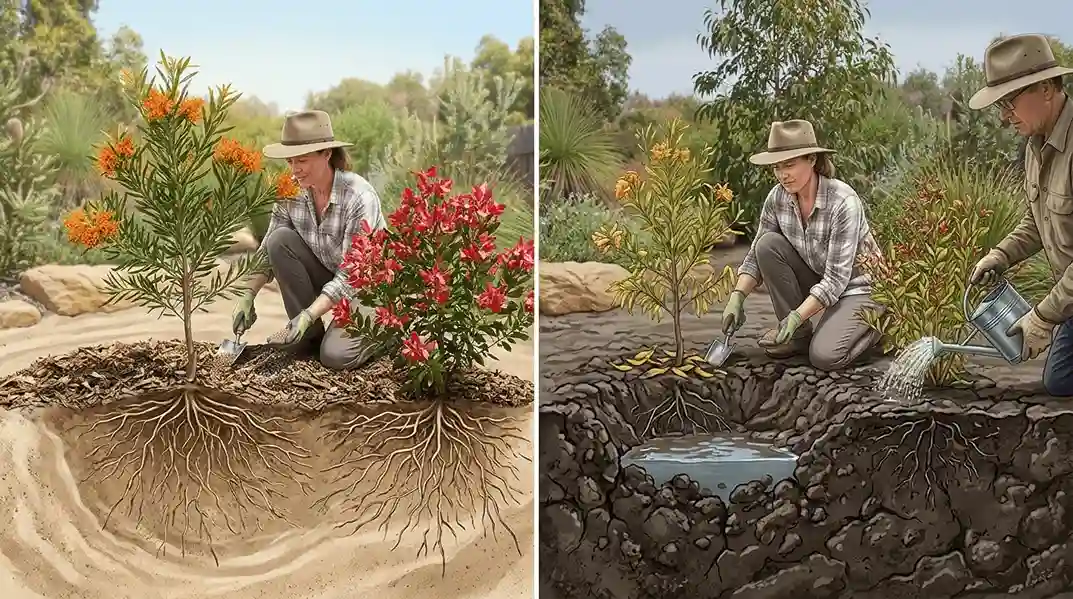
The most common causes include:
- Root disturbance
- Heavy clay soils
- Poor drainage
- Planting in unsuitable climates
Greenery Inside recommends disturbing the roots as little as possible, particularly when planting Nuytsia floribunda.
Flowering Problems
Poor flowering may result from insufficient sunlight, seasonal weather variation, drought stress, or immature plants that have not reached flowering age.
Pests and Diseases
Both species are generally low maintenance. Occasional fungal diseases may occur in poorly drained soils or humid conditions. Good airflow and proper drainage help prevent most issues.
Cultural Significance of the Moodjar Tree
The Moodjar Tree holds profound cultural importance for the Noongar people of Western Australia. It features in traditional knowledge, stories, and spiritual beliefs, making it far more than an ornamental tree. Visitors should admire these trees respectfully and recognise their continuing cultural significance to Aboriginal communities.
Native Australian Christmas Trees in Landscaping
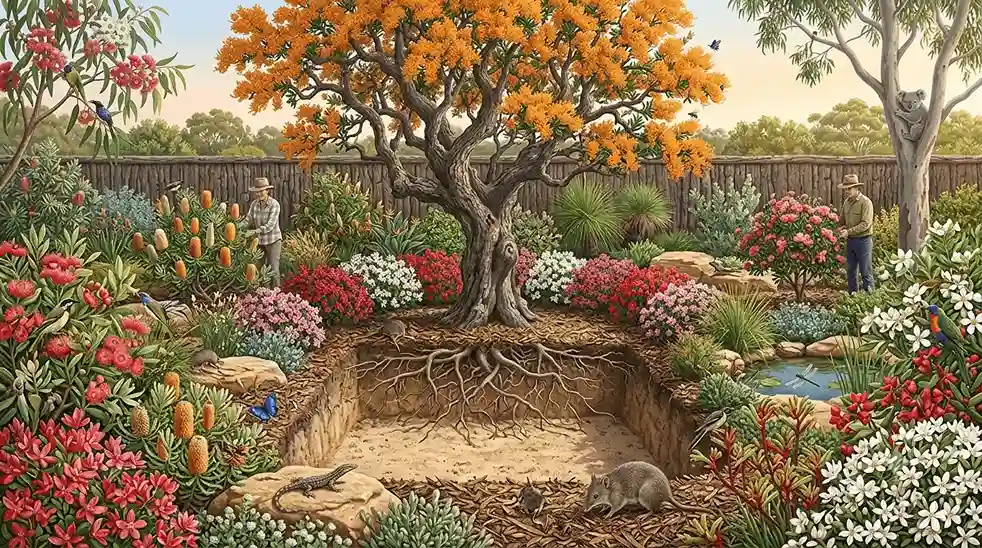
Native Australian Christmas trees provide seasonal colour while supporting birds, bees, and other wildlife. They suit wildlife gardens, native landscapes, parks, and large public plantings. Combining these trees with native plants that attract butterflies creates an even more wildlife-friendly Australian garden.
Best Uses for Nuytsia floribunda
- Large rural properties
- Parks and reserves
- Wildlife habitat
- Feature specimen tree
Best Uses for Christmas Bush
- Native home gardens
- Screening
- Feature planting
- Streetscapes
- Coastal landscapes
Native Australian Christmas Tree Alternatives
If local conditions are unsuitable, consider other Australian festive plants such as:
- Woolly Bush
- Coast Banksia
- NSW Christmas Bush
- Flowering gums
- Other Australian Christmas flowers
These alternatives may better suit different climates while still providing seasonal colour and wildlife benefits. If you’re looking for another colourful native tree, Corymbia ficifolia pink is an excellent choice for spectacular summer flowering.
Common Beginner Mistakes
Avoid these common errors:
- Planting in heavy clay soils
- Overwatering established plants
- Applying high-phosphorus fertilisers
- Choosing a species unsuited to your region
- Disturbing established roots during planting or landscaping
Frequently Asked Questions
What tree is a Christmas tree in Australia?
Australia does not have one official Christmas tree. In Western Australia, the Western Australian Christmas Tree (Nuytsia floribunda) is the best-known festive tree, while in eastern Australia the Christmas Bush (Ceratopetalum gummiferum) is widely recognised.
What is the native Christmas Bush in Australia?
The native Christmas Bush is Ceratopetalum gummiferum, a species native to coastal New South Wales. It is famous for its bright red sepals that develop around Christmas.
What is the story of the Moodjar tree?
The Moodjar Tree is the Noongar name for Nuytsia floribunda. It holds deep cultural and spiritual significance for Noongar people and has been respected in Aboriginal traditions for generations.
Are there any native Australian pine trees?
Australia has several native conifers, including species of Callitris (cypress pines) and Araucaria, but these are different from the native Australian Christmas trees traditionally associated with the festive season.
Can you grow a native Australian Christmas tree outside its natural region?
Yes, but success depends on matching the plant to suitable climate, soil, and drainage conditions. Christmas Bush adapts more readily to cultivation, while Nuytsia floribunda performs best within climates similar to its native south-west Western Australian habitat.
What is the difference between the Western Australian Christmas Tree and the Christmas Bush?
The Western Australian Christmas Tree is a large tree with brilliant yellow-orange flowers and a semi-parasitic root system, whereas the Christmas Bush is a shrub or small tree whose bright red display comes from colourful sepals rather than the flowers themselves.
Conclusion
The native Australian Christmas tree reflects Australia’s remarkable botanical diversity, with Nuytsia floribunda symbolising Christmas in Western Australia and the Christmas Bush (Ceratopetalum gummiferum) representing the festive season across much of eastern Australia. Although they differ in appearance, habitat, and growing requirements, both species provide outstanding ornamental beauty, support native wildlife, and carry important cultural significance. Choosing the right species for your local climate and soil conditions will help ensure healthy growth while celebrating one of Australia’s most distinctive Christmas traditions.