Introduction
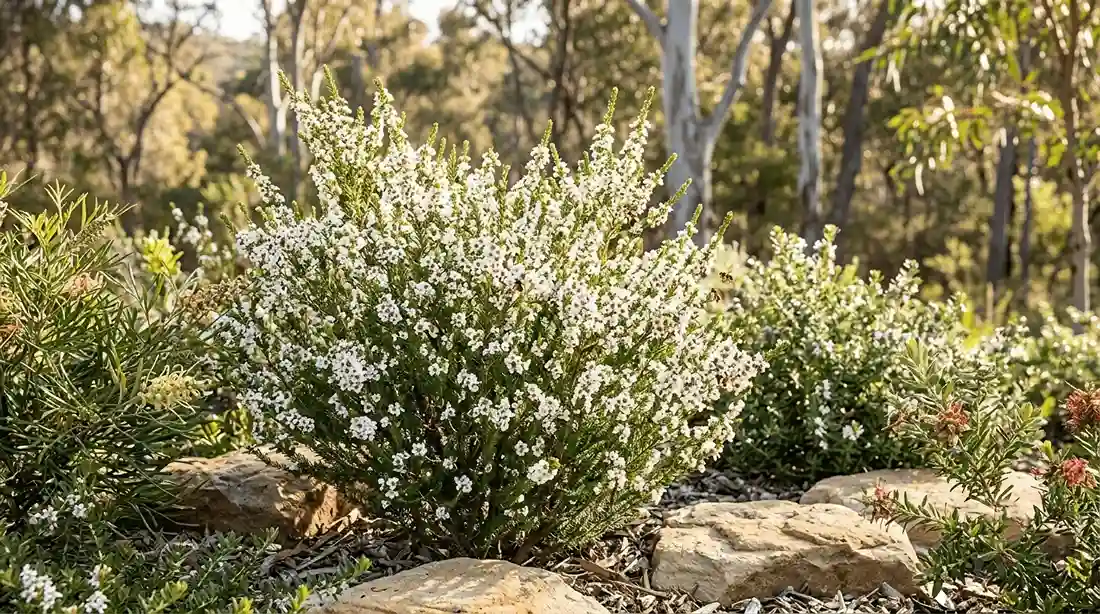
Baeckea imbricata, commonly called Heath Myrtle, is a compact Australian native shrub in the Myrtaceae family. It is admired for its fine evergreen foliage, masses of delicate white flowers, and adaptability to native gardens, borders, rockeries, and wildlife-friendly landscapes. Although often grouped with other Baeckea species, it has its own distinctive compact habit and ornamental appeal.
Quick Summary
- Baeckea imbricata is a compact evergreen Australian native shrub.
- It belongs to the Myrtaceae family alongside eucalypts and bottlebrushes.
- It prefers full sun and well-drained soil and becomes drought tolerant once established.
- Its fine foliage and white flowers suit native gardens, borders, and containers.
What Is Baeckea imbricata?
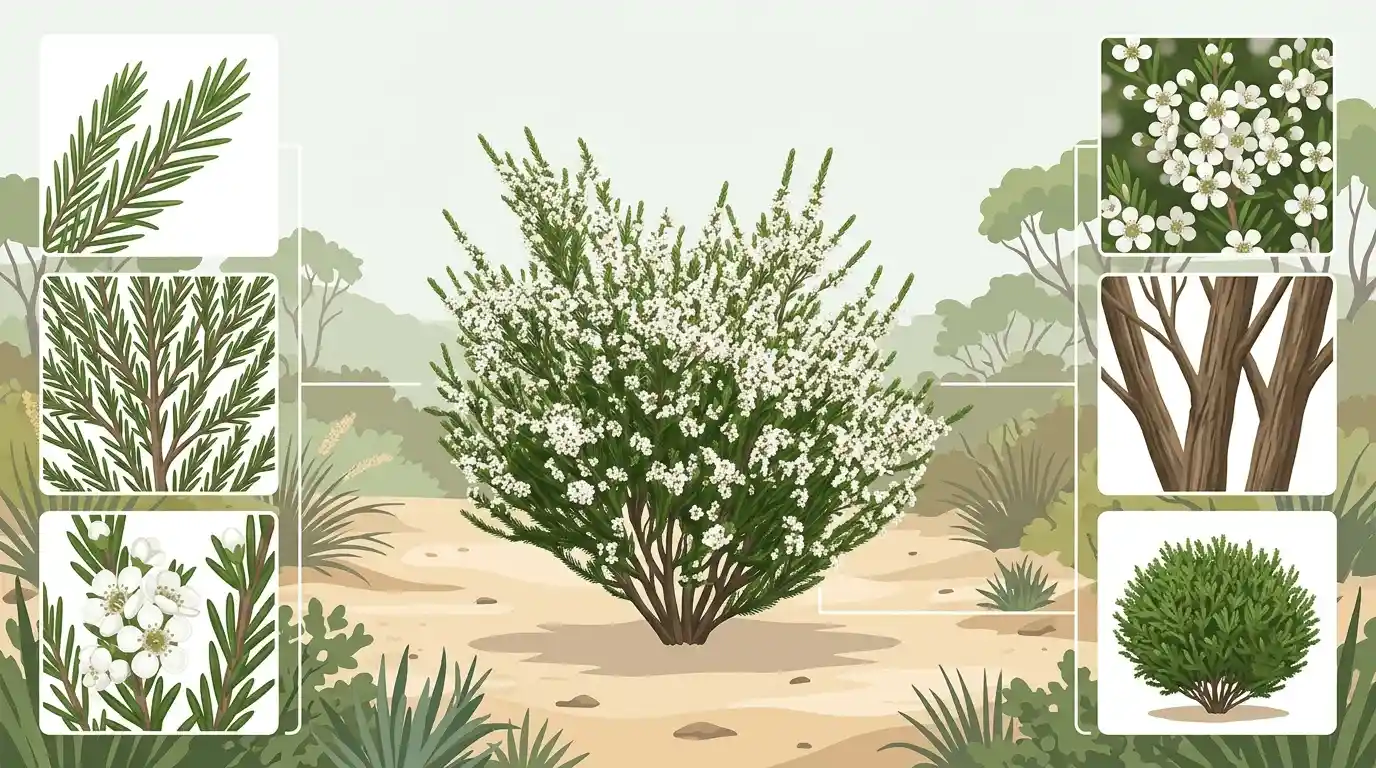
Botanical Classification
- Scientific name: Baeckea imbricata
- Common name: Heath Myrtle
- Family: Myrtaceae
- Native range: Eastern Australia
- Habitat: Heathlands, open woodland, and sandy well-drained soils.
Key Identification Features
Heath Myrtle has fine needle-like evergreen leaves, dense branching, and numerous small white flowers during spring and summer. Its rounded habit creates a soft-textured appearance that distinguishes it from many larger baeckea species.
What Is the Myrtaceae Family in Australia?
The Myrtaceae family includes many iconic Australian plants such as Eucalyptus, Melaleuca, Callistemon, Leptospermum, and Baeckea. Members typically share:
- Aromatic foliage
- Brush-like or star-shaped flowers
- Wildlife-friendly nectar
- Excellent adaptation to Australian climates
Why Is Heath Myrtle Popular in Australian Gardens?
Gardeners value Heath Myrtle because it is compact, evergreen, low maintenance, and attractive to pollinators. Once established, it tolerates dry conditions and suits many temperate Australian regions. Heath Myrtle is also an excellent choice for creating a Modern Australian native garden, where its compact form and long flowering season blend well with other indigenous plants.
Ideal uses include:
- Cottage gardens
- Native gardens
- Rockeries
- Coastal gardens
- Wildlife gardens
- Informal borders
Plant Size and Growth Habit
Mature Height and Width
Most plants reach 1–2 m tall and 1–2 m wide, making them suitable for small landscapes and mixed native plantings.
Growth Form
The shrub develops dense branching with fine-textured foliage and a naturally rounded to slightly spreading habit.
Environmental Factors Affecting Size
| Feature | Typical Range |
| Height | 1–2 m |
| Width | 1–2 m |
| Habit | Rounded, dense |
| Lifespan | Long-lived with good care |
Sunlight, soil drainage, watering, and occasional pruning all influence mature size.
Growth Rate
How Fast Does Baeckea imbricata Grow?
Heath Myrtle has a moderate growth rate, usually establishing within two years before producing stronger seasonal growth.
Factors That Influence Growth
Growth improves with:
- Full sun
- Free-draining soil
- Moderate watering during establishment
- Low-phosphorus native fertilizer
Complete Care Guide
Light Requirements
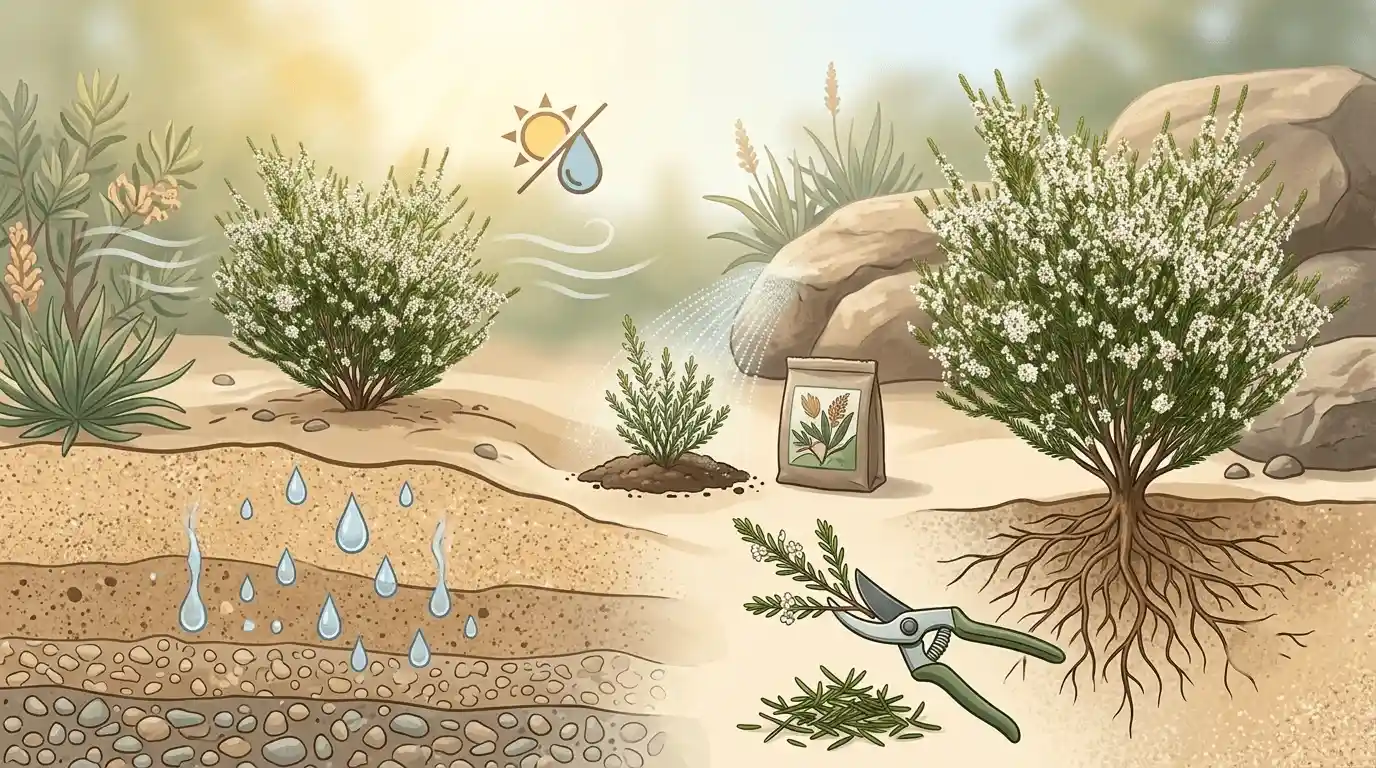
Plant in full sun for the best flowering, although light afternoon shade is acceptable.
Soil Preferences
Grow in sandy or well-drained slightly acidic soils. Avoid heavy clay and waterlogged sites.
Watering Needs
Water regularly after planting. Mature shrubs usually require watering only during prolonged dry periods.
Fertilizing
Apply a native plant fertilizer in spring. Avoid products high in phosphorus.
Pruning
Lightly prune after flowering to maintain shape and encourage dense branching.
Greenery Inside recommends avoiding hard pruning into old wood, as recovery may be slow.
Flowering Characteristics
What Is the Common Heath Flower?
Heath Myrtle produces masses of tiny white flowers that cover the plant from spring into early summer. The term “common heath flower” generally refers to these delicate blooms seen on Australian heathland shrubs.
Wildlife Benefits
The flowers attract:
- Bees
- Native pollinators
- Butterflies
- Beneficial insects
Landscaping Uses
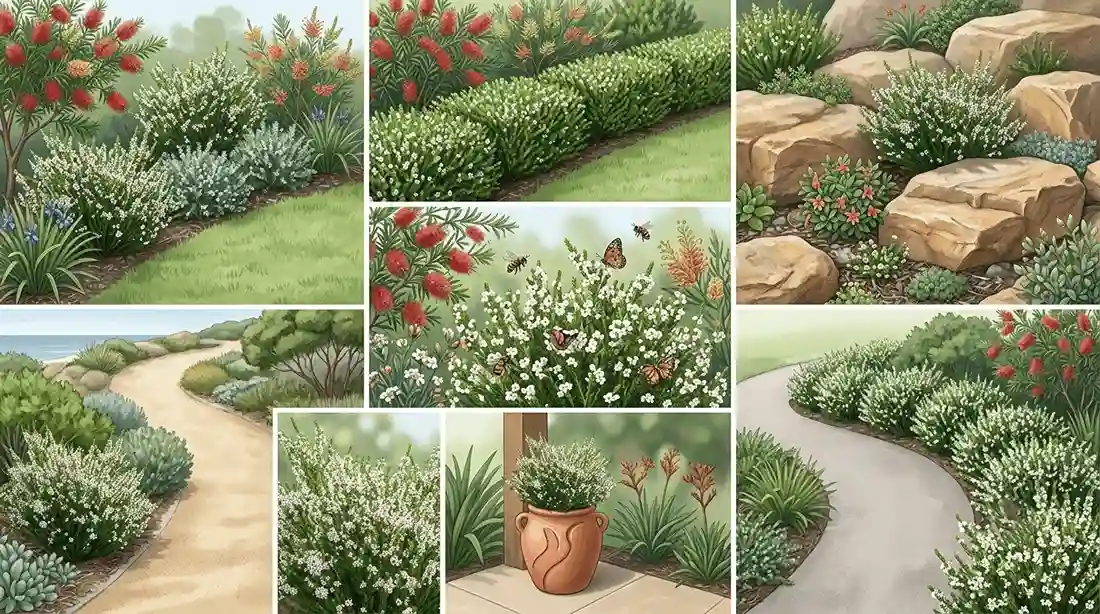
Heath Myrtle works well for native borders, low hedges, feature planting, rock gardens, mass plantings, coastal landscapes, wildlife gardens, and large containers. For coastal designs, Heath Myrtle pairs particularly well with Leptospermum Foreshore, creating a resilient and low-maintenance native planting scheme.
Good companion plants include:
- Grevillea
- Westringia
- Correa
- Leptospermum
- Callistemon
Baeckea imbricata vs Other Baeckea Species
Baeckea imbricata vs Baeckea virgata
Baeckea virgata generally grows taller and is often selected for screening, while Heath Myrtle remains denser and more compact.
Baeckea imbricata vs Baeckea linifolia
Baeckea linifolia has longer leaves and prefers consistently moist conditions, whereas Heath Myrtle performs well in drier sites.
Related Species and Modern Classifications
If you’re comparing compact native shrubs, our guide to Babingtonia virgata dwarf explains how it differs in habit, size, and landscape uses.
| Species | Size | Habit | Best Use |
| Baeckea imbricata | Compact | Dense | Borders |
| Baeckea virgata | Medium | Upright | Screening |
| Babingtonia virgata | Compact | Bushy | Native gardens |
| Sannantha minima | Dwarf | Compact | Rockeries |
| Baeckea gunniana | Small | Shrubby | Cool gardens |
Compact and Dwarf Varieties
Popular Compact Forms
Related selections include dwarf heath myrtle, dwarf baeckea, weeping baeckea, and tall baeckea, each suited to different landscape designs.
Cultivars and Related Selections
Popular landscape cultivars include baeckea virgata dwarf, baeckea virgata compacta, baeckea virgata nana, baeckea virgata minima, babingtonia virgata dwarf, and twiggy heath myrtle. These are separate selections rather than forms of Baeckea imbricata.
Common Growing Problems and Solutions
Poor Flowering
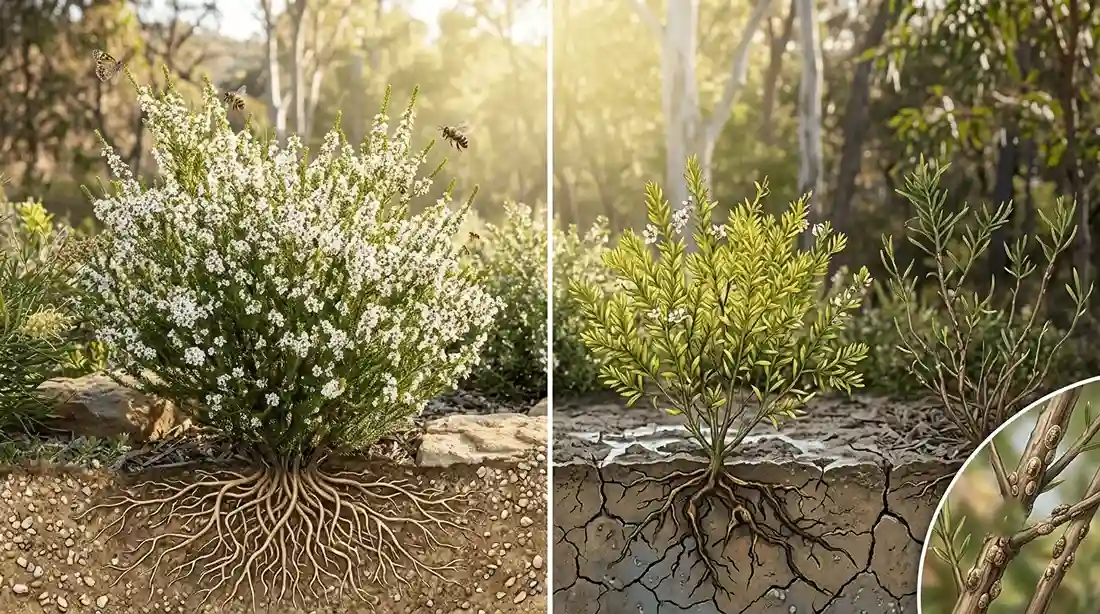
Usually caused by shade or excessive fertilizer. Increase sunlight and use native fertilizers.
Root Rot
Poor drainage is the main cause. Plant in well-drained soil.
Sparse Growth
Often results from insufficient sun or lack of pruning.
Pest and Disease Issues
Generally resistant but may occasionally develop fungal diseases or scale insects. Good airflow and proper watering reduce problems.
Common Beginner Mistakes
Avoid:
- Planting in waterlogged soil
- Overwatering established plants
- Heavy pruning
- High-phosphorus fertilizers
- Deep shade
In our experience, correct drainage is the single biggest factor for long-term success.
Seasonal Care Tips
- Spring: Fertilize lightly and enjoy flowering.
- Summer: Water during extended dry periods.
- Autumn: Ideal planting season.
- Winter: Remove damaged growth and prepare for spring pruning.
Environmental Limitations
Heath Myrtle tolerates light frost and coastal exposure but dislikes prolonged wet conditions, heavy clay soils, and poor drainage. In hot inland climates, occasional deep watering improves performance during extended drought.
Conclusion
Baeckea imbricata (Heath Myrtle) is a versatile Australian native shrub valued for its evergreen foliage, delicate flowers, compact growth, and low-maintenance nature. When grown in full sun with free-draining soil and sensible watering, it provides years of reliable performance in native gardens, borders, coastal landscapes, and wildlife-friendly plantings.
Frequently Asked Questions
Is Baeckea imbricata native to Australia?
Yes. It naturally occurs in parts of eastern Australia.
How big does Heath Myrtle grow?
Most mature plants reach 1–2 metres in height and width.
Does Baeckea imbricata attract bees and pollinators?
Yes. Its nectar-rich flowers attract bees and many native pollinators.
Can Heath Myrtle tolerate drought?
Yes. Once established, it is moderately drought tolerant.
What soil is best for Baeckea imbricata?
Free-draining sandy or slightly acidic soil is ideal.
Is Baeckea imbricata suitable for coastal gardens?
Yes. It performs well in many coastal Australian landscapes with good drainage.
What plants are closely related to Baeckea imbricata?
Related plants include Baeckea virgata, Baeckea linifolia, Babingtonia virgata, Sannantha minima, and Baeckea gunniana.