Introduction
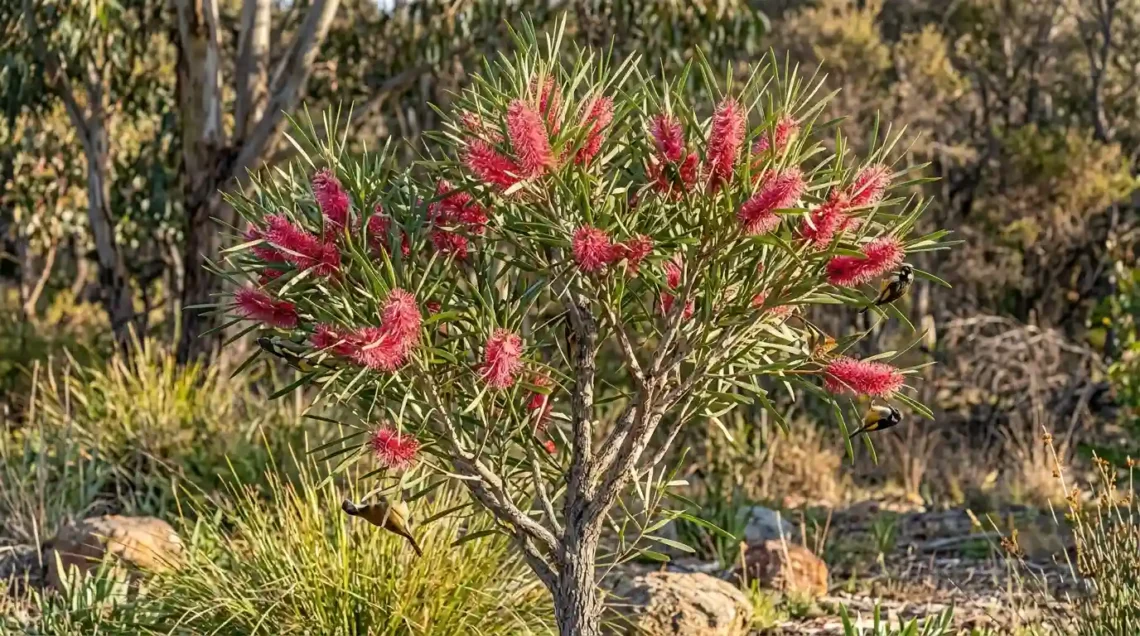
Hakea francisiana, commonly known as grass-leaf hakea, emu tree, or bottlebrush hakea, is a flowering shrub or small tree in the Proteaceae family native to Western Australia and South Australia. It is best known for its long, narrow leaves and large racemes of bright pink to red flowers that bloom during the cooler months, attracting nectar-feeding birds. Adapted to dry Australian landscapes, this hardy native thrives in well-drained soils, tolerates drought and frost once established, and is widely valued for low-maintenance gardens and wildlife-friendly plantings.
If you’re planning a water-wise landscape, our guide to Australian Native Garden Trees explores more hardy native trees that thrive in similar conditions.
Quick Summary
- Plant type: Shrub or small tree in the Proteaceae family, native to Western and South Australia.
- Typical size: Usually grows 3–8 m (8–18 ft) tall with a broad, open canopy.
- Growing conditions: Performs best in full sun and well-drained sandy or clay soils.
- Standout feature: Large pink-red flower racemes, excellent drought and frost tolerance, and strong appeal to nectar-feeding birds.
What Is Hakea Francisiana?
Hakea francisiana is an Australian native species belonging to the Proteaceae family, which also includes banksias, grevilleas, and waratahs. It is commonly called grass-leaf hakea, emu tree, or bottlebrush hakea because of its narrow foliage and cylindrical flower clusters. In 2013, botanical research merged the former Hakea coriacea into Hakea francisiana, making them the same accepted species. Hakea francisiana belongs to the Proteaceae family, a diverse group of flowering plants that also includes banksias, grevilleas, and waratahs.
The genus Hakea honors Baron Christian Ludwig von Hake, an 18th-century German patron of botany, while the species name francisiana recognizes Australian botanist George William Francis.
Is Hakea a Tree or Shrub?
Hakea francisiana can grow as either a large shrub or a small tree, depending on climate, soil, and pruning. It is a non-lignotuberous species, meaning it lacks the woody underground swelling found in some Australian natives.
Typical features include:
- Open V-shaped canopy
- Rough grey-brown bark
- Upright branching habit
- Narrow grass-like leaves
In our experience growing Australian natives, light formative pruning during the early years encourages a stronger, more tree-like structure while preserving abundant flowering.
What Does “Hakea” Mean?
The genus Hakea contains around 150 species, all naturally occurring in Australia. These plants range from compact shrubs to small trees and are well adapted to dry climates.
The name Hakea commemorates Baron von Hake, while the genus itself is recognized for its remarkable diversity in flower color, leaf shape, and habitat across Australia.
How Big Do Hakea Francisiana Plants Get? (Hakea Francisiana Size)
A mature Hakea francisiana generally reaches 3–8 metres (8–18 feet) in height, although local growing conditions influence its final size.
Typical growth characteristics include:
- Height: 3–8 m (8–18 ft)
- Spread: 2–5 m
- Canopy: Open, upright, V-shaped branching
- Growth form: Shrub or small tree
Plants grown in containers remain much smaller because root space is restricted. Although they can survive in large pots for several years, they require bright sunlight, excellent drainage, and regular monitoring to stay healthy.
Greenery Inside recommends allowing enough space for mature growth rather than planting too close to fences or buildings, as the open canopy develops best without crowding.
Are Hakea Fast Growing? (Hakea Francisiana Growth Rate)
Hakea francisiana has a moderate growth rate. Under suitable conditions, young plants establish steadily before producing stronger annual growth once their root systems develop.
Growth is most active during the cooler growing seasons following rainfall. Well-drained soil, full sunlight, and low humidity encourage healthy development.
One important limitation is humidity. Unlike many garden shrubs, Hakea francisiana performs poorly in persistently humid climates and may suffer decline if drainage is inadequate. For this reason, growers in humid regions often choose grafted plants, which generally perform more reliably than seed-grown specimens.
As of recent horticultural recommendations, selecting grafted plants has become increasingly common in coastal and humid regions where long-term survival can otherwise be challenging.
Where to Plant Hakea Francisiana (Sun, Soil & Site Requirements)
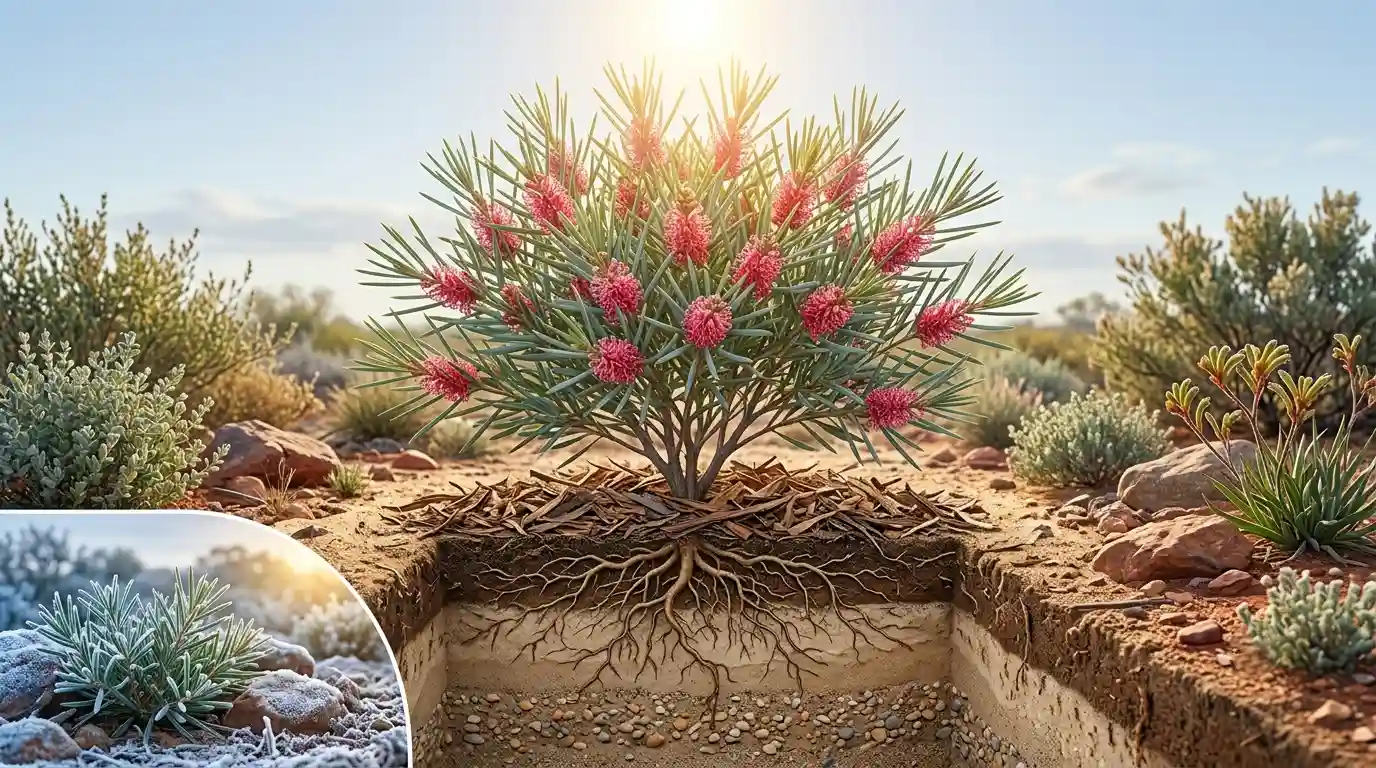
Choosing the right planting location has the greatest influence on the health and flowering of Hakea francisiana. Like many Proteaceae species, it prefers sunny, well-drained environments that mimic its natural habitat.
Does Hakea Like Sun or Shade?
Hakea francisiana grows best in full sun. At least six hours of direct sunlight each day encourages vigorous growth, abundant flowering, and stronger branching.
While the plant tolerates light afternoon shade, excessive shade often results in:
- Reduced flowering
- Sparse growth
- Weaker stems
- Less vibrant foliage
What Kind of Soil Is Best for Hakea?
The ideal soil is well-drained sandy or light clay soil with good air movement around the roots. The species tolerates neutral to mildly alkaline soils and becomes highly drought-resistant after establishment.
Avoid:
- Waterlogged ground
- Heavy, compacted clay
- High-phosphorus fertilizers
Greenery Inside recommends improving drainage before planting if water remains on the soil surface after rainfall.
What Is the Root System of the Hakea?
Like most Proteaceae, Hakea francisiana develops a network of fine, highly efficient roots that absorb nutrients from poor Australian soils.
These specialized roots are excellent for drought adaptation but are also sensitive to:
- Excess moisture
- Root disturbance
- High phosphorus levels
Because of this sensitivity, overwatering is one of the most common causes of decline.
Hakea Francisiana Frost Tolerance
Once established, Hakea francisiana is both drought tolerant and frost hardy, making it suitable for many inland Australian landscapes.
It performs well in regions with seasonal frosts provided drainage remains excellent during winter. Mature plants generally tolerate dry summers with minimal supplemental watering.
Growing Conditions at a Glance
| Growing Factor | Recommended Condition |
| Sun | Full sun |
| Soil | Well-drained sandy or light clay soil |
| Water | Moderate during establishment; low once established |
| Frost | Good frost tolerance |
| Growth Rate | Moderate |
In our experience, the healthiest Hakea francisiana specimens are those planted in open, sunny positions with free-draining soil and minimal fertilizer. Replicating its natural Australian environment is the most reliable way to achieve long-term success.
Hakea Francisiana Flowers
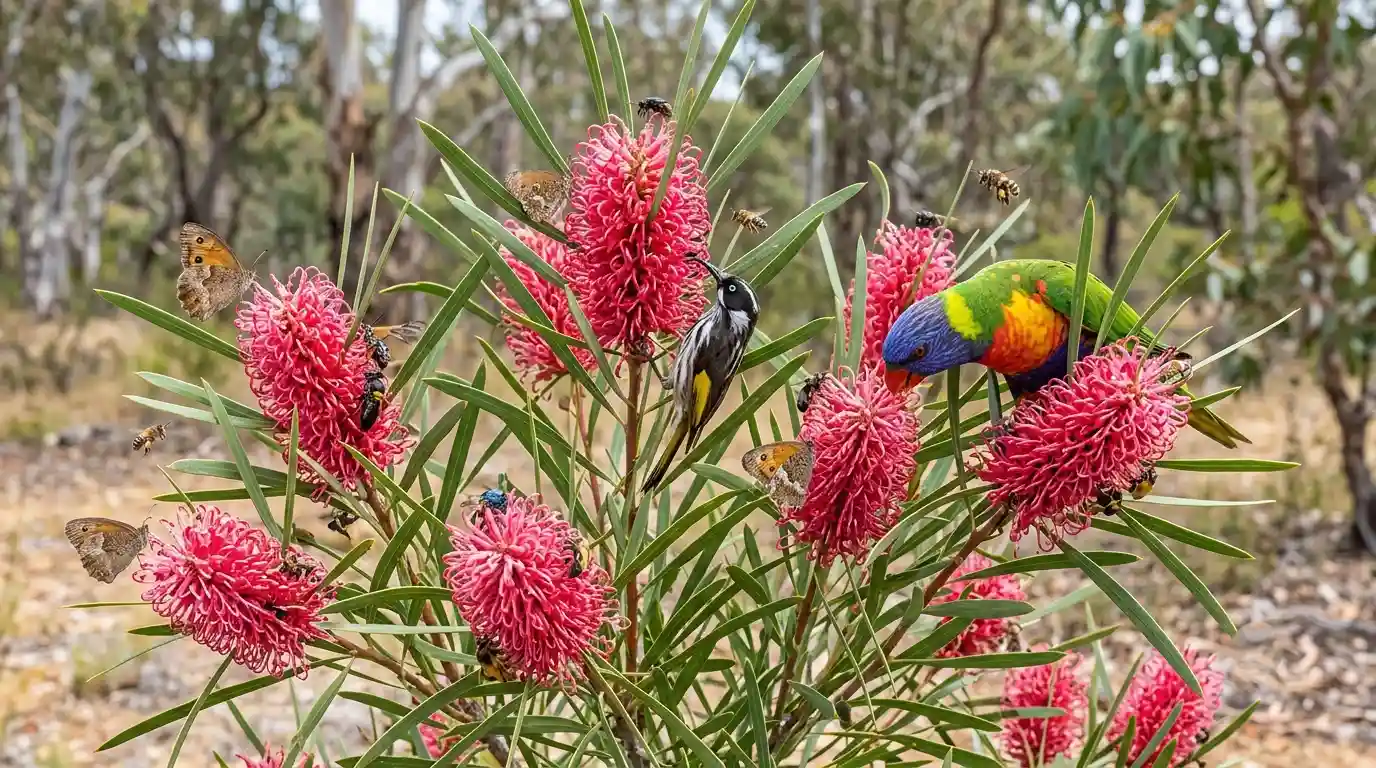
One of the most striking features of Hakea francisiana is its large racemes of bright pink to deep red flowers. Flowering typically occurs from late winter through spring, although timing varies with local climate. The nectar-rich blooms stand out against the narrow green foliage and provide an important food source for pollinators. For an even more wildlife-friendly garden, combine Hakea francisiana with other native plants that attract butterflies to support a wider range of beneficial pollinators.
Are Hakea Flowers Fragrant?
Most Hakea francisiana flowers have only a light or subtle fragrance. They are grown primarily for their vibrant appearance and nectar production rather than a strong scent. Flower fragrance can vary slightly between plants and environmental conditions.
Which Birds Like Hakea?
The nectar-filled flowers attract many nectar-feeding birds, including:
- Honeyeaters
- Wattlebirds
- New Holland Honeyeaters
- Red Wattlebirds
- Lorikeets
In gardens outside Australia, hummingbirds may also visit flowering hakeas where they are present. Greenery Inside has found that planting Hakea francisiana alongside other flowering Australian natives creates a longer-lasting food source for local birds.
Do All Hakeas Flower?
Yes. All Hakea species produce flowers, although bloom time, colour, and flower shape differ between species. With around 150 Australian species, flowering ranges from white and cream to pink, red, and yellow depending on the variety.
Why Is My Hakea Not Flowering?
Poor flowering is usually caused by one or more of these factors:
- Too much shade
- Excess nitrogen or phosphorus fertilizer
- Heavy pruning after flower buds form
- Young plants that have not reached flowering age
Providing full sun, avoiding excessive fertilizer, and pruning only after flowering help encourage reliable blooming.
What Are the Benefits of the Hakea Plant?
Hakea francisiana is valued for both ornamental beauty and practical landscape performance.
Key benefits include:
- Excellent drought tolerance once established
- Good frost resistance
- Low maintenance after establishment
- Attracts birds and pollinators
- Long-lasting cut flowers
- Suitable for native gardens and screening
- Performs well in poor soils with good drainage
Its ability to thrive in harsh Australian conditions makes it an excellent choice for water-wise landscaping. Pairing Hakea francisiana with Groundcover Banksias creates a diverse, drought-tolerant native landscape that supports pollinators throughout the year.
Hakea Francisiana Varieties and Similar Species
Several cultivated selections and closely related species resemble Hakea francisiana. If you enjoy the vibrant flowers of Hakea francisiana, you may also like Hakea Red Pokers, another striking Australian native with excellent ornamental value and bird-attracting blooms.
Hakea Francisiana ‘Intensity’ and Stockdale Sensation
‘Intensity’ and ‘Stockdale Sensation’ are cultivated selections grown for improved flowering, garden performance, and ornamental value. Availability varies between specialist native plant nurseries.
Similar Species — Hakea Coriacea, H. Bucculenta, H. Multilineata
Hakea coriacea was formally merged with Hakea francisiana in 2013 and is no longer recognised as a separate species.
Other similar species include:
- Hakea bucculenta – dense shrub with deep red flowers.
- Hakea multilineata – known for long flower spikes and bluish foliage.
- Hakea francisiana – open habit with grass-like leaves and large pink-red racemes.
Comparison Block: Hakea Francisiana vs. Hakea Laurina
| Feature | Hakea francisiana | Hakea laurina |
| Flower shape | Long racemes | Rounded pincushion flowers |
| Mature size | 3–8 m | 2–6 m |
| Leaves | Long, narrow | Broad, leathery |
| Care | Full sun, excellent drainage | Similar care with slightly broader adaptability |
Can You Grow Hakea From Cuttings? (Propagation)
Yes, Hakea francisiana can be propagated from seed or semi-hardwood cuttings, although success from cuttings varies. Commercial growers often prefer grafting, especially in humid regions, because grafted plants are generally more vigorous and disease-resistant.
Propagation methods include:
- Seed (most common)
- Semi-hardwood cuttings
- Grafting onto hardy rootstocks
Grafting is especially recommended where humidity or poorly drained soils reduce plant survival.
Common Hakea Francisiana Problems and Fixes
Although hardy, Hakea francisiana can develop problems if grown outside its preferred conditions.
| Problem | Cause | Solution |
| Sudden dieback | High humidity or poor drainage | Improve drainage, plant grafted stock |
| Poor flowering | Shade, excess fertilizer, heavy pruning | Plant in full sun and prune lightly after flowering |
| Root decline | Overwatering or excess phosphorus | Water only when needed and use low-phosphorus native fertilizers |
Because Proteaceae roots are naturally adapted to nutrient-poor soils, excessive fertilizer can damage their specialized root system.
Beginner Mistakes and Practical Care Tips
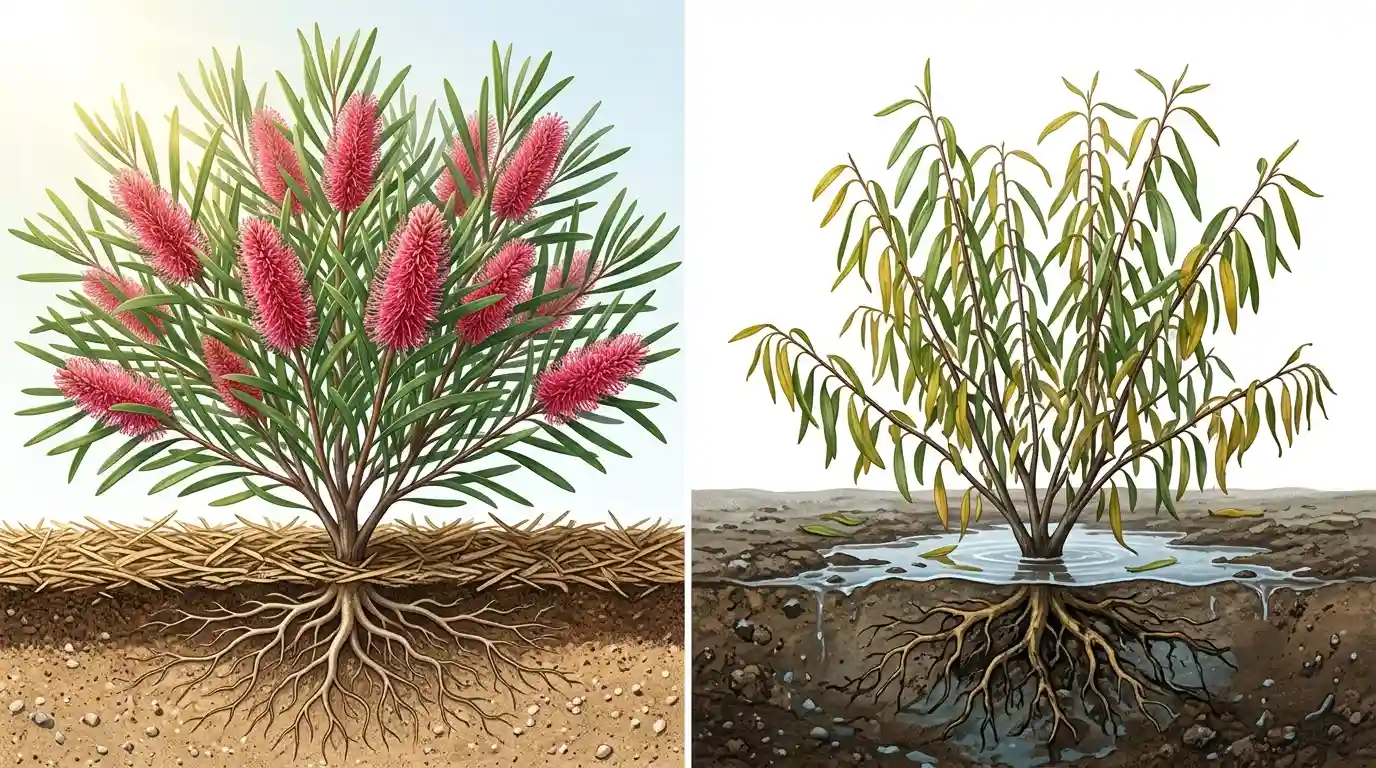
Many problems are easily avoided by following a few basic practices.
Common mistakes include:
- Overwatering newly established plants
- Applying standard high-phosphorus fertilizers
- Pruning heavily into old wood
- Planting in humid or poorly drained sites without grafted plants
- Allowing insufficient space for mature growth
Greenery Inside recommends watering deeply but infrequently during establishment, then reducing irrigation once the plant is established. Regular observation is more effective than routine watering.
Conclusion
Hakea francisiana is a hardy Australian native valued for its striking pink-red flower racemes, drought tolerance, and ability to attract birds. Whether grown as a shrub or small tree, it performs best in full sun and well-drained soil with minimal fertilizer and careful watering. Understanding its size, flowering habits, and Proteaceae root requirements helps gardeners avoid common problems and enjoy a long-lived, low-maintenance landscape plant. For dry, sunny gardens across suitable climates, Hakea francisiana remains one of Australia’s most rewarding native species.
FAQ Section
Does Hakea like sun or shade?
Hakea species, including Hakea francisiana, grow best in full sun, where they produce stronger growth and heavier flowering. Light shade is tolerated but may reduce blooms.
Are Hakea fast growing?
Hakea francisiana has a moderate growth rate. It establishes steadily and grows best in sunny, well-drained locations.
How big do Hakea francisiana plants get?
Most mature plants reach 3–8 metres (8–18 feet) tall with a spread of 2–5 metres, depending on growing conditions.
Can you grow Hakea from cuttings?
Yes. Hakea francisiana can be propagated from cuttings, seeds, or grafting. Grafting is generally preferred for humid climates because it improves long-term performance.
Why is my Hakea not flowering?
Common causes include insufficient sunlight, excessive fertilizer, heavy pruning, or a plant that has not yet reached maturity. Providing full sun and avoiding high-phosphorus fertilizers usually improves flowering.
Is Hakea francisiana a tree or a shrub?
Hakea francisiana can grow as either a large shrub or a small tree, depending on growing conditions, pruning, and available space. Its naturally open, upright growth habit makes it suitable for both ornamental gardens and native landscapes.