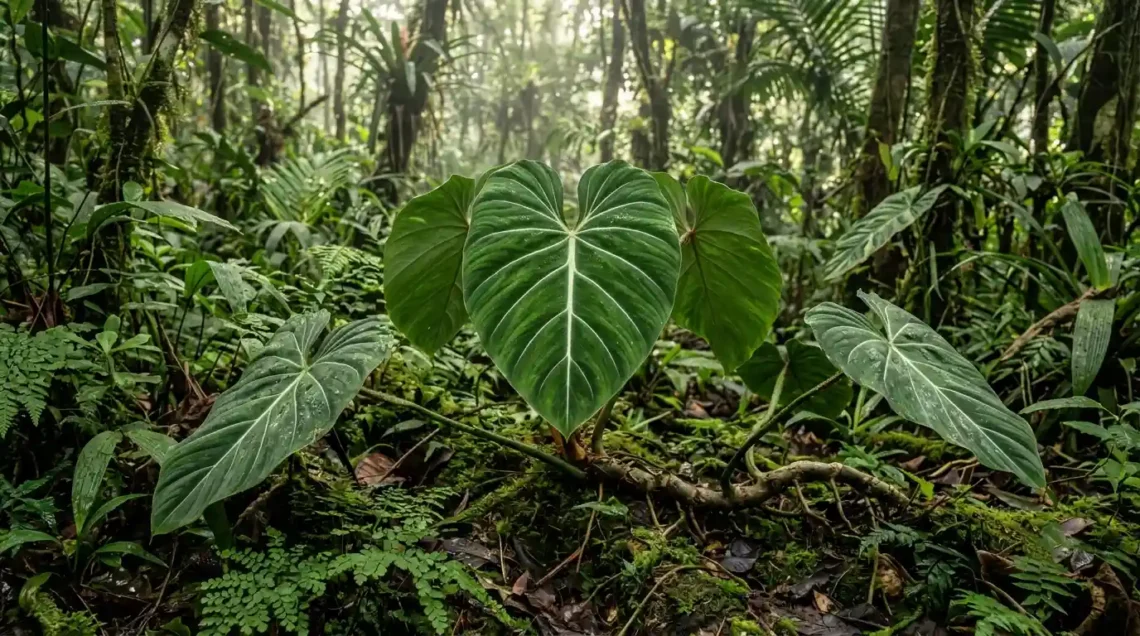
Philodendron gloriosum is one of the most admired tropical foliage plants because of its large, velvety, heart-shaped leaves highlighted by striking white or silver veins. Native to the rainforests of Colombia, this species grows differently from many other philodendrons—it is a crawling (rhizomatous) plant rather than a climbing vine. Understanding this unique growth habit is essential for successful Philodendron gloriosum care. Whether you are growing a young philodendron gloriosum plant, a mature gloriosum philodendron, or simply researching the popular philo gloriosum, this guide explains the light, soil, watering, humidity, and care practices that help it thrive indoors and in suitable outdoor climates.
If you’re building an indoor plant collection, our Guide to House Plants is an excellent starting point for understanding the growing requirements of popular tropical species before caring for a Philodendron gloriosum.
By Greenery Inside | Plant Care & Gardening Expert
Last Updated: July 2026
Quick Summary
- Philodendron gloriosum is a rhizomatous crawler, not a climber, so it grows horizontally instead of climbing a moss pole.
- It grows best in bright indirect light, 60% or higher humidity, and a chunky, well-draining aroid soil mix.
- Overwatering is the leading cause of yellow leaves, root rot, and rhizome damage.
- Type 1, Type 2, Dark Form, and variegated forms mainly differ in leaf shape, vein patterns, rarity, and collector value.
- Consistent warmth, careful watering, and proper pot selection help produce larger, healthier velvety leaves.
What Is Philodendron Gloriosum?
Philodendron gloriosum is a tropical evergreen aroid belonging to the Araceae family. Native primarily to the rainforests of Colombia, with natural populations extending into nearby regions of Central and South America, it is prized for its dramatic velvety foliage and contrasting white or silver leaf veins.
Although Alocasia species have a different growth habit, our African Mask Plant Care: Complete Indoor Growing Guide explains how their care differs from Philodendron gloriosum, making identification and maintenance easier.
Unlike many philodendrons that climb trees, Philodendron gloriosum spreads along the ground through a thick horizontal rhizome. As the rhizome grows across the soil surface, it continuously produces new roots and leaves, allowing the plant to gradually expand outward instead of upward.
Its heart-shaped leaves can become impressively large under proper care, making it one of the most desirable foliage plants among aroid enthusiasts and collectors.
Key botanical information includes:
| Feature | Details |
| Scientific Name | Philodendron gloriosum |
| Family | Araceae |
| Plant Type | Tropical evergreen perennial |
| Native Habitat | Colombian rainforest |
| Growth Habit | Rhizomatous crawler |
| Main Feature | Velvety heart-shaped leaves with bright veins |
One reason this species remains popular is its combination of relatively straightforward care and exceptional ornamental value. When grown under rainforest-like conditions, the leaves become larger, darker, and more velvety with age.
In our experience growing Philodendron gloriosum, one of the biggest surprises for new growers is how quickly the plant begins crawling sideways once healthy. Many first-time owners mistakenly expect vertical growth because of its genus, but its natural growth pattern is completely different.
Readers interested in the broader characteristics and classification of the genus can learn more about Philodendron on Wikipedia.
Philodendron Gloriosum vs. Philodendron Glorious
Although their names sound almost identical, Philodendron gloriosum and Philodendron Glorious are not the same plant.
Philodendron gloriosum is a naturally occurring species found in South American rainforests. It grows horizontally from a creeping rhizome and is recognized for its thick, velvety leaves and prominent white veins.
Philodendron Glorious, by contrast, is a cultivated hybrid created by crossing Philodendron gloriosum with Philodendron melanochrysum. Because of its mixed genetics, it combines features from both parent plants.
Some of the most noticeable differences include:
- Gloriosum is a true botanical species.
- Glorious is a man-made hybrid.
- Gloriosum crawls across the soil.
- Glorious often develops a climbing growth habit.
- Glorious leaves are generally more elongated.
- Gloriosum leaves are broader and more heart-shaped.
Understanding the distinction helps prevent purchasing the wrong plant, especially since both are frequently sold under similar names.
Philodendron Gloriosum vs. Monstera and Alocasia Gloriosum
Many online searches include terms like Monstera gloriosum or Alocasia gloriosum, but these names are botanically incorrect.
There is no officially recognized Monstera species named “Monstera gloriosum.” Likewise, Alocasia gloriosum is not the same plant as Philodendron gloriosum. These names often result from labeling mistakes or confusion caused by similar leaf textures.
The easiest way to distinguish them is by comparing their growth habits and botanical characteristics.
| Plant | Botanical Group | Growth Habit | Leaf Characteristics |
| Philodendron gloriosum | Philodendron | Crawling rhizome | Velvety heart-shaped leaves with bold white veins |
| Monstera species | Monstera | Climbing vine | Often develops leaf fenestrations (holes) |
| Alocasia species | Alocasia | Upright tuberous growth | Thick upright leaves with prominent veins |
If you encounter listings labeled Monstera gloriosum, they almost always refer to a mislabeled plant rather than an officially recognized species.
Greenery Inside recommends purchasing from reputable nurseries that identify plants using their scientific names. Accurate labeling reduces confusion and ensures you receive the species you intended to grow.
Is Philodendron Gloriosum a Climber or a Crawler?
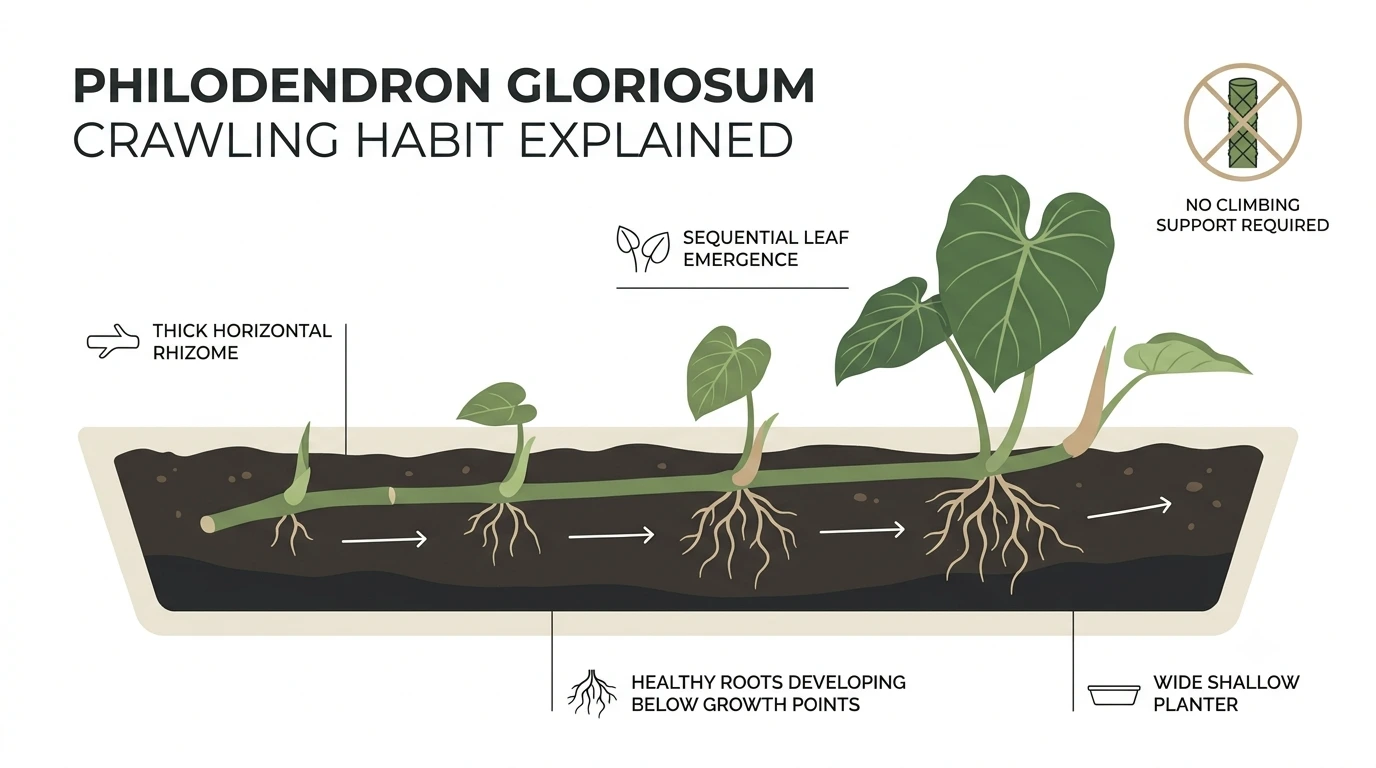
Philodendron gloriosum is a crawler, not a climber. It naturally grows by extending a horizontal rhizome across the forest floor instead of producing vines that climb tree trunks. This creeping growth habit is one of the defining characteristics of the species and directly influences how it should be grown indoors.
Unlike climbing philodendrons, new growth emerges from the advancing rhizome rather than from a vine seeking vertical support. Over time, each new leaf forms farther along the rhizome, gradually increasing the plant’s horizontal spread.
Since gloriosum belongs to a broader group of ground-spreading aroids, our crawling velvet-leaf aroid comparison database catalogs how other rhizomatous species handle this same horizontal growth pattern. It’s a helpful cross-check if you’re deciding whether your plant’s spreading behavior is normal.
Because of this natural behavior:
- The rhizome should remain close to the soil surface.
- Growth moves sideways instead of upward.
- New leaves appear sequentially along the creeping stem.
- Older portions of the rhizome continue supporting root development.
A common misconception is that every philodendron requires a moss pole. While many climbing species benefit from vertical support, Philodendron gloriosum does not naturally climb, so forcing it onto a pole can interfere with its normal growth pattern.
Instead, choose a wide, shallow container that allows the rhizome to travel across the soil surface as it matures.
This horizontal growth habit also makes repotting slightly different. Rather than selecting a deeper pot each time, growers usually upgrade to a wider container that provides additional room for the rhizome to continue expanding.
Philodendron Gloriosum Light Requirements
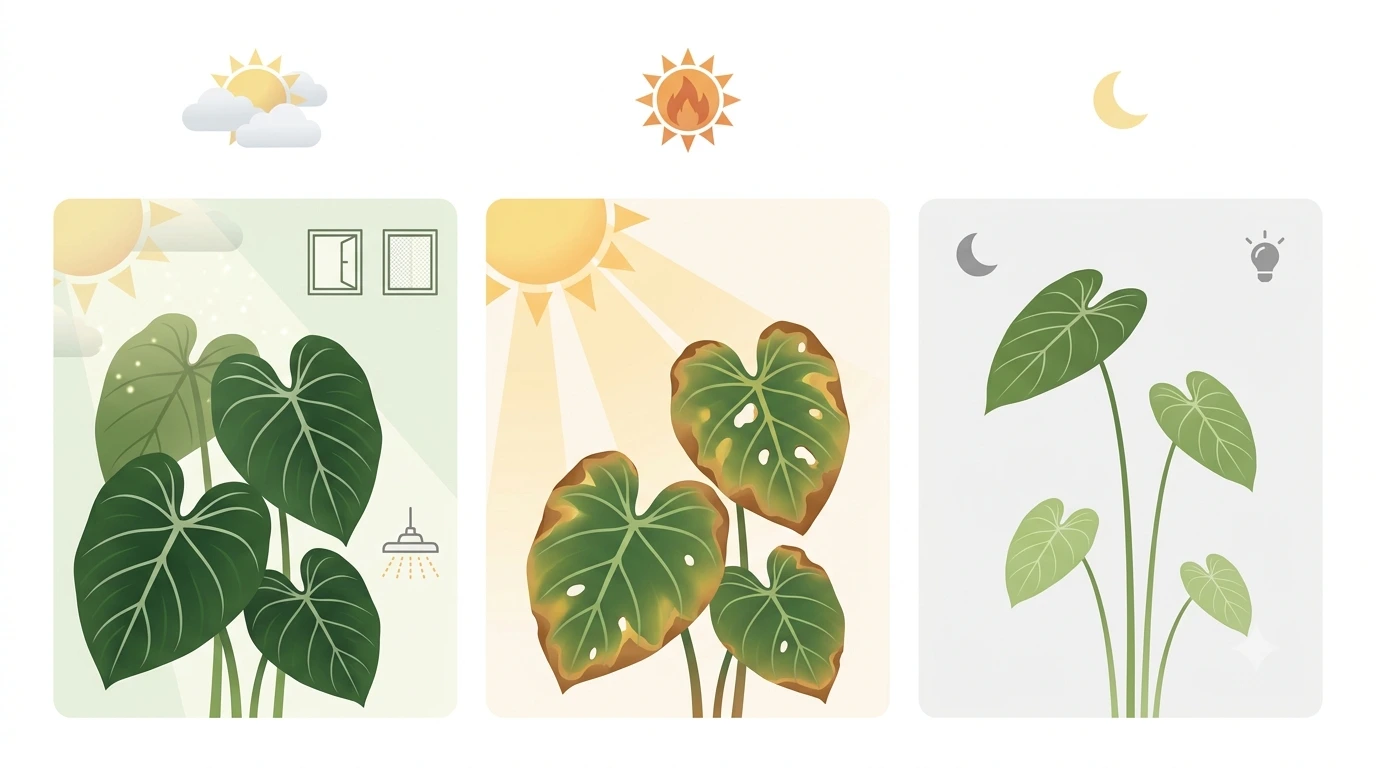
Philodendron gloriosum grows best in bright, indirect light. In its native rainforest habitat, taller trees filter direct sunlight, creating consistent but diffused light throughout the day. Replicating these conditions indoors encourages healthy growth, larger leaves, and stronger vein coloration.
An east-facing window often provides ideal morning light, while a south- or west-facing window usually requires a sheer curtain to soften intense afternoon sun.
Ideal light conditions include:
- Bright filtered sunlight
- Several hours of indirect light daily
- Protection from harsh afternoon sun
- Stable lighting throughout the year
Too much direct sunlight can scorch the delicate velvety leaf surface, causing brown patches or faded coloration.
Signs of excessive light include:
- Bleached foliage
- Crispy leaf edges
- Brown burn spots
- Curling leaves
On the other hand, insufficient light reduces photosynthesis and slows growth.
Common symptoms of low light include:
- Smaller leaves
- Longer spacing between leaves
- Slower growth
- Less pronounced white veining
If natural lighting is limited, full-spectrum LED grow lights provide an excellent alternative. Position the light approximately 12–18 inches above the foliage for 10–12 hours daily, adjusting the distance according to the manufacturer’s recommendations.
As of 2026, many indoor growers have shifted toward energy-efficient full-spectrum LED grow lights because they provide consistent illumination while producing less heat than older fluorescent systems.
Greenery Inside has found that maintaining steady indirect light throughout the year often produces healthier foliage than frequently moving the plant between brighter and darker locations.
Best Soil Mix for Philodendron Gloriosum
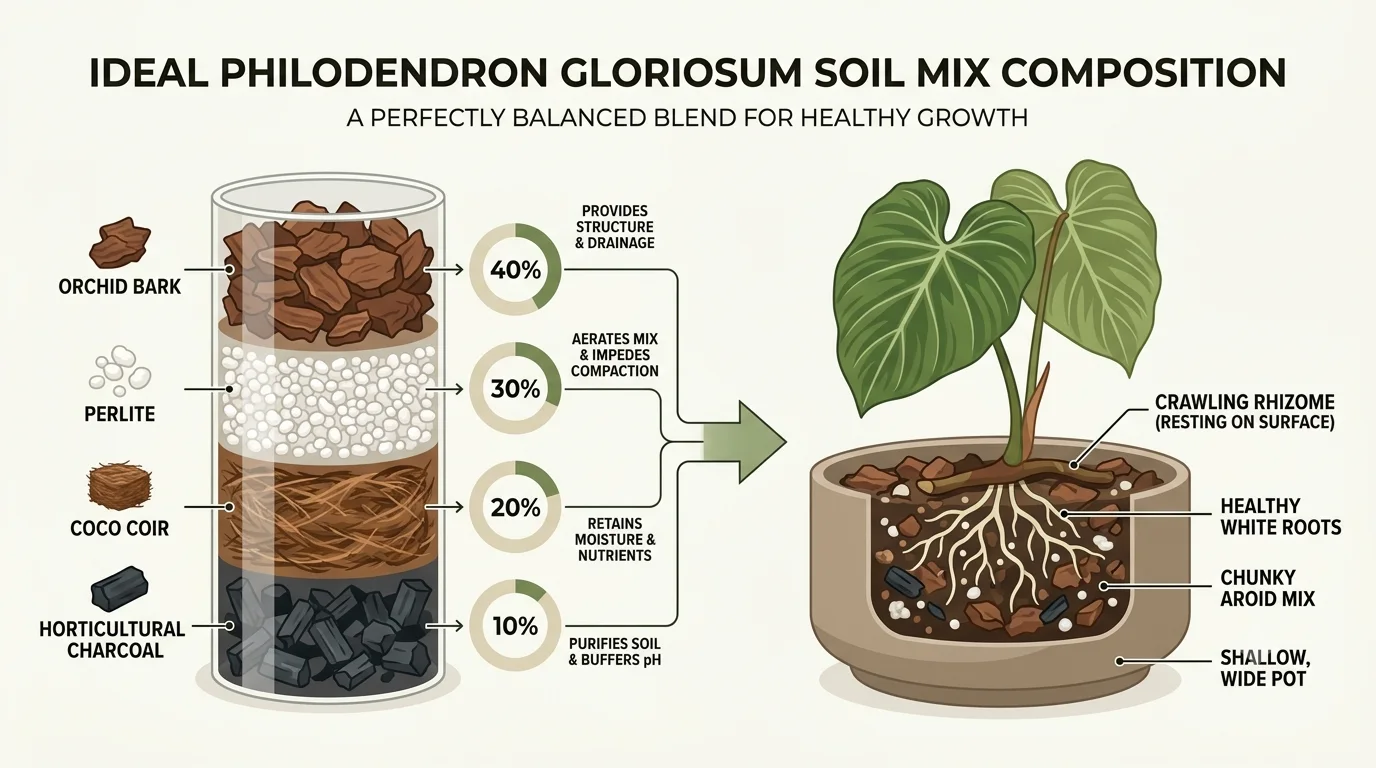
Philodendron gloriosum requires a chunky, airy, and fast-draining aroid soil mix that allows oxygen to reach the roots while retaining enough moisture to prevent dehydration. Because the species grows from a surface rhizome, compact or waterlogged soil significantly increases the risk of root and rhizome rot.
An ideal growing medium balances drainage, aeration, and moisture retention.
A commonly recommended aroid mix includes:
| Ingredient | Approximate Ratio | Purpose |
| Orchid bark | 35% | Improves airflow and drainage |
| Perlite | 25% | Prevents soil compaction |
| Peat moss or coco coir | 25% | Retains moderate moisture |
| Horticultural charcoal | 15% | Improves drainage and helps keep the mix fresh |
This combination creates a loose substrate that closely mimics the organic forest floor where Philodendron gloriosum naturally grows.
Avoid dense garden soil or heavy potting mixes that remain wet for long periods. Excess moisture around the rhizome is one of the most common causes of plant decline.
In our experience, refreshing the soil mix every couple of years also helps maintain proper aeration, especially as bark gradually decomposes and becomes finer over time.
Do Philodendrons Like Big or Small Pots?
Philodendron gloriosum prefers shallow, wide pots rather than deep containers because its rhizome grows horizontally across the soil surface.
A deep pot often leaves unused soil below the root system, where excess moisture can accumulate and increase the likelihood of root rot.
The best container should:
- Be wider than it is deep.
- Include excellent drainage holes.
- Allow several inches of space in front of the growing rhizome.
- Support horizontal expansion without burying the rhizome deeply.
Choosing the correct pot encourages natural growth and reduces watering problems, making long-term Philodendron gloriosum care much easier.
Watering and Humidity Needs
Philodendron gloriosum grows best when the soil stays evenly moist but never waterlogged. In its native rainforest habitat, the plant experiences consistent moisture combined with excellent drainage. Recreating these conditions is essential for healthy roots, vigorous growth, and large velvety leaves.
Rather than watering on a fixed schedule, check the soil before each watering. Allow the top 1–2 inches (2.5–5 cm) of the potting mix to dry before watering thoroughly. This approach helps prevent overwatering while ensuring the roots receive adequate moisture.
If your home’s air is consistently dry, especially during winter, learning practical ways to raise humidity can make a noticeable difference. Our guide on How to Increase Humidity for Plants Naturally and with Humidifiers explains several effective methods suitable for tropical houseplants like Philodendron gloriosum.
Watering frequency varies depending on:
- Temperature
- Humidity levels
- Pot size
- Soil composition
- Seasonal growth
During spring and summer, active growth usually requires more frequent watering. In autumn and winter, growth naturally slows, so watering intervals should be extended.
Greenery Inside recommends lifting the pot or checking soil moisture with your finger instead of relying solely on a calendar. Environmental conditions change throughout the year, making flexible watering more reliable than a strict weekly routine.
Ideal humidity for Philodendron gloriosum is 60–80%. Although the plant can survive at lower humidity levels, higher humidity encourages larger leaves, smoother unfurling, and healthier foliage.
Signs of low humidity include:
- Brown leaf edges
- Leaf curling
- Slow leaf expansion
- New leaves sticking while unfurling
Maintaining stable humidity is often more important than achieving extremely high humidity.
Should I Mist My Gloriosum?
Misting alone is not the most effective way to increase humidity around Philodendron gloriosum. While occasional misting may provide temporary surface moisture, the effect usually lasts only a short time and does not significantly change the surrounding humidity.
Better humidity solutions include:
- Using a humidifier
- Grouping tropical plants together
- Placing the pot on a pebble tray with water
- Growing the plant in naturally humid rooms
If you choose to mist the foliage, do so lightly and ensure there is good air circulation. Constantly wet leaves may encourage fungal problems in poorly ventilated environments.
Signs of Overwatering
Overwatering is the most common reason Philodendron gloriosum declines indoors.
Because the plant has a thick rhizome that stores moisture, constantly wet soil deprives roots of oxygen and creates ideal conditions for fungal diseases.
Common symptoms include:
- Yellowing older leaves
- Soft or mushy rhizome
- Blackened roots
- Foul smell from the soil
- Wilting despite wet soil
- Slow or halted growth
If overwatering is suspected:
- Remove the plant from its pot.
- Inspect the roots and rhizome.
- Trim soft or rotten tissue using sterilized scissors.
- Repot into fresh, well-draining aroid mix.
- Resume watering only after the top layer of soil dries.
Early intervention greatly improves recovery and prevents permanent damage.
Indoor vs. Outdoor Care
Philodendron gloriosum can be grown successfully both indoors and outdoors, provided environmental conditions resemble its tropical rainforest habitat. The main differences involve temperature stability, humidity, sunlight, and seasonal changes.
Indoor cultivation gives growers greater control over environmental conditions, making it the preferred choice in temperate climates.
Outdoor cultivation is suitable only in warm, frost-free regions where temperatures remain consistently mild throughout the year.
| Care Factor | Indoor Growing | Outdoor Growing |
| Light | Bright indirect light near windows | Filtered shade beneath trees or shade cloth |
| Humidity | Often requires humidifier | Naturally higher in tropical climates |
| Temperature | Stable year-round | Can fluctuate with seasons |
| Watering | Controlled by grower | Influenced by rainfall and weather |
| Protection | Safe from wind and frost | Must be protected from extreme weather |
In tropical regions, including parts of northern Australia, Philodendron gloriosum can grow outdoors throughout the year.
In cooler areas such as Melbourne, outdoor growing is generally limited to warmer months. Plants should be moved indoors before temperatures drop below approximately 15°C (59°F).
As of recent growing recommendations, many collectors use covered patios or shade houses outdoors to provide filtered light while protecting plants from harsh afternoon sun and heavy rain.
Greenery Inside has observed that sudden environmental changes—such as moving a plant directly from indoors into full outdoor light—often cause leaf stress. Gradual acclimation over one to two weeks produces much better results.
Growth Rate and Mature Size
Philodendron gloriosum is considered a moderate-growing tropical plant. Under ideal conditions, it produces new leaves regularly during the active growing season, although growth naturally slows during cooler months.
Warm temperatures, high humidity, and bright indirect light encourage faster development, while low light and cold conditions significantly reduce growth.
Factors influencing growth include:
- Light intensity
- Temperature
- Humidity
- Watering consistency
- Soil quality
- Fertilization
Young plants generally produce smaller leaves while establishing their root systems. As the rhizome matures, leaf size gradually increases.
A mature Philodendron gloriosum typically reaches:
| Feature | Typical Size |
| Mature leaf length | 12–24 inches (30–60 cm) |
| Mature leaf width | 8–18 inches (20–45 cm) |
| Rhizome spread | Continues horizontally with age |
| Indoor height | Approximately 1–2 feet (30–60 cm) |
| Outdoor spread | Several feet under ideal conditions |
Although the plant remains relatively low-growing, its horizontal spread can become substantial over time.
One of the most frequently asked questions is, “How big does a Philodendron gloriosum get?”
With proper care, mature specimens develop impressively large velvety leaves while the rhizome continues creeping across the soil. Rather than growing taller, the plant becomes wider and fuller each growing season.
Philodendron Gloriosum Types and Varieties
Several forms of Philodendron gloriosum are available among collectors. While all belong to the same species or closely related cultivated selections, they differ in leaf shape, vein appearance, coloration, and rarity.
These differences primarily affect aesthetics and collector value rather than basic care requirements.
Type 1 vs. Type 2 Gloriosum
The distinction between Type 1 and Type 2 mainly involves leaf proportions and vein characteristics.
Although naming conventions vary among growers, collectors generally recognize the following differences:
| Feature | Type 1 | Type 2 |
| Leaf shape | Broad heart shape | Slightly elongated |
| Veins | Moderately thick | Often bolder and more contrasting |
| Overall appearance | Classic species form | More dramatic foliage |
| Availability | More common | Less common |
Both forms require essentially the same growing conditions.
Variegated Philodendron Gloriosum
Variegated Philodendron gloriosum displays irregular white, cream, or yellow sectors across the leaves due to reduced chlorophyll production.
Because portions of the leaf cannot photosynthesize efficiently, variegated plants generally grow more slowly than fully green specimens.
Collectors value variegated forms because of:
- Unique leaf patterns
- Limited availability
- Higher market demand
- Individual variation between plants
Care differences include:
- Slightly brighter indirect light
- Extra attention to watering
- Stable humidity
- Avoiding excessive direct sunlight, which can scorch pale tissue
Type 1 and Type 2 variegated forms may also differ in vein thickness and leaf proportions, though their cultivation remains largely the same.
Dark Form Gloriosum
The Dark Form is admired for its exceptionally deep green foliage that appears almost black under certain lighting conditions.
Characteristics include:
- Richer leaf coloration
- Strong white veining
- Velvety texture
- Highly ornamental appearance
Its care requirements are virtually identical to standard Philodendron gloriosum.
Providing consistent humidity, bright indirect light, and proper watering helps maintain the intense leaf coloration that makes this form so desirable.
Comparison of Popular Gloriosum Forms
| Characteristic | Type 1 | Type 2 | Variegated | Dark Form |
| Leaf Shape | Broad | Slightly elongated | Variable | Broad |
| Vein Contrast | Moderate | Strong | Variable | Strong |
| Leaf Color | Green | Green | Green with cream/white variegation | Deep dark green |
| Growth Speed | Moderate | Moderate | Slightly slower | Moderate |
| Collector Value | Medium | High | Very high | High |
For a more detailed side-by-side breakdown of these forms — including collector pricing notes — see our full Philodendron gloriosum comparison spreadsheet. It expands on the Type 1, Type 2, Variegated, and Dark Form data summarized in the table above.
Philodendron Gloriosum vs. Similar Species
Several Philodendron species share similar velvety foliage, making identification challenging for beginners. Comparing leaf shape, texture, and growth habits helps distinguish them accurately. If you enjoy velvety foliage with bold white veins, you may also appreciate Anthurium Clarinervium Care Guide: Light, Soil & Water, which covers another popular tropical aroid with similar ornamental appeal but different care requirements.
If you want to compare gloriosum against a wider set of look-alikes side by side, our interactive velvet-leaf aroid care lookup covering 19 comparable species lets you filter by light, soil, humidity, and growth habit. It’s a useful reference when you’re trying to tell gloriosum apart from other crawling and climbing aroids at a glance.
Gloriosum vs. Melanochrysum
Although both plants have velvety leaves, they differ significantly in growth habit.
Philodendron gloriosum is a crawler that spreads horizontally.
Philodendron melanochrysum is a climbing species that benefits from a moss pole and develops increasingly elongated leaves as it matures.
Key differences include:
- Gloriosum has broad heart-shaped leaves.
- Melanochrysum has longer, narrower leaves.
- Gloriosum crawls.
- Melanochrysum climbs.
- Gloriosum has thicker rhizomes.
- Melanochrysum produces climbing stems.
Gloriosum vs. Summer Glory
Philodendron Summer Glory is another hybrid often compared with gloriosum.
Summer Glory inherits characteristics from multiple parent species, resulting in foliage that differs in texture and coloration.
Compared with gloriosum, Summer Glory generally has:
- Shinier leaves
- Bronze-toned emerging foliage
- More upright growth
- Less pronounced velvety texture
| Feature | Gloriosum | Melanochrysum | Summer Glory |
| Growth Habit | Crawler | Climber | Upright to semi-climbing |
| Leaf Texture | Velvety | Velvety | Glossy to semi-velvety |
| Leaf Shape | Heart-shaped | Elongated | Oval to heart-shaped |
| Veins | Bright white | Yellowish-white | Less contrasting |
| Support Needed | No | Yes | Sometimes |
Understanding these differences helps growers choose the species that best suits their available growing space and preferred care style.
How to Propagate Philodendron Gloriosum
Philodendron gloriosum is most successfully propagated by rhizome division. Because this species grows from a creeping rhizome rather than a climbing vine, division produces faster and more reliable results than most stem cuttings.
The best time to propagate is during spring or early summer, when the plant is actively growing and can recover more quickly.
Rhizome Division Method
Rhizome division is the preferred propagation method because each section already contains growing points capable of producing new roots and leaves.
Follow these steps:
- Carefully remove the plant from its pot.
- Locate healthy sections of the rhizome with at least one growth point.
- Use sterilized pruning shears or a sharp knife to divide the rhizome.
- Ensure each division has healthy roots and at least one leaf or active growth bud.
- Allow fresh cuts to dry for several hours before potting.
- Plant each division in fresh, chunky aroid soil.
- Keep the soil lightly moist while new roots establish.
Avoid burying the rhizome too deeply. It should remain partially exposed near the soil surface, just as it grows naturally.
Stem Cutting Method
Although less common, stem cuttings may be possible if a section contains a viable node and healthy roots.
To improve success:
- Select a healthy cutting with at least one node.
- Remove damaged foliage.
- Place the cutting in moist sphagnum moss or a chunky propagation mix.
- Maintain temperatures between 70–80°F (21–27°C).
- Keep humidity above 70%.
Rooting hormone is optional but may encourage faster root development.
Signs of Successful Propagation
Successful propagation is usually visible within several weeks under favorable conditions.
Look for:
- New root growth
- A developing leaf spear
- Firm, healthy rhizomes
- Active shoot development
- Steady leaf expansion
Greenery Inside recommends avoiding frequent disturbance during propagation. Constantly checking the roots can delay establishment and increase stress on young divisions.
Common Problems With Philodendron Gloriosum
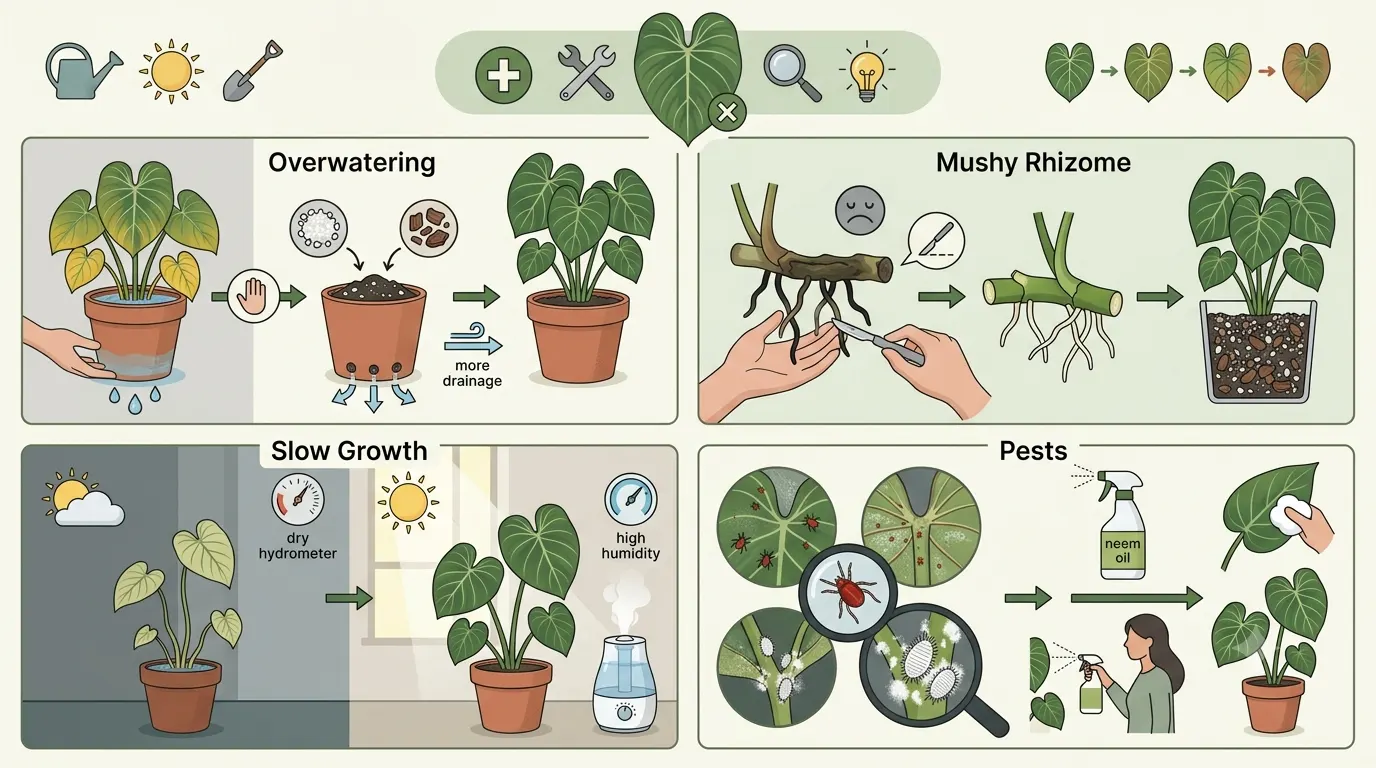
Most Philodendron gloriosum problems result from environmental conditions rather than disease. Identifying the underlying cause early makes recovery much easier.
Yellowing Leaves
Yellow leaves are most commonly caused by overwatering or poorly draining soil.
Causes
- Excess water
- Poor drainage
- Waterlogged soil
- Natural aging of older leaves
Solutions
- Allow the soil to dry slightly between waterings.
- Improve drainage with a chunky aroid mix.
- Ensure the pot has drainage holes.
- Remove naturally aging leaves when appropriate.
Root or Rhizome Rot
Root rot develops when roots remain wet for extended periods.
Symptoms
- Mushy rhizome
- Black roots
- Foul odor
- Wilting despite moist soil
Solutions
- Remove all rotten tissue.
- Repot in fresh, well-draining soil.
- Reduce watering frequency.
- Improve airflow around the root zone.
Slow Growth
Slow growth is usually linked to environmental conditions rather than genetics.
Possible causes include:
- Low light
- Low humidity
- Cool temperatures
- Nutrient deficiencies
- Root-bound conditions
Increasing light levels, maintaining humidity above 60%, and fertilizing during the growing season usually restore healthy growth.
Pest Infestations
Philodendron gloriosum may occasionally attract common houseplant pests.
Common pests include:
- Spider mites
- Mealybugs
- Scale insects
- Thrips
- Fungus gnats
Treatment options include:
- Wiping leaves regularly
- Insecticidal soap
- Neem oil
- Isolating affected plants
- Maintaining good air circulation
Routine inspection of both leaf surfaces helps detect pests before serious infestations develop.
In our experience, inspecting new plants before bringing them indoors is one of the simplest ways to prevent pest outbreaks in an existing plant collection.
Does Philodendron Gloriosum Flower?
Yes, Philodendron gloriosum can flower, but indoor flowering is uncommon.
Like other members of the Araceae family, it produces an inflorescence consisting of a spadix surrounded by a modified leaf called a spathe.
Flowering typically occurs only on mature plants growing under ideal environmental conditions.
Because indoor plants are primarily cultivated for their foliage, flowers are rarely seen in home collections.
Even when flowering occurs, the blooms are generally considered less ornamental than the plant’s spectacular leaves.
How Rare Is Philodendron Gloriosum?
Philodendron gloriosum is no longer considered extremely rare, but it remains highly desirable among tropical plant enthusiasts.
Advances in commercial propagation have made standard forms much easier to obtain than they were several years ago.
However, rarity still varies depending on the form.
Generally:
- Standard green forms are widely available.
- Dark Form plants are less common.
- Type 2 selections are more limited.
- Variegated forms remain exceptionally rare and expensive.
Collector demand, growth rate, and limited propagation all influence market prices.
Many collectors refer to highly variegated Philodendron cultivars as the “holy grail” because of their rarity and unique appearance.
While beauty is subjective, Philodendron gloriosum consistently ranks among the prettiest foliage philodendrons thanks to its velvety texture and dramatic white veining.
Beginner Mistakes to Avoid
Many beginners lose Philodendron gloriosum because of a few avoidable care mistakes rather than difficult growing requirements.
Common mistakes include:
- Using deep pots instead of shallow, wide containers.
- Overwatering before the soil partially dries.
- Planting the rhizome too deeply.
- Growing in compact, poorly draining soil.
- Keeping humidity too low.
- Placing the plant in direct afternoon sunlight.
- Expecting it to climb a moss pole.
- Ignoring seasonal reductions in watering during winter.
Avoiding these mistakes greatly improves long-term plant health and encourages larger foliage.
Greenery Inside recommends observing the plant regularly instead of following rigid care schedules. Small adjustments based on your growing environment often produce better results than treating every home the same.
How to Make a Philodendron Gloriosum Thrive
A thriving Philodendron gloriosum depends on recreating the stable conditions of its tropical rainforest habitat.
For the best results:
- Provide bright, indirect light.
- Maintain humidity between 60–80%.
- Use a chunky, well-draining aroid mix.
- Water only when the top layer of soil begins to dry.
- Choose a shallow, wide container.
- Fertilize lightly during spring and summer.
- Keep temperatures between 65–85°F (18–29°C).
- Inspect regularly for pests and early signs of stress.
As of the latest indoor growing recommendations, consistency is often more beneficial than frequent changes. Stable light, watering, and humidity encourage stronger roots and larger leaves over time. Growers interested in expanding their aroid collection can also explore our Philodendron Verrucosum Care guide to compare the growing requirements of another spectacular velvet-leaf Philodendron.
Healthy plants reward growers with:
- Larger foliage
- Richer green coloration
- Strong white veining
- Steady new leaf production
- Long-lived ornamental value
Conclusion
Philodendron gloriosum care is centered on replicating the warm, humid conditions of its native Colombian rainforest. Providing bright indirect light, a well-draining chunky aroid soil mix, consistent moisture without overwatering, and humidity above 60% creates the ideal environment for healthy growth. Understanding that this species is a crawler rather than a climber is equally important, as it naturally spreads across the soil surface instead of growing up a support.
With proper care and patience, Philodendron gloriosum develops stunning velvety, heart-shaped leaves with striking white veins that make it one of the most rewarding tropical houseplants for both beginners and experienced collectors.
Frequently Asked Questions
Are Philodendron Gloriosum hard to care for?
No. Philodendron gloriosum is considered moderately easy to care for when grown in bright indirect light, well-draining soil, warm temperatures, and consistently high humidity. Most problems result from overwatering rather than the plant being difficult to grow.
Is Philodendron Gloriosum a climber or crawler?
Philodendron gloriosum is a crawler. It grows horizontally through a creeping rhizome and does not naturally climb trees or moss poles.
What are the common problems with Philodendron Gloriosum?
The most common problems include overwatering, root rot, yellowing leaves, slow growth caused by insufficient light, low humidity, and occasional pest infestations such as spider mites or mealybugs.
Does Philodendron Gloriosum need a pole?
No. Because Philodendron gloriosum is a crawling species, it grows best in a shallow, wide pot rather than on a moss pole or climbing support.
How rare is Philodendron gloriosum?
Standard Philodendron gloriosum plants are now widely available through commercial growers. However, variegated forms, Dark Form selections, and some Type 2 plants remain relatively rare and often command higher prices.
What is the difference between Philodendron gloriosum and Philodendron Glorious?
Philodendron gloriosum is a naturally occurring species with a crawling growth habit. Philodendron Glorious is a hybrid of Philodendron gloriosum and Philodendron melanochrysum that typically exhibits a climbing habit and more elongated leaves.
How big does a Philodendron Gloriosum get?
A mature Philodendron gloriosum typically produces leaves 12–24 inches (30–60 cm) long, while its rhizome continues spreading horizontally. Indoors, the plant usually reaches about 1–2 feet (30–60 cm) in height but can spread much wider over time as new growth develops.