Introduction
Red dipladenia is a compact, flowering ornamental plant valued for its vivid red blooms, glossy foliage, and adaptable growth habit. Often grown in containers, patios, and garden beds, the dipladenia plant is popular because it combines strong visual impact with relatively low maintenance. Red dipladenia flowers provide long-lasting color throughout the warm season and perform well in both outdoor and controlled indoor environments. This guide focuses on clear, practical information about red dipladenia care, growth habits, available varieties, plant size expectations, safety considerations, and comparisons with similar plants. The content is structured for easy reference, AI summaries, and direct answers to common questions.
What Is Red Dipladenia?
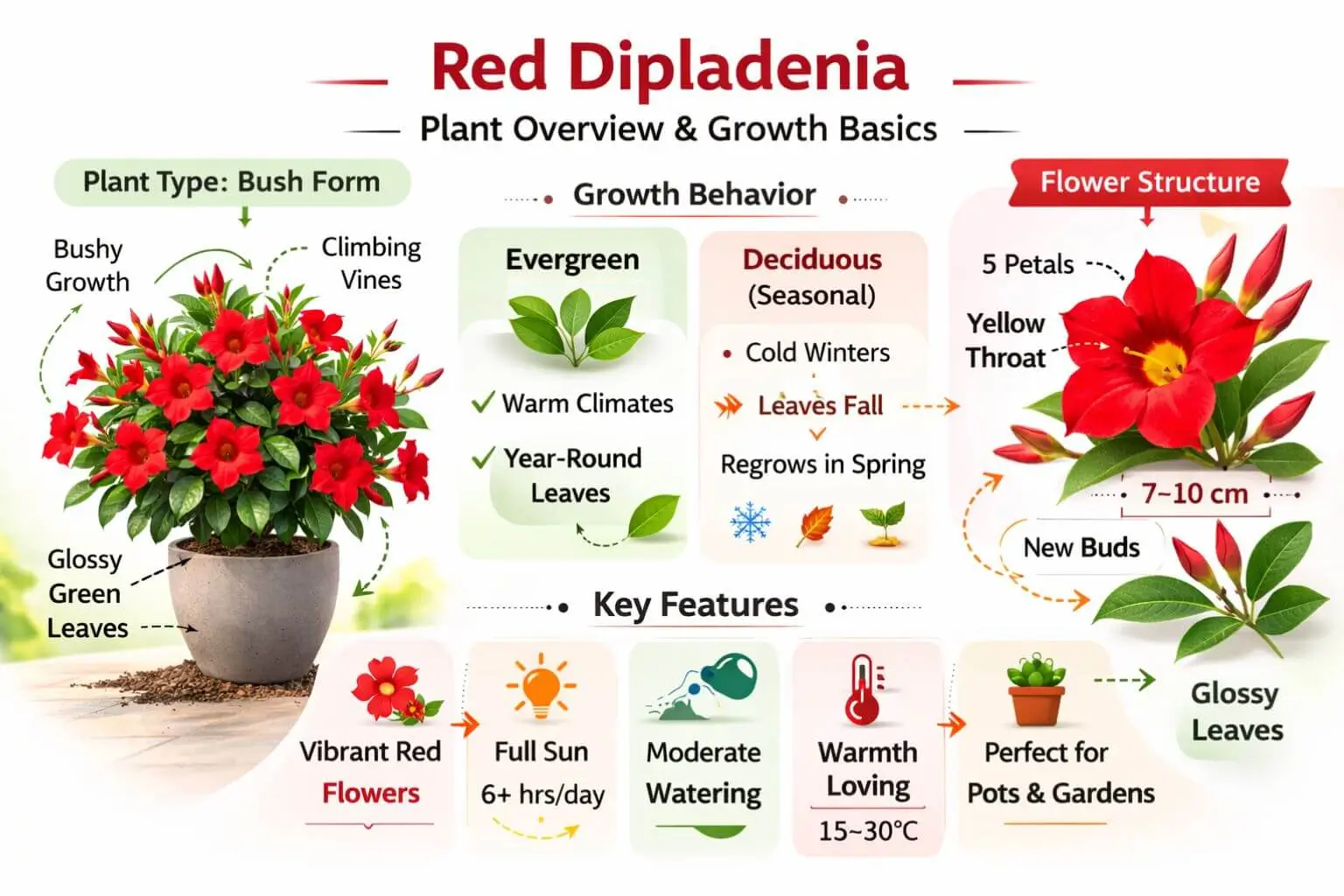
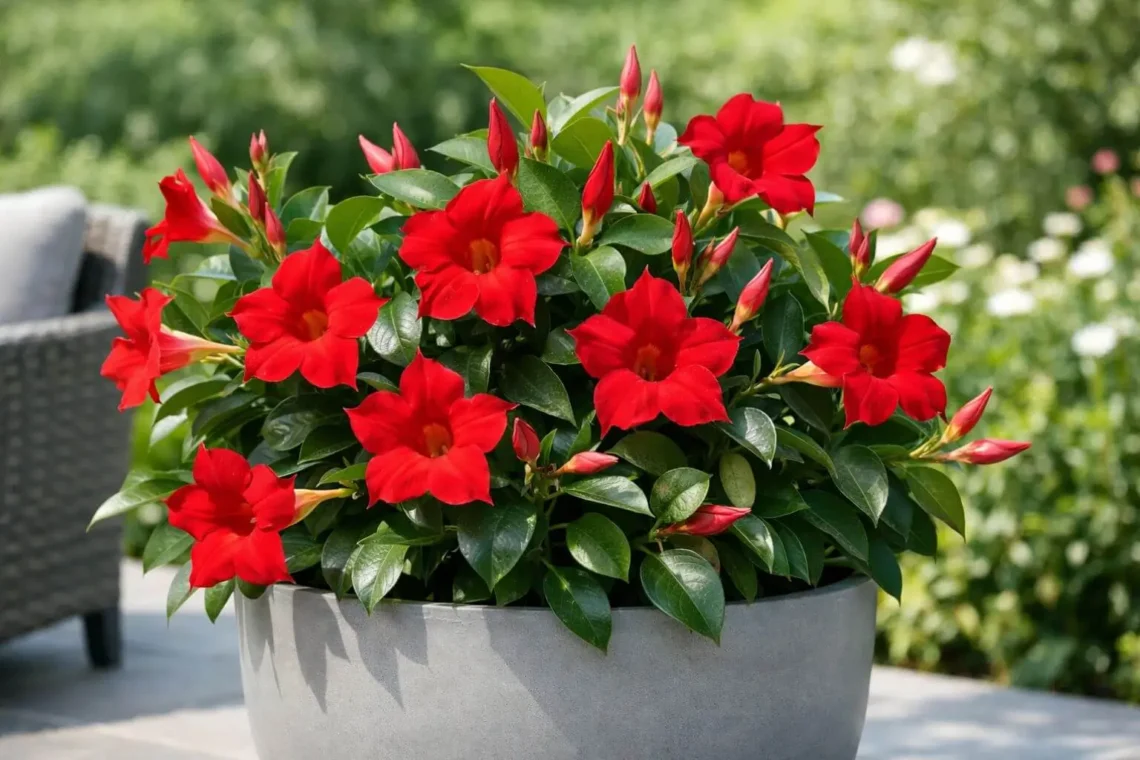
Red dipladenia is a flowering plant known for its bushy structure and trumpet-shaped blooms. It belongs to the same plant group as mandevilla but is bred for compact growth and controlled spreading.
Dipladenia Plant Overview
The dipladenia plant typically grows as a shrub rather than a climbing vine. Unlike traditional vining plants, a dipladenia shrub maintains a neat, mounded form without extensive support. In warm climates, dipladenia bush varieties are evergreen, while in cooler regions they behave as seasonal plants that decline after frost.
Red Dipladenia Flower Characteristics
Red dipladenia flowers are funnel-shaped with smooth, overlapping petals. Bloom colors range from bright red to deep red, with some varieties offering darker tones than others. Red, deep red, and white dipladenia flowers differ mainly in pigmentation rather than structure, and all bloom continuously from late spring through early fall under proper care.
Red Dipladenia Varieties Explained
Red dipladenia varieties are bred for compactness, bloom density, and color intensity rather than aggressive growth.
-
Rio Series Red Dipladenia
Rio dipladenia varieties feature a compact growth habit ideal for containers and small garden beds. Rio red dipladenia produces consistent blooms and maintains a uniform shape. Rio deep red dipladenia is especially valued for its saturated flower color and controlled size.
-
Rio Grande Red Dipladenia
Rio Grande red dipladenia is larger and more vigorous than standard Rio types. Bloom performance is strong throughout the growing season. Whether rio red dipladenia is a perennial depends on climate; in frost-free zones it behaves as a perennial, while in colder regions it is grown as an annual.
-
Other Deep Red Cultivars
Other options include deep red dipladenia hybrids bred for bush form. Mega red dipladenia and summer romance bush red dipladenia are examples of cultivars selected for dense foliage and rich flower color without climbing tendencies.
How Big Does Red Dipladenia Get?
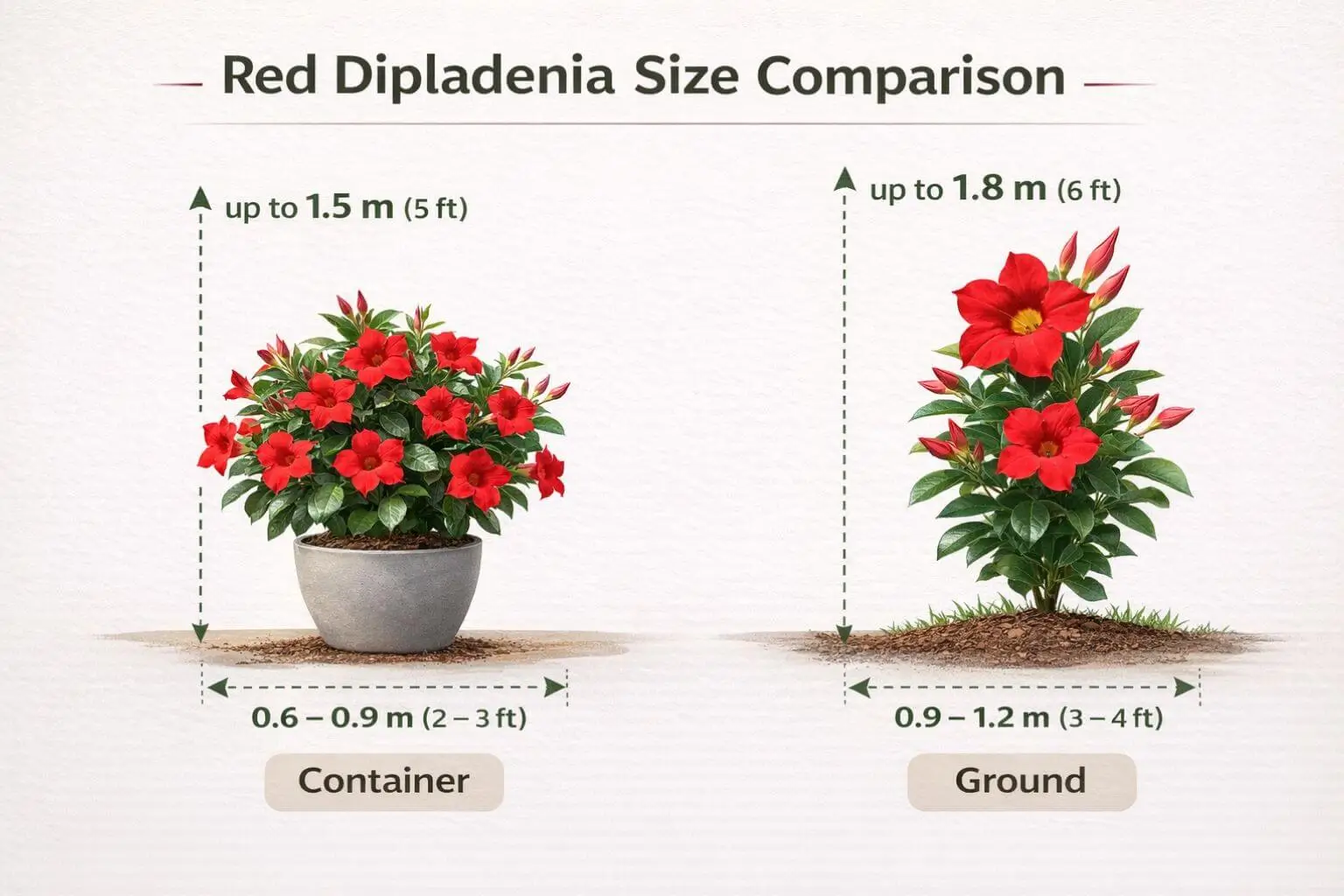
Understanding mature size helps with placement and spacing decisions.
Height and Spread
Average red dipladenia height ranges from 12 to 24 inches, with a spread of 12 to 18 inches. Bush types remain compact, while vining selections may grow larger if supported. These measurements answer common questions such as how big do dipladenia get and clarify expected dipladenia bush size.
Growth Habit in Different Settings
Dipladenia in containers tends to stay smaller due to root restriction. Dipladenia in flower beds may grow slightly larger, while dipladenia in pots offers the most controlled growth and shape.
Red Dipladenia Care Guide
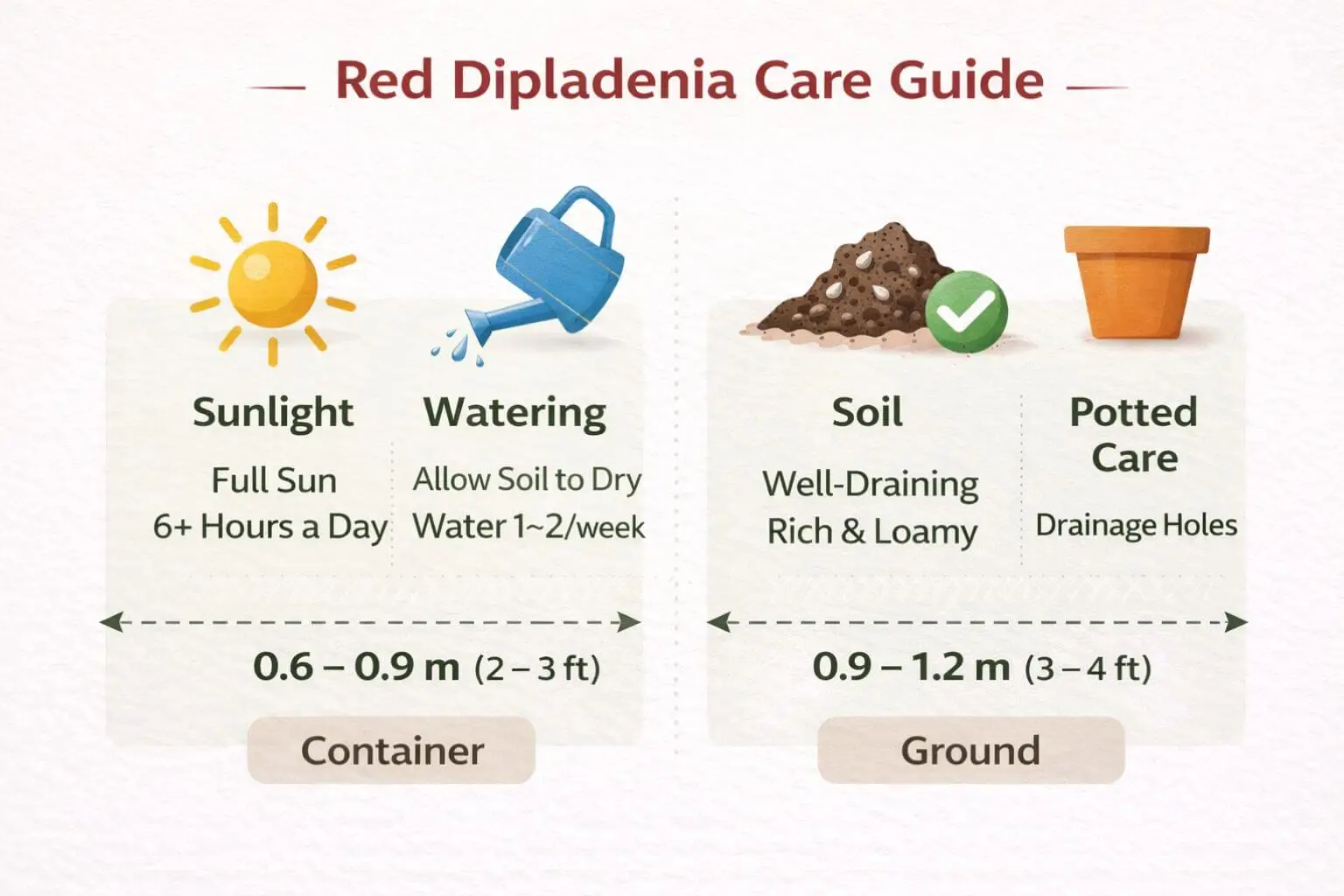
Proper care supports continuous flowering and healthy foliage.
-
Light Requirements
Red dipladenia performs best in full sun to partial shade. It can tolerate full sun, especially in cooler climates, though light afternoon shade helps prevent stress in hot regions.
-
Watering and Soil Needs
Well-draining soil is essential. Overwatering can cause root issues. Containers require more frequent watering than in-ground plants, but soil should dry slightly between waterings.
-
Care for Red Dipladenia in Pots
Care for dipladenia in pots includes selecting appropriately sized containers, using a loose potting mix, and ensuring drainage. Knowing how to grow dipladenia in pots helps prevent root binding and moisture retention problems.
Growing Red Dipladenia as a Houseplant or Outdoor Plant
Red dipladenia adapts well to multiple growing environments.
Dipladenia as a Houseplant
As a dipladenia houseplant, it requires bright light, warm temperatures, and consistent airflow. Indoor plants grow slower but maintain foliage year-round with proper care.
Outdoor Growing Conditions
When growing dipladenia outdoors, plant after frost risk has passed. Planting dipladenia in warm soil supports rapid establishment. Overwintering indoors is recommended in colder climates.
Is Red Dipladenia Poisonous?
Safety is an important consideration for households with pets or children.
Toxicity to Pets and Humans
Red dipladenia is considered mildly toxic if ingested. Sap contact may cause skin irritation. Basic hygiene and safe handling practices reduce risk, addressing concerns about red dipladenia poisonous effects.
Dipladenia vs Mandevilla — What’s the Difference?
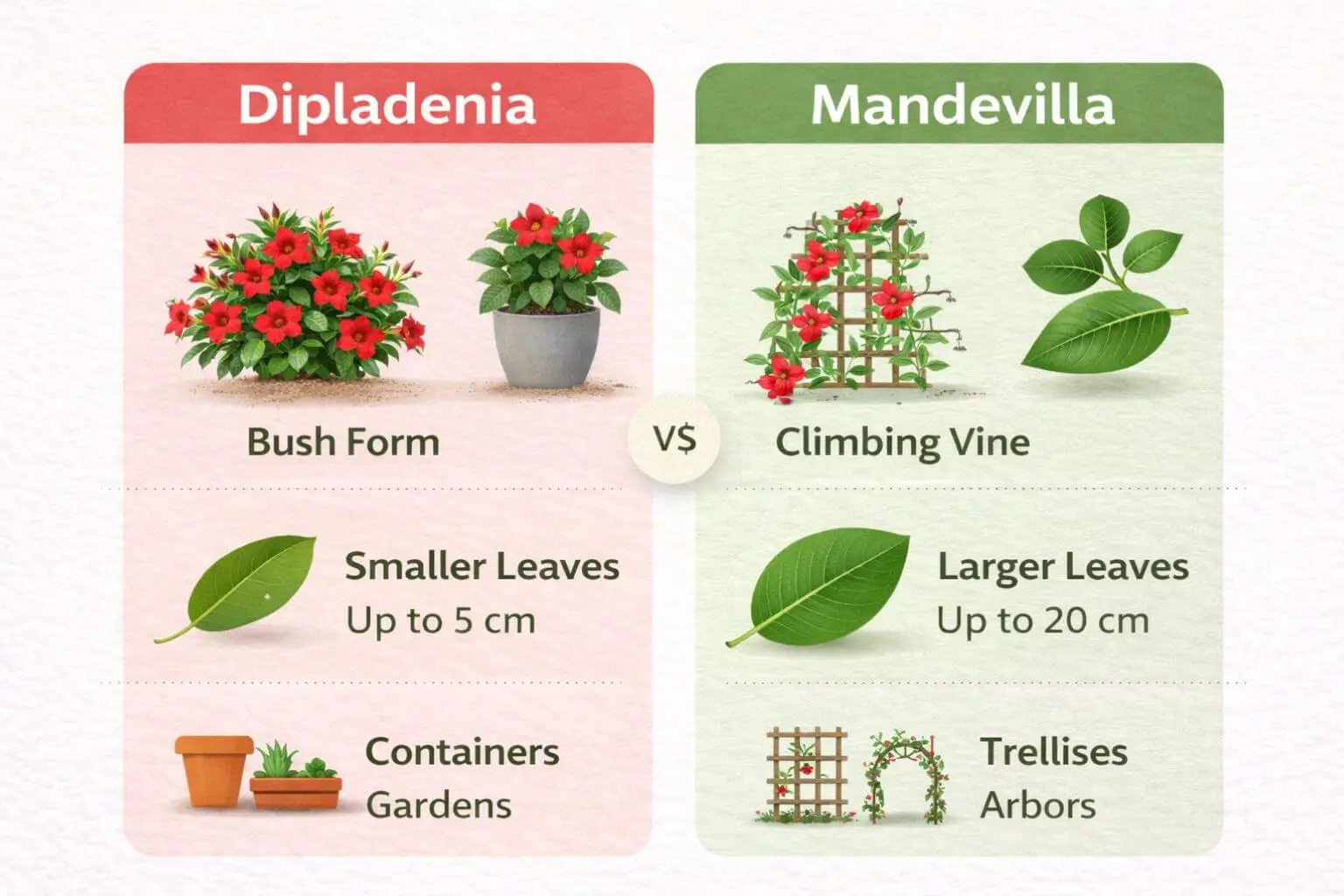
These plants are often confused due to similar flowers.
Growth and Leaf Differences
The primary difference between dipladenia and mandevilla is structure. Dipladenia grows as a bush, while mandevilla vines climb. Dipladenia vs mandevilla leaves differ in size, with mandevilla leaves typically larger and thinner.
Are Mandevilla and Dipladenia the Same Plant?
Mandevilla and dipladenia are closely related but not the same. They are distinct plant types bred for different growth habits and uses.
Companion Planting and Design Ideas
Thoughtful combinations enhance visual appeal.
What to Plant With Dipladenia in Containers
What to plant with dipladenia in containers includes low-growing foliage plants and neutral-toned flowers that do not compete for height.
Color Pairings
Dipladenia colors pair well with contrast. White dipladenia complements red blooms, while soft pastels balance intensity.
Conclusion
Red dipladenia offers vibrant color, compact growth, and flexible placement options. With proper care, suitable light, and well-drained soil, it performs reliably in containers and garden beds. Exploring varieties and understanding growth habits allows gardeners to grow red dipladenia confidently and effectively.
Learn more: 5+ Stunning Narrow Leaf Chalksticks for Effortless Beauty
FAQs
- What is red dipladenia best used for?
Red dipladenia is best used in containers, borders, patios, and small garden spaces where compact growth and continuous color are desired. - Is red dipladenia a perennial?
Red dipladenia is a perennial in frost-free climates but is grown as an annual in regions with cold winters. - Can red dipladenia grow in full sun?
Yes, red dipladenia can grow in full sun, especially with adequate watering and protection from extreme heat. - How often should red dipladenia be watered?
Water when the top layer of soil dries slightly. Containers require more frequent watering than in-ground plants. - What is the difference between dipladenia and mandevilla?
Dipladenia grows as a compact bush, while mandevilla is a climbing vine with larger leaves and longer stems.