Introduction
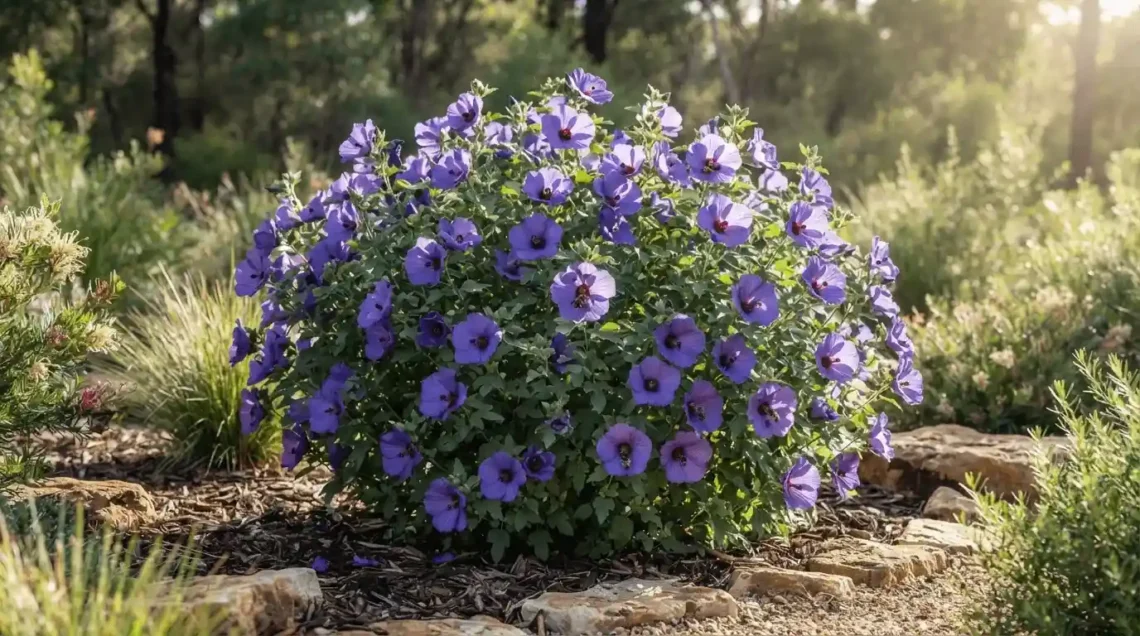
Alyogyne Blue Heeler is a cultivated form of Alyogyne huegelii, a beautiful Australian shrub widely recognised as an Australian native hibiscus. Valued for its vibrant purple-blue flowers, exceptional drought tolerance, and long flowering season, it has become a favourite choice for home gardens, native landscapes, and water-wise planting schemes across Australia. Although many gardeners refer to it as a hibiscus blue shrub because of its striking blooms, it belongs to the native Alyogyne genus rather than the tropical Hibiscus genus. This distinction gives the plant unique characteristics, including improved tolerance to dry climates and lower maintenance requirements, making it an excellent choice for gardeners seeking reliable colour throughout much of the year.
By Greenery Inside | Plant Care & Gardening Expert
Quick Summary
- Alyogyne Blue Heeler is a compact Australian native hibiscus admired for its vivid blue-purple flowers and excellent drought tolerance.
- It grows best in full sun with well-drained soil and becomes relatively low maintenance once established.
- Although commonly called a blue hibiscus, it belongs to the native Alyogyne genus rather than true tropical hibiscus.
- Understanding its mature size, care requirements, and common growing problems helps encourage healthier plants and longer flowering seasons.
What Is Alyogyne Blue Heeler?
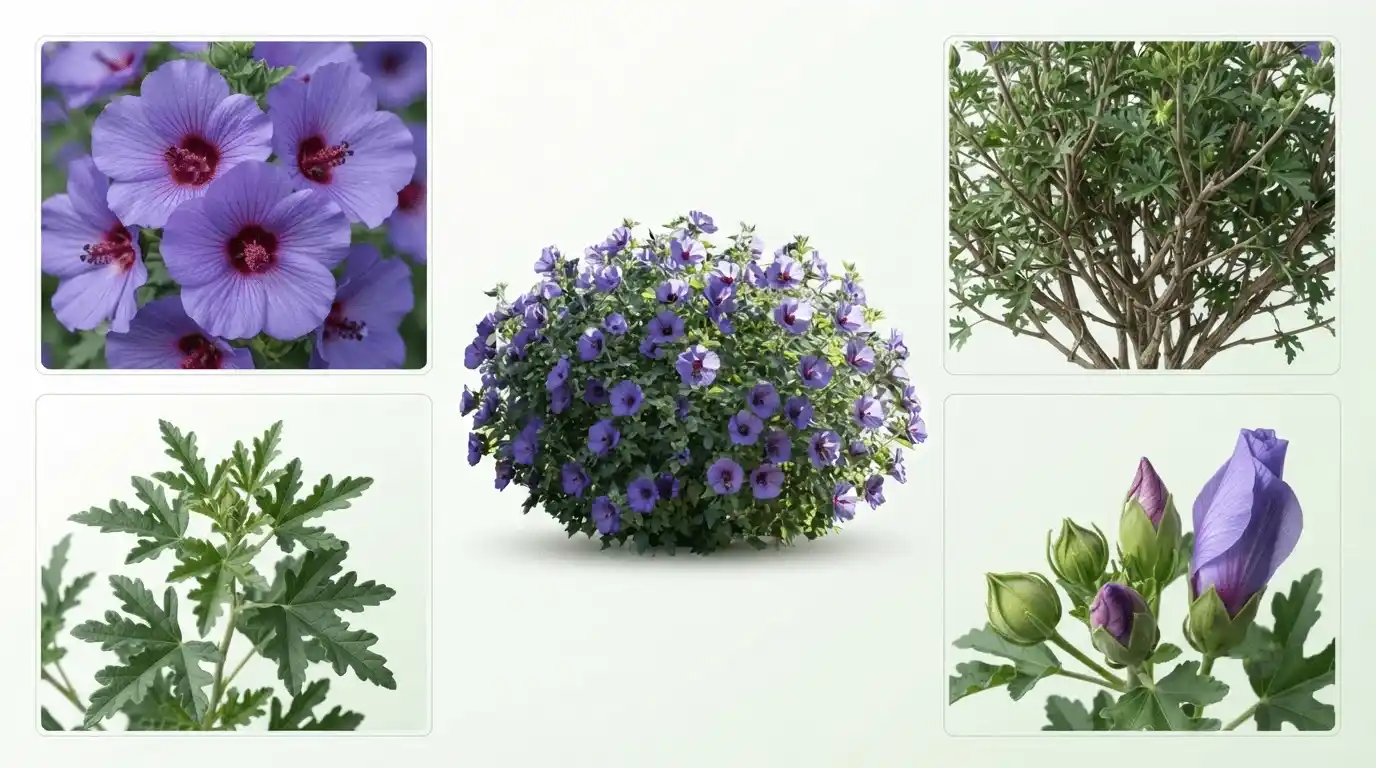
Alyogyne Blue Heeler is a selected cultivar of Alyogyne huegelii, an Australian native flowering shrub known for its showy purple-blue blooms, compact growth, and adaptability to dry climates. It belongs to the family Malvaceae, the same botanical family as hibiscus, cotton, and hollyhocks. Alyogyne belongs to the Malvaceae family, which includes well-known flowering plants such as hibiscus and cotton.
Native to Western Australia, Alyogyne huegelii naturally grows in sandy soils, open woodlands, and semi-arid regions where rainfall can be limited. Plant breeders selected the Blue Heeler cultivar for its improved garden performance, dense growth habit, and prolific flowering compared with many naturally occurring forms.
Because of its ornamental value, it has become one of the most popular cultivars of alyogyne native hibiscus available for Australian gardens. It combines the beauty of large hibiscus-like flowers with the resilience expected from a native Australian hibiscus.
Unlike tropical hibiscus species, which often require warm, humid environments and regular watering, Alyogyne Blue Heeler thrives in full sun, tolerates extended dry periods, and performs exceptionally well in Mediterranean and temperate Australian climates.
In our experience growing Australian native shrubs, Blue Heeler establishes quickly when planted in free-draining soil and generally requires far less maintenance than many exotic flowering shrubs. This combination of beauty and resilience makes it an excellent choice for both beginner and experienced gardeners.
Botanical Classification
| Characteristic | Details |
| Scientific name | Alyogyne huegelii ‘Blue Heeler’ |
| Family | Malvaceae |
| Genus | Alyogyne |
| Plant type | Evergreen flowering shrub |
| Common names | Blue Heeler, Australian native hibiscus, Blue hibiscus |
| Native origin | Western Australia |
| Primary use | Ornamental shrub for landscapes and gardens |
The plant’s distinctive flowers closely resemble hibiscus blooms, which explains why it is often referred to as a hibiscus Australian native despite belonging to a separate but closely related genus.
Why Is It Called a Blue Hibiscus?
Alyogyne Blue Heeler is commonly called a blue hibiscus because its flowers resemble tropical hibiscus blooms while displaying rich blue-purple colouring that is uncommon among flowering shrubs.
The common name can be slightly misleading because the plant is not a true member of the Hibiscus genus. Instead, it belongs to the Australian genus Alyogyne, which evolved separately but shares many floral characteristics due to its relationship within the Malvaceae family.
Its flowers typically appear in shades ranging from:
- Deep violet
- Purple-blue
- Lavender-purple
- Rich bluish violet
Rather than producing a true sky-blue flower, the blooms are generally best described as purple-blue, with colour intensity influenced by sunlight, soil conditions, and plant maturity.
Because of this attractive colouring, gardeners frequently search for terms such as:
- hibiscus blue
- Australian blue hibiscus
- blue hibiscus Australia
These common names all usually refer to Alyogyne Blue Heeler or related Alyogyne huegelii cultivars rather than tropical hibiscus species.
Each flower typically measures between 7 and 10 cm across, with delicate, silky petals surrounding a prominent central column characteristic of members of the Malvaceae family. Individual flowers last only a day or two, but the shrub continuously produces fresh blooms over an extended flowering season, creating a consistently colourful display.
Greenery Inside recommends choosing Blue Heeler if your goal is long-lasting seasonal colour with minimal irrigation, especially in regions where traditional tropical hibiscus struggle to thrive.
Key Features of Alyogyne Blue Heeler
Alyogyne Blue Heeler combines striking flowers, drought resistance, and compact growth, making it one of Australia’s most versatile ornamental native shrubs.
Its combination of ornamental appeal and practical performance has made it increasingly popular in residential gardens, commercial landscapes, and native habitat plantings.
Some of its standout characteristics include:
- Large purple-blue flowers produced over many months.
- Dense evergreen foliage that provides year-round structure.
- Excellent drought tolerance after establishment.
- High heat tolerance suitable for much of Australia.
- Attraction of native bees and other beneficial pollinators.
- Low maintenance requirements compared with many flowering shrubs.
- Compact habit suitable for smaller gardens and containers.
- Good performance in coastal environments with appropriate drainage.
One of the greatest strengths of this shrub is its exceptionally long flowering period. Under favourable growing conditions, it can flower from spring through autumn and, in frost-free regions, may continue producing blooms intermittently throughout the year.
The nectar-rich flowers also support local biodiversity by attracting native bees, butterflies, and other beneficial insects that assist with pollination.
Alyogyne Blue Heeler Features
| Feature | Description |
| Botanical name | Alyogyne huegelii ‘Blue Heeler’ |
| Common names | Blue Heeler, Australian native hibiscus, Blue hibiscus |
| Flower colour | Purple-blue to violet |
| Mature size | Approximately 1.5–2 m tall × 1.5–2 m wide |
| Flowering period | Mainly spring through autumn, longer in mild climates |
| Sun requirements | Full sun to light partial shade |
| Water needs | Low once established |
| Frost tolerance | Light frost only; protect from severe frost |
As of the 2026 growing season, Australian native plant growers continue to recommend planting Alyogyne cultivars in sunny, well-drained locations to maximise flowering and reduce disease problems associated with excess soil moisture.
Alyogyne Blue Heeler Height and Mature Size
Alyogyne Blue Heeler typically reaches 1.5–2 metres in both height and width, forming a naturally rounded, compact shrub suitable for a wide range of garden settings.
Its moderate size makes it an excellent choice for suburban gardens where space may be limited while still providing a substantial flowering display.
Typical mature dimensions include:
| Growth Characteristic | Average Size |
| Height | 1.5–2 metres |
| Width | 1.5–2 metres |
| Growth habit | Dense, rounded shrub |
The exact Alyogyne Blue Heeler height depends on several environmental factors, including:
- Climate
- Soil quality
- Available sunlight
- Water availability
- Pruning frequency
Plants grown in rich, well-drained soils with consistent sunlight generally become fuller and flower more heavily than those grown in shaded or poorly drained sites.
Garden vs Container Growth
When planted directly in the ground, Blue Heeler develops its natural rounded form and reaches its maximum mature size more quickly.
In large containers, growth remains somewhat restricted, often reaching around 1–1.5 metres tall. This smaller size makes container-grown plants suitable for patios, courtyards, and sunny balconies.
Although some gardeners refer to mature specimens as a native hibiscus tree, Blue Heeler is botanically classified as a shrub rather than a tree. However, selective pruning can create a small tree-like appearance with a clear central stem, similar to other native hibiscus tree Australia landscape specimens.
Regular light pruning after flowering helps maintain a compact habit, encourages branching, and promotes greater flower production during the following season.
Growth Rate and Flowering Habit
Alyogyne Blue Heeler has a moderate growth rate and is valued for its exceptionally long flowering season, producing fresh blooms over many months each year.
Under favourable conditions, newly planted shrubs establish rapidly during their first two years. Once established, growth becomes steady and consistent, with mature plants developing dense branching that supports abundant flowering.
Several factors influence growth speed, including:
- Full sun exposure
- Soil drainage
- Seasonal rainfall
- Temperature
- Fertility
- Pruning practices
Flower production generally begins in spring as temperatures rise and continues throughout summer into autumn. In frost-free regions, flowering may continue intermittently during winter.
Unlike many ornamental shrubs that flower in one short burst, Alyogyne Blue Heeler continually replaces spent blooms with new buds, creating an extended display of colour.
In our experience, the heaviest flowering occurs when plants receive at least six hours of direct sunlight each day and are lightly pruned immediately after major flowering flushes. Removing old blooms and trimming soft stem tips encourages branching, which leads to more flowering stems in the following season.
Although individual flowers are short-lived, the constant production of new buds ensures the shrub remains attractive for much of the year. With proper care, healthy specimens can remain productive and ornamental for well over a decade, making them a reliable long-term feature in Australian native gardens.
How to Grow Alyogyne Blue Heeler Successfully

Alyogyne Blue Heeler grows best in full sun, well-drained soil, and warm, dry conditions. Once established, it is one of the easiest Australian native shrubs to maintain, requiring only moderate watering, occasional feeding, and light pruning to produce abundant flowers. Understanding how Alyogyne Blue Heeler fits into wider Australian native garden ecosystems is key to long-term success, especially when combined with other structural planting strategies found in native landscape design systems.
As a selected cultivar of Alyogyne huegelii, this shrub has adapted to many Australian climates. Following a few core horticultural practices will encourage vigorous growth, dense foliage, and a long flowering season.
In our experience, gardeners achieve the best results by prioritising soil drainage over frequent watering. Most long-term problems develop from excess moisture rather than drought.
Best Light Conditions
Full sun is the ideal growing position for Alyogyne Blue Heeler because it promotes compact growth and maximum flower production.
The shrub performs best with at least six hours of direct sunlight each day. Bright conditions encourage more flower buds, stronger stems, and healthier evergreen foliage.
Light requirements
| Light Condition | Plant Performance |
| Full sun (6–8+ hours) | Excellent flowering and compact growth |
| Partial shade (3–5 hours) | Moderate flowering with slightly leggier growth |
| Heavy shade | Poor flowering and weak, elongated stems |
Plants grown in excessive shade often produce fewer flowers as they direct energy toward stem growth in search of more light.
For the most colourful display, choose an open location that receives morning and afternoon sunshine. In Australia’s hottest inland regions, light afternoon shade can help reduce heat stress during prolonged summer heatwaves, although full sun remains the preferred position.
Greenery Inside recommends avoiding planting beneath large trees, where competition for light and moisture can reduce flowering performance.
Soil Requirements
Well-drained soil is essential for healthy Alyogyne Blue Heeler growth because the roots are highly sensitive to prolonged waterlogging.
Like many Australian native plants, Alyogyne huegelii naturally grows in sandy and gravelly soils that drain quickly after rainfall.
Ideal soil characteristics
- Sandy or sandy-loam soil
- Free-draining structure
- Moderate organic matter
- Slightly acidic to neutral pH (approximately 6.0–7.5)
- Good air circulation around the root zone
Heavy clay soils can be improved before planting by incorporating:
- Coarse sand
- Fine gravel
- Compost
- Well-aged organic matter
Raised garden beds are another excellent option where natural drainage is poor.
Soil suitability table
| Soil Type | Suitability |
| Sandy | Excellent |
| Sandy loam | Excellent |
| Loam | Very good |
| Clay loam (improved) | Acceptable |
| Heavy clay | Poor unless drainage is improved |
Avoid planting in low-lying areas where water collects after rain, as saturated soil significantly increases the risk of root diseases.
Watering Requirements
Alyogyne Blue Heeler needs regular watering while establishing but becomes highly drought tolerant once mature.
The watering schedule changes considerably as the shrub develops.
Newly planted shrubs
During the first 6–12 months:
- Water deeply once or twice each week.
- Allow the top layer of soil to dry slightly between waterings.
- Adjust watering frequency during periods of extreme heat.
Deep watering encourages roots to grow downward, making the plant more resilient during dry weather.
Established plants
After establishment:
- Water only during extended dry periods.
- Deep watering every two to three weeks is often sufficient in many regions.
- Reduce irrigation during cooler months when growth naturally slows.
One of the greatest strengths of Alyogyne Blue Heeler is its ability to continue flowering despite relatively dry conditions.
However, drought tolerance does not mean the plant should never be watered. Long periods of extreme drought may reduce flowering, although established shrubs generally recover quickly after rainfall or irrigation.
Practical watering guide
| Plant Age | Watering Frequency |
| Newly planted | 1–2 times weekly |
| Establishing (3–12 months) | Weekly as needed |
| Mature plants | Every 2–3 weeks during prolonged dry weather |
| Winter | Minimal supplemental watering |
In our experience growing Australian native shrubs, overwatering causes far more problems than underwatering. Water deeply but infrequently rather than applying small amounts every day.
Fertilising and Pruning
Light fertilising and regular pruning help Alyogyne Blue Heeler maintain healthy growth, abundant flowers, and a naturally compact shape.
Unlike heavy-feeding exotic ornamentals, this Australian native shrub generally requires only modest nutrition.
Fertilising
Apply a slow-release fertiliser suitable for flowering Australian native plants:
- In early spring before active growth begins.
- Optionally again in early summer if flowering slows.
- Follow manufacturer application rates carefully.
Avoid excessive nitrogen fertilisers, which encourage leafy growth at the expense of flowers.
A balanced fertiliser containing moderate phosphorus and potassium supports healthy root development and sustained blooming.
Pruning
Light pruning is one of the most effective ways to improve flowering.
Prune:
- Immediately after a major flowering flush.
- Remove dead, damaged, or crossing branches.
- Lightly trim stem tips to encourage branching.
- Shape the shrub while maintaining its natural rounded form.
Avoid removing large amounts of old wood, as heavy pruning can temporarily reduce flowering while the plant regrows.
Benefits of regular pruning
- Encourages bushier growth.
- Produces more flowering stems.
- Improves airflow through the canopy.
- Removes weak or damaged branches.
- Maintains a tidy appearance.
Greenery Inside recommends pruning little and often rather than carrying out severe annual pruning. Consistent light trimming produces healthier shrubs with more reliable flowering.
Climate and Hardiness
Alyogyne Blue Heeler is well suited to most temperate, Mediterranean, and semi-arid Australian climates, where warm temperatures and sunny conditions encourage vigorous growth.
Its natural adaptation to Western Australian environments makes it particularly resilient during hot, dry summers.
Ideal climate conditions
- Warm temperate climates
- Mediterranean climates
- Semi-arid regions
- Coastal districts with well-drained soils
- Low-humidity inland areas
The shrub tolerates high summer temperatures remarkably well once established.
Coastal performance
Blue Heeler performs successfully in many coastal gardens because it tolerates:
- Salt-laden air
- Wind exposure
- Sandy soils
Shelter from extremely strong coastal winds can help preserve flowers during stormy weather.
Frost tolerance
Although reasonably hardy, Alyogyne Blue Heeler has only moderate frost resistance.
It tolerates:
- Occasional light frosts
- Brief cold spells
Young plants are more vulnerable than mature specimens.
In colder inland regions:
- Apply organic mulch around the root zone.
- Protect young shrubs with frost cloth during severe frosts.
- Avoid planting in frost pockets where cold air settles.
As of the 2026 growing season, Australian native plant specialists continue to recommend selecting warm, sunny planting sites with excellent drainage to maximise flowering and reduce winter damage.
Common Alyogyne Blue Heeler Problems and How to Fix Them
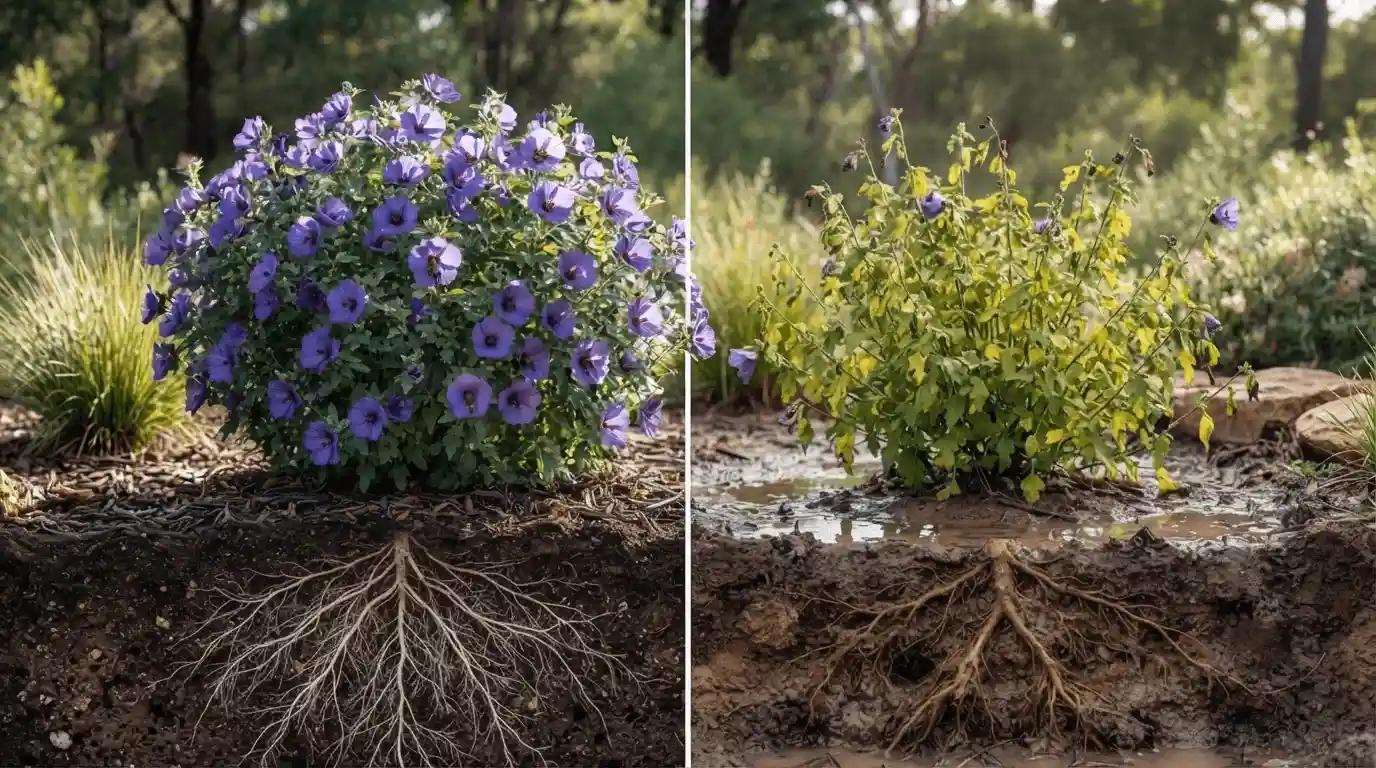
Most Alyogyne Blue Heeler problems result from incorrect growing conditions rather than serious diseases. Poor drainage, excessive watering, frost, and insufficient sunlight account for the majority of plant health issues.
Fortunately, most problems can be corrected early with simple adjustments to watering, pruning, or planting conditions.
Yellow Leaves
Why it happens
Yellowing foliage is commonly caused by:
- Overwatering
- Poor drainage
- Root stress
- Temporary nutrient deficiencies
- Waterlogged soil
How to fix it
- Reduce watering frequency.
- Improve soil drainage.
- Remove standing water around the plant.
- Apply a balanced slow-release fertiliser if nutrient deficiency is suspected.
Prevention
Always allow the soil surface to dry slightly before watering again.
Poor Flowering
Why it happens
Limited flowering usually results from:
- Too much shade
- Excess nitrogen fertiliser
- Heavy pruning at the wrong time
- Immature plants
- Prolonged drought
How to fix it
- Move container plants into full sun.
- Reduce nitrogen-rich fertilisers.
- Prune immediately after flowering rather than before bud formation.
- Water deeply during extended dry periods.
Healthy plants receiving sufficient sunlight usually produce flowers for many months.
Root Rot
Why it happens
Root rot is one of the most serious Alyogyne Blue Heeler problems.
It develops when roots remain saturated for prolonged periods, allowing soil-borne fungi to attack the root system.
Symptoms include:
- Yellow leaves
- Wilting despite moist soil
- Blackened roots
- Gradual dieback
How to fix it
- Improve drainage immediately.
- Remove severely affected roots where possible.
- Reduce watering.
- Replant into raised beds if necessary.
Prevention remains far easier than treatment.
Overwatering
Why it happens
Frequent shallow watering deprives roots of oxygen and weakens the entire plant.
Signs
- Soft stems
- Yellow foliage
- Slow growth
- Leaf drop
- Root disease
Solution
Allow soil to dry between watering sessions and irrigate deeply but less frequently.
Frost Damage
Why it happens
Young shoots may suffer damage after heavy or prolonged frosts.
Symptoms include:
- Blackened leaves
- Wilted new growth
- Stem dieback
How to fix it
Wait until frost danger has passed before pruning damaged growth.
New shoots often emerge naturally during spring.
Pest Attacks
Although generally pest resistant, Alyogyne Blue Heeler may occasionally attract:
- Aphids
- Whiteflies
- Scale insects
- Caterpillars
Management
- Inspect new growth regularly.
- Wash insects off using water where practical.
- Encourage beneficial insects such as ladybirds.
- Remove heavily infested shoots if necessary.
Chemical treatments are rarely required for healthy, established plants.
Leggy Growth
Why it happens
Long, sparse stems usually indicate:
- Insufficient sunlight
- Lack of pruning
- Overcrowding
- Excess nitrogen
How to fix it
- Move container plants into brighter conditions.
- Lightly prune after flowering.
- Improve airflow around the shrub.
- Avoid excessive fertiliser applications.
Bushier plants naturally produce significantly more flowers.
Common Problems at a Glance
| Problem | Likely Cause | Recommended Solution |
| Yellow leaves | Overwatering or poor drainage | Improve drainage and reduce watering |
| Poor flowering | Too much shade or excess nitrogen | Increase sunlight and use balanced fertiliser |
| Root rot | Waterlogged soil | Improve drainage immediately |
| Overwatering | Frequent irrigation | Water deeply but less often |
| Frost damage | Heavy frost | Protect young plants and prune after frost risk passes |
| Pest attacks | Aphids, scale, whiteflies | Encourage beneficial insects and monitor regularly |
| Leggy growth | Shade or lack of pruning | Increase sunlight and prune lightly after flowering |
By understanding these common issues and responding early, gardeners can keep Alyogyne Blue Heeler healthy, vigorous, and flowering reliably for many years.
Alyogyne Blue Heeler vs Other Native Hibiscus Varieties
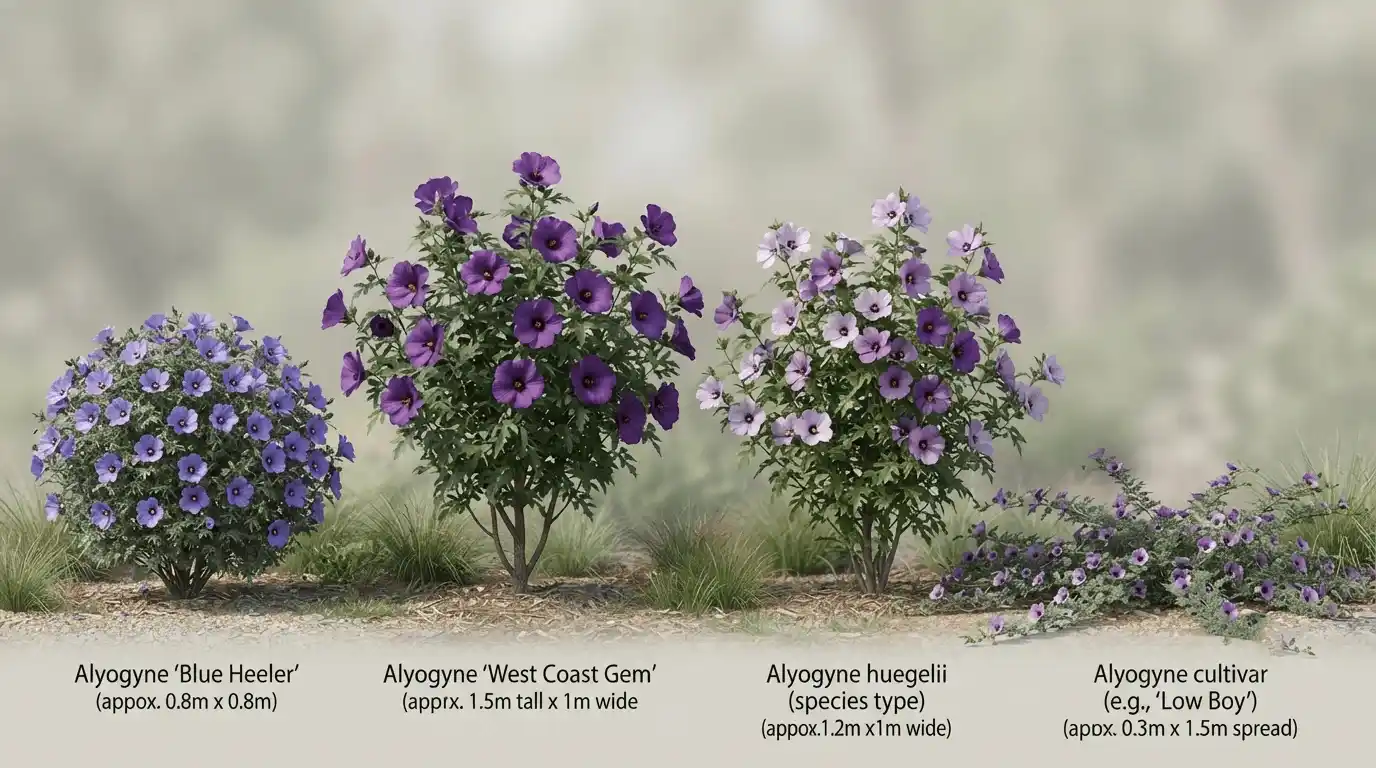
Alyogyne Blue Heeler stands out for its compact growth, prolific purple-blue flowers, and excellent drought tolerance, but several other Alyogyne cultivars and species offer different flower colours, growth habits, and landscaping benefits.
Understanding these differences helps gardeners choose the most suitable Australian native hibiscus for their climate, available space, and design goals.
Although all members of the Alyogyne genus belong to the Malvaceae family, each cultivar has unique ornamental characteristics that make it suitable for different landscape applications.
Alyogyne Blue Heeler vs Alyogyne West Coast Gem
Alyogyne Blue Heeler and Alyogyne West Coast Gem are closely related cultivars, but they differ in flower colour intensity, growth habit, and ideal landscape use.
Alyogyne West Coast Gem, sometimes sold as Alyogyne huegelii West Coast Gem or simply West Coast Gem, is another highly regarded Australian native shrub selected for its spectacular flowering display.
Flower Colour
The most noticeable difference is the flower colour.
- Blue Heeler produces vibrant purple-blue to bluish-violet flowers.
- West Coast Gem generally produces deeper violet to rich purple flowers that often appear darker in strong sunlight.
Although both shrubs are frequently marketed as blue hibiscus, flower colour can vary slightly depending on climate, soil conditions, and plant maturity.
Growth Habit
Blue Heeler naturally develops a compact, rounded form, making it easier to maintain in smaller gardens.
West Coast Gem generally becomes:
- Slightly larger
- More vigorous
- Broader in spread
With regular pruning, both cultivars maintain an attractive, bushy appearance.
Landscape Uses
Blue Heeler is especially suitable for:
- Small residential gardens
- Courtyards
- Large decorative containers
- Feature planting
- Informal low hedges
West Coast Gem is often preferred for:
- Larger native gardens
- Mixed shrub borders
- Screening
- Feature mass plantings
In our experience, Blue Heeler is the easier option for gardeners seeking a compact shrub with minimal pruning, while West Coast Gem suits landscapes where a slightly larger flowering specimen is desirable.
Alyogyne Blue Heeler vs Alyogyne Huegelii
The main difference is that Alyogyne huegelii is the naturally occurring species, while Blue Heeler is a selected cultivar bred for improved ornamental performance.
Alyogyne huegelii occurs naturally across parts of Western Australia and displays greater variation than cultivated selections.
Species vs Cultivar
Alyogyne huegelii includes naturally occurring plants that vary in:
- Flower colour
- Plant size
- Branching habit
- Flowering intensity
Blue Heeler has been selected because it consistently offers:
- Compact growth
- Reliable flowering
- Dense branching
- Uniform appearance
These qualities make it more predictable for landscape design.
Flower Colour
Natural populations of Alyogyne huegelii produce flowers ranging from:
- Purple
- Blue-purple
- Mauve
- Occasionally white
Gardeners may also encounter:
- Alyogyne huegelii blue hibiscus
- Alyogyne huegelii white
The white-flowering forms provide an attractive alternative for native gardens with lighter planting schemes, while Blue Heeler remains one of the most colourful cultivated selections.
Garden Performance
Compared with wild forms, Blue Heeler generally provides:
- Longer flowering periods
- More uniform shape
- Better suitability for suburban gardens
- Easier maintenance
Greenery Inside recommends Blue Heeler for gardeners wanting dependable performance without the natural variability often seen in seed-grown Alyogyne huegelii plants.
Other Alyogyne Species
Several other Alyogyne species expand the range of Australian native hibiscus options by offering different growth forms and landscaping uses.
While Blue Heeler is among the most widely planted cultivars, the genus contains several attractive ornamental species.
Alyogyne Prostrate
One notable example is the Alyogyne prostrate form.
Unlike upright shrubs, prostrate Alyogyne varieties develop a low-growing, spreading habit that makes them useful as:
- Ground covers
- Rock garden plants
- Slope stabilisers
- Water-wise landscape fillers
- Native garden edging plants
Their spreading growth helps suppress weeds while softening hard landscape features such as retaining walls and pathways.
Other Alyogyne species may differ in:
- Mature size
- Flower colour
- Leaf shape
- Cold tolerance
- Natural distribution
These differences allow gardeners to combine several Alyogyne varieties for extended seasonal interest while maintaining a cohesive Australian native planting palette.
Comparison of Popular Alyogyne Varieties
| Variety | Flower Colour | Mature Size | Best Use |
| Blue Heeler | Purple-blue | 1.5–2 m × 1.5–2 m | Feature shrub, containers, cottage gardens |
| West Coast Gem | Deep violet-purple | 2–3 m × 2–3 m | Screening, large native gardens, mixed borders |
| Alyogyne huegelii | Purple, mauve, blue-purple, occasionally white | 2–3 m | Native landscapes, conservation gardens |
| Prostrate Alyogyne | Purple to mauve | Low spreading habit | Ground cover, slopes, rockeries |
Landscaping Ideas for Alyogyne Blue Heeler
Alyogyne Blue Heeler is a versatile flowering shrub that complements many Australian garden styles, from native landscapes to modern water-wise designs. For broader Australian landscape planning ideas and plant selection strategies, explore our guides on Australian native screening trees, evergreen structure plants, and tropical-style privacy planting systems, which help create layered, resilient garden designs.
Its long flowering season, evergreen foliage, and manageable size allow it to function as both a feature plant and a supporting shrub within mixed plantings.
Native Gardens
As one of Australia’s most popular flowering native shrubs, Blue Heeler pairs beautifully with species such as:
- Grevillea
- Westringia
- Callistemon
- Correa
- Banksia
Its vibrant native hibiscus flowers provide strong colour contrast against silver and grey-green native foliage.
Cottage Gardens
Although native in origin, Blue Heeler blends surprisingly well into informal cottage gardens.
Its large blooms combine attractively with:
- Lavender
- Salvia
- Gaura
- Catmint
- Native daisies
The colourful native hibiscus flower display softens garden borders while attracting pollinators.
Water-Wise Landscapes
Blue Heeler is particularly valuable in drought-tolerant landscapes because of its relatively low water requirements after establishment.
Suitable companions include:
- Kangaroo Paw
- Eremophila
- Lomandra
- Dianella
- Native grasses
This combination creates an attractive, low-maintenance garden that performs well during Australia’s hot summers.
Pollinator Gardens
The nectar-rich flowers attract numerous beneficial insects.
Visitors commonly include:
- Native bees
- Honey bees
- Butterflies
- Hoverflies
By incorporating purple native hibiscus into pollinator-friendly gardens, homeowners can support local biodiversity while enjoying months of colourful blooms.
Mixed Shrub Borders
Blue Heeler works exceptionally well as a mid-height shrub in layered planting schemes.
It provides:
- Seasonal colour
- Evergreen structure
- Texture contrast
- Wildlife habitat
Its rounded growth habit complements both upright and spreading native shrubs.
Feature Planting
Because of its abundant flowering, a single mature shrub creates an impressive focal point.
Feature planting works especially well:
- Near entrances
- Along pathways
- Beside patios
- Around outdoor entertaining areas
The striking native hibiscus purple flowers become an eye-catching centrepiece for much of the year.
Informal Hedges
When planted approximately 1.2–1.5 metres apart, Blue Heeler develops into an attractive informal flowering hedge.
Benefits include:
- Seasonal privacy
- Wildlife habitat
- Low pruning requirements
- Continuous colour
Unlike tightly clipped formal hedges, informal native hedges maintain a softer, more natural appearance.
Large Containers
Blue Heeler adapts well to spacious pots with excellent drainage.
Container-grown plants perform best when provided with:
- Premium free-draining potting mix
- Full sun
- Regular but moderate watering
- Light annual pruning
Large containers make it possible to enjoy this Western Australian native hibiscus on patios, balconies, and courtyards where garden space is limited.
Common Beginner Mistakes When Growing Native Hibiscus
Most problems with Alyogyne Blue Heeler can be avoided by understanding its preference for sunny, well-drained conditions and avoiding excessive maintenance.
Many first-time growers unintentionally apply care techniques better suited to tropical shrubs rather than Australian natives.
Common mistakes include:
Planting in Poorly Drained Soil
Waterlogged soil is the leading cause of root problems.
Always improve drainage before planting.
Excess Watering
Frequent watering keeps roots constantly wet and encourages fungal diseases.
Instead:
- Water deeply.
- Allow the soil to partially dry before watering again.
Heavy Pruning
Removing too much growth at one time reduces flowering and delays recovery.
Use light pruning immediately after flowering rather than severe annual cutting.
Too Much Shade
Insufficient sunlight causes:
- Fewer flowers
- Sparse branching
- Leggy growth
Choose a location receiving at least six hours of direct sunlight.
Poor Airflow
Crowded planting encourages moisture build-up around foliage, increasing disease risk.
Maintain adequate spacing between shrubs.
Excess Fertiliser
Applying large amounts of nitrogen encourages leafy growth instead of flowers.
Use a balanced slow-release fertiliser formulated for flowering shrubs or Australian native plants.
Ignoring Frost Protection
Young shrubs benefit from temporary frost protection during their first winters, particularly in inland areas where temperatures fall below freezing.
Frequently Confused Native Hibiscus Types
Several flowering shrubs are commonly referred to as native hibiscus or blue hibiscus, but they belong to different species, cultivars, or even genera. Correct identification helps gardeners choose plants that suit their climate and maintenance preferences.
Alyogyne
Alyogyne is a distinct Australian genus within the Malvaceae family.
Characteristics include:
- Five-petalled flowers
- Excellent drought tolerance
- Evergreen foliage
- Adaptation to dry Australian climates
Blue Heeler belongs to this genus.
Australian Hibiscus
The term Australian hibiscus is a broad common name rather than a botanical classification.
It may refer to:
- Alyogyne species
- Native Hibiscus species
- Various cultivated hybrids
Checking the botanical name is the most reliable way to identify a plant accurately.
Purple Native Hibiscus
The phrase purple native hibiscus commonly describes flowering Australian shrubs with purple blooms.
Depending on the nursery, this may include:
- Alyogyne Blue Heeler
- Alyogyne huegelii
- West Coast Gem
- Other purple-flowering native hibiscus cultivars
Blue Hibiscus
Despite the common name, most so-called blue hibiscus plants produce flowers that are actually blue-purple or violet rather than true blue.
Blue Heeler is one of Australia’s best-known examples.
Native Hibiscus Australia
The term native hibiscus Australia covers numerous native flowering species across several genera.
While many resemble tropical hibiscus, they differ significantly in:
- Climate adaptation
- Growth habit
- Flower colours
- Water requirements
Learning the botanical names helps gardeners select the most suitable plant for their local conditions and avoid confusion when purchasing from nurseries.
Conclusion
Alyogyne Blue Heeler is one of the finest Australian native hibiscus cultivars for gardeners seeking vibrant colour, drought tolerance, and low-maintenance performance. Its compact growth habit, long flowering season, and striking purple-blue blooms make it equally suited to native gardens, cottage landscapes, water-wise plantings, and large containers.
Providing full sun, free-draining soil, moderate watering during establishment, and light annual pruning allows this shrub to thrive for many years. Compared with other Alyogyne cultivars and species, Blue Heeler offers consistent growth, reliable flowering, and excellent adaptability across much of Australia.
Whether used as a feature shrub, an informal hedge, or part of a pollinator-friendly landscape, Alyogyne Blue Heeler delivers lasting ornamental value while showcasing the beauty and resilience of Australian native plants.
Frequently Asked Questions
Is Alyogyne Blue Heeler a true hibiscus?
No. Alyogyne Blue Heeler is not a true Hibiscus. It belongs to the closely related Australian genus Alyogyne within the Malvaceae family. Although its flowers resemble tropical hibiscus, it is a distinct native genus adapted to Australia’s dry climates.
How tall does Alyogyne Blue Heeler grow?
Most mature plants reach 1.5–2 metres in height and width. Regular light pruning helps maintain a compact, rounded shape, while container-grown specimens usually remain slightly smaller.
How often does Alyogyne Blue Heeler flower?
Alyogyne Blue Heeler flowers mainly from spring through autumn, with intermittent blooming possible during winter in frost-free regions. Individual flowers are short-lived, but the shrub continuously produces new blooms over many months.
Is Alyogyne Blue Heeler drought tolerant?
Yes. Once established, Alyogyne Blue Heeler is highly drought tolerant. It performs well with occasional deep watering during prolonged dry periods, making it an excellent choice for water-wise Australian gardens.
Can Alyogyne Blue Heeler grow in pots?
Yes. It grows successfully in large containers provided they have excellent drainage. Use a quality free-draining potting mix, position the container in full sun, and water when the top layer of potting mix begins to dry.
What causes Alyogyne Blue Heeler leaves to turn yellow?
Yellow leaves are most commonly caused by overwatering or poor soil drainage. Other possible causes include temporary nutrient deficiencies, root stress, or prolonged waterlogging. Improving drainage and adjusting watering practices usually resolves the issue.
What is the difference between Alyogyne Blue Heeler and West Coast Gem?
Blue Heeler is generally more compact and produces bright purple-blue flowers, making it ideal for smaller gardens and containers. West Coast Gem typically grows larger and bears deeper violet-purple flowers, making it better suited to larger landscapes and informal screening.
Is Alyogyne Blue Heeler suitable for coastal gardens?
Yes. Alyogyne Blue Heeler performs well in many coastal locations because it tolerates sandy soils, salt-laden air, and windy conditions. Planting in a sunny position with well-drained soil helps ensure healthy growth and reliable flowering.