Introduction
The hoya australis lisa flower is one of the most attractive features of Hoya australis ‘Lisa’, a variegated tropical houseplant prized for its colorful foliage and fragrant blooms. Native to regions associated with the Hoya australis species, this cultivar produces clusters of waxy, star-shaped flowers that emit a sweet scent, especially during evening hours. As indoor gardening continues to grow in popularity, Hoya Australis Lisa has become a favorite trailing plant for hanging baskets and trellises. This guide explains everything you need to know about its flowers, including bloom triggers, care requirements, fragrance, lifespan, propagation methods, and common growing problems.
Like other popular indoor succulents such as the Panda Plant, Hoya australis ‘Lisa’ thrives in bright indirect light and minimal watering.
Quick Summary
- Hoya Australis Lisa is a variegated cultivar of Hoya australis that produces clusters of fragrant, star-shaped flowers called umbels.
- Its flowers have a sweet honey-like fragrance that becomes stronger during warm evenings.
- Individual flower clusters typically remain attractive for 1–2 weeks.
- Bright indirect light, well-draining soil, and controlled watering support healthy growth and flowering.
- Blooming is encouraged by bright light, slight drought stress, cooler nights, and keeping the plant slightly root-bound.
What Is the Hoya Australis Lisa Flower?
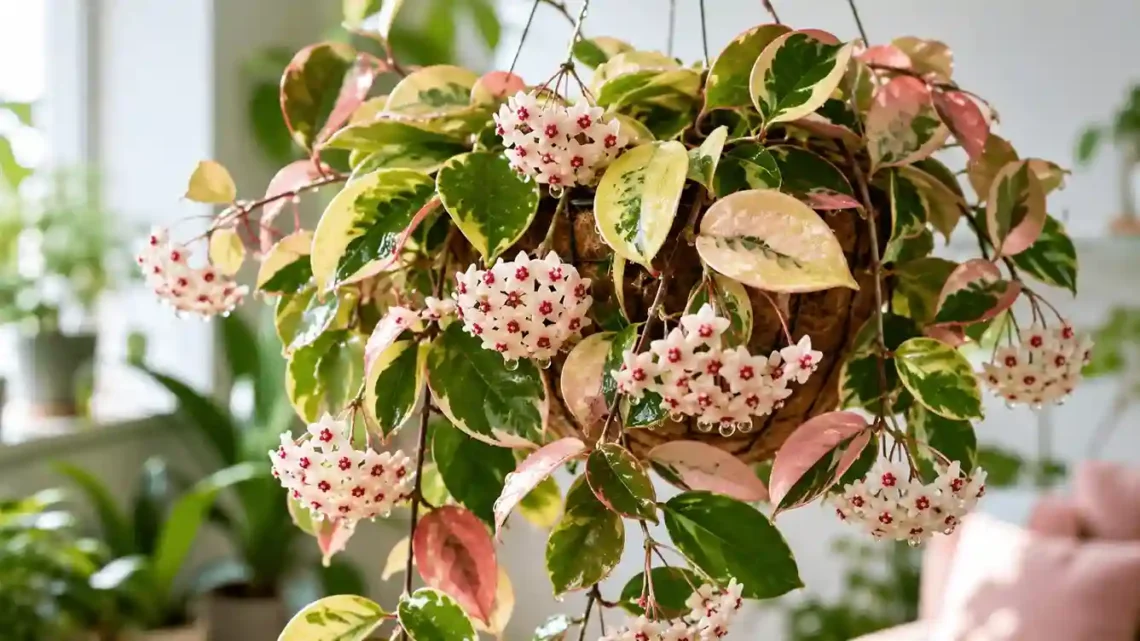
The Hoya australis lisa flower is the bloom produced by Hoya australis ‘Lisa’, a variegated cultivar of the Hoya australis species. Like other types of hoya flowers, these blooms grow in rounded clusters known as umbels.
Each umbel contains approximately 15–30 individual florets. Every floret features a star-shaped outer corolla and a raised central corona, creating the distinctive appearance associated with the hoya australis flower.
The flowers are typically white to pale pink with a reddish-pink center. Their waxy texture gives them a porcelain-like appearance, a characteristic shared by many Hoya species.
Flowers emerge from structures called peduncles, also known as flower spurs. These peduncles are perennial and should never be removed because future blooms develop from the same spur repeatedly.
Hoya Australis Lisa Origin and Background
Hoya australis originates from Australia, Papua New Guinea, and nearby Pacific islands. It belongs to the Apocynaceae family and the Hoya genus, which contains hundreds of tropical and subtropical species.
Hoya australis ‘Lisa’ is not a separate species. Instead, it is a cultivated variety selected for its striking variegated foliage. The leaves display shades of green, cream, yellow, and pink, making the plant highly ornamental even when not flowering.
Understanding the distinction between Hoya australis and Hoya Lisa is important. The species refers to the naturally occurring plant, while ‘Lisa’ refers to the variegated cultivar developed from that species.
What Does the Hoya Australis Lisa Flower Look, Smell, and Feel Like?
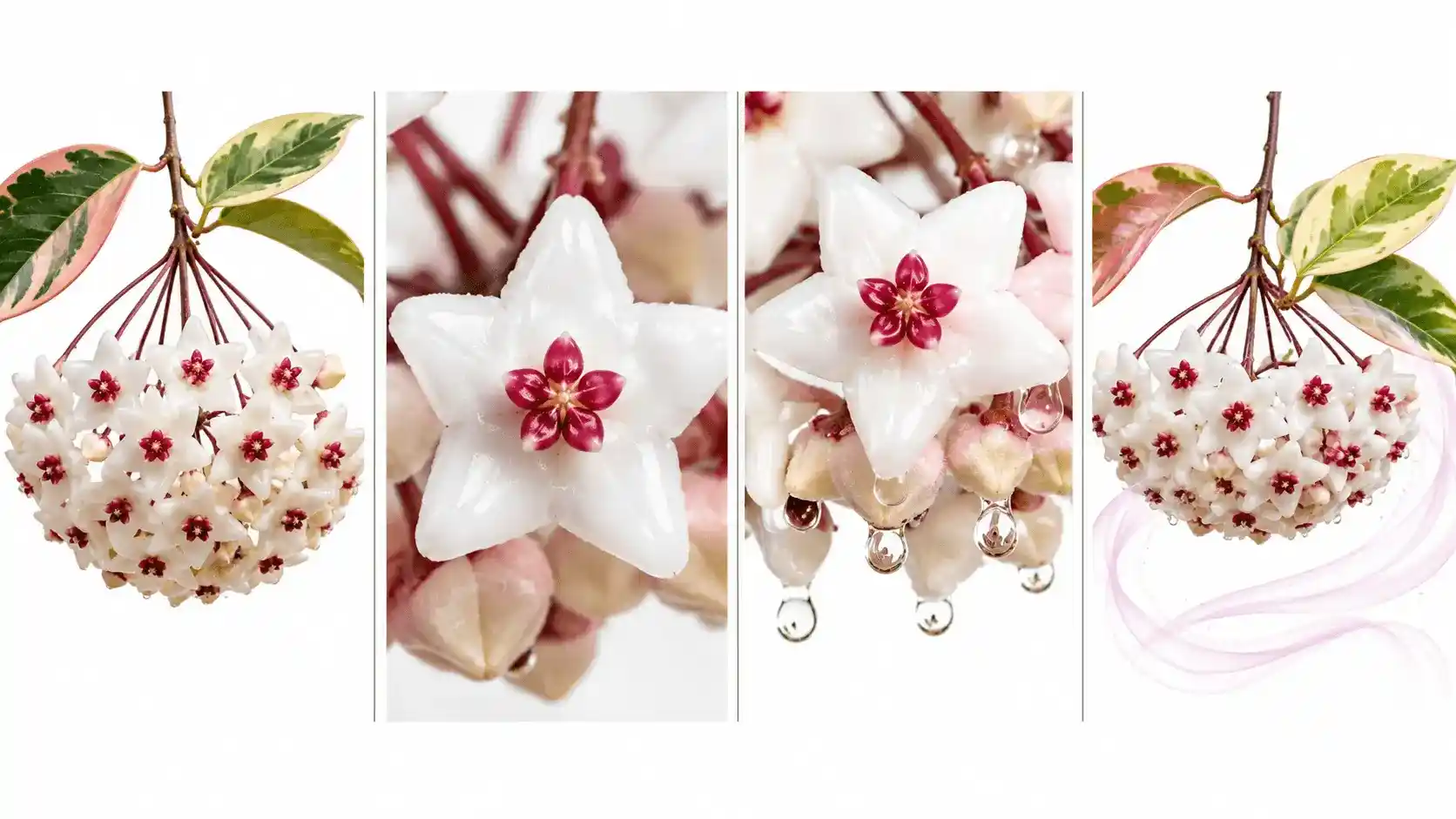
The Hoya Australis Lisa flower is known for its elegant appearance, pleasant fragrance, and waxy texture.
Key Sensory Features
- Spherical umbel clusters containing 15–30 florets
- White petals with deep pink or reddish corona centers
- Porcelain-like appearance
- Sweet honey-vanilla fragrance
- Visible nectar droplets on mature flowers
- Thick, waxy petals with a smooth texture
The hoya australis lisa flower smell is often described as sweet and honey-like with subtle vanilla notes. The scent becomes strongest during evening hours and warm temperatures.
The flowers also produce small nectar droplets that attract pollinators in nature.
How Long Do Hoya Australis Lisa Flowers Last?
Hoya Australis Lisa flowers typically last between one and two weeks per umbel cluster.
The peduncle remains active for future blooming seasons, allowing the plant to produce flowers repeatedly from the same location. Bloom longevity may decrease due to heat stress, low humidity, or moving the plant during flowering.
Hoya Australis Lisa vs. Similar Hoya Varieties
Hoya Australis Lisa vs. Hoya Krimson Princess
The main difference lies in variegation patterns. Hoya Australis Lisa displays yellow, cream, and pink margins, while Krimson Princess develops lighter variegation toward the leaf center.
Both produce fragrant flowers, although Lisa flowers are often considered slightly stronger scented.
Hoya Australis Lisa vs. Hoya Tricolor
Hoya Tricolor typically exhibits green, white, and pink coloration throughout the leaf. Hoya Australis Lisa tends to show more yellow and cream tones.
Tricolor varieties may require slightly more consistent lighting to maintain their coloration.
Hoya Australis vs. Hoya Carnosa
Hoya australis generally develops larger, broader leaves and can grow faster in bright conditions. Hoya carnosa is often more compact and produces denser flower clusters.
Comparison Table
| Feature | Hoya Australis Lisa | Hoya Krimson Princess | Hoya Tricolor | Hoya Carnosa |
| Variegation Location | Leaf margins | Leaf center | Whole leaf | Minimal |
| Flower Color | White + pink corona | White + red corona | White + red corona | White + pink |
| Scent | Strong honey-vanilla | Mild-moderate | Moderate | Mild |
| Care Difficulty | Easy-moderate | Easy-moderate | Moderate | Easy |
| Growth Habit | Trailing | Trailing | Trailing | Trailing |
While often grown indoors, its trailing habit also resembles ornamental grasses like Panicum ‘Cheyenne Sky’ used in landscape layering.
Hoya Australis Lisa Size and Growth Habit
How Large Does Hoya Australis Lisa Get?
Indoors, Hoya Australis Lisa vines can reach 6–10 feet (1.8–3 meters) long over several years.
Its leaves are oval, semi-succulent, and typically measure several centimeters in length. The plant performs exceptionally well in hanging baskets, wall planters, and trellised displays.
Growth Rate of Hoya Australis Lisa
Hoya Australis Lisa is considered a moderate grower.
Growth accelerates during spring and summer under bright conditions. During winter, growth slows significantly. Because variegated leaves contain less chlorophyll, Lisa generally grows more slowly than fully green Hoya australis plants.
Its trailing vines grow similarly to Swedish Ivy, making it ideal for hanging baskets and indoor cascading displays. Like English Ivy Hanging Plant, Hoya australis ‘Lisa’ is widely used for vertical greenery and decorative indoor walls.
How to Care for Hoya Australis Lisa
Light Requirements
Bright indirect light is essential for healthy growth and flowering.
Provide at least 4–6 hours of bright light daily. East-facing and west-facing windows are often ideal. Insufficient light remains the most common reason plants fail to bloom.
Watering
Water deeply and allow the top 1–2 inches of soil to dry before watering again.
Many beginners overwater Hoyas. Slight drought stress can actually encourage flower production.
Soil and Potting
Use a chunky, well-draining mix consisting of:
- Potting soil
- Orchid bark
- Perlite
Keeping the plant slightly root-bound often improves flowering performance.
Humidity and Temperature
Preferred conditions include:
- Humidity: 50–70%
- Temperature: 60–85°F (15–29°C)
Avoid prolonged exposure below 50°F (10°C).
Maintaining ideal humidity levels, similar to recommendations in humidity-increasing guides for indoor plants, significantly improves flowering success.
Fertilization
Apply a balanced or phosphorus-rich fertilizer during spring and summer. Avoid excessive nitrogen, which promotes foliage growth at the expense of flowers.
Similar to Tulsi Plant Care practices, avoiding excessive nitrogen is important to encourage flowering instead of only leafy growth.
Pruning
Minimal pruning is required.
Never remove peduncles because future flower clusters emerge from them. Remove only damaged or dead growth when necessary.
Quick Care Summary Table
| Care Factor | Requirement |
| Light | Bright indirect light, 4–6+ hours |
| Water | When top 1–2 inches dry |
| Soil | Well-draining chunky mix |
| Humidity | 50–70% preferred |
| Temperature | 60–85°F (15–29°C) |
| Fertilizer | Balanced, spring-summer |
| Repotting | Only when root-bound |
Just like in Tomatoes Plant Care Guide, consistent environmental stability plays a key role in successful growth and flowering outcomes.
How to Get Hoya Australis Lisa to Bloom
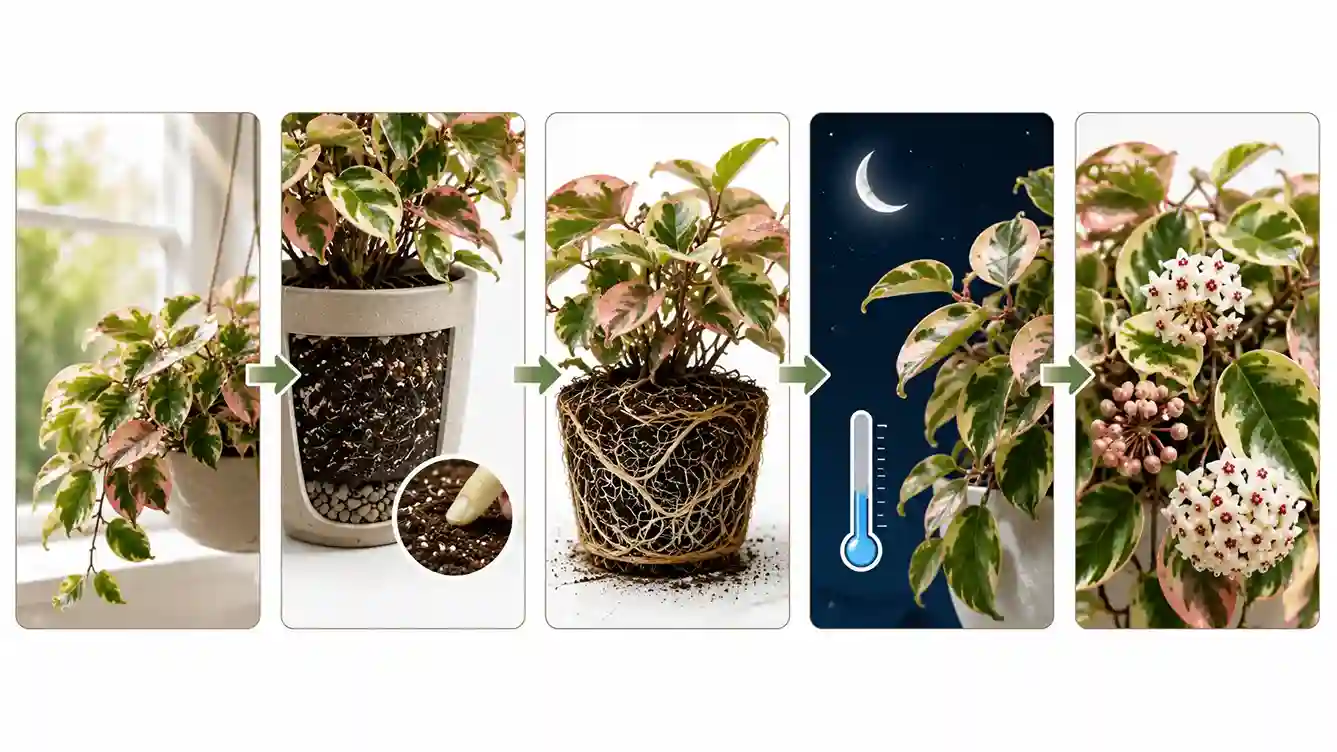
To encourage hoya australis lisa blooms:
- Provide bright indirect light consistently
- Allow mild drought stress before bloom season
- Expose the plant to cooler autumn nights
- Keep the plant slightly root-bound
- Never remove flower spurs
- Use a phosphorus-rich fertilizer in spring
- Avoid moving the plant after buds form
Many plants require 2–3 years from propagation before producing their first flowers.
How to Propagate Hoya Australis Lisa
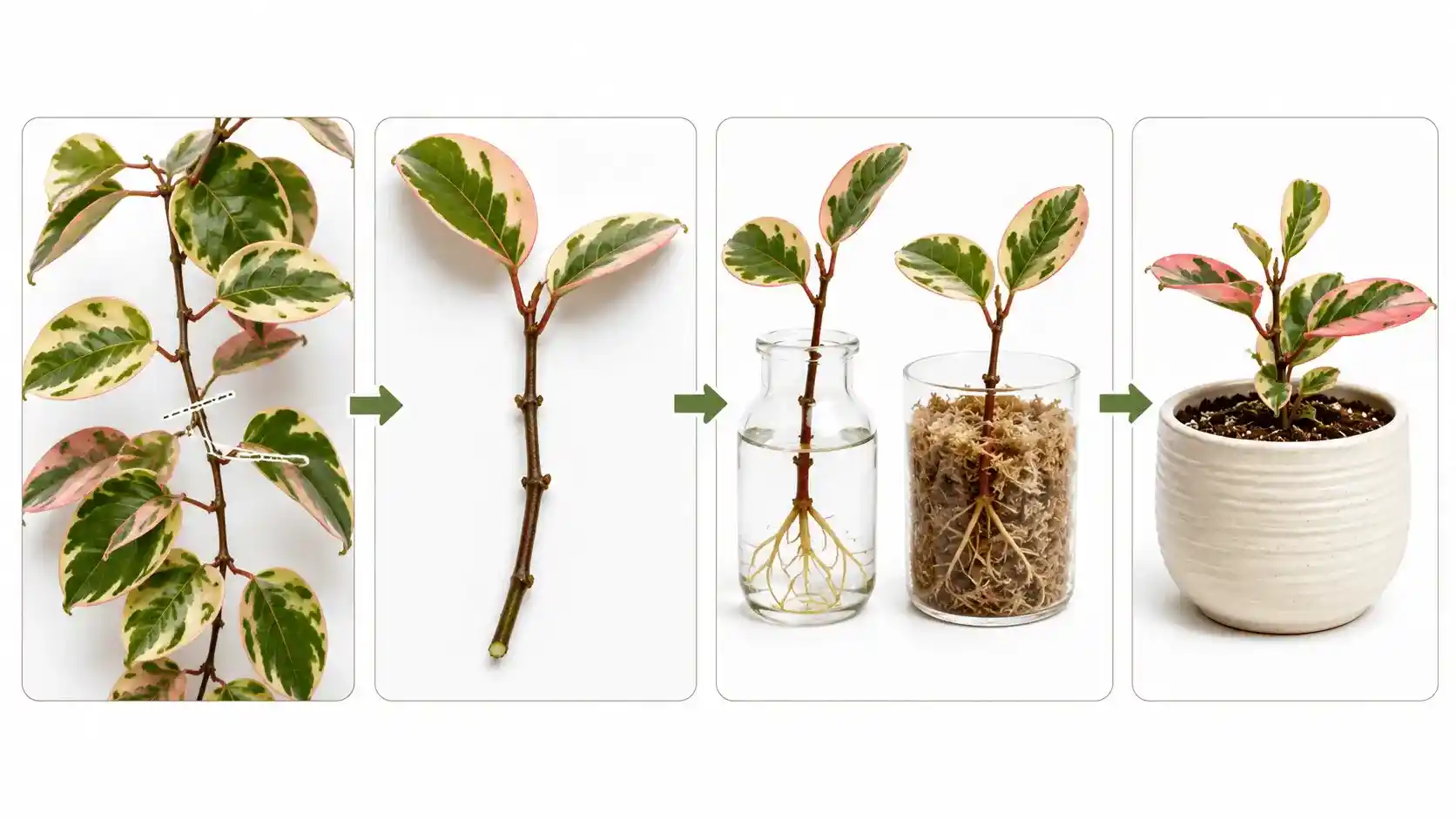
Stem Cutting Propagation (Water or Soil)
- Select a healthy stem with 2–3 nodes.
- Remove lower leaves.
- Allow the cut end to dry for 1–2 hours.
- Place in water or moist sphagnum moss.
- Wait 3–6 weeks for root development.
- Transfer to soil when roots reach 2–3 cm.
Best Season to Propagate
Spring and early summer provide the fastest rooting and highest success rates.
Winter propagation is generally slower and less reliable.
Common Problems with Hoya Australis Lisa and How to Fix Them
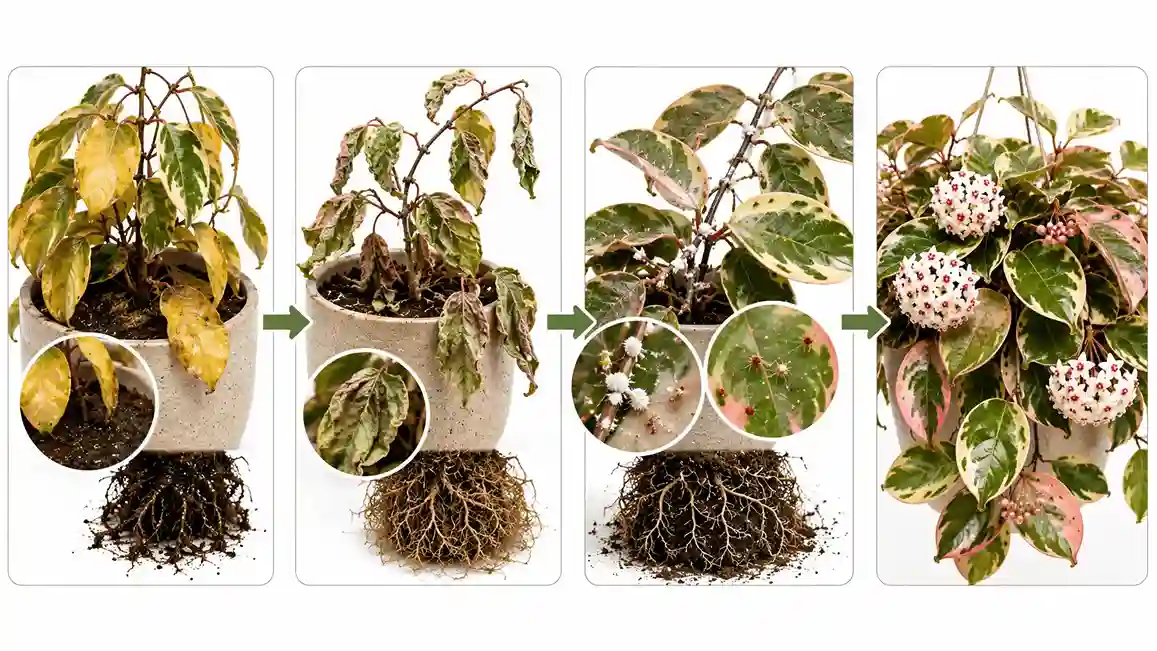
Why Is My Hoya Australis Lisa Not Blooming?
Common causes include insufficient light, excessive nitrogen, oversized pots, or removed peduncles.
Move the plant to brighter conditions and adjust fertilizer practices.
Yellowing Leaves
Usually caused by overwatering, root rot, or nutrient issues.
Check root health and improve drainage.
Wrinkled or Drooping Leaves
Often indicates underwatering or low humidity.
Water thoroughly and monitor environmental conditions.
Pest Problems (Mealybugs, Spider Mites, Fungus Gnats)
Treat infestations using:
- Neem oil
- Insecticidal soap
- Rubbing alcohol
Always quarantine new plants before introducing them indoors.
Bud Drop Before Blooming
Bud drop frequently results from moving the plant, low humidity, or sudden temperature changes.
Keep conditions stable once buds appear.
Is Hoya Australis Lisa Easy to Care For?
Yes, Hoya Australis Lisa is relatively easy to care for.
What Makes It Easy
- Tolerates occasional neglect
- Handles average indoor humidity
- Requires infrequent watering
- Adapts well to containers
What Requires Attention
- Blooming depends heavily on light levels
- Overwatering causes most problems
- Flower spurs must be preserved
It is beginner-friendly for foliage growth but slightly more advanced for reliable flowering.
Hoya Australis Lisa as a Hanging Plant
Hoya Australis Lisa is highly suited to hanging displays because of its trailing growth habit.
Hanging baskets allow vines to cascade naturally while improving airflow around foliage. Trellises can also be used when a more vertical growth pattern is desired.
Proper placement helps maximize light exposure and encourages healthier flowering.
Hoya Australis Lisa Variegated Flower — What Makes It Unique?
The flowers themselves are not variegated. Instead, the unique characteristic of Hoya Australis Lisa is its colorful foliage.
The blooms are essentially identical to standard Hoya australis flowers. However, the combination of fragrant flowers and multicolored leaves creates a highly decorative houseplant.
Because variegated leaves contain less chlorophyll, plants may grow slightly slower and require brighter conditions.
How Long Do Hoya Plants Live?
Hoyas are exceptionally long-lived perennials.
With proper care, many plants survive 20–30 years or longer indoors. Some become treasured heirloom houseplants passed between generations.
Longevity depends on:
- Preventing root rot
- Preserving flower spurs
- Consistent seasonal care
- Proper watering practices
Topical Connections — Hoya Australis Lisa in the Broader Houseplant World
Hoya Australis Lisa occupies a unique place among indoor plants.
It is frequently grouped with:
- Pothos
- String of Pearls
- Tradescantia
- Other trailing tropical plants
The plant is also popular among propagation enthusiasts who trade rooted cuttings within plant communities.
Its fragrant flowers place it alongside indoor favorites such as Jasmine and Gardenia for growers seeking scented houseplants.
Conclusion
The Hoya australis Lisa flower is one of the most rewarding aspects of this beautiful variegated houseplant. Its waxy, star-shaped blooms, sweet fragrance, and long-lasting flower clusters make it highly desirable among indoor gardeners. Success with flowering depends largely on bright indirect light, controlled watering, preserving peduncles, and allowing the plant time to mature. While its colorful foliage alone provides year-round ornamental value, understanding bloom triggers can transform Hoya Australis Lisa from a decorative trailing vine into a reliable flowering specimen that delivers spectacular blooms for many years. Hoya australis ‘Lisa’ is commonly featured in broader guides about plants for homes and gardens due to its decorative foliage and fragrant blooms.
FAQs
What is the difference between Hoya Lisa and Hoya Australis?
Hoya australis is the parent species, while Hoya australis ‘Lisa’ is a variegated cultivar selected for its colorful foliage. Their flowers are essentially the same, but Lisa grows slightly slower because of reduced chlorophyll.
What are the common problems with Hoya Lisa?
Common issues include lack of flowering, yellow leaves from overwatering, bud drop, mealybugs, and root rot. Most problems improve through better light, drainage, and watering management.
How do I get my Hoya Australis Lisa to bloom?
Provide 4–6 hours of bright indirect light, allow slight drought stress, maintain cooler autumn nights, keep the plant root-bound, and never remove flower spurs.
Is Hoya Australis Lisa easy to care for?
Yes. It tolerates average indoor conditions and infrequent watering. Blooming requires additional attention to light and seasonal care, but overall it remains beginner-friendly.
How long do Hoya Australis Lisa flowers last?
Individual umbels generally last 1–2 weeks. The flower spur remains active and can produce future blooms for many years.
What does the Hoya Australis Lisa flower smell like?
The flowers produce a sweet honey-vanilla fragrance that becomes strongest during warm evenings. The scent is noticeable but usually not overpowering indoors.
How do you propagate Hoya Australis Lisa?
Take a stem cutting with 2–3 nodes, root it in water or moist propagation media, and transplant after roots develop. Spring and early summer provide the highest success rates.