Introduction
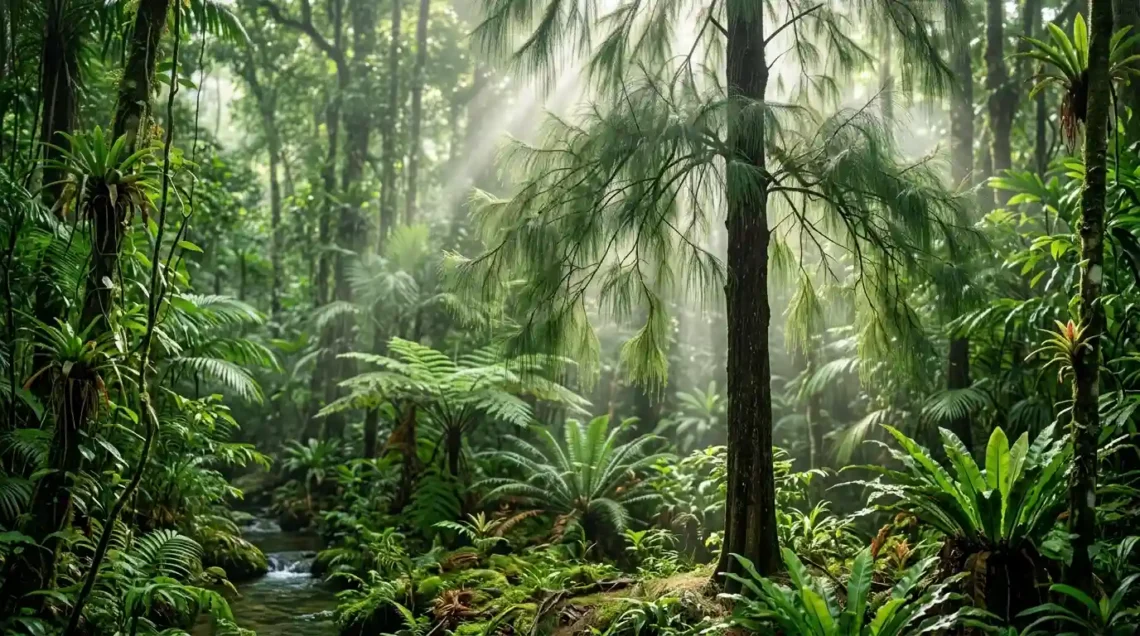
Gymnostoma australianum, commonly known as the Daintree Pine, is a rare Australian rainforest tree native to the tropical regions of Far North Queensland. Despite its common name, it is not a true pine but belongs to the Casuarinaceae family, making it more closely related to she-oaks than to northern hemisphere pines. Found naturally in the Daintree Rainforest, this species is admired for its fine, pendulous foliage and elegant upright form.
In its natural habitat, Gymnostoma australianum plays an important ecological role in rainforest margins and lowland ecosystems. For gardeners and plant collectors, it is valued as an ornamental specimen tree due to its unique texture, adaptability to warm climates, and striking architectural presence in landscapes.
Quick Summary: Gymnostoma Australianum at a Glance
- Gymnostoma australianum (Daintree Pine) is a rare rainforest tree native to Far North Queensland
- It is not a true pine; it belongs to the Casuarinaceae family and is related to she-oaks
- It features fine, weeping branchlets and grows best in warm, humid climates
- Mature trees can reach significant heights, making them ideal for large landscapes
What Is Gymnostoma Australianum?
Gymnostoma australianum is a tropical rainforest tree species belonging to the genus Gymnostoma, within the plant family Casuarinaceae. It is native to the Daintree Rainforest region of Queensland, Australia, where it grows in lowland tropical forest margins and moist, well-drained soils. Gymnostoma australianum belongs to the family Casuarinaceae, a group of nitrogen-fixing trees commonly associated with Australian native ecosystems and rainforest margins.
The common name “Daintree Pine” comes from its superficial resemblance to coniferous pines, particularly its slender, needle-like branchlets. However, botanically, it is not a pine at all. Instead, it belongs to a unique group of Australian and Southeast Asian trees adapted to nutrient-poor soils and tropical environments.
In ecological terms, Gymnostoma australianum contributes to forest structure, soil stability, and biodiversity in rainforest ecosystems, particularly in northern Queensland’s tropical zones.
Gymnostoma vs True Pines — What’s the Difference?
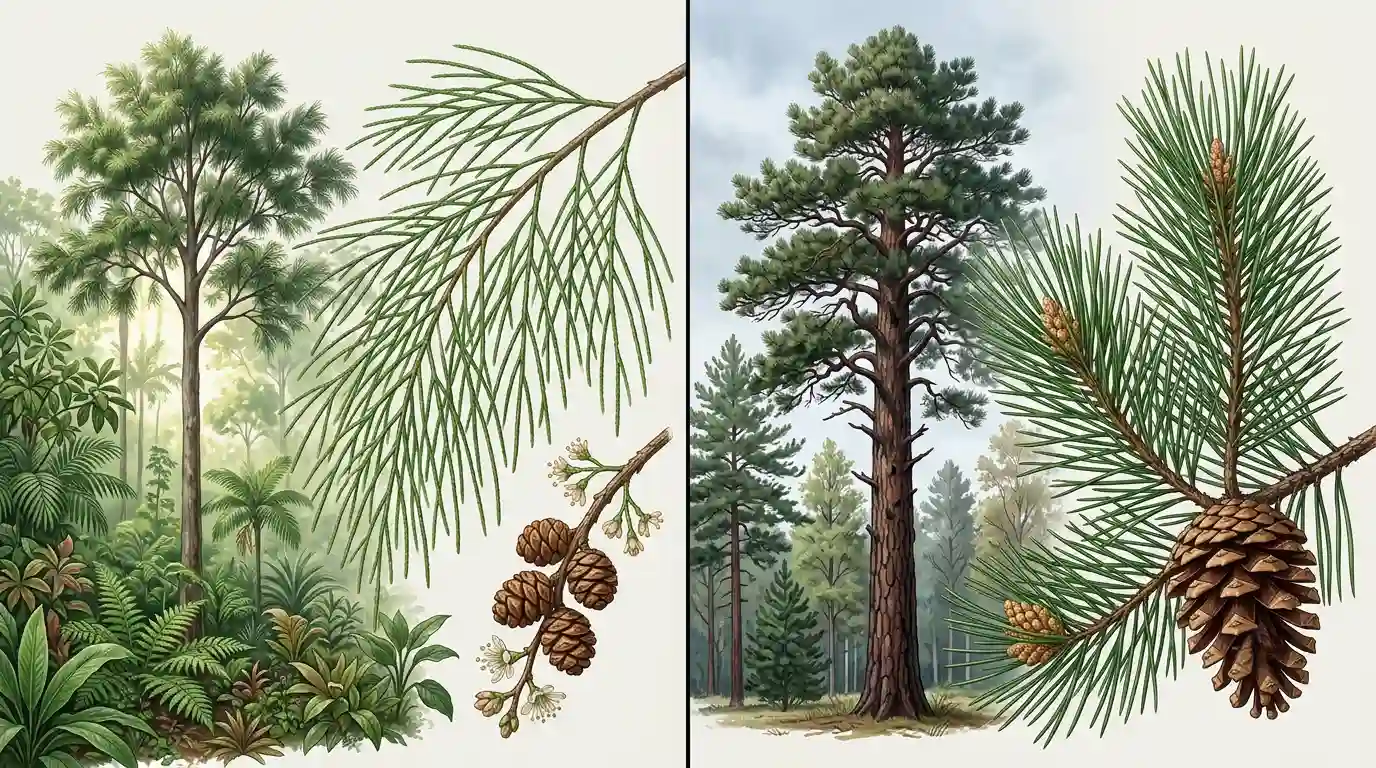
Although Gymnostoma australianum is called a “pine,” it is fundamentally different from true pines (Pinus species).
| Feature | Gymnostoma australianum | True Pine (Pinus spp.) |
| Family | Casuarinaceae | Pinaceae |
| Foliage | Fine, jointed branchlets | True needle leaves |
| Native Region | Far North Queensland, Australia | Northern Hemisphere |
| Cone Type | Small woody cones | Large resinous cones |
| Growth Habit | Tropical rainforest tree | Temperate conifer |
| Rarity | Limited distribution | Widely distributed |
The term “pine” is therefore a misnomer based purely on visual similarity rather than botanical classification. The structure of Gymnostoma branchlets is more segmented and adapted for tropical moisture conditions, unlike the rigid needles of Pinus species.
Gymnostoma Australianum Height — How Tall Does It Grow?
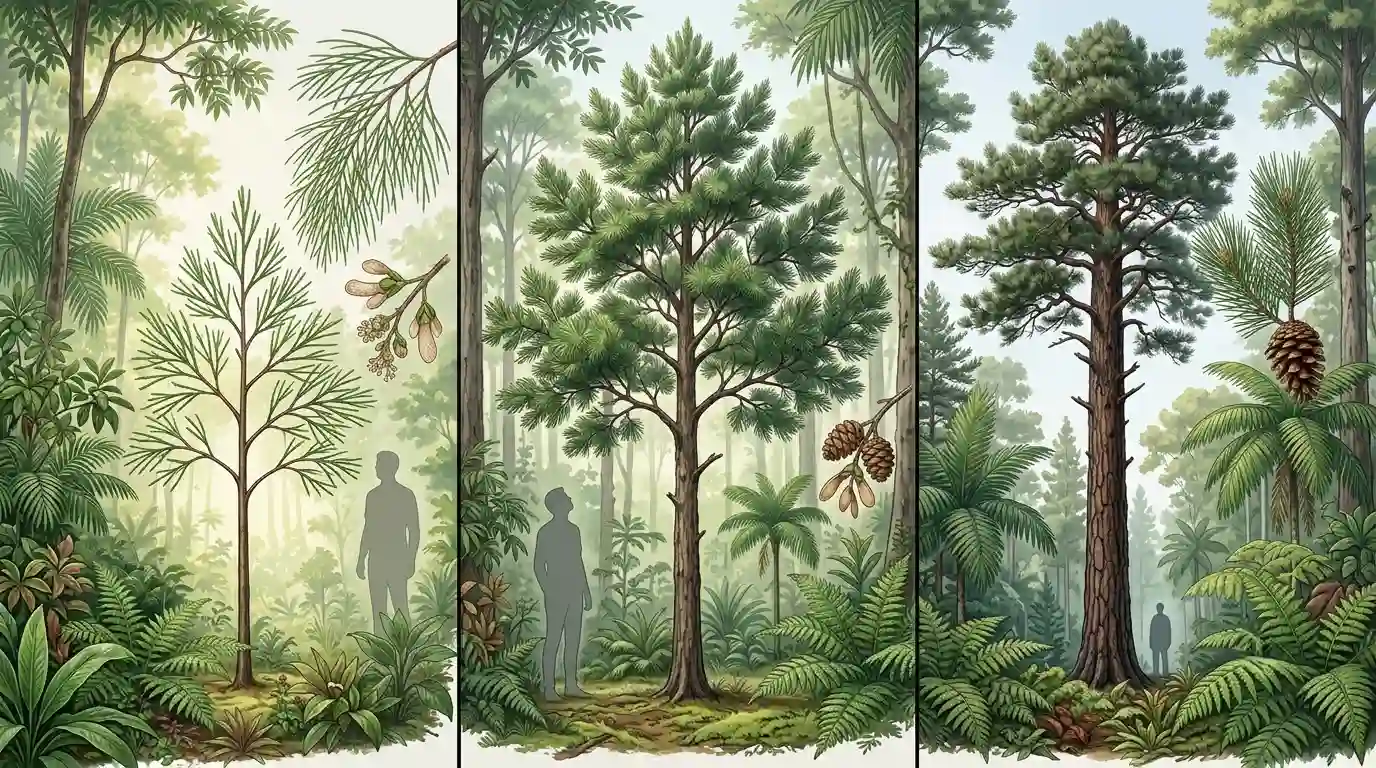
Gymnostoma australianum typically reaches a mature height of 8–20 meters or more, depending on environmental conditions. In ideal rainforest settings with high rainfall and deep soils, it can grow even taller and develop a strong upright canopy structure.
In cultivation, growth height varies significantly:
- In-ground planting: 10–20 m potential height
- Container growth: usually restricted to 2–5 m
- Indoor environments: not suitable for long-term growth
Environmental factors strongly influence its ultimate size, including:
- Soil fertility and drainage
- Annual rainfall and humidity
- Sunlight exposure
- Temperature stability
In our experience growing native Australian rainforest species, Gymnostoma australianum performs best when given space and consistent moisture without waterlogging. Restricted root systems significantly limit its vertical growth.
Growth Rate — Is Daintree Pine Fast or Slow Growing?
Gymnostoma australianum is generally considered a moderate-growing tree, with its fastest growth occurring during warm and wet seasons.
Key growth characteristics:
- Active growth in spring and summer
- Slower development in cooler or dry periods
- Responds positively to humidity and rich organic soils
Growth speed is influenced by:
- Soil quality (nutrient-rich soils accelerate growth)
- Water availability (consistent moisture supports steady development)
- Light exposure (full sun improves vigor)
- Pruning (can encourage branching but may slow height gain temporarily)
For gardeners expecting rapid results, this species requires patience but rewards long-term establishment with a strong, architectural form.
Gymnostoma Australianum Care Guide
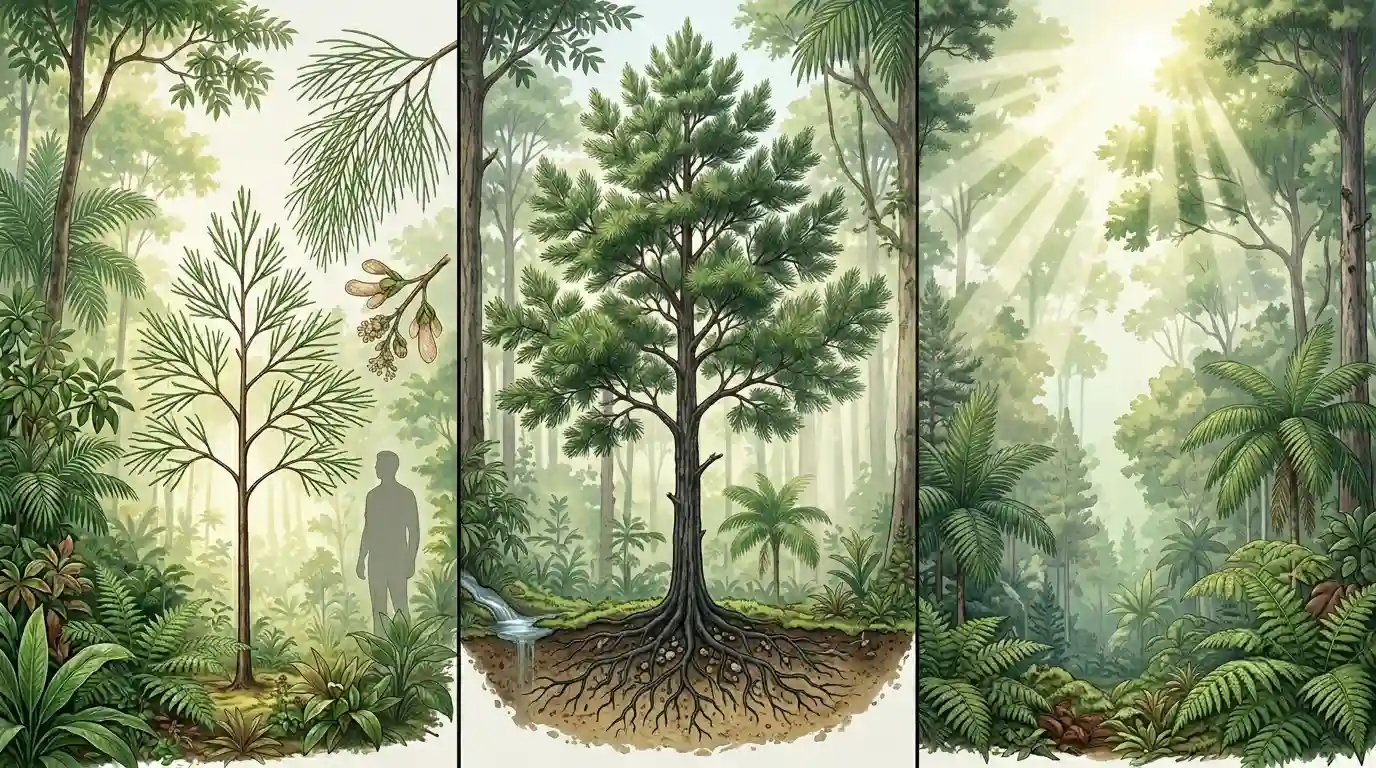
Gymnostoma australianum care is relatively straightforward once environmental conditions are met. It thrives best in warm, humid climates with well-drained soils and minimal nutrient interference. Gymnostoma australianum shares several care traits with other Australian native ornamentals commonly found in rainforest and garden landscapes.
Sunlight Requirements
Gymnostoma australianum grows best in full sun to partial shade conditions. Full sun encourages denser foliage and stronger structural growth, while partial shade may result in slightly looser branching.
- Full sun: optimal growth and form
- Partial shade: slower but stable growth
- Deep shade: weak, sparse development
Watering Needs
This species prefers consistent moisture without waterlogging.
- Keep soil evenly moist during establishment
- Reduce watering once established in natural rainfall zones
- Avoid standing water or soggy root zones
In its natural rainforest habitat, rainfall is frequent but soil drainage is excellent, which is the key balance to replicate.
Soil Preferences
Gymnostoma australianum prefers:
- Well-draining soils
- Slightly acidic pH
- Sandy-loam or loamy textures with organic matter
Like many Australian native trees, its performance improves significantly when grown under conditions similar to other drought-adapted and rainforest-edge species.
Poor performance is common in heavy clay unless heavily amended with:
- Compost
- Coarse sand
- Organic mulch
Fertilization
As a native Australian plant, it requires low-phosphorus fertilizers.
- Apply native plant fertilizer in spring and summer
- Avoid high-phosphorus general fertilizers
- Do not over-fertilize, as it may damage root systems
Pruning and Maintenance
Pruning is optional but can be used for shaping.
- Light pruning to maintain structure
- Remove damaged or crossing branches
- Best done after active growth season
Heavy pruning is not recommended, as it may stress the tree.
Climate Tolerance
Gymnostoma australianum thrives in:
- Tropical and subtropical climates
- Warm, humid environments
It is not frost-tolerant and may suffer damage in cold temperatures. Prolonged exposure to frost can be fatal, making it unsuitable for temperate regions without protection.
Gymnostoma Australianum Varieties
There are no widely recognized horticultural cultivars of Gymnostoma australianum. Most variation occurs naturally within wild populations rather than through selective breeding.
Within the broader Gymnostoma genus, several related species exist, each adapted to different tropical regions.
Gymnostoma Genus Overview — Species Comparison
| Species | Native Region | Key Characteristics |
| Gymnostoma australianum | Far North Queensland, Australia | Most commonly referenced Daintree Pine |
| Gymnostoma deplancheanum | New Caledonia | Similar fine foliage, less cultivated |
| Gymnostoma papuanum | Papua New Guinea | Larger rainforest species with robust growth |
These species share similar structural traits but differ in size, distribution, and ecological adaptation.
Is Gymnostoma Australianum Invasive?
Gymnostoma australianum is not considered invasive. It has a naturally restricted distribution in the Daintree region and does not exhibit aggressive spreading behavior outside its native habitat.
In cultivation:
- It grows steadily but not invasively
- Does not dominate surrounding vegetation
- Requires suitable tropical conditions to establish
There are no major regulatory concerns regarding its cultivation in Australia, and it is generally regarded as an ecologically safe native species. Its limited ecological range actually contributes to its rarity and conservation interest.
Common Gymnostoma Australianum Problems
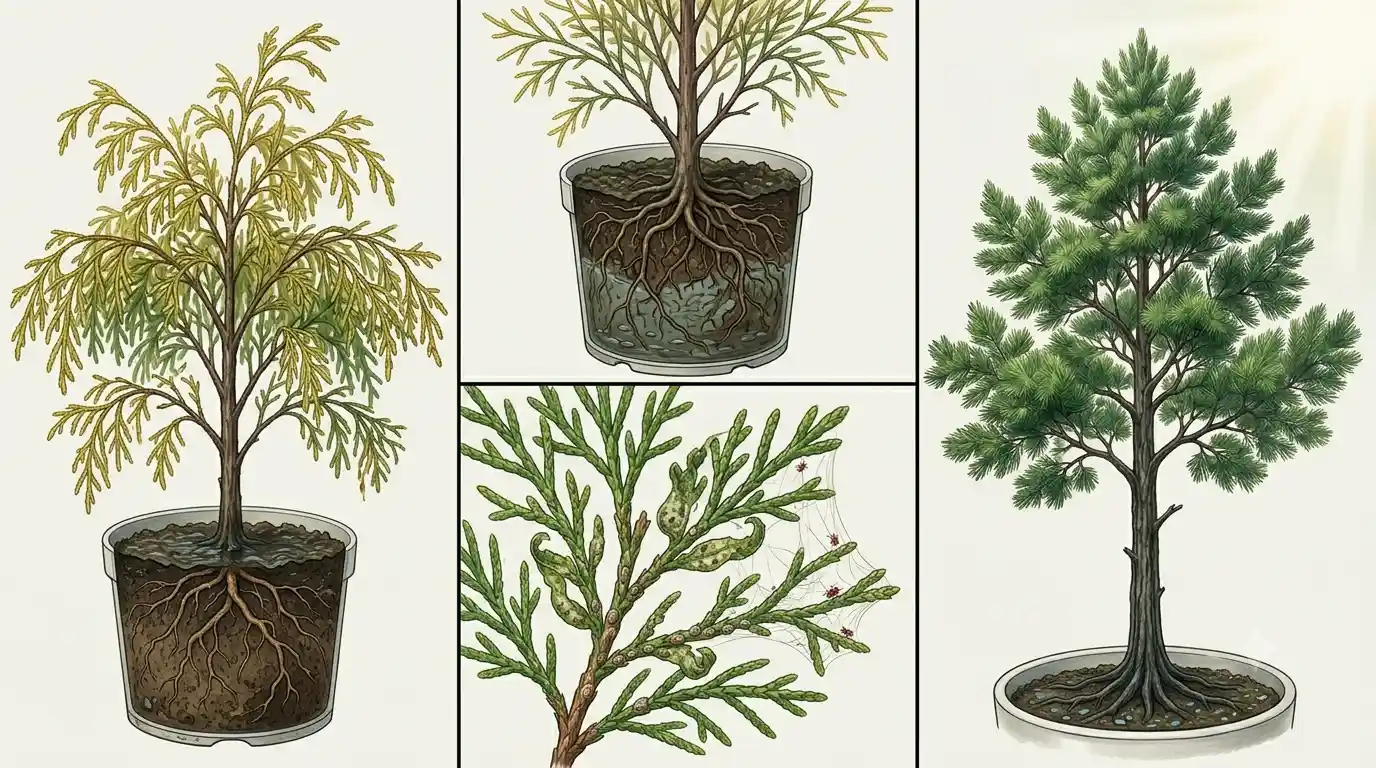
Like many rainforest species, Gymnostoma australianum may experience issues when grown outside its ideal conditions. Many cultivation issues seen in Gymnostoma australianum are also common in other Australian native plants when grown outside their natural habitat conditions.
Yellowing Foliage / Needle Drop
Causes:
- Overwatering
- Nutrient deficiency
- Transplant shock
Symptoms:
- Pale or yellowing branchlets
- Premature shedding
Fix:
- Improve drainage
- Adjust watering schedule
- Apply mild native fertilizer
Root Rot and Drainage Issues
Causes:
- Waterlogged soil
- Poor drainage in containers
Symptoms:
- Wilting despite moist soil
- Dark, mushy roots
Fix:
- Repot with improved drainage mix
- Reduce watering frequency
Pest Issues
Common pests include:
- Scale insects
- Spider mites
- Occasional borers
Management:
- Neem oil applications
- Horticultural oil sprays
- Regular inspection of foliage
Slow or Stunted Growth
Causes:
- Poor soil quality
- Low light conditions
- Nutrient imbalance
Fix:
- Improve sunlight exposure
- Add organic soil amendments
- Correct fertilization practices
Rare Pine Tree Australia — Why It Is Considered Rare
Gymnostoma australianum is considered rare due to its limited natural distribution in the Daintree Rainforest region. It is not widespread across Australia and occurs only in specific ecological niches within Far North Queensland. Its rarity aligns with other region-specific Australian native flora that are valued in conservation-focused landscaping and biodiversity gardening.
In botanical terms, rarity is defined by:
- Geographic restriction
- Limited population density
- Specialized habitat requirements
This species is sought after by collectors due to its:
- Unique appearance
- Ecological significance
- Limited availability in cultivation
Its rarity also highlights the importance of rainforest conservation in maintaining biodiversity within Australia’s tropical ecosystems.
Growing Gymnostoma Australianum at Home — Beginner Mistakes to Avoid
Many cultivation failures occur due to mismatched environmental conditions.
Common mistakes include:
- Planting in frost-prone areas without protection
- Using high-phosphorus general fertilizers
- Overwatering in poorly drained soils
- Expecting rapid growth without establishment time
- Treating it like a true pine tree in care routines
In our experience working with Australian native trees, the most common issue is poor drainage combined with overwatering, which quickly leads to root stress and decline.
Successful cultivation depends on replicating warm, humid rainforest-like conditions.
Conclusion
Gymnostoma australianum, or the Daintree Pine, is a rare and ecologically significant Australian rainforest tree with a distinctive appearance and strong ornamental value. Despite its common name, it is not a true pine but belongs to the Casuarinaceae family, making it more closely related to she-oaks.
When grown in suitable tropical or subtropical climates, it thrives with minimal intervention, provided it has well-drained soil, moderate moisture, and low-phosphorus nutrition. Its rarity, combined with its architectural beauty, makes it a valuable addition to native plant collections and large landscape designs.
For gardeners seeking a unique, low-maintenance native tree with strong ecological identity, Gymnostoma australianum offers both visual appeal and conservation significance.
Frequently Asked Questions About Gymnostoma Australianum
What is Gymnostoma australianum commonly called?
It is commonly called the Daintree Pine, named after the Daintree Rainforest in Far North Queensland where it naturally occurs.
How tall does a Daintree Pine grow?
It typically grows between 8–20 meters in natural conditions, but may remain smaller in cultivation depending on environment and space.
Is Gymnostoma australianum a true pine tree?
No, it is not a true pine. It belongs to the Casuarinaceae family, not Pinaceae, and only resembles pines visually.
Is the Daintree Pine suitable for home gardens?
Yes, but only in tropical or subtropical climates with enough space and well-drained soil. It is not suitable for frost-prone regions.
Is Gymnostoma australianum invasive in Australia?
No, it is not invasive. It has a limited natural range and does not spread aggressively in cultivation.
What are the most common problems with Gymnostoma australianum?
The most common issues are root rot, yellowing foliage, and pest infestations, usually caused by poor drainage or incorrect care.
What climate does Gymnostoma australianum grow best in?
It grows best in warm, humid tropical to subtropical climates and is sensitive to frost and prolonged cold conditions.