Introduction
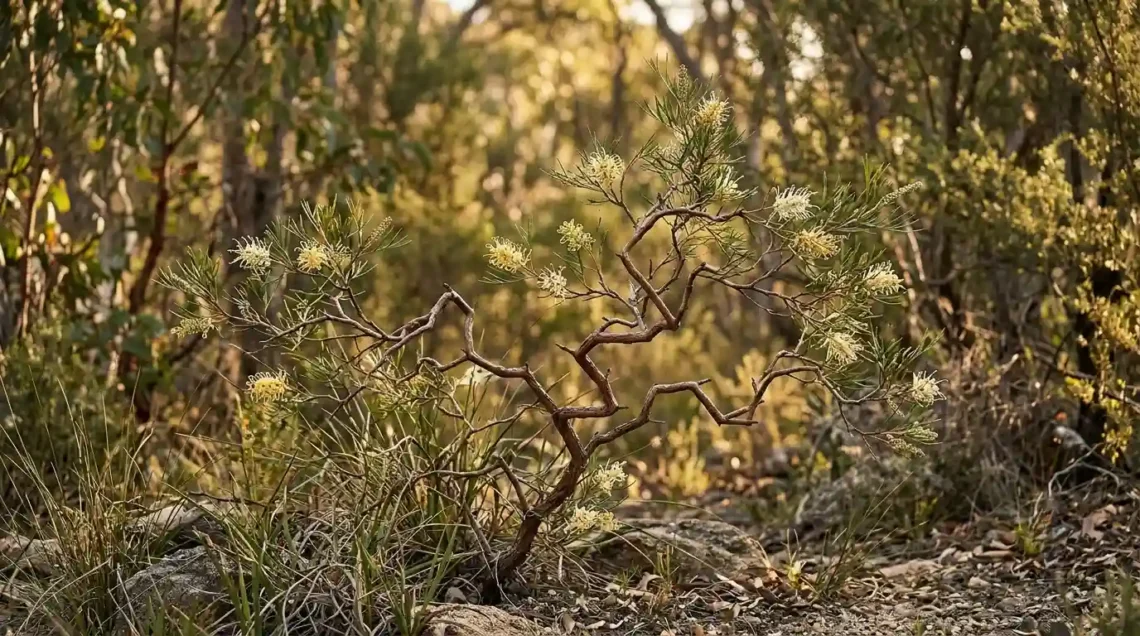
Zig zag grevillea (Grevillea flexuosa) is a distinctive Australian native shrub known for its unusual zigzagging branch structure and ecological value in native landscapes. The zig zag grevillea is appreciated for its sculptural growth habit, wildlife-friendly flowers, and adaptability to low-maintenance gardens.
This plant belongs to the Proteaceae family and is endemic to Western Australia, where it thrives in nutrient-poor, well-drained soils. Its most recognisable feature is its sharply angled stems that create a zigzag pattern along each branch, making it highly ornamental even when not in bloom. Grevillea species belong to the Proteaceae family, a major group of Australian flowering plants. Learn more about the family here: Proteaceae.
By Greenery Inside | Plant Care & Gardening Expert
Last Updated: June 2026
Quick Summary
- Zig zag grevillea (Grevillea flexuosa) is a native Australian shrub named for its distinctively angled, zigzagging stems.
- It produces ornamental grevillea flowers that attract nectar-feeding birds and insects, making it valuable for wildlife gardens.
- As a compact grevillea bush, it suits both natural landscaping and formal garden borders.
- It is well-adapted to low-rainfall, well-drained soils and is considered a low-maintenance grevillea plant for Australian conditions.
What Is Zig Zag Grevillea?
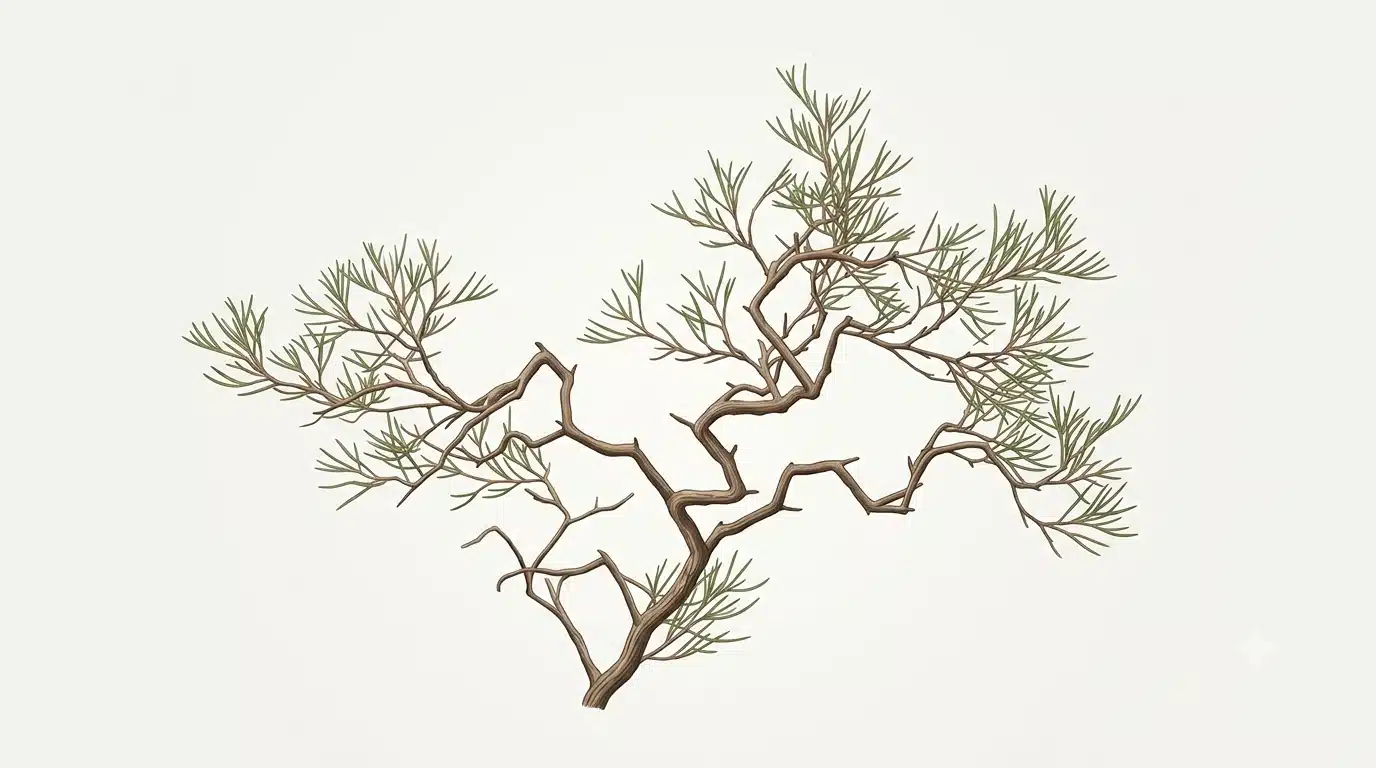
Zig zag grevillea (Grevillea flexuosa) is a native shrub from the Grevillea genus within the Proteaceae family. The term “flexuosa” refers to its flexible, bending, or irregular stem growth pattern, which directly describes its zigzag structure. The common name “zig zag grevillea” comes from this visually striking branching habit.
This species is native to Western Australia and naturally occurs in nutrient-poor sandy soils where many other ornamental plants struggle. It is valued for its resilience, ecological role, and sculptural appearance in native gardens.
Botanical Classification and Native Range
Zig zag grevillea belongs to:
- Family: Proteaceae
- Genus: Grevillea
- Species: flexuosa
It is native to the southwest regions of Western Australia, particularly in the Wheatbelt biodiversity zones. These areas are characterised by dry summers, sandy soils, and seasonal rainfall patterns.
Related Western Australian grevilleas such as grevillea synapheae and grevillea intricata share similar environmental adaptations, including drought tolerance and preference for low-phosphorus soils. These species often co-exist in similar ecological zones and contribute to diverse native shrubland ecosystems.
What Makes It Different from Other Grevillea Varieties?
The most distinctive feature of zig zag grevillea is its angular, zigzag branching pattern. Unlike many weeping grevillea varieties that have drooping, flowing stems, Grevillea flexuosa grows in a structured, irregular form that creates a sculptural silhouette.
Compared to ornamental species like grevillea catkin, which produces elongated flowering structures, zig zag grevillea is more valued for its architectural branching than floral density. This makes it a standout choice among grevillea plants in Australia for structural landscaping.
Zig Zag Grevillea Size and Growth Habit
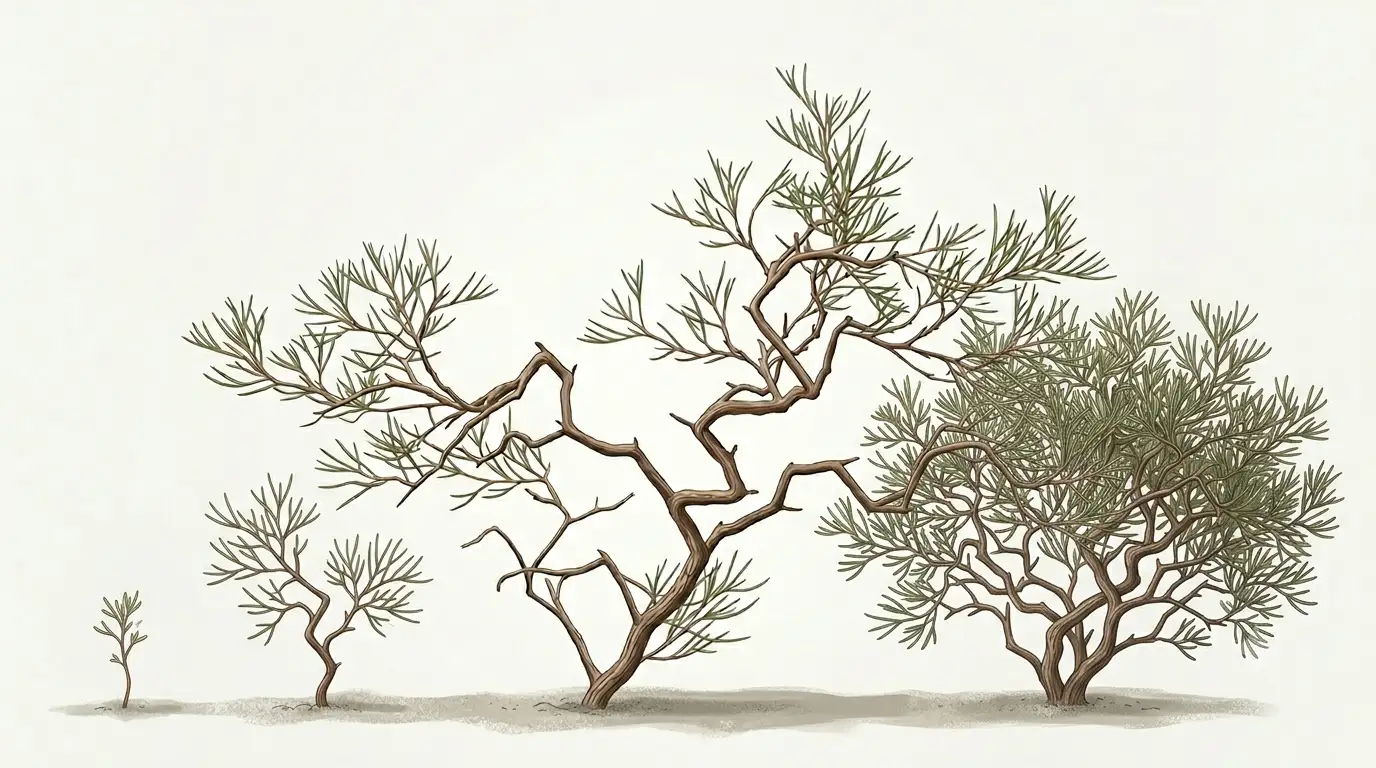
Zig zag grevillea is generally classified as a compact to medium-sized shrub. It grows as a woody perennial shrub rather than a tree or groundcover plant.
In most conditions, it develops a naturally open structure with visible branching patterns, making it suitable for feature planting in native gardens.
Zig Zag Grevillea Height — What to Expect at Maturity
At maturity, zig zag grevillea typically reaches:
- Height: 1–2 metres
- Spread: 1–1.5 metres
Its final size depends heavily on soil fertility, sunlight exposure, and pruning frequency. In nutrient-rich or irrigated environments, it may grow slightly larger, while in dry native conditions it remains compact.
Growth Rate — Slow, Moderate, or Fast?
Zig zag grevillea has a moderate growth rate. It establishes slowly in its early years, focusing energy on root development before above-ground expansion.
Growth is most active during cooler and wetter months, while summer growth slows significantly. Well-drained soil and full sun exposure can significantly improve establishment speed and long-term plant health.
Grevillea Flower — Appearance, Colour, and Bloom Season
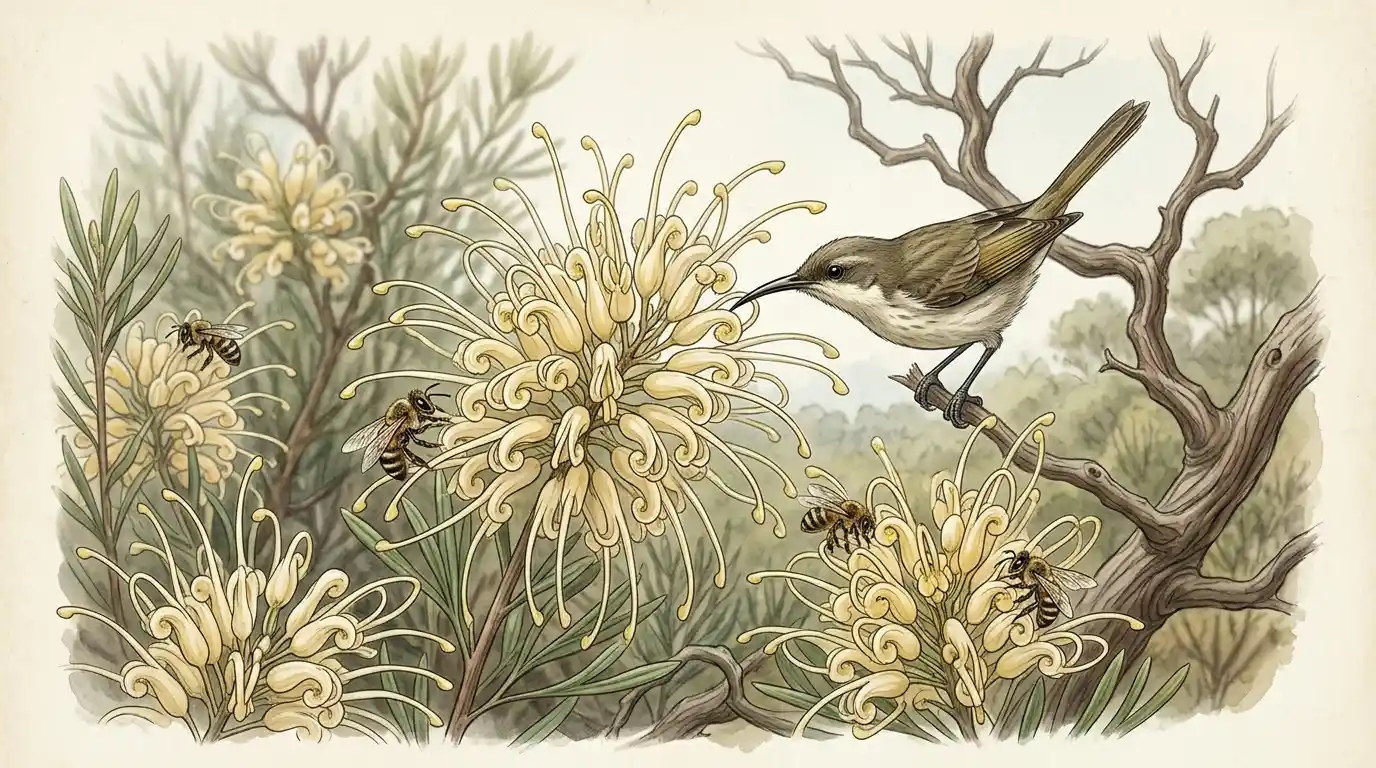
The grevillea flower of Grevillea flexuosa is typically spider-like or toothbrush-shaped, a common floral structure within the Grevillea genus. The flowers are usually pale yellow to cream, depending on local growing conditions.
Blooming generally occurs in spring through early summer, although flowering may vary slightly depending on climate and rainfall patterns.
The flower structure is designed for nectar access, making it highly attractive to wildlife. Nectar is produced at the base of the floral tube, encouraging interaction with pollinators.
Wildlife and Pollinator Value
Zig zag grevillea plays an important ecological role in supporting native wildlife. Its flowers attract:
- Honeyeaters (native nectar-feeding birds)
- Bees and native insects
- Occasional small pollinating beetles
In our experience growing native gardens, grevillea flexuosa consistently draws bird activity during peak flowering periods, especially in low-disturbance habitats. This makes it an excellent choice for wildlife-friendly planting schemes.
How to Grow Zig Zag Grevillea — Care Guide
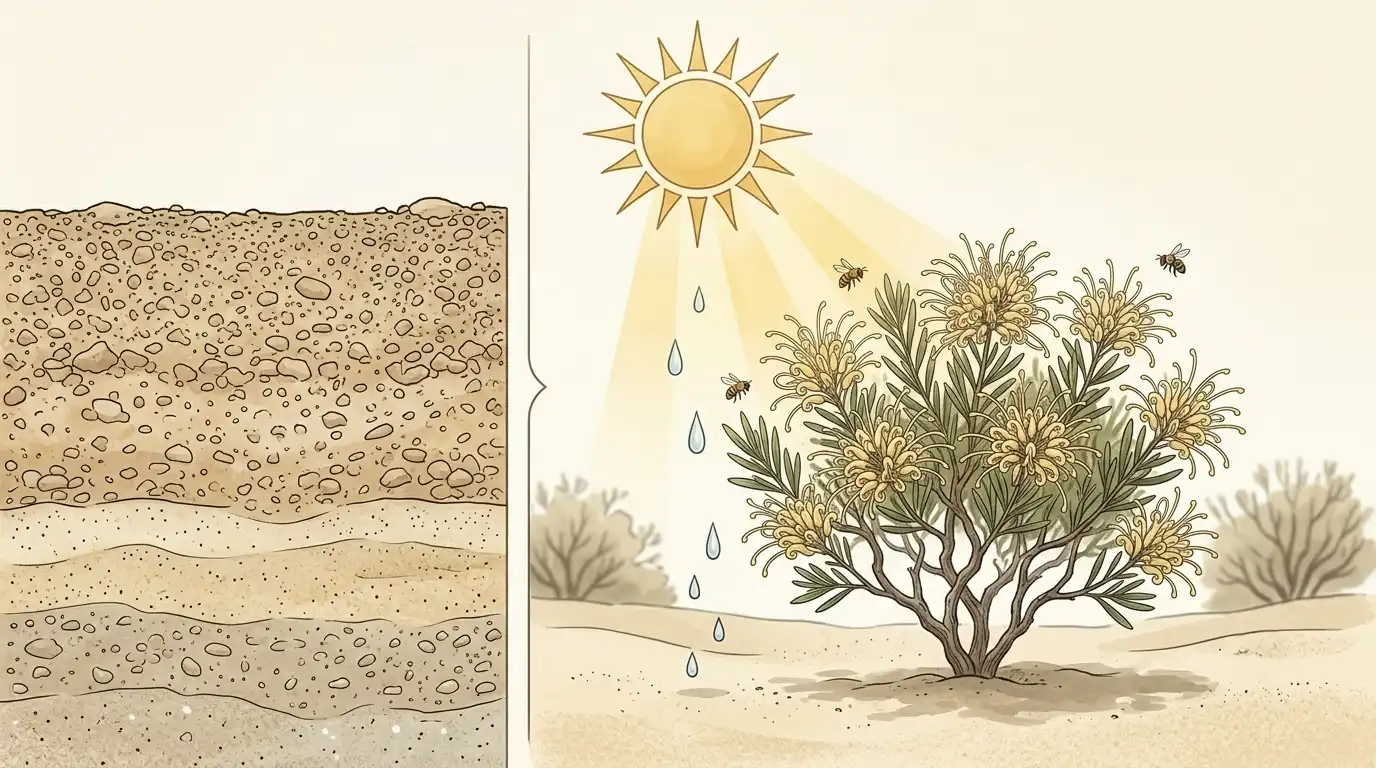
Zig zag grevillea is a low-maintenance plant when grown under the right conditions. It thrives in environments that mimic its natural Australian habitat.
Zig zag grevillea shares similar low-maintenance growing requirements with other Australian natives such as Silky Emu Bush (Eremophila nivea Care & Guide), Acacia Little Nugget Care Guide & Growth Tips, and Hovea acutifolia Care and Growing Guide, all of which thrive in well-drained soils and full sun conditions.
Soil Requirements and Drainage
It prefers:
- Well-drained sandy or loamy soils
- Slightly acidic conditions
- Low phosphorus levels
Heavy clay soils or waterlogged conditions should be avoided, as they can quickly lead to root stress and decline.
Watering Needs
Once established, zig zag grevillea is highly drought-tolerant. During the first 6–12 months, regular deep watering is essential to support root establishment. Mature plants require minimal supplemental watering except during prolonged dry periods.
Overwatering is one of the most common causes of plant failure.
Sunlight and Climate Tolerance
This species performs best in full sun conditions. It tolerates warm, dry climates typical of many Australian regions.
It has moderate frost tolerance but may require protection in areas with severe or prolonged frost events.
Fertilisation and Soil Nutrition
Grevilleas are highly sensitive to phosphorus. Only use:
- Native plant fertilisers
- Low-phosphorus formulations
Standard garden fertilisers can cause root burn and long-term damage.
Pruning Zig Zag Grevillea
Pruning should be done lightly after flowering. This encourages denser growth and maintains shape without disrupting its natural zigzag structure. Hard pruning is generally unnecessary unless rejuvenation is required.
Zig Zag Grevillea in Landscape Design
Zig zag grevillea is widely used in native and drought-tolerant landscaping designs. Its sculptural form makes it suitable as a feature plant or structural backdrop in mixed native gardens.
It works well in:
- Wildlife gardens
- Low-water landscapes
- Native shrub borders
- Habitat restoration planting
It is commonly used alongside other native landscape plants featured in Australian native garden trees, and pairs well with species like Grass Trees Perth: Care, Cost & Buying Guide and Pimelea Snowball Care, Growth & Guide for Gardeners to create drought-tolerant native garden ecosystems.
Using Grevillea as a Hedge or Screen
While not a traditional dense hedge plant, zig zag grevillea can be used in informal hedging. Spacing plants approximately 1 metre apart allows partial screening while maintaining airflow and structure.
Compared to denser grevillea hedges, it offers a more natural and architectural appearance rather than a clipped hedge form.
Companion Planting with Australian Natives
It pairs well with other Australian native plants such as:
- Kangaroo paw
- Banksia species
- Lomandra grasses
These combinations create layered, drought-resilient garden ecosystems that support biodiversity.
Zig Zag Grevillea vs. Related Species — Key Comparisons
| Feature | Grevillea flexuosa (Zig Zag) | Grevillea synapheae | Grevillea intricata |
| Common name | Zig Zag Grevillea | Catkin Grevillea | Tangled Grevillea |
| Native region | SW Western Australia | Western Australia | Western Australia |
| Height | ~1–2 m | ~0.5–1 m | ~0.5–1.5 m |
| Flower type | Spider/toothbrush | Catkin-style | Small clustered |
| Key feature | Zigzag branching | Pendulous flower spikes | Dense tangled habit |
| Wildlife value | High | Moderate | Moderate |
All three species share adaptation to low-phosphorus soils and dry Australian environments. Grevillea catkin is particularly noted for its hanging flower spikes, which contrast with the structural branching of zig zag grevillea.
Weeping Grevillea Varieties vs. Zig Zag Grevillea
Weeping grevillea varieties differ significantly in structure compared to zig zag grevillea. While weeping forms have cascading, downward growth, Grevillea flexuosa maintains upright, angular branching.
For broader grevillea diversity and cold-tolerant species comparisons, see Frost Hardy Grevilleas Guide: Best Cold Climate Varieties, which highlights structural and climatic variations across the genus.
Weeping varieties such as Grevillea ‘Noellii’ are typically used for soft landscaping effects, whereas zig zag grevillea is used for architectural structure and visual contrast.
What Is a Weeping Grevillea?
A weeping grevillea is defined by its drooping branches and flowing growth habit. These plants are often larger and require different pruning approaches compared to compact shrubs like zig zag grevillea.
Grafted Grevillea flexuosa — What It Means and Why It Matters
A grafted grevillea flexuosa is a plant that has been joined onto a hardy rootstock. This technique improves adaptability to different soil conditions and increases overall plant resilience.
Benefits of Buying a Grafted Grevillea flexuosa
- Improved tolerance to heavier or variable soils
- Increased growth vigour in non-native environments
- Longer lifespan in challenging landscapes
- Better performance outside natural Western Australian soils
Grafted forms are often preferred by landscapers for reliability and consistency.
Common Problems with Zig Zag Grevillea and How to Fix Them
Yellowing Leaves — Causes and Solutions
The most common cause is phosphorus toxicity from inappropriate fertilisers. Other causes include poor drainage or nutrient imbalance. Switching to native fertilisers and improving soil structure usually resolves the issue.
Root Rot and Overwatering
Root rot develops in poorly drained soils. Symptoms include wilting, yellowing, and plant collapse. Improving drainage and reducing watering frequency are essential corrective steps.
Pests and Disease on Grevillea Plants
Common issues include:
- Scale insects
- Grevillea looper caterpillars
- Fungal infections in humid conditions
Treatment includes horticultural oils, pruning affected areas, and improving airflow.
Poor Flowering or Slow Growth
This is often caused by:
- Excess shade
- Incorrect fertilisation
- Improper pruning timing
Relocating the plant to full sun and adjusting soil nutrition usually improves flowering performance.
Conclusion
Zig zag grevillea (Grevillea flexuosa) is a uniquely structured Australian native shrub valued for its zigzag branching habit, wildlife-supporting flowers, and adaptability to dry conditions. Its ornamental form, ecological benefits, and low-maintenance nature make it an ideal choice for native gardens, hedging, and landscape design. Overall, it remains one of the most distinctive and functional grevillea plants for Australian-style landscaping.
FAQs
Q1: What is the difference between zig zag grevillea and grevillea flexuosa?
They are the same plant. Zig zag grevillea is the common name, while Grevillea flexuosa is its scientific name.
Q2: How tall does zig zag grevillea grow?
It typically grows 1–2 metres tall, depending on soil, climate, and pruning conditions.
Q3: Is zig zag grevillea suitable for hedging?
Yes, but it forms an informal hedge rather than a dense clipped screen.
Q4: What is the difference between grevillea synapheae and grevillea intricata?
Grevillea synapheae has catkin-like flowers, while grevillea intricata has a denser tangled habit.
Q5: Why are the leaves on my grevillea turning yellow?
This is usually caused by phosphorus toxicity or poor drainage.
Q6: What does grafted grevillea flexuosa mean and is it better?
It means the plant is joined to a hardy rootstock, improving soil adaptability and performance.
Q7: When does zig zag grevillea flower?
It typically flowers in spring to early summer, depending on climate conditions.