Introduction
Feature shrubs are ornamental plants selected to become visual focal points within a landscape. Unlike ordinary garden shrubs that simply fill space, feature shrubs attract attention through striking flowers, colourful foliage, unique textures, sculptural shapes, or year-round structure. In Australian gardens, many homeowners choose Australian native shrubs because they combine beauty with drought tolerance, low maintenance, and wildlife value. While both native and exotic species can serve as feature plants or even complement a feature tree, native shrubs are especially well adapted to Australia’s diverse climates and soils, making them an excellent long-term choice for residential landscapes. If you’re also planning the upper layer of your landscape, our guide to Australian Native Garden Trees explains how to pair feature shrubs with suitable native trees for a balanced garden design.
By Greenery Inside | Plant Care & Gardening Expert
In our experience designing and maintaining Australian gardens, selecting one or two standout shrubs often creates a stronger landscape impact than planting many ordinary shrubs. Choosing species suited to your local climate also reduces maintenance while improving long-term performance.
Quick Summary
- Feature shrubs create focal points through flowers, foliage, texture, colour, or distinctive growth habits.
- Australian native shrubs are generally drought tolerant, low maintenance, and attractive to birds and pollinators.
- The ideal shrub depends on mature size, available sunlight, soil type, and intended landscape use.
- Native flowering shrubs and evergreen shrubs provide lasting structure and seasonal interest throughout the year.
What Are Feature Shrubs?
Feature shrubs are ornamental shrubs grown primarily to attract attention within a garden design. Rather than acting as background plants, they become visual highlights that add colour, texture, shape, or seasonal interest.
A well-chosen feature shrub may be positioned near an entrance, beside a pathway, within a lawn, or as the centrepiece of a garden bed. It helps organise the surrounding landscape by naturally drawing the eye toward a specific location.
Unlike shrubs planted solely for screening or hedging, feature shrubs are selected for their ornamental qualities rather than their ability to form dense barriers.
Common characteristics include:
- Spectacular flowering displays
- Distinctive foliage colours
- Architectural branching
- Interesting bark textures
- Attractive evergreen forms
- Seasonal changes that provide year-round appeal
Many feature shrubs Australia gardeners prefer are native species because they perform reliably in local growing conditions while supporting biodiversity.
What Makes a Shrub a Feature Plant?
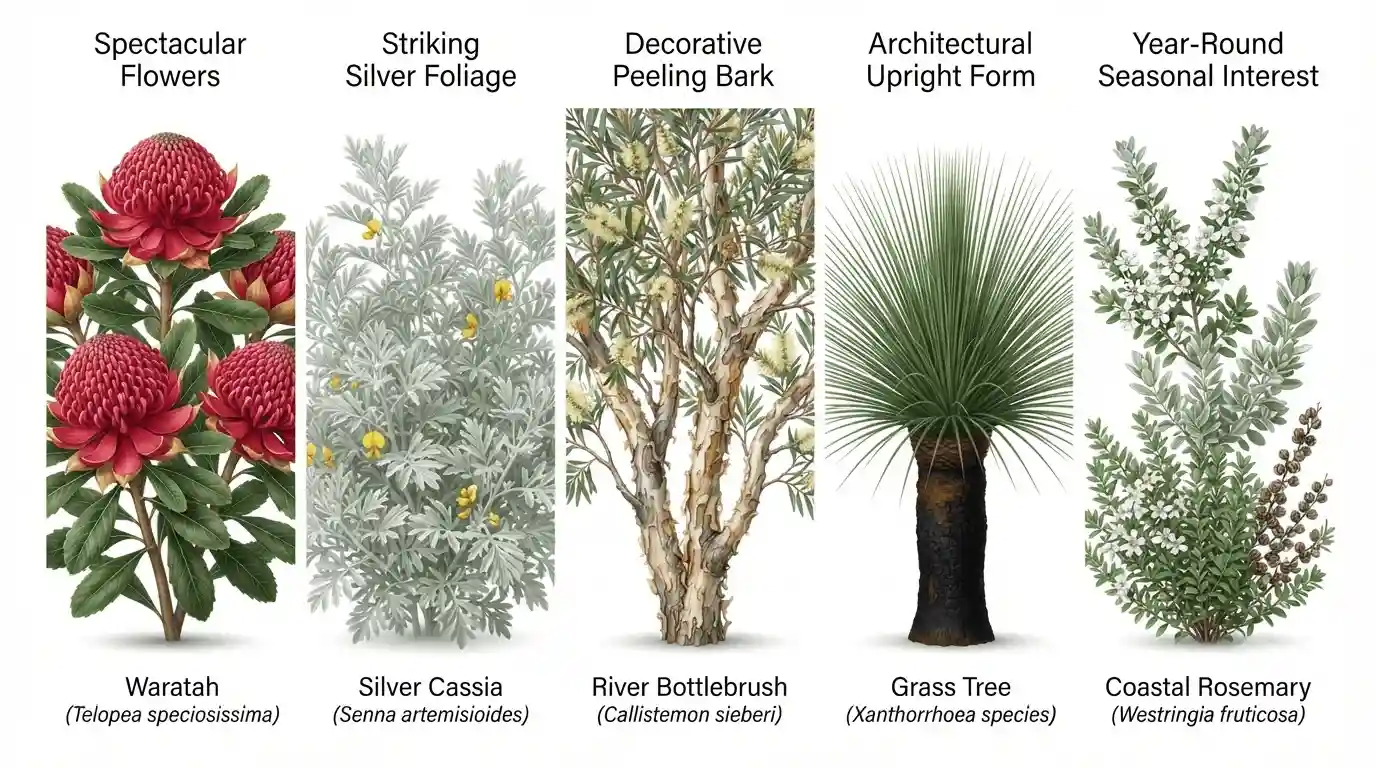
A shrub becomes a feature plant when it provides a strong visual presence that distinguishes it from surrounding vegetation. Rather than blending into the background, it serves as a focal point within the landscape.
The best feature plants often display one or more of the following characteristics:
Unique Foliage
Some shrubs remain attractive even when not flowering.
Examples include foliage that is:
- Silver
- Blue-grey
- Burgundy
- Lime green
- Variegated
These colours create contrast against lawns and darker green planting schemes.
Colourful Flowers
Large or abundant flowers immediately capture attention.
Many native feature plants produce nectar-rich blooms that attract birds and beneficial insects while adding seasonal colour.
Attractive Bark
Certain shrubs offer ornamental bark with peeling textures or contrasting colours that remain decorative throughout winter after flowering has finished.
Sculptural Growth Habit
Some shrubs naturally develop graceful, weeping, upright, rounded, or architectural forms.
These sculptural qualities allow them to function similarly to a small feature tree, especially in compact gardens where space is limited.
Seasonal Interest
The most successful Australian native feature plants provide visual interest throughout multiple seasons by combining flowers, foliage, fruit, bark, or changing colours.
Some gardeners even pair native feature trees with feature shrubs to create layered landscapes featuring multiple heights and textures.
Greenery Inside recommends selecting shrubs that remain attractive for more than just a few weeks each year. Long-lasting foliage often contributes more to overall garden design than short-lived flowering displays.
Types of Feature Shrubs for Australian Gardens
Australian gardens include a wide variety of climates, from cool temperate regions to tropical and arid landscapes. Fortunately, there are feature shrubs suited to almost every environment.
Most homeowners choose shrubs based on one of four primary characteristics:
- Flowering displays
- Evergreen foliage
- Decorative leaves
- Compact growth
Understanding these categories helps simplify plant selection.
Flowering Feature Shrubs
Flowering feature shrubs are among the most popular landscape plants because they produce seasonal bursts of colour that immediately draw attention.
Many native flowering shrubs have evolved to tolerate Australian conditions while producing nectar-rich blooms that support local wildlife.
Popular qualities include:
- Long flowering periods
- Bright colours
- Bird-attracting nectar
- Pollinator-friendly flowers
- Low water requirements
Many excellent flowering native shrubs bloom during spring, while others flower repeatedly throughout the year.
Common flower colours include:
- Red
- Pink
- White
- Yellow
- Orange
- Purple
Many Australian native flowering shrubs retain evergreen foliage after flowering, extending their ornamental value.
Excellent choices include numerous flowering Australian native shrubs within the Grevillea, Correa, Banksia, Callistemon, and Boronia groups.
Even compact native flowering bushes can become eye-catching focal points when planted individually or in small groups.
Many gardeners also prefer evergreen flowering shrubs because they provide both year-round greenery and seasonal flowers.
Smaller gardens often benefit from small flowering shrubs, which add colour without overwhelming limited planting space.
Evergreen Feature Shrubs
Evergreen shrubs remain attractive throughout the year because they retain their foliage across all seasons.
Unlike deciduous shrubs, they continue providing structure even when flowering has finished.
Benefits include:
- Consistent greenery
- Year-round privacy
- Reliable screening
- Wind protection
- Continuous landscape structure
Many evergreen feature shrubs require relatively little maintenance once established.
Australian gardeners frequently choose evergreen native shrubs because they tolerate drought while maintaining healthy foliage.
Compact gardens often benefit from small evergreen shrubs Australia homeowners can use beneath windows, along pathways, or within foundation plantings.
Shrubs that mature at manageable sizes are especially popular, including evergreen shrubs to 2 metres Australia, which provide screening without dominating smaller yards.
Many of these species are also regarded as low maintenance evergreen shrubs to 2 metres Australia because they require only occasional pruning after establishment.
Colourful Foliage Shrubs
Not every feature shrub relies on flowers to stand out.
Some become focal points through distinctive foliage colours that remain attractive throughout the year.
Popular foliage colours include:
- Silver
- Blue-grey
- Burgundy
- Bronze
- Purple
- Variegated green and cream
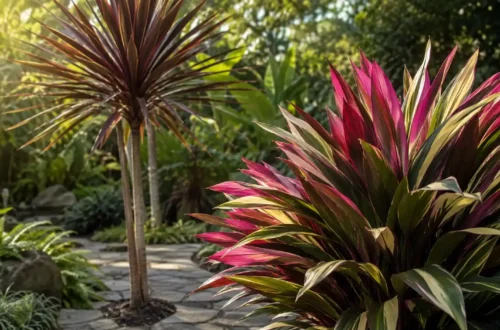
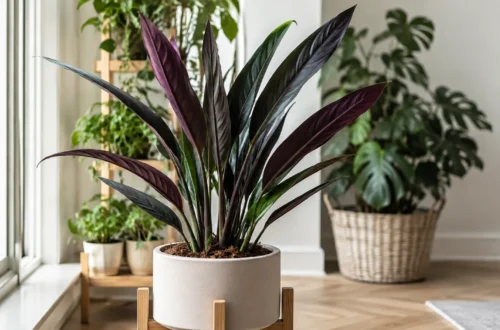
Silver foliage reflects sunlight and complements modern landscapes, while burgundy leaves provide dramatic contrast against green lawns.
Blue-grey foliage pairs particularly well with drought-tolerant gardens and contemporary architectural designs.
These colourful shrubs continue enhancing the landscape long after flowering has finished, making them valuable for year-round visual interest.
Compact and Dwarf Feature Shrubs
Small gardens increasingly rely on compact shrubs that deliver maximum visual impact without requiring excessive space.
Many dwarf shrubs naturally maintain rounded shapes, reducing the need for regular pruning.
Benefits include:
- Suitable for courtyards
- Ideal for small gardens
- Easy maintenance
- Excellent container performance
- Neat growth habits
Modern breeders have introduced numerous dwarf shrubs Australia gardeners can grow in urban landscapes.
Compact small shrubs fit well beside entrances, patios, pathways, and outdoor entertaining areas.
A carefully selected small bush often becomes a focal point simply because it contrasts with surrounding paving or lawn.
Dense small bushy plants also soften hard landscaping while remaining manageable in size.
Many native bushy plants naturally develop compact rounded forms that require little shaping.
Best Australian Native Feature Shrubs
Australia’s native flora offers an exceptional range of ornamental shrubs that combine beauty with resilience. Rather than choosing from hundreds of individual species, it is often easier to focus on reliable shrub groups known for outstanding landscape performance.
Grevillea
Grevilleas are among the most versatile Australian native shrubs available.
They offer:
- Long flowering seasons
- Nectar-rich blooms
- Bird attraction
- Excellent drought tolerance
- Wide range of sizes
Many varieties work equally well as specimen shrubs or informal screening plants.
Correa
Correas are compact native Australian shrubs known for their tubular flowers that attract honeyeaters.
Most perform well in part shade and tolerate coastal conditions, making them suitable for a wide range of Australian gardens.
Banksia
Banksias combine bold flowers with distinctive seed cones and textured foliage.
These iconic native shrubs Australia gardeners value provide year-round interest while supporting birds, bees, and other wildlife.
Callistemon (Bottlebrush)
Bottlebrush shrubs produce vibrant flower spikes that bloom heavily during spring and often again later in the year.
Many native bushes remain compact while others grow into substantial screening shrubs.
Westringia
Westringia is prized for its neat growth habit and soft grey-green foliage.
It responds well to pruning, making it suitable for both formal and informal landscapes.
Leptospermum (Tea Tree)
Tea trees provide masses of delicate flowers combined with fine evergreen foliage.
Many native Australian bushes tolerate coastal winds, sandy soils, and drought once established.
Melaleuca (Paperbark)
Melaleucas add texture through papery bark, soft foliage, and colourful flowers.
Numerous varieties perform well as ornamental Australian native bushes while also supporting local pollinators.
Hakea
Hakeas are valued for their unusual flowers, architectural forms, and impressive drought tolerance.
They make excellent statement plants in native landscapes.
Crowea
Croweas produce attractive star-shaped flowers over extended periods.
Their compact habit makes them suitable for smaller gardens seeking long-lasting seasonal colour.
Boronia
Boronia species are admired for their fragrant flowers and fine foliage.
Although they appreciate good drainage and slightly more care than some natives, they reward gardeners with exceptional floral displays.
Collectively, these shrub groups represent some of the finest native bush Australia landscapes can showcase. They also highlight the remarkable diversity of native bush species available across the country.
Whether designing a cottage garden, coastal landscape, or contemporary outdoor space, these Australian bushes provide beauty, structure, and ecological value.
In our experience growing Aussie shrubs, selecting locally adapted species greatly improves long-term health while reducing irrigation, fertiliser, and maintenance requirements.
Choosing Feature Shrubs by Mature Size
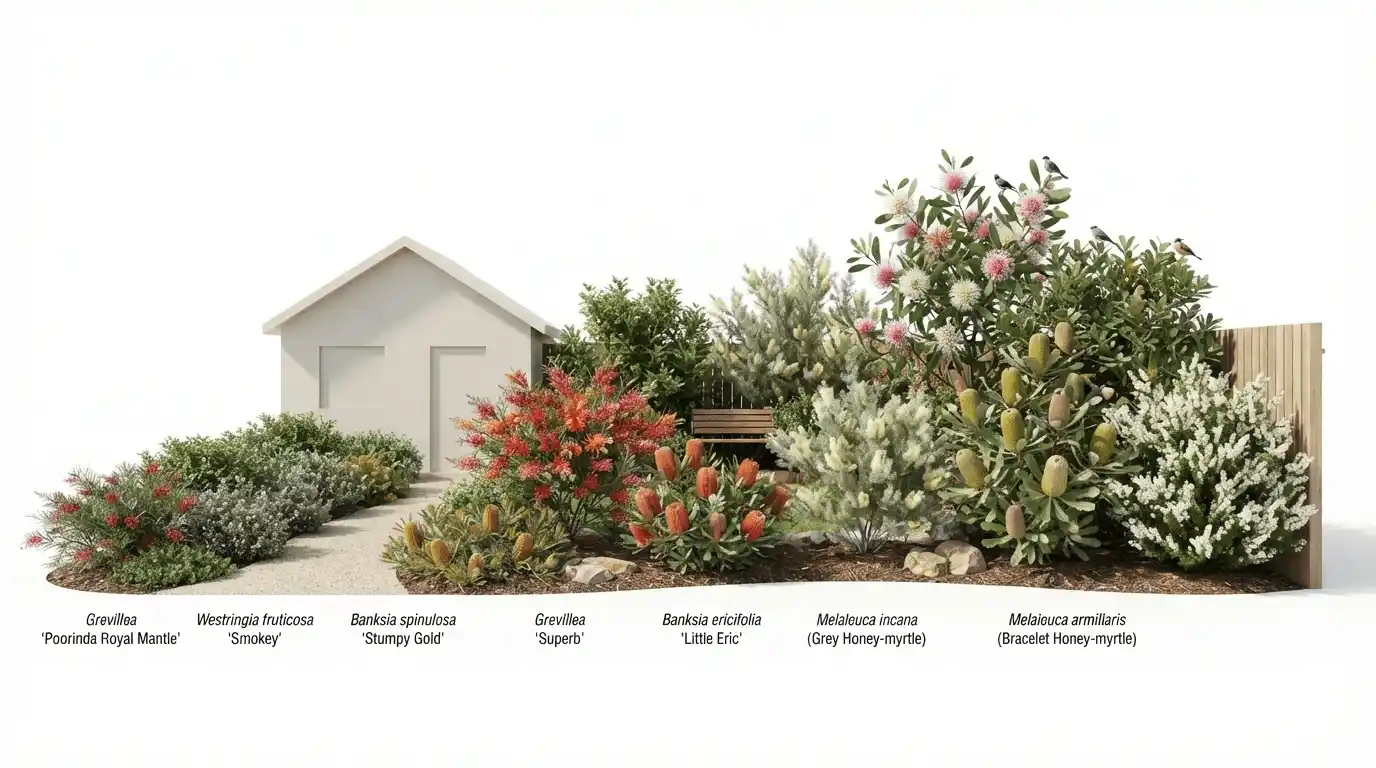
Selecting feature shrubs according to their mature size is one of the most important steps in successful garden design. Many shrubs look compact when purchased from a nursery but can grow much larger over time. Planning for their full height and width helps prevent overcrowding, reduces the need for excessive pruning, and allows each plant to display its natural shape.
When choosing a shrub, consider the available space, nearby structures, sunlight, and the role the plant will play in your landscape.
| Mature Height | Suitable Uses | Example Native Shrubs |
| Up to 1 metre | Borders, containers, pathways, rockeries, front gardens | Correa, dwarf Grevillea, Crowea |
| Around 2 metres | Feature planting, informal screening, mixed borders | Westringia, Callistemon, Leptospermum |
| Around 3 metres | Privacy, windbreaks, wildlife habitat, large focal points | Banksia, Melaleuca, Hakea |
Small Shrubs (Up to 1 Metre)
Small feature shrubs are perfect for compact gardens, narrow borders, courtyards, and container planting. Their manageable size makes them easy to maintain while still providing attractive flowers, colourful foliage, or interesting textures.
Many Australian native shrubs 1m tall become eye-catching focal points without overwhelming surrounding plants. They are also ideal beneath windows, along pathways, or in front garden beds where visibility is important.
Advantages of smaller shrubs include:
- Easy to maintain
- Require little pruning
- Suitable for pots and containers
- Fit well in small landscapes
- Create neat, layered planting designs
Popular choices include compact Correa varieties, dwarf Grevilleas, Crowea cultivars, and small Westringia selections.
Whether you are looking for small native shrubs, a small native shrub, native small shrubs, or small Australian shrubs, always check the expected mature size before planting. Many Australian native small shrubs naturally develop dense, rounded forms that remain attractive throughout the year.
Other excellent options include small Australian native shrubs, small native Australian shrubs, Australian native small plants, and other small native plants that provide year-round interest with very little maintenance.
Medium Shrubs (Around 2 Metres)
Medium-sized shrubs offer one of the best combinations of beauty, versatility, and practicality. They provide enough height to become a landscape focal point while remaining suitable for most suburban gardens.
Many gardeners specifically search for Australian native shrubs 2m because this size is ideal for creating privacy without making outdoor spaces feel enclosed.
Medium shrubs are commonly used for:
- Feature planting
- Informal screening
- Property boundaries
- Mixed shrub borders
- Backdrops for flowering perennials
Many native shrubs to 2 metres also provide excellent habitat for birds while producing attractive flowers throughout the year.
Popular medium-sized native shrubs include:
- Westringia
- Medium-sized Grevilleas
- Callistemons
- Leptospermum
- Compact Banksias
- Melaleuca cultivars
Several of these are also recognised as evergreen shrubs to 2 metres Australia, making them valuable for maintaining year-round garden structure.
Homeowners wanting reliable screening often select medium native shrubs because they provide privacy without excessive maintenance. Many medium shrubs Australia gardeners grow are also considered medium evergreen shrubs Australia, retaining dense foliage across every season.
These plants combine well with ornamental grasses, flowering groundcovers, and small trees to create balanced landscape designs.
Large Shrubs (Around 3 Metres)
Large shrubs are excellent choices when greater height, privacy, or visual impact is required. They often become dominant landscape features while remaining easier to maintain than large trees.
Many Australian native shrubs 3m provide multiple landscape benefits, including:
- Privacy screening
- Wind protection
- Noise reduction
- Wildlife habitat
- Strong architectural structure
Species such as larger Banksias, Melaleucas, Hakeas, and Callistemons can create attractive informal screens while producing nectar-rich flowers that attract birds, bees, and butterflies.
In our experience, gardeners often underestimate how much space these shrubs require. Allowing generous spacing encourages healthier growth, better air circulation, and more abundant flowering while reducing future maintenance.
Selecting Feature Shrubs for Different Garden Styles
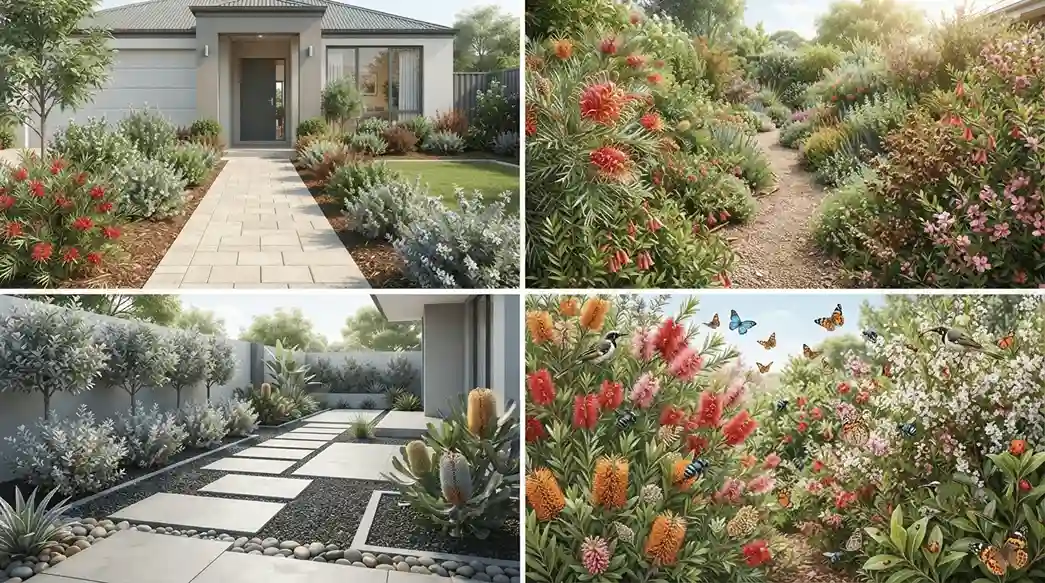
Feature shrubs should complement the overall design of your landscape rather than simply filling empty spaces. The right shrub enhances the character of the garden while creating balance, contrast, and year-round interest.
Feature Shrubs for Front Yards
Front gardens benefit from shrubs that immediately capture attention while remaining neat and well-proportioned.
The best feature shrubs for front yard planting generally offer:
- Attractive flowers
- Evergreen foliage
- Compact growth
- Interesting textures
- Year-round appeal
Some of the best feature shrubs for Australian front gardens include compact Grevilleas, Correas, Westringias, dwarf Callistemons, and ornamental Leptospermums.
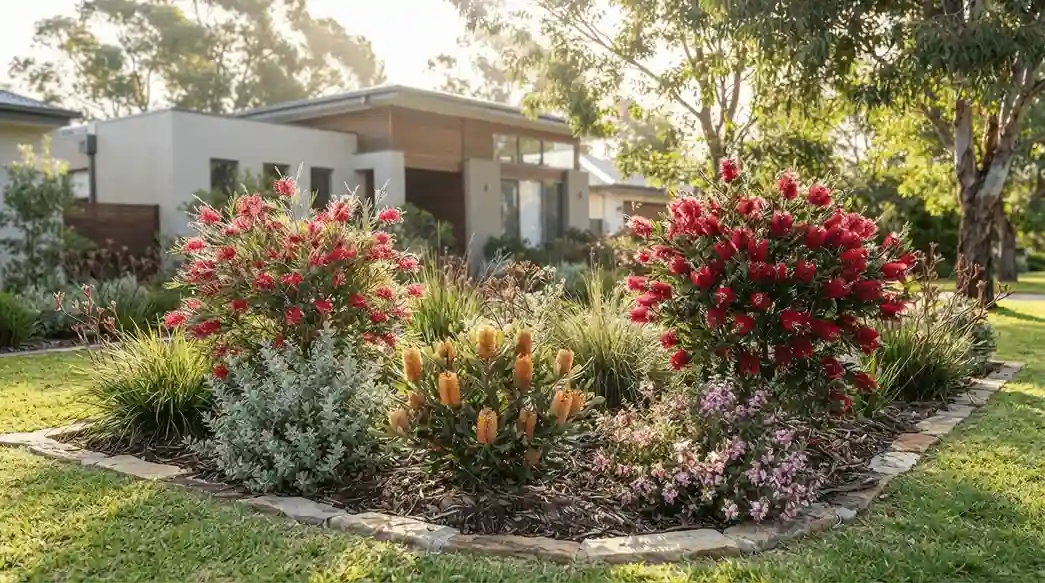
Planting a single feature shrub near the entrance or within the centre of a garden bed often creates a stronger visual statement than grouping several different species together.
Native Cottage Gardens
Native cottage gardens combine informal planting with colourful flowers and natural textures. These gardens encourage biodiversity while maintaining a relaxed appearance.
Many native flowering shrubs perform exceptionally well in cottage-style landscapes because they bloom over long periods and provide valuable nectar for wildlife.
Excellent choices include:
- Grevillea
- Boronia
- Crowea
- Correa
- Tea Tree
- Small Banksias
Combining these shrubs with ornamental grasses and flowering perennials creates layered plantings full of seasonal colour.
Adding several colourful shrubs with different flowering times ensures the garden remains attractive throughout the year.
Modern Minimalist Landscapes
Modern landscape designs focus on clean lines, repeated forms, and carefully selected plants with strong architectural qualities.
Instead of relying on abundant flowers, these gardens often use shrubs with:
- Dense evergreen foliage
- Rounded forms
- Upright growth
- Silver leaves
- Blue-grey foliage
- Contrasting textures
Westringia, compact Banksias, Hakeas, and selected Leptospermums work particularly well because they provide structure without appearing overly formal.
Repeating the same shrub throughout the landscape creates rhythm and visual consistency.
Wildlife-Friendly Gardens
Feature shrubs can play an important role in supporting local wildlife while also enhancing the appearance of the garden.
Many Australian native shrubs produce nectar-rich flowers that attract:
- Honeyeaters
- Native bees
- Butterflies
- Pollinating insects
Dense foliage also provides nesting sites and shelter for small birds.
Grevilleas, Banksias, Callistemons, Melaleucas, Correas, and Hakeas are among the best choices because they flower over extended periods and supply valuable food sources throughout much of the year.
As of 2026, wildlife-friendly gardening remains one of the most recommended landscaping approaches for increasing biodiversity in residential gardens.
Feature Shrubs for Different Growing Conditions
Choosing shrubs suited to your local environment greatly improves their long-term health and reduces maintenance. Australian native shrubs have adapted to a wide range of climates, making it possible to find suitable species for almost every garden.
Full Sun Gardens
Most Australian native shrubs perform best in full sun, where they develop stronger growth, healthier foliage, and heavier flowering.
Excellent small shrubs for full sun Australia include:
- Dwarf Grevilleas
- Westringia
- Compact Correas
- Crowea
- Small Banksias
Providing at least six hours of direct sunlight each day generally produces the best flowering performance.
Low-Maintenance Gardens
Low-maintenance landscapes rely on hardy plants that require minimal watering, pruning, and fertilising after establishment.
Many low maintenance shrubs Australia gardeners prefer are native species naturally adapted to local rainfall and soil conditions.
Reliable options include:
- Westringia
- Grevillea
- Callistemon
- Melaleuca
- Hakea
Several are also recognised as low maintenance flowering shrubs Australia, producing colourful blooms with relatively little care.
When selecting low maintenance feature shrubs, prioritise species that naturally suit your local climate. Many low maintenance Australian native shrubs remain attractive for years with only occasional pruning and seasonal watering.
Fast-Growing Shrubs
Fast-growing shrubs are ideal when establishing privacy screens or creating an established-looking garden in a shorter period.
Popular fast growing Australian native shrubs include:
- Callistemon
- Melaleuca
- Leptospermum
- Selected Grevillea varieties
These fast growing native shrubs Australia establish quickly and respond well to light annual pruning.
Many fast-growing native shrubs Australia are also excellent choices for attracting birds and pollinators.
Other suitable fast growing Australian native plants provide rapid growth while remaining attractive feature plants.
Homeowners looking for screening often choose fast growing shrubs to 2 metres, as they provide privacy without becoming excessively large. Many fast-growing shrubs to 2 metres also flower abundantly once established.
Overall, fast growing native shrubs combine rapid establishment with long-term ornamental value.
Native Hedging Options
Although feature shrubs and hedging plants are sometimes the same species, they serve different purposes within the landscape.
Feature shrubs are grown individually to attract attention through their flowers, foliage, or distinctive shape.
Hedging shrubs are planted closely together to create continuous screens, boundaries, or privacy barriers.
Popular native hedging plants Australia include:
- Westringia
- Lilly Pilly
- Callistemon
- Melaleuca
A well-designed garden often combines both planting styles. An evergreen hedge provides a simple green backdrop, while one or two flowering feature shrubs create seasonal colour and visual interest, resulting in a more balanced and dynamic landscape.
Plant Size
Understanding the mature size of a feature shrub is essential for creating a balanced and low-maintenance garden. While many shrubs appear small when purchased, they can grow significantly over several years. Planning for their mature height and width helps avoid overcrowding, improves air circulation, and reduces the need for frequent pruning.
Most Australian native feature shrubs fall into three general size categories:
| Shrub Size | Typical Height | Typical Width | Best Uses |
| Small | Up to 1 m | 0.5–1 m | Borders, containers, pathways, small gardens |
| Medium | 1.5–2.5 m | 1–2 m | Feature planting, mixed beds, informal screening |
| Large | 2.5–4 m | 2–3 m | Privacy, windbreaks, wildlife habitat, large landscapes |
The mature size of a shrub can vary depending on:
- Climate
- Soil fertility
- Water availability
- Sunlight
- Pruning practices
- Individual cultivar
Small feature shrubs work well in courtyards and urban gardens where space is limited. Medium shrubs provide versatility for most residential landscapes, while larger shrubs create impressive focal points and natural privacy screens.
In our experience, leaving enough space between shrubs allows each plant to develop its natural shape, resulting in healthier growth and a more attractive garden over time.
Growth Rate
Feature shrubs vary considerably in their growth speed. Understanding whether a shrub is slow, moderate, or fast growing helps set realistic expectations and assists with long-term landscape planning.
| Growth Rate | Typical Growth | Examples |
| Slow | Less than 20 cm per year | Boronia, Crowea |
| Moderate | 20–50 cm per year | Westringia, Banksia, Correa |
| Fast | More than 50 cm per year | Callistemon, Melaleuca, some Grevilleas |
Slow-Growing Shrubs
Slow-growing shrubs typically produce dense, compact growth and require less pruning. Although they take longer to reach their mature size, they often maintain a naturally tidy appearance.
These shrubs are ideal for:
- Small gardens
- Formal landscapes
- Container planting
- Long-term feature displays
Moderate-Growing Shrubs
Most Australian native feature shrubs have a moderate growth rate. They establish steadily while developing strong root systems and balanced branching.
Moderate growers offer an excellent combination of manageable maintenance and dependable performance, making them suitable for most home gardens.
Fast-Growing Shrubs
Fast-growing shrubs quickly establish privacy, reduce wind exposure, and create mature-looking landscapes.
Species such as Callistemon, Melaleuca, and several Grevillea varieties can grow rapidly under favourable conditions. While they provide quick results, they usually benefit from occasional pruning to maintain an attractive shape.
Factors That Affect Growth
Several environmental factors influence how quickly feature shrubs grow.
Climate
Temperature has a major impact on plant growth. Most Australian native shrubs grow fastest during warm spring and summer conditions, while growth slows during winter.
Water
Regular watering during establishment encourages healthy root development. Once established, many native shrubs become drought tolerant, although prolonged dry periods may temporarily reduce growth.
Soil
Well-drained soil promotes stronger root systems and healthier plants. Poor drainage can slow growth and increase the risk of root diseases.
Sunlight
Most flowering native shrubs perform best in full sun, where they produce stronger stems, denser foliage, and more abundant blooms. Shade-tolerant species may still grow well in partial shade but often flower less heavily.
Nutrition
Australian native shrubs generally require only light feeding. Excessive fertiliser, particularly products high in phosphorus, may reduce plant health rather than improve growth.
Greenery Inside recommends focusing on healthy root establishment during the first one to two years instead of trying to encourage rapid top growth. Strong root systems usually result in healthier, longer-lived shrubs with better flowering performance.
Care Guide
Most Australian native feature shrubs are relatively easy to maintain once established. Providing the right growing conditions during their first few years encourages vigorous growth, reliable flowering, and long-term health.
Water Requirements
Newly planted shrubs require consistent watering until their root systems become established.
A general watering guide includes:
- Water deeply one to two times per week during the first growing season.
- Adjust watering based on rainfall and soil moisture.
- Reduce watering as the shrub matures.
- Water deeply during prolonged drought rather than applying frequent light watering.
Most established Australian native shrubs tolerate dry conditions much better than constantly wet soil.
One of the most common mistakes we observe is watering little and often. Deep, infrequent watering encourages roots to grow deeper, making shrubs more resilient during hot weather.
Light Requirements
Light levels directly influence flowering, foliage colour, and overall plant health.
Most feature shrubs grow best in:
- Full sun (at least six hours of direct sunlight daily)
- Light afternoon shade in very hot climates
- Partial shade for naturally woodland species such as some Correas and Boronias
Choosing a shrub that matches your garden’s light conditions reduces stress and improves flowering.
Soil Preferences
Healthy soil provides the foundation for successful shrub growth.
Most Australian native shrubs prefer:
- Well-drained soils
- Slightly acidic to neutral pH
- Moderate organic matter
- Good air circulation around the roots
Different soil types require different approaches:
| Soil Type | Recommendation |
| Sandy soil | Add compost and organic mulch to improve moisture retention. |
| Clay soil | Improve drainage with gypsum and organic matter before planting. |
| Loamy soil | Usually ideal for most native shrubs with minimal improvement needed. |
Avoid planting shrubs in areas where water remains around the roots after heavy rain, as prolonged waterlogging can lead to root rot.
Fertilising
Most Australian native shrubs require only modest fertilising.
Use:
- Low-phosphorus fertilisers formulated for native plants
- Well-aged compost
- Organic mulch to gradually improve soil structure
Avoid excessive fertiliser applications, particularly products designed for lawns or exotic flowering plants, as many native species are sensitive to high phosphorus levels.
Applying mulch around the base of shrubs also helps conserve soil moisture, regulate soil temperature, and suppress weeds.
Pruning
Pruning encourages healthy growth while maintaining an attractive shape.
General pruning guidelines include:
- Remove dead or damaged branches promptly.
- Lightly prune flowering shrubs after blooming finishes.
- Avoid removing large amounts of growth at one time.
- Shape evergreen shrubs with gentle trimming rather than heavy cutting.
Regular light pruning is generally more effective than occasional severe pruning.
Climate Tolerance
One reason Australian native feature shrubs are so popular is their adaptability to diverse climates.
Many species tolerate:
- High summer temperatures
- Extended dry periods
- Light to moderate frost
- Coastal winds
- Salt spray
- Poor soils
However, not every species performs equally well in every region. Always select shrubs suited to your local climate, rainfall, and frost conditions.
As of 2026, gardeners increasingly favour climate-adapted native shrubs because they require fewer resources while remaining resilient under changing weather conditions.
Common Problems When Growing Feature Shrubs
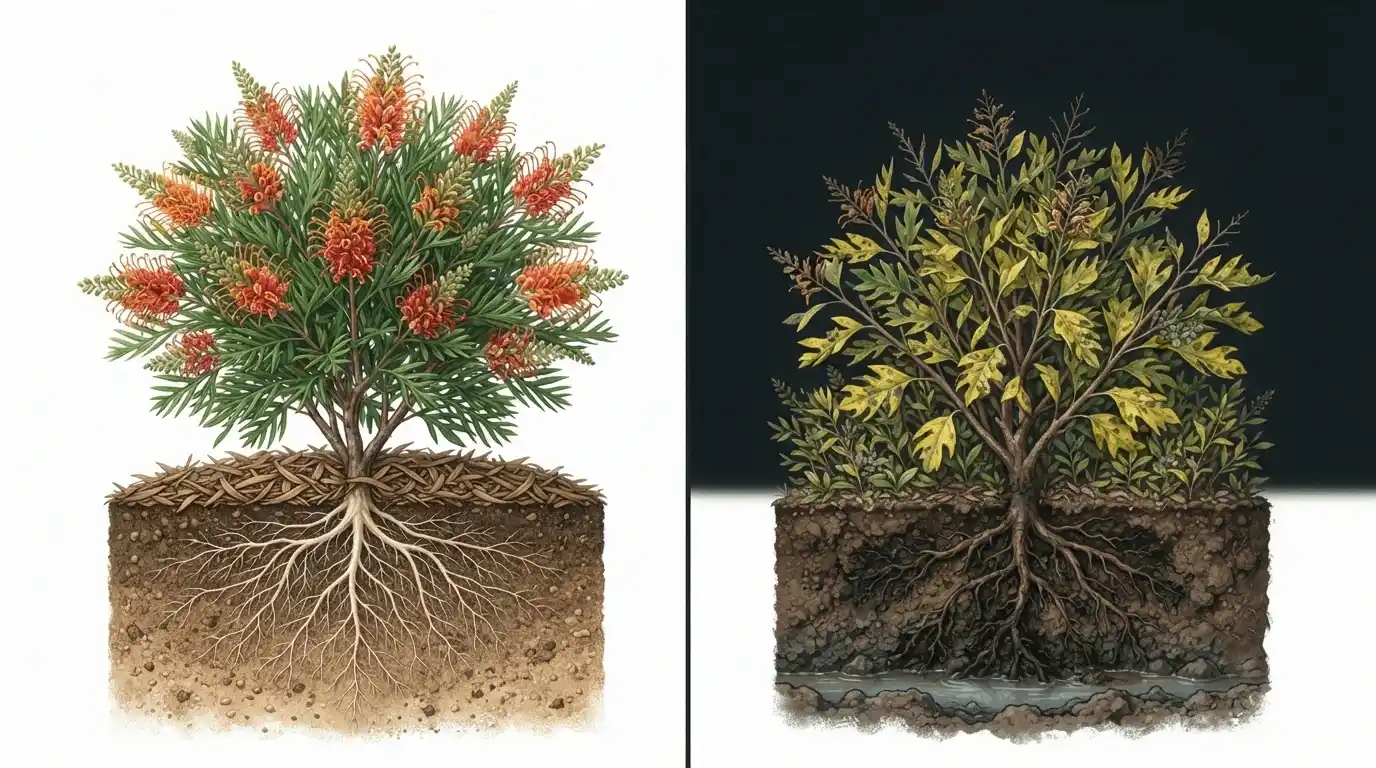
Even well-chosen feature shrubs can develop problems if their growing conditions do not match their needs. Most issues are related to watering, soil conditions, pruning, or nutrition rather than the shrubs themselves. Identifying symptoms early helps prevent long-term damage and encourages healthy growth.
| Problem | Common Cause | How to Fix It | Prevention |
| Poor flowering | Insufficient sunlight, excessive nitrogen, incorrect pruning | Move to a sunnier location if possible, reduce nitrogen fertiliser, prune after flowering | Plant in the correct light conditions and follow species-specific pruning schedules |
| Yellow leaves | Overwatering, poor drainage, nutrient imbalance | Improve drainage, adjust watering, apply a suitable native plant fertiliser if needed | Avoid waterlogged soil and use low-phosphorus fertilisers |
| Overwatering | Frequent shallow watering | Allow soil to dry slightly between watering and water deeply but less often | Check soil moisture before watering |
| Root rot | Poor drainage and constantly wet soil | Remove severely affected roots if possible and improve soil drainage | Plant in well-drained soil and avoid standing water |
| Poor drainage | Heavy clay or compacted soil | Incorporate organic matter or gypsum and consider raised garden beds | Prepare the planting site before planting |
| Incorrect pruning | Pruning at the wrong time or cutting too heavily | Remove damaged growth and allow the shrub to recover naturally | Prune immediately after flowering and avoid excessive cutting |
| Nutrient deficiencies | Nutrient-poor soil or unsuitable fertiliser | Apply a low-phosphorus fertiliser formulated for native plants | Feed lightly during active growth if required |
| Pest damage | Aphids, scale insects, caterpillars, or borers | Remove pests manually or use environmentally friendly controls when necessary | Regularly inspect plants and encourage beneficial insects |
Poor Flowering
Poor flowering is one of the most common concerns among gardeners. Most flowering shrubs require adequate sunlight and proper pruning to produce abundant blooms.
Common causes include:
- Too much shade
- Excessive nitrogen fertiliser
- Pruning before flower buds develop
- Young plants that have not fully established
In our experience, many native shrubs flower much more reliably once they have developed a strong root system during their first two years.
Yellow Leaves
Yellowing foliage usually indicates environmental stress rather than disease.
Possible causes include:
- Excess water around the roots
- Poor drainage
- Temporary nutrient deficiencies
- Seasonal leaf replacement
Check the soil before watering and ensure excess water drains freely after rainfall.
Overwatering
Many Australian native shrubs naturally tolerate dry conditions better than constantly wet soil.
Signs of overwatering include:
- Yellow leaves
- Soft stems
- Wilting despite wet soil
- Slow growth
Water deeply but allow the soil surface to dry slightly before watering again.
Root Rot
Root rot develops when roots remain in saturated soil for extended periods. It reduces oxygen availability and encourages fungal pathogens.
Symptoms include:
- Wilting
- Leaf drop
- Blackened roots
- Gradual plant decline
Improving drainage is the most effective long-term solution.
Poor Drainage
Heavy clay soils often drain slowly, increasing the risk of root diseases.
To improve drainage:
- Add compost before planting.
- Incorporate gypsum where appropriate for clay soils.
- Create raised garden beds in poorly drained areas.
- Avoid planting in low-lying locations where water collects.
Healthy drainage promotes stronger root systems and healthier shrubs.
Incorrect Pruning
Pruning at the wrong time can remove developing flower buds and reduce the next flowering season.
General recommendations include:
- Prune immediately after flowering.
- Remove dead or damaged branches.
- Avoid cutting into old woody stems unless recommended for the species.
- Shape gradually rather than heavily reducing plant size.
Regular light pruning usually produces healthier, fuller shrubs than occasional severe pruning.
Nutrient Deficiencies
Australian native shrubs generally require fewer nutrients than many exotic ornamental plants.
Symptoms of nutrient deficiencies may include:
- Pale foliage
- Reduced flowering
- Slow growth
- Smaller leaves
Apply fertilisers specifically formulated for Australian native plants and avoid products high in phosphorus.
Pest Damage
Although many native shrubs are naturally resilient, occasional pest problems can occur.
Common pests include:
- Aphids
- Scale insects
- Caterpillars
- Leaf-eating beetles
- Borers
Encouraging birds, lacewings, ladybirds, and other beneficial insects often helps maintain natural pest control without relying heavily on chemical treatments.
Feature Shrubs vs Feature Trees
Both feature shrubs and feature trees create visual interest, but they serve different purposes in landscape design. Choosing between them depends on available space, desired height, maintenance requirements, and the overall style of the garden.
| Feature | Feature Shrub | Feature Tree |
| Mature size | Usually 0.5–4 metres | Typically 5 metres or taller |
| Landscape role | Colour, texture, seasonal interest, screening | Height, shade, structure, long-term focal point |
| Maintenance | Usually easier to prune and manage | May require professional pruning as it matures |
| Shade | Limited to moderate | Provides substantial shade |
| Privacy | Excellent for low to medium screening | Better for overhead screening and canopy coverage |
| Suitable garden size | Small to medium gardens | Medium to large gardens |
A feature shrub is often the better choice for compact residential gardens because it provides year-round interest without dominating the landscape. Shrubs can also be combined with ornamental grasses, groundcovers, and flowering perennials to create layered planting schemes.
A feature tree, on the other hand, introduces height and structure while providing shade and long-term visual impact. In larger landscapes, combining shrubs beneath native feature trees creates a balanced, multi-level planting design that supports wildlife and improves biodiversity.
Common Beginner Mistakes When Choosing Feature Shrubs
Choosing the right feature shrub involves more than selecting an attractive plant at the nursery. Many common problems arise because gardeners focus on appearance without considering the shrub’s long-term requirements.
Ignoring Mature Size
One of the biggest mistakes is planting shrubs too close together or too close to buildings and pathways.
Before planting, always check the expected mature height and width rather than the size of the plant in its nursery container.
Planting Too Close Together
Crowded shrubs compete for sunlight, water, and nutrients. Limited airflow also increases humidity around the foliage, making fungal diseases more likely.
Allow enough spacing for each shrub to reach its mature size comfortably.
Choosing Unsuitable Plants for the Local Climate
Australia’s climates vary from cool temperate to tropical and arid regions. A shrub that thrives in one location may struggle in another.
Select species suited to your area’s:
- Temperature range
- Rainfall
- Frost frequency
- Soil type
- Coastal or inland conditions
Locally adapted native shrubs generally establish more quickly and require less ongoing care.
Over-Fertilising Native Shrubs
Many Australian native shrubs naturally grow in nutrient-poor soils and are sensitive to excessive fertiliser.
Using lawn fertilisers or products high in phosphorus can damage sensitive roots and reduce plant health.
Always choose fertilisers specifically formulated for native plants and apply them sparingly.
Selecting Shrubs Without Year-Round Interest
Some shrubs provide spectacular flowers for only a few weeks each year but offer little visual appeal afterwards.
For the most attractive landscape, look for plants that combine:
- Evergreen foliage
- Attractive flowers
- Interesting bark
- Decorative seed pods or fruit
- Distinctive growth habits
In our experience, gardens remain visually appealing throughout the year when feature shrubs contribute more than just seasonal flowering.
Conclusion
Feature shrubs are among the most versatile plants for Australian landscapes, adding colour, texture, structure, and seasonal interest to gardens of every size. Whether used as a focal point in a front yard, incorporated into a wildlife-friendly landscape, or combined with other ornamental plants, they create lasting visual impact while enhancing overall garden design.
Australian native shrubs offer additional advantages, including drought tolerance, lower maintenance requirements, and valuable habitat for birds, bees, and butterflies. By selecting shrubs based on their mature size, growing conditions, garden style, and long-term care needs, gardeners can create healthy, attractive landscapes that thrive for many years.
With thoughtful planning and the right plant selection, feature shrubs can provide year-round beauty while supporting biodiversity and making Australian gardens more resilient and sustainable.
Frequently Asked Questions
What are the 4 types of shrubs?
The four common types of shrubs are flowering shrubs, evergreen shrubs, deciduous shrubs, and foliage shrubs. Each offers different ornamental features, such as colourful flowers, year-round greenery, seasonal leaf changes, or decorative foliage.
What are the different types of feature plants?
Feature plants include flowering shrubs, ornamental grasses, sculptural succulents, feature trees, palms, and architectural plants with distinctive foliage or growth habits. They are selected to create a focal point within the landscape.
What are 5 examples of shrubs?
Five popular shrubs include Grevillea, Westringia, Callistemon, Banksia, and Correa. These Australian native shrubs are widely grown because they are attractive, relatively low maintenance, and beneficial for wildlife.
What are the features of a bush?
A bush is a woody plant with multiple stems arising near the base. Bushes are generally shorter than trees and are valued for their dense foliage, flowers, berries, or ornamental form.
What are the best Australian native feature shrubs for small gardens?
Compact Grevilleas, Correas, Croweas, dwarf Westringias, and small Banksia cultivars are excellent choices for small gardens. They provide colourful flowers, evergreen foliage, and manageable growth while attracting pollinators.
Which feature shrubs flower for the longest time?
Many Grevillea, Callistemon, Correa, and some Boronia varieties produce flowers over extended periods. Choosing a mix of species with different flowering seasons can provide colour throughout much of the year.
Are native shrubs better than exotic shrubs?
Neither is universally better, but Australian native shrubs are often better adapted to local climates, require less water after establishment, and provide important food and habitat for native wildlife. Exotic shrubs may still be suitable when matched to local growing conditions.
Which feature shrubs are best for low-maintenance gardens?
Westringia, Grevillea, Callistemon, Melaleuca, and Hakea are among the best low-maintenance feature shrubs. Once established, they generally require minimal watering, occasional pruning, and only light fertilising with products suitable for Australian native plants.