Introduction
Acacia Sterling Silver is a popular Australian native ornamental selection admired for its elegant silver-grey foliage, evergreen habit, and adaptability to a wide range of garden styles. Often associated with silver acacia, silver wattle, silver leaf wattle, and Acacia silver wattle, this attractive plant is prized for creating year-round colour and texture in landscapes. It is also sometimes discussed alongside Acacia binervia, although the relationship depends on the selected form and nursery classification. Whether used as a feature tree, informal screen, or low-maintenance native planting, Acacia Sterling Silver offers reliable performance with relatively simple care, making it a favourite among Australian gardeners seeking drought-tolerant beauty. Acacia Sterling Silver is also an excellent choice for gardeners looking to expand their collection of Australian native garden trees, offering year-round foliage colour and reliable landscape performance.
By Greenery Inside | Plant Care & Gardening Expert
Quick Summary
- Acacia Sterling Silver is primarily grown for its striking silvery evergreen foliage and ornamental value.
- It thrives in full sun and well-drained soil with minimal maintenance once established.
- The tree is widely used for screening, feature planting, native gardens, and drought-tolerant landscapes.
- Regular light pruning and appropriate watering encourage healthy, dense growth.
- Its attractive foliage, seasonal flowers, and wildlife value make it an excellent landscape plant across many Australian regions.
What Is Acacia Sterling Silver?
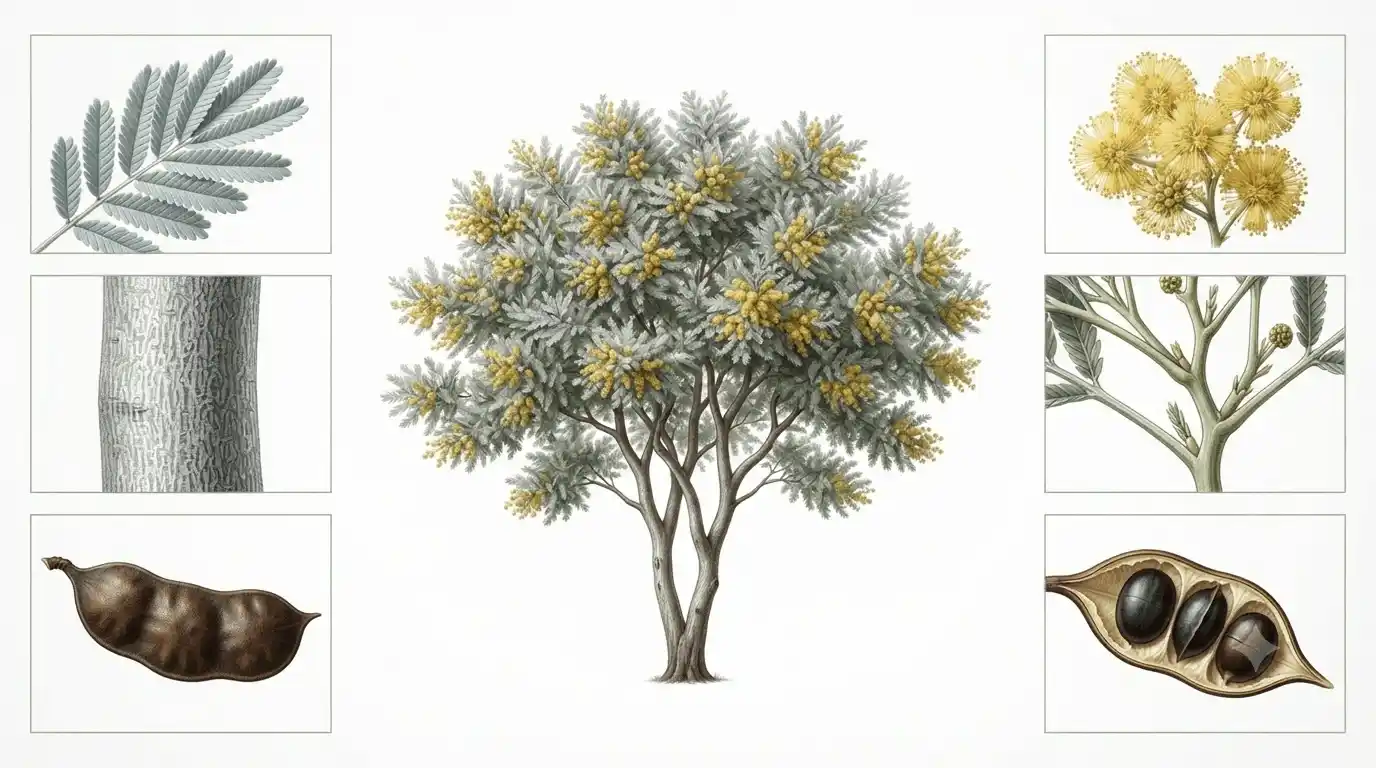
Acacia Sterling Silver is an ornamental Australian native acacia selected for its attractive silver-grey foliage, dense growth, and year-round landscape appeal. It is commonly planted in residential gardens, native landscapes, screening projects, and feature plantings because of its distinctive colour and relatively easy care. If you’re selecting native trees for ornamental landscaping, our guide to Feature Trees Brisbane explains how to choose standout specimens for different garden sizes and climates.
Unlike many flowering ornamentals that are valued primarily for seasonal blooms, Acacia Sterling Silver is appreciated throughout the year. Its soft silver foliage creates contrast against green shrubs, flowering perennials, and darker native trees while adding texture to modern and naturalistic garden designs.
In our experience growing Australian native wattles, silver-foliaged selections like Acacia Sterling Silver often become focal points even when they are not flowering because their foliage provides continuous visual interest throughout every season.
Botanical Classification
Acacia Sterling Silver belongs to the following botanical classification:
| Classification | Details |
| Botanical Kingdom | Plantae |
| Family | Fabaceae |
| Genus | Acacia |
| Plant Type | Evergreen native shrub or small tree (depending on selection) |
| Native Origin | Australia |
Like other members of the Fabaceae (legume) family, acacias are nitrogen-fixing plants. Their roots form beneficial relationships with soil bacteria, helping improve soil fertility while supporting healthy plant growth. Learn more about the botanical characteristics of the genus on Wikipedia’s Acacia page.
Common Names
Depending on the nursery, region, or horticultural reference, Acacia Sterling Silver may be known by several common names, including:
- Silver acacia
- Silver wattle
- Silver leaf wattle
- Acacia silver wattle
- Sterling Silver acacia
Although these names are sometimes used interchangeably, they may also refer to closely related silver-foliaged Acacia species or cultivated selections rather than one identical botanical plant.
The common names generally describe the plant’s most distinctive feature—its elegant silvery foliage that gives gardens brightness even during winter.
Is Acacia Sterling Silver the Same as Acacia binervia?
Not exactly. While Acacia Sterling Silver is frequently associated with Acacia binervia, the two terms should not always be considered identical.
Acacia binervia, commonly known as coast myall or two-veined hickory wattle in some references, is a recognised botanical species native to eastern Australia. “Sterling Silver” is generally regarded as a cultivated selection or nursery form valued for particularly attractive silver foliage and ornamental performance.
Because nursery naming can vary across Australia, gardeners should check the botanical label when purchasing plants to understand exactly which selection they are buying.
Regardless of the naming convention, the plant is grown primarily for its ornamental foliage, compact habit, and adaptability rather than for botanical distinction.
Its soft silver leaves also reflect sunlight, helping brighten mixed plantings and creating striking contrast against darker green native species.
Key Features of Acacia Sterling Silver
Foliage and Appearance
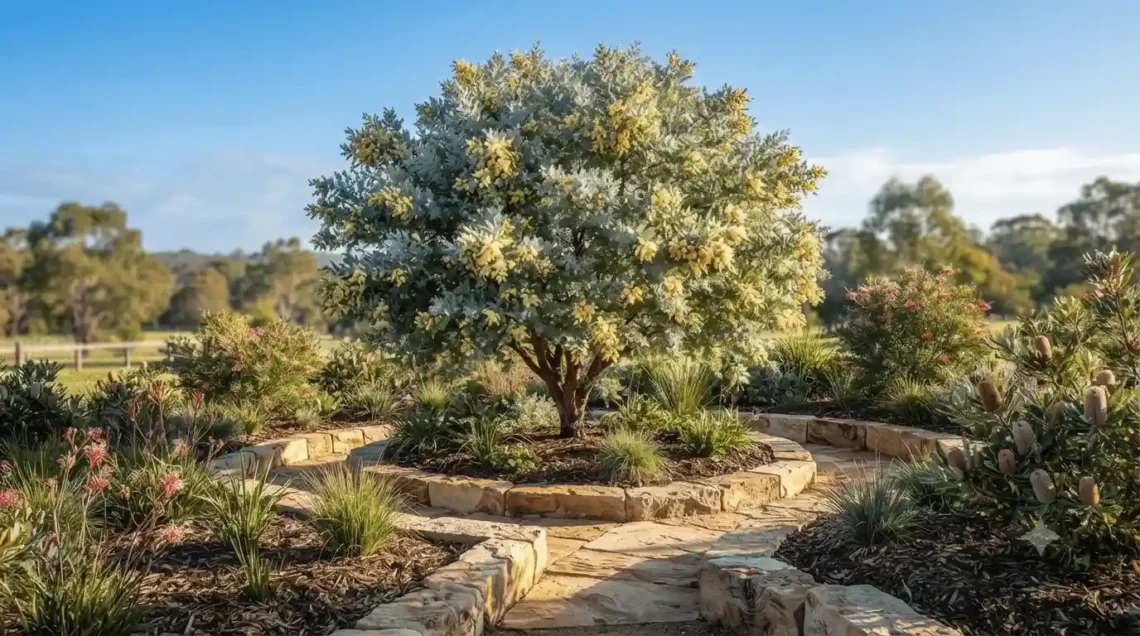
The defining characteristic of Acacia Sterling Silver is its beautiful silver wattle leaves. The foliage displays soft silver-grey to blue-grey tones that remain attractive throughout the year, making the plant valuable even outside its flowering season. Similar silver and ornamental foliage can also be found in Acacia Podalyriifolia, another popular Australian wattle valued for its attractive foliage and seasonal flowers.
The leaves have a refined texture that gives the plant a soft, elegant appearance while creating movement when exposed to gentle breezes.
Key foliage characteristics include:
- Evergreen throughout the year
- Attractive silver-grey colouring
- Fine ornamental texture
- Dense branching habit
- Excellent contrast with green landscape plants
- Low leaf drop compared with many deciduous trees
The ornamental wattle foliage complements contemporary landscapes, native gardens, Mediterranean-inspired designs, and drought-tolerant planting schemes.
Greenery Inside recommends allowing sufficient space around the tree so the silvery foliage can be appreciated from multiple viewing angles rather than crowding it among taller shrubs.
Flowers and Seasonal Interest
Although the foliage is the primary attraction, Acacia Sterling Silver also produces the familiar fluffy flowers associated with Australian wattles.
The flowers are typically:
- Bright yellow
- Rounded and fluffy
- Produced in clusters
- Lightly fragrant
- Rich in pollen for beneficial insects
Flowering generally occurs from late winter into spring, although timing varies depending on local climate and seasonal conditions.
These blossoms provide an important nectar and pollen source for:
- Native bees
- Honeybees
- Butterflies
- Beneficial insects
- Small nectar-feeding birds
The flowering period also increases seasonal interest, making the plant valuable for wildlife-friendly gardens while adding vibrant colour that contrasts beautifully with the silver foliage.
As of current Australian horticultural recommendations (2026), gardeners are increasingly incorporating native flowering wattles into pollinator gardens to help support local biodiversity alongside ornamental planting.
Growth Habit
Acacia Sterling Silver develops a naturally upright and balanced growth habit with dense branching that responds well to occasional pruning. For more species suitable for natural screening, see our guide to Australian Native Screening Trees.
Typical characteristics include:
- Upright form
- Dense evergreen canopy
- Rounded to slightly spreading shape
- Medium-density branching
- Attractive architectural structure
Because of its balanced form, it performs well in numerous landscape situations, including:
- Feature planting
- Informal hedges
- Privacy screens
- Native gardens
- Boundary planting
- Windbreaks
- Mixed shrub borders
Its combination of attractive foliage and naturally neat growth allows it to function equally well as a standalone specimen or as part of layered landscape designs.
Acacia Sterling Silver Size and Growth
Mature Height and Width
Acacia Sterling Silver generally reaches a moderate mature size suitable for residential gardens, although its final dimensions depend on climate, soil quality, and growing conditions.
Most established plants reach approximately:
| Growth Characteristic | Typical Range |
| Mature Height | 4–8 metres |
| Mature Width | 3–5 metres |
| Growth Rate | Moderate to fast |
| Evergreen | Yes |
| Typical Lifespan | 15–30 years under favourable conditions |
Actual mature size can vary due to several environmental factors, including:
- Available root space
- Soil fertility
- Drainage quality
- Annual rainfall
- Sunlight exposure
- Pruning practices
- Local climate
A well-maintained specimen grown in full sun with excellent drainage usually develops a fuller canopy and healthier branch structure than plants growing in compacted or poorly drained soils.
When fully grown, Acacia Sterling Silver provides ample shade while remaining manageable for most suburban gardens.
Growth Rate
Acacia Sterling Silver is generally considered a moderate to fast-growing native tree, particularly during its establishment years.
Young plants usually produce their most vigorous growth during the first several seasons after planting, provided moisture is consistent and the root system becomes established.
Growth is influenced by several factors.
Climate
Warm temperate climates generally encourage the fastest development, while cooler regions may experience slower annual growth.
Soil Quality
Free-draining soils allow roots to expand efficiently, supporting stronger canopy development.
Water Availability
Regular watering during establishment promotes healthy root growth. Once mature, the tree becomes considerably more drought tolerant, although prolonged dry periods may reduce growth rates.
Sunlight
Full sun encourages denser foliage, improved branching, and stronger flowering compared with heavily shaded locations.
From our experience, gardeners often expect extremely rapid growth immediately after planting. In reality, many Acacia varieties first invest energy into developing a healthy root system before producing vigorous canopy growth during subsequent seasons.
Care Guide for Acacia Sterling Silver
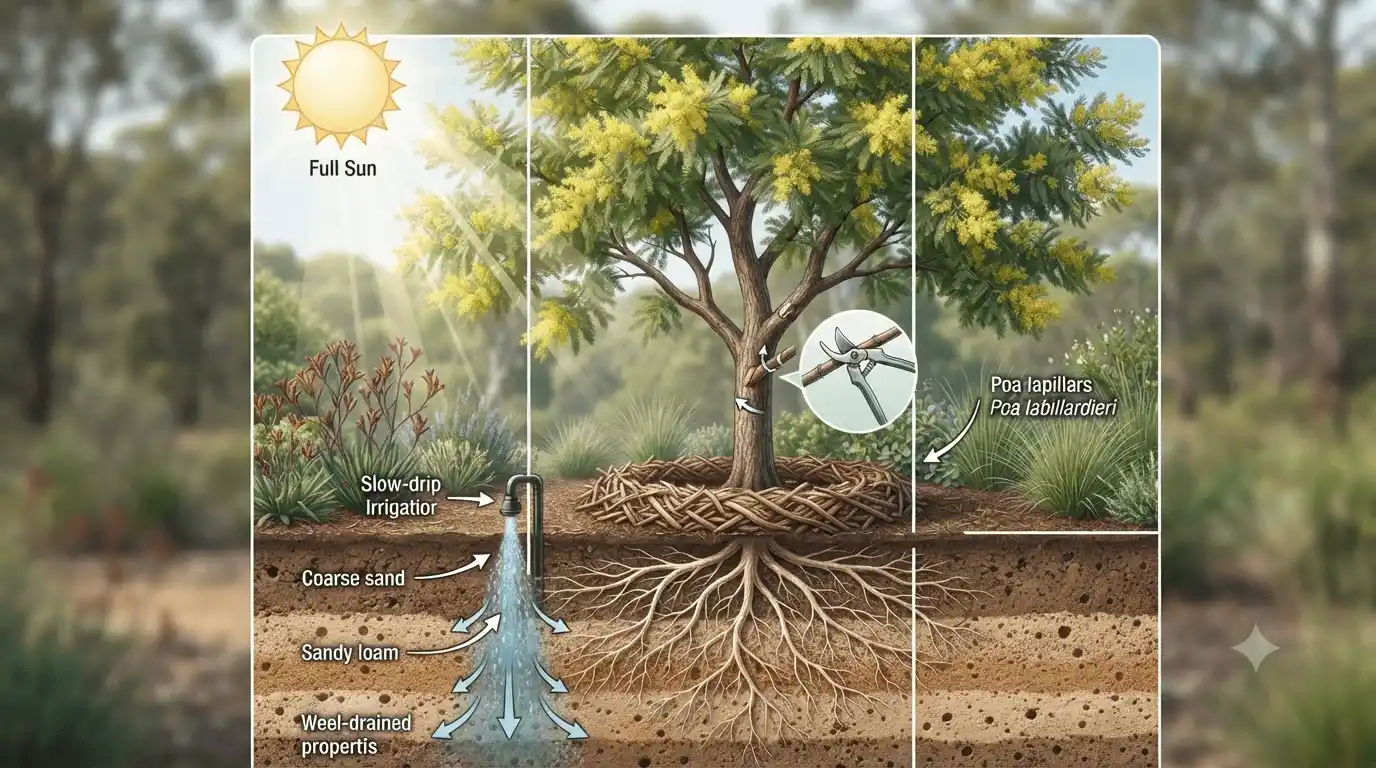
Acacia Sterling Silver grows best with simple, consistent care that matches its natural Australian habitat. Once established, it is considered a relatively low-maintenance native tree, but proper watering, sunlight, soil selection, and occasional pruning help it remain healthy and attractive for many years.
Following established horticultural practices will reduce the risk of disease, encourage dense silver foliage, and improve flowering.
Light Requirements
Acacia Sterling Silver performs best in full sun, receiving at least six hours of direct sunlight each day.
Although it can tolerate light partial shade, insufficient sunlight often results in:
- Less dense foliage
- Reduced flowering
- Slower growth
- More open branching
- Less vibrant silver colouring
For the healthiest growth:
| Light Condition | Performance |
| Full sun | Excellent growth, dense foliage, best flowering |
| Light partial shade | Acceptable with moderate flowering |
| Heavy shade | Poor growth and sparse canopy |
Full sun also helps keep the foliage dry after rain, reducing conditions that favour fungal diseases.
In our experience, trees planted in open positions develop a noticeably fuller canopy and more intense silver-grey foliage than those growing beneath taller trees.
Watering Needs
Regular watering is essential during establishment, while mature Acacia Sterling Silver trees require only occasional deep watering during extended dry periods.
During Establishment
For the first 12–18 months after planting:
- Water deeply once or twice each week.
- Allow the soil surface to dry slightly between waterings.
- Increase watering during prolonged heatwaves.
- Reduce watering during periods of regular rainfall.
Deep watering encourages roots to grow downward instead of remaining close to the soil surface.
Mature Trees
Once fully established, the tree becomes relatively drought tolerant.
Generally, mature plants only require supplemental watering when:
- Rainfall has been absent for several weeks.
- Extreme summer temperatures persist.
- Trees are growing in sandy soils that dry quickly.
A thorough soak is more beneficial than frequent shallow watering.
Drought Tolerance
Like many Australian wattles, Acacia Sterling Silver tolerates dry conditions well after establishment. Temporary drought may slightly reduce growth but rarely causes long-term damage if the tree is otherwise healthy.
Risks of Overwatering
Overwatering is one of the most common causes of poor performance.
Excess moisture can lead to:
- Yellow leaves
- Root rot
- Reduced oxygen around roots
- Slow growth
- Premature decline
Greenery Inside recommends checking soil moisture before watering rather than following a fixed schedule, especially during cooler months.
Soil Requirements
Well-drained soil is the single most important requirement for healthy Acacia Sterling Silver growth.
The species naturally performs well in soils that drain quickly and do not remain waterlogged after rainfall.
Suitable soil types include:
- Sandy soils
- Sandy loam
- Gravelly soils
- Well-drained loam
Clay Soils
Heavy clay soils can present challenges because they retain excess moisture around the roots.
If planting in clay:
- Improve drainage with organic matter where appropriate.
- Consider raised garden beds or mounds.
- Avoid low-lying areas where water collects.
Soil pH
Acacia Sterling Silver generally tolerates slightly acidic to neutral soils.
Ideal pH range:
- Approximately 6.0–7.5
The plant adapts to a range of soil conditions provided drainage remains good.
Fertilising
Established Acacia Sterling Silver usually requires little fertiliser.
Because acacias naturally form nitrogen-fixing relationships with soil bacteria, excessive fertilising often produces unnecessary soft growth.
If additional nutrients are needed:
- Apply a slow-release fertiliser formulated for Australian native plants.
- Feed lightly during spring if growth appears weak.
- Avoid repeated heavy applications.
Avoid High-Phosphorus Fertilisers
Many Australian native plants, including numerous Acacia species, are sensitive to excessive phosphorus.
High-phosphorus fertilisers may:
- Damage roots
- Reduce plant health
- Cause nutrient imbalance
Always select products specifically labelled for native plants whenever possible.
Pruning
Light pruning helps maintain the attractive shape and dense branching of Acacia Sterling Silver.
Routine pruning is generally limited to maintenance rather than heavy reshaping.
Recommended pruning includes:
- Removing dead branches
- Cutting out damaged stems
- Eliminating crossing branches
- Light trimming after flowering
- Maintaining desired size for hedges
Avoid removing large amounts of foliage at one time, as severe pruning may temporarily stress the plant.
Pruning after flowering also allows the plant to develop new growth before the following blooming season.
Growing Acacia Sterling Silver in Pots
Is It Suitable for Containers?
Yes, Acacia Sterling Silver can be grown in a pot while young, although long-term container culture has limitations because of its developing root system and mature size.
Container growing is often suitable for:
- Courtyards
- Patios
- Balconies with full sun
- Temporary landscape displays
Choosing the Right Pot
A large container provides better root development and improves moisture stability.
Choose a pot that:
- Has multiple drainage holes
- Is wide enough for root expansion
- Is made from durable material
- Allows excess water to drain freely
Starting with a container of at least 40–50 litres gives young plants sufficient growing space.
Potting Mix
Use a premium free-draining native plant potting mix.
Avoid mixes that remain consistently wet, as poor drainage significantly increases the risk of root diseases.
Watering Container Plants
Container-grown plants dry out faster than those growing in the ground.
Monitor soil moisture regularly during:
- Summer
- Windy weather
- Heatwaves
However, avoid leaving water sitting in saucers beneath containers.
Repotting
Young plants should be repotted as roots fill the container.
Signs that repotting is needed include:
- Roots emerging from drainage holes
- Rapid drying after watering
- Reduced growth
- Crowded root ball
Eventually, mature specimens usually perform better when planted in the ground.
Root System and Planting Considerations
Root Growth
Acacia Sterling Silver develops a spreading root system that supports rapid establishment while seeking moisture and nutrients within the surrounding soil.
Like many native trees, its roots are generally opportunistic rather than aggressively invasive.
The root system typically:
- Spreads wider than the canopy over time
- Grows deeper in well-drained soils
- Expands more shallowly in compacted soils
- Responds to available moisture
Safe Planting Distances
Allow sufficient space between the tree and nearby structures.
General recommendations include planting several metres away from:
- House foundations
- Retaining walls
- Swimming pools
- Underground pipes
- Septic systems
Although Acacia Sterling Silver is not typically considered invasive, roots may exploit existing cracks in damaged infrastructure where moisture is present.
Drainage Considerations
Good drainage remains essential throughout the tree’s life.
Avoid planting in:
- Permanently wet soils
- Waterlogged depressions
- Areas where stormwater accumulates
- Poorly drained clay without improvement
Healthy root systems depend on adequate soil oxygen as much as moisture.
Lifespan and Long-Term Maintenance
Acacia Sterling Silver commonly lives for 15 to 30 years under favourable growing conditions, although lifespan varies depending on climate, soil quality, and ongoing care.
Many ornamental wattles are naturally shorter lived than some larger native eucalyptus species, but proper maintenance can help maximise longevity.
Factors influencing lifespan include:
- Soil drainage
- Climate suitability
- Water management
- Disease prevention
- Storm damage
- Pruning practices
- Pest pressure
Long-Term Maintenance Tips
Maintain healthy trees by:
- Watering deeply during extended drought.
- Removing dead or diseased branches promptly.
- Inspecting annually for pests and fungal issues.
- Avoiding unnecessary fertiliser applications.
- Refreshing mulch while keeping it away from the trunk.
- Monitoring overall canopy health each growing season.
As of 2026, many Australian arborists continue to recommend annual inspections of mature ornamental native trees to identify structural issues before they become significant, particularly after severe storms or prolonged drought.
With proper care, Acacia Sterling Silver remains an attractive landscape specimen that provides year-round foliage colour, seasonal flowers, and valuable habitat for native wildlife.
Best Landscaping Uses
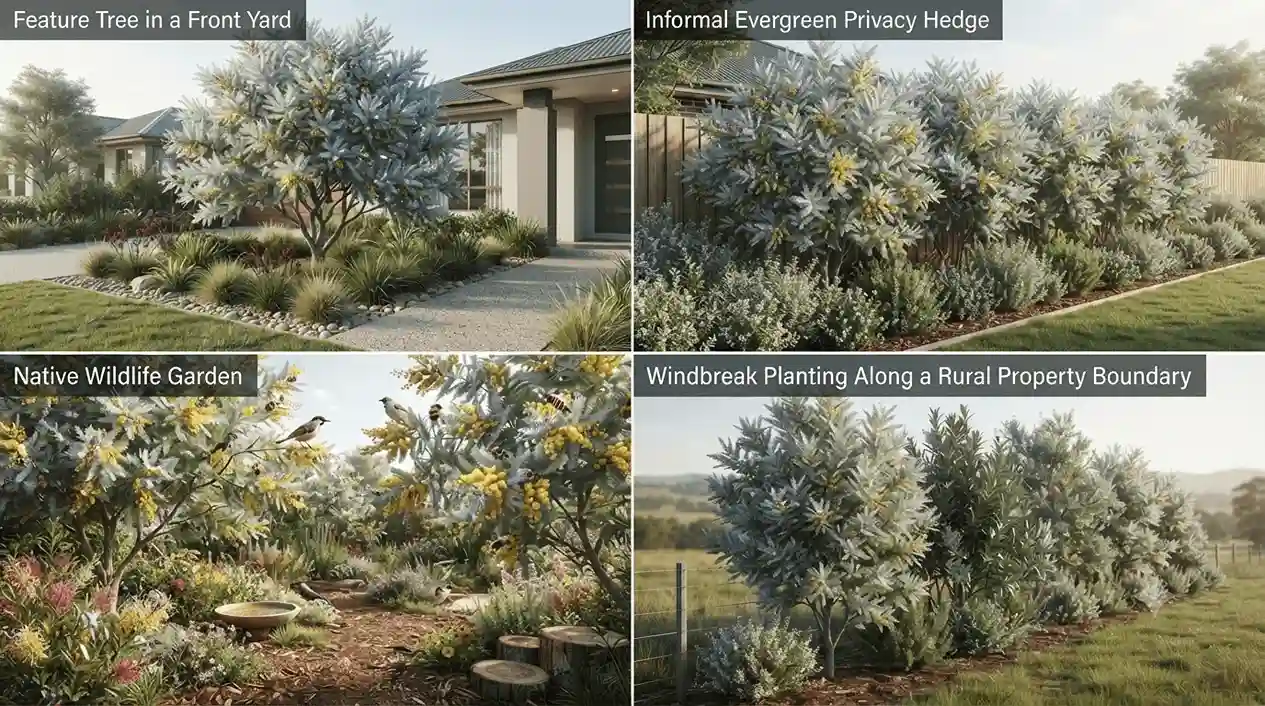
Acacia Sterling Silver is one of the most versatile silver-foliaged Australian native trees for residential and public landscapes. Its evergreen habit, soft silver-grey foliage, and manageable size make it suitable for both modern and naturalistic garden designs. Whether planted as a focal point or incorporated into a larger native landscape, it provides year-round structure and seasonal interest.
In our experience, the silvery foliage stands out particularly well when planted alongside darker green shrubs or flowering native plants, creating attractive colour contrast without overwhelming the surrounding landscape.
Feature Tree
Acacia Sterling Silver makes an excellent feature tree due to its elegant form and distinctive foliage.
Benefits as a specimen tree include:
- Attractive year-round silver-grey foliage
- Upright, balanced canopy
- Seasonal yellow flowers
- Low-maintenance growth
- Suitable for medium-sized gardens
It works particularly well:
- Near entrances
- In front gardens
- Beside lawns
- Within gravel gardens
- As a focal point in native landscapes
Allow enough open space around the canopy so the foliage colour and natural branching can be fully appreciated.
Native Garden Plant
As an Australian native, Acacia Sterling Silver integrates naturally with many other indigenous plants.
Suitable companion plants include:
- Grevilleas
- Callistemons (Bottlebrush)
- Westringia
- Correas
- Banksias
- Lomandras
- Dianellas
These combinations create gardens that:
- Support local wildlife
- Require relatively low maintenance
- Tolerate Australian climatic conditions
- Provide year-round visual interest
Because the plant is evergreen, it contributes structure even when neighbouring species are not flowering.
Informal Hedge
Acacia Sterling Silver can be used as an informal hedge or privacy screen thanks to its dense branching and evergreen foliage.
Rather than creating a tightly clipped formal hedge, it develops a softer, more natural screen.
Benefits include:
- Year-round privacy
- Wind protection
- Attractive silver foliage
- Habitat for birds
- Seasonal flowering
For hedge planting:
- Space plants according to their expected mature width.
- Prune lightly after flowering to encourage dense branching.
- Avoid excessive trimming that removes too much healthy foliage.
An informal hedge also softens boundaries while maintaining a natural Australian landscape appearance.
Wildlife Gardens
Acacia Sterling Silver contributes valuable habitat for native wildlife.
Its flowers provide nectar and pollen for:
- Native bees
- Honeybees
- Butterflies
- Hoverflies
- Other beneficial insects
The dense canopy also offers:
- Shelter for small birds
- Nesting opportunities
- Protection from predators
- Resting sites during hot weather
Including flowering wattles within wildlife gardens helps increase biodiversity while supporting pollinating insects that benefit nearby flowering plants.
Acacia Sterling Silver vs Other Silver Wattles
Although several Australian wattles have silver foliage, they differ in mature size, growth habit, and landscape uses. Understanding these differences helps gardeners choose the most suitable plant for their available space and design goals.
Acacia Sterling Silver vs Acacia binervia
Acacia Sterling Silver and Acacia binervia share similarities but are not always identical plants. “Sterling Silver” is commonly marketed as a selected ornamental form valued for its distinctive foliage, while Acacia binervia refers to the botanical species.
Foliage
Acacia Sterling Silver is generally selected for its brighter, more ornamental silver-grey foliage.
Acacia binervia typically has greener to grey-green foliage, depending on the individual plant and growing conditions.
Mature Size
Sterling Silver selections are often chosen for their manageable garden size.
The species Acacia binervia may grow larger under favourable natural conditions.
Growth Habit
Acacia Sterling Silver usually develops:
- Dense branching
- Compact canopy
- Uniform ornamental shape
Acacia binervia often displays a more natural woodland growth habit.
Landscaping Uses
Sterling Silver is commonly used for:
- Feature planting
- Screening
- Residential gardens
- Native landscaping
Acacia binervia is also suitable for restoration projects and larger landscapes where a more natural appearance is desired.
Maintenance
Both benefit from:
- Well-drained soil
- Full sun
- Occasional pruning
- Limited fertiliser
Sterling Silver generally requires slightly more shaping if maintained as a hedge.
Sterling Silver vs Other Silver Acacia Trees
Several Australian Acacia species have attractive silver foliage.
When comparing them, consider:
- Mature height
- Canopy width
- Growth speed
- Foliage colour
- Flowering performance
- Intended landscape use
| Feature | Acacia Sterling Silver | Acacia binervia | Other Silver Acacias |
| Foliage | Bright silver-grey | Grey-green to silver | Varies by species |
| Height | Medium | Medium to large | Highly variable |
| Growth Rate | Moderate to fast | Moderate | Moderate to fast |
| Best Uses | Feature tree, hedge, screening | Native landscapes, restoration | Feature planting, windbreaks, ornamental gardens |
| Maintenance | Low | Low | Depends on species |
Selecting the right silver wattle depends on available space, desired appearance, and local growing conditions rather than foliage colour alone.
Common Growing Problems and Solutions
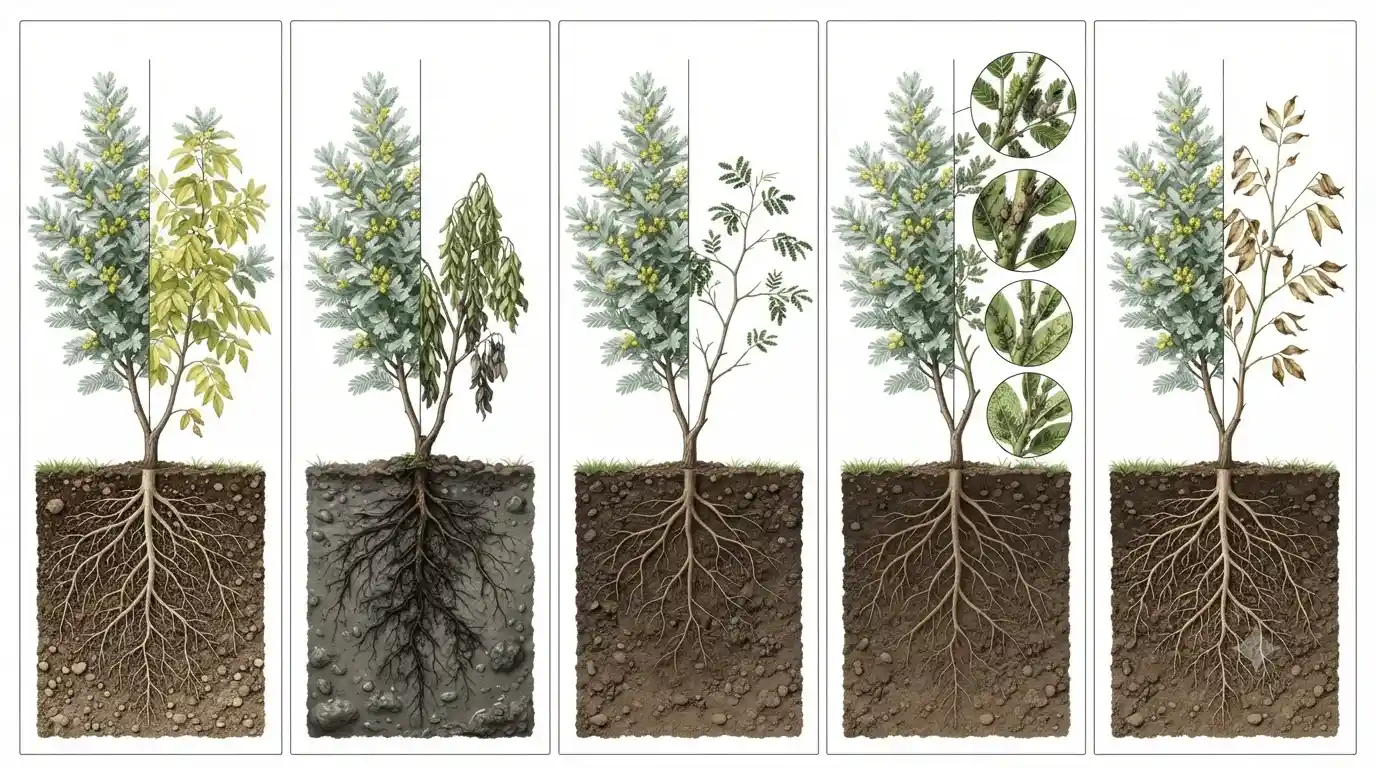
Even though Acacia Sterling Silver is considered relatively hardy, it can develop problems if grown in unsuitable conditions. Most issues are preventable with proper planting, watering, and ongoing care.
Yellow Leaves
Causes
Yellow foliage commonly results from:
- Overwatering
- Poor drainage
- Nutrient imbalance
- Root stress
- Prolonged waterlogging
Symptoms
- Yellowing leaves
- Reduced vigour
- Leaf drop
- Slow new growth
Prevention
- Plant in free-draining soil.
- Water only when necessary.
- Avoid compacted planting sites.
Solutions
Check soil moisture before watering. Improve drainage where required and remove severely affected branches if root health has been compromised.
Poor Growth
Causes
Poor growth may occur because of:
- Insufficient sunlight
- Heavy clay soil
- Root restriction
- Drought stress
- Poor planting location
Symptoms
- Sparse canopy
- Small leaves
- Limited annual growth
- Weak branching
Prevention
Choose a sunny location with well-drained soil.
Solutions
Correct watering practices, improve soil conditions where possible, and avoid excessive fertiliser that may create weak, soft growth.
Root Rot
Causes
Root rot develops when roots remain in saturated soil for extended periods.
Symptoms
- Wilting despite moist soil
- Yellow foliage
- Branch dieback
- Soft or decaying roots
Prevention
The best prevention is excellent drainage.
Raised beds or planting mounds can significantly reduce the risk in heavier soils.
Solutions
Reduce watering immediately and improve drainage. Severely affected trees may be difficult to recover if extensive root damage has already occurred.
Pest Issues
Acacia Sterling Silver is generally resistant to major pest problems but may occasionally attract:
- Scale insects
- Aphids
- Leaf-eating caterpillars
- Psyllids
Symptoms
- Sticky leaves
- Distorted new growth
- Visible insects
- Minor foliage damage
Prevention
Healthy, unstressed trees are naturally more resistant to pests.
Encouraging beneficial insects such as ladybirds and lacewings can also help maintain natural pest control.
Solutions
Small infestations can often be managed by pruning affected growth or washing insects from the foliage with water. Larger infestations may require horticultural oils or insecticidal soaps approved for use on native plants.
Frost or Heat Damage
Causes
Extreme weather can stress young or newly planted trees.
Symptoms
Frost damage:
- Blackened young shoots
- Burnt foliage
- Dieback of tender growth
Heat damage:
- Scorched leaf edges
- Wilting
- Premature leaf drop
Prevention
- Protect young plants during severe frosts.
- Apply mulch to moderate soil temperature.
- Water deeply before prolonged heatwaves.
Solutions
Remove damaged growth once new shoots appear and continue normal care. Healthy established plants usually recover well after temporary weather-related stress.
Common Beginner Mistakes
Most problems with Acacia Sterling Silver are caused by incorrect planting or maintenance rather than the plant itself. Avoiding a few common mistakes will help establish a healthy, long-lived tree with attractive silver foliage.
Planting in Poorly Drained Soil
Poor drainage is the leading cause of failure in many Australian native plants.
Why it’s a problem:
- Roots require oxygen as well as moisture.
- Waterlogged soil encourages fungal diseases.
- Long periods of saturated soil can lead to root rot.
How to avoid it:
- Plant in free-draining soil.
- Improve drainage before planting if necessary.
- Use raised beds or mounds in heavy clay areas.
Overwatering
New gardeners often assume native plants require frequent watering.
In reality, Acacia Sterling Silver needs regular watering only while becoming established.
Too much water can cause:
- Yellow leaves
- Weak growth
- Root diseases
- Reduced drought tolerance
Instead, water deeply and allow the soil to dry slightly before watering again.
Applying Too Much Fertiliser
Acacias naturally fix nitrogen through beneficial soil bacteria, so heavy fertiliser applications are rarely necessary.
Excess fertiliser can lead to:
- Soft, weak growth
- Nutrient imbalance
- Reduced flowering
- Phosphorus toxicity in phosphorus-sensitive native plants
If feeding is required, choose a slow-release fertiliser formulated specifically for Australian native plants and apply it sparingly.
Incorrect Pruning
Heavy pruning can spoil the tree’s natural shape and place unnecessary stress on the plant.
Avoid:
- Removing large limbs unnecessarily
- Cutting into old leafless wood
- Pruning during periods of extreme heat
Instead:
- Lightly prune after flowering.
- Remove dead, damaged, or crossing branches.
- Maintain the tree’s natural form rather than forcing a formal shape.
Choosing an Unsuitable Location
Planting too close to buildings or in heavily shaded areas often causes long-term problems.
Before planting, consider:
- Mature height and spread
- Sunlight availability
- Soil drainage
- Nearby underground services
- Future maintenance access
Giving the tree adequate space from the beginning reduces the need for major pruning later.
Pot Growing Mistakes
Container-grown plants require more attention than those planted in the ground.
Common mistakes include:
- Using containers without drainage holes
- Choosing pots that are too small
- Allowing roots to become pot-bound
- Overwatering during winter
- Leaving water standing in saucers
Repot young plants as needed and consider transplanting them into the garden once they outgrow their container.
Environmental Limitations
Although Acacia Sterling Silver is adaptable, it performs best when grown within its preferred environmental conditions. Understanding its limitations helps gardeners choose suitable planting sites and minimise stress.
Frost Tolerance
Established plants tolerate light to moderate frost better than newly planted specimens.
Young plants may require protection during their first one or two winters in colder regions.
Where severe frosts are common:
- Plant in a sheltered position.
- Apply organic mulch around the root zone.
- Protect young plants with frost cloth when extreme cold is forecast.
Heat Tolerance
Acacia Sterling Silver performs well in warm Australian climates.
Once established, it tolerates:
- Hot summers
- Periodic drought
- High solar exposure
During prolonged heatwaves:
- Deep watering before extreme temperatures helps reduce stress.
- Mulch helps conserve soil moisture.
- Avoid heavy pruning during very hot weather.
Coastal Exposure
Many silver-foliaged Acacia selections cope reasonably well with coastal conditions.
Moderate exposure to:
- Salt-laden air
- Coastal winds
- Sandy soils
is generally tolerated, although severe salt spray immediately adjacent to the shoreline may damage foliage.
Sheltered coastal gardens usually provide the best growing conditions.
Wind Tolerance
The tree has good wind tolerance once established due to its flexible branching and well-developed root system.
However, prolonged exposure to very strong winds may:
- Dry foliage rapidly
- Damage young branches
- Reduce flowering
Windbreak planting or sheltered positions are beneficial in exposed inland and coastal sites.
Soil Limitations
Acacia Sterling Silver adapts to several soil types but performs poorly in:
- Permanently wet soils
- Poorly drained clay
- Highly compacted ground
Good drainage remains more important than soil fertility.
Rainfall Considerations
The species performs best where rainfall is moderate or supplemented with occasional irrigation during prolonged dry periods.
Extended wet conditions are generally more problematic than temporary drought because saturated soils increase the risk of root diseases.
Where Is Acacia Sterling Silver Best Suited in Australia?
Acacia Sterling Silver is suitable for many Australian climates provided it receives full sun and well-drained soil. Its adaptability has made it a popular ornamental choice for residential landscapes across several regions.
Temperate Regions
Temperate areas provide some of the most favourable growing conditions.
These regions typically offer:
- Moderate rainfall
- Mild winters
- Warm summers
- Good seasonal growth
The tree establishes readily and develops a dense, attractive canopy.
Dry Inland Areas
Once established, Acacia Sterling Silver performs well in many inland locations because of its drought tolerance.
To maximise success:
- Water regularly during establishment.
- Apply mulch to conserve moisture.
- Choose well-drained planting sites.
Growth may slow during prolonged drought, but healthy plants generally recover after seasonal rainfall.
Coastal Gardens
In many coastal areas, Acacia Sterling Silver grows successfully when protected from intense salt spray.
Its silver foliage complements coastal landscape designs and pairs well with other salt-tolerant Australian native plants.
Growing Conditions Relevant to Perth
Gardeners interested in Acacia Sterling Silver Perth growing conditions should focus on climate rather than local suppliers.
Perth’s Mediterranean climate is generally favourable because it provides:
- Long sunny periods
- Dry summers
- Mild winters
However, success depends on:
- Well-drained soil
- Deep establishment watering
- Occasional irrigation during extended summer drought
Heavy clay soils in some suburbs may require drainage improvement before planting.
Buying Considerations
Choosing a healthy Acacia Sterling Silver plant greatly improves its chances of establishing successfully. While availability varies throughout Australia, selecting quality nursery stock is more important than purchasing the largest specimen.
Selecting a Healthy Plant
Look for plants with:
- Healthy silver-grey foliage
- Even branching
- No signs of pests
- Strong central structure
- Well-developed but not pot-bound roots
Avoid plants showing:
- Yellow leaves
- Wilted growth
- Broken stems
- Root-bound containers
- Obvious pest infestations
Container Sizes
Acacia Sterling Silver is commonly available in several nursery container sizes.
Smaller containers:
- Cost less
- Establish quickly after planting
- Adapt more easily to new soil
Larger specimens:
- Provide an immediate landscape effect
- Require more careful watering during establishment
- May experience greater transplant shock if roots are restricted
Nursery Quality Indicators
A reputable nursery will usually provide plants that have:
- Accurate botanical labelling
- Healthy root systems
- Consistent watering
- Good overall structure
- Freedom from major pests and diseases
Ask whether the plant has been hardened off before sale, especially if purchasing during warmer months.
What Affects Plant Cost?
The price of Acacia Sterling Silver varies depending on factors such as:
- Plant size
- Age
- Container size
- Nursery growing costs
- Regional availability
- Seasonal demand
Searches for terms such as Acacia Sterling Silver Bunnings or Acacia Sterling Silver price often reflect consumer interest in availability. However, stock, sizes, and pricing can differ significantly between nurseries and regions, so availability should be confirmed locally before purchase.
Conclusion
Acacia Sterling Silver is an attractive Australian native ornamental tree valued for its striking silver-grey foliage, evergreen habit, and versatility in a wide range of landscapes. Whether grown as a feature tree, informal hedge, privacy screen, or part of a native garden, it provides year-round interest with relatively low maintenance.
Its success depends on a few essential growing conditions: full sun, well-drained soil, careful watering during establishment, and light pruning to maintain a healthy structure. Once established, the tree shows good drought tolerance and supports local biodiversity by providing nectar, pollen, and shelter for native wildlife.
For gardeners seeking a hardy silver-foliaged native tree, Acacia Sterling Silver offers an excellent balance of ornamental beauty, manageable mature size, and long-term landscape value. By planting it in a suitable location and following accepted horticultural practices, you can enjoy healthy growth and seasonal colour for many years.
Frequently Asked Questions
How tall does Acacia Sterling Silver grow?
Acacia Sterling Silver typically reaches 4–8 metres in height with a spread of approximately 3–5 metres, although mature size varies depending on climate, soil quality, and maintenance.
Is Acacia Sterling Silver fast growing?
Yes. It is generally considered a moderate to fast-growing Australian native tree. Growth is usually most vigorous during the first few years after planting when provided with full sun, well-drained soil, and consistent watering.
Can Acacia Sterling Silver be grown in a pot?
Yes. Young plants grow well in large containers with excellent drainage. However, because of their mature size and expanding root system, long-term growth is usually more successful when planted in the ground.
Does Acacia Sterling Silver have invasive roots?
No. Acacia Sterling Silver is not generally regarded as having invasive roots. Its roots naturally spread in search of moisture and nutrients, so it is still advisable to plant several metres away from buildings, pipes, and other structures.
How long does Acacia Sterling Silver live?
Under favourable growing conditions, Acacia Sterling Silver commonly lives 15–30 years. Proper drainage, correct watering, and routine maintenance can help maximise its lifespan.
Is Acacia Sterling Silver suitable as a hedge?
Yes. Its dense evergreen foliage makes it an excellent choice for informal hedges, privacy screens, and windbreaks. Light pruning after flowering helps maintain a full, attractive shape.
What is the difference between Acacia Sterling Silver and Acacia binervia?
Acacia binervia is the recognised botanical species, while Acacia Sterling Silver is generally regarded as an ornamental selection or cultivated form valued for its brighter silver-grey foliage, compact growth habit, and suitability for residential landscaping. Although they share many characteristics, nursery naming and plant forms may vary.