Introduction
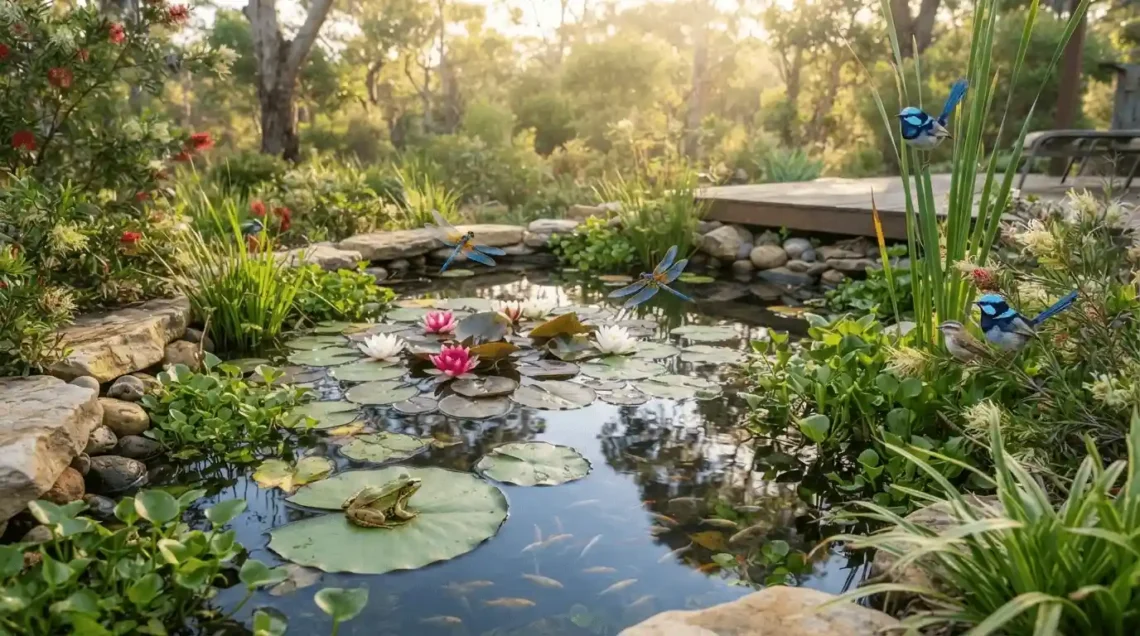
Waterplants are an essential part of healthy ponds, lakes, wetlands, streams, and decorative water gardens. These plants not only enhance the appearance of a landscape but also improve water quality, support wildlife, and create balanced aquatic ecosystems. While the terms pond plants, aquatic plants, and water garden plants are often used interchangeably, they refer to plants adapted to different growing positions within or around water. Across water plants Australia, homeowners and landscapers increasingly use native and ornamental species to build sustainable backyard ponds and natural landscapes that require less maintenance while supporting local biodiversity.
By Greenery Inside | Plant Care & Gardening Expert
Quick Summary
- Waterplants naturally improve pond health by filtering water, reducing algae, and providing habitat for wildlife.
- Different aquatic plants thrive as floating, submerged, marginal, or deep-water species depending on water depth.
- Australian native water plants are well adapted to local climates, making them easier to grow and maintain.
- Combining various pond plants creates healthier ecosystems and more attractive water gardens.
- Selecting plants suited to your pond size and climate results in long-term success.
What Are Waterplants?
Waterplants are aquatic plants that have adapted to grow in water or consistently moist environments.. Also known as aquatic plants, they can grow fully submerged, float on the water’s surface, or root in saturated soil while extending foliage above the water.
Unlike ordinary garden plants, water plants have specialized structures that allow them to tolerate low oxygen levels around their roots and constant exposure to moisture. Some species absorb nutrients directly from the water, helping maintain water quality naturally.
These plants occur in many freshwater environments throughout Australia and around the world, including ponds, rivers, wetlands, marshes, lakes, and slow-moving streams. Some species even thrive along the edges of waterways where soil remains damp year-round.
Waterplants perform numerous ecological functions:
- Filter excess nutrients from water
- Stabilize pond edges
- Produce oxygen
- Provide shelter for fish and frogs
- Support insects and pollinators
- Reduce excessive algae growth
Many plants that grow by water have evolved specifically for fluctuating water levels, making them resilient in natural and constructed ponds alike.
Whether grown in ornamental ponds or natural wetlands, plants water ecosystems rely on aquatic vegetation to remain balanced and healthy. Likewise, many river plants help prevent erosion while improving habitat for aquatic wildlife.
Types of Aquatic Habitats
Aquatic plants grow in a wide range of freshwater environments. Understanding these habitats helps gardeners choose suitable species for different pond conditions.
| Habitat | Characteristics | Suitable Plant Types |
| Ponds | Still or slow-moving water | Water lilies, floating plants, marginals |
| Rivers | Flowing water with changing levels | Rushes, sedges, river plants |
| Wetlands | Permanently or seasonally wet soils | Native sedges, reeds, rushes |
| Billabongs | Calm inland water bodies | Billabong water plants, native lilies |
| Lakes | Large bodies of standing water | Deep-water aquatic plants |
| Water Gardens | Artificial ornamental ponds | Mixed aquatic and decorative species |
Natural river plants are adapted to flowing water and fluctuating water levels, while billabong water plants thrive in calmer conditions where water movement is minimal. Water gardens often combine several habitat types to achieve both ecological balance and visual appeal.
Greenery Inside Insight: In our experience designing small backyard ponds, including plants from multiple aquatic zones creates a healthier ecosystem than relying on a single plant type.
Types of Pond Plants and Water Garden Plants
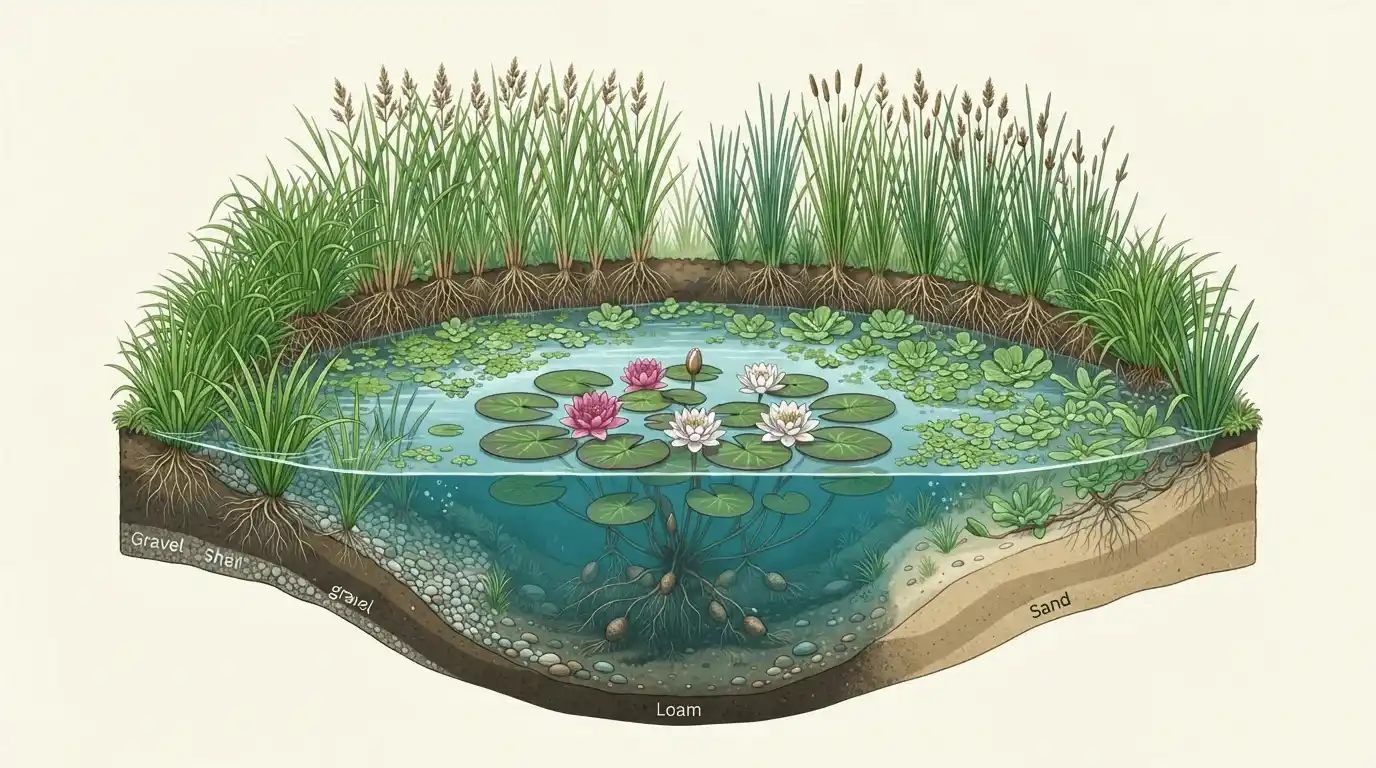
Most successful ponds include a combination of different aquatic plant categories. Each performs a unique role in maintaining water quality, supporting wildlife, and creating visual interest.
Floating Water Plants
Floating plants drift freely across the water surface without rooting into the pond floor. Their roots hang beneath the water, absorbing nutrients directly from the surrounding water.
These floating water plants for ponds provide several important benefits:
- Shade the water surface
- Reduce sunlight reaching algae
- Lower water temperatures during summer
- Absorb excess nutrients
- Provide shelter for fish fry
- Offer resting places for frogs and insects
Because floating plants grow rapidly under warm conditions, they should be monitored regularly to prevent them from covering excessive portions of the pond surface.
As of recent pond management recommendations in 2026, maintaining approximately 40–60% surface coverage helps balance shade while preserving sufficient light penetration and oxygen exchange.
Water Lilies
Among the most recognizable aquatic plants, water lilies produce floating leaves and spectacular blooms that transform ponds into ornamental features.
An Australian water lily is especially suited to local growing conditions, offering improved resilience to Australian climates while supporting native aquatic ecosystems.
Native species, including the Australian native water lily, develop broad floating leaves that shade the water and reduce algae growth. Their colourful water flowers attract pollinating insects while providing shelter for fish beneath the leaves.
Benefits of growing a native water lily include:
- Beautiful seasonal flowers
- Natural shade for pond life
- Reduced algae growth
- Habitat for frogs
- Lower summer water temperatures
Several Australian native water lilies perform exceptionally well in warm climates, while others tolerate cooler southern regions when planted at appropriate depths.
Compared with many exotic cultivars, native species generally establish more reliably and often require less intervention once mature.
Greenery Inside Recommendation: We recommend selecting an Australian native water lily whenever possible because these species usually adapt better to local rainfall patterns and seasonal temperatures than imported varieties.
Marginal Pond Plants
Marginal plants grow along shallow pond edges where their roots remain underwater while stems and foliage emerge above the surface.
These pond plants create smooth transitions between water and surrounding landscapes while stabilizing pond banks against erosion.
Common benefits include:
- Stabilizing shoreline soil
- Filtering runoff
- Providing wildlife habitat
- Creating nesting sites for frogs
- Softening pond edges visually
Many pond water plants grow best in water depths between 5 and 20 centimetres, although individual species vary considerably.
Using several water plants for ponds around the perimeter also improves biodiversity by creating shelter for beneficial insects, dragonflies, and amphibians.
Popular marginal plants include sedges, rushes, water ribbons, and flowering aquatic perennials.
Tall Pond Plants
Tall aquatic plants add height and structure to ponds while serving valuable ecological functions.
These tall pond plants often grow upright along pond margins or in shallow water, creating natural screens and wind protection.
Advantages include:
- Vertical landscape interest
- Shelter for birds
- Wind reduction across pond surfaces
- Nesting habitat
- Improved privacy
- Increased biodiversity
Tall reeds, rushes, and native sedges are commonly used in larger ponds where their mature size complements the surrounding landscape.
Because many tall species spread through underground rhizomes, occasional division helps maintain healthy growth and prevents overcrowding.
Benefits of Water Plants in Ponds
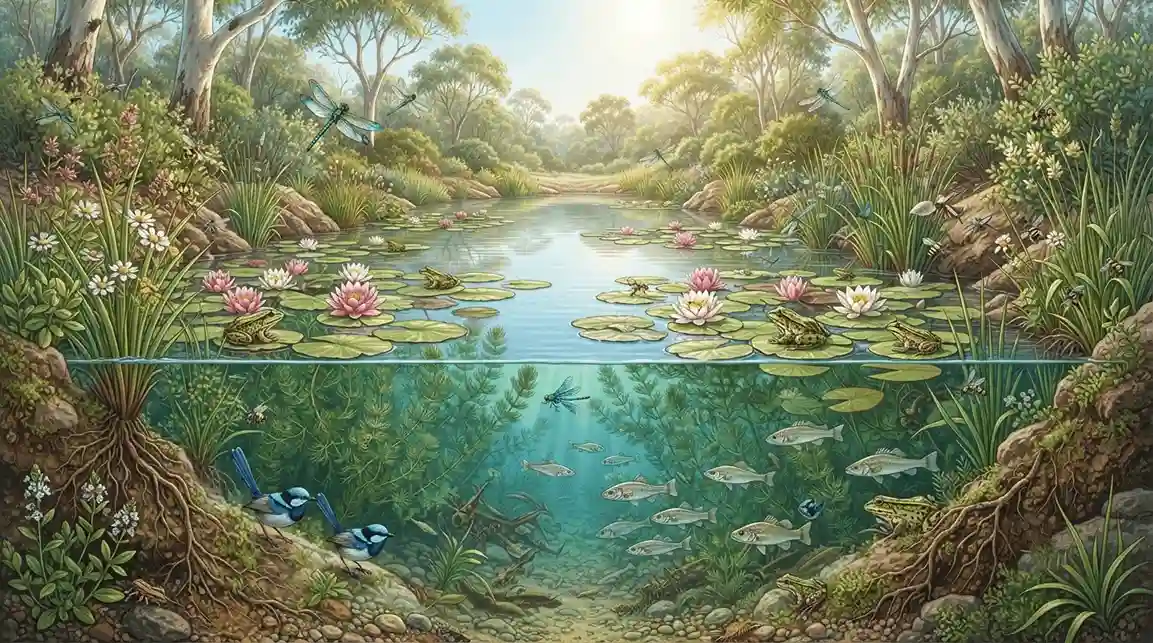
Water plants are far more than decorative additions. Healthy populations of aquatic pond plants perform essential ecological functions that improve both water quality and biodiversity.
Major benefits include:
- Improve water quality by absorbing dissolved nutrients.
- Filter excess nutrients that would otherwise feed algae.
- Reduce algae growth through shading and nutrient competition.
- Increase oxygen levels, particularly through submerged species.
- Support frogs and fish by providing food, breeding sites, and shelter.
- Attract pollinators including native bees and dragonflies.
- Prevent erosion by stabilising pond edges.
- Improve biodiversity by supporting a wide range of aquatic organisms.
When several categories of water plants ponds are combined, they create a self-supporting ecosystem that requires fewer chemical treatments and less maintenance.
Scientific studies consistently show that balanced aquatic vegetation contributes to healthier freshwater ecosystems by cycling nutrients, reducing sediment movement, and supporting beneficial microorganisms.
Australian Native Water Plants
Australian native water plants are naturally adapted to local rainfall patterns, soils, temperatures, and wildlife interactions. As a result, they often outperform exotic species in Australian gardens while requiring less maintenance. If you are also selecting species for bog gardens, rain gardens, or permanently damp landscapes, our guide to Plants That Like Wet Soil Australia explores additional native and ornamental species that thrive in consistently moist conditions.
Choosing Australian native water plants provides several advantages:
- Better adaptation to local climates
- Greater drought and heat resilience
- Support for native frogs, insects, and birds
- Reduced maintenance after establishment
- Improved biodiversity
- Lower risk of invasive behaviour
Whether establishing a formal pond or restoring a natural wetland, native Australian water plants help create sustainable aquatic environments.
Many native water plants Australia have evolved to withstand Australia’s highly variable climate, including seasonal flooding, drought, and temperature extremes.
Likewise, native aquatic plants Australia contribute significantly to freshwater habitat restoration projects because they support indigenous wildlife and maintain ecological balance.
Popular Australian aquatic plants are increasingly available through specialist nurseries, making it easier than ever to include local species in home landscapes.
Today, gardeners can select from a wide variety of Australian water plants suitable for ornamental ponds, wildlife gardens, rain gardens, and natural wetlands.
As interest in sustainable gardening continues to grow, demand for water plants in Australia has increased, particularly among homeowners seeking environmentally responsible landscaping solutions.
Popular Australian Native Water Plants
Several native species are highly regarded for their beauty, adaptability, and ecological value.
| Plant | Best Growing Position | Main Benefits |
| Australian Native Water Lily | Deep water | Flowers, fish shade, wildlife habitat |
| Nardoo (Marsilea drummondii) | Wet margins | Ground cover, erosion control |
| Water Ribbons (Triglochin procera) | Shallow water | Excellent oxygenation and habitat |
| Spike Rush (Eleocharis spp.) | Pond edges | Bank stabilisation and filtration |
| Club Rush (Bolboschoenus spp.) | Wetlands | Wildlife shelter and nutrient uptake |
| Native Sedges (Carex spp.) | Marginal zones | Erosion prevention and habitat creation |
Each species performs best under different water depths and growing conditions.
- Australian Native Water Lily: Ideal for ornamental ponds with calm, permanent water.
- Nardoo: Suitable for shallow wetlands and naturalistic water gardens.
- Water Ribbons: Excellent for filtering nutrients while providing underwater habitat.
- Spike Rush: Performs well around pond edges and shallow marshes.
- Club Rush: Valuable in larger ponds and natural billabongs.
- Native Sedges: Highly versatile for pond margins, rain gardens, and creek edges.
Greenery Inside Experience: We have found that combining native sedges, water ribbons, and Australian native water lilies creates one of the most balanced planting combinations for backyard ponds, offering year-round interest while supporting frogs, dragonflies, and beneficial aquatic insects.
Choosing Water Plants for Different Pond Types
Choosing the right water garden plants depends on your pond’s size, depth, purpose, sunlight exposure, and local climate. A healthy pond usually includes a combination of floating plants, water lilies, marginal plants, and emergent species. Each occupies a different growing zone and contributes to cleaner water, healthier wildlife habitats, and a balanced aquatic ecosystem. Water features also integrate beautifully into a Modern Australian Native Garden, where native aquatic plants complement drought-tolerant shrubs, grasses, and feature trees to create a cohesive landscape.
When selecting pond plants Australia, consider the following factors:
- Pond size and maximum water depth
- Hours of direct sunlight
- Water movement from pumps or waterfalls
- Local climate and seasonal temperatures
- Desired appearance and maintenance level
- Wildlife you want to encourage
Rather than relying on a single plant type, combining plants from different aquatic zones creates a more resilient pond that naturally filters water and supports biodiversity.
Small Garden Ponds
Compact ponds require carefully selected plants that provide multiple benefits without overwhelming the available space. Smaller species maintain an attractive appearance while leaving enough open water for oxygen exchange and fish movement.
Ideal choices include:
- Compact Australian native water lilies
- Dwarf sedges
- Water ribbons
- Small rushes
- Carefully managed floating plants
Avoid vigorous species that spread aggressively, as they can quickly cover the pond surface and compete with slower-growing plants.
Greenery Inside Experience: In our experience, maintaining approximately 40–60% open water creates the best balance between shade, oxygen exchange, and healthy aquatic plant growth in small backyard ponds.
Wildlife Ponds
Wildlife ponds are designed to support native frogs, birds, insects, and aquatic animals rather than focusing solely on ornamental appeal. Native species are generally the best choice because they provide food, breeding sites, and shelter for local wildlife.
Suitable plants include:
- Native sedges
- Spike rush
- Club rush
- Water ribbons
- Australian native water lilies
These plants help attract:
- Frogs
- Dragonflies
- Native bees
- Waterbirds
- Beneficial aquatic insects
Using locally native species also strengthens the ecological value of the pond by supporting insects and animals that have evolved alongside these plants.
Ornamental Water Gardens
Ornamental ponds combine visual appeal with ecological function. The goal is to create a balanced display of flowers, foliage, and varying plant heights while maintaining healthy water conditions.
Popular combinations include:
- Flowering water lilies
- Colourful marginal plants
- Controlled floating plants
- Upright reeds and rushes
Layering plants with different textures and bloom times provides year-round interest. Repeating similar plant groupings around the pond also creates a cohesive landscape design.
Natural Billabongs and Creek Edges
Natural-style ponds and creek-edge plantings are intended to replicate Australia’s freshwater environments. These landscapes benefit from hardy native species that tolerate fluctuating water levels and changing seasonal conditions.
Recommended plants include:
- Native sedges
- Club rush
- Spike rush
- Nardoo (Marsilea drummondii)
- Water ribbons (Triglochin procera)
- Indigenous reeds
These species stabilise pond edges, reduce erosion, filter runoff, and create valuable habitat for aquatic wildlife.
Freshness Note: As of 2026, ecological restoration projects throughout Australia continue to recommend locally sourced native aquatic plants whenever possible, helping preserve regional biodiversity while improving long-term establishment success.
How to Grow and Care for Waterplants
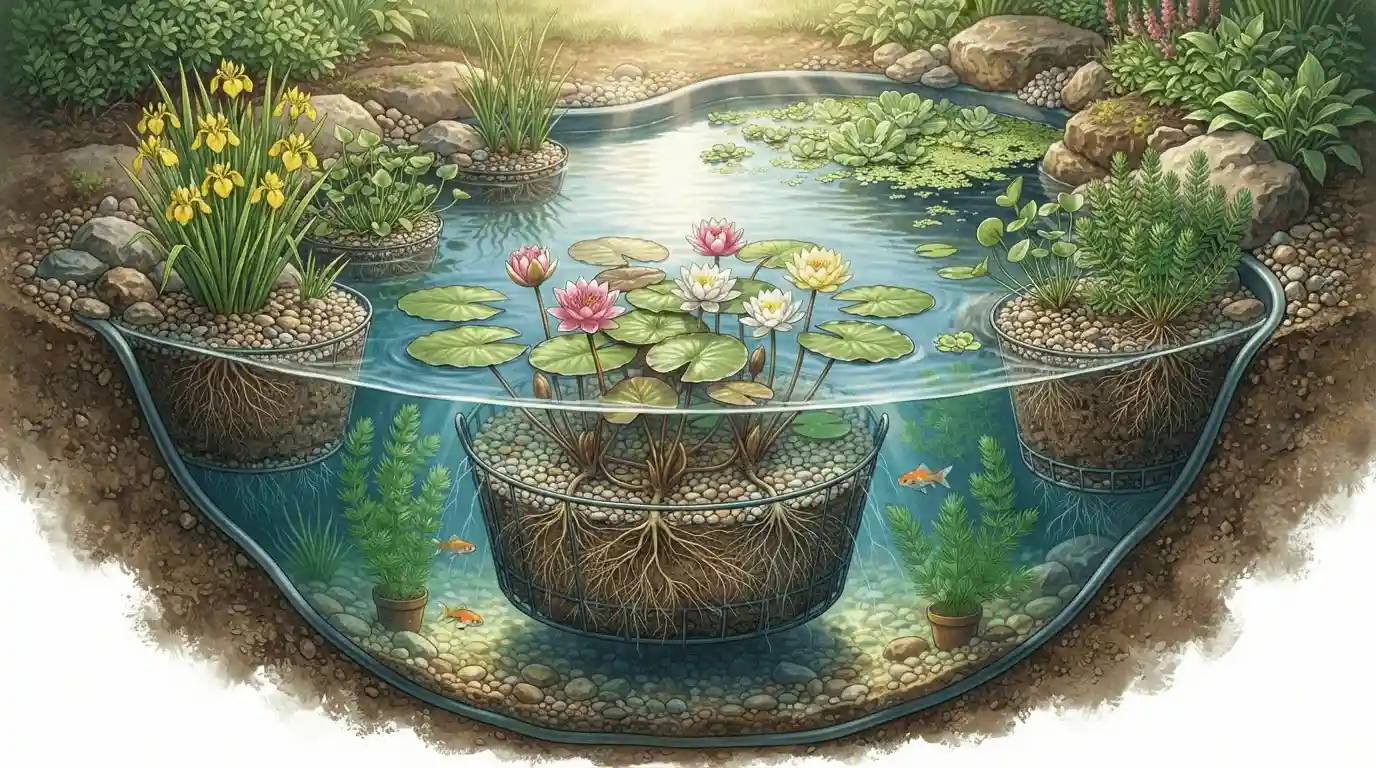
Most waterplants are relatively easy to maintain once they are established in suitable growing conditions. Successful cultivation depends on matching each plant with the correct water depth, sunlight level, growing medium, and seasonal care routine rather than frequent maintenance.
The key elements of successful aquatic plant care include:
- Maintaining suitable water depth
- Providing adequate sunlight
- Using appropriate aquatic soil
- Applying fertiliser carefully
- Performing regular seasonal maintenance
Following established horticultural practices helps aquatic plants remain vigorous while naturally supporting a healthy pond ecosystem.
Water Requirements
Water depth is one of the most important factors affecting the health and growth of aquatic plants. Each category of waterplant has evolved to grow within a specific water zone.
| Plant Type | Recommended Water Depth |
| Floating plants | Float freely on the water surface |
| Water lilies | 30–90 cm |
| Marginal plants | 5–20 cm |
| Emergent reeds and rushes | 10–40 cm |
Water quality is equally important. Healthy ponds generally maintain:
- Stable water levels
- Good oxygen circulation
- Low nutrient pollution
- Minimal chemical contamination
- Balanced pH levels
Avoid placing delicate aquatic plants directly beside powerful fountains or pumps unless the species naturally tolerates flowing water.
Greenery Inside Recommendation: During Australia’s hot summer months, regularly check pond water levels because evaporation can expose crowns and rhizomes, reducing plant health and flowering performance.
Light Requirements
Most flowering aquatic plants perform best when grown in full sun. Adequate light encourages vigorous growth, larger foliage, and abundant flowers.
General lighting recommendations include:
- Full sun (6–8 hours): Ideal for water lilies and most flowering aquatic plants.
- Partial shade (4–6 hours): Suitable for many marginal species.
- Light shade: Best for selected sedges and shade-tolerant wetland plants.
Insufficient sunlight commonly results in:
- Reduced flowering
- Smaller leaves
- Slower growth
- Increased algae because healthy plants compete less effectively for nutrients
In northern Australia and other hot regions, afternoon shade may help protect some species from extreme summer temperatures.
Growing Medium
Unlike terrestrial garden plants, aquatic plants require heavy planting media that remain stable underwater. Lightweight potting mixes often float or release nutrients into the water, encouraging algae growth.
Suitable growing media include:
- Heavy aquatic planting soil
- Clay-based aquatic mixes
- Washed gravel as a top layer
- Aquatic baskets or containers
Avoid using:
- Standard potting mix
- Bark-based compost
- Lightweight garden soil
- Highly fertilised mixes
Planting baskets make long-term maintenance much easier because plants can be repositioned, divided, or removed without disturbing the entire pond.
Fertilising Aquatic Plants
Aquatic plants absorb nutrients from both their roots and the surrounding water, meaning they generally require less fertiliser than terrestrial plants.
For healthy growth:
- Apply slow-release aquatic fertiliser tablets during spring.
- Feed actively growing plants through summer if required.
- Reduce fertilising during autumn.
- Stop feeding dormant plants during winter.
Water lilies usually benefit the most from regular feeding because they produce large leaves and flowers throughout the growing season.
Excess fertiliser should always be avoided, as unused nutrients encourage unwanted algae growth.
Freshness Note: Current aquatic gardening recommendations continue to favour controlled-release aquatic fertilisers because they supply nutrients gradually while minimising nutrient loss into pond water.
Seasonal Maintenance
Routine maintenance keeps waterplants healthy and prevents overcrowding.
Important seasonal tasks include:
- Removing spent flowers
- Trimming damaged or yellow leaves
- Dividing overcrowded plants
- Removing accumulated organic debris
- Cleaning planting baskets when needed
- Monitoring the spread of vigorous species
Spring is generally the best season for dividing mature aquatic plants because new growth begins shortly afterwards.
During autumn:
- Remove dying foliage.
- Reduce organic matter entering the pond.
- Inspect rhizomes for damage.
- Prepare plants for cooler temperatures.
Winter care depends on climate. In tropical Australia, many aquatic plants continue growing throughout the year, while in temperate and southern regions growth slows significantly and some species enter dormancy until spring.
Greenery Inside Experience: We have found that dividing vigorous marginal plants every two to three years restores flowering, improves airflow, and prevents aggressive species from dominating the pond.
Plant Size
Waterplants vary greatly in their mature height and spread depending on species, water depth, climate, nutrient availability, and growing space. Understanding their eventual size helps prevent overcrowding and ensures every plant has enough room to develop properly.
| Plant Category | Typical Mature Height | Typical Spread |
| Floating plants | Surface level | Rapid surface coverage |
| Water lilies | Leaves 10–30 cm above water | 60–200 cm spread |
| Marginal plants | 30–120 cm | 30–90 cm |
| Tall reeds and rushes | 1–3 metres | Clump-forming to spreading |
Several environmental factors influence mature size, including:
- Water depth
- Available sunlight
- Nutrient levels
- Container size
- Species genetics
- Local climate
Larger planting baskets generally support stronger root systems, resulting in healthier foliage and more vigorous flowering. Water lilies also perform best when planted at their recommended depth, allowing leaves to spread naturally across the water surface.
Choosing plants with mature sizes that match your pond dimensions reduces future maintenance and creates a more balanced landscape.
Growth Rate
Waterplants grow at different speeds depending on their species and environmental conditions. Understanding growth rates helps gardeners plan maintenance, spacing, and long-term pond management.
Fast-Growing Species
Some aquatic plants establish rapidly and quickly absorb excess nutrients from the water.
Examples include:
- Floating aquatic plants
- Water ribbons
- Spike rush
- Many native sedges
These fast-growing species are valuable for suppressing algae because they compete effectively for nutrients. However, they should be thinned regularly to prevent overcrowding and excessive surface coverage.
Moderate Growers
Many ornamental marginal plants grow steadily over several seasons, gradually forming attractive clumps without becoming invasive.
Examples include:
- Club rush
- Decorative reeds
- Numerous native sedges
Moderate growers usually require less frequent division and are easier to manage in ornamental ponds.
Slow-Growing Water Lilies
Water lilies establish more slowly than floating plants but develop into long-lived feature plants with impressive foliage and flowers.
Their growth depends on several factors, including:
- Water temperature
- Sunlight exposure
- Nutrient availability
- Plant maturity
- Correct planting depth
Most water lilies become noticeably more vigorous after completing their first full growing season.
Environmental conditions strongly influence growth across all aquatic plants. Warm temperatures, consistent sunlight, stable water levels, and good water quality encourage vigorous development, while cooler weather, excessive shade, poor nutrition, and restricted root space naturally slow plant growth.
Understanding these growth patterns makes it easier to schedule fertilising, plant division, and seasonal maintenance, ensuring a healthy and well-balanced pond throughout the year.
Common Problems with Pond Plants and How to Fix Them
Even well-maintained ponds can experience occasional plant health issues. Most problems are caused by unsuitable growing conditions, poor water quality, incorrect planting depth, or nutrient imbalances rather than disease. Identifying the underlying cause early allows most pond plants and aquatic plants to recover quickly.
Regular observation is the best preventative measure. Inspect your plants every few weeks during the growing season to detect changes in leaf colour, flowering, and overall growth.
Yellow Leaves
Yellow leaves are one of the most common problems affecting aquatic plants. While older leaves naturally die back over time, widespread yellowing usually indicates an environmental issue.
Common causes include:
- Nutrient deficiencies
- Poor water quality
- Insufficient sunlight
- Incorrect planting depth
- Root congestion in containers
How to fix it:
- Remove old or damaged leaves.
- Check water quality and nutrient levels.
- Feed heavy feeders, such as water lilies, with aquatic fertiliser tablets.
- Ensure plants receive the recommended amount of sunlight.
- Divide overcrowded plants if necessary.
Occasional yellow leaves are normal as plants replace older foliage throughout the growing season.
Poor Flowering
Most aquatic plants flower reliably when grown under suitable conditions. Poor flowering usually indicates that one or more growing requirements are not being met.
Possible causes include:
- Too little sunlight
- Overcrowded rhizomes
- Incorrect planting depth
- Lack of nutrients
- Immature plants
Solutions:
- Provide at least six hours of direct sunlight daily for flowering species.
- Divide mature water lilies every few years.
- Plant at the recommended depth.
- Apply slow-release aquatic fertiliser during active growth.
- Be patient with newly planted specimens, as some require a full growing season before flowering heavily.
Greenery Inside Experience: We have found that insufficient sunlight is the most common reason water lilies fail to bloom. Simply relocating containers to a sunnier position often produces noticeable improvements within one growing season.
Excessive Algae
Algae naturally occur in ponds, but excessive growth indicates an imbalance within the aquatic ecosystem.
Common causes include:
- Excess nutrients
- Too much direct sunlight
- Too few aquatic plants
- Overfeeding fish
- Accumulated organic debris
Preventing algae naturally:
- Increase plant coverage with a mixture of floating, marginal, and submerged species.
- Remove fallen leaves before they decompose.
- Avoid overfertilising aquatic plants.
- Feed pond fish only what they consume quickly.
- Maintain good water circulation where appropriate.
A balanced collection of aquatic plants naturally competes with algae for nutrients, reducing the need for chemical treatments.
Rotting Rhizomes
Rhizomes are underground stems that store energy and produce new growth. Healthy rhizomes should be firm and free from foul odours.
Rotting usually develops because of:
- Poor planting media
- Waterlogged organic soil
- Overcrowded containers
- Physical damage
- Poor sanitation during division
How to prevent rhizome rot:
- Use heavy aquatic planting soil.
- Divide overcrowded plants regularly.
- Remove soft or diseased tissue immediately.
- Plant rhizomes at the correct depth.
- Avoid burying growing tips too deeply.
Healthy rhizomes are essential for vigorous foliage and reliable flowering.
Pest Damage
Although aquatic plants experience fewer pest problems than many terrestrial plants, several insects and molluscs can occasionally cause damage.
Common pests include:
- Aphids
- Snails
- Caterpillars
Signs of infestation may include:
- Distorted leaves
- Holes in foliage
- Sticky residue from aphids
- Chewed flowers
- Reduced plant vigour
Prevention strategies:
- Inspect plants regularly.
- Remove pests by hand where practical.
- Encourage beneficial insects.
- Avoid excessive fertiliser, which produces soft, pest-prone growth.
- Remove severely damaged leaves.
Healthy aquatic plants usually recover quickly from minor pest damage when growing conditions remain favourable.
Australian Native Water Plants vs Exotic Pond Plants
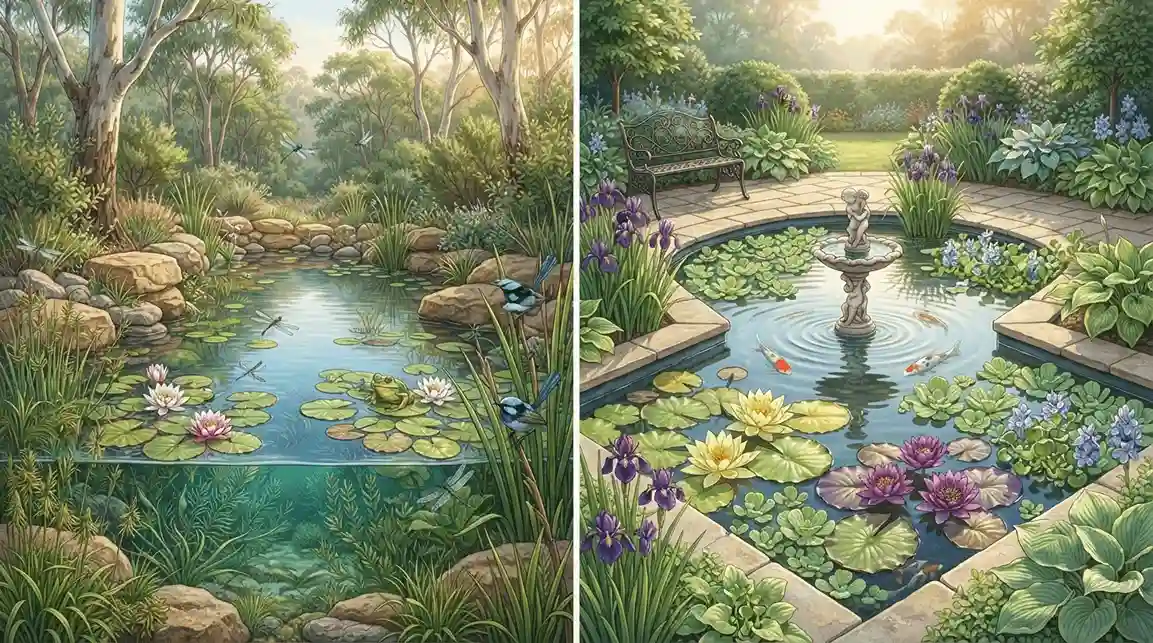
Both Australian native and exotic pond plants can create beautiful water gardens. However, native species generally provide greater ecological benefits and are better adapted to Australia’s diverse climates. Pairing aquatic species with surrounding Australian Native Yellow Flowers creates colourful pond borders that also attract bees, butterflies, and other beneficial pollinators.
| Feature | Australian Native Water Plants | Exotic Pond Plants |
| Adaptation | Naturally adapted to Australian climates | May require more specialised care |
| Maintenance | Generally lower once established | Often varies by species |
| Wildlife Value | Excellent support for native birds, frogs, insects, and fish | Usually lower ecological value |
| Water Needs | Adapted to local rainfall and seasonal conditions | Some require more stable conditions |
| Biodiversity Support | Promotes healthy native ecosystems | May contribute less to local biodiversity |
Choosing native species helps create sustainable ponds while supporting Australia’s unique freshwater wildlife.
Exotic species can still play an ornamental role, but always confirm they are not considered invasive in your region before planting.
Beginner Mistakes When Growing Waterplants
Many common pond problems result from simple mistakes made during planting or routine maintenance. Fortunately, these issues are easy to avoid with proper planning.
Choosing the Wrong Planting Depth
Each aquatic plant has a preferred growing depth. Planting too deeply may prevent leaves from reaching the surface, while planting too shallow can expose roots and crowns.
Always follow the recommended planting depth for each species.
Adding Too Many Floating Plants
Floating plants provide valuable shade and nutrient uptake, but excessive coverage blocks sunlight and reduces oxygen exchange.
Aim to keep approximately 40–60% of the pond surface covered rather than allowing floating plants to blanket the entire pond.
Poor Water Circulation
Although many aquatic plants prefer calm water, stagnant conditions can reduce oxygen levels and encourage algae.
Gentle water movement from a fountain, waterfall, or pump often improves water quality without disturbing most aquatic plants.
Overfertilising
Applying excessive fertiliser is one of the fastest ways to encourage algae growth.
Use only fertilisers specifically designed for aquatic plants and follow the manufacturer’s application rates.
Ignoring Seasonal Maintenance
Dead foliage, overcrowded plants, and accumulated organic debris reduce pond health over time.
Regular seasonal maintenance helps:
- Improve water quality
- Encourage stronger flowering
- Prevent disease
- Maintain healthy plant growth
Mixing Invasive Species
Some ornamental aquatic plants spread aggressively and can outcompete native vegetation if introduced into natural waterways.
Before purchasing new plants:
- Check local regulations.
- Avoid invasive species.
- Purchase from reputable aquatic nurseries.
- Prioritise Australian native species whenever possible.
Greenery Inside Recommendation: Research every new aquatic plant before introducing it into your pond. Selecting well-behaved species from the beginning greatly reduces future maintenance and protects local ecosystems.
Waterplants for Australian Climates
Australia’s diverse climates mean that no single aquatic plant suits every location. Choosing species adapted to your region improves growth, reduces maintenance, and increases long-term success.
Tropical Australia
Northern Australia’s warm temperatures allow many aquatic plants to grow throughout the year.
Suitable plants include:
- Australian native water lilies
- Water ribbons
- Native sedges
- Club rush
- Tropical floating plants
These species tolerate warm water and extended growing seasons.
Subtropical Regions
Subtropical climates experience warm summers and mild winters, supporting a wide range of aquatic plants.
Excellent choices include:
- Native water lilies
- Spike rush
- Water ribbons
- Nardoo
- Decorative rushes
Most species continue active growth for much of the year.
Temperate Climates
Temperate regions experience distinct seasonal changes, requiring plants that tolerate cooler winter temperatures.
Recommended species include:
- Hardy Australian native water lilies
- Native sedges
- Club rush
- Spike rush
- Cold-tolerant reeds
Growth slows during winter before increasing again in spring.
Cool Southern Regions
Southern Australia experiences cooler winters and occasional frost in some areas.
Suitable aquatic plants include:
- Hardy native sedges
- Club rush
- Water ribbons
- Selected cold-tolerant native water lilies
Protect tender tropical species during prolonged cold periods by moving container-grown plants to deeper water or sheltered positions where appropriate.
Freshness Note: As of 2026, Australian growers increasingly recommend selecting locally native aquatic plants that naturally occur within your region. These species generally establish more quickly, require less maintenance, and provide greater ecological benefits than plants adapted to different climates.
Conclusion
Waterplants play an essential role in creating healthy, attractive, and sustainable ponds. Whether you are designing a small backyard water feature, a wildlife pond, or a natural water garden, selecting the right combination of pond plants, aquatic plants, and Australian native water plants improves water quality, reduces algae, supports local wildlife, and enhances the overall appearance of your landscape.
By understanding different plant categories, choosing species suited to your climate, and following proper care practices, you can build a balanced aquatic ecosystem that thrives for many years. Native species are particularly valuable because they are well adapted to Australian conditions and contribute to local biodiversity with minimal maintenance.
Thoughtful plant selection based on pond size, water depth, regional climate, and ongoing maintenance needs will help ensure your water garden remains healthy, beautiful, and environmentally beneficial throughout every season.
Frequently Asked Questions
What is the difference between pond plants and aquatic plants?
Aquatic plants are all plants adapted to grow in water or permanently wet conditions. Pond plants are a subgroup of aquatic plants specifically used in ponds, including floating plants, water lilies, marginal plants, and emergent species.
Which water plants are best for Australian ponds?
Australian native water lilies, water ribbons, native sedges, spike rush, club rush, and Nardoo are among the best choices because they are well adapted to Australian climates and provide excellent habitat for native wildlife.
Do water plants help keep pond water clean?
Yes. Water plants absorb excess nutrients, filter pollutants, increase oxygen levels, provide shade that limits algae growth, and support beneficial microorganisms that contribute to healthier pond ecosystems.
Can water lilies grow in small backyard ponds?
Yes. Many compact and dwarf water lily varieties are ideal for small backyard ponds, provided they receive at least six hours of direct sunlight and are planted at the correct depth.
How deep should pond plants be planted?
The ideal planting depth depends on the species. Marginal plants typically grow in 5–20 cm of water, while most water lilies perform best at depths between 30 and 90 cm. Always follow the recommendations for individual plants.
What are the easiest Australian native water plants to grow?
Water ribbons, native sedges, spike rush, club rush, and Australian native water lilies are among the easiest native aquatic plants to establish because they are well adapted to local growing conditions and require relatively little maintenance.
How do I stop algae using pond plants?
Increase plant coverage with floating plants, water lilies, and marginal species to compete with algae for nutrients and provide shade. Avoid overfeeding fish, remove organic debris regularly, and limit excessive fertiliser use to maintain a balanced pond ecosystem.
Can aquatic plants survive winter in Australia?
Yes. Many Australian native aquatic plants tolerate winter conditions well. In tropical regions, they often continue growing year-round, while in temperate and southern climates growth slows or becomes dormant until warmer spring temperatures return.