Introduction
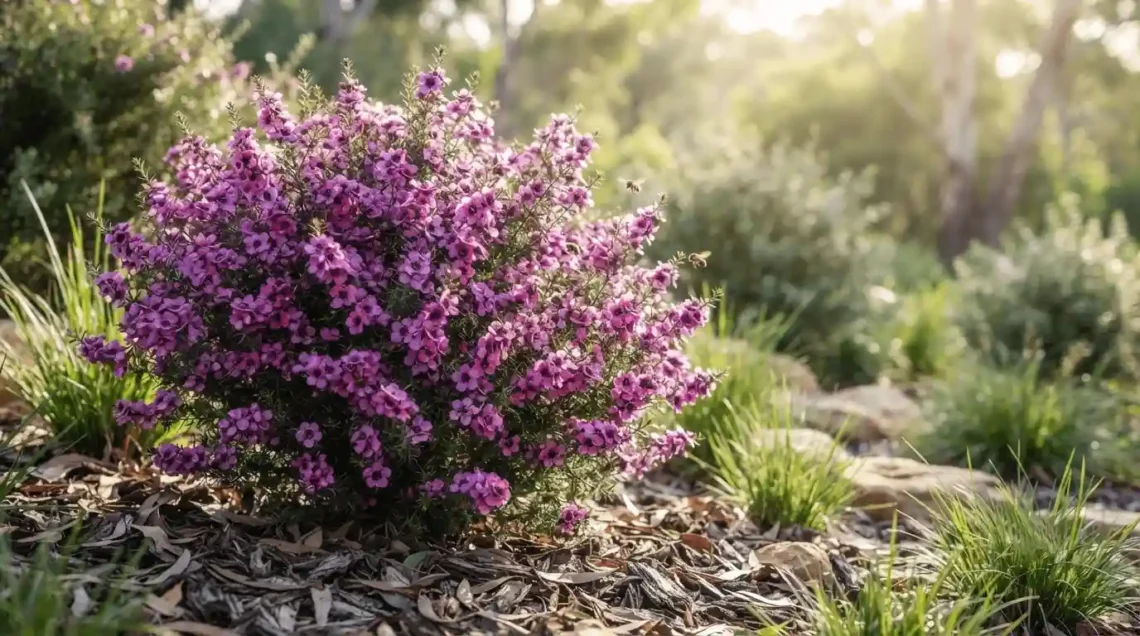
Leptospermum Pageant is a striking ornamental Australian native shrub admired for its masses of vibrant purple-pink blooms, evergreen foliage, and compact growth habit. Often referred to as a purple tea tree, this attractive Leptospermum plant is well suited to home gardens, native landscapes, coastal plantings, and decorative containers. Like many members of the genus, its colourful Leptospermum flowers attract bees and other beneficial pollinators while providing year-round garden interest. Whether you’re creating a wildlife-friendly landscape or looking for a low-maintenance flowering shrub, Leptospermum Pageant offers excellent ornamental value with relatively simple care requirements.
Quick Summary
- Leptospermum Pageant is a compact Australian native shrub prized for abundant purple-pink flowers.
- It grows best in full sun with well-drained soil and moderate watering.
- Regular pruning immediately after flowering promotes dense growth and heavier blooming.
- Excellent drainage, good airflow, and proper watering help prevent most common growing problems.
- It is ideal for native gardens, informal hedges, coastal landscapes, wildlife gardens, and large containers.
What Is Leptospermum Pageant?
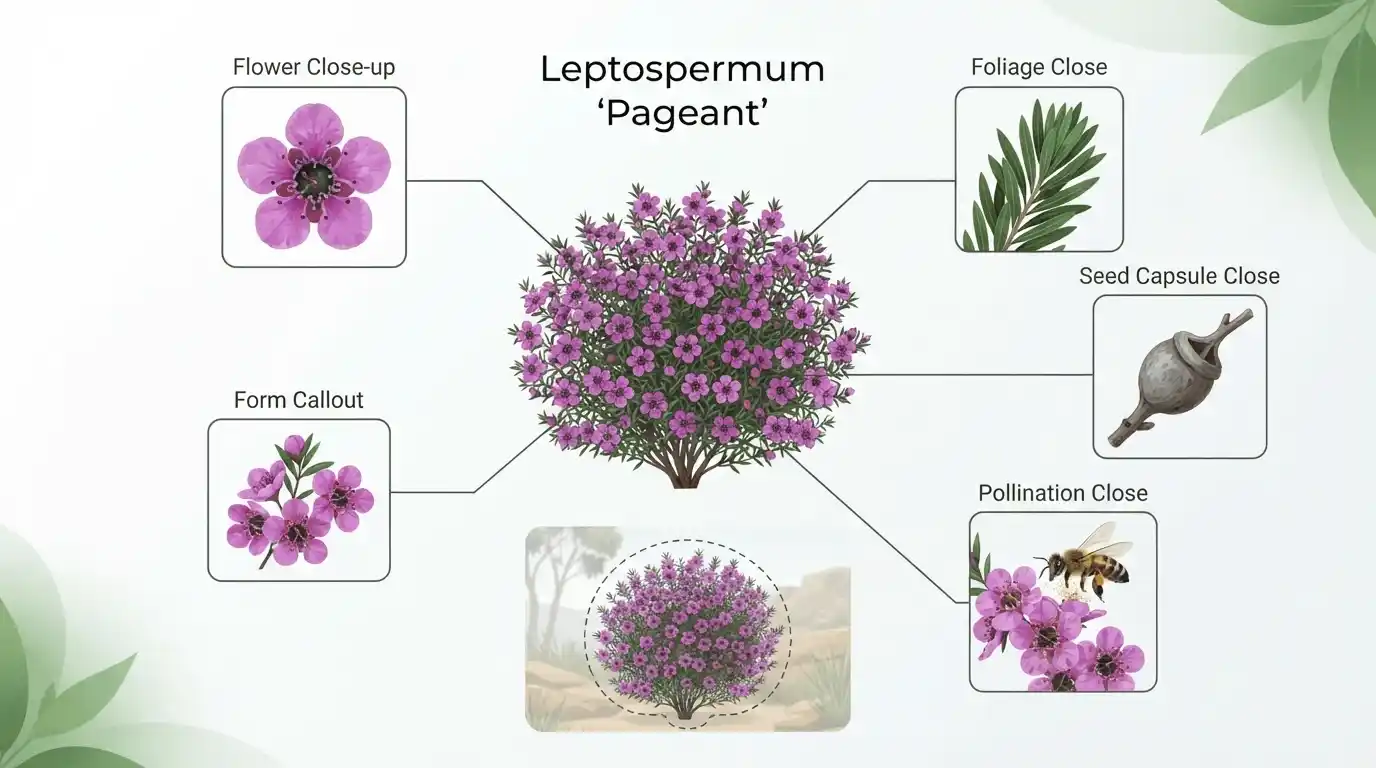
Leptospermum Pageant is a cultivated ornamental tea tree selected for its compact habit, dense evergreen foliage, and spectacular purple-pink spring flowers. It belongs to the genus Leptospermum, a group of flowering shrubs and small trees within the myrtle family (Myrtaceae), which includes many iconic Australian native plants.
What is Leptospermum?
If you’re wondering what is Leptospermum, it is a botanical genus containing more than 80 recognised species that naturally occur throughout Australia, with a smaller number found in New Zealand and Southeast Asia. These plants are commonly known as tea trees because early European settlers brewed aromatic leaves from certain species as a tea substitute. The genus Leptospermum includes a diverse group of flowering shrubs and small trees native mainly to Australia and surrounding regions.
Leptospermum species vary considerably in size, ranging from compact shrubs suitable for small gardens to larger trees found in coastal forests and heathlands. Despite this diversity, most share several defining characteristics:
- Evergreen aromatic foliage
- Five-petalled flowers
- Woody seed capsules that remain on branches
- Excellent tolerance to Australian growing conditions
- High value for pollinators and native wildlife
Many gardeners appreciate the genus because it combines ornamental beauty with exceptional resilience.
Why Is It Called the Purple Tea Tree?
Leptospermum Pageant is widely known as the purple tea tree because of its exceptionally colourful blossoms. During its flowering season, the shrub becomes covered with masses of vivid purple-pink blooms that almost hide the foliage beneath.
Unlike white-flowering tea trees commonly seen growing naturally in bushland, Pageant was selected specifically for its richer flower colour and improved garden performance. The colourful display makes it one of the more decorative ornamental tea tree cultivars available for residential landscapes.
Its flowers also provide nectar and pollen for:
- Native bees
- Honey bees
- Hoverflies
- Butterflies
- Other beneficial insects
This makes the shrub valuable for biodiversity while adding seasonal colour to the landscape.
Botanical Background
Leptospermum Pageant is closely related to Leptospermum scoparium, one of the best-known ornamental tea trees grown throughout Australia and New Zealand. Many modern cultivated varieties have been developed through selective breeding to improve flowering, growth habit, and adaptability.
Although people sometimes use the names interchangeably, Leptospermum Pageant is a cultivated variety rather than a naturally occurring wild species. It has been selected because it combines:
- Compact branching
- Dense evergreen foliage
- Heavy flowering
- Attractive landscape performance
- Reliable garden growth
These qualities have made it a favourite among landscapers and home gardeners alike.
How Does It Differ from Other Leptospermum Shrubs?
Compared with many larger Leptospermum shrubs, Pageant typically develops a more compact, rounded form. It is easier to maintain than vigorous species and responds exceptionally well to pruning.
In our experience growing Australian native shrubs, Leptospermum Pageant performs best when planted where it receives at least six hours of direct sunlight each day. Plants grown in open, sunny positions consistently produce denser foliage and significantly heavier flowering than those planted in shade.
Greenery Inside also recommends allowing sufficient spacing around the shrub. Good air circulation not only encourages healthier foliage but also reduces moisture-related diseases that occasionally affect densely planted gardens.
Overall, Leptospermum Pageant combines the toughness of traditional tea trees with improved ornamental appeal, making it an outstanding choice for modern Australian gardens.
Are Leptospermum Native to Australia?
Yes. Most Leptospermum species are native to Australia, where they naturally occur across a wide range of climates and ecosystems. They are an important part of Australia’s native flora and play a valuable ecological role by supporting insects, birds, and other wildlife.
Native Distribution
The genus Leptospermum is distributed throughout almost every Australian state and territory. Different species have adapted to environments including:
- Coastal dunes
- Heathlands
- Open forests
- Mountain slopes
- Swamps
- Sandy plains
- Rocky outcrops
Some species thrive in high-rainfall coastal regions, while others tolerate extended dry periods and nutrient-poor soils.
This adaptability explains why ornamental tea trees have become popular landscape plants in many parts of Australia.
Are Leptospermum Native to Australia?
The answer to “Are Leptospermum native to Australia?” is overwhelmingly yes. Australia is considered the primary centre of diversity for the genus, with the majority of recognised species occurring naturally across the continent.
Many Australian native species have evolved to withstand challenging conditions such as:
- Drought
- Coastal salt spray
- Poor sandy soils
- Bushfire recovery
- Seasonal rainfall variation
These natural adaptations make cultivated varieties, including Leptospermum Pageant, relatively low-maintenance once established.
Leptospermum scoparium Australia
One of the best-known species is Leptospermum scoparium, which naturally occurs in parts of southeastern Australia while also being widespread throughout New Zealand.
Within Australia, populations are commonly found in:
- Tasmania
- Victoria
- New South Wales
- Southeastern South Australia
Its ornamental flowers and adaptability have made it one of the foundation species used in breeding many colourful garden cultivars.
Leptospermum Manuka and the Manuka Plant
Many people associate Leptospermum manuka with New Zealand because Manuka is the Māori name commonly used for Leptospermum scoparium. The Manuka shrub, Manuka plant, and Manuka tea tree plant are all common names referring to this same species.
Although New Zealand is internationally famous for Manuka honey, the species also occurs naturally in Australia. Scientific studies continue to distinguish Australian and New Zealand populations while recognising they belong to the same botanical species.
The nectar-rich flowers are highly attractive to bees, which is why Manuka has become globally recognised through honey production.
Ecological Importance
Leptospermum species contribute significantly to healthy native ecosystems. Gardeners planning a biodiversity-focused landscape can combine tea trees with other native plants that attract butterflies to create a more valuable habitat for pollinators and beneficial insects.
Their flowers provide valuable food for:
- Native bees
- European honey bees
- Butterflies
- Hoverflies
- Beetles
- Nectar-feeding insects
Dense shrubs also create shelter for:
- Small native birds
- Lizards
- Beneficial insects
- Ground-dwelling wildlife
Because many species flower profusely, they are considered excellent additions to wildlife-friendly gardens.
In our experience, mature Leptospermum shrubs quickly become some of the busiest flowering plants in the garden during bloom season, often attracting pollinators throughout the day. Gardeners looking to increase biodiversity can benefit greatly from including ornamental tea trees alongside other Australian native flowering shrubs.
As of the 2026 growing season, horticulturists continue to recommend Australian native Leptospermum cultivars for water-wise landscapes due to their adaptability, pollinator value, and ability to thrive with relatively low maintenance once established.
Key Features of Leptospermum Pageant
Leptospermum Pageant is prized for its colourful flowers, dense evergreen foliage, and naturally compact form. It combines the toughness of Australian native tea trees with a refined ornamental appearance, making it suitable for both small residential gardens and larger landscape projects.
Flower Appearance
The standout feature of Leptospermum Pageant is its spectacular display of Leptospermum flowers. During the flowering season, the shrub becomes covered with masses of vibrant purple-pink blossoms that contrast beautifully against its fine green foliage.
Each flower has the classic five-petalled appearance typical of the myrtle family (Myrtaceae). Although individual blooms are relatively small, they are produced so abundantly that the entire shrub appears covered in colour.
Flower characteristics include:
- Rich purple-pink petals
- Small yellow centre with prominent stamens
- Dense clusters covering branch tips
- Long-lasting seasonal display
- Excellent ornamental value
Flowering generally occurs from late spring into early summer, although local climate can influence the exact timing. In warmer regions, blooming may begin slightly earlier, while cooler climates often experience a later flowering period.
The colourful blossoms attract numerous pollinators, including:
- Native bees
- Honey bees
- Butterflies
- Hoverflies
- Other beneficial insects
In our experience growing Australian native shrubs, plants receiving full sun consistently produce a heavier floral display than those growing in partial shade.
Foliage and Plant Habit
Beyond its flowers, Leptospermum Pageant remains attractive throughout the year because of its dense evergreen foliage.
The leaves are:
- Small and narrow
- Dark to medium green
- Slightly aromatic when crushed
- Closely spaced along the stems
This dense branching creates a naturally rounded shrub that requires only light pruning to maintain its shape.
Its compact habit makes it especially useful where gardeners want year-round structure without an oversized shrub dominating the landscape.
Unlike some larger tea tree species that develop open or irregular branching, Pageant typically maintains a neat appearance with minimal maintenance.
Mature Height and Size
The typical Leptospermum Pageant height reaches approximately 1.5–2 metres (5–6.5 feet) with a similar spread under ideal growing conditions.
The final Leptospermum Pageant size depends on several environmental factors, including:
- Soil quality
- Sunlight exposure
- Rainfall
- Climate
- Pruning frequency
- Available growing space
Shrubs growing in garden beds usually reach their full mature dimensions within several years. Plants grown in containers generally remain more compact because root development is naturally restricted.
Regular pruning after flowering can also maintain a smaller size while encouraging denser branching and improved flowering the following season.
Leptospermum Pageant Feature Table
| Feature | Details |
| Flower colour | Purple to deep pink |
| Bloom season | Late spring to early summer |
| Mature height | Approximately 1.5–2 m |
| Mature width | Approximately 1.5–2 m |
| Growth habit | Dense, rounded evergreen shrub |
| Best landscape uses | Feature shrub, native gardens, hedges, wildlife gardens, coastal gardens, containers |
Growth Rate and Growing Conditions
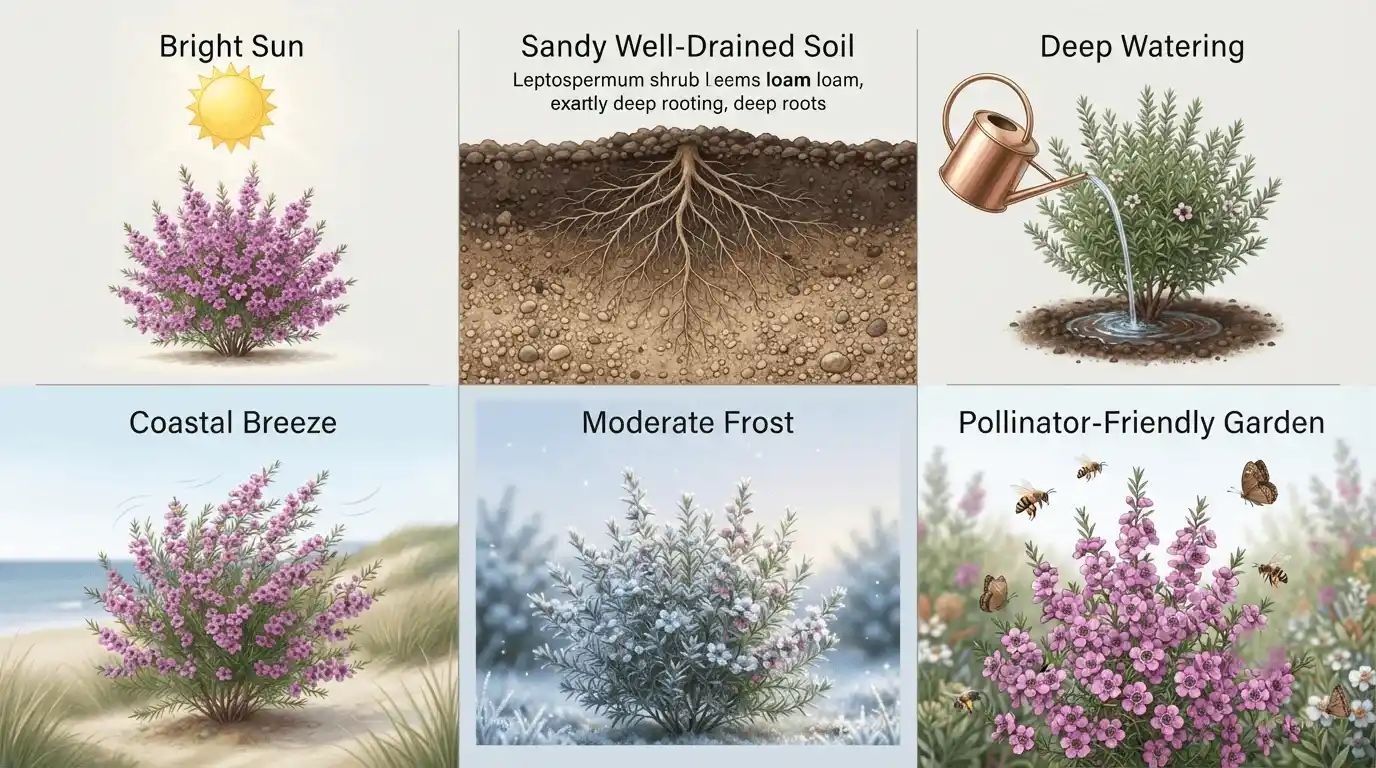
Leptospermum Pageant is considered a moderately growing shrub that establishes reliably when planted in suitable conditions. Once established, it requires relatively little maintenance while producing abundant flowers each year.
How Fast Does Leptospermum Pageant Grow?
Leptospermum Pageant has a moderate growth rate.
Young plants typically establish quickly during their first two growing seasons before developing their characteristic dense branching. Under favourable conditions, annual growth commonly ranges between 20 and 40 centimetres, although vigorous plants may grow slightly faster.
Growth speed is influenced by:
- Full sunlight
- Well-drained soil
- Consistent watering during establishment
- Mild temperatures
- Healthy root development
Poor drainage, heavy clay soils, or excessive shade can noticeably slow growth.
Greenery Inside recommends focusing on healthy root establishment during the first year rather than encouraging rapid top growth. Well-established shrubs usually become far more resilient during dry periods.
Climate Preferences
Leptospermum Pageant performs best in temperate and warm climates but adapts well to many Australian growing regions.
Ideal conditions include:
- Full sun
- Good air circulation
- Moderate rainfall
- Well-drained soils
Once established, the shrub tolerates short dry periods better than constantly wet soil.
It also demonstrates:
- Moderate frost tolerance
- Good wind resistance
- Excellent coastal performance
- Adaptability to sandy soils
In colder inland regions, young plants benefit from temporary frost protection during their first winter.
As of the 2026 growing season, many Australian growers continue recommending native Leptospermum cultivars for water-wise landscapes because of their ability to cope with variable seasonal rainfall.
Best Planting Location
Choosing the right planting site greatly influences flowering performance and long-term health.
The ideal location provides:
- At least six hours of direct sunlight daily
- Excellent soil drainage
- Adequate spacing for airflow
- Protection from prolonged waterlogging
Suitable planting locations include:
- Front gardens
- Native landscape borders
- Coastal gardens
- Informal hedges
- Wildlife gardens
- Large decorative containers
In our experience, shrubs planted in open sunny positions flower much more heavily than those growing near large trees or buildings that cast afternoon shade.
Leptospermum Pageant Care Guide
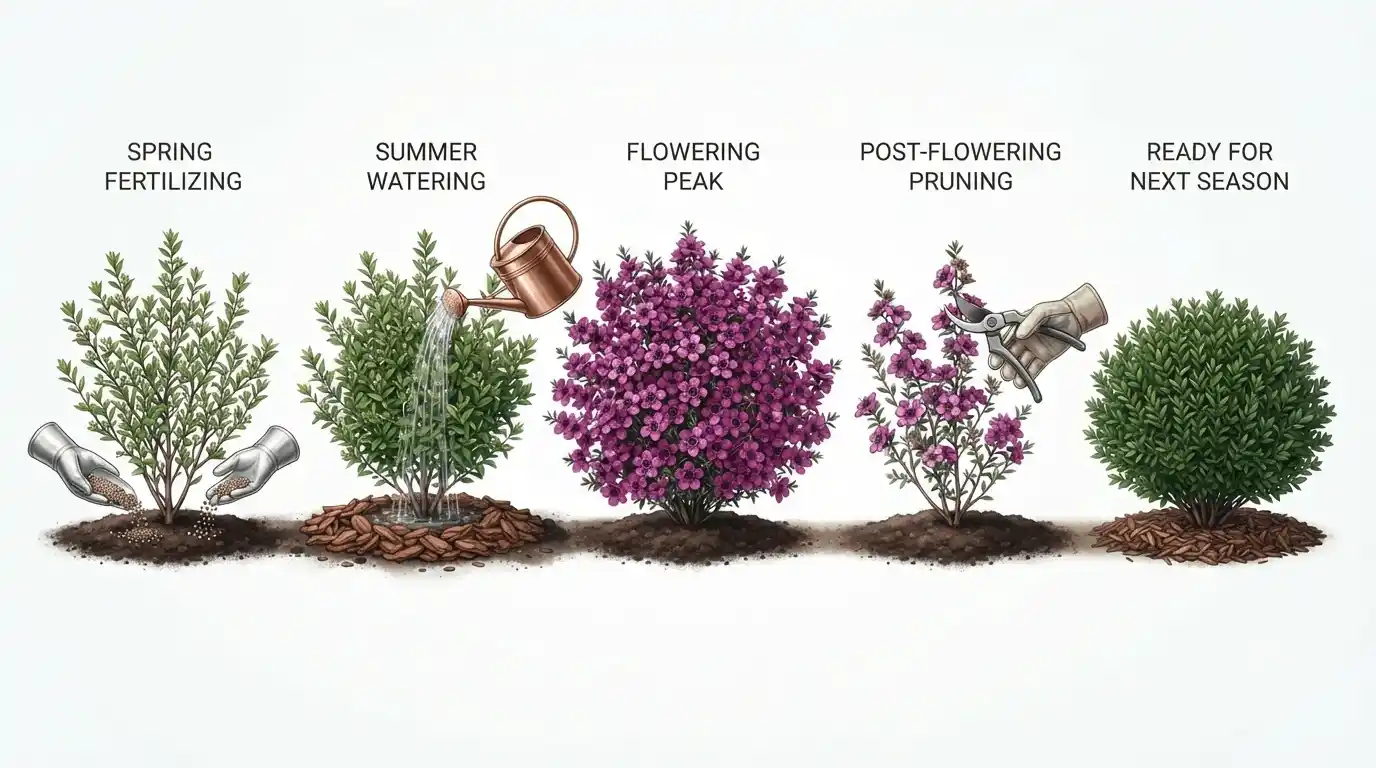
Although Leptospermum Pageant is relatively easy to grow, providing the correct growing conditions results in healthier foliage, stronger flowering, and a longer-lived shrub.
Water Requirements
Water newly planted shrubs regularly during their first growing season to encourage deep root development.
A practical watering schedule is:
- Once or twice weekly during establishment
- Reduce frequency as roots mature
- Water deeply rather than lightly
- Allow the soil surface to dry slightly between waterings
Established plants are reasonably drought tolerant but still appreciate occasional deep watering during prolonged hot, dry weather.
Avoid constantly wet soil, as excessive moisture is one of the leading causes of poor plant health.
Light Requirements
Leptospermum Pageant performs best in full sun.
For maximum flowering, provide:
- Six to eight hours of direct sunlight daily
Although the shrub tolerates light partial shade, insufficient sunlight often results in:
- Fewer flowers
- Longer stems
- Reduced branching
- Less compact growth
Full sun also improves air circulation through the canopy by encouraging stronger, balanced growth.
Leptospermum Soil Requirements
Meeting the correct Leptospermum soil requirements is one of the most important aspects of successful cultivation.
The ideal soil should be:
- Well-drained
- Slightly acidic to neutral (approximately pH 5.5–7.0)
- Moderately fertile
- Rich in organic matter without becoming waterlogged
Suitable soil types include:
- Sandy loam
- Loamy garden soil
- Raised garden beds with improved drainage
Heavy clay soils should be amended before planting or avoided altogether, as poor drainage significantly increases the risk of root diseases.
Fertilizing
Leptospermum Pageant generally requires only light feeding.
Apply a slow-release fertiliser formulated for Australian native plants in early spring before new growth begins.
Avoid excessive phosphorus because many Australian native plants are sensitive to high phosphorus levels.
Greenery Inside recommends using modest fertiliser applications rather than frequent feeding. Overfertilising often encourages excessive leafy growth at the expense of flowering.
Mulching
Mulching helps conserve moisture while protecting shallow roots from temperature extremes.
Suitable mulch materials include:
- Aged bark
- Leaf mulch
- Wood chips
- Native garden mulch
Maintain a mulch layer approximately 5–7 cm deep, keeping it a few centimetres away from the main stem to prevent excess moisture around the trunk.
Mulch also suppresses weeds and gradually improves soil structure as it decomposes.
Pruning After Flowering
The best time to prune Leptospermum Pageant is immediately after flowering finishes.
Light annual pruning helps:
- Maintain a compact shape
- Encourage dense branching
- Stimulate additional flowering wood
- Remove damaged stems
- Improve airflow through the shrub
Avoid hard pruning into old woody stems that have little leafy growth, as recovery may be slower.
In our experience, annual light trimming produces a much fuller shrub than infrequent heavy pruning. Regular maintenance also keeps the plant attractive throughout the year while encouraging a more impressive floral display during the following flowering season.
Key Features of Leptospermum Pageant
Leptospermum Pageant is prized for its colourful flowers, dense evergreen foliage, and naturally compact form. It combines the toughness of Australian native tea trees with a refined ornamental appearance, making it suitable for both small residential gardens and larger landscape projects.
Flower Appearance
The standout feature of Leptospermum Pageant is its spectacular display of Leptospermum flowers. During the flowering season, the shrub becomes covered with masses of vibrant purple-pink blossoms that contrast beautifully against its fine green foliage.
Each flower has the classic five-petalled appearance typical of the myrtle family (Myrtaceae). Although individual blooms are relatively small, they are produced so abundantly that the entire shrub appears covered in colour.
Flower characteristics include:
- Rich purple-pink petals
- Small yellow centre with prominent stamens
- Dense clusters covering branch tips
- Long-lasting seasonal display
- Excellent ornamental value
Flowering generally occurs from late spring into early summer, although local climate can influence the exact timing. In warmer regions, blooming may begin slightly earlier, while cooler climates often experience a later flowering period.
The colourful blossoms attract numerous pollinators, including:
- Native bees
- Honey bees
- Butterflies
- Hoverflies
- Other beneficial insects
In our experience growing Australian native shrubs, plants receiving full sun consistently produce a heavier floral display than those growing in partial shade.
Foliage and Plant Habit
Beyond its flowers, Leptospermum Pageant remains attractive throughout the year because of its dense evergreen foliage.
The leaves are:
- Small and narrow
- Dark to medium green
- Slightly aromatic when crushed
- Closely spaced along the stems
This dense branching creates a naturally rounded shrub that requires only light pruning to maintain its shape.
Its compact habit makes it especially useful where gardeners want year-round structure without an oversized shrub dominating the landscape.
Unlike some larger tea tree species that develop open or irregular branching, Pageant typically maintains a neat appearance with minimal maintenance.
Mature Height and Size
The typical Leptospermum Pageant height reaches approximately 1.5–2 metres (5–6.5 feet) with a similar spread under ideal growing conditions.
The final Leptospermum Pageant size depends on several environmental factors, including:
- Soil quality
- Sunlight exposure
- Rainfall
- Climate
- Pruning frequency
- Available growing space
Shrubs growing in garden beds usually reach their full mature dimensions within several years. Plants grown in containers generally remain more compact because root development is naturally restricted.
Regular pruning after flowering can also maintain a smaller size while encouraging denser branching and improved flowering the following season.
Leptospermum Pageant Feature Table
| Feature | Details |
| Flower colour | Purple to deep pink |
| Bloom season | Late spring to early summer |
| Mature height | Approximately 1.5–2 m |
| Mature width | Approximately 1.5–2 m |
| Growth habit | Dense, rounded evergreen shrub |
| Best landscape uses | Feature shrub, native gardens, hedges, wildlife gardens, coastal gardens, containers |
Growth Rate and Growing Conditions
Leptospermum Pageant is considered a moderately growing shrub that establishes reliably when planted in suitable conditions. Once established, it requires relatively little maintenance while producing abundant flowers each year.
How Fast Does Leptospermum Pageant Grow?
Leptospermum Pageant has a moderate growth rate.
Young plants typically establish quickly during their first two growing seasons before developing their characteristic dense branching. Under favourable conditions, annual growth commonly ranges between 20 and 40 centimetres, although vigorous plants may grow slightly faster.
Growth speed is influenced by:
- Full sunlight
- Well-drained soil
- Consistent watering during establishment
- Mild temperatures
- Healthy root development
Poor drainage, heavy clay soils, or excessive shade can noticeably slow growth.
Greenery Inside recommends focusing on healthy root establishment during the first year rather than encouraging rapid top growth. Well-established shrubs usually become far more resilient during dry periods.
Climate Preferences
Leptospermum Pageant performs best in temperate and warm climates but adapts well to many Australian growing regions.
Ideal conditions include:
- Full sun
- Good air circulation
- Moderate rainfall
- Well-drained soils
Once established, the shrub tolerates short dry periods better than constantly wet soil.
It also demonstrates:
- Moderate frost tolerance
- Good wind resistance
- Excellent coastal performance
- Adaptability to sandy soils
In colder inland regions, young plants benefit from temporary frost protection during their first winter.
As of the 2026 growing season, many Australian growers continue recommending native Leptospermum cultivars for water-wise landscapes because of their ability to cope with variable seasonal rainfall.
Best Planting Location
Choosing the right planting site greatly influences flowering performance and long-term health.
The ideal location provides:
- At least six hours of direct sunlight daily
- Excellent soil drainage
- Adequate spacing for airflow
- Protection from prolonged waterlogging
Suitable planting locations include:
- Front gardens
- Native landscape borders
- Coastal gardens
- Informal hedges
- Wildlife gardens
- Large decorative containers
In our experience, shrubs planted in open sunny positions flower much more heavily than those growing near large trees or buildings that cast afternoon shade.
Leptospermum Pageant Care Guide
Although Leptospermum Pageant is relatively easy to grow, providing the correct growing conditions results in healthier foliage, stronger flowering, and a longer-lived shrub.
Water Requirements
Water newly planted shrubs regularly during their first growing season to encourage deep root development.
A practical watering schedule is:
- Once or twice weekly during establishment
- Reduce frequency as roots mature
- Water deeply rather than lightly
- Allow the soil surface to dry slightly between waterings
Established plants are reasonably drought tolerant but still appreciate occasional deep watering during prolonged hot, dry weather.
Avoid constantly wet soil, as excessive moisture is one of the leading causes of poor plant health.
Light Requirements
Leptospermum Pageant performs best in full sun.
For maximum flowering, provide:
- Six to eight hours of direct sunlight daily
Although the shrub tolerates light partial shade, insufficient sunlight often results in:
- Fewer flowers
- Longer stems
- Reduced branching
- Less compact growth
Full sun also improves air circulation through the canopy by encouraging stronger, balanced growth.
Leptospermum Soil Requirements
Meeting the correct Leptospermum soil requirements is one of the most important aspects of successful cultivation.
The ideal soil should be:
- Well-drained
- Slightly acidic to neutral (approximately pH 5.5–7.0)
- Moderately fertile
- Rich in organic matter without becoming waterlogged
Suitable soil types include:
- Sandy loam
- Loamy garden soil
- Raised garden beds with improved drainage
Heavy clay soils should be amended before planting or avoided altogether, as poor drainage significantly increases the risk of root diseases.
Fertilizing
Leptospermum Pageant generally requires only light feeding.
Apply a slow-release fertiliser formulated for Australian native plants in early spring before new growth begins.
Avoid excessive phosphorus because many Australian native plants are sensitive to high phosphorus levels.
Greenery Inside recommends using modest fertiliser applications rather than frequent feeding. Overfertilising often encourages excessive leafy growth at the expense of flowering.
Mulching
Mulching helps conserve moisture while protecting shallow roots from temperature extremes.
Suitable mulch materials include:
- Aged bark
- Leaf mulch
- Wood chips
- Native garden mulch
Maintain a mulch layer approximately 5–7 cm deep, keeping it a few centimetres away from the main stem to prevent excess moisture around the trunk.
Mulch also suppresses weeds and gradually improves soil structure as it decomposes.
Pruning After Flowering
The best time to prune Leptospermum Pageant is immediately after flowering finishes.
Light annual pruning helps:
- Maintain a compact shape
- Encourage dense branching
- Stimulate additional flowering wood
- Remove damaged stems
- Improve airflow through the shrub
Avoid hard pruning into old woody stems that have little leafy growth, as recovery may be slower.
In our experience, annual light trimming produces a much fuller shrub than infrequent heavy pruning. Regular maintenance also keeps the plant attractive throughout the year while encouraging a more impressive floral display during the following flowering season.
Common Leptospermum Pageant Problems and Solutions
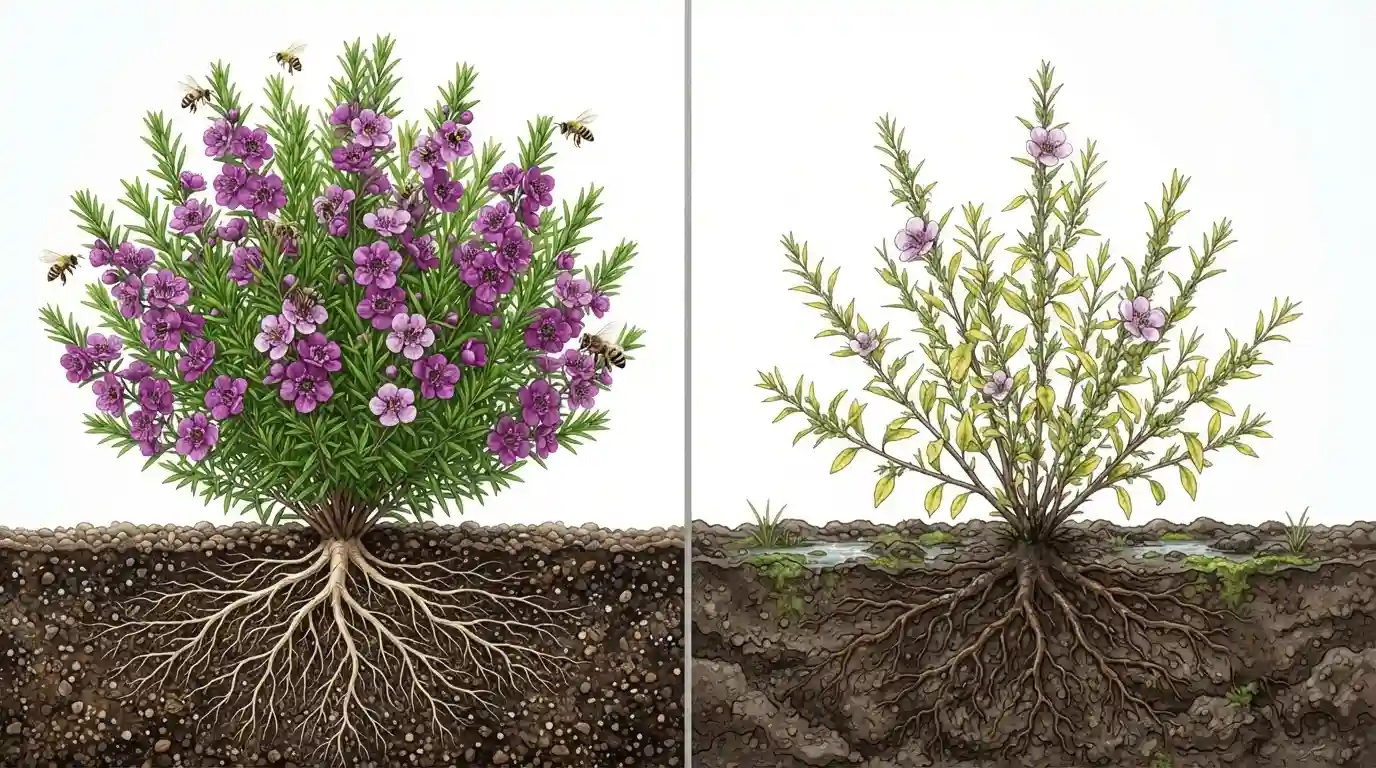
Leptospermum Pageant is generally a hardy shrub, but poor growing conditions can lead to reduced flowering, foliage problems, or disease. Most Leptospermum Pageant problems are preventable with proper planting, watering, and routine maintenance.
Poor Flowering
Poor flowering is usually caused by insufficient sunlight, excessive fertiliser, or incorrect pruning. Leptospermum Pageant flowers most heavily when grown in full sun and pruned immediately after blooming.
Common causes:
- Too much shade
- High-nitrogen fertilisers
- Pruning at the wrong time
- Immature plants
How to fix it:
- Move container plants to a sunnier location.
- Apply a low-phosphorus fertiliser formulated for Australian natives in spring.
- Prune only after flowering.
- Be patient with young plants as flowering improves with maturity.
Prevention:
- Plant in full sun.
- Feed lightly once a year.
- Avoid removing flower buds through late pruning.
Yellow Leaves
Yellow foliage often indicates a cultural problem rather than disease.
Common causes:
- Overwatering
- Poor drainage
- Nutrient deficiencies
- Root stress
How to fix it:
- Check soil moisture before watering.
- Improve drainage if soil remains wet.
- Remove damaged foliage.
- Apply a suitable native plant fertiliser if deficiencies are suspected.
Prevention:
- Water only when necessary.
- Avoid planting in waterlogged soil.
- Maintain healthy mulch without covering the stem.
Root Rot
Root rot is one of the most serious problems affecting Leptospermum Pageant. It commonly develops in poorly drained soils where roots remain saturated for extended periods.
Common causes:
- Heavy clay soils
- Poor drainage
- Frequent overwatering
How to fix it:
- Improve drainage immediately.
- Reduce watering.
- Remove severely affected plants if root damage is extensive.
Prevention:
- Plant in raised beds if drainage is poor.
- Avoid constantly wet soil.
- Use free-draining soil mixes for container plants.
Greenery Inside recommends checking drainage before planting. In our experience, improving soil drainage prevents far more problems than any treatment applied later.
Pest Problems
Leptospermum Pageant is relatively pest resistant, although occasional infestations may occur.
Common pests include:
- Aphids
- Scale insects
- Psyllids
- Spider mites
How to fix it:
- Wash pests away with water where practical.
- Prune heavily infested stems.
- Encourage beneficial insects such as ladybirds.
- Use horticultural oils only when necessary and according to label directions.
Prevention:
- Maintain good airflow.
- Avoid excessive nitrogen fertiliser.
- Inspect plants regularly during spring and summer.
Sparse Growth
Sparse or leggy growth usually develops when plants receive insufficient sunlight or are left unpruned for several seasons.
Common causes:
- Too much shade
- Delayed pruning
- Nutrient imbalance
- Crowded planting
How to fix it:
- Increase sunlight exposure.
- Prune lightly after flowering.
- Feed appropriately.
- Thin surrounding vegetation if overcrowded.
Prevention:
- Space shrubs correctly.
- Perform annual maintenance pruning.
- Grow in full sun whenever possible.
Common Beginner Mistakes When Growing Leptospermum Pageant
Many growing problems can be avoided by understanding the basic needs of this Australian native shrub.
Common mistakes include:
Overwatering
One of the biggest mistakes is watering too frequently. Established plants tolerate short dry periods much better than permanently wet soil.
Planting in Heavy Clay
Poor drainage increases the likelihood of root diseases and weak growth. Improve clay soils before planting or choose raised beds.
Using Too Much Fertiliser
Excess fertiliser encourages lush leafy growth while reducing flowering. Australian native plants generally require lighter feeding than many exotic shrubs.
Growing in Too Much Shade
Plants growing in shaded locations often become leggy and produce significantly fewer flowers.
Incorrect Pruning
Pruning before flowering removes developing flower buds. Always prune immediately after flowering finishes.
Poor Plant Spacing
Crowded shrubs restrict airflow, increasing humidity around the foliage and creating favourable conditions for fungal diseases.
Environmental Limitations and Seasonal Care
Leptospermum Pageant adapts well to many Australian climates, but seasonal maintenance helps keep plants healthy and flowering consistently.
Summer Care
During hot weather:
- Water deeply during extended dry periods.
- Maintain mulch to conserve soil moisture.
- Monitor newly planted shrubs more frequently.
- Remove spent flowers and damaged growth if necessary.
Established plants are relatively drought tolerant but still benefit from occasional deep watering during prolonged heat.
Winter Care
Winter maintenance is generally minimal.
Tasks include:
- Reduce watering as temperatures cool.
- Avoid waterlogged soils.
- Protect young plants from severe frost.
- Delay fertilising until early spring.
In cooler regions, applying fresh mulch before winter helps moderate soil temperature around the root system.
Coastal Conditions
Leptospermum Pageant performs particularly well in coastal gardens. For gardeners creating exposed seaside landscapes, other cultivars such as Leptospermum Foreshore can also provide excellent performance in sandy soils and windy coastal conditions.
Its natural adaptations allow it to tolerate:
- Salt-laden winds
- Sandy soils
- Wind exposure
- Variable rainfall
Although coastal conditions are generally suitable, newly planted shrubs still require regular watering until fully established.
Drought Performance
Once established, Leptospermum Pageant demonstrates good drought tolerance.
Extended dry periods may reduce flowering temporarily, but healthy plants usually recover quickly following seasonal rainfall or deep irrigation.
As of the 2026 growing season, Australian horticultural experts continue recommending native Leptospermum cultivars for water-wise landscapes because of their resilience under changing climate conditions.
Related Tea Tree Species You May Also Like
If you enjoy Leptospermum Pageant, several related tea tree species offer different foliage, fragrances, and landscape uses. Leptospermum Seclusion is another ornamental cultivar valued for its attractive flowers and dense growth. Gardeners interested in exploring more compact flowering tea trees can also compare it with Leptospermum Seclusion for different landscape uses.
Leptospermum petersonii (Lemon-Scented Tea Tree)
Leptospermum petersonii, commonly known as the lemon-scented tea tree, is famous for its strongly citrus-scented foliage rather than its flowers.
It is also known by names including:
- Leptospermum petersonii lemon scented tea tree
- Leptospermum petersonii lemon-scented tea tree
- Lemon scented tea tree Leptospermum petersonii
- Lemon tea tree plant
- Lemon scented tree
Unlike the compact Pageant cultivar, the lemon scented tea tree height commonly reaches 4–8 metres, depending on climate and growing conditions.
Its fragrant foliage makes it an excellent choice for:
- Feature planting
- Wildlife gardens
- Informal screening
- Aromatic landscapes
Leptospermum Lemon Hedge
Gardeners wanting a fragrant privacy screen often choose Leptospermum lemon hedge or establish a Leptospermum petersonii hedge.
These hedges offer:
- Dense evergreen foliage
- Pleasant lemon fragrance
- Excellent screening
- Wildlife habitat
Leptospermum Seclusion
Leptospermum Seclusion is another ornamental cultivar valued for its attractive flowers and dense growth. It is frequently used in native gardens where a compact flowering shrub is required.
Leptospermum Fore Shore
Leptospermum Fore Shore is a low-growing coastal cultivar developed for exposed sites. It performs especially well in sandy soils and windy seaside gardens.
Leptospermum polygalifolium Cardwell
Leptospermum polygalifolium Cardwell is a naturally vigorous Australian native species with excellent adaptability. It develops into a larger shrub than Pageant and is often selected for revegetation, screening, and larger native landscapes.
Conclusion
Leptospermum Pageant is one of the finest ornamental Australian native tea tree cultivars for home gardens. Its compact growth, evergreen foliage, and masses of vibrant purple-pink flowers make it an excellent choice for feature planting, informal hedges, wildlife gardens, coastal landscapes, and decorative containers.
Providing full sun, well-drained soil, moderate watering, and light pruning after flowering will keep the shrub healthy and flowering reliably for many years. Once established, it requires relatively little maintenance while offering year-round ornamental value and important nectar for pollinators.
Whether you are creating a native garden or simply looking for a colourful, low-maintenance flowering shrub, Leptospermum Pageant is a dependable and rewarding addition to Australian landscapes.
Frequently Asked Questions
What is Leptospermum Pageant?
Leptospermum Pageant is a compact ornamental Australian tea tree cultivar grown for its dense evergreen foliage and abundant purple-pink flowers. It is widely used in native gardens, hedges, and landscape plantings.
How tall does Leptospermum Pageant grow?
Under ideal conditions, Leptospermum Pageant typically reaches 1.5–2 metres in both height and width. Regular pruning can maintain a smaller, denser shrub.
Is Leptospermum Pageant native to Australia?
Leptospermum Pageant is a cultivated variety derived from Australian native tea tree species. The genus Leptospermum is predominantly native to Australia, where it naturally occurs across diverse habitats.
Does Leptospermum Pageant need full sun?
Yes. Full sun produces the healthiest growth and the heaviest flowering. While the shrub tolerates light shade, flowering and branching are usually reduced in low-light conditions.
How often should I water Leptospermum Pageant?
Water newly planted shrubs regularly during establishment. Mature plants require only occasional deep watering during extended dry periods, provided the soil drains well.
When does Leptospermum Pageant flower?
Leptospermum Pageant usually flowers from late spring to early summer, although flowering time varies slightly depending on local climate.
Can Leptospermum Pageant be grown as a hedge?
Yes. Its naturally dense branching makes it an excellent informal hedge. Annual pruning after flowering helps maintain a compact and attractive screen.
What causes Leptospermum Pageant to stop flowering?
Poor flowering is most commonly caused by insufficient sunlight, excessive nitrogen fertiliser, incorrect pruning, or immature plants. Growing the shrub in full sun and pruning immediately after flowering encourages reliable blooms each year.