Introduction
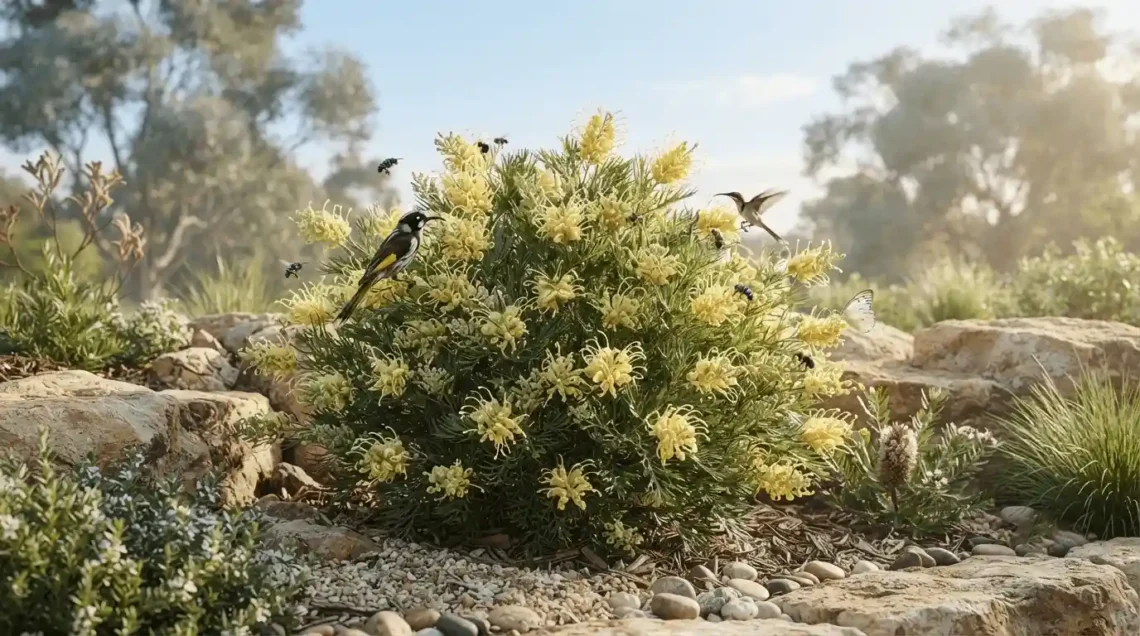
Grevillea Mellow Yellow is a compact Australian native shrub admired for its soft yellow spider-like blooms, evergreen foliage, and exceptional ability to attract birds and beneficial pollinators. As one of the most attractive yellow grevillea selections, it combines ornamental beauty with excellent drought tolerance, making it well suited to water-wise gardens, native landscapes, and low-maintenance planting schemes. Its distinctive grevillea flower provides nectar for wildlife over an extended flowering season, while its manageable size allows it to fit comfortably into gardens of many styles. Among Australian grevillea shrubs, this cultivar is valued for reliable performance, year-round interest, and environmental benefits.
By Greenery Inside | Plant Care & Gardening Expert
At Greenery Inside, we have found that Grevillea cultivars perform best when matched to the right climate, soil drainage, and sunlight conditions rather than relying on frequent watering or fertilizing.
Quick Summary
- Grevillea Mellow Yellow is a compact Australian native shrub with long-lasting yellow flowers that attract birds and pollinators.
- It performs best in full sun and well-drained soil with minimal watering once established.
- Its moderate size makes it suitable for gardens, borders, and informal hedges.
- Regular light pruning helps maintain shape and encourages more flowering.
What Is Grevillea Mellow Yellow?
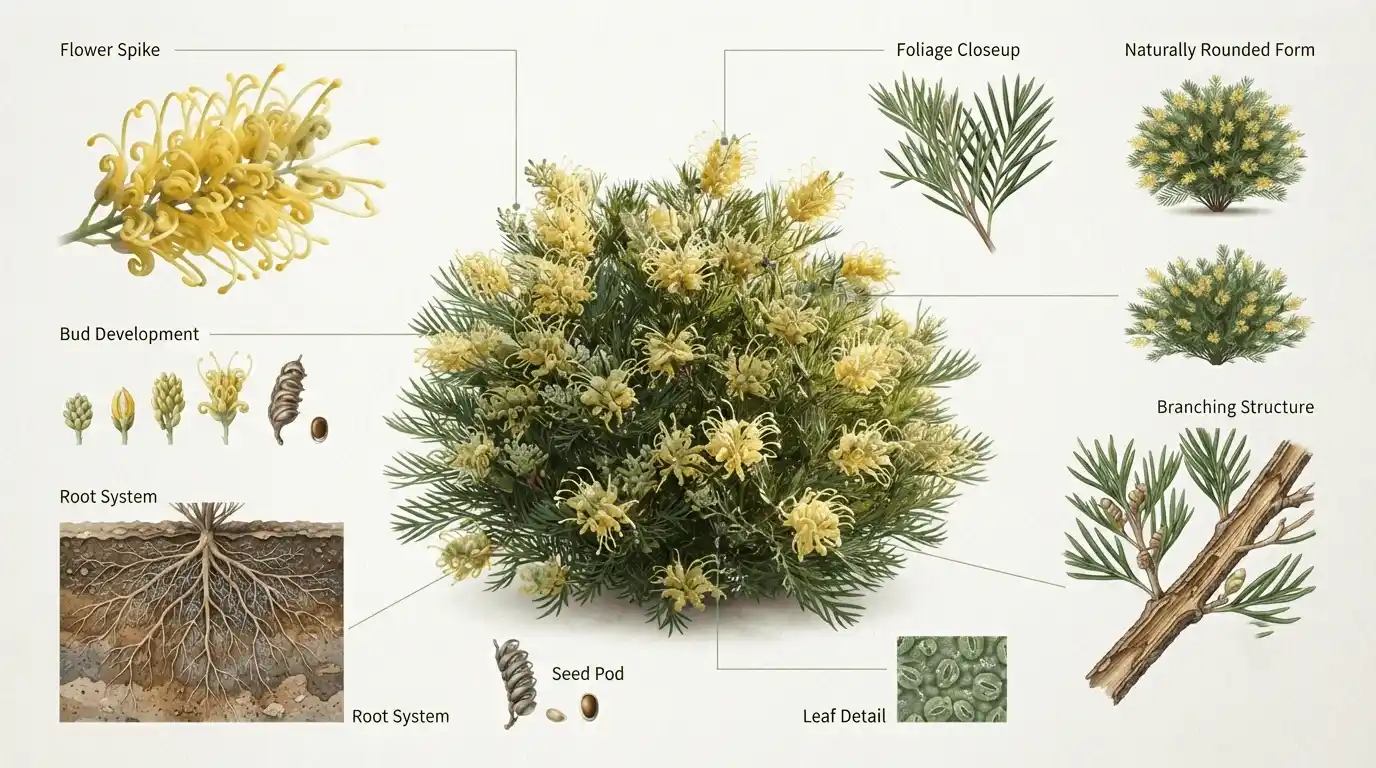
Plant overview and key characteristics
Grevillea Mellow Yellow is an ornamental cultivar within the Grevillea genus, a diverse group of Australian native plants belonging to the Proteaceae family. The plant is prized for its graceful branching habit, fine evergreen foliage, and soft yellow spider-like blooms that provide colour through much of the year. Grevillea belongs to a diverse Australian genus in the Proteaceae family, widely documented in botanical references such as Grevillea (Wikipedia).
Often referred to as Mellow Yellow Grevillea, this cultivar forms a naturally rounded shrub with dense growth, making it suitable for residential landscapes as well as habitat gardens. Its flowers produce abundant nectar that attracts birds and insects while adding subtle colour to the landscape.
Key characteristics include:
- Australian native evergreen shrub
- Soft yellow spider-like grevillea flowers
- Fine-textured green foliage
- Compact, rounded growth habit
- Long flowering season
- Excellent drought tolerance once established
- Highly attractive to nectar-feeding wildlife
Unlike many ornamental shrubs that require intensive maintenance, grevillea mellow yellow performs reliably with relatively little intervention when planted in suitable growing conditions.
In our experience growing native grevilleas, consistent drainage has a greater influence on long-term plant health than frequent fertilization. Healthy roots typically produce stronger flowering displays year after year.
Why it is called Mellow Yellow Grevillea
The name Mellow Yellow Grevillea comes from the plant’s soft buttery-yellow blooms. Rather than producing bright or vivid yellow flowers, this cultivar displays gentle pastel shades that create a relaxed, natural appearance in the landscape. The delicate flower colour contrasts beautifully with its finely divided evergreen foliage, making it a popular choice for native-inspired garden designs.
Why gardeners choose this cultivar
Gardeners select Grevillea Mellow Yellow because it combines ornamental value with practical performance. It is particularly suited to sustainable landscapes where low water use and wildlife support are important priorities.
Major benefits include:
- Extended flowering period
- Excellent nectar source for birds
- Attractive to bees and beneficial insects
- Good drought resistance after establishment
- Low-maintenance growth habit
- Evergreen foliage providing year-round structure
- Suitable for a wide range of Australian climates
As of the current growing season, many native plant growers continue recommending locally adapted grevillea cultivars like Mellow Yellow for water-wise landscapes due to their resilience under prolonged dry conditions when properly established.
Grevillea Mellow Yellow Size and Growth Habit
Mature height and width
Grevillea Mellow Yellow develops into a compact to medium-sized shrub that is easy to incorporate into both small and larger gardens. While mature dimensions vary slightly depending on climate and soil quality, the plant generally maintains a balanced and rounded form.
Typical mature measurements include:
- Height: approximately 1.5–2 metres (5–6.5 feet)
- Width: approximately 1.5–2 metres (5–6.5 feet)
This moderate Grevillea Mellow Yellow size allows it to function effectively as:
- Feature shrub
- Informal hedge
- Mixed border plant
- Wildlife garden specimen
- Foundation planting
Its naturally dense branching creates an attractive rounded silhouette that usually requires only light maintenance to retain its shape.
Growth rate and seasonal development
The growth rate of Grevillea Mellow Yellow is generally considered moderate. Young plants establish steadily during their first one to two years before producing stronger seasonal growth.
The most active growth typically occurs during:
- Spring
- Early summer
- Mild autumn periods in suitable climates
Several environmental factors influence ultimate plant size, including:
- Sunlight exposure
- Soil drainage
- Climate
- Water availability during establishment
- Pruning practices
Healthy plants growing in full sun with freely draining soil generally develop more compact branching and heavier flowering than those grown in shaded or poorly drained locations.
Typical Growth Characteristics
| Feature | Typical Growth |
| Height | 1.5–2 m |
| Width | 1.5–2 m |
| Growth rate | Moderate |
| Form | Rounded, dense, evergreen shrub |
Grevillea Mellow Yellow Care Guide
Light requirements
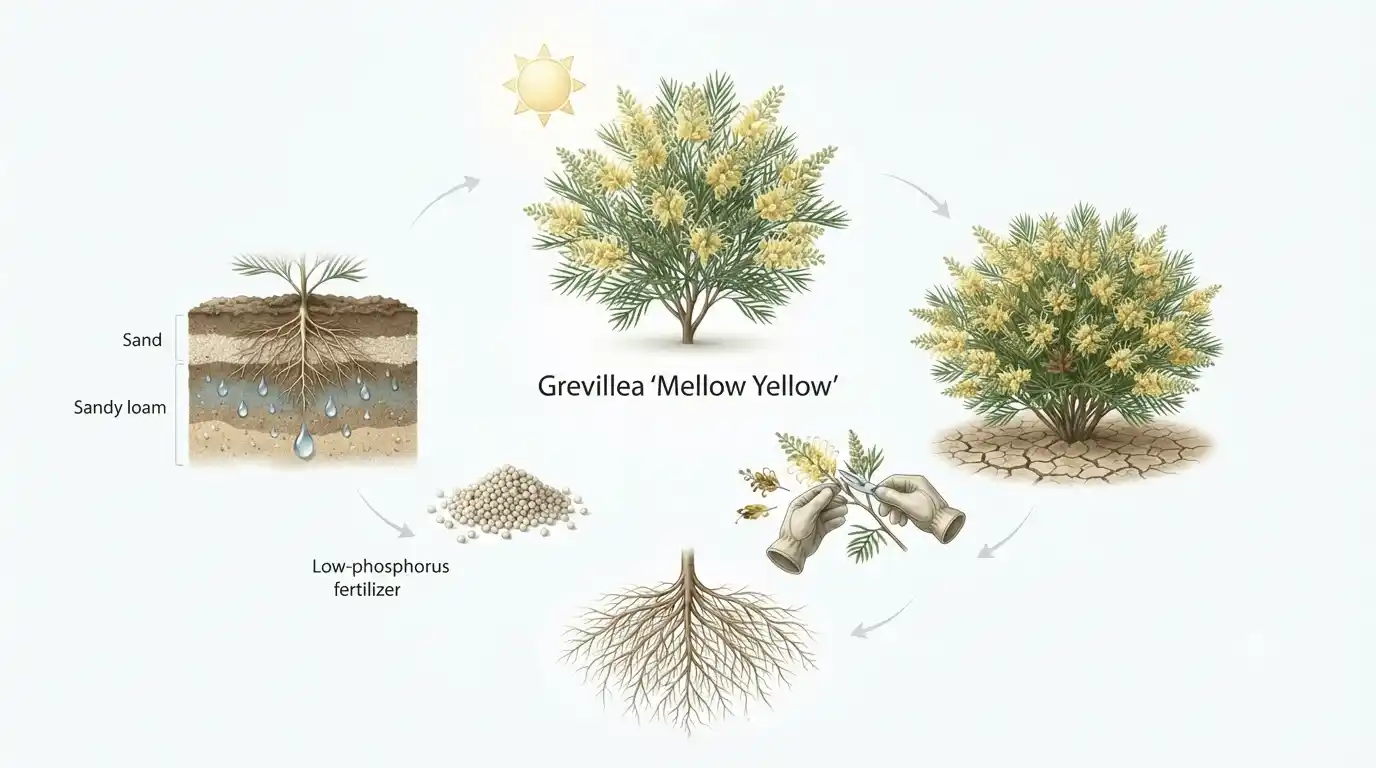
Grevillea Mellow Yellow grows best in full sun, where it produces the highest number of flowers and maintains dense foliage. A minimum of six hours of direct sunlight daily is recommended for optimal performance.
Although the shrub can tolerate partial shade, reduced sunlight often results in:
- Fewer flowers
- More open branching
- Slower growth
- Reduced nectar production
Greenery Inside recommends selecting the sunniest practical planting position, especially in cooler regions where maximum sunlight improves flowering consistency.
Watering requirements
Newly planted shrubs require regular watering while their root systems establish. During the first growing season, deep watering once or twice each week is generally sufficient, depending on rainfall and soil type.
Once established, Grevillea Mellow Yellow becomes notably drought tolerant.
Watering guidelines include:
- Water deeply rather than frequently.
- Allow soil to partially dry between watering.
- Reduce irrigation during cool weather.
- Avoid permanently wet soil.
Overwatering remains one of the most common causes of decline because prolonged moisture limits oxygen around the roots.
Soil preferences
Well-drained soil is one of the most important requirements for successful growth.
Suitable soil types include:
- Sandy soils
- Sandy loam
- Gravelly soils
- Free-draining native garden mixes
Heavy clay soils should be improved with drainage amendments or avoided altogether where water remains around roots after rainfall.
Good drainage helps prevent root diseases while encouraging vigorous root development and healthy flowering.
Fertilizer recommendations
Like many Australian native plants, Grevillea Mellow Yellow prefers fertilizers that are specifically formulated for phosphorus-sensitive species.
The best options include:
- Low-phosphorus native fertilizers
- Slow-release native plant fertilizers
- Light seasonal feeding during spring if growth appears weak
Avoid excessive fertilization because too much nutrient input can encourage leafy growth at the expense of flowers.
Established shrubs growing in healthy soil often require very little supplemental feeding.
Pruning and maintenance
Light pruning immediately after the main flowering period helps maintain an attractive compact shape while stimulating fresh shoots that produce future flowers.
Routine maintenance includes:
- Remove spent flowers where practical.
- Trim lightly after flowering.
- Remove damaged branches.
- Avoid cutting into old woody stems that may regenerate poorly.
Our experience growing grevilleas shows that frequent light trimming produces fuller shrubs than occasional heavy pruning.
Climate and hardiness
Grevillea Mellow Yellow is well adapted to warm temperate and Mediterranean-style climates. It tolerates hot summers, dry periods, and coastal conditions once established.
Key climate characteristics include:
- Good heat tolerance
- Moderate coastal tolerance
- Excellent drought resistance
- Performs well in mild winters
Light frosts are usually tolerated by established plants, although young shrubs benefit from temporary protection during severe cold events.
During winter, flowering may continue in mild climates, while cooler regions often experience slower bloom production before flowering increases again with spring warmth. This seasonal grevillea winter performance makes the plant valuable for providing nectar when many other garden shrubs are less productive.
Flowering Characteristics and Seasonal Interest
Flower Colour and Blooming Period
Grevillea Mellow Yellow produces soft yellow, spider-like flowers over an extended flowering season, making it one of the most rewarding Australian native shrubs for year-round garden interest. In most climates, the heaviest flowering occurs from late winter through spring, although established plants often continue blooming intermittently throughout the year, especially in regions with mild winters.
Its distinctive flowers feature slender, curved styles that create the classic spider-flower appearance associated with many grevilleas. The gentle yellow colouring complements native landscapes and blends beautifully with both evergreen foliage and surrounding flowering plants.
Key flowering characteristics include:
- Soft creamy-yellow to pale yellow flowers
- Distinctive spider-like bloom structure
- Rich nectar production
- Long flowering season
- Evergreen foliage that provides year-round structure
Every grevillea yellow flower produces abundant nectar, making the shrub an important food source for birds and beneficial insects. Unlike many ornamental shrubs that flower only briefly, Grevillea Mellow Yellow delivers reliable seasonal colour with minimal maintenance.
As of the current growing season, horticultural experts continue to recommend light pruning immediately after the main flowering flush. This encourages vigorous new growth, which typically carries the next wave of blooms.
Pollinators Attracted to the Plant
One of the defining features of Grevillea Mellow Yellow is its exceptional value to wildlife. The nectar-rich flowers attract a wide variety of pollinators and native birds, helping create a healthier and more diverse garden ecosystem. Grevillea Mellow Yellow is also a strong butterfly-attracting plant, and you can discover more nectar-rich options in our guide to native plants that attract butterflies.
Common visitors include:
- Honeyeaters
- Native bees
- European honeybees
- Butterflies
- Small nectar-feeding native birds
- Hoverflies and other beneficial insects
These pollinators feed on the abundant nectar while transferring pollen between flowers, supporting both plant reproduction and biodiversity. Even a single mature shrub can become an important seasonal food source when other flowering plants are scarce.
In our experience at Greenery Inside, gardens that combine several nectar-producing native species consistently attract a greater variety of birds throughout the year. Planting Grevillea Mellow Yellow alongside other flowering natives can significantly increase wildlife activity in the garden.
Best Landscape Uses for Grevillea Mellow Yellow
Garden Design Applications
Grevillea Mellow Yellow is a versatile evergreen shrub that fits naturally into a wide range of landscape styles. Its compact size, soft yellow flowers, and fine-textured foliage make it equally suitable for small residential gardens and expansive native landscapes. For more evergreen planting ideas that maintain year-round structure in the garden, you may also explore our selection of best evergreen trees suited for diverse climates.
It is commonly used in:
- Australian native gardens
- Wildlife-friendly gardens
- Cottage gardens
- Water-wise landscapes
- Informal flowering hedges
- Mixed shrub borders
- Feature plantings
- Coastal gardens with well-drained soils
Its naturally rounded growth habit requires minimal shaping, making it an excellent option for gardeners seeking attractive, low-maintenance plants. The evergreen foliage also provides year-round structure, even when flowering slows during cooler months.
Companion Planting Ideas
Grevillea Mellow Yellow grows well with many Australian native plants and drought-tolerant ornamentals that prefer similar growing conditions.
Other grevillea varieties
Combining multiple grevillea cultivars extends the flowering season while introducing different flower colours, textures, and plant forms. Mixing upright, compact, and spreading varieties creates a more dynamic landscape.
Native shrubs
Suitable native shrub companions include:
- Westringia
- Callistemon
- Banksia
- Correa
- Hakea
These shrubs enjoy similar well-drained soils and sunny positions while collectively providing habitat for birds and pollinators.
Flowering perennials
Flowering perennials that pair well include:
- Kangaroo Paw (Anigozanthos)
- Native daisies
- Lavender
- Salvia
- Gaura
These plants complement the soft yellow blooms while thriving under comparable watering and sunlight conditions.
Grevillea Mellow Yellow Compared with Other Yellow Grevilleas
Grevillea Mellow Yellow vs Grevillea Wattlebird Yellow
Although both belong to the Grevillea genus, Grevillea Mellow Yellow and Grevillea Wattlebird Yellow offer different characteristics that suit different landscape needs.
Grevillea Mellow Yellow is valued for its compact, rounded growth and soft buttery-yellow flowers, making it an excellent choice for suburban gardens, borders, and informal hedges.
Grevillea Wattlebird Yellow generally develops into a larger and more vigorous shrub with brighter yellow flowers. Its stronger growth habit makes it better suited to spacious gardens and larger wildlife plantings.
The main differences include:
- Flower colour: Mellow Yellow produces softer pastel yellow blooms, while Wattlebird Yellow often displays brighter yellow tones.
- Plant size: Mellow Yellow remains more compact at maturity.
- Growth habit: Mellow Yellow forms a dense rounded shrub, whereas Wattlebird Yellow is typically more vigorous and spreading.
- Landscape use: Mellow Yellow is ideal for smaller gardens and borders, while Wattlebird Yellow performs best in larger landscapes and habitat gardens.
Both cultivars are excellent nectar producers and thrive in full sun with well-drained soil.
Comparison with Other Yellow Grevillea Varieties
There are numerous yellow grevillea varieties, each offering unique combinations of flower colour, mature size, and growth habit.
For example, Grevillea Honeybird Yellow is appreciated for its bright yellow blooms and excellent bird-attracting qualities, while other cultivars display flowers ranging from creamy yellow to rich golden shades.
When selecting a grevillea yellow flower variety, consider the following factors:
- Mature height and spread
- Flower colour intensity
- Growth habit
- Climate suitability
- Available planting space
- Intended landscape purpose
Some grevillea yellow flowers remain compact enough for small gardens, while others are better suited to screening, informal hedges, or larger native landscapes.
| Feature | Mellow Yellow | Wattlebird Yellow | Other Yellow Grevilleas |
| Height | Approximately 1.5–2 m | Medium to large | Varies by cultivar |
| Flower Colour | Soft yellow | Bright yellow | Cream to golden yellow |
| Growth Habit | Compact, rounded shrub | Vigorous, spreading shrub | Upright, rounded, or spreading |
| Best Use | Borders, wildlife gardens, small landscapes | Larger native gardens and habitat plantings | Depends on cultivar and available space |
How Grevillea Mellow Yellow Compares with Other Popular Grevilleas
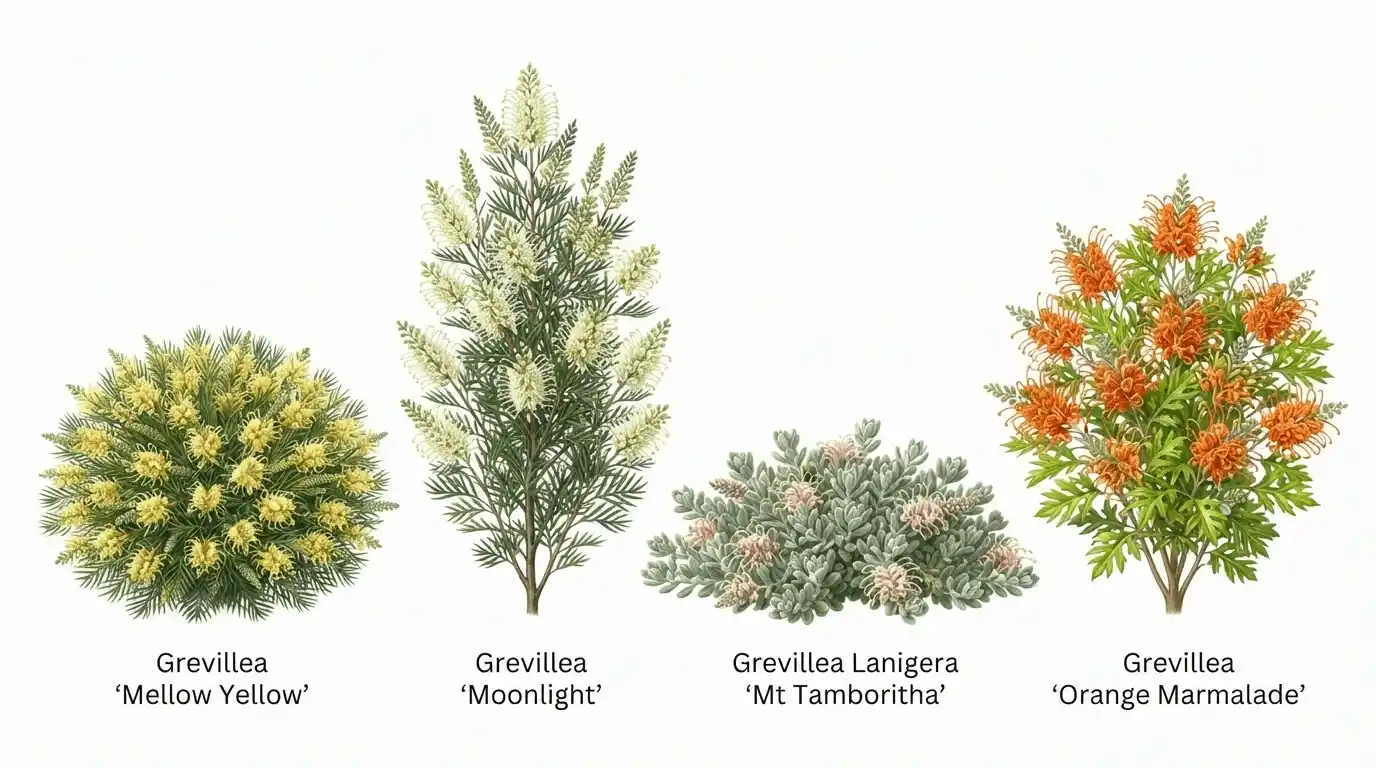
Compared with Grevillea Moonlight
Grevillea Moonlight is one of Australia’s most recognised grevillea cultivars, but it differs significantly from Grevillea Mellow Yellow in both size and landscape application.
The most obvious distinction is its mature size. While Grevillea Mellow Yellow forms a compact shrub suitable for residential gardens, Moonlight Grevillea grows into a large shrub or small tree. While Grevillea Mellow Yellow is mainly grown outdoors, gardeners experimenting with container greenery can also explore our guide to house plants for more ideas on indoor and patio-friendly plant care.
Key differences include:
- Size: Grevillea Moonlight typically reaches 4–6 metres, while Grevillea Mellow Yellow usually grows to around 1.5–2 metres.
- Flower colour: Moonlight produces creamy-white flowers, whereas Mellow Yellow bears soft yellow blooms.
- Growth habit: Moonlight has a larger, upright structure.
- Landscape use: Moonlight is ideal for screening and feature planting, while Mellow Yellow is better suited to borders, wildlife gardens, and compact landscapes.
Gardeners researching Grevillea Moonlight height or Grevillea Moonlight size should allow considerably more planting space than would be required for Mellow Yellow.
Compared with Grevillea Lanigera
Grevillea lanigera, commonly known as Woolly Grevillea, offers a completely different growth habit from Grevillea Mellow Yellow.
Many popular selections, including Grevillea lanigera ‘Mt Tamboritha’, Grevillea Mt Tamboritha, and Grevillea Mount Tamboritha, grow as low-spreading groundcovers instead of upright shrubs.
The main differences include:
- Mellow Yellow develops into a rounded shrub.
- Woolly Grevillea spreads across the ground.
- Mellow Yellow produces soft yellow flowers.
- Many Grevillea lanigera cultivars display pink, cream, or red-toned flowers.
- Mt Tamboritha is widely planted as a groundcover for slopes, rockeries, and erosion control.
Gardeners looking for an attractive groundcover often prefer Grevillea lanigera, while those wanting a flowering shrub generally choose Mellow Yellow.
Compared with Orange-Flowering Grevilleas
Orange-flowering grevilleas provide a much bolder visual impact than the gentle yellow tones of Grevillea Mellow Yellow.
Popular orange selections include:
- Grevillea Orange Marmalade
- Blood Orange Grevillea
- Orange Wow Grevillea
These cultivars are frequently selected as statement plants because of their vibrant orange to orange-red flowers.
Compared with Mellow Yellow:
- Grevillea Mellow Yellow offers soft yellow blooms with a subtle, natural appearance.
- Orange grevillea cultivars produce brighter flowers that become strong focal points in the landscape.
- Both attract nectar-feeding birds, bees, and butterflies.
- Both require full sun, excellent drainage, and low-phosphorus fertilisers for best performance.
Choosing between yellow and orange-flowering grevilleas ultimately depends on the desired colour palette, available garden space, and overall landscape design rather than significant differences in cultivation requirements.
Common Growing Problems and Solutions
Although Grevillea Mellow Yellow is considered a hardy and low-maintenance Australian native shrub, it can experience a few growing problems if planted in unsuitable conditions. Most issues are related to watering, soil drainage, or incorrect maintenance practices rather than serious diseases.
Poor Flowering
Poor flowering is usually caused by insufficient sunlight, excessive fertilizer, or incorrect pruning. Addressing these factors often restores healthy blooming during the next flowering season.
Common causes include:
- Too little sunlight: Grevillea Mellow Yellow performs best in full sun. Plants growing in heavy shade often produce fewer flowers and become leggy.
- Excess fertilizer: High-nitrogen or high-phosphorus fertilizers encourage leafy growth instead of flowers and may damage phosphorus-sensitive native plants.
- Incorrect pruning: Heavy pruning into old wood can reduce flowering. Light trimming immediately after the main flowering period encourages fresh flowering shoots.
To improve flowering:
- Plant in a location with at least six hours of direct sunlight daily.
- Use only low-phosphorus fertilizers formulated for Australian native plants.
- Prune lightly after flowering rather than removing large branches.
Yellowing Leaves and Root Issues
Yellowing leaves often indicate problems below the soil surface rather than deficiencies in the foliage itself.
The most common causes include:
- Poor soil drainage
- Root rot from excessive moisture
- Nutrient imbalance
- Prolonged overwatering
Grevilleas dislike waterlogged conditions because saturated soil reduces oxygen around the roots. Over time, this can lead to root decline, poor growth, and yellow foliage.
Signs of drainage problems include:
- Yellowing leaves
- Wilting despite moist soil
- Slow growth
- Branch dieback
- Soft or decaying roots
If drainage is poor, improve the planting area with raised beds or free-draining soil mixes. Avoid watering until the upper layer of soil has partially dried.
In our experience at Greenery Inside, improving drainage is often more effective than applying additional fertilizer when grevilleas show signs of stress.
Pest and Disease Considerations
Grevillea Mellow Yellow is generally resistant to most pests and diseases when grown under suitable conditions.
Occasionally, gardeners may notice:
- Aphids on new growth
- Scale insects
- Spider mites during prolonged hot, dry weather
Most infestations remain minor and can be controlled by encouraging beneficial insects or removing affected stems.
Disease problems are relatively uncommon but may include root rot if soil remains consistently wet.
Preventive measures include:
- Plant in well-drained soil.
- Avoid overwatering.
- Improve air circulation around the shrub.
- Remove dead or damaged branches promptly.
- Inspect new growth regularly for early pest activity.
Healthy plants growing in suitable conditions rarely require chemical treatments.
Common Beginner Mistakes
Many growing problems can be avoided by understanding the basic needs of Australian native grevilleas. Beginners often make a few common mistakes that reduce plant health or flowering performance.
The most frequent mistakes include:
Planting in Poorly Drained Soil
Poor drainage is one of the leading causes of grevillea failure. Heavy clay or waterlogged soils increase the risk of root diseases and poor growth.
Using High-Phosphorus Fertilizer
Most grevilleas belong to the Proteaceae family and are sensitive to excessive phosphorus. Always select fertilizers specifically designed for Australian native plants.
Overwatering
Established Grevillea Mellow Yellow plants require relatively little supplemental irrigation. Frequent watering keeps the soil excessively wet and increases the likelihood of root problems.
Heavy Pruning
Large cuts into mature woody stems can reduce flowering and slow recovery. Regular light pruning produces a healthier, denser shrub.
Growing in Too Much Shade
Insufficient sunlight leads to:
- Reduced flowering
- Sparse growth
- Longer, weaker stems
- Lower nectar production
Choosing a bright, sunny location gives the best overall results.
Choosing the Right Grevillea for Your Garden
Selecting the right grevillea depends on available space, desired flower colour, climate, and the role the plant will play within the landscape. With hundreds of species and cultivars available, there is a grevillea suitable for almost every garden style. If you are planning a complete native landscape, you can explore more design ideas in our guide to Australian native garden trees, which highlights the best species for structure, screening, and wildlife-friendly gardens.
Understanding Grevillea Colours and Flower Forms
One of the greatest attractions of the Grevillea genus is its remarkable diversity of flower colours and forms.
Popular grevillea flower colours include:
- Yellow
- Orange
- Cream
- White
- Red
- Pink
- Apricot
- Bi-coloured selections
Spider-like flowers are the most recognizable, but some species produce toothbrush-shaped or clustered blooms that create different visual effects.
Gardeners seeking subtle colour often choose yellow or cream-flowering cultivars such as Grevillea Mellow Yellow, while orange and red selections provide stronger visual contrast and attract large numbers of nectar-feeding birds.
Selecting by Plant Size and Landscape Purpose
Grevilleas are available in a wide range of growth habits, allowing gardeners to select plants that suit both small urban gardens and expansive rural landscapes.
Options include:
Grevillea Shrubs
These are the most common landscape forms and include compact varieties suitable for borders, hedges, and feature planting.
Grevillea Trees
Some species develop into small trees that provide screening, shade, or architectural structure.
Common choices include several naturally upright grevillea tree types that reach several metres in height.
Grevillea Groundcovers
Low-growing cultivars spread across the ground and are ideal for:
- Slopes
- Rock gardens
- Erosion control
- Garden edges
Some gardeners specifically seek a yellow grevillea ground cover, although these are less common than pink or red-flowering groundcover varieties.
Small Grevilleas
Compact small grevilleas are excellent for:
- Courtyards
- Small gardens
- Containers
- Front garden beds
These selections offer long flowering seasons without requiring significant pruning.
Grevillea Species and Types
Australia is home to hundreds of naturally occurring grevillea species, each adapted to different climates and environments.
When choosing among different grevillea types or types of grevillea, consider:
- Mature height and spread
- Flower colour
- Growth habit
- Frost tolerance
- Drought resistance
- Local climate
- Soil drainage
Many native grevilleas are specifically adapted to Australian conditions, making them valuable additions to sustainable, low-water landscapes.
Environmental Benefits of Grevillea Mellow Yellow
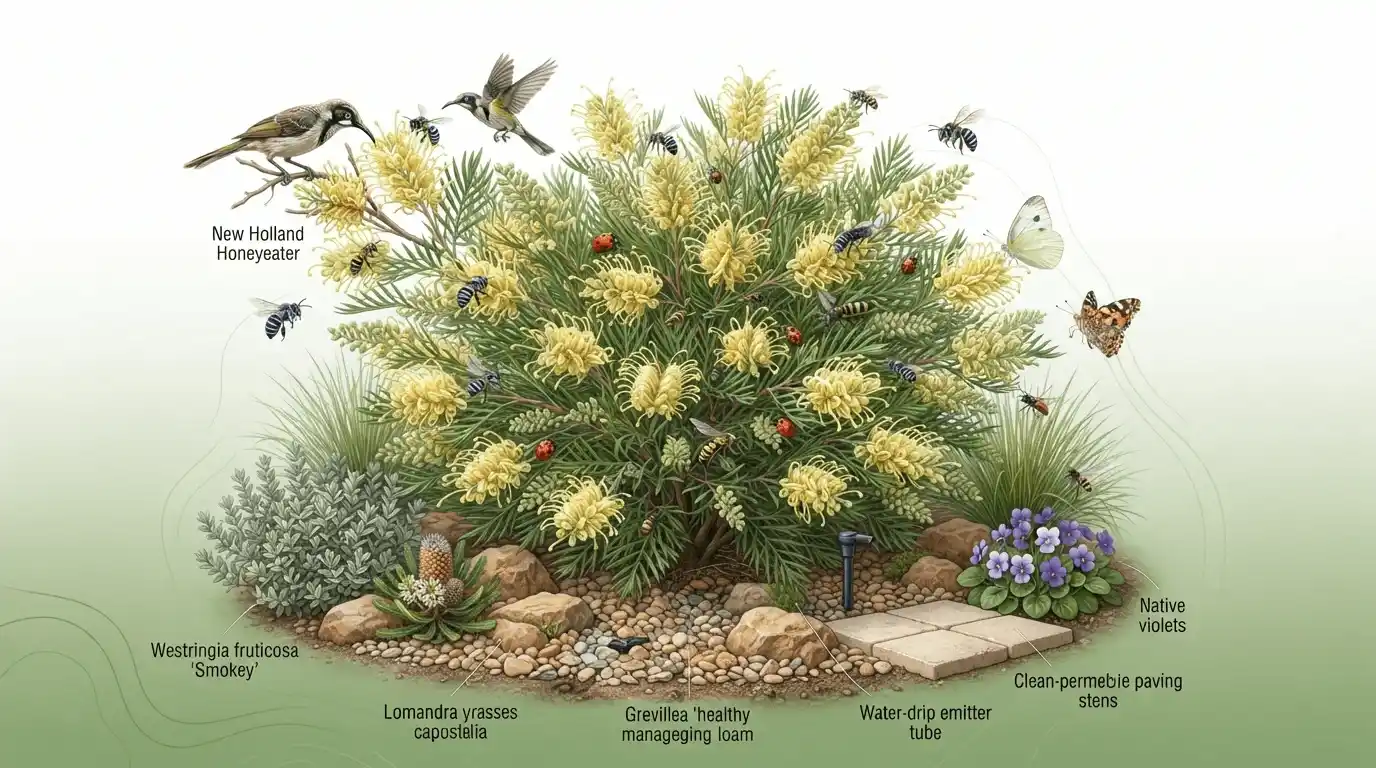
Beyond its ornamental appeal, Grevillea Mellow Yellow provides significant environmental benefits that make it an excellent choice for sustainable gardens.
Supports Bird Habitat
The nectar-rich flowers provide an important food source for honeyeaters and other native birds throughout much of the year. Dense evergreen foliage also offers shelter and nesting opportunities for small wildlife.
Encourages Pollinators
The flowers attract:
- Native bees
- Honeybees
- Butterflies
- Hoverflies
- Other beneficial insects
Supporting these pollinators contributes to healthier garden ecosystems and improved biodiversity.
Conserves Water
Once established, Grevillea Mellow Yellow requires relatively little irrigation. Its drought tolerance makes it particularly valuable in water-wise landscapes and regions experiencing seasonal dry periods.
Promotes Native Biodiversity
Planting Australian native species helps support local ecosystems by providing habitat and food sources that many native birds and insects have evolved to use.
Combining grevilleas with other indigenous shrubs creates more resilient and wildlife-friendly gardens.
Supports Sustainable Landscaping
Grevillea Mellow Yellow contributes to sustainable landscape design by offering:
- Low water requirements
- Reduced fertilizer needs
- Long flowering seasons
- Habitat for wildlife
- Low ongoing maintenance
- Excellent adaptation to Australian climates
These characteristics make it an environmentally responsible choice for gardeners seeking attractive plants with lasting ecological value.
Conclusion
Grevillea Mellow Yellow is a versatile Australian native shrub that combines soft yellow flowers, evergreen foliage, and reliable performance in a wide range of landscapes. Its manageable size, extended flowering season, and excellent drought tolerance make it an outstanding choice for native gardens, wildlife habitats, borders, and water-wise planting schemes.
With full sun, well-drained soil, light pruning, and low-phosphorus fertilization, this cultivar remains healthy and productive for many years while providing valuable nectar for birds, bees, and butterflies. Its low-maintenance nature also makes it suitable for both beginner and experienced gardeners.
Whether you are creating a compact native garden or expanding a larger wildlife-friendly landscape, Grevillea Mellow Yellow offers an attractive balance of beauty, resilience, and ecological value. Choosing the right grevillea based on your garden size, local climate, and landscape goals will help ensure long-term success.
Frequently Asked Questions
How big does Grevillea Mellow Yellow grow?
Grevillea Mellow Yellow typically grows to 1.5–2 metres (5–6.5 feet) in both height and width. Mature size may vary slightly depending on climate, soil quality, sunlight, and maintenance practices.
How do you care for Grevillea Mellow Yellow?
Grow it in full sun with well-drained soil, water regularly during establishment, then reduce watering once mature. Apply a low-phosphorus fertilizer only when needed and prune lightly after flowering to maintain shape and encourage new blooms.
Does Grevillea Mellow Yellow flower all year?
In mild climates, Grevillea Mellow Yellow can produce flowers intermittently throughout the year, with the heaviest flowering usually occurring from late winter through spring.
Is Grevillea Mellow Yellow drought tolerant?
Yes. Once established, Grevillea Mellow Yellow is highly drought tolerant and performs well in water-wise gardens. Occasional deep watering during extended dry periods is generally sufficient.
Can Grevillea Mellow Yellow grow in pots?
Yes. It can be grown successfully in large containers provided they have excellent drainage. Use a free-draining native plant potting mix, position the container in full sun, and avoid overwatering.
What is the difference between Grevillea Mellow Yellow and Grevillea Moonlight?
Grevillea Mellow Yellow is a compact shrub with soft yellow flowers, while Grevillea Moonlight is a much larger shrub or small tree producing creamy-white flowers. Moonlight is better suited to large gardens and screening, whereas Mellow Yellow fits smaller landscapes and borders.
Which yellow grevillea variety is best for small gardens?
Grevillea Mellow Yellow is among the best yellow grevillea varieties for small gardens because of its compact size, rounded growth habit, long flowering season, and ability to attract birds and pollinators without requiring extensive maintenance.