
Introduction: What Are Lilly Pilly Varieties?
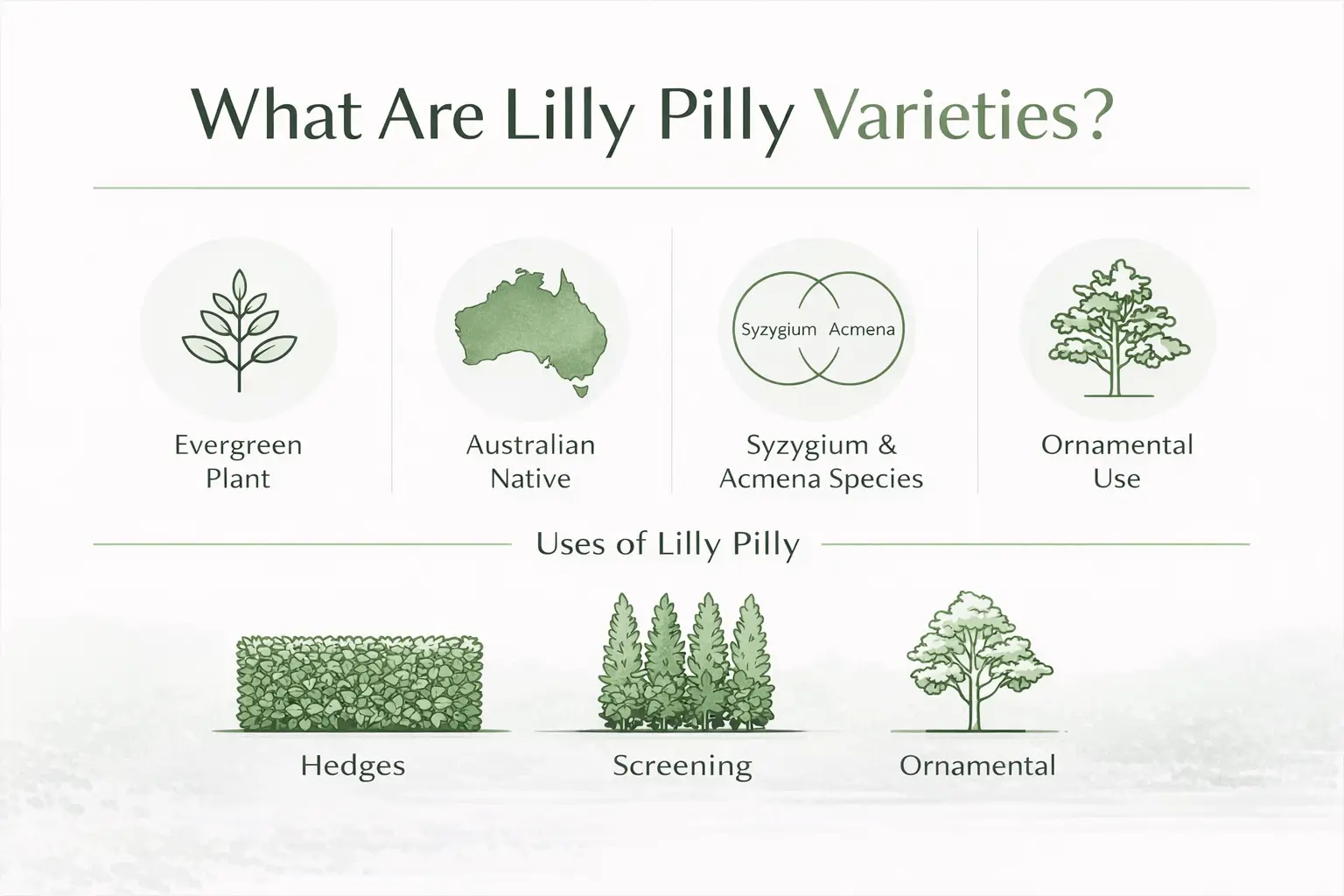
Lilly pilly varieties are a group of Australian native evergreen plants primarily belonging to the genera Syzygium and Acmena. These plants are widely used in landscaping due to their dense foliage, fast growth, and adaptability. These plants belong mainly to the Syzygium genus, a group of flowering plants detailed further on Wikipedia for botanical reference.
They are especially popular for hedging, screening, and ornamental purposes in residential gardens. Lilly pilly plants offer a wide range of options, from compact dwarf shrubs to tall trees, making them suitable for different garden sizes and design needs. The diversity in types of lilly pilly includes variations in height, leaf color, growth habits, and resistance to pests like psyllids. This flexibility makes them a preferred choice for both beginners and experienced gardeners.
Quick Summary
- Lilly pilly varieties are evergreen native plants ideal for hedges and privacy screens
- They range from dwarf shrubs to tall trees depending on the species
- Many modern varieties are bred for psyllid resistance and low maintenance
- Choosing the right type depends on height, root system, and screening needs
Types of Lilly Pilly Varieties Explained
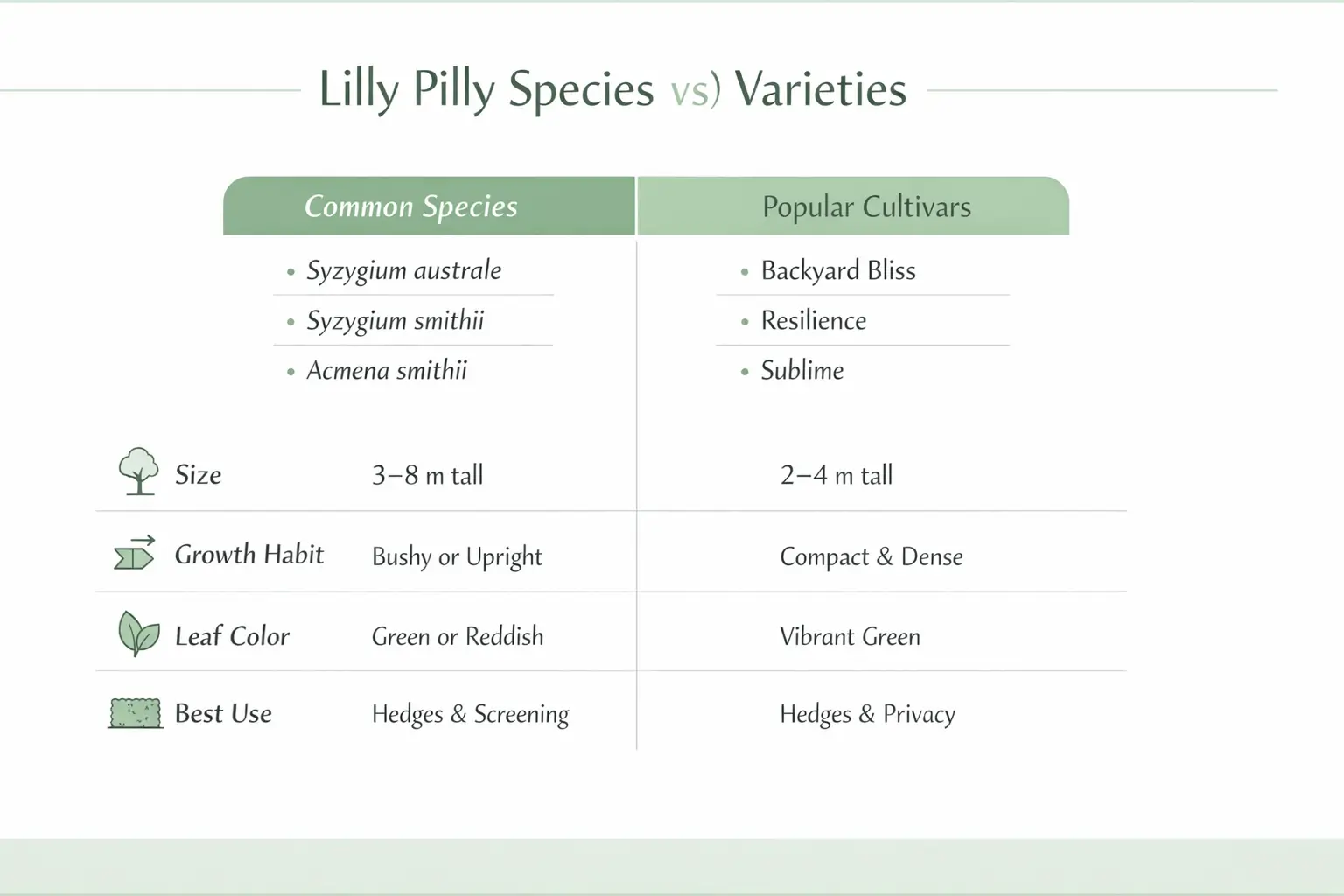
Lilly pilly types are generally classified based on their botanical species and cultivated varieties. The most common plant groups include Syzygium australe, Syzygium smithii, and Acmena smithii, each offering unique characteristics. Lilly pilly plants are often associated with Australian brush cherry species, which are widely valued for hedging and ornamental use — you can explore this further in Australian Brush Cherry.
Common Lilly Pilly Species
- Syzygium australe – A highly popular hedging plant known for its dense foliage and fast growth
- Syzygium smithii – A versatile species with lush, dense leaves suitable for multiple landscape uses
- Acmena smithii – A traditional ornamental variety often used for decorative planting
Different Lilly Pilly Varieties (Cultivars)
Popular cultivated varieties include:
- Backyard Bliss
- Resilience
- Sublime
- Other new lilly pilly varieties developed for improved performance
Key Differences:
- Leaf color ranges from bright green to deep glossy tones
- Growth habits vary from compact shrubs to tall screening trees
- Sizes differ depending on cultivar selection
Suitability:
- Ideal for hedging and privacy screens
- Suitable for decorative garden planting
- Can be used in pots or as feature plants
Popular Lilly Pilly Varieties for Hedging and Screening
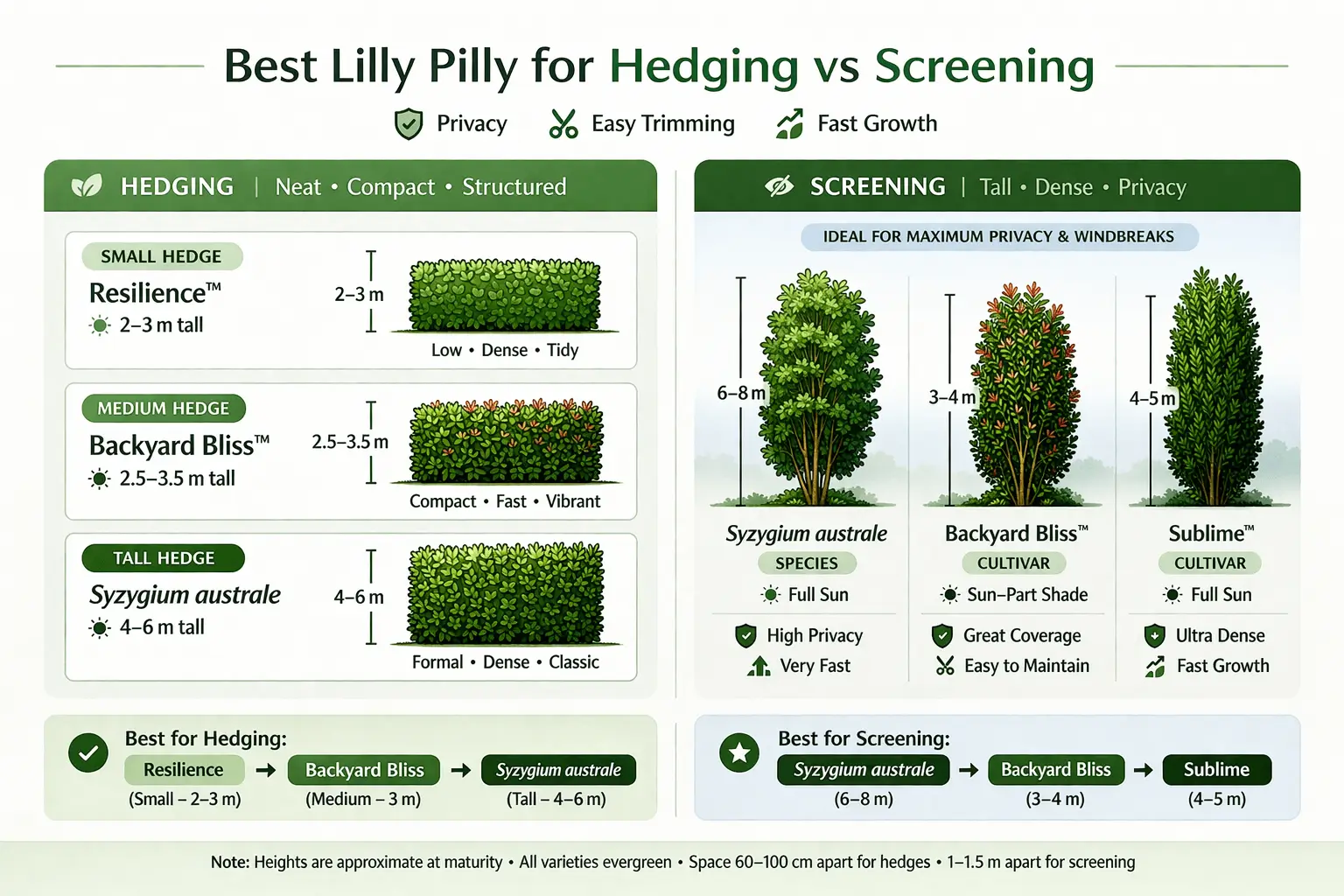
Lilly pilly plants are widely used for creating privacy screens and structured hedges due to their dense foliage and easy maintenance.
If you’re comparing screening options beyond lilly pilly, you can also explore other excellent choices in Australian Native Screening Trees for broader landscaping ideas.
Best Lilly Pilly for Screening
The best lilly pilly for screening includes tall, dense varieties that provide full coverage quickly:
- Resilience
- Backyard Bliss
- Various Syzygium australe varieties
These plants grow upright and form thick foliage, making them ideal for blocking views and creating privacy.
Lilly Pilly Hedge Varieties
Different hedge types can be created using lilly pilly varieties:
- Small/dwarf hedges for compact spaces
- Medium hedges for standard garden boundaries
- Tall hedges for full privacy screening
Features of Good Hedge Plants:
- Dense foliage for coverage
- Fast growth rate
- Easy pruning and shaping
Comparison of Popular Lilly Pilly Varieties
| Variety | Height | Growth Rate | Best Use | Special Feature |
| Backyard Bliss | Medium | Moderate | Hedge | Compact growth |
| Resilience | Tall | Fast | Screening | Psyllid resistant |
| Sublime | Medium | Moderate | Decorative hedge | Dense foliage |
This comparison highlights the practical differences between popular lilly pilly varieties. Selecting the right type depends on the desired height, maintenance level, and specific garden function.
Lilly Pilly Root System Explained
The lilly pilly root system is generally considered manageable and suitable for residential planting when proper spacing is maintained.
Are Lilly Pilly Roots Invasive?
Lilly pilly roots are generally non-invasive in most environments. However, they can spread moderately depending on soil quality, moisture levels, and plant maturity.
Root Behavior and Planting Considerations
Root growth can be influenced by environmental conditions and planting location.
Safe Planting Tips:
- Avoid planting too close to building foundations
- Ensure well-drained soil conditions
- Regular pruning helps control plant size and root spread
Choosing the Right Lilly Pilly Variety for Your Garden
Selecting the right lilly pilly variety depends on available space, climate, and desired plant height.
Small and Dwarf Lilly Pilly Varieties
These are ideal for:
- Small gardens
- Container planting
- Decorative borders
Tall and Narrow Lilly Pilly Varieties
Best suited for:
- Privacy screening
- Boundary hedges
- Narrow spaces
Native and Edible Lilly Pilly Varieties
Some varieties produce edible berries, making them useful for:
- Native gardens
- Edible landscaping
- Wildlife attraction
Growth Rate and Size of Lilly Pilly Plants
Lilly pilly plants vary significantly in growth rate and mature size depending on the species and growing conditions.
Growth Categories:
- Slow-growing varieties for controlled shaping
- Moderate-growing varieties for balanced maintenance
- Fast-growing varieties for quick screening and hedging
Environmental factors such as sunlight, soil quality, and watering practices play a major role in determining growth speed and final size.
Lilly Pilly Care Guide (Essential Growing Conditions)
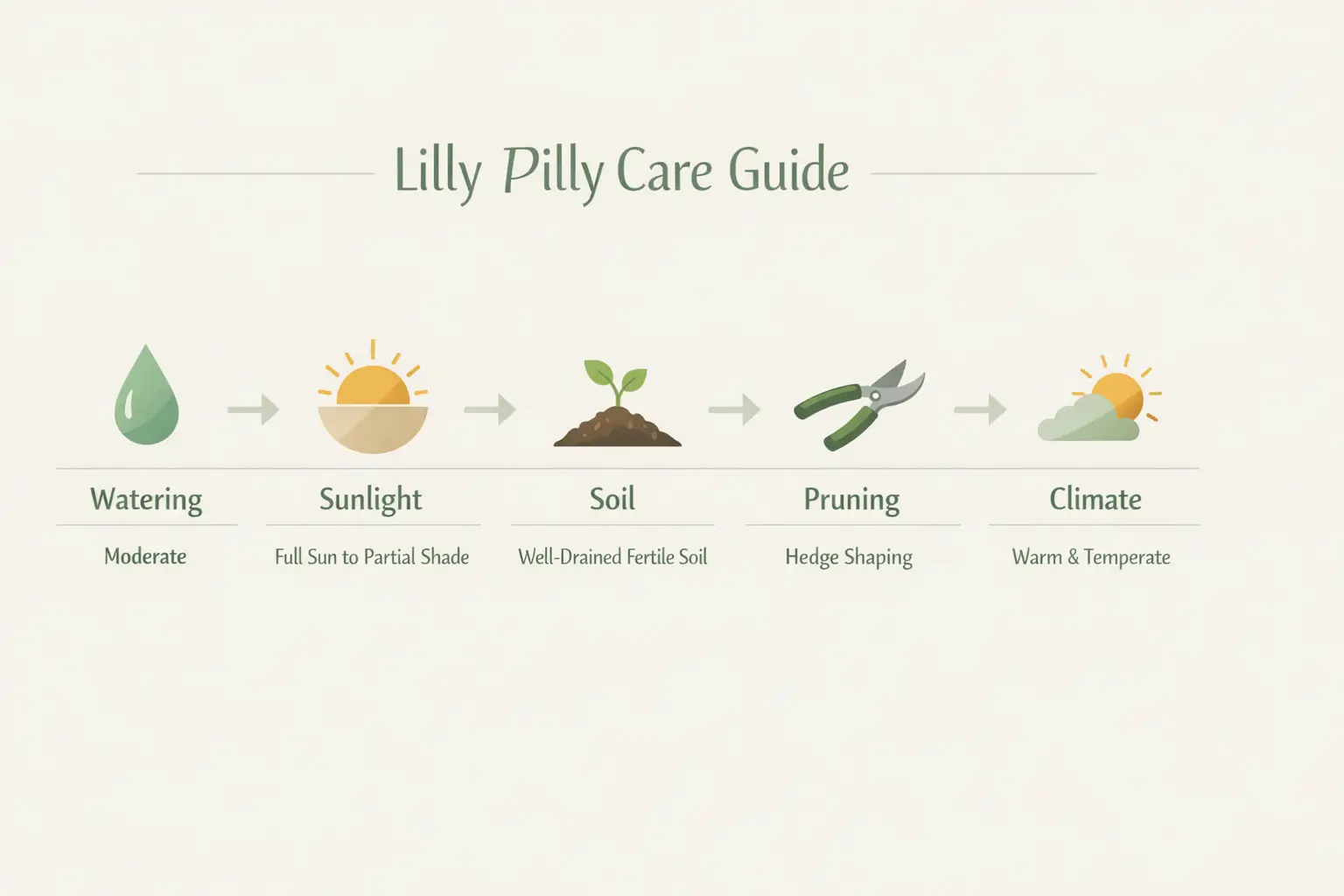
Proper care ensures healthy growth and long-lasting performance of lilly pilly plants.
Care Requirements:
- Watering: Regular watering with well-drained soil
- Light: Full sun to partial shade
- Soil: Fertile, well-draining soil
- Pruning: Maintains hedge shape and density
- Climate: Best suited for warm and temperate regions
Consistent care improves plant density and resistance to pests and diseases.
Common Problems and Solutions
Psyllid Damage in Lilly Pilly
Psyllid damage causes bumps and distortion in leaves due to insect activity. The most effective solution is to choose psyllid-resistant lilly pilly varieties such as Resilience.
Slow Growth or Poor Health
Slow growth is usually caused by poor soil conditions or lack of nutrients. Improving soil fertility and maintaining proper watering schedules can restore plant health.
Yellowing Leaves
Yellow leaves often result from overwatering or nutrient deficiencies. Adjust watering practices and provide balanced fertilization to correct the issue.
Beginner Mistakes When Growing Lilly Pilly
Common Mistakes:
- Planting too close together
- Choosing the wrong variety for available space
- Ignoring regular pruning
- Not selecting pest-resistant varieties
Avoiding these mistakes helps ensure healthier growth and better hedge formation.
Environmental and Regional Considerations
Lilly pilly plants adapt well to different environments, particularly in regions like Australia and New Zealand.
Key Considerations:
- Tolerant to a range of climates
- Suitable for both coastal and inland areas
- Some varieties may be sensitive to frost
Understanding local conditions helps in selecting the most suitable variety.
Conclusion: Understanding Lilly Pilly Varieties for Better Plant Selection
Lilly pilly varieties differ in size, growth habits, and maintenance needs, making them versatile plants for landscaping. From compact shrubs to tall screening trees, each type serves a specific purpose in garden design.
Choosing the right variety depends on factors such as space, desired height, and maintenance level. By selecting a suitable plant, gardeners can achieve effective hedging, screening, or decorative results with minimal effort.
The key takeaway is to match the lilly pilly variety with your garden requirements to ensure long-term success and healthy growth.
FAQs
- What are the most popular lilly pilly varieties?
Common varieties include Resilience, Backyard Bliss, and Sublime due to their reliable growth and suitability for hedging. - Which lilly pilly is best for hedging?
Dense-growing varieties like Syzygium australe and Resilience are ideal for creating structured hedges. - Are lilly pilly roots invasive?
No, lilly pilly roots are generally non-invasive, but proper spacing should still be maintained. - How fast do lilly pilly plants grow?
Growth rates vary, but most lilly pilly plants grow at a moderate to fast pace under suitable conditions. - What is the best lilly pilly for screening?
Tall varieties such as Resilience and Backyard Bliss are commonly used for effective privacy screening.