Introduction
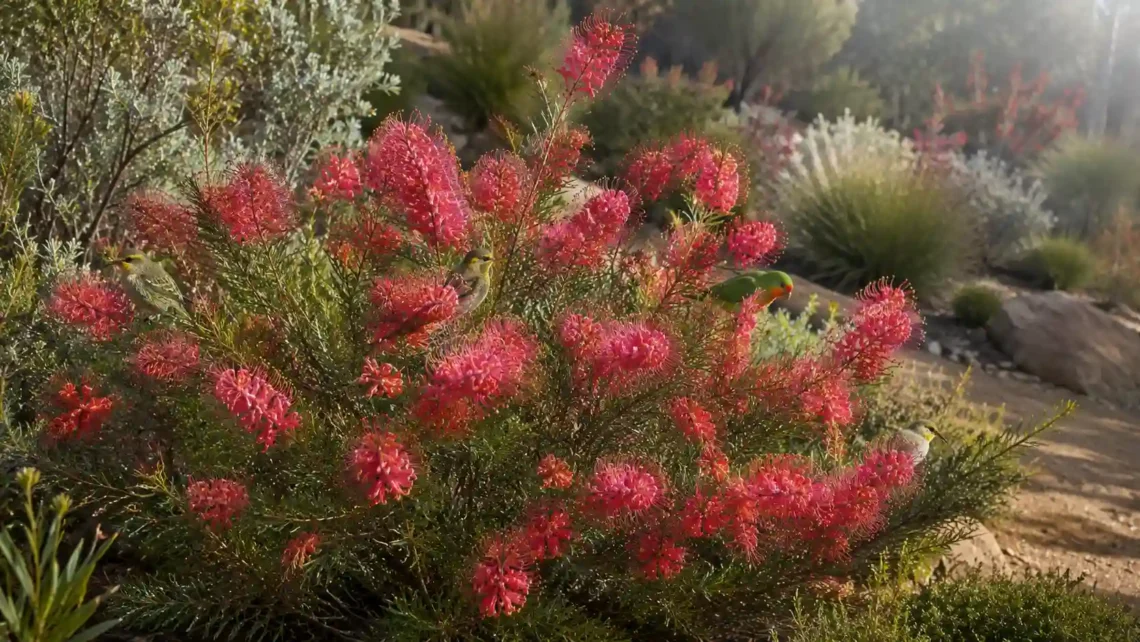
Grevillea ‘Winter Delight’ is a compact hybrid grevillea valued for its bright winter-to-spring flowering and strong appeal to pollinators. It is widely used in Australian native gardens for its low-maintenance nature and drought tolerance once established. This plant produces vivid nectar-rich blooms during cooler months when many shrubs remain dormant, adding seasonal colour and ecological value.
Winter Delight Grevillea typically reaches a manageable size suitable for borders, hedging, and wildlife gardens. Its adaptability to well-drained soils and sunny positions makes it a reliable choice for both beginner and experienced gardeners seeking year-round structure with seasonal floral interest.
Quick Summary
- Compact grevillea with vibrant winter-to-spring flowering
- Grows 1–2 metres tall and wide in most conditions
- Thrives in full sun with well-drained soil
- Low water needs once established
- Highly attractive to birds and pollinators
What Is Winter Delight Grevillea?
Grevillea ‘Winter Delight’ is a hybrid Australian native shrub belonging to the Proteaceae family. It is cultivated primarily for ornamental landscaping due to its dense growth habit and seasonal floral display. The plant is especially valued for flowering during winter, providing colour when many other garden plants are dormant.
This grevillea is often associated with the hybrid group derived from Grevillea lanigera, though naming variations exist. Its compact form and prolific flowering distinguish it from many larger, less manageable grevillea species. Grevillea belongs to a large genus of Australian native plants known for their distinctive flower structures and ecological importance in supporting wildlife.
Botanical Name and Classification
The botanical naming of Winter Delight Grevillea can be confusing. It is commonly referred to as:
- Grevillea ‘Winter Delight’
- Grevillea hybrida ‘Winter Delight’
- Sometimes linked to Grevillea lanigera ‘Winter Delight’
It belongs to the Proteaceae family, known for nutrient-adapted Australian natives. The hybrid classification means it does not always breed true from seed, which is important for propagation.
Key Identifying Features
- Toothbrush-style flowers typical of grevilleas
- Red to pink floral tones
- Dense, fine-textured foliage
- Flowering period: winter to early spring
- Compact, rounded shrub habit
It is often compared with similar cultivars like Grevillea ‘Winter Wonder’ and Grevillea ‘New Blood’, but Winter Delight is generally more compact and winter-focused in flowering.
Winter Delight Grevillea Size, Height, and Spread
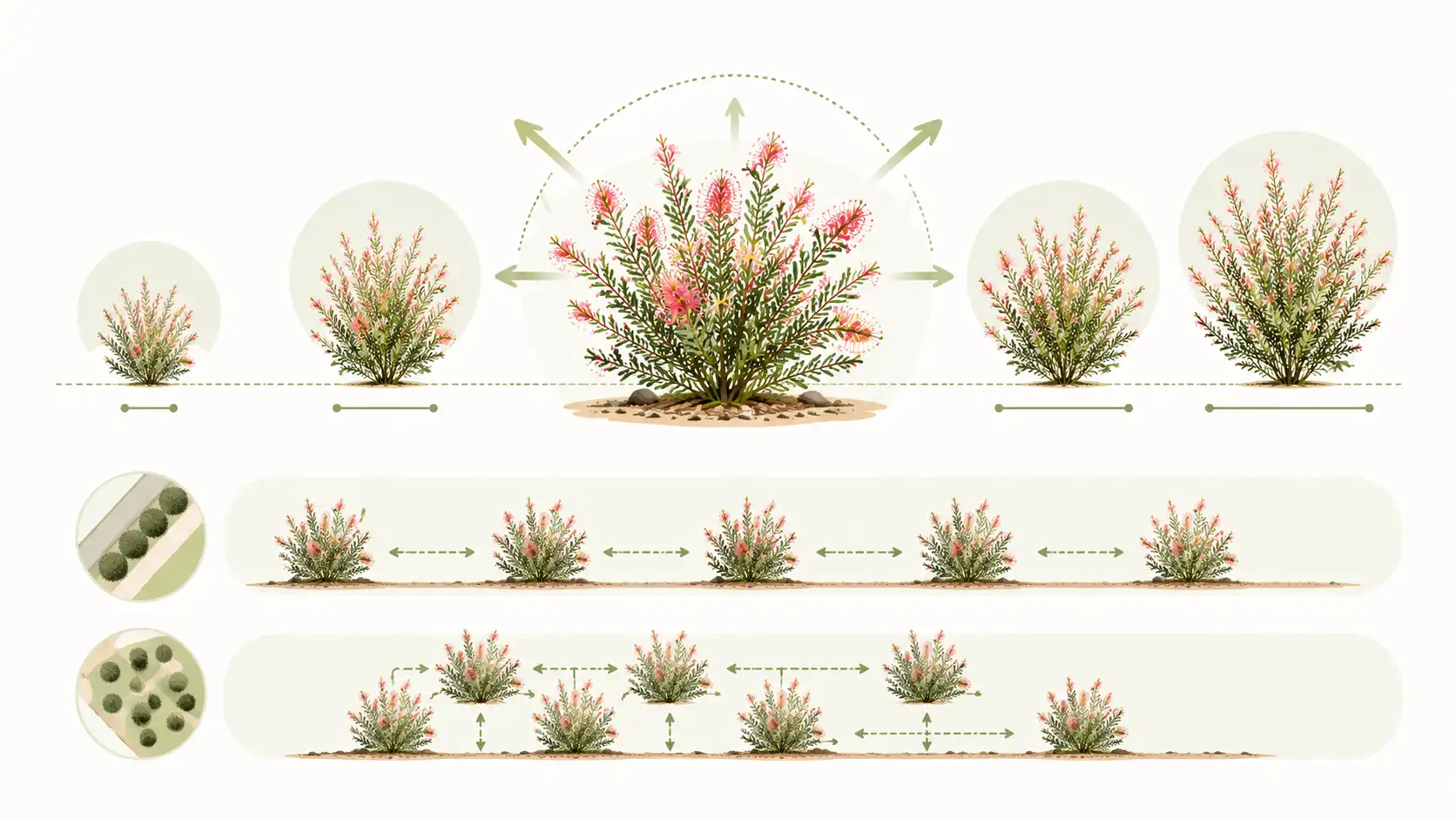
Winter Delight Grevillea maintains a compact structure suitable for small gardens and mixed plantings. Its size is influenced by climate, soil quality, and pruning frequency.
How Big Does Winter Delight Grevillea Get?
- Mature height: 1–2 metres
- Mature spread: 1–2 metres
- Growth habit: compact and rounded
- Container growth: smaller, typically under 1.5 metres
In our experience growing grevilleas in Mediterranean-style gardens, consistent pruning after flowering helps maintain dense branching and prevents legginess.
Recommended Spacing for Winter Delight Grevillea
- Hedging: 1–1.5 metres apart
- Mass planting: 1.5–2 metres apart
- Feature planting: 2+ metres spacing
Proper spacing improves airflow, reduces fungal risk, and ensures balanced canopy development.
Winter Delight Grevillea Care Guide
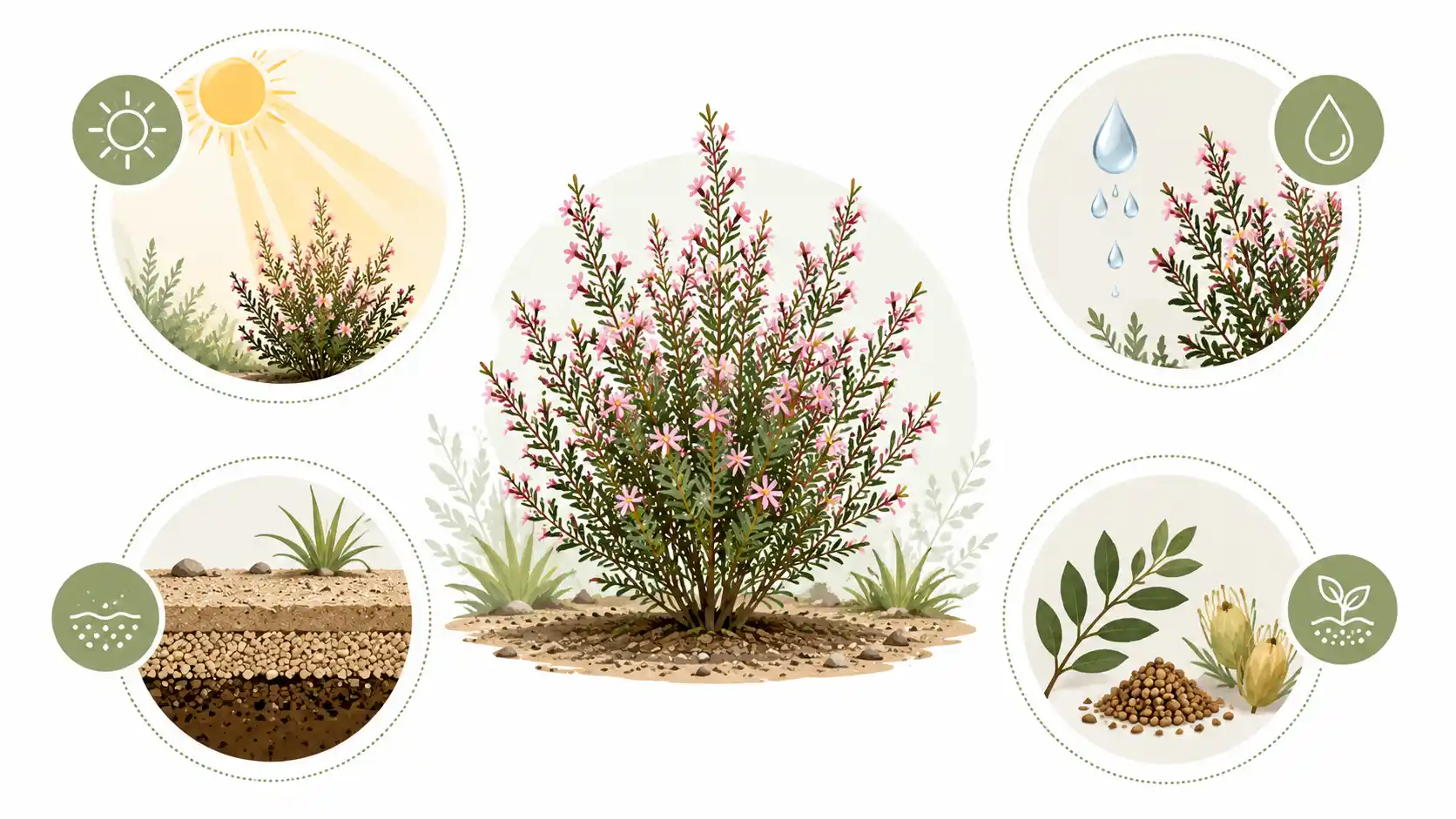
Grevillea ‘Winter Delight’ requires low-maintenance care once established but benefits from correct planting conditions.
Sunlight Requirements
- Requires full sun (6+ hours daily)
- Partial shade reduces flowering intensity
- Performs best in open, bright positions
Watering Needs
- Drought-tolerant once established
- Water regularly during first 1–2 years
- Avoid waterlogging at all times
- Deep, infrequent watering is ideal
Greenery Inside recommends reducing watering frequency after establishment to encourage stronger root development.
Soil Preferences and Drainage
- Prefers well-drained sandy or loamy soils
- Tolerates slightly acidic to neutral pH
- Clay soils must be improved with organic matter and drainage
- Avoid phosphorus-rich fertilisers due to Proteaceae sensitivity
Fertilisation
- Use low-phosphorus native plant fertiliser only
- Apply lightly in spring and late summer
- Avoid standard garden fertilisers entirely
Pruning Winter Delight Grevillea
- Best pruned after main flowering period
- Light shaping encourages bushiness
- Avoid cutting into bare old wood
- Use clean, sharp tools to prevent disease spread
Climate Tolerance and Hardiness
- Moderate frost tolerance once mature
- Performs well in temperate and Mediterranean climates
- Heat tolerant in dry conditions
- Sensitive to prolonged humidity and poor drainage
How to Grow Winter Delight Grevillea From Seeds
Seed propagation is not recommended for maintaining cultivar traits. Hybrid grevilleas like Winter Delight do not reliably produce true-to-type plants from seed.
Propagation From Cuttings
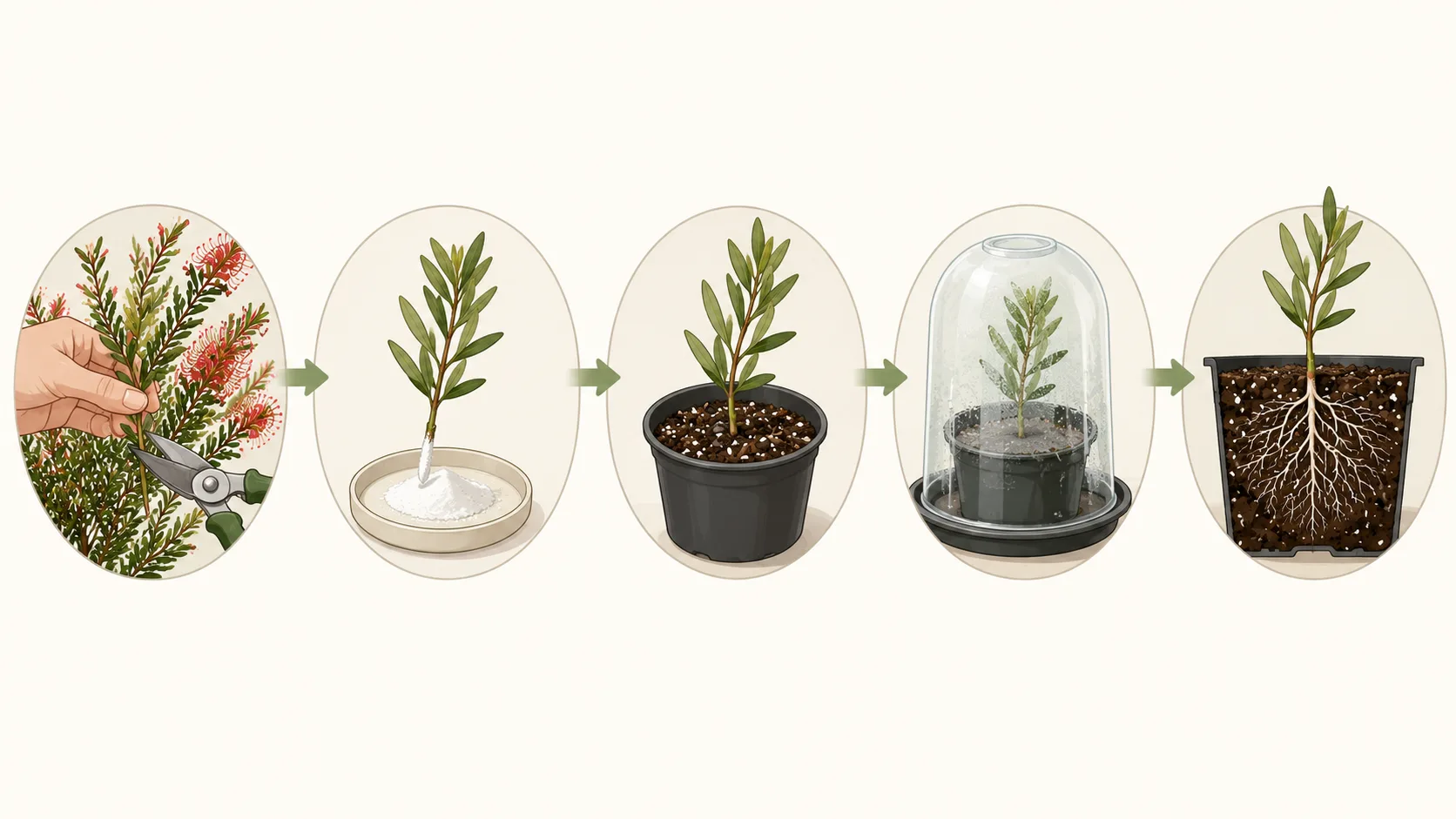
Cuttings are the preferred method:
- Take semi-hardwood cuttings in late spring or summer
- Use rooting hormone for better success rates
- Plant in a free-draining propagation mix
- Maintain humidity and indirect light
- Rooting typically occurs in 6–10 weeks
Where to Buy Winter Delight Grevillea
Grevillea ‘Winter Delight’ is commonly available in Australia through:
- Native plant nurseries
- Large garden centres
- Seasonal stockists such as Bunnings (availability varies)
Stock levels often fluctuate depending on season and regional demand.
Winter Delight Grevillea in the Landscape
This grevillea is widely used in sustainable and low-water landscaping designs. This plant is also part of broader ecosystems explored in Native Plants That Attract Butterflies Guide, supporting pollinators beyond just birds.
Common uses include:
- Native wildlife gardens
- Informal hedging
- Erosion control on slopes
- Mixed native shrub borders
It attracts nectar-feeding birds such as honeyeaters and lorikeets, supporting biodiversity in urban gardens. Winter Delight Grevillea works beautifully alongside other low-maintenance natives such as Acacia Cognata Dwarf Varieties & Care Guide, especially in modern drought-tolerant garden designs.
Companion Plants for Winter Delight Grevillea
Suitable companions:
- Native grasses
- Lomandra species
- Kangaroo paw (Anigozanthos)
- Other low-phosphorus tolerant natives
Avoid pairing with heavy-feeding plants requiring phosphorus-rich soils.
Winter Delight Grevillea vs. Similar Varieties
| Feature | Winter Delight | Winter Wonder | New Blood | Bronze Rambler |
| Height | ~1–2 m | ~1–2 m | ~1–2 m | Ground cover |
| Flower Colour | Red/Pink | Red/Pink | Deep Red | Orange-Red |
| Flowering Season | Winter–Spring | Winter–Spring | Year-round | Extended |
| Growth Habit | Compact | Compact | Upright | Spreading |
| Drought Tolerance | High | High | High | High |
| Bird Attraction | Yes | Yes | Yes | Yes |
This comparison helps gardeners select the best cultivar based on space and flowering preference.
Common Problems With Winter Delight Grevillea and How to Fix Them
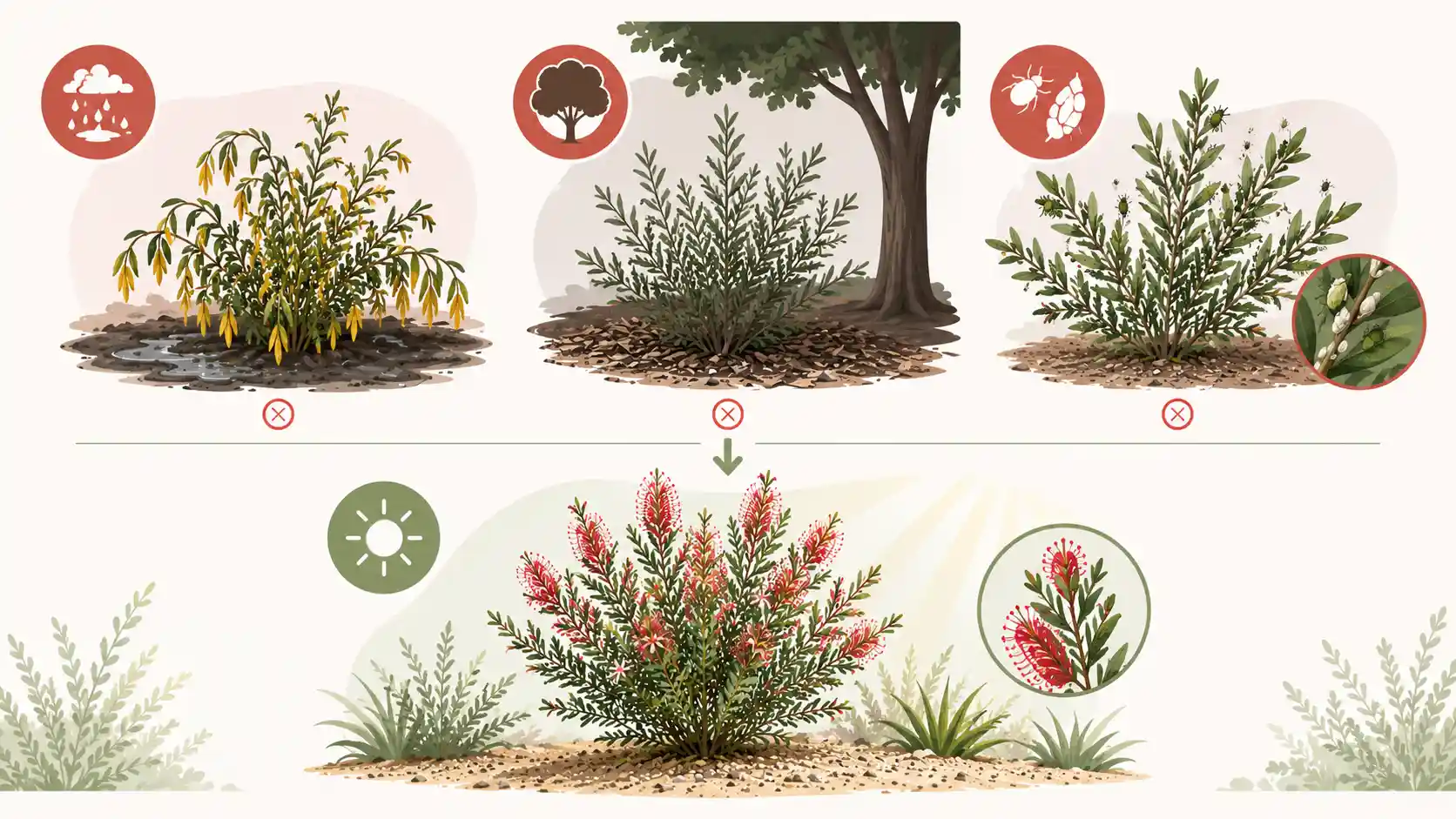
Yellowing Leaves
Caused by overwatering, poor drainage, or phosphorus toxicity. Improve drainage and adjust fertiliser type immediately.
Poor or No Flowering
Often due to low sunlight or excessive nitrogen fertilisation. Move plant or adjust feeding schedule.
Root Rot and Overwatering
Signs include wilting despite wet soil. Improve drainage and remove affected roots if necessary.
Pest Issues
Common pests include aphids, scale, and grevillea looper caterpillars. Use horticultural oils or manual removal methods.
Beginner Mistakes When Growing Grevillea ‘Winter Delight’
Common errors include:
- Using high-phosphorus fertilisers
- Planting in heavy clay without drainage improvement
- Overwatering young plants
- Cutting into old woody growth
- Ignoring spacing requirements
- Underestimating mature size
Avoiding these mistakes significantly improves plant longevity and flowering performance.
Conclusion
Grevillea ‘Winter Delight’ is a resilient, compact shrub that delivers strong seasonal colour and ecological value in home gardens. Its winter flowering, drought tolerance, and low maintenance requirements make it an excellent choice for sustainable landscapes.
For best results, plant it in full sun with well-drained soil and minimal phosphorus inputs. When properly established, it becomes a long-lived feature plant that supports birds, pollinators, and year-round garden structure.
Frequently Asked Questions About Winter Delight Grevillea
What is the botanical name of Grevillea ‘Winter Delight’?
It is commonly referred to as Grevillea hybrida ‘Winter Delight’ and is sometimes linked to Grevillea lanigera hybrids, reflecting its hybrid origin.
How tall does Winter Delight Grevillea grow?
It typically grows 1–2 metres in height and width, depending on soil, climate, and pruning.
How much space should I leave between plants?
Allow 1–1.5 metres for hedging and up to 2 metres for feature planting to ensure healthy airflow and growth.
Can it grow in a pot or container?
Yes, it grows well in large containers with excellent drainage and requires more frequent watering than in-ground plants.
Why is my Grevillea not flowering?
The most common causes are insufficient sunlight, excessive nitrogen fertiliser, or incorrect pruning timing.
Is it frost tolerant?
It has moderate frost tolerance once established but performs best in mild to warm climates.
Where can I buy it in Australia?
It is available at native plant nurseries and some large garden centres, including seasonal availability at major retailers like Bunnings.