Introduction
Spyridium parvifolium is an adaptable Australian native shrub valued for its attractive silvery-grey foliage, compact growth habit, and clusters of creamy-white flowers. Naturally occurring across several regions of Australia, it thrives in challenging environments where many ornamental shrubs struggle. Its drought tolerance, low maintenance requirements, and ecological value have made it increasingly popular in native gardens, habitat restoration projects, and sustainable landscape designs. This guide explains how to identify Spyridium parvifolium, where it naturally grows, the conditions it prefers, practical care recommendations, its mature size, and the many ways gardeners use this resilient shrub in modern landscapes. If you’re planning a wildlife-friendly landscape, our Australian Native Garden Trees guide features more Australian trees and shrubs that grow well alongside Spyridium parvifolium.
By Greenery Inside | Plant Care & Gardening Expert
Quick Summary
- Spyridium parvifolium is a hardy Australian native shrub recognized for its silvery-grey foliage and clusters of creamy-white flowers.
- It grows best in well-drained soil with full sun to partial shade and becomes drought tolerant once established.
- The shrub is widely used in native gardens, wildlife habitats, ecological restoration, and low-maintenance landscapes.
- Correct identification is important because several related Spyridium species and Dusty Miller share similar silvery foliage.
What Is Spyridium parvifolium?
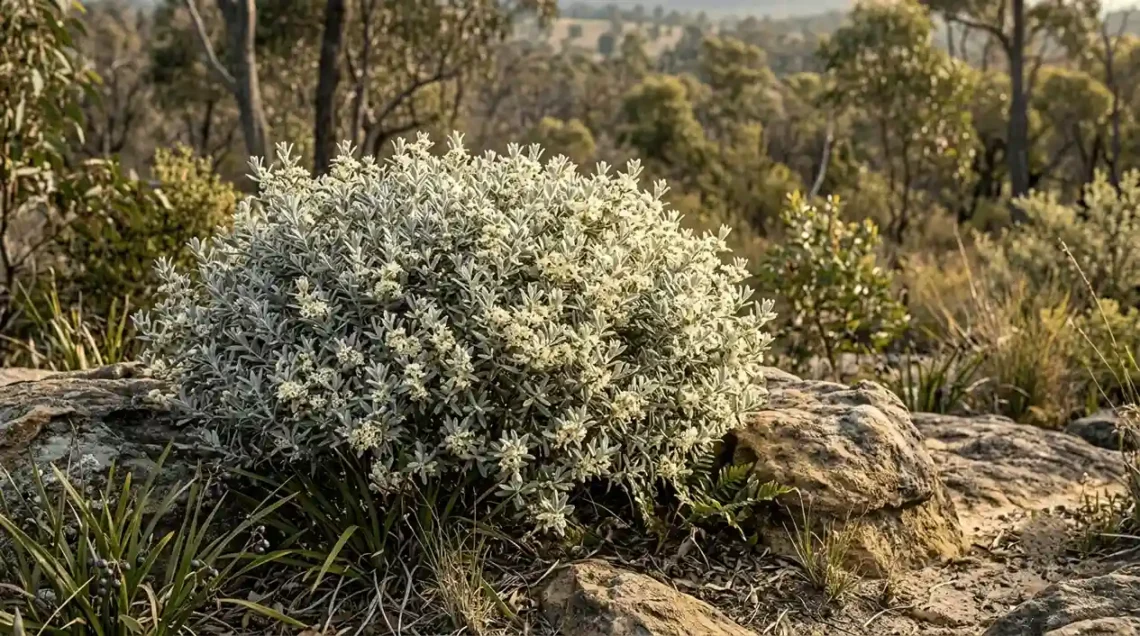
Spyridium parvifolium is a woody evergreen shrub belonging to Australia’s diverse native flora. It is admired for its dense branching, small rounded leaves with silvery undersides, and compact growth habit. Depending on local conditions, it may develop as a low spreading shrub or an upright rounded plant.
Spyridium is a genus of Australian flowering shrubs in the Rhamnaceae family, valued for their silvery foliage and adaptability to dry environments.
Its natural adaptability allows it to survive in nutrient-poor soils, dry climates, coastal environments, and open woodland ecosystems. Because it provides nectar and shelter for native insects while requiring relatively little maintenance, it is considered an important species for ecological landscaping.
Botanical Classification
| Classification | Details |
| Scientific name | Spyridium parvifolium |
| Family | Rhamnaceae |
| Genus | Spyridium |
| Plant type | Evergreen native shrub |
| Native status | Indigenous to Australia |
The genus Spyridium contains numerous Australian shrubs adapted to diverse climates. Members of the family Rhamnaceae often possess small clustered flowers and dense branching structures suited to dry environments.
What Is the Common Name for Spyridium parvifolium?
Spyridium parvifolium has several regional common names throughout Australia, although usage varies between states and local communities. Many gardeners simply refer to it by its scientific name because common names are not standardized.
Using the botanical name helps avoid confusion with other silver-leaved native shrubs and ensures accurate plant identification when purchasing from native nurseries or consulting horticultural references.
How to Identify Spyridium parvifolium
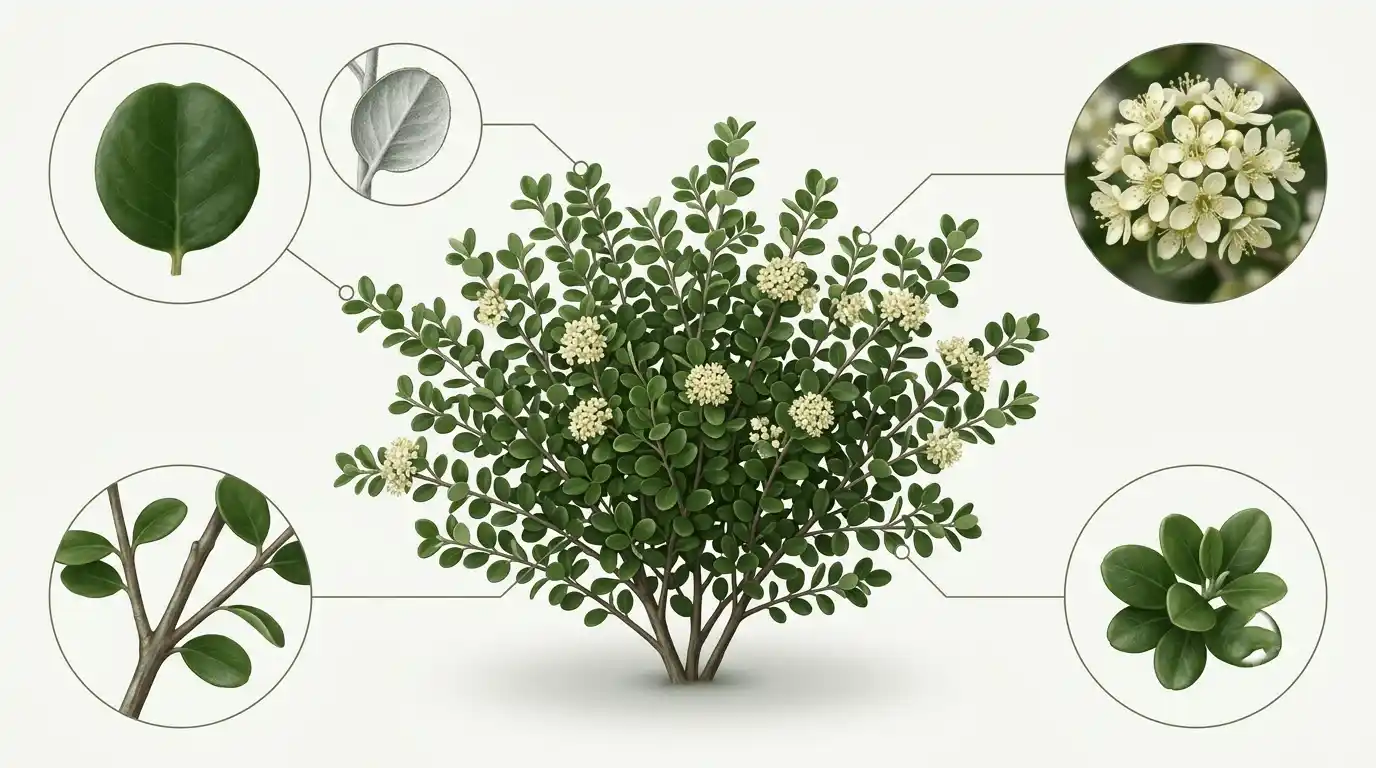
Spyridium parvifolium is identified by its compact branching habit, small rounded leaves, silvery foliage, and clusters of creamy-white flowers. The silvery appearance comes from fine hairs covering the undersides of the leaves and young stems.
Its appearance changes slightly throughout the year but generally remains attractive due to its evergreen foliage.
Leaves, Stems, and Silvery Foliage
The leaves are one of the easiest identifying characteristics.
Key features include:
- Small rounded to oval leaves
- Dark green upper surface
- White to silvery hairy undersides
- Soft textured foliage
- Dense branching habit
- Fine grey stems on younger growth
The hairy undersides reduce water loss by reflecting sunlight and limiting evaporation, helping the shrub survive Australia’s dry conditions.
In our experience growing Australian native shrubs, this silvery foliage becomes particularly striking during dry weather when surrounding vegetation may lose its vibrant color.
Flowers and Flowering Season
The flowers appear in compact rounded clusters near branch tips.
Characteristics include:
- Creamy-white flowers
- Small individual blooms
- Dense flower heads
- Mild nectar source
- Attractive to native bees and other pollinating insects
Flowering generally occurs from late winter through spring, although timing varies according to local climate and rainfall.
Identification Characteristics
| Feature | Description |
| Leaves | Small, rounded, dark green above, silvery below |
| Flowers | Creamy-white clustered heads |
| Height | Usually 0.5–2 m depending on form |
| Growth habit | Compact, rounded or spreading |
| Bark | Fine grey-brown stems |
| Flowering season | Late winter to spring |
Natural Habitat and Distribution
Spyridium parvifolium naturally occurs across several Australian states where it occupies dry forests, heathlands, woodlands, coastal vegetation, and rocky hillsides.
Its ability to establish in nutrient-poor soils makes it an important component of many native ecosystems.
Where Is Spyridium parvifolium Naturally Found?
The species is naturally distributed in parts of:
- Victoria
- New South Wales
- South Australia
- Tasmania
- Selected regions of southeastern Australia
Typical habitats include:
- Open eucalyptus woodlands
- Dry forests
- Coastal heath
- Rocky slopes
- Sandy plains
- Native shrublands
These environments experience seasonal drought, low soil fertility, and occasional fire, conditions to which the shrub has adapted over thousands of years.
Environmental Adaptations
Spyridium parvifolium possesses several natural adaptations that increase its resilience.
These include:
- Excellent drought tolerance after establishment
- Ability to grow in sandy and gravelly soils
- Tolerance of coastal winds
- Adaptation to nutrient-poor environments
- Moderate resilience following natural fire events in suitable ecosystems
As of 2026, native plant growers continue to recommend selecting locally sourced forms whenever possible because regional populations are often best adapted to local climate conditions.
What Are the Growing Conditions for Spyridium parvifolium?
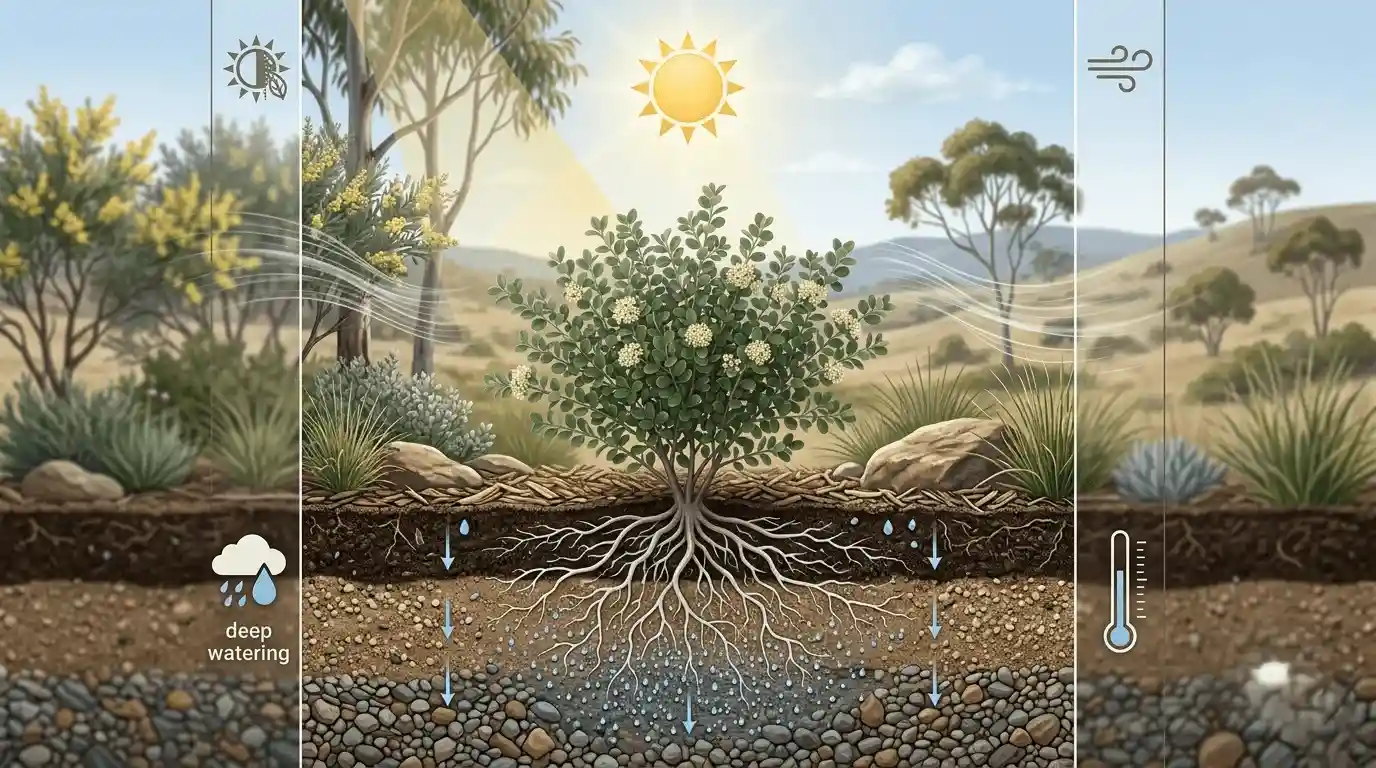
Spyridium parvifolium grows best in full sun to partial shade, well-drained soil, and locations that avoid prolonged waterlogging. Once established, it requires relatively little irrigation and tolerates dry conditions well.
Choosing an appropriate planting site is the most important factor for long-term success.
Light Requirements
The shrub performs best with abundant sunlight.
Recommended conditions:
- Full sun for maximum flowering
- Partial shade in hotter inland climates
- Good air circulation
- At least six hours of sunlight daily for dense growth
Plants grown in excessive shade may become open and produce fewer flowers.
Soil Preferences
Well-drained soil is essential.
Suitable soil types include:
- Sandy soil
- Gravelly soil
- Loamy soil with excellent drainage
- Slightly acidic to neutral pH
Heavy clay soils should be improved before planting because poor drainage increases the risk of root diseases.
Greenery Inside recommends incorporating coarse gravel or organic matter into poorly drained soils rather than relying solely on raised irrigation schedules.
Water Requirements
Young plants require regular watering while roots establish.
General watering guidance:
- Water deeply after planting.
- Maintain consistent moisture during establishment.
- Reduce irrigation after several months.
- Water only during prolonged dry periods once mature.
- Never allow roots to remain in standing water.
Although drought tolerant, newly planted shrubs should not be allowed to dry out completely during their first growing season.
Climate and Hardiness
Spyridium parvifolium is well suited to many temperate Australian climates.
It generally tolerates:
- Summer heat
- Coastal exposure
- Moderate frost
- Dry seasonal conditions
- Windy locations
In colder inland regions, young plants may benefit from temporary frost protection until fully established.
Spyridium parvifolium Care Guide
Proper care focuses on maintaining healthy roots, avoiding excessive fertilization, and preserving the shrub’s natural compact shape.
Watering Schedule
Water newly planted shrubs once or twice each week, depending on rainfall and soil drainage.
Once established:
- Water only during extended dry spells.
- Deep watering is preferable to frequent shallow irrigation.
- Reduce watering during cooler months.
In our experience, overwatering causes far more problems than underwatering for mature native shrubs.
Fertilizing Native Plants
Australian native plants generally require minimal fertilizer.
Best practices include:
- Use low-phosphorus native plant fertilizer if required.
- Fertilize lightly during spring.
- Avoid excessive nitrogen.
- Do not fertilize stressed or newly transplanted plants.
High-phosphorus fertilizers may damage sensitive native species.
Pruning Tips
Pruning helps maintain dense branching and encourages vigorous growth.
Recommended approach:
- Lightly prune after flowering.
- Remove dead or damaged stems.
- Avoid cutting heavily into old woody growth.
- Shape naturally rather than shearing.
Regular light pruning generally produces healthier plants than infrequent severe pruning.
Mulching Best Practices
Mulching helps conserve moisture while suppressing weeds.
Suitable mulch includes:
- Leaf mulch
- Coarse bark
- Wood chips
- Native garden mulch
Maintain a gap around the main stem to reduce the likelihood of fungal diseases.
Long-Term Maintenance
Long-term care remains relatively simple.
Maintenance includes:
- Monitoring drainage after heavy rain
- Removing dead branches annually
- Replenishing mulch each year
- Checking periodically for pests
- Avoiding excessive fertilizer applications
Established shrubs often remain attractive for many years with minimal intervention.
Spyridium parvifolium Size and Growth Rate
The mature size of Spyridium parvifolium varies according to local climate, soil quality, and the particular form being grown. Some naturally occurring populations remain compact, while others develop into larger rounded shrubs.
Typical Mature Size
The typical Spyridium parvifolium size ranges between:
- Height: 0.5–2 metres
- Width: 0.5–2 metres
Compact forms are suitable for smaller gardens, while spreading selections provide broader ground coverage.
Mature Size Under Different Growing Conditions
| Growing Conditions | Typical Height | Typical Width |
| Dry coastal sites | 0.5–1 m | 0.8–1.5 m |
| Woodland gardens | 1–1.5 m | 1–1.5 m |
| Ideal well-drained sites | 1.5–2 m | 1.5–2 m |
| Prostrate forms | Under 0.5 m | Up to 2 m spread |
Growth Rate
Spyridium parvifolium has a moderate growth rate under suitable conditions.
Growth is influenced by:
- Soil drainage
- Available sunlight
- Seasonal rainfall
- Local climate
- Plant genetics
Most active growth occurs during spring and early summer, slowing during periods of drought or winter dormancy.
Spyridium parvifolium Uses in Landscaping
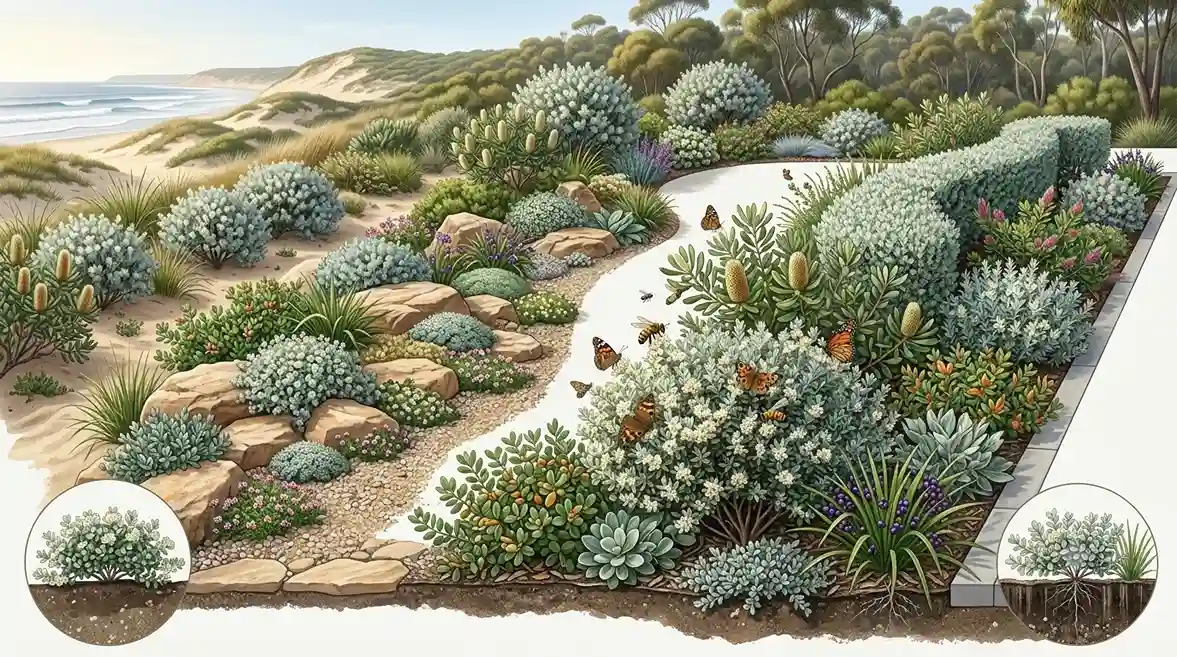
Spyridium parvifolium is valued for its versatility in naturalistic landscapes. Its compact habit, drought tolerance, and wildlife value make it suitable for both residential gardens and ecological restoration.
Spyridium parvifolium Uses
Common landscape uses include:
- Australian native gardens
- Habitat restoration projects
- Wildlife gardens
- Pollinator-friendly landscapes
- Low-maintenance residential gardens
- Coastal plantings
- Informal native hedging
- Stabilizing suitable sandy slopes and erosion-prone areas
Its evergreen silvery foliage also provides year-round visual contrast among darker green native shrubs.
Companion Plants
Spyridium parvifolium combines well with many Australian native species. For low-growing contrast, Correa Alba Prostrate pairs beautifully with Spyridium parvifolium, offering evergreen foliage and white flowers while thriving in similar well-drained conditions.
Popular companion plants include:
- Correa species
- Westringia species
- Grevillea cultivars
- Banksia species
- Leptospermum species
- Dianella species
When designing mixed native gardens, combine plants with similar water and soil requirements to reduce long-term maintenance while creating layered habitat for native wildlife.
Spyridium parvifolium Prostrate Forms
Spyridium parvifolium Prostrate Forms
Some naturally occurring and cultivated forms of Spyridium parvifolium have a prostrate or low-spreading growth habit rather than developing into upright shrubs. These forms are especially valuable in landscapes where a dense, low-maintenance groundcover is preferred.
A Spyridium parvifolium prostrate form typically spreads horizontally while remaining relatively low in height. Its silvery foliage creates year-round texture, making it useful for both ornamental and practical purposes.
Landscape advantages include:
- Excellent ground coverage
- Reduced soil erosion on gentle slopes
- Weed suppression once established
- Attractive cascading growth over rocks or retaining walls
- Habitat for beneficial insects
Prostrate forms are particularly suitable for:
- Rock gardens
- Native cottage gardens
- Coastal landscapes
- Dry embankments
- Garden borders
- Large containers with excellent drainage
Compared with upright forms, prostrate selections generally require less shaping but need adequate space to spread naturally.
Spyridium parvifolium vs Dusty Miller
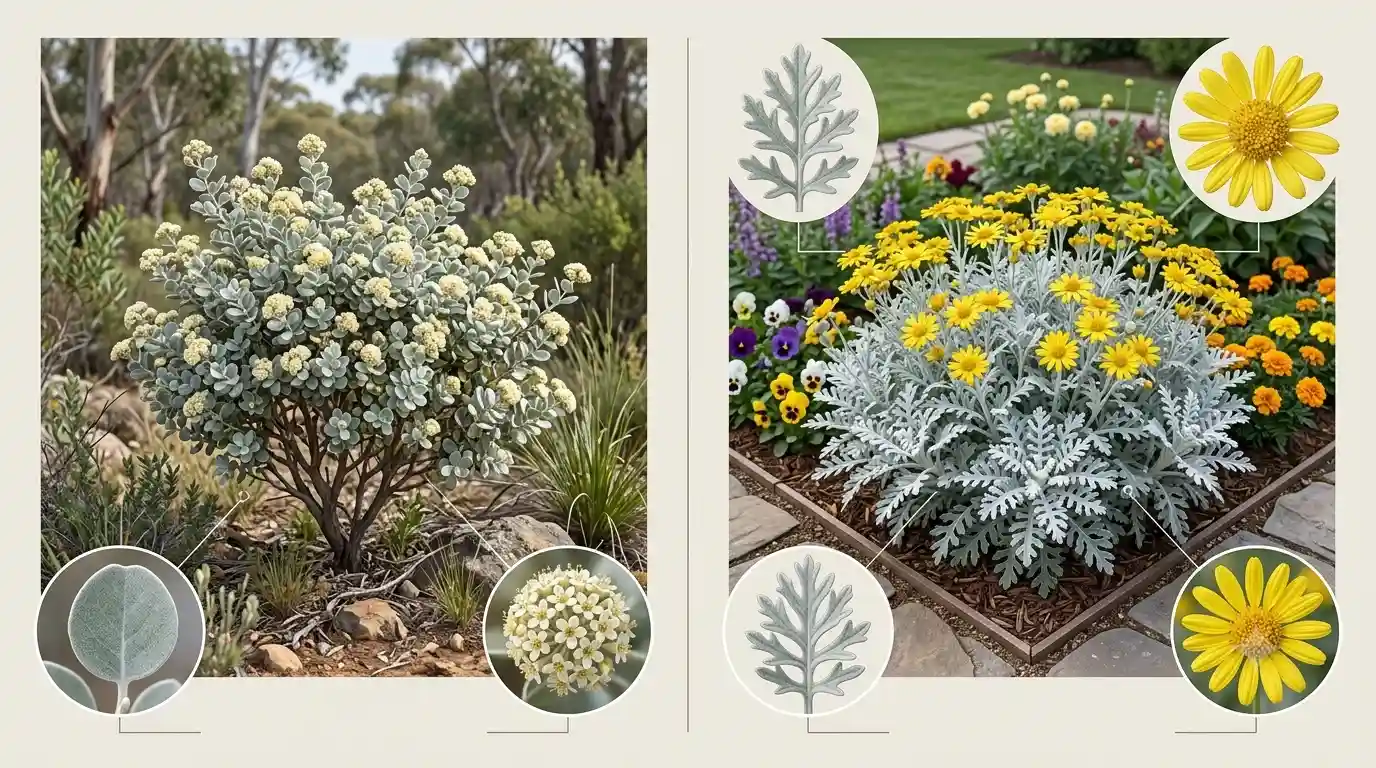
Although the silvery foliage of Spyridium parvifolium resembles Dusty Miller at first glance, the two plants are unrelated. They belong to different botanical families, have different growth habits, and originate from different parts of the world.
Understanding these differences helps gardeners choose the most appropriate plant for their landscape.
Spyridium parvifolium vs Dusty Miller
The phrase Spyridium parvifolium dusty miller often appears in gardening searches because both plants display silver-grey foliage. However, their similarities are largely cosmetic.
Major differences include:
- Spyridium parvifolium is an Australian native shrub.
- Dusty Miller is typically grown as an ornamental bedding plant.
- Their flowers, leaves, and botanical relationships differ significantly.
- Spyridium parvifolium generally supports Australian native ecosystems more effectively.
Comparison: Spyridium parvifolium vs Dusty Miller
| Feature | Spyridium parvifolium | Dusty Miller |
| Botanical family | Rhamnaceae | Asteraceae |
| Native origin | Australia | Mediterranean region |
| Growth habit | Woody evergreen shrub | Herbaceous perennial (often grown as an annual) |
| Foliage | Small rounded silvery-grey leaves | Deeply divided silver leaves |
| Flowers | Creamy-white clusters | Yellow daisy-like flowers |
| Garden use | Native gardens, restoration, wildlife | Bedding displays, borders, containers |
| Drought tolerance | High after establishment | Moderate to high |
Where Is Dusty Miller Native To?
Dusty Miller (Jacobaea maritima, formerly Senecio cineraria) is native to the Mediterranean region, where it naturally grows in rocky coastal habitats.
Unlike Spyridium parvifolium, which evolved within Australian ecosystems, Dusty Miller is introduced in Australia and is primarily cultivated for ornamental foliage rather than ecological restoration.
Similar Species Within the Spyridium Genus
Several species within the Spyridium genus share similar foliage and flower characteristics. Careful observation is important for accurate identification.
Spyridium vexilliferum
Spyridium vexilliferum is another Australian native shrub with woolly foliage and compact flower clusters.
Key characteristics include:
- Dense branching
- Hairy leaves
- White flower heads
- Adaptation to dry environments
Compared with Spyridium parvifolium, it often differs in leaf shape, branching structure, and geographic distribution.
Spyridium globulosum
Spyridium globulosum also belongs to the same genus but has distinctive rounded flower heads and regional habitat preferences.
Identification features include:
- Rounded flowering clusters
- Compact shrub habit
- Silvery foliage
- Adaptation to coastal and woodland habitats
Although similar, its botanical characteristics differ sufficiently for reliable identification using regional field guides.
Comparison of Major Spyridium Species
| Species | Growth Habit | Distribution | Distinguishing Feature |
| Spyridium parvifolium | Compact to spreading shrub | Southeastern Australia | Small rounded silvery leaves |
| Spyridium vexilliferum | Upright shrub | Southern Australia | Woollier foliage and different branching |
| Spyridium globulosum | Compact shrub | Southern coastal regions | Rounded flower clusters |
Is Spyridium parvifolium Related to Myoporum parvifolium?
No. Despite sharing the species name parvifolium, these plants belong to completely different genera and are unrelated botanically.
The shared species epithet simply means “small-leaved” in Latin and does not indicate a close relationship. If you’re specifically looking for drought-tolerant native groundcovers, Eremophila Ground Cover is another excellent option for erosion control, rockeries, and low-maintenance Australian gardens.
What Is Myoporum parvifolium Used For?
Myoporum parvifolium is primarily used as a groundcover rather than an upright shrub.
Common applications include:
- Groundcover planting
- Erosion control
- Suppressing weeds
- Covering banks and slopes
- Coastal landscaping
Major differences include:
- Myoporum parvifolium spreads rapidly along the ground.
- Spyridium parvifolium develops into a shrub.
- They belong to different plant families.
- Their flowers and foliage differ noticeably.
Selecting the correct plant depends on whether a gardener needs vertical structure or low-growing ground coverage.
Common Problems and How to Fix Them
Although Spyridium parvifolium is generally hardy, improper growing conditions can lead to reduced vigor or poor performance.
Poor Growth
Poor growth usually results from:
- Heavy clay soil
- Insufficient sunlight
- Poor drainage
- Compacted soil
Improve drainage, increase sunlight exposure where practical, and avoid excessive fertilization.
Root Rot from Overwatering
Root rot is the most common cultivation problem.
Symptoms include:
- Yellowing foliage
- Wilting despite moist soil
- Blackened roots
- Stem decline
Allow soil to dry between watering and plant only in well-drained locations.
Sparse Flowering
Limited flowering often occurs because of:
- Too much shade
- Excess nitrogen fertilizer
- Heavy pruning before flowering
- Poor plant maturity
Providing full sun and pruning only after flowering generally improves bloom production.
Pest and Disease Issues
Fortunately, Spyridium parvifolium experiences relatively few serious pest problems.
Occasional issues include:
- Aphids on young shoots
- Scale insects
- Minor fungal diseases in poorly ventilated sites
Healthy plants growing in appropriate conditions are usually resistant to significant damage.
Preventive Care Tips
To reduce future problems:
- Plant in free-draining soil.
- Water deeply but infrequently.
- Use native plant fertilizer sparingly.
- Maintain good air circulation.
- Inspect plants periodically for early signs of pests.
Greenery Inside recommends addressing environmental issues before applying pesticides, as healthy native shrubs naturally resist many common problems.
Common Beginner Mistakes When Growing Spyridium parvifolium
Many cultivation problems are caused by avoidable mistakes.
Common errors include:
- Planting in heavy clay without improving drainage
- Watering mature shrubs too frequently
- Applying high-phosphorus fertilizers
- Pruning heavily before flowering
- Choosing deep shade instead of full sun or light shade
Avoiding these mistakes greatly increases long-term plant health and flowering performance.
Seasonal Care Throughout the Year
Seasonal maintenance helps keep Spyridium parvifolium healthy while supporting natural growth cycles.
Spring
- New growth begins.
- Flowering occurs in many regions.
- Apply light native fertilizer if needed.
- Check mulch depth.
Summer
- Water only during prolonged dry periods.
- Monitor young plants more closely.
- Watch for signs of heat stress after planting.
Autumn
Autumn is often an excellent planting season because cooler temperatures encourage root establishment before summer arrives.
Inspect drainage before winter rainfall.
Winter
- Remove damaged branches.
- Reduce watering.
- Protect young plants from severe frost where necessary.
Seasonal pruning immediately after flowering generally maintains the plant’s natural shape while encouraging dense future growth.
Conservation, Native Value, and Ecological Importance
Spyridium parvifolium contributes significantly to Australia’s native biodiversity. You can further enhance biodiversity by combining this shrub with other Native Plants That Attract Butterflies, creating a continuous nectar source for butterflies, bees, and other beneficial insects.
Its ecological benefits include:
- Providing nectar for native pollinators
- Offering shelter for beneficial insects
- Supporting habitat diversity
- Increasing resilience within native landscapes
- Contributing to restoration projects
Because it is adapted to local environments, the shrub generally requires fewer external inputs such as irrigation and fertilizer than many introduced ornamental species.
In ecological restoration, locally sourced native plants are increasingly preferred because they help preserve regional genetic diversity and support native wildlife communities.
Conclusion
Spyridium parvifolium is a resilient Australian native shrub valued for its silvery foliage, compact growth habit, drought tolerance, and ecological importance. Correct identification, well-drained soil, adequate sunlight, and moderate watering are the foundations of successful cultivation. Whether used in wildlife gardens, coastal landscapes, habitat restoration, or low-maintenance native plantings, it provides lasting ornamental and environmental benefits. By understanding its growing conditions, care requirements, mature size, and differences from similar species, gardeners can confidently incorporate Spyridium parvifolium into sustainable Australian landscapes.
Frequently Asked Questions (FAQs)
What is the common name for Spyridium parvifolium?
Spyridium parvifolium is known by several regional common names in Australia, but these vary between locations. For accuracy, most horticulturists and native plant growers recommend using its botanical name.
What are the growing conditions for Spyridium parvifolium?
It grows best in full sun to partial shade, well-drained sandy or gravelly soil, and areas with good air circulation. Once established, it tolerates dry conditions well.
How large does Spyridium parvifolium grow?
Most plants reach approximately 0.5–2 metres in both height and width, depending on climate, soil conditions, and the particular form being grown.
Is Spyridium parvifolium drought tolerant?
Yes. After establishing a healthy root system, Spyridium parvifolium becomes highly drought tolerant and usually requires supplemental watering only during prolonged dry periods.
What is Spyridium parvifolium used for?
It is commonly planted in Australian native gardens, wildlife habitats, habitat restoration projects, coastal landscapes, informal hedges, and low-maintenance garden designs.
Is Spyridium parvifolium the same as Dusty Miller?
No. Although both have silvery foliage, they belong to different plant families, originate from different regions, and serve different landscape purposes.
How does Spyridium parvifolium differ from Spyridium vexilliferum?
Spyridium parvifolium typically has small rounded leaves and a compact habit, while Spyridium vexilliferum differs in foliage characteristics, branching structure, and natural distribution.
Can Spyridium parvifolium be grown in coastal gardens?
Yes. Its tolerance of wind, sandy soils, and coastal conditions makes it a reliable choice for many coastal landscapes with good drainage.
Is Spyridium parvifolium suitable for wildlife gardens?
Yes. Its flowers attract native pollinators, while its dense branching provides shelter for beneficial insects and contributes to biodiversity.
How often should Spyridium parvifolium be pruned?
Light pruning immediately after flowering is generally sufficient. Remove dead or damaged branches as needed, but avoid heavy pruning into old woody stems.