Introduction
Ozothamnus Colour Surprise is a compact flowering cultivar of Ozothamnus diosmifolius, a popular Australian native rice flower prized for its masses of colorful blooms and evergreen foliage. Native to eastern Australia, this attractive shrub is widely grown in home gardens, native landscapes, and commercial cut-flower production. Its flower buds gradually transition from rich pink to soft white, creating a striking display over an extended flowering season. With its naturally rounded habit, relatively low maintenance requirements, and excellent wildlife value, this rice flower Australian native has become a favorite among gardeners seeking long-lasting seasonal color while supporting pollinators. If you’re planning a complete native landscape, explore our Australian Native Garden Trees guide for more Australian species that pair beautifully with Ozothamnus Colour Surprise.
By Greenery Inside | Plant Care & Gardening Expert
Quick Summary
- Ozothamnus Colour Surprise is a compact cultivar of Ozothamnus diosmifolius known for abundant pink and white flower clusters.
- It performs best in full sun with free-draining soil and becomes relatively drought tolerant after establishment.
- This Australian native attracts bees and beneficial insects while providing excellent cut flowers.
- Regular pruning after flowering and avoiding waterlogged soil help maintain vigorous growth and reliable flowering.
What Is Ozothamnus Colour Surprise?
Ozothamnus Colour Surprise is a cultivated variety of Ozothamnus diosmifolius developed for its colorful flower display, compact growth, and suitability for ornamental landscapes. It belongs to a group of Australian shrubs commonly called the rice flower due to their small, tightly packed flower buds resembling grains of rice before opening. Ozothamnus is a genus of Australian flowering shrubs valued for their attractive blooms, evergreen foliage, and importance in native gardens and the cut-flower industry.
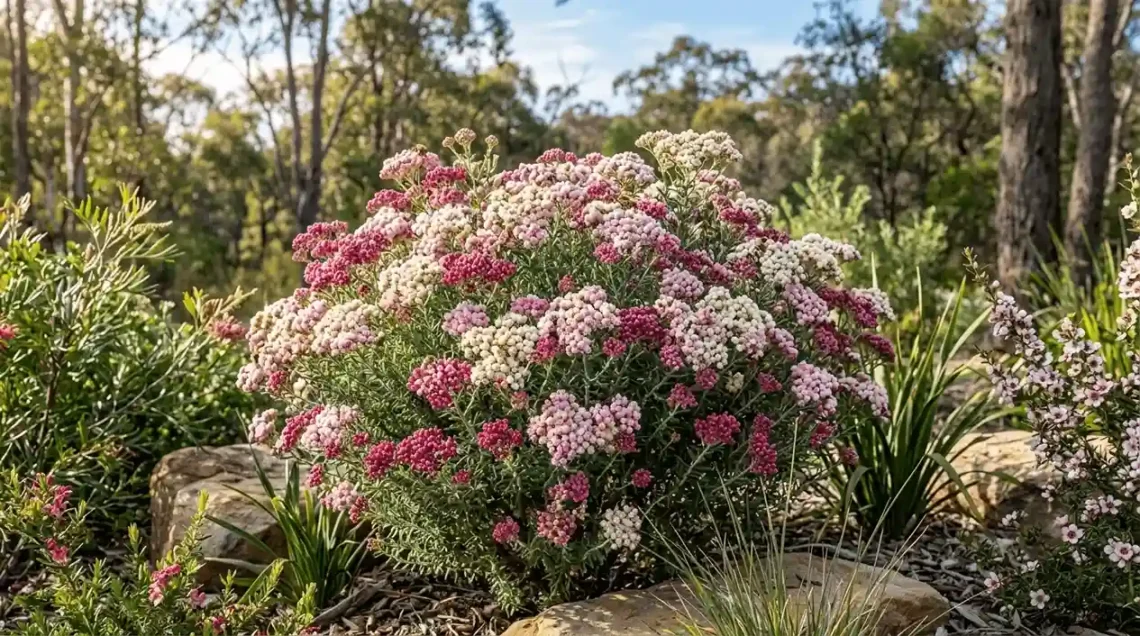
The cultivar is valued for producing dense clusters of flowers that begin as deep pink buds before gradually opening into lighter pink and creamy white blooms. Its evergreen foliage provides year-round structure, making it suitable for both residential gardens and commercial flower production.
Like its parent species, Ozothamnus Colour Surprise naturally originates from eastern Australia’s woodland and forest environments where well-drained soils and abundant sunlight support healthy growth.
Botanical Classification
| Classification | Details |
| Kingdom | Plantae |
| Family | Asteraceae |
| Genus | Ozothamnus |
| Species | Ozothamnus diosmifolius |
| Cultivar | ‘Colour Surprise’ |
As a cultivated selection of Ozothamnus diosmifolius, Colour Surprise retains the species’ adaptability while offering enhanced ornamental value through improved flower color and compact growth.
Why Is It Called the Australian Native Rice Flower?
The plant is called the Australian native rice flower because it naturally occurs in Australia and produces clusters of tiny unopened buds that resemble grains of rice. As the buds mature, they gradually expand into attractive flower heads that change color throughout the blooming period.
The common name helps distinguish this ornamental shrub from unrelated flowering plants while highlighting its Australian origin.
Characteristics that contribute to the name include:
- Rice-like unopened flower buds
- Dense flower clusters
- Native distribution across eastern Australia
- Popular use in native landscaping
- Long-lasting cut flowers
The rice flower plant has become increasingly popular among gardeners because it combines ornamental beauty with relatively easy maintenance, making it one of Australia’s best-known native flowering shrubs.
Ozothamnus Colour Surprise Characteristics
Ozothamnus Colour Surprise is recognized for its compact habit, attractive evergreen foliage, and long-lasting flower clusters. These characteristics make it suitable for both formal and informal landscape designs.
Key identifying features include:
- Dense rounded growth habit
- Evergreen narrow green leaves
- Strong upright branching
- Abundant terminal flower clusters
- Pink buds gradually fading to white
- Mild natural fragrance
- Excellent nectar source for pollinating insects
- Long flowering period
Unlike many flowering shrubs that bloom for only a short period, mature plants often display multiple stages of flower development simultaneously, creating a multicolored appearance.
Plant Characteristics Table
| Feature | Description |
| Botanical name | Ozothamnus diosmifolius ‘Colour Surprise’ |
| Mature size | Approximately 1–1.5 m high and wide |
| Flower colour | Dark pink buds fading to pale pink and white |
| Flowering season | Late winter through spring |
| Growth habit | Compact, rounded shrub |
| Evergreen | Yes |
| Native range | Eastern Australia |
Gardeners often appreciate that mature rice flowers maintain attractive foliage even outside the flowering season. The colorful display also makes the shrub an excellent pink rice flower plant for floral arrangements and wildlife-friendly gardens.
Plant Size, Growth Rate, and Mature Height
Ozothamnus Colour Surprise develops into a medium-sized shrub that remains naturally compact without becoming excessively large. Its predictable size makes planning garden layouts easier while reducing long-term maintenance.
Ozothamnus Colour Surprise Height
The typical Ozothamnus Colour Surprise height ranges from approximately 1 to 1.5 metres with a similar spread at maturity.
Actual size depends on several factors:
- Soil drainage
- Sunlight exposure
- Water availability
- Pruning practices
- Local climate
Plants grown in full sun with excellent drainage generally develop a dense, rounded canopy suitable for borders, feature plantings, and mixed shrub gardens.
Because of its moderate size, it also works well in smaller residential landscapes where larger native shrubs may become overwhelming.
Growth Rate
Ozothamnus Colour Surprise has a moderate growth rate.
Young plants establish relatively quickly during their first two growing seasons before settling into steady annual growth.
Growth is typically strongest during:
- Spring
- Early summer
- Mild autumn conditions
Growth slows considerably during periods of drought, extreme heat, or cold weather.
Environmental factors influencing growth include:
- Full sunlight
- Well-drained soils
- Moderate watering during establishment
- Light annual pruning
- Balanced nutrition
Once established, the shrub generally requires less intervention than many ornamental flowering plants.
Flowering Season and Bloom Colors

Ozothamnus Colour Surprise flowers from late winter into spring, producing long-lasting clusters that gradually change color as the blooms mature.
The flowering display begins with tightly packed buds that are rich pink or dark pink in color. As individual flowers open, they gradually transition through lighter shades before becoming creamy white.
This natural progression allows several flower colors to appear simultaneously on the same plant, creating one of the cultivar’s most distinctive ornamental features.
Color progression generally follows this pattern:
- Dark pink buds
- Bright pink flowers
- Soft pink blooms
- Creamy white mature flowers
This extended sequence gives gardeners a continuously changing display throughout the rice flower season.
Popular descriptive names include:
- Pink rice flower
- Rice flower dark pink
- White rice flower plant
- Ozothamnus pink
- Ozothamnus diosmifolius pink
- Ozothamnus diosmifolius dark pink
Flower Color Development
| Flower Color | Bloom Stage | Seasonal Appearance |
| Dark Pink | Flower buds | Early flowering |
| Bright Pink | Newly opened flowers | Peak bloom |
| Pale Pink | Mid flowering | Transitional stage |
| White | Mature flowers | Late flowering |
Greenery Inside recommends deadheading only lightly after flowering, as heavy pruning during bloom may reduce the display for the current season.
Where Do You Plant Ozothamnus?

Ozothamnus Colour Surprise performs best in sunny locations with excellent drainage where it receives good air circulation throughout the year.
Its adaptable nature allows it to thrive in a variety of landscape styles, provided excess moisture around the roots is avoided.
Ideal planting locations include:
- Native gardens
- Mixed shrub borders
- Cottage gardens
- Pollinator gardens
- Rock gardens
- Low-maintenance landscapes
- Feature plantings
- Large containers with free-draining potting mix
In our experience growing Australian native shrubs, avoiding poorly drained sites is one of the most important factors for long-term success.
Sunlight Requirements
For maximum flowering, plant Ozothamnus Colour Surprise in full sun.
Recommended conditions include:
- Six or more hours of direct sunlight daily
- Light afternoon shade in extremely hot inland climates if necessary
- Open positions with good airflow
Insufficient sunlight often results in:
- Fewer flowers
- Weaker stems
- Sparse branching
- Reduced flowering intensity
Soil Requirements
The shrub prefers soils that drain rapidly while still retaining moderate moisture during establishment.
Ideal soil characteristics include:
- Sandy loam
- Well-drained garden soil
- Slightly acidic to neutral pH
- Moderate organic matter
Avoid:
- Heavy clay
- Permanently wet soils
- Compacted ground
- Poor drainage
Improving drainage before planting significantly reduces the likelihood of root diseases.
Climate and Hardiness
Ozothamnus Colour Surprise is well adapted to many temperate Australian climates.
It tolerates:
- Moderate frost once established
- Summer heat with adequate soil moisture
- Coastal conditions
- Short periods of drought
As of the 2026 growing season, many native plant growers continue recommending deep, infrequent watering during extended dry periods rather than frequent shallow irrigation, as this encourages stronger root development.
Ozothamnus Colour Surprise Care Guide
Providing the correct growing conditions helps Ozothamnus Colour Surprise remain compact, healthy, and floriferous for many years.
Watering
Newly planted shrubs require consistent watering while roots establish.
General recommendations include:
- Water deeply once or twice each week after planting.
- Reduce watering frequency as roots develop.
- Allow the soil surface to dry slightly between watering.
Established plants become relatively drought tolerant but still benefit from occasional deep watering during prolonged dry weather.
Fertilizing
Use a fertilizer specifically formulated for Australian native plants whenever possible.
Best practices include:
- Apply in early spring.
- Avoid excessive phosphorus.
- Feed lightly once or twice annually if growth is slow.
Excess fertilizer often encourages leafy growth at the expense of flowering.
Pruning
Prune immediately after flowering finishes.
Benefits include:
- Encouraging bushier growth
- Improving air circulation
- Maintaining compact shape
- Promoting more flowers next season
Avoid cutting back into old leafless wood, as regeneration may be slower.
Mulching
Mulch helps improve growing conditions while protecting shallow roots.
Suitable mulch practices include:
- Apply 5–8 cm of organic mulch.
- Keep mulch away from the stem.
- Reduce weed competition.
- Help conserve soil moisture.
- Moderate soil temperature fluctuations.
Greenery Inside recommends renewing mulch annually while maintaining adequate airflow around the plant base to minimize moisture-related problems.
Care Guide Table
| Care Task | Frequency | Best Practice |
| Watering | Weekly during establishment | Deep watering, avoid waterlogging |
| Fertilizing | 1–2 times yearly | Low-phosphorus native fertilizer |
| Pruning | After flowering | Light shaping only |
| Mulching | Annually | Organic mulch kept away from stems |
How Do You Care for Ozothamnus Diosmifolius?
Ozothamnus diosmifolius thrives when grown in full sun, well-drained soil, and with moderate watering during establishment. Since Ozothamnus Colour Surprise is a cultivar of Ozothamnus diosmifolius, it shares nearly all of the species’ basic care requirements while offering enhanced ornamental flower color.
Long-term success depends on providing conditions that closely resemble its natural Australian habitat. Once established, the shrub becomes relatively low maintenance and can remain attractive for many years with routine seasonal care.
Healthy growth practices include:
- Plant in a sunny, well-ventilated location.
- Avoid heavy or waterlogged soils.
- Water deeply but infrequently after establishment.
- Apply a low-phosphorus fertilizer formulated for Australian native plants.
- Prune lightly after flowering to maintain a compact shape.
- Replace mulch annually while keeping it clear of the main stem.
In our experience growing Australian native shrubs, gardeners often achieve better flowering by watering deeply during prolonged dry spells rather than applying frequent shallow irrigation.
Common Care Mistakes
Avoid these common problems:
- Overwatering mature plants
- Planting in poorly drained clay soils
- Applying high-phosphorus fertilizers
- Pruning heavily into old wood
- Growing in excessive shade
Following these basic maintenance practices helps encourage dense foliage, vigorous stems, and reliable flowering each season.
Ozothamnus Colour Surprise Propagation
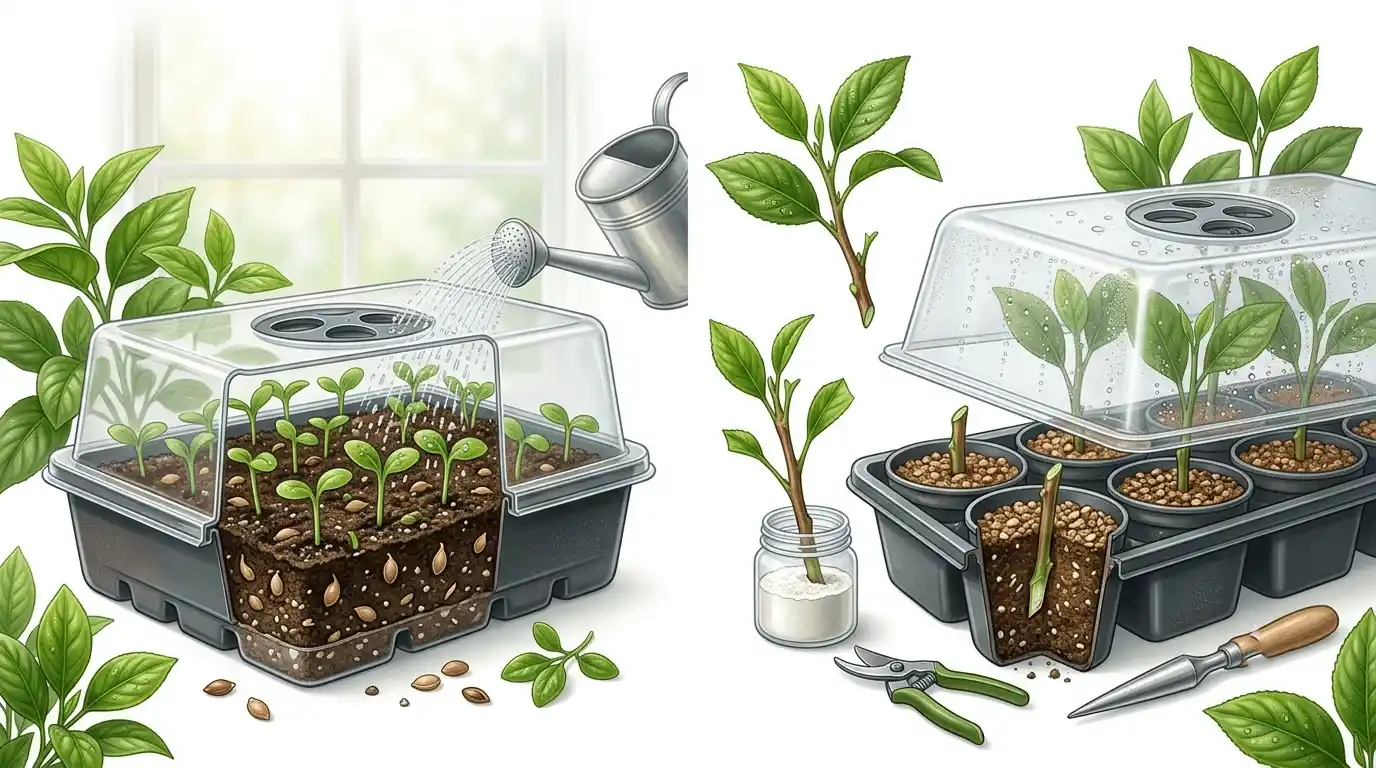
Ozothamnus Colour Surprise can be propagated from both seeds and semi-hardwood cuttings. While both methods are possible, cuttings generally produce plants that remain true to the characteristics of the parent cultivar.
Growing from Seeds
Growing ozothamnus colour surprise seeds is possible, but gardeners should understand that seedlings may not always develop the exact characteristics of the cultivated variety because many cultivars do not reproduce true from seed.
Successful seed propagation generally involves:
- Collecting mature seed after flowering.
- Cleaning and storing seed in a cool, dry place.
- Sowing into a free-draining propagation mix.
- Keeping the medium evenly moist but never saturated.
- Providing bright light and moderate warmth.
Fresh seed often germinates more reliably than older stored seed, although germination rates can vary.
Propagation from Cuttings
Propagation from semi-hardwood cuttings is the preferred method for maintaining the unique characteristics of Ozothamnus Colour Surprise.
For the highest success rate:
- Take healthy semi-hardwood cuttings after the main flowering period.
- Remove the lower leaves.
- Dip the base in a rooting hormone.
- Insert cuttings into a sterile, free-draining propagation mix.
- Maintain consistent humidity while avoiding excessive moisture.
- Place the cuttings in bright, indirect light until roots develop.
Root development generally occurs over several weeks under favorable conditions.
Greenery Inside recommends selecting vigorous, disease-free stems from healthy plants, as these typically establish more quickly than weaker material.
Propagation Comparison
| Method | Difficulty | Time | Success Rate |
| Seeds | Moderate | Several weeks to months | Moderate |
| Semi-hardwood cuttings | Easy to Moderate | Several weeks | High |
Is Ozothamnus a Perennial?
Yes. Ozothamnus is a perennial evergreen shrub.
Although many gardeners ask whether Ozothamnus is a perennial, it is more accurately classified as a woody evergreen shrub rather than a herbaceous perennial.
Unlike annual plants that complete their life cycle within one growing season, Ozothamnus continues growing and flowering year after year.
Typical characteristics include:
- Evergreen foliage
- Woody branching structure
- Long lifespan
- Annual flowering cycle
- Continuous landscape value
With proper care, many plants remain productive for numerous years, making them valuable additions to low-maintenance gardens.
Its evergreen habit also provides year-round texture even after the flowering season has ended.
Landscaping Ideas Using Ozothamnus Colour Surprise
Ozothamnus Colour Surprise is highly versatile and complements many landscape styles thanks to its compact size, evergreen foliage, and colorful flowers. For added seasonal colour and contrasting foliage, combine Ozothamnus Colour Surprise with Acacia Podalyriifolia, another beautiful Australian native shrub that thrives in similar growing conditions.Its compact habit and long-lasting blooms also make Ozothamnus Colour Surprise an excellent choice for a Modern Australian Native Garden, where texture, colour, and low-maintenance planting are key design features.
Excellent planting locations include:
- Australian native gardens
- Mixed shrub borders
- Cottage-style gardens
- Wildlife gardens
- Pollinator landscapes
- Coastal gardens
- Feature plantings
- Commercial flower production
- Large decorative containers
The shrub combines well with other drought-tolerant Australian natives that share similar soil and sunlight requirements.
Its long-lasting blooms also make excellent fresh and dried cut flowers.
Wildlife Value
The nectar-rich flowers attract beneficial insects including:
- Native bees
- Honey bees
- Butterflies
- Other pollinating insects
Increasing pollinator activity can improve biodiversity throughout the garden.Pair this rice flower with other Native Plants That Attract Butterflies to create a vibrant pollinator-friendly garden that supports butterflies, bees, and other beneficial insects throughout the year.
Clarifying the “Pincushion Plant Australia” Name
Some gardeners confuse Ozothamnus Colour Surprise with the pincushion plant Australia. However, these are different ornamental plants.
Ozothamnus belongs to the daisy family (Asteraceae) and produces dense rice-like flower clusters, whereas plants commonly called pincushion flowers belong to different botanical groups and have distinctly different flower structures.
Understanding this distinction helps prevent purchasing the wrong plant when selecting Australian native ornamentals.
Ozothamnus Colour Surprise vs Other Popular Cultivars
Although several cultivars of Ozothamnus diosmifolius are available, each differs in flower color, growth habit, and ornamental use.
Ozothamnus Colour Surprise vs Ozothamnus Red Gingham
Both cultivars belong to the same species but differ mainly in flower coloration.
Ozothamnus Colour Surprise
- Pink buds fading to pale pink and white
- Rounded compact habit
- Excellent for mixed borders
- Attractive changing flower colors
Ozothamnus Red Gingham
- Richer red to dark pink flowers
- Strong ornamental contrast
- Similar maintenance requirements
- Often selected for bold floral displays
Ozothamnus Colour Surprise vs Ozothamnus Radiance
These cultivars share similar growing requirements but differ slightly in appearance.
Ozothamnus Colour Surprise
- Multi-toned flower display
- Compact growth
- Soft seasonal color transition
Ozothamnus Radiance
- Brighter flower presentation
- Slight variation in growth habit
- Popular in ornamental native gardens
Cultivar Comparison Table
| Cultivar | Flower Color | Height | Best Use | Flowering Season |
| Colour Surprise | Pink to white | 1–1.5 m | Borders, native gardens | Late winter–spring |
| Red Gingham | Deep red-pink | About 1–1.5 m | Feature planting | Late winter–spring |
| Radiance | Bright pink | About 1–1.5 m | Mixed landscapes | Late winter–spring |
Common Growing Problems and How to Fix Them
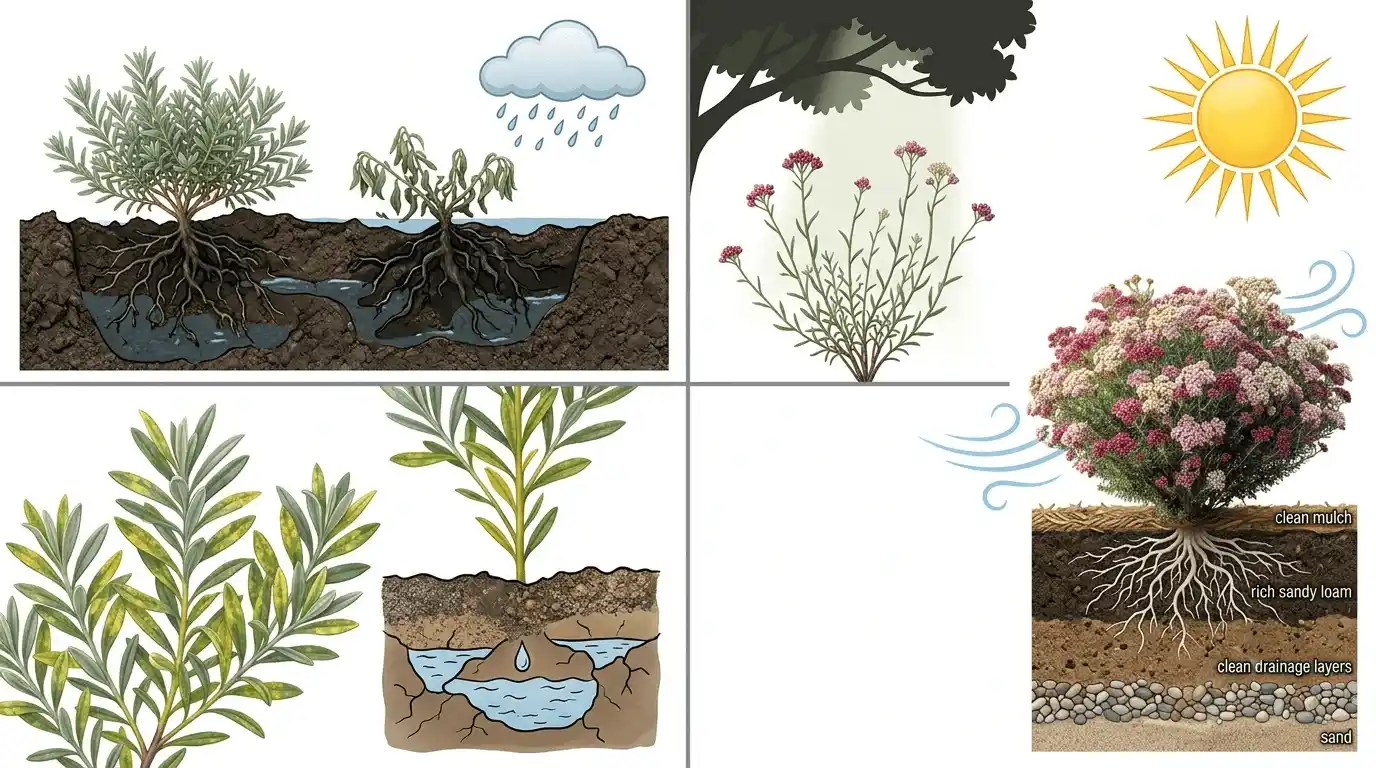
Ozothamnus Colour Surprise is generally reliable, but unsuitable growing conditions can lead to reduced vigor or flowering.
Poor Flowering
Causes
- Too much shade
- Excess nitrogen fertilizer
- Heavy pruning at the wrong time
- Immature plants
Solutions
- Move or plant in full sun.
- Use native plant fertilizer.
- Prune only after flowering.
- Allow young shrubs time to establish.
Prevention
Maintain consistent sunlight, balanced nutrition, and annual post-flowering pruning.
Root Rot
Causes
Poor drainage is the primary cause of root rot.
Symptoms
- Wilting despite moist soil
- Yellow foliage
- Soft or darkened roots
- Declining growth
Prevention
- Improve drainage before planting.
- Avoid standing water.
- Water only when needed.
- Plant in raised beds if necessary.
Yellow Leaves
Causes
- Water stress
- Nutrient imbalance
- Poor drainage
- Environmental stress
Solutions
- Adjust watering frequency.
- Improve drainage.
- Apply an appropriate native fertilizer if deficiencies are confirmed.
- Remove damaged foliage.
Sparse Growth
Causes
- Insufficient sunlight
- Lack of pruning
- Poor nutrition
- Crowded planting
Solutions
- Increase sunlight exposure.
- Prune after flowering.
- Feed lightly during spring.
- Maintain proper spacing for airflow.
Beginner Mistakes to Avoid
Many problems with Ozothamnus Colour Surprise can be prevented by avoiding a few common gardening mistakes.
Avoid:
- Planting in heavy clay that retains excessive moisture.
- Overwatering mature shrubs.
- Applying excessive fertilizer, especially products high in phosphorus.
- Growing plants in too much shade.
- Skipping annual pruning after flowering.
- Crowding plants too closely together, reducing airflow.
Greenery Inside has found that good drainage and proper pruning consistently make the greatest difference in maintaining healthy, floriferous plants over the long term.
Frequently Asked Questions About Ozothamnus Colour Surprise
Where do you plant Ozothamnus?
Plant Ozothamnus in full sun with well-drained soil. It performs well in native gardens, borders, rock gardens, cottage gardens, pollinator gardens, and large containers with excellent drainage.
Is Ozothamnus a perennial?
Yes. Ozothamnus is an evergreen perennial shrub that flowers each year while maintaining its foliage throughout the seasons.
How do you care for Ozothamnus Diosmifolius?
Provide full sun, free-draining soil, moderate watering during establishment, light feeding with a native plant fertilizer, and prune after flowering to encourage dense growth.
Can Ozothamnus Colour Surprise grow in pots?
Yes. It grows successfully in large containers provided they have drainage holes and are filled with a well-draining native plant potting mix.
How fast does Ozothamnus Colour Surprise grow?
It has a moderate growth rate, usually reaching its mature size within a few growing seasons under favorable conditions.
When does Ozothamnus Colour Surprise flower?
The shrub typically flowers from late winter through spring, producing clusters that change from dark pink buds to pale pink and white blooms.
Can you grow Ozothamnus Colour Surprise from seeds?
Yes, although propagation from semi-hardwood cuttings is generally preferred because it more reliably preserves the cultivar’s characteristics.
Is Ozothamnus Colour Surprise drought tolerant?
Once established, Ozothamnus Colour Surprise tolerates short periods of drought, although occasional deep watering during extended dry weather supports healthier growth and flowering.
Conclusion
Ozothamnus Colour Surprise is an attractive cultivar of Ozothamnus diosmifolius that combines evergreen foliage, compact growth, and long-lasting pink-to-white flower clusters. Its adaptability, wildlife value, and relatively low maintenance requirements make it an excellent choice for Australian native gardens, borders, pollinator landscapes, and cut-flower displays.
Success with this Australian native rice flower depends on selecting a sunny location with well-drained soil, watering carefully during establishment, applying suitable native plant fertilizer, and pruning after flowering to maintain a dense, healthy shape. With these simple care practices, Ozothamnus Colour Surprise can provide reliable seasonal color and year-round garden interest for many years.