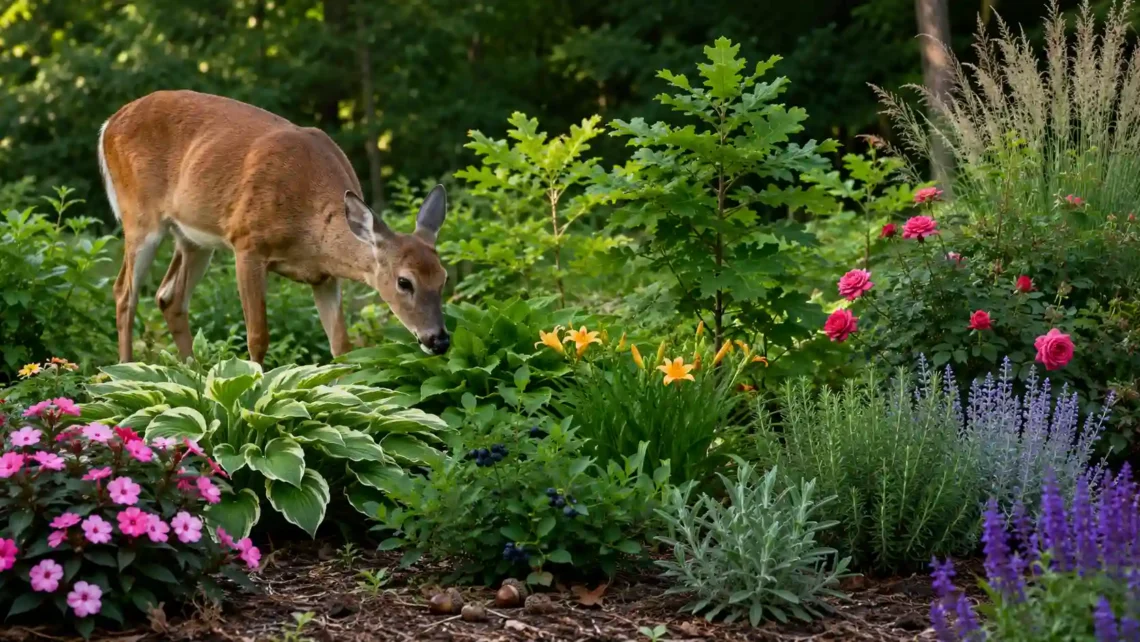
According to Greenery Inside, deer eat hostas, daylilies, tulips, roses, and hydrangeas, along with acorns, clover, fruit, and young tree shoots. They favor tender new growth on woody plants like arborvitae and fruit trees, and readily browse vegetable gardens, especially beans, peas, and lettuce, particularly during fall and winter food scarcity.
Deer generally avoid strongly aromatic or toxic plants such as daffodils, lavender, and boxwood, which is why these are common choices in deer-resistant landscaping. As ruminants, they can ferment fibrous browse in a specialized four-chambered stomach, letting them survive on woody twigs and bark when preferred forage runs low. Diet composition also shifts by region and season, with agricultural crops like soybeans and corn becoming major food sources near farmland.
By Greenery Inside | Plant Care & Gardening Expert
Last Updated: July 2026
Quick Summary
- Deer eat tender flowers, vegetable crops, shrubs, tree seedlings, fruits, nuts, grasses, and wild broadleaf plants.
- Hostas, impatiens, daylilies, roses, tulips, and pansies are common garden favorites.
- Lavender, rosemary, sage, foxglove, lamb’s ear, daffodils, and boxwood are usually less appealing.
- Deer eat more soft greenery in spring and summer but depend more heavily on woody browse during winter.
- Deer resistance describes a preference level, not a guarantee that a plant will remain untouched.
What Do Deer Eat? (Overview of Deer Diet)
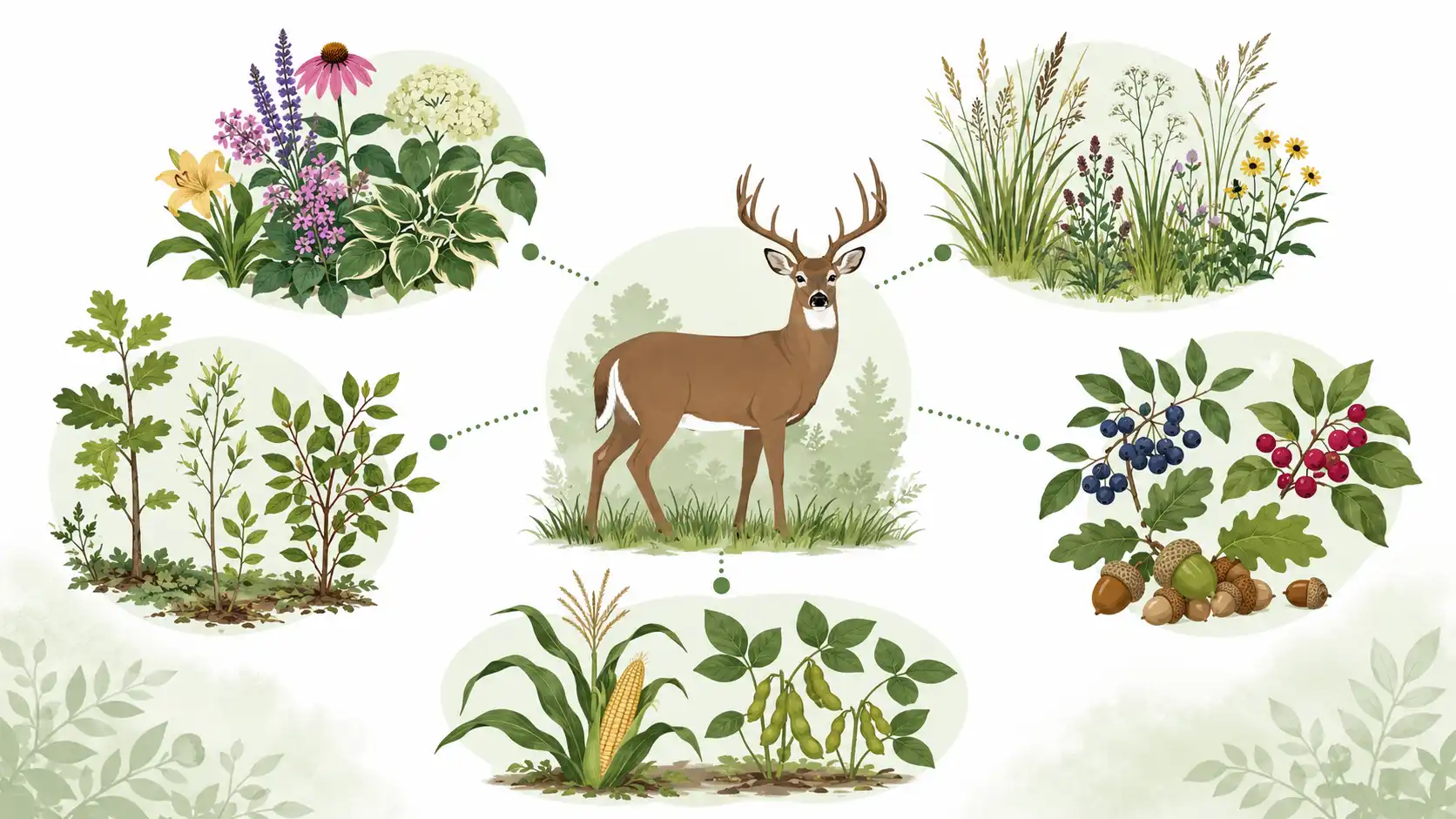
Deer eat grasses, broadleaf plants, leaves, shoots, buds, flowers, fruits, nuts, woody stems, and agricultural crops. They are generalist herbivores, but most deer species behave primarily as browsers rather than dedicated grazers. Browsers select nutrient-rich portions of many different plants instead of consuming large amounts of mature grass.
The white-tailed deer, scientifically known as Odocoileus virginianus, is one of the most widespread deer species around North American gardens and landscapes.
Its diet typically includes four major plant categories:
- Forbs: Broadleaf herbaceous plants other than grasses
- Browse: Leaves, buds, stems, and shoots from trees and shrubs
- Mast: Acorns, nuts, seeds, berries, and other fruits
- Grasses and crops: Young grasses, corn, soybeans, alfalfa, wheat, and similar cultivated plants
Texas Parks and Wildlife identifies browse, forbs, mast, grasses, and available agricultural crops as major components of the white-tailed deer diet. The proportions change as rainfall, plant growth, habitat quality, and seasonal availability change.
Deer often target fertilized and irrigated landscapes because young garden plants contain tender tissues, moisture, carbohydrates, minerals, and protein. The University of Georgia notes that deer may obtain a meaningful portion of their water from irrigated plants and succulent new growth.
What Plants Do Deer Eat in the Wild
Wild deer eat native forbs, grasses, shrubs, tree seedlings, fruits, nuts, and seasonal mast. Their exact food choices depend on which species grow locally and which plant parts are available at a particular time.
Young ornamental trees may also suffer browsing or bark damage, so newly planted specimens such as weeping eucalyptus should be protected with temporary tree guards in areas with frequent deer activity.
Common wild foods include:
- Native grasses and sedges, particularly young growth
- Clover and other broadleaf herbaceous plants
- Oak and maple seedlings
- Buds and shoots from shrubs and young trees
- Acorns and other nuts
- Blackberries, wild grapes, serviceberries, and fallen fruit
- Mushrooms and dried vegetation when other foods are limited
- Corn, soybeans, wheat, alfalfa, and other nearby agricultural crops
Deer frequently browse seedlings and saplings because the buds and young stems are within reach and contain softer tissues than mature branches. In autumn, acorns and other forms of mast become particularly valuable as deer build energy reserves before winter. University of Minnesota Extension reports that deer shift from leafy spring growth toward mast in autumn and available woody vegetation in winter.
Greenery Inside recommends examining damage height and appearance before assuming deer are responsible. Deer usually tear leaves and stems, leaving rough or shredded edges because they lack upper incisors. Rabbits and rodents generally leave cleaner, angled cuts closer to the ground.
What Plants Do Deer Eat in Winter
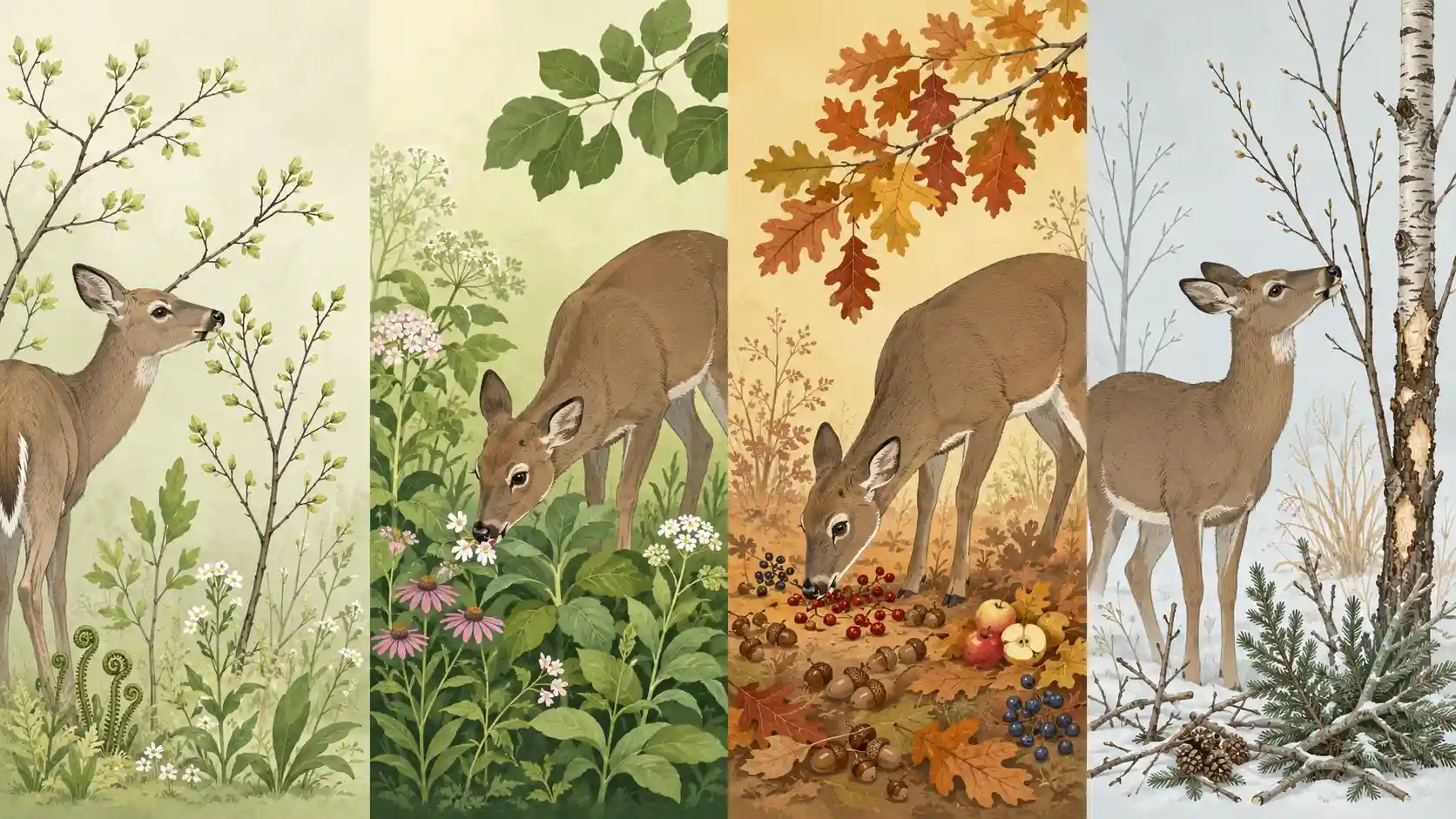
In winter, deer eat twigs, buds, dried leaves, bark, evergreen foliage, sedges, grasses, and other vegetation that remains accessible. Woody browse becomes more important because tender herbaceous plants are dormant, dead, buried under snow, or otherwise unavailable.
Typical winter foods include:
- Twigs and buds from young deciduous trees
- Shrub stems and evergreen leaves
- Dried grasses and sedges
- Fallen leaves
- Remaining acorns, berries, and fruits
- Conifer foliage when preferred foods are scarce
- Bark from young trees in severe conditions
Winter browsing becomes more intense during prolonged cold, deep snow, drought, overpopulation, or competition for food. Hungry deer may enter gardens and eat plants they normally ignore. Minnesota Extension identifies cold temperatures and deep snow as conditions that increase plant damage, while Penn State notes that deer may be forced to consume less nutritious woody browse during winter.
A practical seasonal pattern is that spring damage can also be severe. By late winter and early spring, deer may have low fat reserves and seek nutrient-rich buds, shoots, garden plants, and orchard growth.
Regional Differences in Deer Diet
Deer diets vary by climate, native vegetation, rainfall, land use, and deer species. A plant heavily browsed in one region may receive little damage elsewhere because local deer have different alternatives and learned feeding patterns.
In Australian regions affected by feral deer, young native specimens such as the native Australian Christmas tree may need protection while establishing, particularly where browsing or bark damage has previously occurred.
In Texas, white-tailed deer commonly eat native brush, forbs, mesquite beans, prickly pear fruit, acorns, grasses, and agricultural forage. During drought, reduced forb growth may push deer toward drought-tolerant browse, prickly pear, and mesquite mast.
Gardeners establishing larger native landscapes can explore our complete guide to Australian native garden trees while planning tree placement, establishment care, and protection for young specimens.
In temperate North American regions, deer commonly use oak and maple regeneration, shrubs, acorns, berries, agricultural fields, and garden ornamentals. Northern winters create a stronger seasonal shift toward twigs, buds, dried vegetation, and conifer foliage.
In the United Kingdom, several deer species may enter gardens, including roe and muntjac deer. The Royal Horticultural Society explains that local damage depends on time of year, available vegetation, garden location, and individual feeding preferences. Plants avoided in one garden may be regularly eaten in another.
Flowers Deer Eat (Common Garden Favorites)
Deer commonly eat flowers with soft leaves, succulent stems, accessible buds, and limited fragrance or bitterness. They may consume the foliage, flower buds, open blooms, or the entire upper portion of a plant.
Flowers and ornamental plants frequently damaged by deer include:
- Impatiens
- Hostas
- Daylilies
- Roses
- Tulips
- Pansies
Hostas are especially vulnerable because their broad leaves contain substantial moisture and have a soft texture. Impatiens provide tender leaves and stems, while deer often remove daylily buds before the flowers open. Roses may be eaten despite their thorns, particularly when new shoots and buds are available.
The University of Georgia includes hostas, impatiens, daylilies, roses, tulips, and pansies among plants that deer occasionally or frequently browse.
In our experience reviewing garden damage patterns, recently planted flowers often receive attention before established plants. New growth is tender, and deer may investigate unfamiliar additions even when the mature plant is considered relatively resistant.
Do Deer Eat Geraniums?
Geraniums are generally less attractive to deer when their foliage has a strong scent, coarse texture, or bitter taste. Scented geraniums and many bedding geraniums in the genus Pelargonium are commonly treated as deer-resistant, but they can still be sampled when natural food is limited.
The name “geranium” covers different plant groups. Hardy cranesbill geraniums belong to the genus Geranium, while common bedding and scented geraniums usually belong to Pelargonium. Resistance can vary among species, cultivars, regions, and local deer populations.
Minnesota Extension includes Pelargonium × hortorum among plants selected for lower deer appeal, while the Missouri Botanical Garden lists several Geranium species among plants not favored by deer.
However, regional experience is not always consistent. The RHS reports that hardy geraniums and pelargoniums can be susceptible in some UK gardens. This variation demonstrates why deer resistance should be treated as a probability rather than a fixed botanical trait.
Do Deer Eat Impatiens?
Yes, deer readily eat impatiens. Their soft leaves, succulent stems, high moisture content, and lack of strong fragrance make them highly attractive when deer can access the planting area.
Common impatiens, Impatiens walleriana, may be eaten down to short stems. Damage can occur overnight and may affect foliage, flowers, and unopened buds. Rose balsam, Impatiens balsamina, is also vulnerable.
The University of Georgia specifically classifies common impatiens and rose balsam among plants that deer occasionally or frequently browse.
Greenery Inside recommends avoiding large groups of impatiens along woodland borders, unfenced property edges, or known deer paths. Where impatiens are important to the design, place them near regular human activity or protect them with a physical barrier.
Do Deer Eat Begonias?
Deer may eat begonias, but wax begonias are generally less appealing than impatiens. Their thicker, waxier leaves and less succulent surface can reduce browsing, although hungry deer may still taste or damage them.
Begonia resistance varies by species and cultivar. Wax begonias, commonly classified as Begonia semperflorens hybrids, are frequently included on deer-resistant plant lists. Minnesota Extension lists wax begonia among plants deer tend to avoid because of plant characteristics such as texture, fragrance, or toxicity.
Begonias should therefore be classified as low to moderately attractive rather than guaranteed deer-proof. Fresh transplants and tender new shoots may be more vulnerable than mature foliage.
Plants Deer Usually Avoid (Deer-Resistant Options)
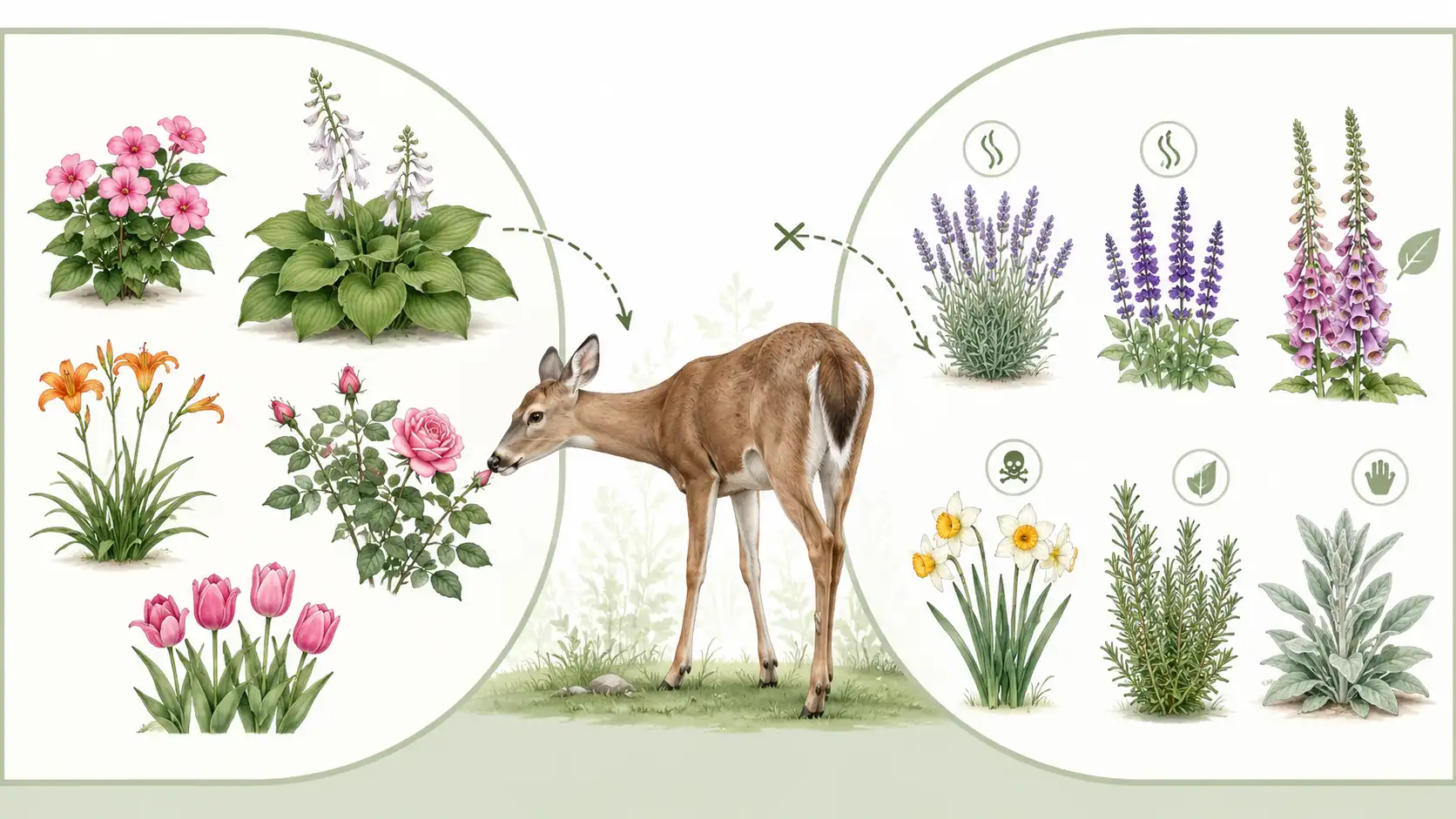
Deer usually avoid plants with strong fragrances, fuzzy or leathery leaves, sharp textures, bitter flavors, or toxic compounds. These characteristics make plants less pleasant or potentially harmful to consume.
Common deer-resistant choices include:
- Fragrant herbs: Lavender, rosemary, sage, thyme, mint, and oregano
- Fuzzy or textured plants: Lamb’s ear, foxglove, dusty miller, and some salvias
- Bitter or toxic plants: Daffodils, foxglove, hellebores, and boxwood
- Aromatic flowering plants: Catmint, salvia, lavender, and Russian sage
Daffodils, Narcissus species, contain compounds that discourage browsing and are identified by Minnesota Extension as poisonous to deer. Foxgloves, Digitalis species, are also highly toxic and must be handled carefully around children and pets.
Deer resistance does not mean these plants are safe for people or animals to eat. Toxic ornamentals should be planted and handled according to established safety guidance.
Deer-Resistant Flowers That Bloom All Summer
Salvia, catmint, and yarrow are among the most useful deer-resistant plants for extended summer flowering. Their aromatic foliage, textured leaves, and less-palatable plant compounds reduce their appeal to browsing deer.
- Salvia: Many species bloom repeatedly from late spring through summer when spent flowers are removed. Strongly scented leaves help discourage deer.
- Catmint: Nepeta species produce aromatic foliage and can rebloom after shearing.
- Yarrow: Achillea species have finely divided, aromatic foliage and broad flower clusters that can continue through summer with suitable care.
The Missouri Botanical Garden includes salvia, catmint, and yarrow among plants not favored by deer. The RHS also notes that many salvias resist deer damage because of their strongly scented foliage.
As of summer 2026, current extension guidance continues to emphasize integrated protection rather than relying on plant selection alone. Greenery Inside recommends combining long-blooming resistant plants with fencing or individual plant protection in areas experiencing repeated browsing.
| Category | Deer Often Eat | Deer Usually Avoid |
| Flowers | Impatiens, hostas, daylilies | Lavender, salvia, foxglove |
| Foliage type | Soft, tender foliage | Fuzzy, waxy, leathery, or fragrant foliage |
| Common example | Tulips | Daffodils |
Comparison — Why Some Plants Are Eaten and Others Aren’t
Some plants are eaten more frequently because they provide tender growth, moisture, accessible nutrients, and little chemical or physical resistance. Plants are usually avoided when their scent, texture, bitterness, or toxicity makes browsing unpleasant.
Scent-based deterrence: Aromatic oils in lavender, rosemary, sage, catmint, and salvia can mask or reduce the appeal of the foliage. Strong scent does not create an absolute barrier, but it lowers preference.
Texture-based deterrence: Fuzzy, rough, leathery, waxy, or sharply divided leaves are more difficult or uncomfortable to browse. Lamb’s ear is a common example of a plant protected partly by dense leaf hairs.
Toxicity and bitterness: Daffodils, foxglove, hellebores, and some shrubs contain bitter or toxic compounds. Deer often avoid these plants, although toxicity does not guarantee that no tasting or physical damage will occur.
Moisture and tenderness: Irrigated plants, expanding leaves, flower buds, and young stems are often more attractive because they contain water and digestible nutrients. Deer may browse new growth and later leave the mature foliage alone.
Seasonal hunger override: Severe winter weather, drought, overcrowding, and habitat loss can override normal preferences. Under strong feeding pressure, deer may eat thorny, fragrant, or supposedly resistant plants.
Common Mistakes and Problems With Deer-Resistant Plants
Deer-resistant gardening fails when resistance is treated as complete protection. Successful management requires appropriate plant placement, seasonal awareness, early intervention, and physical protection for valuable specimens.
Why Deer Still Eat “Deer-Resistant” Plants
Deer still eat resistant plants because resistance is relative. Young deer may sample unfamiliar vegetation, while hungry animals may consume almost any available plant during winter, drought, overpopulation, or periods of habitat stress.
Why it happens:
- A newly planted specimen has tender growth.
- Preferred natural forage is unavailable.
- Deer have become accustomed to feeding in the garden.
- Local deer have different preferences from deer in another region.
- Snow, drought, or population pressure has increased hunger.
- Repeated fertilization produces soft, nutrient-rich foliage.
How to fix it:
Combine resistant planting with physical barriers. Fencing, protective cages, netting, and tree guards provide more reliable protection than plant choice alone. Exclusion is widely regarded as the most consistent method where damage is severe.
Container growing offers another practical option because vulnerable plants can be moved closer to the house or placed behind a protected barrier. Our guide to Australian native plants in pots explains how to grow and manage suitable native species in containers.
How to prevent it:
- Protect all new plantings until established.
- Place valuable plants away from woodland edges and known deer routes.
- Avoid grouping hostas, impatiens, tulips, and daylilies along exposed borders.
- Use several management methods instead of one repellent.
- Respond when damage first appears, before deer establish a regular feeding habit.
In our practical assessment of deer-prone garden layouts, a resistant outer planting layer works best when it is supported by a real barrier. Fragrant plants may reduce casual browsing, but they do not reliably protect a bed of hostas or impatiens from determined deer.
Beginner Mistakes in Deer-Resistant Gardening
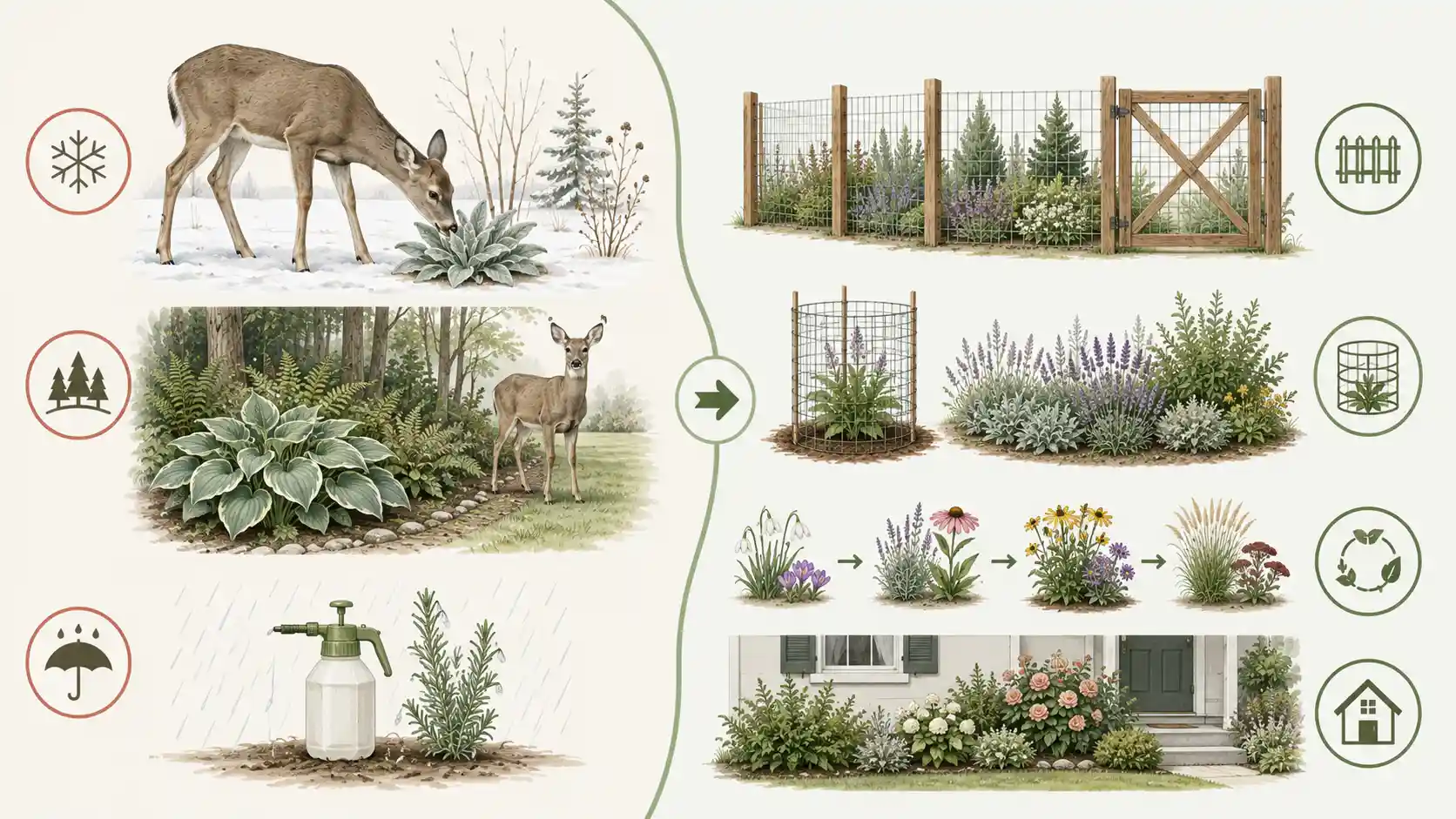
A common beginner mistake is assuming that one repellent, scent, or plant type will work throughout the year. Deer adapt to repeated smells and sounds, while weather can wash away spray repellents or reduce their effectiveness.
Other mistakes include:
- Planting hostas, impatiens, roses, or daylilies next to forest edges
- Protecting summer flowers but leaving evergreen shrubs exposed in winter
- Assuming thorny plants cannot be eaten
- Failing to protect young trees from browsing and antler rubbing
- Using only aromatic companion plants without fencing
- Ignoring changes in deer numbers or nearby habitat
- Reapplying repellents inconsistently
- Treating “rarely damaged” as “never damaged”
Seasonal planning is essential. Summer-resistant flowers do not protect evergreen shrubs, woody stems, and tree buds during winter. A deer-resistant landscape should include less-preferred plants across all seasons and additional protection for exposed woody plants.
Comparing Deer Resistance Across Common Garden Plants
Impatiens have the highest deer appeal among these three common bedding plants, while scented geraniums generally have the lowest. Begonias fall between them because their thicker or waxier foliage reduces preference, but browsing remains possible.
| Plant | Deer Appeal Level | Notes |
| Impatiens | High | Soft, tender, moisture-rich, and frequently eaten |
| Begonias | Low–Moderate | Wax begonias are often avoided but may be browsed when food is scarce |
| Geraniums, especially scented types | Low | Fragrance and leaf texture deter many deer, although regional results vary |
Impatiens are the least suitable choice for an unprotected garden with regular deer activity. Begonias can provide a lower-risk alternative for shaded beds, especially wax begonia cultivars. Scented geraniums may offer stronger resistance in many North American landscapes, but local observations should guide final plant selection.
This comparison also shows why generic deer-resistant lists can be misleading. Common names may refer to several species, cultivars, or even different botanical genera. Climate, planting age, deer species, local population density, and nearby food sources can all change the result.
Conclusion
Deer eat a diverse mixture of forbs, grasses, woody browse, tree seedlings, flowers, fruits, nuts, and agricultural crops. Their diet changes with plant availability, location, weather, season, and hunger. Tender plants such as impatiens, hostas, daylilies, roses, and tulips are frequently eaten, while fragrant, fuzzy, waxy, bitter, or toxic plants are usually less attractive.
Understanding what plants do deer eat helps gardeners identify high-risk flowers and replace them with lower-risk alternatives such as lavender, salvia, catmint, yarrow, daffodils, begonias, or scented geraniums. However, no plant is guaranteed to remain untouched. Deer resistance is a preference scale, and hungry deer can override normal feeding behavior. The most dependable approach combines resistant plants with careful placement, seasonal planning, early damage detection, and physical barriers.
Frequently Asked Questions (FAQs)
What plant do deer like the most?
There is no single plant that every deer prefers, but hostas, impatiens, daylilies, tulips, roses, and pansies are among the most frequently eaten garden plants. Deer are especially attracted to soft leaves, tender buds, succulent stems, and irrigated new growth.
Do deer eat begonias?
Deer may eat begonias, but wax begonias are usually less attractive than impatiens. Their thicker, waxier foliage provides moderate resistance. Fresh growth can still be sampled, particularly when preferred vegetation is scarce or deer pressure is high.
Are geraniums deer resistant?
Many geraniums are considered deer-resistant because of their fragrance, leaf texture, or bitter taste. Scented Pelargonium varieties are often avoided, but resistance varies by cultivar and region. Hungry deer may still browse geraniums when other food is unavailable.
What flowers do deer not eat?
Deer usually avoid lavender, salvia, foxglove, daffodils, catmint, yarrow, lamb’s ear, and Russian sage. These plants have fragrant, fuzzy, bitter, waxy, or toxic characteristics. No flower is completely deer-proof under all conditions.
What plants do deer eat in winter?
During winter, deer eat twigs, buds, shrub stems, dried leaves, grasses, sedges, bark, evergreen foliage, and remaining fruits or nuts. Woody browse becomes especially important when soft plants are dormant or buried beneath snow.
Do deer eat impatiens?
Yes. Impatiens are highly attractive to deer because their foliage and stems are soft, tender, and moisture-rich. Deer may consume the leaves, flowers, buds, and upper stems, sometimes reducing an entire planting overnight.