Introduction
Bursaria spinosa, commonly known as sweet bursaria, native blackthorn, or Australian blackthorn, is a hardy native Australian shrub or small tree valued for its adaptability and ecological benefits. Belonging to the Pittosporaceae family, this thorny species grows naturally across much of Australia in a wide range of environments. Gardeners appreciate it for its fragrant flowers, dense growth habit, and ability to support native wildlife. Whether used as a screening hedge, habitat plant, or low-maintenance landscape feature, Bursaria spinosa remains one of Australia’s most versatile native shrubs.
Quick Summary
- Bursaria spinosa (sweet bursaria) is a thorny native Australian shrub valued for hedging, wildlife habitat, and fragrant flowers.
- Common names include native blackthorn, Australian blackthorn, and Christmas bush.
- It grows across most Australian states, including Tasmania, with several recognized subspecies.
- The plant is widely used for screening, soil stabilization, and supporting pollinators.
- Once established, it is drought tolerant and suitable for low-maintenance native gardens.
What Is Bursaria Spinosa? (Family, Common Names & Identification)
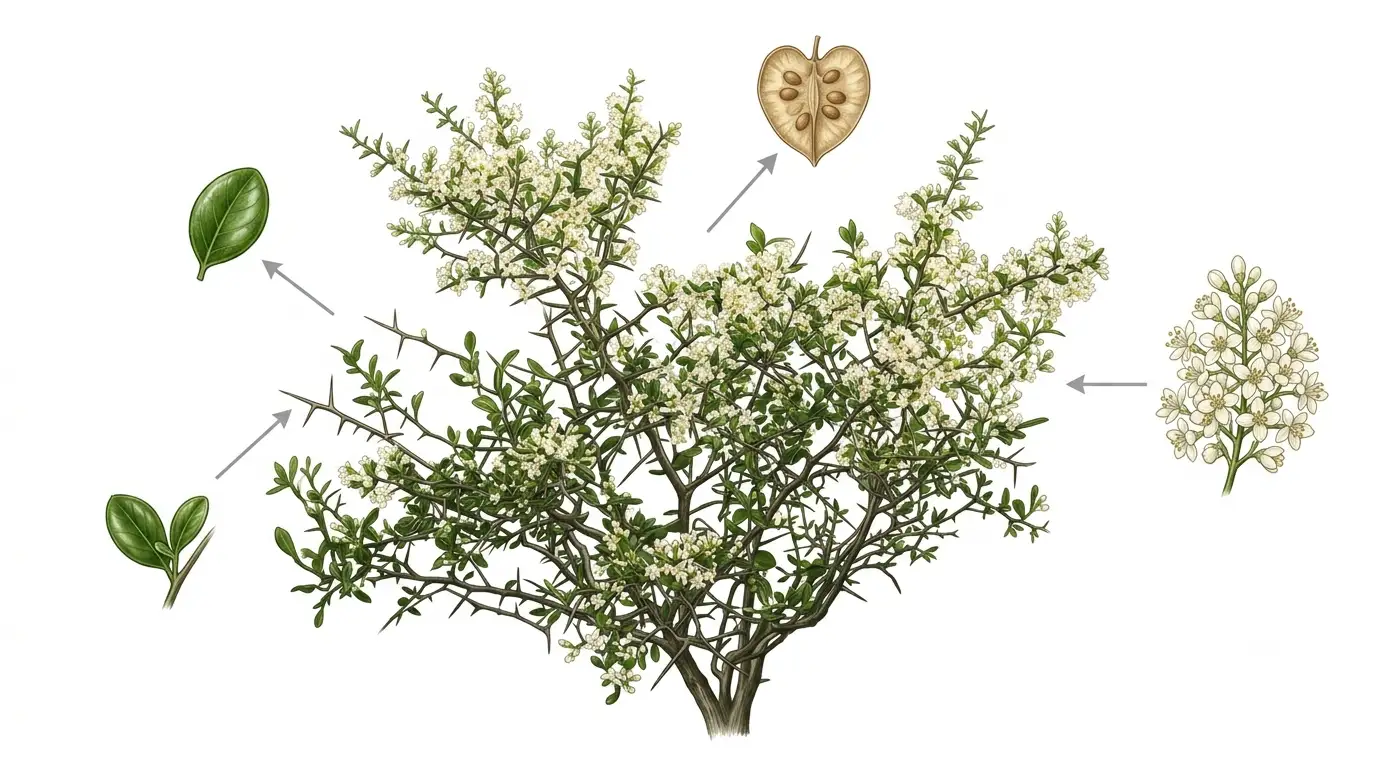
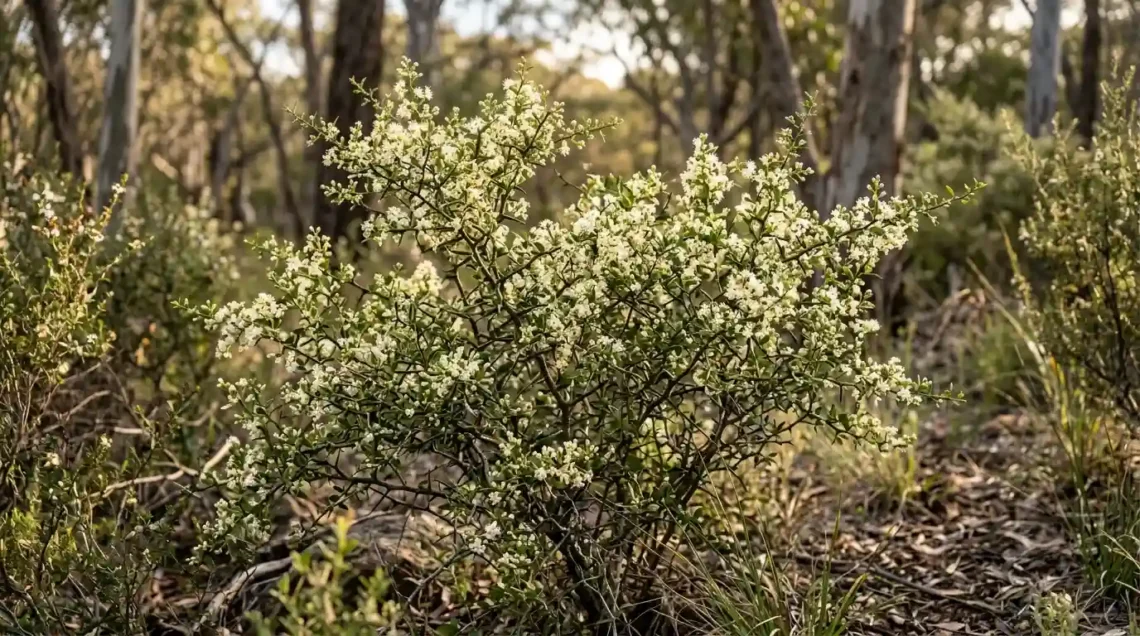
Bursaria spinosa is a native Australian shrub or small tree in the Pittosporaceae family. It is known for its spiny branches, fragrant flowers, and ability to thrive in diverse landscapes.
Common names include:
- Sweet bursaria
- Native blackthorn
- Australian blackthorn
- Christmas bush bursaria spinosa
Key Identification Features
- Spiny branches that create a dense protective structure
- Small white to cream-colored fragrant flowers during summer
- Glossy oval-shaped green leaves
- Distinctive flat, heart-shaped seed capsules
- Upright to spreading growth habit
Many gardeners ask, “What is the common name for bursaria spinosa?” The most widely used common name is sweet bursaria, although native blackthorn is also frequently used.
Bursaria Spinosa Varieties and Subspecies
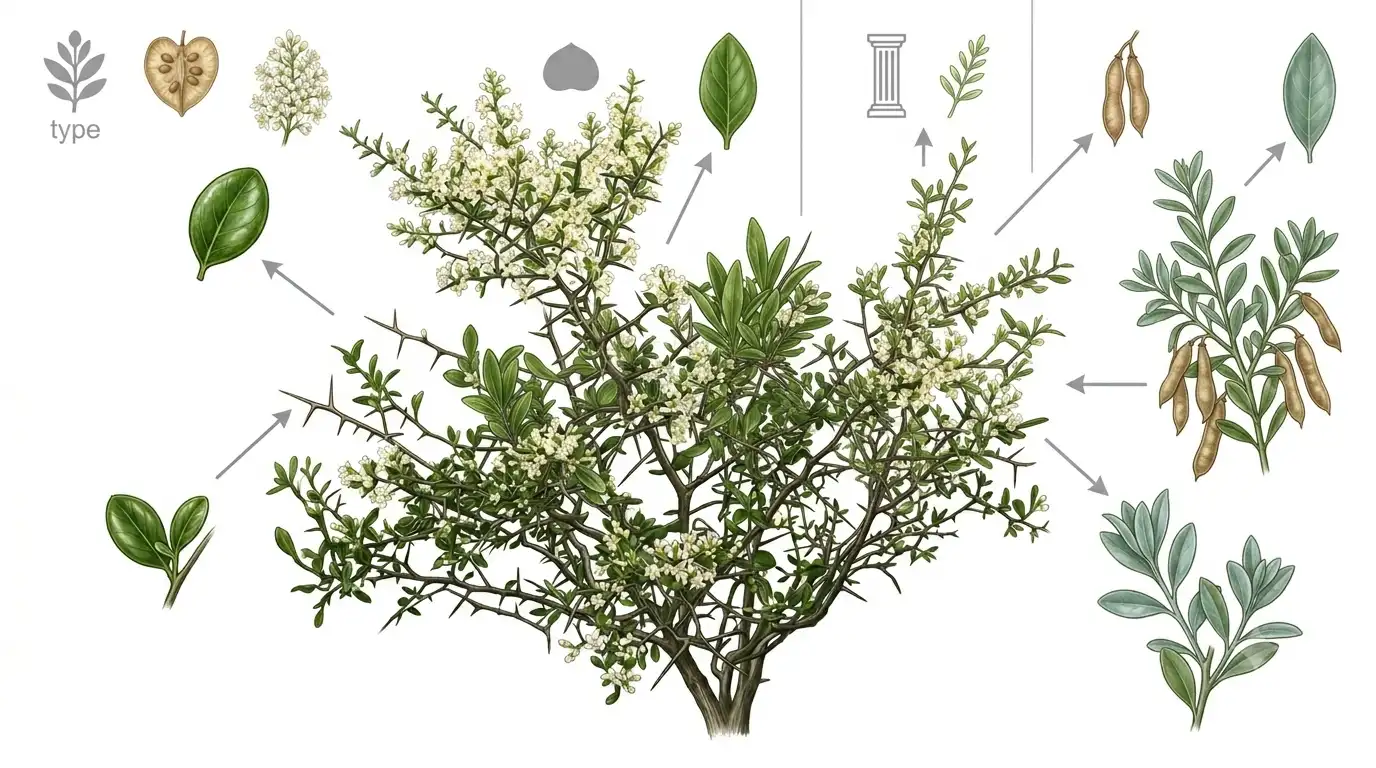
Several recognized forms of Bursaria spinosa occur throughout Australia.
These include:
- Bursaria spinosa subsp. spinosa
- Bursaria spinosa subsp. lasiophylla
- Bursaria spinosa ssp. spinosa
Differences between subspecies often involve leaf texture, growth form, and geographic distribution.
| Subspecies | Leaf Characteristics | Region | Typical Use |
| Subsp. spinosa | Small glossy leaves | Widespread | Hedging and habitat |
| Subsp. lasiophylla | Hairier foliage | Specific inland regions | Revegetation projects |
| Ssp. spinosa | Variable foliage | Broad distribution | Landscaping and conservation |
Comparison — Bursaria Spinosa vs Similar Native Shrubs
Although often used in similar landscapes, Bursaria spinosa is botanically different from Callistemon sieberi and Melaleuca sieberi.
| Feature | Bursaria spinosa | Callistemon sieberi | Melaleuca sieberi |
| Family | Pittosporaceae | Myrtaceae | Myrtaceae |
| Flowers | Small white clusters | Bottlebrush flowers | Brush-like flowers |
| Growth Habit | Thorny shrub/tree | Shrub/small tree | Shrub/tree |
| Main Use | Hedge, habitat | Ornamental flowering | Screening, habitat |
| Spines | Present | Absent | Absent |
Despite being grouped together in native gardens, these plants are not closely related.
Bursaria Spinosa Distribution and Natural Habitat
Bursaria spinosa occurs across most Australian states and territories, including Tasmania.
Bursaria spinosa Tasmania populations thrive in cooler climates and are commonly found in woodland ecosystems.
Natural habitats include:
- Open woodlands
- Forest margins
- Coastal scrub
- Regenerating bushland
Environmental conditions tolerated include:
- Sandy soils
- Loamy soils
- Clay-based soils with drainage
- Temperate climates
- Semi-arid regions
- Full sun to partial shade
It shares woodland and coastal scrub environments with Banksia oblongifolia across parts of Australia.
Bursaria Spinosa Size and Growth Rate
Bursaria spinosa typically reaches 2–10 meters in height depending on growing conditions and subspecies. When grown in containers, size is generally more restricted than outdoor specimens.
Typical mature dimensions:
- Height: 2–10 m
- Width: 1.5–5 m
Growth is generally slow to moderate, with most active growth occurring during warmer seasons.
Factors influencing size include:
- Pruning frequency
- Soil fertility
- Water availability
- Light exposure
Growth patterns are similar to Acacia podalyriifolia, with moderate seasonal development depending on soil conditions.
How to Plant Bursaria Spinosa (Best Time, Soil & Conditions)
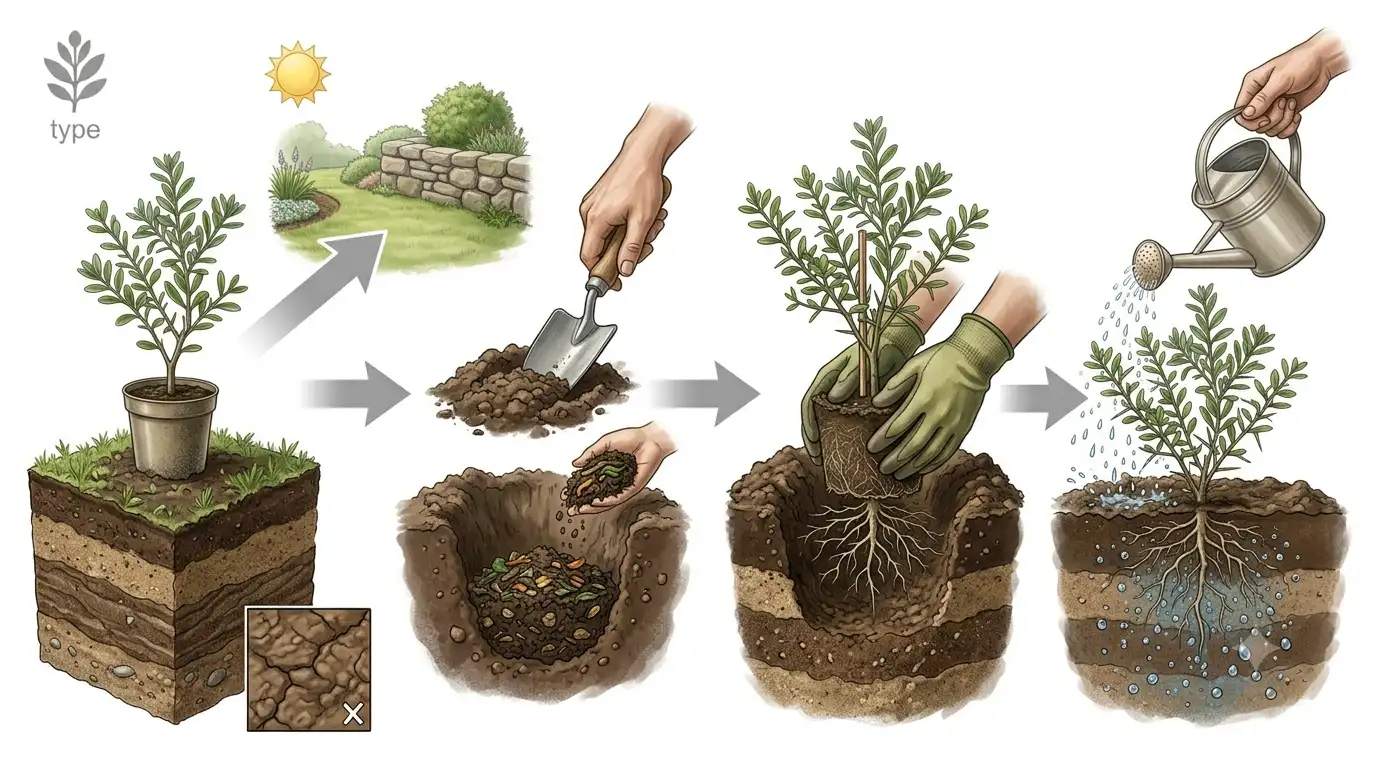
The best time of year to plant Bursaria spinosa is during autumn or spring when temperatures are moderate and root establishment is easier.
Planting Steps
- Select a sunny or partly shaded location.
- Prepare well-drained soil.
- Dig a hole twice the width of the root ball.
- Space plants appropriately if creating a hedge.
- Backfill and water thoroughly.
- Apply mulch while keeping it away from the stem.
Proper establishment during the first year helps improve long-term performance.
Growing Bursaria Spinosa From Seed
Growing Bursaria spinosa from seed requires patience because germination can be variable. Native species often respond well to treatments that mimic natural environmental conditions.
Seed-Growing Steps
- Collect mature seed capsules after they dry.
- Extract and clean seeds.
- Apply smoke treatment or scarification if recommended.
- Sow seeds in a free-draining propagation mix.
- Cover lightly with soil.
- Keep consistently moist but not waterlogged.
Germination may take several weeks to several months depending on conditions. Seed propagation methods are comparable to Lomatia silaifolia care, where pre-treatment improves germination success.
Bursaria Spinosa Care Guide
Once established, Bursaria spinosa requires relatively little maintenance.
| Care Factor | Requirement |
| Water | Moderate when young; drought tolerant when mature |
| Light | Full sun to part shade |
| Soil | Well-drained soils |
| Fertilizer | Minimal feeding required |
| Pruning | Light shaping after flowering |
| Climate | Frost hardy and coastal tolerant |
Regular observation helps identify issues before they become significant problems. Like Pratia pedunculata, it prefers well-drained soil and responds poorly to overwatering.
Common Uses for Bursaria Spinosa
The common uses for Bursaria spinosa include landscaping, habitat creation, and environmental restoration.
Popular Uses
- Hedging and privacy screening
- Wildlife habitat and nesting shelter
- Butterfly host plant support
- Soil stabilization and erosion control
- Ornamental flowering shrub
- Bush regeneration projects
Its dense and thorny growth makes it especially valuable in native gardens. Like Grevillea Preissii Seaspray, it is valued for attracting pollinators and supporting biodiversity.
Bursaria Spinosa Hedge — Planting and Maintenance Tips
Bursaria spinosa makes an effective hedge because of its dense branching and natural spines.
For hedges:
- Space plants approximately 1–2 meters apart.
- Water regularly during establishment.
- Prune lightly each year after flowering.
- Remove damaged branches when necessary.
The spiny structure provides both security and habitat value for wildlife. It performs similarly to Correa Alba Prostrate in dense native hedge systems requiring low maintenance.
Common Problems With Bursaria Spinosa (Troubleshooting)
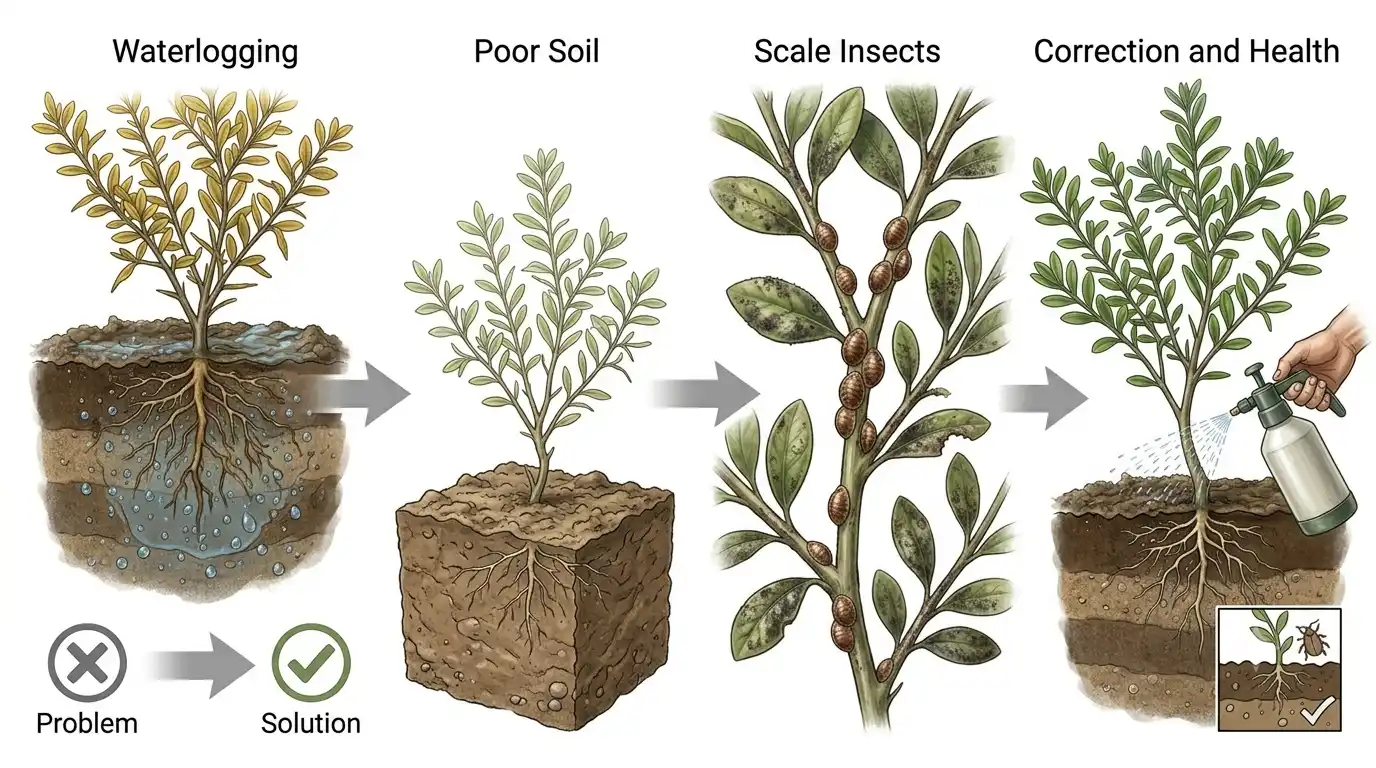
Leaves Turning Yellow
Causes:
- Overwatering
- Poor drainage
- Nutrient deficiencies
Solutions:
- Improve drainage
- Reduce watering frequency
- Apply suitable native plant fertilizer if needed
Prevention:
- Avoid waterlogged soils
Slow Growth
Causes:
- Poor soil quality
- Insufficient sunlight
- Root stress
Solutions:
- Improve growing conditions
- Ensure adequate sunlight exposure
Prevention:
- Plant in suitable locations from the beginning
Pest Issues
Common pests include:
- Scale insects
- Sap-sucking insects
Solutions:
- Monitor plants regularly
- Remove infestations early
- Encourage beneficial insects
Prevention:
- Maintain plant health through proper care
Poor drainage issues are also common in Eremophila ground cover species if soil conditions are not managed correctly.
Beginner Mistakes to Avoid When Growing Bursaria Spinosa
Common mistakes include:
- Overwatering young plants
- Planting in poorly drained soil
- Excessive pruning that removes flowering wood
- Placing plants too close to pathways despite their spiny branches
- Using rich fertilizers designed for exotic species
Avoiding these issues helps maintain healthy growth and flowering. Over-fertilizing is also a common mistake, similar to issues seen in Acacia baileyana prostrate cultivation.
Bursaria Spinosa and Its Lifespan
Bursaria spinosa is a long-lived native shrub or small tree.
Under suitable conditions, plants can survive for several decades.
Factors influencing lifespan include:
- Climate suitability
- Soil drainage
- Water management
- Pest control
- Pruning practices
Healthy plants in natural settings often remain productive for many years.
Where to Find Bursaria Spinosa for Sale and Sourcing Tips
When sourcing Bursaria spinosa, focus on plant quality and local suitability rather than plant size alone.
Consider:
- Purchasing from reputable native plant nurseries
- Selecting subspecies suited to local climates
- Checking root health before purchase
- Choosing healthy seedlings with strong growth
- Comparing young plants versus established specimens
Locally adapted plants often establish more successfully.
Bursaria Spinosa Within the Broader Native Garden Landscape
Bursaria spinosa plays an important role within Australian native garden design. Unlike many indoor plants, it is primarily an outdoor species that performs best with natural sunlight and airflow. Similar native shrubs like Acacia fimbriata are also widely used for hedging and habitat planting in Australian gardens.
It also connects with broader gardening topics:
- Plant propagation through seed collection
- Native landscaping and screening
- Wildlife-friendly garden design
- Plant troubleshooting and maintenance
- Ecological restoration projects
Its versatility makes it valuable in both residential and conservation settings. It is commonly featured in broader Australian native garden tree systems due to its resilience and habitat value.
Conclusion
Bursaria spinosa is a hardy and adaptable native Australian shrub valued for its distinctive appearance, fragrant flowers, and ecological importance. From understanding its identification and subspecies to learning proper planting, care, and troubleshooting techniques, gardeners can successfully grow this species in a wide range of landscapes. Whether used for hedging, wildlife habitat, erosion control, or native garden design, Bursaria spinosa remains a practical and low-maintenance choice that provides long-term benefits for both people and local ecosystems.
FAQs
What is the common name for bursaria spinosa?
The most common names for Bursaria spinosa are sweet bursaria, native blackthorn, and Australian blackthorn.
What are the common uses for bursaria spinosa?
Bursaria spinosa is commonly used for hedging, wildlife habitat, soil stabilization, ornamental landscaping, and bush regeneration projects.
What is the best time of year to plant Bursaria spinosa?
Autumn and spring are generally the best planting seasons because temperatures are milder and root establishment is easier.
What is the lifespan of bursaria spinosa?
Bursaria spinosa can live for several decades when grown in suitable conditions with proper care and maintenance.
How do you grow bursaria spinosa from seed?
Collect mature seeds, apply any recommended pre-treatment, sow them in a well-drained propagation mix, and keep the growing medium consistently moist until germination occurs.
What is the difference between bursaria spinosa subsp. spinosa and subsp. lasiophylla?
Subsp. spinosa generally has smoother foliage and a broader distribution, while subsp. lasiophylla is distinguished by hairier leaves and adaptation to specific regional environments.