Introduction
Kennedia nigricans, commonly known as black coral pea or black kennedia, is a vigorous Australian native climber in the Fabaceae family endemic to south-west Western Australia. It is widely grown in gardens for its fast coverage, drought tolerance, and striking pea-shaped flowers. This plant is especially valued for its ability to quickly cover fences, walls, and embankments. In this article, you will learn its botanical identity, growth behavior, flowering patterns, care needs, propagation methods, and common gardening uses.
Quick Summary
- Kennedia nigricans is a fast-growing Australian native climbing shrub also known as black coral pea or black kennedia.
- It produces clusters of black/purple and yellow-orange pea-shaped flowers from winter into spring.
- It is prized for covering fences, walls, and embankments due to its vigorous growth.
- It is drought-tolerant, frost-hardy, and propagated from scarified seed or cuttings.
What Is Kennedia Nigricans? (Overview & Common Names)
Kennedia nigricans is a woody perennial climber belonging to the genus Kennedia in the Fabaceae (pea family). It is native to south-west Western Australia and is known for its trifoliate leaves and twining growth habit. The plant is commonly called black coral pea, black kennedia, or simply kennedia nigricans.
Quick Facts Table
| Feature | Description |
| Botanical name | Kennedia nigricans |
| Common names | Black coral pea, black kennedia |
| Family | Fabaceae |
| Native range | South-west Western Australia |
| Plant type | Perennial climbing shrub |
| Mature size | 3–6 m+ spread (with support) |
| Flower color | Black/purple with yellow-orange |
| Bloom season | Winter to spring |
The plant is widely appreciated in Australian native landscaping for its ornamental flowers and aggressive climbing ability. It is closely related to other Australian native climbers such as Acacia Podalyriifolia: Care, Size, Growth & Uses and Hardenbergia Violacea Care, Growth, and Varieties, which are also widely used in native landscaping systems.
Plant Size & Growth Habit
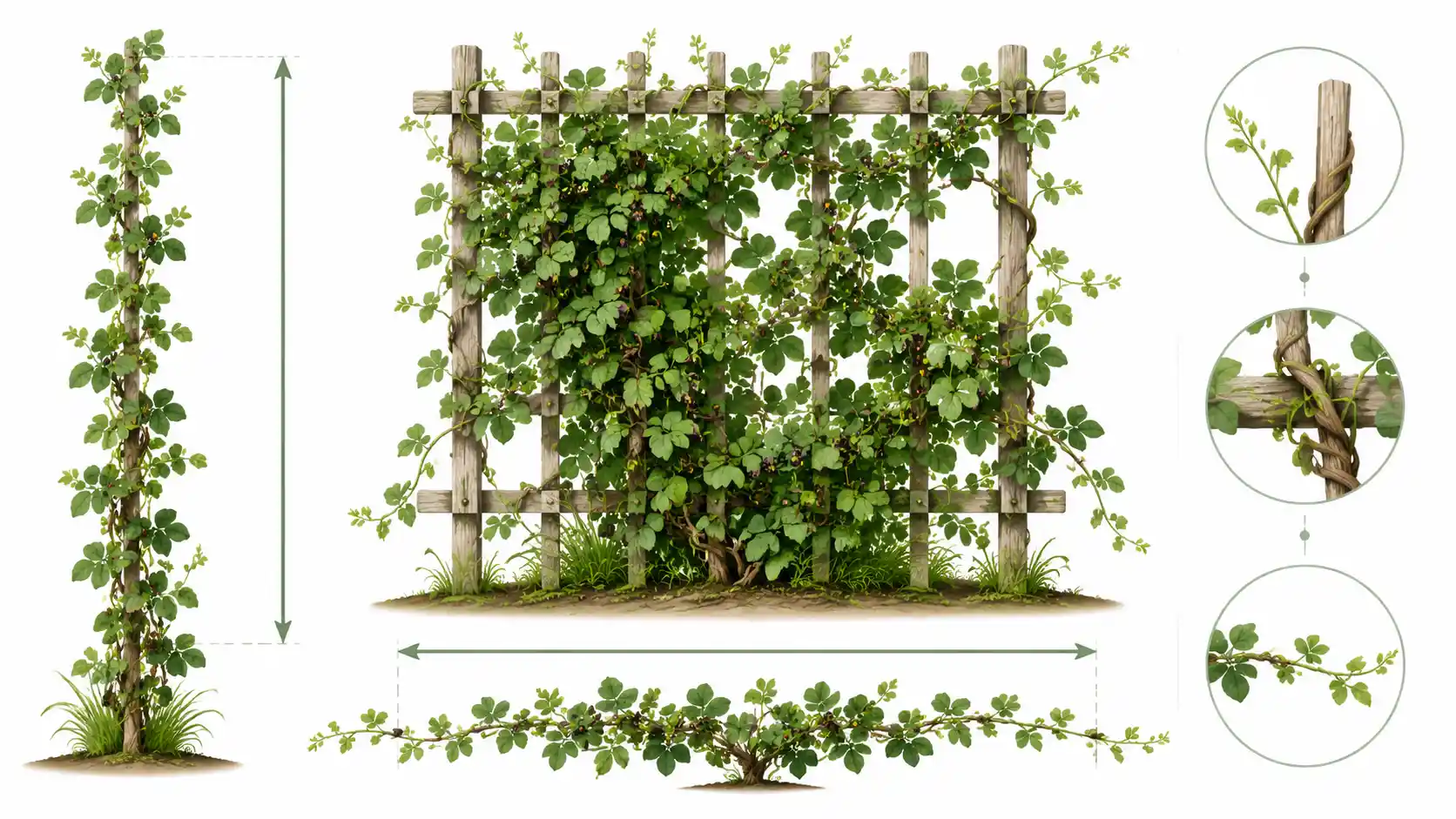
Kennedia nigricans is a vigorous, woody climber that requires structural support to develop fully. It is not suited to indoor cultivation due to its size and growth strength.
Key Growth Characteristics
- Mature height: 3–6 meters or more with support
- Spread: can extend widely over fences and structures
- Growth form: twining, scrambling woody climber
- Habit: evergreen in mild climates
Its rapid expansion makes it ideal for covering large vertical surfaces, but it can become dominant if not managed. In large native garden designs, Kennedia nigricans is often combined with structural shrubs like Bursaria Spinosa: Care, Varieties, Uses & Growing Guide for layered vegetation planning.
Growth Form Overview
- Twining stems that wrap around supports
- Dense foliage coverage over time
- Strong lateral spread when established
Growth Rate
Kennedia nigricans is classified as a fast-growing and vigorous climber, especially during warm seasons.
Growth Behavior
- Rapid growth in spring and summer
- Slower development during colder months
- Establishes quickly once roots are set
Environmental conditions influencing growth:
- Full sun exposure increases flowering and vigor
- Well-drained soil promotes strong root development
- Moderate watering supports steady establishment
Flowers and Blooming Season
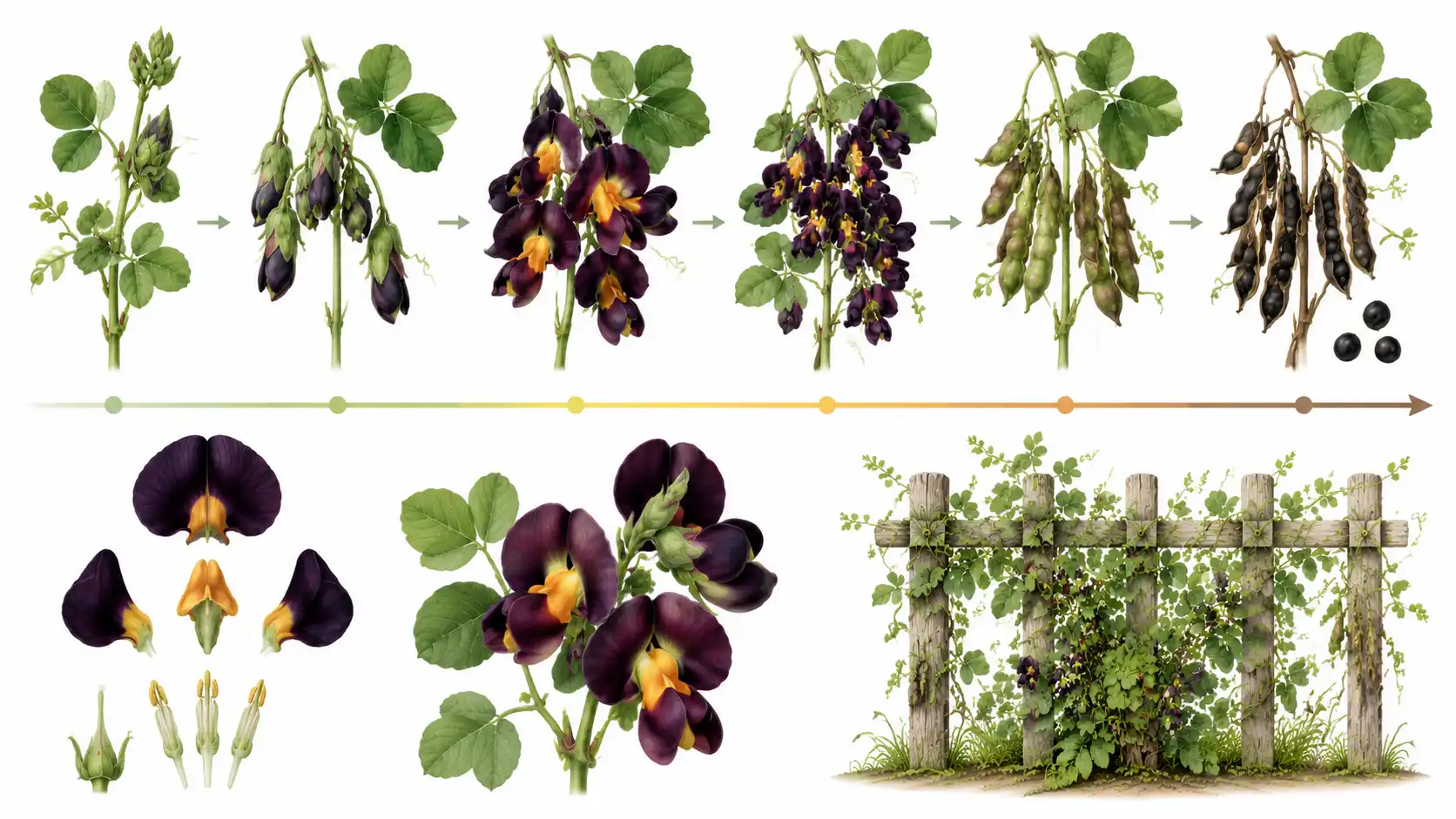
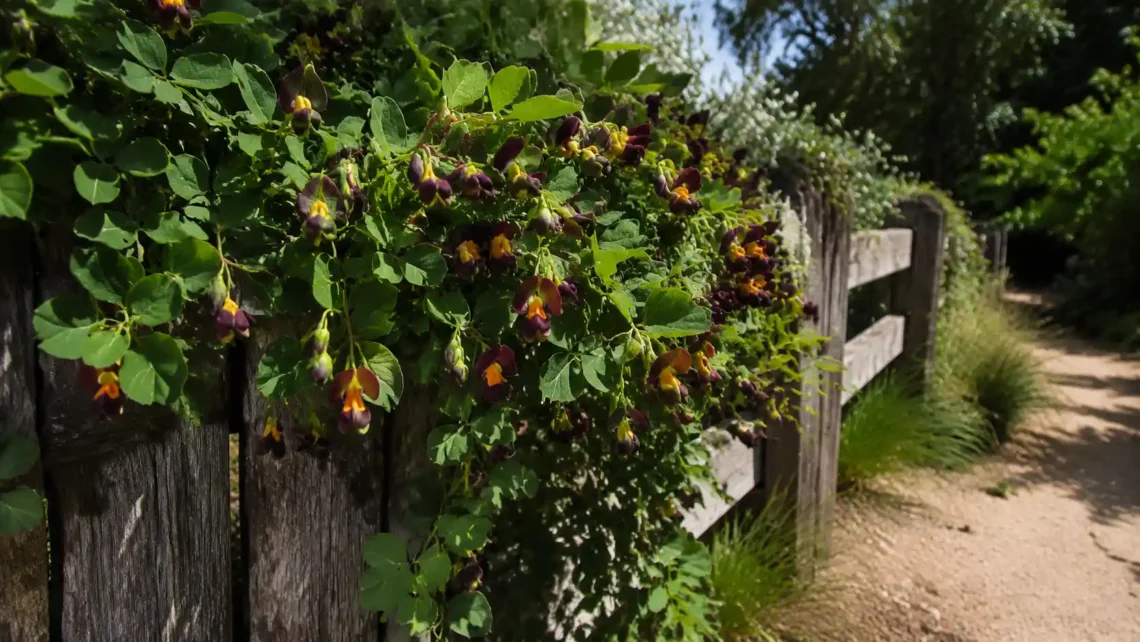
Kennedia nigricans produces distinctive pea-shaped flowers that are dark maroon to blackish-purple with a contrasting yellow-orange center.
Flowering Characteristics
- Flower color: deep purple-black with yellow-orange markings
- Arrangement: clustered blooms along stems
- Shape: typical Fabaceae pea flowers
- Bloom period: winter through spring
Bloom Cycle Details
- Flowers emerge during cooler months
- Peak flowering occurs in early spring
- Seed pods form after flowering ends
Its ornamental flowering habit is similar in visual impact to other native flowering climbers such as Pandorea Pandorana Snowbells Care, Growth & Guide.
Native Habitat & Life Cycle
Kennedia nigricans is a perennial woody climber native to coastal and near-coastal regions of south-west Western Australia.
It naturally grows in:
- Coastal dunes
- Sandy flats
- Creek margins
- Open scrublands
It is adapted to nutrient-poor, well-drained soils and Mediterranean-type climates. Botanical references such as Florabase confirm its classification and distribution within Western Australia’s native flora database.
This plant is part of a broader ecological system of Australian natives often featured in Australian Native Garden Trees: The Complete Planting Guide.
Growing Kennedia Nigricans on a Fence or Screen
Kennedia nigricans is commonly used as a fence climber due to its dense growth and rapid coverage ability.
Why It Is Used on Fences
- Quickly covers unsightly structures
- Provides dense green screening
- Produces ornamental flowers along vertical surfaces
Fence Growing Tips
- Install strong trellis or wire support
- Plant at least 1–2 meters apart for coverage balance
- Train young shoots early onto support structures
- Prune to control spreading beyond boundaries
For vertical garden integration, it can be paired with flowering natives like Callistemon White Anzac Care, Size & Growing Guide to create layered screening effects.
Kennedia Nigricans Care Guide
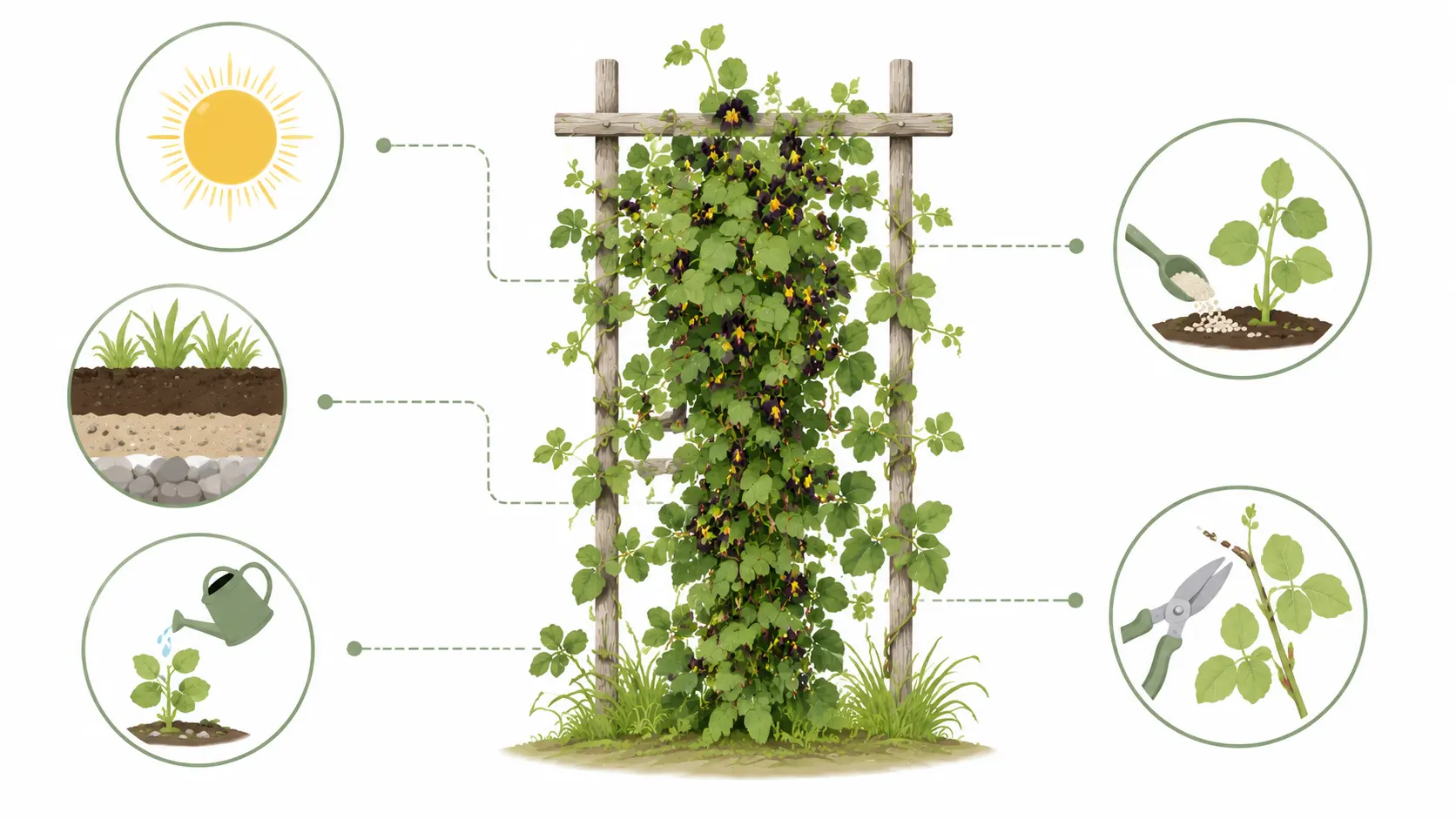
Kennedia nigricans is considered easy to grow once established, especially in suitable climates.
Watering Needs
- Drought-tolerant after establishment
- Requires regular watering during early growth
Light Requirements
- Full sun is preferred for best flowering
- Can tolerate partial shade but flowers less
Soil Preferences
- Well-drained soil is essential
- Adaptable to sandy or poor soils
Fertilization
- Light feeding once or twice per year
- Avoid excessive nitrogen fertilization
Pruning
- Prune after flowering to control vigor
- Helps maintain shape and encourages new growth
Climate Tolerance
- Tolerates frost in moderate conditions
- Performs well in warm and dry climates
Similar drought-tolerant care patterns can also be observed in Eremophila Ground Cover: Best Varieties, Care & Planting Guide and Grevillea Ivory Whip: Care, Size, Growth & Uses.
How to Propagate Kennedia Nigricans
Kennedia nigricans can be propagated through seed or cuttings.
Seed Propagation
- Seeds require scarification before planting
- Soak in warm water to break dormancy
- Sow in well-drained seed mix
Cutting Propagation
- Take semi-hardwood cuttings in spring or summer
- Use rooting hormone for better success
- Maintain humidity until roots develop
Cuttings are preferred for named varieties to preserve traits. Propagation techniques are consistent with many Australian native shrubs, including species like Lomatia myricoides (River Lomatia) Care Guide.
Kennedia Nigricans vs Other Coral Pea Species
| Species | Common Name | Flower Color | Growth Habit | Native Range |
| Kennedia nigricans | Black coral pea | Black/purple & yellow | Vigorous climber | W. Australia |
| Kennedia rubicunda | Dusky coral pea | Red to pink | Creeping climber | Eastern Australia |
| Kennedia prostrata | Running postman | Bright red | Groundcover | Southern Australia |
Kennedia nigricans is generally more vigorous and larger than many other coral pea species.
Common Problems & Troubleshooting
Kennedia nigricans is generally hardy but can experience issues in poor conditions.
Yellowing Leaves
- Cause: overwatering or poor drainage
- Fix: improve soil aeration and reduce watering
Slow Establishment
- Cause: insufficient sunlight or nutrient-poor soil
- Fix: relocate or improve soil conditions
Pest Issues
- Rare but may include aphids on new shoots
- Control with natural insecticidal soap
Overgrowth Problems
- Cause: lack of pruning
- Fix: regular seasonal trimming
Beginner Mistakes to Avoid
- Planting in full shade and expecting strong flowering
- Not providing a strong support structure
- Underestimating its vigorous growth habit
- Over-fertilizing with nitrogen-rich products
- Ignoring pruning after flowering
Kennedia Nigricans in the Garden
Kennedia nigricans is widely used in native and low-maintenance landscaping designs.
Garden Uses
- Fence and wall coverage
- Embankment stabilization
- Native garden integration
- Habitat-friendly planting schemes
Companion Planting Ideas
- Works well with other Australian natives
- Pairs with drought-tolerant shrubs
- Suitable alongside eucalyptus-based landscapes
Its strong growth makes it ideal for ecological restoration and ornamental screening. It also supports biodiversity-friendly planting designs similar to Native Plants That Attract Butterflies Guide, improving habitat value for pollinators.
Conclusion
Kennedia nigricans is a vigorous, fast-growing Australian native climber best known for its striking black and yellow pea flowers and its ability to rapidly cover fences, walls, and embankments. It thrives in full sun, tolerates drought, and requires minimal maintenance once established. With proper support, pruning, and well-drained soil, it becomes a highly effective and ornamental landscape plant. Overall, Kennedia nigricans fits strongly within Australian native planting systems alongside species featured in Australian Native Garden Trees: The Complete Planting Guide.
FAQs
Is Kennedia Nigricans easy to grow?
Yes, it is easy to grow once established, especially in full sun with well-drained soil and minimal maintenance.
What is the blooming season for Kennedia Nigricans?
It typically blooms from winter through spring, producing clusters of distinctive pea-shaped flowers.
How do you take care of black coral peas?
Provide full sun, well-drained soil, occasional watering, and prune after flowering to control growth.
What is the common name for Kennedia nigricans?
Its most common names are black coral pea and black kennedia.
Is Kennedia nigricans frost tolerant?
Yes, it has moderate frost tolerance once established in suitable climates.
Can Kennedia nigricans be grown indoors?
No, it is too vigorous and large for indoor cultivation.
How quickly will Kennedia nigricans cover a fence?
It can cover a fence within 1–3 growing seasons depending on conditions.